Crappie Season & Limit in Minnesota
There's nothing quite like a successful day chasing crappies on a Minnesota lake, feeling that subtle tap on the line, and knowing you're about to reel in one of these delicious panfish. But let's be honest, figuring out the ever-changing rules can feel like trying to untangle a backlash in the dark. It’s a common frustration: one lake allows you a generous basket, while another, just a few miles down the road, has a completely different set of rules. You want to enjoy your time on the water, not worry about inadvertently breaking a regulation. This comprehensive guide is here to demystify crappie season and limits in Minnesota, helping you understand the statewide rules, recognize special lake-specific exceptions, and ultimately, fish with confidence and compliance.
Understanding Minnesota’s Crappie Regulations
Minnesota is blessed with an abundance of fantastic crappie fishing opportunities, from the smallest ponds to sprawling reservoirs. To keep these fisheries healthy and thriving for generations of anglers, the Minnesota Department of Natural Resources (DNR) implements a set of regulations. These rules cover everything from when you can fish for crappies to how many you can keep, and they’re designed to prevent overharvest and protect spawning populations. It's a balancing act: ensuring anglers have a great experience today while safeguarding the future of the species.
Statewide Crappie Season Details
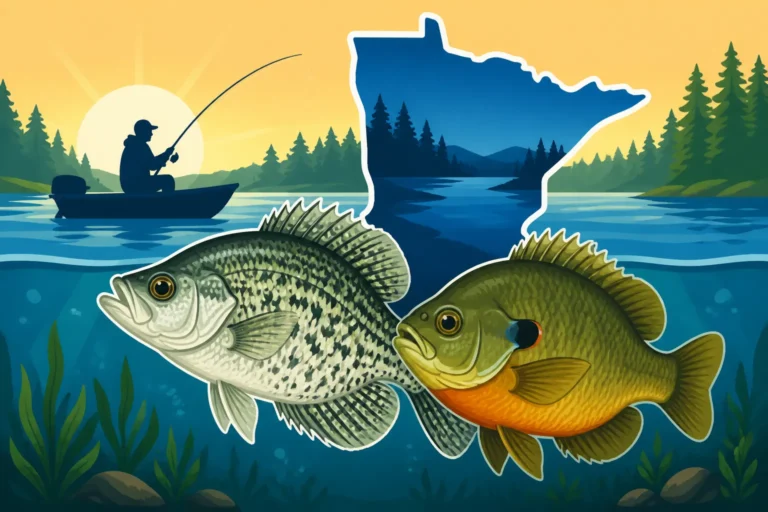
One of the best pieces of news for crappie enthusiasts in Minnesota is that, for most waters, the crappie season is continuous. That means you can target crappies year-round, whenever the mood strikes and the conditions are right. Whether you’re chasing them on the ice in January or finding them in their summer haunts, crappies are generally fair game. This continuous season applies to both black crappies and white crappies, the two primary species found across the state. While the season itself is open, it's the limits and special regulations that often trip people up, and that's where we really need to pay attention.
Imagine a warm spring day, the ice has just melted off Lake Minnetonka, and you're eager to get out for some early season crappie action. Because the season is continuous, you don't have to wait for a specific opener like you would for walleye. You can head out, knowing that crappies are available to be caught. The same goes for the dead of winter; with proper ice fishing gear, you can be out on Upper Red Lake chasing crappies through the ice without worrying about a closed season.
Daily and Possession Limits for Crappie
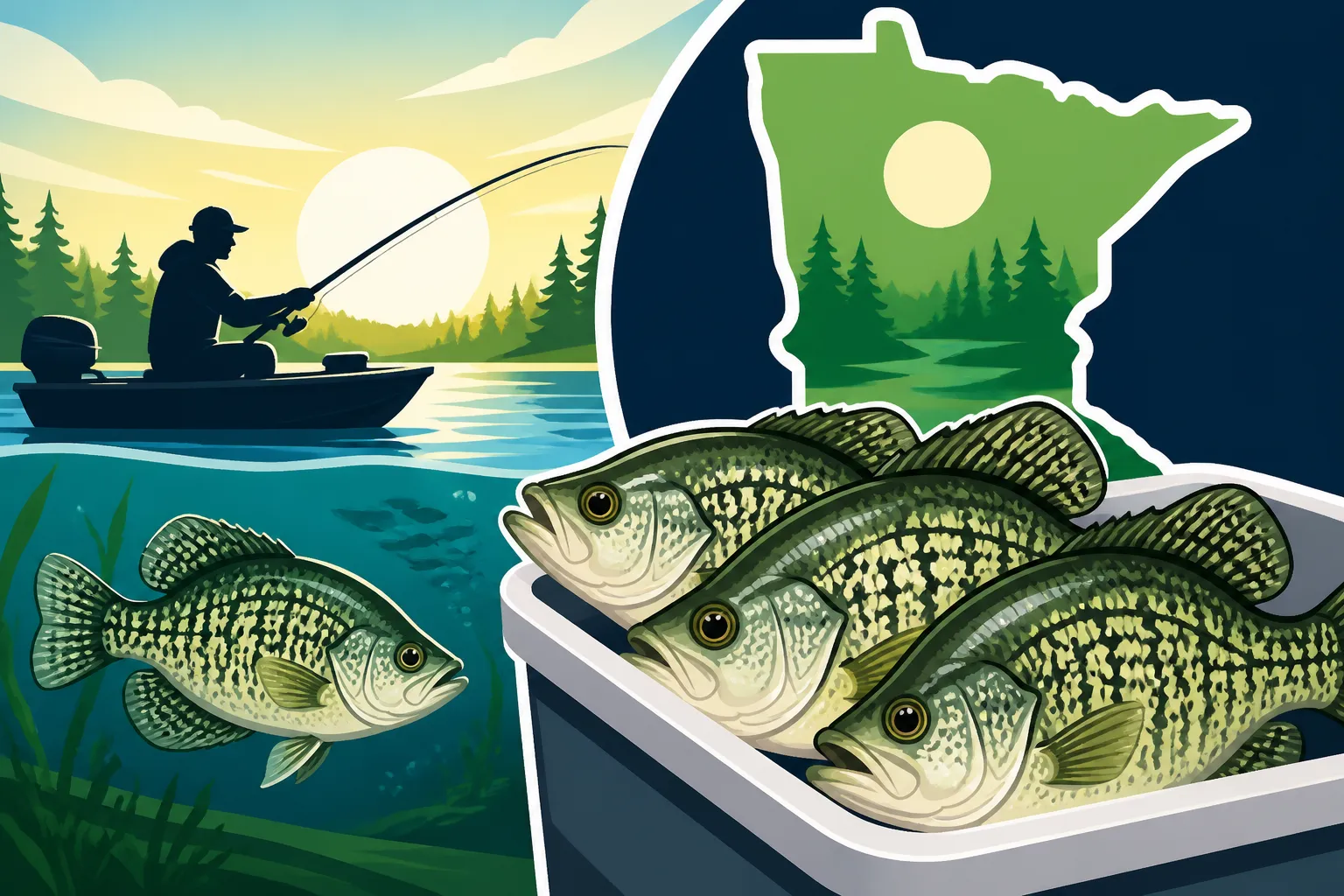
While the crappie season is largely open all year, the number of crappies you can keep is strictly regulated. This is where most anglers need to pay close attention to avoid penalties. The statewide daily and possession limit for crappie in Minnesota is generally 10. This means you can catch and keep up to 10 crappies in a single day, and you cannot have more than 10 crappies in your possession, whether that’s in your livewell, cooler, or freezer at home.
Let's break down the difference between daily and possession limits with a common scenario. Suppose you go fishing on Saturday and catch your limit of 10 crappies. You take them home, clean them, and put them in the freezer. Then, on Sunday, you decide to go fishing again. You can catch another 10 crappies that day. However, if you haven't cleaned and consumed the crappies from Saturday, and they are still in your possession (e.g., in a cooler in your garage), you would be over the possession limit if you caught another 10. The 10 crappies you took home from Saturday count towards your possession limit. So, when planning multi-day trips or storing your catch, always keep this crucial distinction in mind. For a broader understanding of statewide limits, you might want to check out the guide on Minnesota Fishing Limits: Bag & Possession (2026).
Special Crappie Regulations and Exceptions
Now, here’s where things get a little more nuanced, and where staying informed really pays off. While that statewide "10 crappies" rule is a good baseline, Minnesota has a myriad of lakes, and many of them have specific, tailored regulations that supersede the general rule. These exceptions are put in place by the DNR to manage fish populations in particular bodies of water, often due to unique ecological factors, heavy fishing pressure, or to promote larger fish sizes. Ignoring these lake-specific rules can lead to serious fines and trouble, so it's always worth a quick check before you launch your boat or drill your hole.
Lake-Specific Slot Limits or Reduced Limits
Many popular crappie lakes in Minnesota operate under special regulations, which can include reduced daily limits, slot limits, or even a complete catch-and-release mandate for certain sizes. A "slot limit" means you can only keep fish that fall within a specific size range, and fish above or below that range must be released. A "reduced limit" simply means the total number of fish you can keep is less than the statewide 10.
For example, on some lakes, you might find a daily crappie limit of 5, or perhaps a regulation stating that all crappies between 9 and 11 inches must be released, but you can keep 5 crappies over 11 inches. These regulations are designed to protect specific size classes of fish, often the larger, more prolific spawners, or to allow smaller fish to grow into trophy sizes.
Consider a lake like Lake Sarah near Hutchinson, or perhaps a popular fishing spot in the Brainerd Lakes Area. These lakes might have signs at public access points detailing their specific crappie regulations. It's not uncommon to find lakes with a 5-fish crappie limit, particularly those that receive heavy fishing pressure or are known for producing larger crappies. Always consult the official Minnesota DNR Fishing Regulations handbook or their website for the most current information for the specific body of water you plan to fish. It literally changes year to year, or even within the season sometimes! This is why a quick check on the specific lake's rules is non-negotiable before you cast your first line.
Border Water Regulations
Fishing on boundary waters – those lakes and rivers shared with neighboring states or provinces – introduces another layer of complexity to crappie regulations. Minnesota shares significant fishing waters with Wisconsin, North Dakota, Iowa, and the Canadian province of Ontario. For these shared waters, regulations are often a joint effort between the respective governing bodies, and they can differ from Minnesota's inland rules.
For example, if you're fishing on the St. Croix River, which forms part of the border with Wisconsin, the crappie limits and seasons might be different from those on, say, Lake Vermilion. Similarly, waters like Lake of the Woods, shared with Ontario, have unique international regulations. These border water rules are typically detailed in a specific section of the Minnesota Fishing Regulations handbook. It’s crucial to know which set of rules applies to the specific stretch of water you're on. You can dive deeper into these nuances by reading our guide on Border Water Fishing Rules (Minnesota-Ontario, Wisconsin).
For a clear overview, here's a table summarizing common crappie limits in Minnesota, but remember, always verify for your specific lake and year:
| Water Body Type | Statewide Daily Limit | Statewide Possession Limit | Common Special Limits (Examples) | Notes |
|---|---|---|---|---|
| Inland Waters | 10 Crappies | 10 Crappies | Varies: 5 crappies, or a slot limit (e.g., 9-11" protected) | Many popular lakes have specific, reduced limits. |
| Wisconsin Border | Check Joint Regs | Check Joint Regs | Often 15 crappies, sometimes with size restrictions (e.g., minimum 7") | Applies to Mississippi River, St. Croix River, Lake Superior. |
| North/South Dakota Border | Check Joint Regs | Check Joint Regs | Varies by specific water body. | Check specific agreements for Red River, Bois de Sioux River. |
| Ontario Border | Check Joint Regs | Check Joint Regs | Often 10 crappies (non-resident), sometimes with size restrictions | Applies to Lake of the Woods, Rainy Lake, Basswood Lake, etc. |
This table is for illustrative purposes only. Always consult the most current Minnesota DNR Fishing Regulations for exact and up-to-date information.
Why Crappie Regulations Matter
Sometimes it might feel like all these rules are just there to make your life harder, but in reality, crappie regulations are incredibly important for maintaining healthy fish populations and ensuring sustainable fishing for everyone. Think of them as the foundational principles that allow our cherished lakes to continue providing great angling experiences year after year. Without these carefully considered guidelines, we'd quickly see declines in crappie numbers and quality, impacting both the ecosystem and our beloved pastime.
Conservation Efforts and Future Generations
Crappies, both black and white, are prolific spawners, but they are also highly sought after. Anglers love them because they are fun to catch and, let's be honest, absolutely delicious to eat. This popularity means they can be susceptible to overfishing, especially in smaller lakes or during vulnerable periods like the Crappie Spawning: When and Where|spring spawn. Regulations like daily limits and special size restrictions are vital tools that the DNR uses to manage these populations.
By limiting the number of crappies an angler can keep, the DNR ensures that enough fish remain in the lake to reproduce successfully and maintain a healthy age structure. Slot limits, for instance, specifically protect the prime breeding stock – those medium to large crappies that contribute most to the next generation. Imagine if every angler kept every crappie they caught, regardless of size or number. Within a few seasons, many lakes would be stripped bare, and the joy of crappie fishing would diminish significantly. These regulations are a direct investment in the future of Minnesota's fisheries, ensuring that your kids and grandkids will have the same, if not better, opportunities to enjoy chasing these panfish. It's all about responsible stewardship of a precious natural resource.
Penalties for Non-Compliance
While the DNR emphasizes education and voluntary compliance, there are real consequences for breaking fishing regulations. Ignorance of the law is not considered an excuse, and game wardens are diligent in enforcing these rules. Getting caught with over-limit crappies, keeping fish outside a slot limit, or fishing without a valid fishing license can result in significant penalties.
These penalties can range from substantial fines, often hundreds of dollars per violation, to the confiscation of your catch, fishing gear, and even your boat. In more severe or repeated cases, you could face criminal charges, suspension of your fishing privileges, or even jail time. It’s not just about the money; a violation can stay on your record and affect your ability to get future licenses. The goal of these penalties isn't simply to punish but to deter illegal activities that harm fish populations and disadvantage law-abiding anglers. It's a stark reminder that these regulations are serious, and respecting them is crucial. For more details on what happens if you break the rules, you can read about Penalties for Keeping Over-Limit Fish in Minnesota.
Practical Tips for Staying Compliant
Navigating fishing regulations doesn't have to be a headache that takes away from your time on the water. With a few simple habits and resources, you can ensure you're always fishing within the rules, protecting our fisheries, and enjoying a worry-free day. It's all about being prepared and knowing where to find the right information.
Checking the Official DNR Regulations
The absolute best resource for staying up-to-date on crappie seasons and limits, or any fishing regulation for that matter, is the official Minnesota DNR Fishing Regulations handbook. This guide is published annually and is available both in print at license vendors (like sporting goods stores or even some convenience stores) and online as a PDF. The online version is particularly handy because you can easily search for specific lakes or species.
Before every fishing trip, especially if you're visiting a new lake or it's a new fishing season, make it a habit to quickly consult the DNR regulations. Look up your target lake specifically. The "Special Regulations" section for each county or lake is where you'll find any deviations from the statewide rules. It might seem tedious at first, but a quick check takes minutes and can save you a lot of hassle and potential fines. You can usually find the most current version by searching "Minnesota Fishing Regulations PDF" or by visiting the DNR's official website. Knowing where to find the Minnesota Fishing Regulations PDF: Where to Find It is a critical step for any responsible angler.
Measuring and Counting Your Catch
Once you’re out on the water, accurately measuring and counting your catch is key to staying within limits. Always carry a reliable measuring device – a rigid bump board is ideal for accurate length measurements, especially for fish that have slot limits. Don't just eyeball it; a few fractions of an inch can make all the difference between a legal fish and a violation.
When it comes to counting, it's easy to lose track, especially if the crappies are biting fast and furious. Consider using a simple clicker counter or a dedicated stringer that only holds your legal catch. Some anglers even use a marker on their livewell lid. The important thing is to have a system that helps you keep an accurate tally of the crappies you intend to keep. Remember, if you’re fishing with a group, individual limits apply, but possession limits often refer to what’s in the boat or vehicle. Make sure everyone understands the rules and is counting responsibly. It’s also wise to handle fish gently when measuring and releasing, especially those that fall outside the slot limit or those you're simply practicing catch and release with. Learning Catch and Release Best Practices in Minnesota can further help protect these fish for future angling success.
Crappie Fishing Success Beyond Regulations
Once you’ve got the crappie season and limits down, you can truly focus on the exciting part: catching these fantastic fish! Minnesota is renowned for its crappie fishing, and understanding their behavior will significantly improve your success. Whether you're targeting big black crappies in a deep, clear lake or white crappies in a murky river system, a little knowledge goes a long way.
Seasonal Patterns and Locations
Crappies are notorious for moving throughout the year, adapting to water temperatures and available forage. In the spring, after ice-out, you'll often find them congregating in shallow, warmer bays, especially around emergent vegetation or submerged wood, gearing up for the spawn. This is a prime time for using small jigs under a slip bobber. As summer progresses, they tend to move to deeper water, often suspending over weed lines, humps, or main-lake basins. Knowing Crappie Fishing Techniques for Minnesota Lakes for these periods is crucial.
During the fall, crappies often school up tightly and move back towards weed edges or deeper breaks as water temperatures cool. This can lead to incredible fishing, as finding one crappie often means finding a whole school. Winter ice fishing for crappies is incredibly popular, with anglers targeting deep basins or submerged structure. Understanding these seasonal shifts in location is often the biggest factor in finding consistent crappie action.
Bait and Lure Choices for Crappie
Crappies aren't usually picky eaters, which is one of the reasons they're so much fun to catch. However, matching your presentation to their mood and the conditions can make a huge difference. Small jigs, typically 1/32 to 1/16 ounce, are a staple. Tipping them with a small live minnow, a piece of plastic (like a tiny twister tail or tube jig), or even maggots can be incredibly effective. Color can sometimes play a role, with chartreuse, white, and pink being perennial favorites, but don't be afraid to experiment.
For those looking for a simple, yet highly effective method, a classic slip bobber rig with a small hook and a live minnow is tough to beat. The key is to present your bait at the depth where the crappies are holding. Fish finders can be invaluable for locating these schools, especially when they're suspended over deeper water. Whether you’re using tiny ice jigs through the hardwater or casting micro-plastics in open water, keeping your presentations small and subtle will generally yield the best results for crappies. Don't forget, sometimes the simplest setup can be the most effective way to entice these tasty panfish.
Conclusion
Navigating the crappie season and limit regulations in Minnesota might seem like a maze at first, but with a bit of attention and the right resources, it’s entirely manageable. The key takeaways are to always remember the continuous season for crappie, but be hyper-aware of the statewide daily/possession limit of 10, and most importantly, always check for specific lake regulations that might reduce that limit or impose slot limits. These rules are in place not to hinder your fun, but to ensure that Minnesota's incredible crappie fisheries remain vibrant and healthy for all of us, year after year. By doing your part to understand and follow the rules, you’re not just being a legal angler; you’re being a responsible steward of our natural resources. So grab your gear, consult the DNR guide, and get out there to enjoy some fantastic crappie fishing!
Disclaimer
Please note that fishing regulations, including seasons, daily limits, and possession limits, are subject to change by the Minnesota Department of Natural Resources (DNR). While every effort has been made to provide accurate and up-to-date information in this guide, it is the angler's sole responsibility to consult the official Minnesota DNR Fishing Regulations handbook or website for the most current rules and any emergency closures or special provisions before engaging in any fishing activity. This article is for informational purposes only and should not be considered a substitute for the official DNR regulations.