Lake of the Woods Walleye Limit & Slot
There is nothing quite like the excitement of driving up Highway 11 or 72, watching the trees get thicker and the air get crisper, only to realize you aren't 100% sure what the current keeper rules are for the "Walleye Capital of the World." It is incredibly frustrating to be out on the ice or a boat, landing a beautiful fish, and having to second-guess whether it belongs in the livewell or back in the water. This guide solves that headache by breaking down the exact Lake of the Woods walleye limit and slot regulations, ensuring you stay legal while enjoying one of the best fisheries on the planet.
Understanding the Combined Limit for Walleye and Sauger
When you fish Lake of the Woods, the first thing you have to wrap your head around is that the DNR manages walleye and sauger as a "combined" limit. This is different from many other inland lakes where you might just be looking at a flat number for one species. On Lake of the Woods, you are allowed a total of six fish in combination, but there is a specific sub-limit for walleye that you cannot exceed.
For the 2026 season, the regulation remains consistent with the goal of preserving the world-class quality of this fishery. You can have six fish in your possession, but no more than four of those fish can be walleye. This means if you want to bring home a full "six-pack" of fillets, at least two of those fish must be sauger. It sounds simple enough until you are in the heat of a "sauger flurry" at 30 feet deep and have to start counting what is in the bucket.
The reason for this distinction is biological. Sauger are generally smaller and more prolific in the deeper basins of the Big Traverse. By allowing a higher proportion of sauger in the limit, the DNR can provide plenty of "eaters" for the frying pan while protecting the walleye population from over-harvest. If you are new to the area, make sure you check out our Lake of the Woods Fishing Guide for more context on where these two species typically hang out during different times of the year.
The Nuances of the Combined Possession Limit
It is also vital to remember the difference between a daily limit and a possession limit. In Minnesota, these are usually the same. You cannot catch four walleye on Friday, eat them for dinner, and then go out and catch four more on Saturday if you still have leftovers in the fridge. Your total possession—whether it is in your cooler on the boat, in the freezer at the resort, or in your frying pan—cannot exceed the limit.
Many folks get tripped up when they travel with friends. If you have a group of four people in a vehicle, you can have 16 walleye and 8 sauger total (assuming everyone took their full combined limit of 6 with the 4-walleye max). However, if you are the only one with a license, you cannot claim the fish caught by your buddies. This is why we always tell people to check How Much Is a Minnesota Fishing License? before they head up, because the fines for being over-limit are significantly more expensive than the permit itself.
Identifying Your Catch: Walleye vs. Sauger
Before you toss a fish into the livewell, you need to be certain which species it is. While they look similar, the easiest way to tell them apart is the tail and the dorsal fin. A walleye will have a distinct white tip on the bottom lobe of its tail fin and a solid black blotch at the back base of its spiny dorsal fin. A sauger, on the other hand, lacks that white tail tip and instead has distinct rows of black spots on its dorsal fin, almost like a leopard print.
If you find yourself staring at a fish and doubting your ID skills, it is safer to treat it as a walleye. Since the walleye limit is lower, misidentifying a walleye as a sauger and keeping five of them would put you over the legal limit. For a deeper dive into the biology of these fish, take a look at our Walleye vs Sauger: How to Tell the Difference article to avoid any awkward conversations with a conservation officer.
| Species Category | Maximum Number Allowed | Notes |
|---|---|---|
| Combined (Walleye & Sauger) | 6 | Total number of both species combined. |
| Walleye Sub-Limit | 4 | You cannot have more than 4 walleyes. |
| Sauger Sub-Limit | 6 | You could theoretically keep 6 saugers if you have 0 walleyes. |
| The "Trophy" Exception | 1 | Only 1 walleye over 28 inches is allowed in your limit. |
Navigating the Protected Slot and Trophy Rules
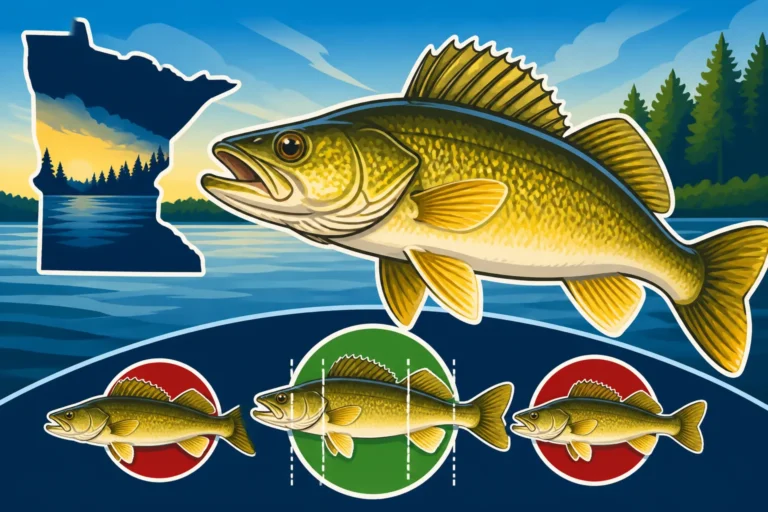
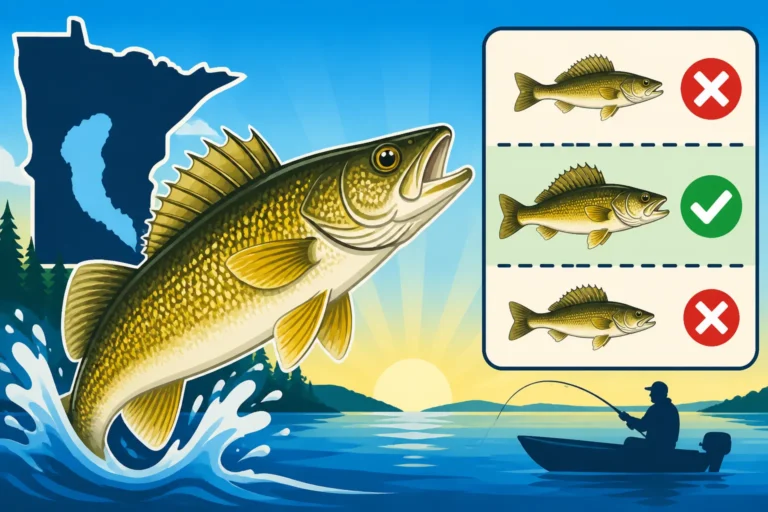
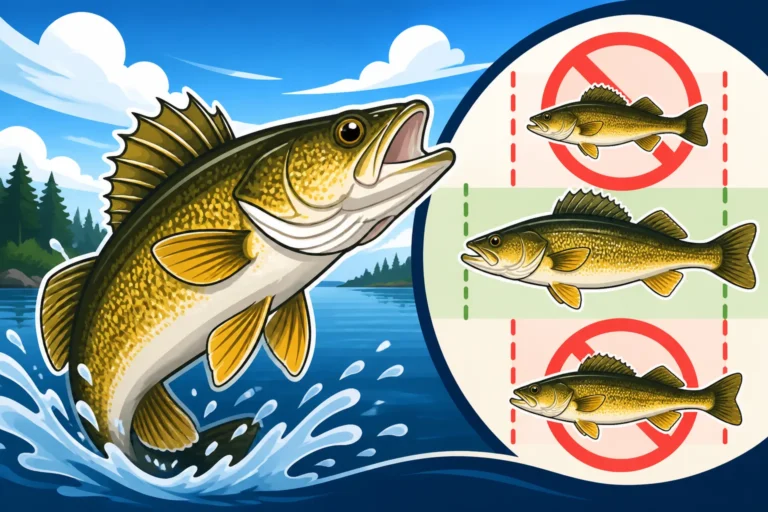
The "slot limit" is perhaps the most talked-about regulation on Lake of the Woods. It is the DNR's primary tool for ensuring that the massive 20-to-26-inch female walleyes—the "spawners"—stay in the lake to produce the next generation of fish. For 2026, the protected slot on Lake of the Woods for walleye is 19.5 inches to 28 inches.
What this means in practice is that any walleye you catch that measures between 19.5 inches and 28 inches (inclusive) must be immediately returned to the water. It doesn't matter if the fish is "gut hooked" or looks like it won't survive; the law is very strict on this point. This can be heartbreaking when you land a 24-inch "gold bar" that would look great in a photo and even better on a plate, but these fish are the lifeblood of the lake.
Understanding these rules is part of being a responsible angler. If you are planning a trip, you should definitely read up on Minnesota Walleye Limit & Size Rules to see how Lake of the Woods compares to other popular destinations like Mille Lacs or Winnibigoshish, which often have very different slot requirements.
The One Over 28 Inches Rule
The regulation does allow for one "trophy" fish. You are permitted to keep one walleye that is longer than 28 inches as part of your four-fish walleye limit. This is the fish of a lifetime for many people. However, in the modern era of high-quality taxidermy, many veteran Lake of the Woods anglers choose to release even these giants.
A 28-inch walleye is likely 15 to 20 years old. Keeping it for a "wall hanger" is a personal choice, but many prefer to take a quick measurement and a photo, then order a fiberglass replica. If you do decide to keep one, remember it counts as one of your four walleyes. If you already have four eaters in the livewell that are under 19.5 inches, you would have to release one of them to make room for the trophy, or simply release the trophy. To learn more about how to handle these big fish safely, check out Catch and Release Best Practices in Minnesota.
Accurate Measurement Techniques
To stay within the law, you need a high-quality measuring board. A floppy tape measure is not acceptable because it follows the curves of the fish's body, which can make a legal 19-inch fish look like a 20-inch fish in the slot. The official way to measure a fish in Minnesota is to lay it flat on its side, close the mouth, and squeeze the tail lobes together to get the maximum length.
I’ve seen many folks get a "bump" from a CO because their "eyeball" measurement was off by a quarter-inch. On a lake like this, a quarter-inch is the difference between a legal meal and a hefty fine. If you are gear-shopping for your trip, look into the Best Gear for Walleye Fishing in Minnesota for recommendations on accurate, DNR-approved measuring tools.
Seasonal Adjustments and Boundary Water Nuances
Lake of the Woods isn't just one big bowl of water; it includes the Rainy River and the Northwest Angle, and the rules can shift depending on where you are and what time of year it is. One of the most common points of confusion is the spring season on the Rainy River.
From March 1st through April 14th, the Rainy River and Four Mile Bay operate under a catch-and-release-only policy for walleye and sauger. This is the time when the "big girls" are moving out of the lake and up the river to spawn. It is a world-class opportunity to catch a 10-pounder, but you cannot put a single one in the frying pan during this window. If you're heading up for the spring run, make sure you've looked at the Minnesota Fishing Seasons & Opener Dates (2026) to ensure your trip timing aligns with your goals.
The Northwest Angle and Canadian Waters
The "Angle" is a unique piece of Minnesota that requires traveling through Canada (or taking a boat/plane across the lake) to reach. Because you are so close to the border, it is incredibly easy to accidentally cross into Ontario waters. Ontario has entirely different limits and slot sizes.
If you have a Minnesota license and are fishing in the Minnesota portion of the Northwyest Angle, the "4 walleye / 6 combined" rule applies. However, if you cross that invisible line into Canada, you must have an Ontario license, and you are subject to their rules (which often involve a "Conservation" or "Sport" license choice). Do not try to bring Canadian-caught fish back into Minnesota waters if they don't meet Minnesota's size and limit requirements while you are in Minnesota territory. For those making the trek north, our Northwest Angle Fishing guide covers the logistics of this trip in detail.
Ice Fishing vs. Open Water Regulations
Generally, the limits stay the same during the winter, but the logistics of "possession" change. When you are staying in a sleeper house, that house is considered your "dwelling" for the duration of the trip. If you have fish in the freezer of your wheelhouse, those count toward your possession limit.
A common question is: "Can I fish on Lake of the Woods and then go to another lake the next day?" Yes, but you must be careful. If you have your limit of Lake of the Woods walleyes (4), and you go to an inland lake with a limit of 6, you could technically catch 2 more to reach the state-wide general limit of 6, but you could never have more than 4 from Lake of the Woods in your possession if they are within the slot or over-limit. It gets complicated, which is why most people stick to one lake per trip. If you are planning a winter getaway, check out Minnesota Ice Fishing & Shelter Rules for more on the specific laws for hard-water angling.
Practical Tips for Staying Legal and Handling Fish
The DNR and local conservation officers are very active on Lake of the Woods because it is such a high-traffic destination. Being prepared isn't just about catching fish; it's about making sure the end of your day isn't ruined by a citation. One of the best tips I can give is to keep your "keepers" on ice immediately. Not only does this preserve the meat, but it also makes it much easier for an officer to count and measure your catch.
If you are staying at a resort, they usually have fish-cleaning shacks. Be aware that you cannot "cull" fish. Once you put a fish in your livewell or on a stringer and continue fishing, that fish is legally part of your limit. You cannot catch a bigger one later and "swap" it out. This is a common mistake that leads to "over-limit" tickets. For more on the legalities of how you handle your catch, read Minnesota Possession Limits Explained.
Filleting and Transportation Rules
When you are transporting fish from the lake back to your home, they must be "identifiable." This means you cannot just have a bag of unrecognizable white meat. In Minnesota, if you fillet your fish, you must leave a 1-square-inch patch of skin with scales intact on each fillet so the species can be identified.
Additionally, on Lake of the Woods, because of the slot limit, you are often required to transport fish in a way that their length can still be determined if they are whole, or you must follow specific resort-clearing rules. Most anglers find it easiest to keep the fish whole on ice until they are ready to be eaten or processed at home, provided they are clearly legal. If you're unsure how to prep your catch for the trip home, our guide on How to Fillet a Walleye (Step by Step) includes tips on leaving that legal skin patch.
Why These Rules Matter for the Future
It is easy to grumble about the slot limit when you have to release the fifth "perfect" 22-incher of the day, but Lake of the Woods is a success story. By protecting the 19.5" to 28" fish, the lake has maintained a massive population of trophy-sized walleyes that also serve as a "nursery" for the lake.
When we follow these rules, we are ensuring that our kids and grandkids can experience the same "legendary" fishing we enjoy today. The Minnesota Conservation vs Regular License debate often touches on this—choosing a conservation license (which has lower limits) is a great way to still enjoy a meal while putting less pressure on the resource.
Minnesota Fishing Regulations Disclaimer
Regulations are subject to change by the Minnesota Department of Natural Resources (DNR) at any time, especially on border waters like Lake of the Woods. While this guide provides the most current information for the 2026 season, always consult the official Minnesota Fishing Regulations handbook or the DNR website before your trip to verify daily limits, special seasonal closures, and AIS requirements. Ensure you have a valid license and are aware of any emergency rule changes that may have been implemented due to environmental factors.