Catch and Release Best Practices in Minnesota
It's incredibly frustrating when you're trying your best to do right by the fish and the lakes, but you're not entirely sure if your catch and release efforts are actually helping. We all want to enjoy Minnesota's incredible fishing, from the teeming walleye lakes to the elusive muskie waters, and ensure that our kids and grandkids can experience the same joy. This comprehensive guide is here to walk you through the proven, empathetic methods for handling fish gently, maximizing their survival rate, and truly contributing to the health of our precious fisheries.
Why Catch and Release Matters for Minnesota Fisheries
When we talk about fishing in Minnesota, it’s not just about the thrill of the catch or the delicious meal afterward. It's about a much larger picture: the health and sustainability of our aquatic ecosystems. Catch and release, when done properly, is a cornerstone of responsible angling, allowing us to enjoy the sport while actively working to preserve it.
Preserving Fish Populations for Future Generations
Imagine heading out to your favorite lake, perhaps a spot known for its consistent walleye bite or a hidden gem for big crappies, only to find the populations have dwindled. It’s a disheartening thought, and it’s a reality that can happen without careful management. Overfishing, even by well-meaning anglers, can decimate fish stocks over time. This is where catch and release steps in as a vital practice. By carefully releasing fish, especially those of reproductive age or those that are smaller and haven't had a chance to spawn, we help ensure there are enough fish in the water to reproduce and keep the population thriving. It’s a direct investment in the future of our angling opportunities, allowing for a cycle of life that benefits everyone who loves to wet a line.
This practice is particularly crucial in high-pressure fishing areas or for species that are heavily targeted. Think about the incredible popularity of Walleye Fishing in Minnesota: Complete Guide or the dedication of muskie anglers who often spend countless hours chasing the "fish of 10,000 casts." Without a strong catch and release ethic, these fisheries could quickly become strained. Every fish carefully released is another fish that contributes to the next generation, bolstering the numbers and ensuring that the thrill of the catch remains a possibility for years to come. It’s a small effort with enormous long-term payoffs.
Protecting Trophy Fish and Genetic Diversity
Beyond just maintaining numbers, catch and release plays a critical role in developing and sustaining trophy fisheries. Larger, older fish are often the most prolific spawners, contributing significantly to the genetic strength and overall health of the fish population. Releasing these giants isn't just about giving another angler a chance to catch them; it's about safeguarding the genetic material that produces those impressive fish in the first place. When you release a truly massive Northern Pike in Minnesota: Identification & Where to Catch or a giant muskie, you're not just letting go of one fish; you're letting go of a genetic powerhouse.
Consider a lake known for its exceptional size limits or slot limits, like parts of Mille Lacs for walleye, where specific size fish must be released. These regulations are designed precisely to protect those valuable breeding fish. Adhering to these rules and practicing careful catch and release, even when not legally mandated for a particular size, helps to ensure that the gene pool remains strong. It allows the biggest, strongest, and most resilient fish to pass on their traits, ultimately leading to a more robust and exciting fishery for everyone, contributing to the potential for truly memorable, trophy-sized catches.
Essential Gear for Responsible Catch and Release
Let’s be honest, we all love our gear. But when it comes to catch and release, selecting the right tools isn't just about performance for us; it's about minimizing stress and maximizing survival for the fish. Having the proper equipment can make all the difference between a fish swimming off strong and one that struggles to recover.
The Right Rod, Reel, and Line
Many anglers, especially beginners, might not realize how much their rod, reel, and line choices impact a fish's survival during catch and release. The goal is to bring the fish in efficiently, without prolonging the fight to the point of exhaustion, which significantly reduces its chances of survival after release. A rod that's too light for the target species, for instance, might mean a 10-minute battle with a feisty bass that could have been landed in half the time with appropriate tackle. This extended struggle builds up lactic acid in the fish's muscles, making it harder for them to recover.
For instance, when targeting walleye, having one of the Best Walleye Rods & Reels that matches the size of fish and the presentation can make a huge difference. A medium-light or medium action rod with a strong backbone allows you to apply enough pressure to turn the fish and bring it in quickly without tearing hooks out of its mouth. Using a line that's too light can lead to break-offs or overly long fights. Conversely, line that's too heavy can hinder your presentation. Choosing the right strength of braided, fluorocarbon, or monofilament line, appropriate for the species and conditions, is key. If you're new to the sport, consider checking out a guide on Best Fishing Gear for Beginners in Minnesota (By Budget) to help you get started on the right foot.
Hook Selection for Easy Removal
This is one of the easiest and most impactful changes you can make to improve your catch and release success. Traditional treble hooks, especially on popular lures, can be a real headache. They often hook fish in multiple places, get tangled in nets, and can cause significant damage to sensitive areas like the eyes or gills. The struggle to remove deeply embedded treble hooks dramatically increases the time a fish is out of water and the potential for injury.
Switching to single hooks, particularly barbless ones or those with the barb pinched down, is a game-changer. Circle hooks are another excellent choice, especially when fishing with live bait for species like walleye or catfish. Circle hooks are designed to hook in the corner of the fish's mouth, minimizing deep-hooking in the throat or stomach. Even if you're using your favorite crankbait, consider replacing the trebles with appropriate-sized single hooks. This simple modification makes hook removal quicker, cleaner, and far less stressful for the fish, vastly improving their chances of swimming away unharmed.
Landing Nets and Tools for Safe Handling
Once you've fought and landed a fish, the next crucial step is getting it into your boat or onto the bank safely. This is where the right landing net and specialized tools come into play. Traditional knotted nylon nets, while effective at holding fish, can strip off their protective slime coat, which is vital for preventing infections. The rough netting can also damage fins and scales.
Instead, invest in a net with rubberized or knotless mesh. These types of nets are much gentler on the fish's skin and fins, preserving that essential slime coat. For larger species like muskies, a cradle net or a large, wide-hooped net is ideal, allowing you to keep the entire fish submerged during unhooking. Beyond the net, having a good pair of long-nose pliers or a dedicated hook-removal tool is non-negotiable. These tools allow you to quickly and safely extract hooks without putting your fingers near sharp teeth or stressing the fish by fumbling. For toothy critters like pike, a pair of jaw spreaders can also be a lifesaver, allowing safe access to hooks without endangering your hands or the fish’s mouth.
The Art of Landing and Handling Fish Gently
Landing a fish isn't just about getting it into the boat; it's about doing so with the fish's well-being as the top priority. The moments between the hook-set and the release are critical, and gentle handling techniques can significantly increase a fish's survival rate. It's a skill that's honed with practice, but understanding the fundamentals is the first step.
Minimize Fight Time
One of the biggest contributors to post-release mortality is exhaustion. When a fish fights for an extended period, it depletes its energy reserves and builds up lactic acid, similar to how our muscles feel after an intense workout. This metabolic stress can make it difficult for the fish to recover, swim properly, or evade predators once released. The longer the fight, the higher the chances it won't survive.
Therefore, it's crucial to use tackle that is appropriately matched to the size of the fish you're targeting. This doesn't mean "horsing" the fish in, which can cause internal damage or pull hooks out, but rather applying consistent, firm pressure. Keep your rod tip up, reel steadily, and try to bring the fish to the net as quickly as possible without totally overpowering it. If you feel like your gear is too light and you're consistently having long battles, it might be time to reconsider your setup. It's better to slightly over-gun than under-gun when prioritizing a healthy release.
Proper Netting and Unhooking
Once the fish is close, the netting process is critical. Avoid slamming the net down on the fish or dragging it across the surface. Instead, lead the fish headfirst into a submerged, rubberized or knotless net. Once in the net, try to keep the fish in the water as much as possible, especially if you're planning a quick release. If you must bring it into the boat, do so gently.
With the fish safely in the net, observe where the hook is located. If it's easily accessible in the lip or jaw, use your long-nose pliers or hook remover to quickly twist it out. For fish with teeth, like a Muskie Fishing in Minnesota: The Fish of 10,000 Casts or a pike, consider using a jaw spreader to safely access the hook without getting bitten. Avoid tearing or ripping the hook out, as this can cause unnecessary damage. If the hook is deeply embedded and cannot be easily removed without causing significant harm, it's often best to simply cut the line as close to the hook as possible. Hooks made of carbon steel will eventually rust and dissolve, giving the fish a better chance than suffering from a botched removal.
Handling Fish Out of Water When Necessary
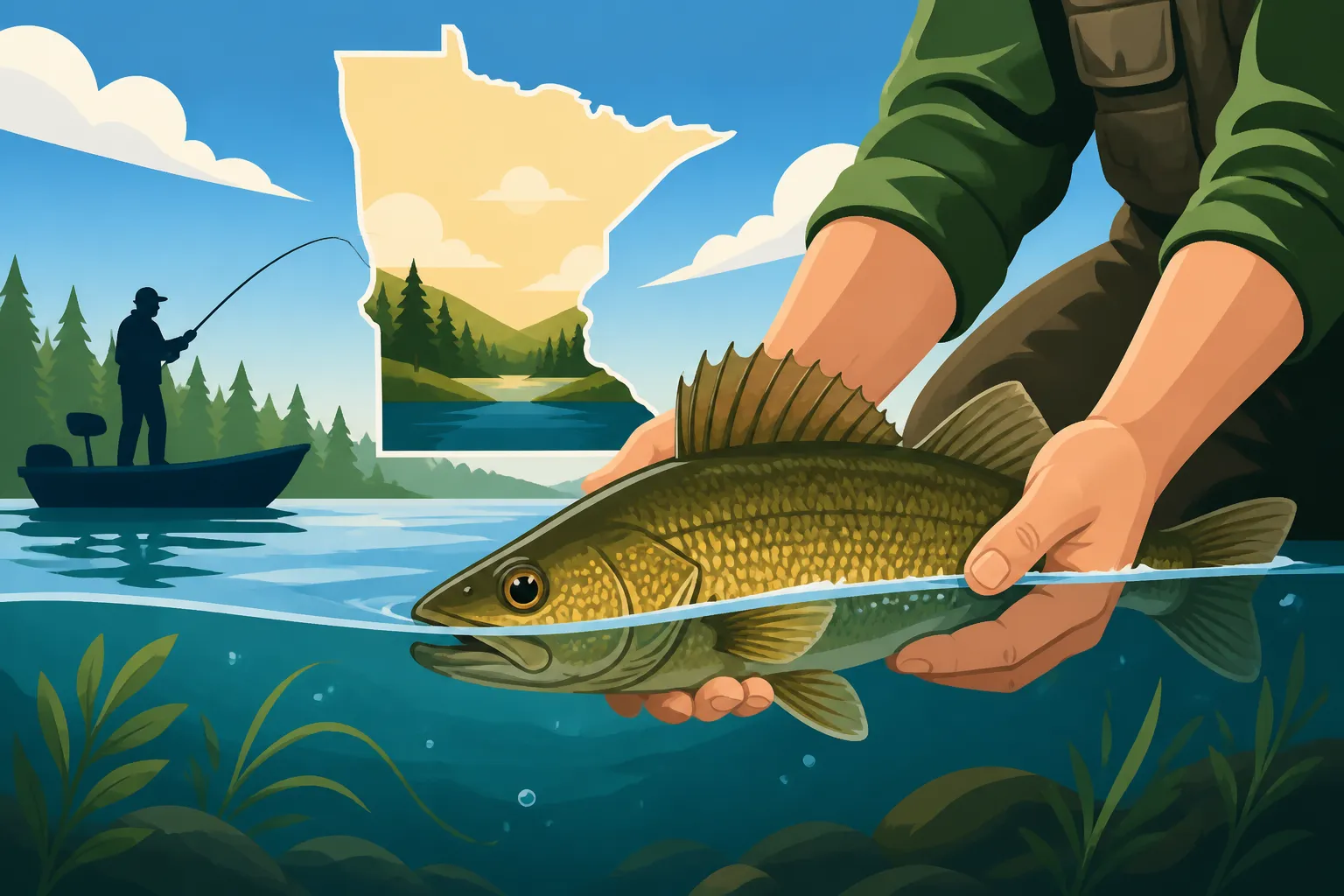
Sometimes, you need to lift the fish out of the water, perhaps for a quick measurement, a photo, or if you're fishing from the bank. The key here is minimal time out of the water and maximum support. Always wet your hands thoroughly before touching a fish. Dry hands can strip away their protective slime coat, leaving them vulnerable to disease and infection.
When lifting a fish, always support its body horizontally. Never hold a fish vertically by its jaw, gills, or tail, as this can cause severe internal damage to its spine and organs, especially for larger, heavier fish. For walleye and bass, supporting the belly while gently gripping the lower jaw is a good technique. For very large fish, like a trophy muskie, a cradle net or having a second person support the tail is crucial. Keep the fish calm, cover its eyes if it helps reduce thrashing, and get it back into the water as swiftly as possible, ideally within 10-15 seconds. Remember, a great photo isn't worth a dead fish.
Crucial Steps for a Successful Release
You've landed the fish, unhooked it, and maybe even snapped a quick photo. Now comes the moment of truth: the release. This step is just as important as the catch itself, and doing it correctly is what separates a truly responsible angler from one who merely lets fish go. A successful release means the fish swims away under its own power, with a high likelihood of survival.
Reviving the Fish
After the stress of being caught and handled, many fish will be disoriented and exhausted. Simply tossing them back into the water isn't enough. They need a moment to regain their bearings and recharge. The process of reviving a fish is crucial and can significantly increase its chances of survival. Gently hold the fish in the water, supporting its belly, with its head facing into any current or toward open water if there’s no current. This allows oxygenated water to flow over its gills.
Don't push or pull the fish back and forth; this actually forces water the wrong way through their gills. Instead, hold it still and observe. You'll feel it start to kick and try to swim. When it begins to struggle to get away from your grasp, and can hold itself upright without your support, it’s usually ready. Let it swim off on its own; sometimes they need a moment to gather strength before darting away. This patient approach is vital, particularly for species that fight hard or when water temperatures are high.
Recognizing When a Fish Won't Survive
While our goal is always a successful release, sometimes a fish is too severely injured or exhausted to recover. It's a tough reality to face, but recognizing these signs is part of responsible angling. Look for excessive bleeding, especially from the gills or deep in the throat, which often indicates fatal damage. If a fish is completely unresponsive, unable to right itself, or floats belly-up even after extended revival efforts, its chances are slim.
In such cases, it's an ethical decision to determine the best course of action. If the fish is within legal harvest limits, keeping it may be the most humane option rather than releasing it to die slowly. Always refer to current Minnesota Fishing Limits: Bag & Possession (2026) before making this decision. The goal of catch and release is to conserve fish, and sometimes that means preventing unnecessary suffering. It's not a failure to keep a fish that genuinely won't make it; it's a responsible choice.
Understanding Environmental Factors
The environment around you plays a huge role in a fish's ability to survive release. Water temperature and oxygen levels are perhaps the most critical. Cold water holds more dissolved oxygen, and fish are generally less stressed in cooler conditions. As water temperatures rise in summer, fish become more susceptible to stress and exhaustion. A prolonged fight in warm water can be fatal, even if the fish appears to swim away strongly.
During hot summer months, especially when surface water temperatures hit the high 70s or 80s, consider limiting your catch and release efforts for sensitive species like trout or even walleye. If you do fish in warm conditions, minimize fight time, handle fish extremely quickly, and revive them meticulously. Oxygen depletion can also be an issue in shallow, stagnant waters. Paying attention to these environmental cues can help you make informed decisions about when and where to practice catch and release, or even when to postpone fishing entirely to protect the resource.
Species-Specific Considerations for Minnesota Anglers
While the general principles of catch and release apply across the board, different fish species have unique physiologies and behaviors that require slightly tailored approaches. Understanding these nuances can further enhance your success and ensure the well-being of Minnesota's diverse fish populations.
Walleye and Northern Pike
Walleye are undoubtedly a favorite target for many Minnesota anglers. They're often caught on a variety of baits and lures, from jigs and minnows to crankbaits. When practicing catch and release for walleye, remember their delicate mouth structure. Their paper-thin mouths can tear easily, especially with aggressive hook removal or vertical holding. Always use a net with rubberized mesh and support their body horizontally. If a walleye has been reeled up from deep water (typically 25 feet or more), it might experience barotrauma, where expanding gases in its swim bladder cause it to float. While some suggest fizzing (puncturing the swim bladder), it's a technique best left to experienced hands as improper execution can do more harm than good. In Minnesota, the DNR generally recommends against fizzing by recreational anglers. Instead, try to avoid fishing walleye too deep, especially in summer. You can learn more about Walleye Fishing Techniques: Complete Minnesota Guide and how they relate to healthy releases.
Northern Pike, with their sharp teeth and aggressive nature, also demand specific handling. Always have a good pair of long-nose pliers or a jaw spreader handy. Never reach your bare hand into a pike's mouth! The gill plates are also razor-sharp, so avoid gripping them. Many anglers find it easiest to carefully slide a rubberized net under the pike, then use tools to remove the hook while the fish is still mostly submerged or laid gently on a wet surface. Their slime coat is crucial, so minimize contact with dry surfaces. While tough, pike can still be stressed by long fights and improper handling, so swift and careful release is key.
Muskie and Bass
Muskie, the legendary "fish of 10,000 casts," are almost universally a catch and release species due to their trophy status and slow growth rates. Releasing a muskie properly is an art form itself. The most critical piece of equipment is a large, deep rubberized net or a muskie cradle. These fish are large, powerful, and easily injured if handled incorrectly. Always keep them in the net or cradle in the water during hook removal. Use extra-long, heavy-duty pliers or bolt cutters for hooks that are too deeply embedded. Many muskie anglers will tell you that if you can't remove the hook in the water, cut the line.
When you must bring a muskie out of the water for a quick photo, ensure you have a second person to help support its entire body horizontally, often with one hand under the gill plate (not in the gills!) and the other under the tail. Minimize the time out of water to mere seconds. Bass, both largemouth and smallmouth, are generally very hardy, but they still benefit from careful handling. The "lip grip" is common, but always support the belly of larger bass horizontally to prevent jaw or spinal damage. For guidance, consider learning How to Catch Muskie for the First Time and incorporating these handling tips from the start.
Panfish and Trout
The small size and delicate nature of panfish like Crappie & Panfish in Minnesota: Complete Guide (bluegill, crappie, perch) mean they can be easily harmed. When fishing for panfish, consider using smaller, barbless hooks. If you're catching a lot and planning to keep some, handle the ones you intend to release with extra care. A wet hand and a gentle grip are all it takes. Because they're small, they often swallow hooks more easily, so keep those small pliers handy.
Trout, especially stream trout in the cold, clear waters of Minnesota's Driftless Area, are highly sensitive to handling and temperature changes. If you're into Trout Fishing in Minnesota: Streams & Lakes, you'll know that their survival rate greatly depends on careful handling. Keep them in the water as much as possible, and never let them flop around on the bank. Use a fine-mesh net to secure them, quickly remove the hook with wet hands or forceps, and revive them gently in the current until they swim away strongly. Fly anglers often pinch barbs or use barbless hooks, which is an excellent practice for trout fishing.
Here's a quick summary of species-specific considerations:
| Fish Species | Key Considerations | Recommended Gear | Handling Best Practices |
|---|---|---|---|
| Walleye | Delicate mouth, barotrauma risk from deep water | Rubberized net, long-nose pliers | Horizontal support, minimize deep water stress, careful hook removal |
| Northern Pike | Sharp teeth, gill plates, protective slime coat | Long-nose pliers, jaw spreader, rubberized net | Keep wet, avoid gill plate contact, quick hook removal |
| Muskie | Large, powerful, easily injured, trophy status | Large cradle net or deep rubberized net, bolt cutters | Keep submerged for unhooking, two-person horizontal support for photos |
| Largemouth/Smallmouth Bass | Generally hardy, but horizontal support is key for larger fish | Rubberized net, standard pliers | Support belly, gentle lip grip, minimize time out of water |
| Panfish (Crappie, Bluegill, Perch) | Small, delicate, prone to deep hooking | Small barbless hooks, small pliers | Wet hands, gentle grip, quick release |
| Trout | Highly sensitive to temperature and handling stress | Fine-mesh net, forceps, barbless hooks | Keep in water, revive in current, minimal contact |
Common Mistakes to Avoid
Even with the best intentions, it's easy to fall into habits that unknowingly reduce a fish's chances of survival after release. Being aware of these common pitfalls and actively working to avoid them is a huge step toward becoming a truly responsible conservation angler.
The "Photo Op" Dilemma
We've all been there: you catch a truly magnificent fish, and the first thing you want to do is snap a picture to remember the moment. There's nothing inherently wrong with taking a photo, but it's crucial to prioritize the fish's life over the perfect shot. A common mistake is prolonging the time a fish is out of water while you fumble with your camera, try different poses, or wait for the ideal lighting. Every second out of water, especially during warm weather, is precious and increases stress.
To avoid this, have your camera ready beforehand. Wet your hands and the fish if it's going to be out of the water for even a few seconds. Plan your shot, take it quickly (a few seconds, not minutes), and get the fish back into the water for revival immediately. If it's a truly massive, once-in-a-lifetime fish, or the conditions are particularly harsh (very warm water, very cold air), consider keeping it in the net in the water and taking a "grip and grin" shot with just its head out, or even an underwater photo if you have the gear. Remember, a blurry photo of a living fish is always better than a perfect shot of one that doesn't make it.
Improper De-hooking Techniques
Fumbling with hooks, ripping them out, or using inadequate tools can cause severe and often fatal damage to a fish. One of the most common errors is trying to pry out a deeply embedded hook with your fingers or a dull, short pair of pliers. This often leads to tearing flesh, breaking jaws, or damaging vital organs like the gills. Another mistake is using the wrong tool for the job – a small pair of needle-nose pliers won't cut it for a large muskie hook.
Always carry dedicated, appropriate hook removal tools for the species you're targeting. For most common fish, a quality pair of long-nose pliers will suffice. For toothy fish or those with particularly tough mouths, heavy-duty pliers or even bolt cutters for cutting large hooks might be necessary. Practice quick, decisive hook removal. If the hook is swallowed or too deeply set to remove easily without causing significant trauma, it's almost always better to cut the line as close to the hook as possible. The hook will eventually corrode, and the fish has a much better chance than if you try to extract it forcefully.
Ignoring Stress Signals
Fish communicate their stress in various ways, and ignoring these signals is a critical mistake. If a fish is thrashing violently, bleeding excessively, or showing no signs of life after being caught, these are clear indicators of severe distress. Another common sign is when a fish floats belly-up or is unable to right itself after being released from your hands. While some fish may momentarily struggle, prolonged disorientation or inability to swim away signals a high likelihood of post-release mortality.
Pay close attention to the fish's behavior during and after handling. If it's showing clear signs of distress, extend the revival period. Hold it gently in the water, facing any current, until it kicks strongly and swims away on its own. Don't rush this process. If, after several minutes, the fish still cannot recover, you might need to make the tough decision to harvest it (if legal) rather than releasing it to die slowly. Our role as anglers is not just to catch fish, but to respect them, and sometimes that means acknowledging when our best efforts aren't enough and acting accordingly. Being informed about current Minnesota Fishing Regulations Changes for 2026 can also help ensure you're always acting within legal guidelines and best practices.
Disclaimer
The information provided in this guide is for general informational purposes only and is not intended to replace official regulations or professional advice. Fishing regulations in Minnesota are subject to change, and it is the angler's responsibility to consult the most current Minnesota Department of Natural Resources (DNR) fishing regulations before engaging in any fishing activity. Always prioritize safety and environmental stewardship.