Crappie & Panfish in Minnesota: Complete Guide
There’s a special kind of magic in chasing panfish across Minnesota’s diverse waters. Whether you’re dreaming of a plate piled high with crispy crappie fillets or introducing a youngster to the thrill of a bluegill on the line, these smaller species offer endless enjoyment. But let's be real, finding and consistently catching those big, "slab" crappies or jumbo sunfish can be a real head-scratcher. They move with the seasons, their preferences change, and sometimes it feels like they just vanish. This guide is here to untangle all that, providing a deep dive into Minnesota’s crappie and panfish scene, helping you understand their habits, find their hiding spots, and fill your cooler (responsibly, of course!).
The Wonderful World of Minnesota Panfish: An Overview
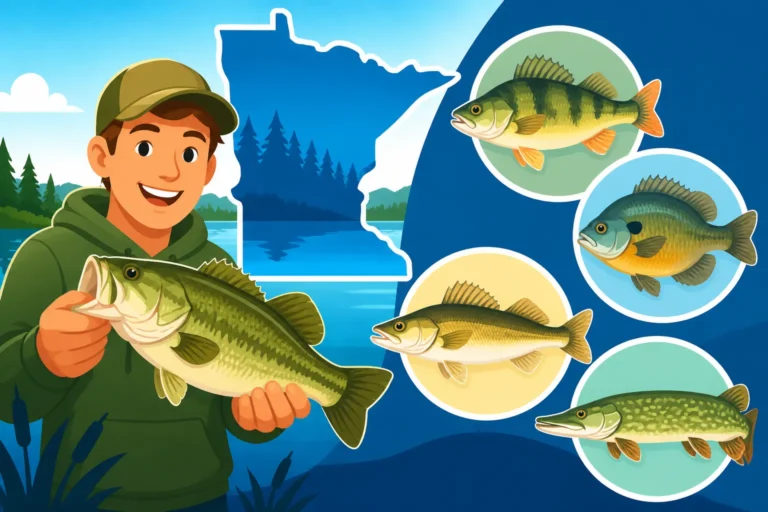
When we talk about "panfish" in Minnesota, we're really talking about a fantastic group of fish that are generally smaller, fit perfectly in a frying pan, and offer incredibly rewarding fishing experiences. They're often overlooked for their bigger, flashier cousins like walleye or muskie, but panfish are the true backbone of many local fishing traditions. Understanding the distinct characteristics of each species will dramatically improve your success on the water.
Identifying Crappie: Black vs. White
Crappies are arguably the most sought-after panfish in Minnesota, famous for their delicious, flaky white meat. But did you know there are two main species? Distinguishing between black and white crappie is crucial, not just for bragging rights, but sometimes for understanding their preferred habitats and behaviors. They often coexist in the same lakes, but subtle differences can guide your approach.
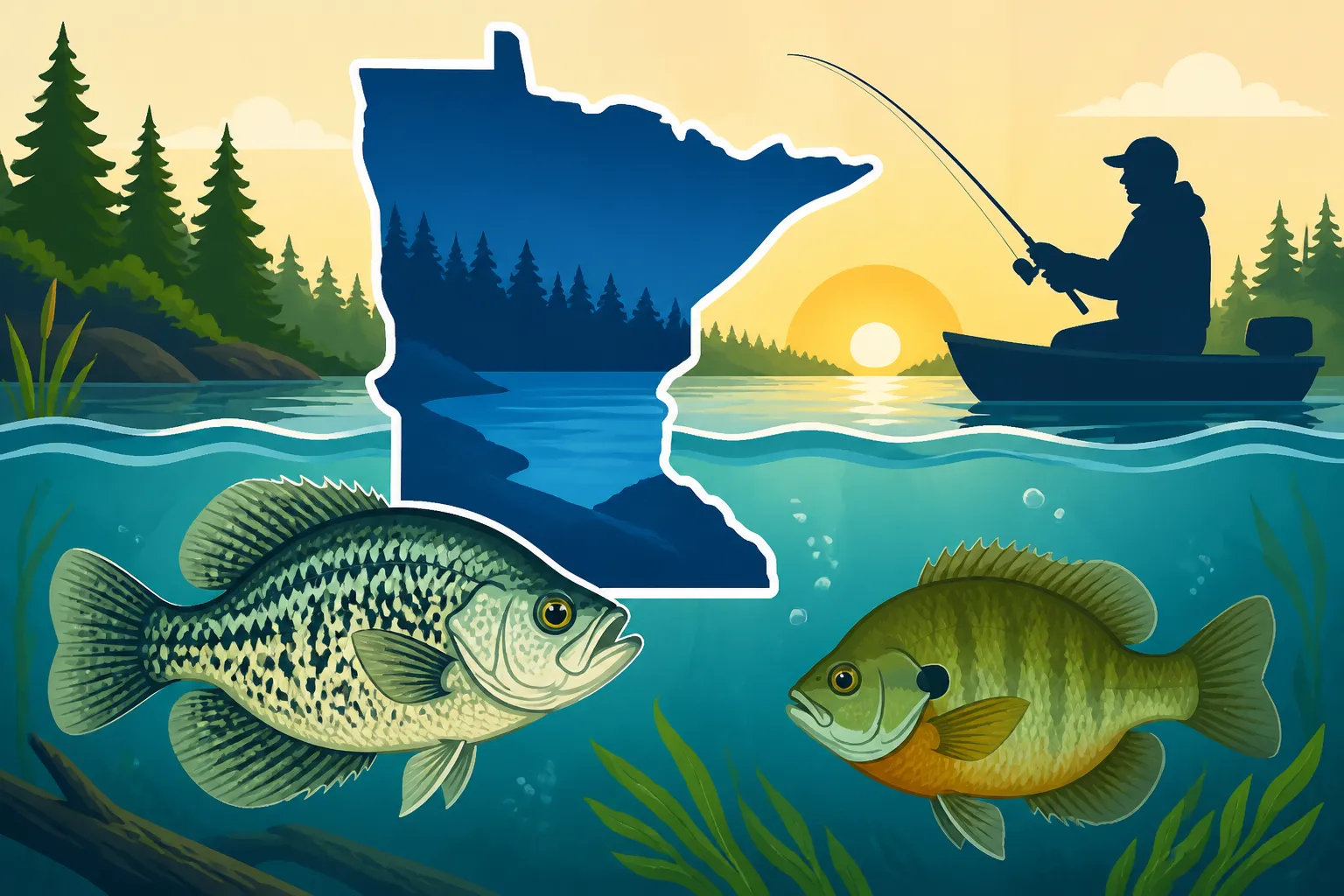
Black crappies tend to have a darker, more mottled appearance with irregular splotches of black or dark green across their silver-gold sides. The most reliable identifier, though, is their dorsal fin: a black crappie will usually have 7 or 8 spines in its dorsal fin. These fish often prefer clearer, cooler waters with more vegetation and structure, like fallen trees or brush piles. Think of them as the slightly more finicky, aesthetically pleasing cousin. They might hold a little deeper, especially in summer, and can be found suspended over open water or nestled right in heavy cover.
White crappies, on the other hand, typically display distinct vertical bars or stripes along their sides, which are much more uniform than the black crappie's mottling. Count those dorsal fin spines, and you'll usually find 5 or 6 on a white crappie. These resilient fish are more tolerant of turbid (cloudier) water and often thrive in river systems, larger lakes with extensive shallow flats, or reservoirs with less pristine conditions. They're known for schooling up in massive numbers, which can lead to incredible fishing action when you find a school. You might find them in shallower bays, especially during spring, or hugging channel edges and submerged humps in deeper water as the season progresses. It’s important to know the difference, as it might dictate whether you're fishing a specific weedline or focusing on open water structure. To dive deeper into these differences, check out our guide on Black Crappie vs White Crappie.
Unpacking Sunfish: Bluegill, Pumpkinseed, and Greenies
When most Minnesotans say "sunfish," they're usually picturing a bluegill. But our state is home to a delightful variety of sunfish species, each with its own charm and preferred hangout. These feisty little fighters are often the first fish a new angler catches, providing endless fun and a fantastic introduction to the sport. Understanding the nuances between them can help you target bigger specimens and understand why certain spots are hotter than others.
The bluegill is the undisputed king of panfish for many. Easily identified by the prominent dark spot on the posterior edge of its gill cover (the "ear flap") and often a dark spot at the base of its dorsal fin, they also usually have vertical bars along their sides, though these can fade or intensify with mood and water conditions. Their bodies are deep and compressed, giving them that classic round "panfish" shape. Bluegills love clear, warm water with abundant weeds, docks, and submerged timber. They're notorious bed-builders in the shallows during spring and summer, creating dinner-plate-sized depressions where they guard their eggs aggressively. Targeting these areas can lead to fast and furious action.
Pumpkinseeds are arguably the most colorful sunfish in Minnesota. Look for their striking turquoise streaks on the gill plate, often with an orange or red spot on the tip of the "ear flap." They're generally a bit smaller than bluegills but make up for it with their stunning iridescent colors. Pumpkinseeds also prefer weed-choked shallows and are often found mixed in with bluegills, but they might gravitate towards slightly denser vegetation or areas with sandy bottoms. Catching one is always a visual treat!
Green sunfish are a bit chunkier than bluegills or pumpkinseeds, with a larger mouth that extends back to their eye. Their bodies are typically olive green to brownish, with iridescent blue-green spots on their fins and gill covers. The "ear flap" is usually dark with a light, often yellow or orange, margin. Green sunfish are incredibly hardy and tolerant of poor water quality, often found in smaller ponds, ditches, and even stagnant water where other fish might struggle. They're aggressive eaters, sometimes making them a nuisance when targeting other species, but their willingness to bite makes them a great option for beginner anglers. For a comprehensive look at how these delightful species differ, our Bluegill vs Sunfish vs Crappie: Panfish ID guide offers fantastic insights.
Yellow Perch: The Delicious Schoolers
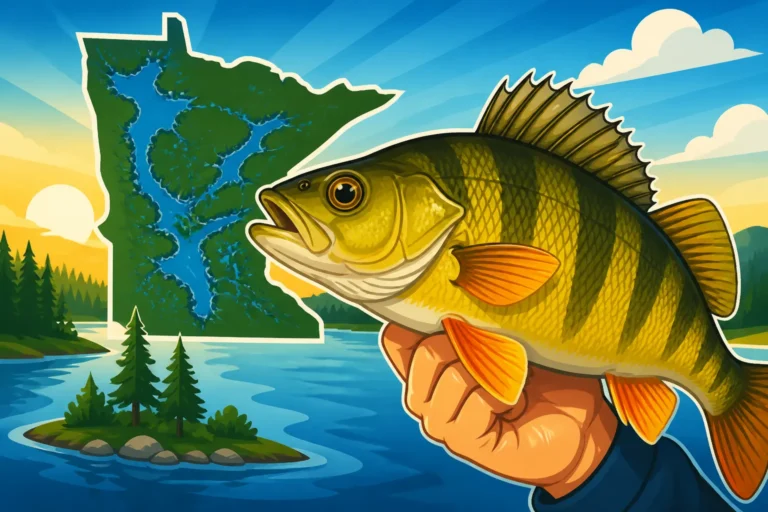
Yellow perch are another cherished panfish species in Minnesota, prized for their delicious, firm, white fillets. While not technically a "sunfish," they are often grouped with crappie and bluegill due to their size and popularity as table fare. They are easily recognizable by their distinctive golden-yellow sides adorned with 6-8 dark, vertical bars that extend from their back to below their lateral line. Their dorsal fins often have a spiny, sharp appearance.
Unlike crappies and sunfish that might be more spread out or in smaller groups, yellow perch are true schooling fish. When you find one, you've likely found a whole pile of them! They typically prefer cooler, deeper water than sunfish, often congregating around structures like humps, points, rock piles, or deep weed lines. In larger, colder lakes, you might find jumbo perch suspended over deep basins, chasing schools of baitfish. Their schooling behavior makes them an ideal target for ice fishing, where anglers can literally fill buckets when they locate a productive school. They're aggressive biters, especially on small jigs tipped with live bait, and provide consistent action once you dial in their location.
Decoding Panfish Behavior: Where, When, and Why
Understanding the intricate lives of crappie, sunfish, and perch is like having a secret weapon in your tackle box. These fish aren't just randomly swimming around; their movements and feeding patterns are dictated by ancient instincts tied to water temperature, light, and the need to reproduce and survive. Knowing these behaviors will help you predict their locations and adapt your strategies throughout the year.
Panfish Spawning Rituals: Timing and Locations
The spawning period is a critical time for panfish and offers some of the most accessible and exciting fishing of the year. It's when these fish move into predictable, shallow areas, often becoming aggressive and easier to catch. However, responsible angling during this time is paramount to ensure healthy populations for the future.
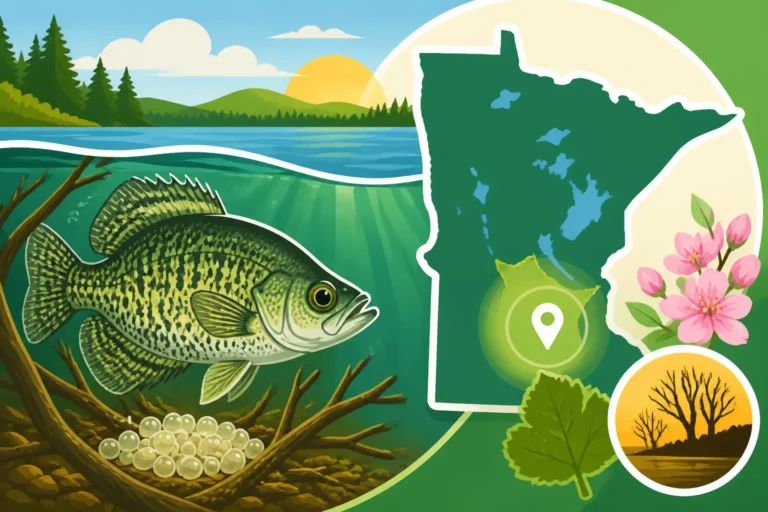
Crappie typically begin their spawn when water temperatures reach the mid-50s to low 60s Fahrenheit, usually from late April through May in most Minnesota lakes, depending on how quickly spring arrives. Both black and white crappie will move into shallow bays, protected coves, and channels with dark bottoms that absorb sunlight, warming the water faster. Black crappies often prefer areas with submerged wood, brush piles, or dense stands of emergent vegetation like cattails or reeds. White crappies are a bit more adaptable and will use similar cover but are also comfortable spawning on hard-bottomed areas in rivers or larger shallow flats. They create nests in gravel or sandy bottoms, often near some form of cover. During this time, the males guard the nests aggressively, making them easy targets. It’s a fantastic time for action, but remember that these are the future generations you’re catching, so consider limiting your harvest or practicing catch and release for some of the larger breeding fish. Our guide to Crappie Spawn in Minnesota: When and Where offers a detailed look at this crucial period.
Sunfish, particularly bluegills, have a slightly later and often more prolonged spawning season than crappies, kicking off when water temperatures consistently hit the high 60s to low 70s Fahrenheit. This usually means late May through July, with multiple spawning waves in some lakes. They'll flock to very shallow, protected areas of bays, often only 1-3 feet deep, and construct those unmistakable "dinner plate" nests in sandy or gravelly bottoms. You can often see these nests from shore or from a boat, sometimes covering vast areas like a honeycomb. Bluegills are notoriously aggressive on the beds, protecting their eggs from predators, which is why they're so easy to catch during this time. Pumpkinseeds will often spawn in similar areas, sometimes interspersed among bluegill beds. While it's tempting to fill a bucket, remember that overharvesting these shallow-water spawners can deplete a lake's population of larger, older fish, leading to a stunted fishery down the road.
Yellow perch have an earlier spawn than crappie and sunfish, typically in April or early May, as soon as ice-out occurs and water temperatures creep into the mid-40s to low 50s. They don't build nests like crappies or sunfish; instead, females lay long, ribbon-like strands of eggs over submerged vegetation, brush, or fallen trees in shallow bays. This makes them less concentrated on specific beds but still very active in shallow, warmer water during this period. After spawning, perch will disperse to deeper structures, so their shallow water presence is often a shorter window.
Diet and Foraging Habits: What's on Their Menu?
Understanding what panfish eat is fundamental to choosing the right bait or lure. These fish are opportunistic feeders, but their diet changes with size, season, and the available forage in a particular body of water. Matching the hatch, or at least presenting something appealing, is key to consistent bites.
Crappies, especially larger ones, are primarily piscivorous, meaning they eat other fish. They love small minnows, shiners, young-of-the-year perch, and other juvenile fish. They also consume a good deal of aquatic insects, zooplankton, and small crustaceans. This dual diet explains why both tiny jigs and small minnows are so effective. In clear water, they might key in on small, translucent zooplankton, requiring very small baits and light line. In murkier water, vibrations and scent become more important. During spring and fall, when baitfish are abundant in shallower waters, crappies will gorge themselves. In the summer, they often suspend in open water, chasing schools of ciscoes or other pelagic baitfish.
Sunfish, particularly bluegills and pumpkinseeds, are insectivores and molluscivores. Their primary diet consists of aquatic insects (both larval and adult forms), small crustaceans, snails, worms, and even some plant matter. Larger bluegills will also eat very small minnows or fry. Their smaller mouths are perfectly adapted for "nipping" at these tiny food sources. This is why small jigs, tiny pieces of worm, or micro-plastics are so incredibly effective for them. They're constantly grubbing around in weeds, under docks, and along the bottom, picking off whatever morsels they can find. If you’re fishing a weedline and getting consistent bites from smaller sunfish, try a slightly larger bait or move to the outer edge of the weeds; bigger bluegills often patrol the perimeter for larger prey.
Yellow perch have a broader diet, making them quite adaptable. They are voracious eaters, consuming a wide range of aquatic insects, crustaceans, leeches, small minnows, and fish eggs (including their own!). This varied diet means they're susceptible to everything from worms and minnows to small jigs and spoons. In some lakes, especially those with abundant tullibees or ciscoes, jumbo perch will actively hunt and feed on these baitfish, becoming more predatory as they grow larger. This is why a small jigging spoon or a heavier jig tipped with a minnow head can be so deadly for them, especially through the ice or when targeting suspended schools.
Preferred Habitats and Seasonal Movements
Panfish aren't static; they're constantly on the move, following food, comfort, and safety. Understanding their seasonal migrations and preferred hangouts is the biggest puzzle piece in becoming a successful panfish angler. Lakes are dynamic ecosystems, and fish respond to changes in water temperature, oxygen levels, and available cover.
In early spring, right after ice-out, all panfish species will begin to move towards warmer, shallower water. Crappies and perch might congregate near river inlets, northern bays, or shallow, dark-bottomed areas that warm up fastest. Sunfish will soon follow, staging in slightly deeper water adjacent to their eventual spawning grounds. Think of these areas as pre-spawn staging points, often slightly deeper than their actual spawning beds but still receiving plenty of sunlight.
As spring progresses into summer, after the spawn, panfish generally move deeper as water temperatures rise and weed growth explodes. Crappies will often disperse from their shallow spawning grounds and either hold tight to deep weed lines (10-20 feet), relate to submerged structures like brush piles or rock humps, or suspend over open water basins, chasing baitfish. This can be the trickiest time to locate crappies, as they can be anywhere in the water column. Sunfish, while still present in shallower weeds and under docks, will often move to the outer edges of weed beds, deeper grass flats, or even submerged timber in 8-15 feet of water, especially the larger specimens. Yellow perch will consistently relate to main lake structures like points, humps, and rock reefs, often in 15-30 feet of water, especially where there's a good hard bottom or scattered weeds. Finding them often involves covering a lot of water.
Fall brings a significant shift. As water temperatures cool and aquatic vegetation begins to die off, panfish experience a "feeding frenzy" to build up reserves for winter. Crappies and perch will often move back to shallower depths, especially during periods of stable weather, congregating along deep weed edges, break lines, and drop-offs. They're often found in very concentrated schools at this time. Sunfish will also follow suit, moving from deeper summer haunts back to shallower weed beds that are still healthy, or congregating on the edges of remaining green weeds. This period, particularly after the fall turnover, can offer some of the best fishing of the year, as fish are actively feeding and can be quite aggressive.
During winter, under the ice, panfish movements become more restricted. Crappies will often suspend over the deepest basins of lakes, especially in large schools, or relate to submerged humps and deep weed lines. Sunfish will typically hold in slightly shallower water than crappies, often in 10-25 feet, relating to green weed beds or submerged brush piles. Yellow perch are often found in huge schools on main lake flats, humps, and points, sometimes in surprisingly deep water (30+ feet), especially if there are invertebrate hatches or abundant baitfish. Understanding these seasonal shifts is crucial. You won't find winter crappies in the same spot you found them during the spring spawn, for example. Mastering the art of Seasonal Fishing Patterns in Minnesota is a game-changer for all species, including panfish.
Gearing Up for Panfish Success: Tackle and Tools
You don't need a boatload of expensive gear to catch panfish in Minnesota, but having the right tools for the job can make a huge difference, especially when you're trying to consistently catch bigger fish. Think finesse, light lines, and sensitive equipment – these small details really add up.
Rods, Reels, and Line: The Finesse Approach
Panfish, by their very nature, are not line-shredding giants. They have small mouths and often subtle bites, which means your tackle needs to be scaled down to match. Using heavy gear designed for walleye or pike will result in missed bites, poor bait presentation, and significantly less fun.
For crappies and sunfish, a light or ultra-light spinning rod is your best friend. A good length is typically between 5 to 6.5 feet. This length offers a good balance of casting distance for small lures and enough sensitivity to detect those faint nibbles. Look for a rod with a fast or extra-fast action, meaning the tip bends easily but the backbone is still stiff. This allows for excellent sensitivity and quick hook-sets without overpowering the fish. Popular brands like St. Croix (especially their Panfish Series) or Ugly Stik (for durability) offer excellent options at various price points. For the reel, a small spinning reel in the 500 to 1000 size range is perfect. These reels are lightweight, balance well with ultra-light rods, and have a smooth drag system, which is important for protecting light lines. Brands like Shimano, Daiwa, and Pflueger make fantastic small reels.
Line choice is perhaps one of the most critical aspects of panfish fishing. You need something thin, low-visibility, and sensitive. Monofilament line in 2-4 pound test is a classic choice. It has a bit of stretch, which can be forgiving, and is easy to knot. Fluorocarbon line in similar weights offers even less visibility underwater and more sensitivity due to its lower stretch, but it can be a bit stiffer and harder to manage on small reels. Braided line, while incredibly sensitive and strong for its diameter, often requires a fluorocarbon leader because it can be too visible and has no stretch, potentially pulling hooks out of soft panfish mouths. For most applications, 4-pound test monofilament or fluorocarbon is a great all-around choice. If you're targeting truly "jumbo" crappies or fishing in very clear water, don't hesitate to drop down to 2-pound test. When ice fishing, the smaller holes and shorter rods mean even lighter lines, often 2-3 pound test fluorocarbon, are preferred. Our guide on Best Ice Fishing Rods for Walleye & Panfish has more specific recommendations for winter setups.
Baits and Lures: Tempting Their Palates
The world of panfish baits and lures is incredibly diverse, ranging from classic live bait to hyper-realistic micro-plastics. The key is to match your offering to the fish's mood and what they're actively feeding on. Don't be afraid to experiment, as what works one day might not the next.
Live bait is a consistent winner for panfish. For crappies, small fathead minnows or crappie minnows are incredibly effective. Hooked lightly through the lip or back, they provide natural action and scent that crappies can't resist. Small leeches are also fantastic, especially for larger crappies and sunfish, offering durability and movement. For sunfish, a small piece of nightcrawler, a waxworm, or a grub (like a eurolarvae or spike) on a tiny hook is often irresistible. These natural offerings provide scent and lifelike movement that can entice even the most finicky panfish.
Artificial lures have come a long way and are incredibly effective, offering the advantage of being reusable and allowing for more active fishing. For crappies, small jigs (1/32 to 1/16 ounce) tipped with a small plastic grub, tube, or minnow imitator are incredibly versatile. Colors like white, chartreuse, pink, and black are perennial favorites. Small spoons and blade baits can also be effective, especially for suspended crappies or when ice fishing. For sunfish, tiny tungsten jigs (1/64 to 1/32 ounce) tipped with a single waxworm, plastic micro-nymph, or a soft plastic "tail" are deadly. The smaller profile and faster drop rate of tungsten jigs are often irresistible to bluegills. Mini crankbaits and spinnerbaits can also catch larger crappies and sunfish, especially when fish are aggressive. Keep a variety of sizes and colors on hand, as panfish can be surprisingly particular. If you're looking for winter options, our Best Lures for Ice Fishing Crappie article is packed with great suggestions.
Essential Electronics and Accessories
While not strictly necessary, modern electronics can drastically increase your panfish success, especially for locating schools in open water or under the ice. Beyond the high-tech, a few basic accessories are also incredibly helpful.
Fish finders, particularly those with down imaging or side imaging capabilities, are invaluable for locating brush piles, weed lines, and suspended schools of crappies in open water. Even a basic sonar unit can show you depth and fish arches. If you're serious about finding those offshore schools, units from brands like Humminbird, Lowrance, or Garmin can quickly pinpoint where fish are holding. For ice fishing, a flasher unit (like a Vexilar or MarCum) is almost indispensable. It gives you real-time feedback on fish presence, your lure, and how fish are reacting to your presentation. Seeing your bait go down and a fish rise to meet it is a game-changer for panfish. Learning How to Read a Flasher (Vexilar/Humminbird) will seriously improve your winter panfish game.
Beyond electronics, a few accessories will make your panfish adventures more enjoyable and successful. A good pair of polarized sunglasses will help you spot shallow-water fish and structure, reducing glare. A long-nosed pliers or forceps is essential for safely removing tiny hooks from small mouths, minimizing harm to the fish. A small cooler with ice will keep your catch fresh if you plan on keeping some for a delicious meal. Finally, a ruler or measuring board is important for checking fish against slot limits or length regulations, ensuring you stay compliant with Minnesota's fishing rules.
Year-Round Panfish Strategies: Mastering the Seasons
Panfish don't stay in one spot all year; their movements are deeply influenced by water temperature, available food, and spawning cycles. Becoming a versatile panfish angler means understanding how to target them successfully through every season, from the first thaw to the thickest ice.
Springtime Panfish: Post-Spawn Feasts
Spring fishing for panfish in Minnesota is a highly anticipated event, particularly for crappies and bluegills as they move into shallower waters for spawning. The post-spawn period, when fish are recuperating and feeding aggressively, offers some of the best action.
Right after ice-out, when water temperatures are still cold (40s-50s F), crappies will start to stage in bays, channels, and shallow flats that warm up quickly. These areas often have dark bottoms, which absorb sunlight, or are protected from cold winds. They'll be feeding on whatever small minnows or aquatic insects are available. This is a prime time for vertical jigging a small minnow or a tiny jig under a bobber along these staging areas. As the water warms into the mid-50s to low 60s, crappies move onto their spawning beds in shallow areas with submerged wood, brush, or dense weeds. They become very aggressive defending their nests. Post-spawn, usually mid-to-late May, they’ll start to move slightly deeper to recover and feed heavily. They might still be found near their spawning grounds but in 5-10 feet of water, often on the edges of remaining weeds or over submerged cover. This is when a slow retrieve with a small jig or a slip bobber rig with a minnow is deadly.
Bluegills and other sunfish also move shallow as spring progresses, typically when water temperatures hit the high 60s to low 70s, usually late May through June and even into July. They'll create their distinctive circular beds in sandy or gravelly spots in protected shallow bays. During this time, they are incredibly aggressive and can be caught on almost anything, from a tiny piece of worm under a bobber to micro jigs. However, remember the importance of conservation during the spawn. After they finish spawning, bluegills will often remain in shallow to mid-depth weed beds for a short period before slowly dispersing to deeper summer haunts. Focus on healthy, green weed lines, lily pad fields, and areas around docks and boat lifts. These fish are often quite hungry after the exhausting spawn. For some great early season walleye tips that can also apply to finding panfish staging areas, check out our guide on Early Season Walleye After the Opener.
Summer Panfish: Deep Weeds and Open Water
Summer can be a bit more challenging for panfish, especially for those seeking larger specimens, as the fish often move deeper and disperse more broadly than in spring. However, if you know where to look and how to adapt, summer can yield some incredible catches.
Crappies in summer are notorious for suspending over deep water or hugging deep structure. In larger lakes, they might be found 15-30 feet down over 40-foot basins, chasing schools of ciscoes or other baitfish. This often requires boat control and a good fish finder to locate these nomadic schools. Trolling small crankbaits or jigging spoons can be effective, as can vertical jigging with a minnow when you find a concentrated school. They also relate heavily to deep weed lines (15-25 feet), submerged brush piles, and rock humps. Casting small jigs or slip bobbers to these precise locations during low-light conditions can be very productive. Night fishing for crappies can also be extremely productive, especially around dock lights or submerged brush.
Sunfish, while some smaller ones remain in the shallows, the larger "slab" bluegills and pumpkinseeds will often retreat to deeper, cooler water. Look for them along the outer edges of expansive weed beds, particularly coontail or cabbage, in 8-20 feet of water. They will also congregate around deep docks, submerged timber, and brush piles that offer cover and access to cooler water. A subtle approach is often best: small jigs tipped with live bait or micro-plastics, fished slowly along these structures. Sometimes, the biggest bluegills will be found mixed in with crappies around deep brush. Focusing on these deeper weed edges where there's a good "break" to open water is often key. You might also find them in brush piles or near lily pads that have a deeper adjacent drop-off.
Yellow perch will consistently relate to main lake structures during the summer. Focus on humps, points, and rock reefs that drop into deeper water (15-40 feet). They are schooling fish, so once you find them, the action can be fast and furious. Small jigs tipped with worms or minnows, fished vertically or on a slow drift, are highly effective. Sometimes, a simple slip bobber rig over a deep weed edge can also pick off a few jumbo perch.
Autumn Panfish: Feeding Frenzy Before Ice-Up
Fall is a fantastic time for panfish in Minnesota, often rivaling spring in terms of catch rates and fish size. As water temperatures drop, panfish enter a pre-winter feeding frenzy, trying to pack on calories before the lean months under the ice.
Crappies become incredibly active in the fall. As the water cools, they often move from their deep summer haunts back towards shallower break lines, deep weed edges, and submerged structure in 10-25 feet of water. They form large, concentrated schools, making them easier to locate with a fish finder. This is prime time for active jigging with small spoons or plastics, or slow-trolling small crankbaits along break lines. Look for them in areas where green weeds still persist, as these offer cover and hold forage. The turnover period, when the lake's water layers mix, can be tricky, but once it settles, the bite can be exceptional.
Sunfish, including bluegills and pumpkinseeds, also respond well to cooling water. They will often concentrate on remaining green weed beds, particularly in the 8-15 foot range, or around submerged wood. Like crappies, they are feeding heavily and can be quite aggressive. Small jigs, tipped with live bait like waxworms or small pieces of nightcrawler, fished under a bobber or slowly retrieved, are highly effective. Don't overlook rock piles or transitions from rock to mud, as these can also hold clusters of sunfish. They're trying to fatten up, so a slightly larger presentation might tempt a bigger fish.
Yellow perch are absolute fall superstars. They stack up in massive schools on main lake flats, humps, and points, especially those with some gravel or rock. They're often in 20-40 feet of water, though sometimes shallower on cloudy days. Vertical jigging with a spoon tipped with a minnow head, or a jig-and-minnow combination, is incredibly effective. Once you find a school, you can often stay on them for hours. Fall perch are usually chunky and aggressive, providing some of the best table fare of the year.
Ice Fishing for Panfish: Winter's Bounty
Minnesota's ice fishing culture is legendary, and panfish are a huge part of it. When the lakes freeze over, anglers flock to hard water, and panfish provide consistent action throughout the long winter months.
For ice fishing crappies, the most common strategy is to target them suspended over deep basins. In many Minnesota lakes, crappies will gather in huge schools in 20-40 feet of water, sometimes even deeper. A flasher unit is essential for finding these schools and monitoring their depth. Small spoons, horizontal jigs (like a VMC Tungsten Worm Jig or a Clam Drop-Kick), or tiny plastics, often tipped with a minnow head or waxworm, are highly effective. Active jigging, raising and lowering your lure with varied cadences, is key to drawing strikes. Another reliable spot for crappies under the ice is around deep weed lines or submerged brush piles. These areas provide cover and hold invertebrates. Setting up multiple holes and moving until you find an active school is often the most successful approach. Our comprehensive guide on Ice Fishing for Crappie & Panfish has all the details you need.
Ice fishing sunfish (bluegills, pumpkinseeds, and sometimes green sunfish) is a staple for many winter anglers. They typically prefer shallower water than crappies, often holding in 10-25 feet of water, relating tightly to green weed beds or submerged wood. Tungsten jigs, due to their small size and heavy weight, are incredibly popular for sunfish. Tipped with a single waxworm, spike, or a tiny plastic tail, they offer excellent presentation. A slow, subtle jigging action is usually best, sometimes just a slight quiver of the rod tip. Bluegills can be very finicky under the ice, so experimenting with colors, jigging cadences, and bait combinations is important. They often bite best during mid-day hours.
Ice fishing yellow perch offers some of the most consistent action in winter. Perch will school up on main lake flats, points, and humps, often in 15-40 feet of water. They are aggressive biters and will respond well to spoons (like a Clam Leech Flutter Spoon or a Northland Forage Minnow Spoon) tipped with a minnow head or a jig-and-minnow combination. Active jigging, often a more aggressive lift-and-drop than for sunfish, can quickly bring in a school. Perch are often found in large numbers, so once you find them, you can have continuous action. They are also known to roam, so having a mobile setup to follow the school can be beneficial.
Minnesota's Premier Panfish Destinations: Where to Find the Action
Minnesota is truly the "Land of 10,000 Lakes," and thankfully, a huge number of them hold thriving panfish populations. From sprawling northern giants to smaller, tucked-away gems, there are countless opportunities for anglers of all skill levels to enjoy crappie, bluegill, and perch fishing.
Top Lakes for Crappie
When it comes to crappies, some Minnesota lakes stand out for their consistent production of both numbers and "slab" sized fish. These lakes often have diverse forage bases, abundant structure, and healthy aquatic ecosystems that allow crappies to thrive.
One of the most famous crappie destinations is Mille Lacs Lake. While primarily known for walleye and smallmouth bass, Mille Lacs boasts a fantastic black crappie population. Anglers often find large schools suspended over the mud flats in the deeper basins or relating to submerged humps and rock piles, particularly in the fall and winter. The sheer size of the lake means crappies can be nomadic, but when you find them, the action can be incredible. Other notable crappie lakes include Lake Vermilion in the northeast, known for its beautiful scenery and consistent crappie action around its countless islands and bays. Lakes like Leech Lake and Lake Winnibigoshish also hold strong crappie populations, particularly in their shallower, weed-filled bays during the spring and fall. These large, diverse lakes offer ample habitat for crappies to grow large and provide year-round opportunities. Smaller, more localized lakes like Lake Independence near the Twin Cities or Pelican Lake (near Breezy Point) also regularly produce excellent crappie catches, often in association with deep weed lines and submerged timber. For an even more comprehensive list of hotspots, check out our guide on the Best Crappie Lakes in Minnesota.
Best Lakes for Bluegill and Other Sunfish
Bluegills are found in almost every lake in Minnesota, but some lakes consistently produce larger, healthier populations of these feisty fighters. The "best" lakes often have a good balance of predatory fish (like bass and pike) to keep the sunfish population from becoming stunted, leading to bigger, fatter bluegills.
Lakes in the Brainerd Lakes Area, such as Gull Lake or the Whitefish Chain, are renowned for their excellent bluegill fishing, with plenty of docks, weed beds, and shallow bays to explore. These lakes also benefit from strong conservation efforts and good water quality. Heading south, lakes in the Alexandria Area, like Lake Ida and Lake Le Homme Dieu, are consistent producers of quality bluegills, often found on deep weed edges and around submerged brush. The Twin Cities metro area, despite its urban setting, also offers fantastic bluegill opportunities. Lakes like Lake Minnetonka have excellent panfish numbers, particularly in the quieter bays and channels. Smaller, less pressured lakes and ponds, often managed specifically for panfish, can also be real gems, though they might require a bit more local knowledge to find. For a broader view, our Best Panfish Lakes in Minnesota guide provides a great starting point for bluegill enthusiasts.
Hunting for Jumbo Perch Destinations
While yellow perch are widespread, finding those truly "jumbo" perch—the ones that stretch a ruler past 10 or 12 inches—requires targeting specific lakes known for their unique conditions that allow perch to grow to impressive sizes.
Upper Red Lake and Lower Red Lake are legendary for their jumbo yellow perch populations, particularly during the ice fishing season. These large, shallow, fertile lakes provide an abundance of forage and habitat that allow perch to grow exceptionally large. Anglers flock to the Red Lakes each winter, hoping to fill their limits with these golden beauties. While the walleye often steal the show on the Red Lakes, the perch fishery is truly world-class. Other northern lakes, like Lake Winnibigoshish (often called "Big Winnie"), also hold excellent perch populations, particularly in the vast flats and humps. In the winter, Winnie is a hot spot for targeting perch with aggressive jigging techniques. Lakes in the Detroit Lakes area, such as Big Detroit Lake or Lake Melissa, can also produce good numbers of large perch, especially in the fall and winter when they school up on deeper structures. The key to finding jumbo perch is often to look for large bodies of water with healthy baitfish populations and extensive main lake structure.
Mastering Panfish Techniques: Finesse and Presentation
Catching panfish consistently, especially the bigger ones, is less about power and more about finesse and understanding how to present your bait effectively. These fish often have a subtle bite, and dialing in your technique can turn a slow day into a fantastic outing.
The Art of the Slip Bobber
The slip bobber is arguably one of the most versatile and effective rigs for panfish, especially for crappies and sunfish. It allows you to present your bait at a precise depth, from very shallow to quite deep, without the hassle of a fixed bobber.
Setting up a slip bobber is straightforward: first, slide a bobber stop onto your main line, then a small bead, followed by the slip bobber itself. Below the bobber, tie on a small split shot or two (just enough to keep the bobber upright) and then your hook. The bobber stop, typically a piece of string or rubber, allows you to easily adjust the depth of your bait simply by sliding it up or down your line. This is incredibly useful when you're trying to target fish at a specific depth, whether they're suspended over deep water or hugging the bottom of a weed bed. The beauty of the slip bobber is its sensitivity. Unlike fixed bobbers that can be difficult to cast when set deep, a slip bobber slides freely down the line, allowing for long, effortless casts. Once the rig hits the water, the line slides through the bobber until the bobber stop hits the top, suspending your bait at the desired depth. This allows for a very natural presentation, as your bait hangs vertically, often appearing more lifelike to a wary panfish.
When fishing with a slip bobber, pay close attention to the wind and current. A slight drift can give your bait tantalizing movement without you having to retrieve it. For crappies, a small minnow hooked through the lip or a tiny jig tipped with a waxworm or soft plastic is perfect. For sunfish, a small piece of worm, a waxworm, or a grub on a size 8 or 10 Aberdeen hook is usually irresistible. Experiment with different depths until you find where the fish are holding. If you're seeing fish arches on your electronics at 12 feet, set your bobber stop to 12 feet. This precision is what makes the slip bobber so deadly. Mastering this technique, which is detailed further in our guide How to Use a Slip Bobber for Walleye & Crappie, will significantly boost your panfish catch rates.
Micro-Jigging and Deadsticking Through the Ice
Ice fishing for panfish is a Minnesota winter tradition, and two techniques stand out: micro-jigging and deadsticking. These methods, often used in tandem, can be incredibly effective for enticing finicky fish under the ice.
Micro-jigging involves using tiny jigs, often made of tungsten, to impart subtle action to your bait. Tungsten jigs are heavier than lead for their size, allowing them to drop quickly and be fished effectively on light line. These jigs are paired with waxworms, spikes, or tiny soft plastic tails. The key to micro-jigging is often subtlety. Instead of aggressive jigging, try a slight quiver of the rod tip, a slow lift, or simply holding the jig perfectly still for extended periods. Panfish, especially bluegills, can be very particular and will often inspect a bait before committing. Watching your flasher is crucial: if you see a fish rise to your bait but not bite, try a different jigging cadence, a different color, or even just holding it perfectly still (deadsticking) to see if that triggers a strike. Sometimes the fish want it to move, sometimes they want it to just sit there.
Deadsticking, as the name implies, involves using a rod holder to keep a second line perfectly still in the water, often with a small minnow on a plain hook or a very lightly weighted jig. While you're actively jigging one hole, the deadstick acts as a passive offering. This is incredibly effective for crappies and perch, which are often more willing to take a stationary, natural-looking minnow. Often, fish that are wary of a actively jigged presentation will readily bite a deadstick. Many ice anglers will set up one hole for micro-jigging and a second hole with a deadstick, allowing them to present two different options simultaneously. This strategy maximizes your chances, especially on slower days or when fish are pressured. Remember to keep your lines light and your hooks sharp, as panfish bites through the ice can be incredibly subtle, sometimes just a slight "mush" feel on the line or a twitch of the bobber.
Trolling and Drifting for Suspended Crappie
While often associated with walleye, trolling and drifting can be incredibly effective techniques for locating and catching crappies, especially when they are suspended over open water or spread out along extensive break lines. This approach allows you to cover a lot of water and find active schools.
Trolling for crappies involves slowly pulling small crankbaits or jigs behind your boat. Speed is critical; crappies generally prefer a very slow presentation, often less than 1.5 mph. Use your electronics to find baitfish schools or marked crappies, and then troll through these areas. Small crankbaits designed for panfish, in natural minnow patterns or bright colors, can be very effective. Alternatively, you can troll small jigs tipped with soft plastics or even live minnows. When trolling jigs, you might need to add a small split shot or use heavier jigs to get them down to the desired depth. Trolling is particularly effective in larger lakes where crappies suspend over deep basins, chasing schools of ciscoes or other pelagic baitfish. It's a great way to locate those elusive summer and fall schools that might be scattered across vast areas.
Drifting is a similar technique but relies on wind or current to move your boat and baits. This is often preferred when crappies are slightly more concentrated but still scattered enough that stationary fishing isn't efficient. Use a drift sock to control your speed, aiming for a very slow drift. You can drift with slip bobber rigs, small jigs, or even simply a minnow on a bare hook with a small split shot. Let your lines out to different depths to cover the water column. Drifting is particularly effective over large flats, gradual break lines, or humps where crappies might be moving and feeding. If you find a productive area, you can make multiple drifts to pick off more fish. The natural movement imparted by the drift can be incredibly appealing to crappies, making it seem like an easy meal. For those interested in deeper trolling strategies, our article on Trolling Crankbaits for Walleye: Speed & Depth offers foundational principles that can be adapted for larger crappie.
Responsible Angling: Regulations and Conservation for Panfish
As passionate anglers, we all share a responsibility to protect Minnesota's incredible fishing resources. This is especially true for panfish, which are often numerous but can be susceptible to overharvesting if not managed carefully. Understanding and adhering to regulations, and practicing good conservation habits, ensures healthy fisheries for generations to come.
Understanding Bag and Possession Limits
Minnesota has specific regulations for crappie, sunfish (including bluegill, pumpkinseed, and green sunfish), and yellow perch. These limits are set by the Minnesota Department of Natural Resources (DNR) to manage fish populations and ensure sustainable fishing. It's not just about what you can keep, but how many you can have at home.
The bag limit refers to the number of fish of a certain species you can keep in one day. The possession limit refers to the maximum number of fish you can have in your possession, whether in your livewell, cooler, or at home. For most panfish species in Minnesota, the statewide daily bag limit for crappies, sunfish (combined species), and yellow perch is 20 fish each. So, you could legally keep 20 crappies, 20 sunfish (a mix of bluegill, pumpkinseed, etc.), and 20 yellow perch in a single day, for a total of 60 panfish. The possession limit is usually the same as the daily bag limit. This means if you have 20 crappies at home in your freezer, you can only catch and keep 0 more crappies until you consume some of them. It's vital to check the current Minnesota Fishing Regulations handbook or the DNR website before each fishing season, as rules can change annually. Our guide on Minnesota Fishing Limits: Bag & Possession (2026) provides a comprehensive overview of these important rules. For specific numbers, articles like How Many Crappie Can You Keep in Minnesota and How Many Sunfish Can You Keep in Minnesota offer direct answers.
Special Regulations and Slot Limits
Beyond the general statewide limits, many specific lakes in Minnesota have special regulations, often including reduced bag limits or slot limits for panfish. These are implemented to address specific population issues, such as stunted growth (too many small fish) or to protect larger breeding-size fish.
A reduced bag limit simply means you can keep fewer fish than the statewide general limit. For instance, a lake might have a 10-crappie bag limit instead of 20, or a 5-sunfish bag limit. These are often applied to popular lakes that experience high fishing pressure or have a history of panfish population issues. Slot limits are designed to protect fish within a certain size range. For panfish, you might encounter a "protected slot" where fish within a specific length (e.g., 8-10 inches) must be immediately released, but you can keep fish both smaller and larger than the slot, up to your reduced bag limit. Alternatively, some lakes have "minimum length limits" where fish must be over a certain size to be kept.
These special regulations are often marked on lake maps, at public boat launches, or detailed in the Minnesota DNR fishing regulations. It is your responsibility to know the rules for the specific body of water you are fishing. Ignoring these special regulations can lead to significant fines and penalties. For example, some lakes, like Lake of the Woods, have specific rules for different species, including perch. Always check the lake-specific regulations, which can be found in the DNR's digital or print fishing regulations booklet. These management tools are essential for maintaining quality fishing opportunities, particularly for vulnerable species like panfish.
Practicing Ethical Catch and Release
Even when allowed to keep fish, practicing ethical catch and release for some or all of your catch is a powerful way to contribute to panfish conservation, especially for those larger "trophy" crappies and sunfish that are vital for spawning.
If you plan to release fish, handle them as little as possible and always with wet hands. Dry hands can remove a fish's protective slime coat, making it vulnerable to disease. Avoid holding fish by their mouths, especially smaller fish, as this can damage their jaws. Instead, support their body horizontally. If a fish is deeply hooked, especially in the gills or throat, it's often best to cut the line as close to the hook as possible rather than trying to remove the hook, which can cause more trauma. Barbless hooks can also make removal much easier and quicker.
Consider the environmental conditions when practicing catch and release. In very warm summer water, fish can be more stressed, and their survival rates after release might be lower. During these times, it might be more ethical to keep a few fish for a meal rather than releasing many that might not survive. Conversely, releasing those big "breeder" crappies and sunfish, especially during or immediately after the spawn, helps ensure strong future generations. These larger, older fish are the most prolific spawners and contribute significantly to the genetic health of the population. By making mindful choices, we can all help sustain Minnesota's fantastic panfish resources for years to come. Our guide on Catch and Release Best Practices in Minnesota offers more in-depth advice on ensuring fish survival.
Disclaimer
Fishing regulations, seasons, and limits in Minnesota are subject to change. While we strive to provide the most accurate and up-to-date information, it is always your responsibility to consult the official Minnesota Department of Natural Resources (DNR) fishing regulations booklet or their website before heading out on the water. This guide is for informational purposes only.