Best Gear for Northern Pike Fishing in Minnesota
There’s a unique thrill to hooking into a Minnesota Northern Pike. They're aggressive, they fight hard, and their razor-sharp teeth can make quick work of lesser gear. Many anglers get frustrated losing lures or, worse, losing a trophy fish right at the boat because their setup just wasn’t up to the challenge. This guide will walk you through the essential gear you need for Northern Pike fishing in Minnesota, ensuring you're well-equipped to tackle these freshwater predators in any season, from casting on open water to jigging through the ice.
Rods and Reels Designed for Pike Warfare
When you're targeting Northern Pike, your rod and reel aren't just tools; they're your primary weapons. These fish are known for their explosive strikes and powerful runs, so having the right combination is absolutely critical for success and avoiding equipment failure. Don't skimp here, or you'll quickly learn a tough lesson about pike tenacity.
Selecting the Right Rod Power and Action
Choosing the correct fishing rod for Northern Pike comes down to two main characteristics: power and action. Power refers to the rod's stiffness or resistance to bending, while action describes where along the rod the bend occurs. For pike, you generally want something with some serious backbone.
A medium-heavy to heavy power rod is typically the sweet spot for pike fishing. Why so much power? Imagine a large Northern Pike, maybe 35 inches or more, hitting your spoon like a freight train near a dense weedline on Lake Winnibigoshish. A flimsy rod would bend in half, offering little control, making it nearly impossible to turn the fish's head away from snags, or to get a solid hookset. A powerful rod gives you the leverage needed to set the hook firmly into their bony mouth and to muscle them away from cover. This kind of power ensures you can handle the sudden surges and head shakes without your rod feeling overwhelmed.
When it comes to action, a fast to moderate-fast action rod is usually preferred. A fast action rod means it bends mostly in the top third of the blank, providing excellent sensitivity to detect even subtle bites and allowing for quick, powerful hooksets. This is crucial when a pike might just "mouth" a bait before fully committing. A moderate-fast action offers a bit more flex through the middle of the rod, which can be forgiving when fighting a thrashing fish, reducing the chances of pulling the hook. For most casting applications, a rod length between 6'6" and 7'6" offers a good balance of casting distance and maneuverability. Longer rods, around 8 to 9 feet, are often favored for trolling larger baits, helping to spread out lines and absorb the shock of a big strike. You can find a great selection of these specialized rods and reels at places like Bass Pro Shops, where you can often get hands-on with different models to feel the power and action yourself.
The Best Reel Choices for Pike Anglers
Just as with rods, your reel needs to be robust and reliable to stand up to the challenge of Northern Pike. There are two primary types of reels that pike anglers typically consider: spinning reels and baitcasting reels. Each has its advantages depending on your preferred fishing style and the baits you're using.
For many anglers, especially those just starting out or using lighter to medium-weight lures, a spinning reel is a fantastic choice. Look for models in the 3000 to 4000 size range. The most critical feature for a pike spinning reel is a smooth, reliable drag system. Pike will make powerful, sustained runs, and a sticky or jerky drag can lead to broken lines or pulled hooks. A good drag allows the fish to take line when necessary, gradually tiring it out without putting undue stress on your line or rod. Spinning reels are also generally easier to cast, especially with lighter baits, and are less prone to backlashing, making them very user-friendly.
Baitcasting reels, on the other hand, are the choice for many experienced pike anglers, particularly when using heavier lures like large spoons, spinnerbaits, or swimbaits. They offer superior power and control, which is a huge advantage when you're trying to cast bulky baits accurately into tight spots or when needing to rapidly retrieve a lure from a pike's path. Baitcasters generally have higher line capacities and more robust gearing, translating to more cranking power to bring in big fish. You'll want to consider the gear ratio as well; a faster gear ratio (e.g., 7.1:1 or higher) is excellent for quickly burning spinnerbaits or covering water, while a slightly slower ratio (e.g., 6.4:1) provides more torque for fighting big fish or working large, resistant lures. Regardless of whether you choose spinning or baitcasting, invest in a reel from a reputable brand known for durability and smooth operation, as pike can be notoriously tough on equipment.
Essential Lures and Baits to Entice Pike
Northern Pike are opportunistic predators, known for their aggressive strikes and willingness to hit a wide variety of baits. However, some lures and presentations are consistently more effective than others for these hungry Minnesota fish. Having a diverse tackle box will prepare you for different conditions and pike moods.
Hard Baits for Aggressive Strikes
Hard baits are cornerstone lures for targeting aggressive Northern Pike, especially in open water. Their flash, vibration, and erratic movements can trigger even a lethargic pike into striking. One of the most classic and consistently effective pike lures is the spoon. Brands like Dardevle and Johnson Silver Minnow have been catching pike for generations for a reason. Their wobbling action mimics an injured baitfish, and the flash from their metallic or brightly colored finishes can be irresistible. Spoon sizes from 3/4 oz to 1.5 oz are common, with vibrant colors like red-and-white, five-of-diamonds, or chartreuse being popular choices. You can cast them near weed edges, over submerged structure, or troll them behind your boat.
Crankbaits are another excellent hard bait choice, particularly for covering water or reaching different depths. Shallow-diving crankbaits are great for working over weed flats or along shorelines, while deep-diving models are perfect for trolling open water basins or targeting fish suspended over deeper humps. Look for crankbaits with rattles, as the added noise can help attract pike from a distance, especially in stained water. Jointed crankbaits often have a more erratic, fish-like swimming action that pike find enticing. When casting, vary your retrieval speed, incorporating pauses and twitches to make the lure appear injured and vulnerable. For trolling, ensure your crankbait is running true and at a depth where pike are actively feeding.
Jerkbaits offer a different presentation altogether, designed for an erratic, "slash-and-pause" retrieval that can be deadly. Suspending jerkbaits are particularly effective, as they hold their depth during pauses, allowing pike to move in for the kill. The key with jerkbaits is to impart a series of sharp jerks with your rod tip, followed by pauses that can range from a few seconds to over ten seconds, especially in colder water. This stop-and-go action perfectly imitates a struggling baitfish, often triggering violent strikes from following pike. You can find a wide array of these hard baits on Amazon, often with various color patterns and sizes to match local forage.
Soft Baits and Live Bait Rigs
Beyond hard baits, soft plastics and, of course, live bait, play a crucial role in a pike angler's arsenal. These options can be highly effective when pike are finicky or when you need a more natural presentation.
Large swimbaits, typically 5-8 inches or even larger, are becoming increasingly popular for pike. These soft plastic lures are designed to imitate real baitfish, often with a lifelike swimming action when retrieved steadily. You can rig them with weighted swimbait hooks for a weedless presentation over heavy cover or use a jig head for fishing open water or deeper structure. Paddle-tail swimbaits, with their vibrating tail, are particularly effective. The key is to match the hatch – choose colors and sizes that mimic the primary forage fish in the lake you're fishing. Experiment with different weights to control the depth and fall rate, mimicking a wounded baitfish sinking slowly.
Spinnerbaits are another fantastic soft bait option, though they incorporate a metal blade for flash and vibration. They excel at fishing through weeds and cover, where snagging can be an issue with other lures. The combination of a vibrating skirt, flashing blades, and a robust single hook makes them highly effective for pike. Look for spinnerbaits with tandem blades (e.g., Colorado and Willowleaf) to maximize flash and vibration. Brands like Northland Tackle offer excellent spinnerbait options in weights from 3/8 oz to 1 oz for pike. Retrieve them steadily, or yo-yo them through gaps in vegetation. For general Northern Pike Fishing Tips for Minnesota Anglers, consider how these lures integrate into a broader strategy.
When all else fails, or when targeting trophy pike, live bait is often the answer. Large minnows, such as shiners or suckers, are irresistible to pike. You can fish them under a large bobber near weed edges or over submerged humps, allowing the minnow to swim naturally. Another highly effective presentation is a bottom bouncer with a crawler harness, though for pike, you'd typically use a larger single hook or a quick-strike rig with a large live sucker. Make sure your live bait rig incorporates a strong wire or heavy fluorocarbon leader, as pike will slice through standard monofilament or fluorocarbon mainlines with ease. When ice fishing, the use of large live suckers under a tip-up is a proven technique for catching monster pike.
| Lure Type | Best Conditions | Retrieval Style | Typical Sizes (Pike) |
|---|---|---|---|
| Spoons | Clear to stained water, over weeds, open water | Steady retrieve, stop-and-go, erratic jerks | 3/4 oz – 1.5 oz |
| Crankbaits | Covering water, varied depths, trolling | Steady retrieve, stop-and-go, twitching | 3-7 inches |
| Jerkbaits | Clear water, active fish, cold water | Jerk-jerk-pause, erratic twitches | 4-7 inches |
| Swimbaits | Over weeds, open water, mimicking baitfish | Steady retrieve, slow roll, jigging | 5-8 inches |
| Spinnerbaits | Heavy cover, weeds, stained water | Steady retrieve, slow roll, burning | 3/8 oz – 1 oz |
| Live Bait (Suckers) | Any condition, especially for trophy fish/ice fishing | Under a bobber, bottom rig, quick-strike rig | 6-12 inches (or larger) |
Terminal Tackle and Crucial Accessories
Having the right rod and reel, along with an assortment of lures, is just one part of the equation. The small but mighty components of your terminal tackle, as well as essential accessories for handling these toothy critters, are equally vital for a successful and safe pike fishing experience.
Understanding Leader Options
This is perhaps the most critical component of your pike fishing setup, and it's where many anglers make mistakes. Northern Pike have mouths full of extremely sharp, needle-like teeth, perfectly designed to shred anything that gets between them and their meal. Using standard monofilament or fluorocarbon leader material will result in instant bite-offs, lost lures, and lost fish.
The most common and reliable solution is a steel leader. These leaders are made from various types of wire – stranded, single-strand, or titanium wire – and typically come in strengths ranging from 30 to 80 pounds. Wire leaders provide ultimate bite protection and are a non-negotiable item for serious pike fishing. You can purchase pre-tied leaders with swivels and snaps, or you can buy bulk wire and crimp your own. While some anglers prefer heavy fluorocarbon (80-100 lb test) for its invisibility, even thick fluorocarbon can be cut by a large pike's teeth, especially if ingested or if the fish thrashes. It's generally a riskier choice than steel, though it might be considered in extremely clear water where presentation is paramount. When choosing steel leaders, look for quality components for the swivels and snaps. Barrel swivels help prevent line twist, especially when using spoons or spinnerbaits, and sturdy snaps (like Duolock or Cross-Lock snaps) allow for quick and easy lure changes without compromising strength. A good rule of thumb is to use a leader that is at least 9-12 inches long to account for a pike's potential to inhale a lure deeply. Knowing How Many Lines Can You Fish in Minnesota? can also influence how you rig your leaders across multiple setups.
Landing and Handling Pike Safely
Successfully hooking a pike is only half the battle; bringing it to the boat or shore and unhooking it safely for both you and the fish requires specific tools. There's nothing worse than finally getting a big pike to the boat or ice hole only to realize you don't have the right tools to unhook it safely, both for you and the fish, potentially causing unnecessary harm or even getting yourself injured.
A large, rubberized landing net is an absolute must-have. A net with a deep, wide hoop will make landing even a substantial pike much easier, reducing the risk of losing the fish at the last minute. Rubberized mesh is crucial because it protects the fish's slime coat (which is vital for its health) and prevents hooks from tangling, which can be a nightmare with standard nylon mesh. For a truly large pike, sometimes an extra-long handle can be beneficial, particularly if you're fishing from a boat with high gunwales. For safely handling these toothy critters, consider a net designed for Best Landing Net for Muskie & Pike as they share similar characteristics.
Next up, you need a good pair of long-nosed pliers or, even better, a dedicated set of fishing forceps. These tools are indispensable for reaching deep into a pike's mouth to remove hooks. Their elongated jaws allow you to get a firm grip on the hook without putting your fingers near those dangerous teeth. Jaw spreaders can also be incredibly helpful, especially for larger pike that have completely engulfed a lure. These tools hold the pike's mouth open, giving you a clear, unobstructed path to the hooks. Finally, consider wearing a cut-resistant glove on your non-dominant hand. This provides an extra layer of protection when handling a feisty pike, safeguarding against both their teeth and sharp gill plates. Remember, a responsible angler prioritizes the safety of both themselves and the fish, especially when practicing catch and release.
Specialized Gear for Ice Fishing Northern Pike
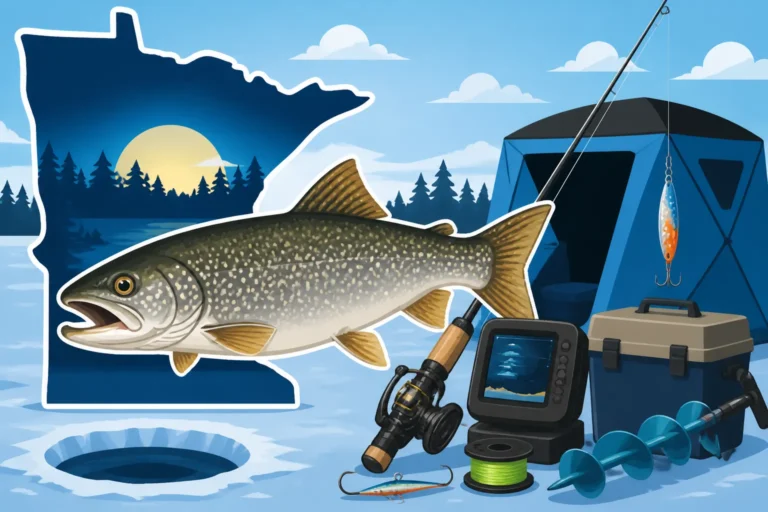
While Northern Pike are a fantastic open water target, they truly shine as an ice fishing species in Minnesota. The winter landscape offers unique challenges and opportunities, and having the right specialized gear makes all the difference when targeting them through the hardwater. Many anglers travel specifically to lakes like Upper Red Lake or Lake of the Woods for their renowned winter pike fishing.
Ice Rods and Tip-Ups for Winter Pike
When ice fishing for pike, your rod setup differs significantly from open water gear. For active jigging, a heavy action ice rod, typically between 28 to 40 inches in length, is ideal. The shorter length allows for better control in a confined ice shelter and makes it easier to set the hook quickly and decisively. The heavy power provides the necessary backbone to fight a strong pike that might be pulling against the resistance of an ice hole. Many ice rods are designed with specific handle lengths and reel seats for ergonomic use in the cold. Pair these rods with a durable spinning reel in the 2500-3500 size range, prioritizing a smooth drag that can perform in freezing temperatures.
However, the quintessential tool for ice fishing Northern Pike is the tip-up. Tip-ups are passive fishing devices that allow you to cover a wider area, often deploying multiple lines simultaneously (within legal limits, of course, so make sure you know How Many Lines Can You Fish in Minnesota? before heading out). A tip-up consists of a spool of line submerged in the water, a flag mechanism that springs up when a fish takes the bait, and a cross-frame that sits over the ice hole. When a pike bites, it pulls line off the spool, releasing the flag and signaling a strike. Brands like Frabill, Beaver Dam, and HT Enterprises offer robust tip-ups designed to withstand harsh Minnesota winters. Look for models with large capacity spools that can hold at least 50-100 yards of heavy monofilament or braided line, topped with a strong wire leader. Some tip-ups come with larger spools and insulated covers to prevent the hole from freezing over in extremely cold conditions, which is a common problem on expansive, exposed lakes. You can discover the Best Tip-Ups for Pike Fishing in a dedicated guide.
Baits and Setups for Hardwater Pike
Just like in open water, live bait reigns supreme for ice fishing Northern Pike, with large sucker minnows being the undisputed king. A 6- to 12-inch sucker minnow fished under a tip-up is a phenomenal way to entice large pike. The key is to rig the minnow in a way that keeps it lively and presents the hook effectively. Many anglers use a quick-strike rig, which consists of two treble hooks strategically placed on the minnow to ensure a solid hookset when the pike takes the bait. This setup allows you to set the hook quickly, preventing the pike from swallowing the bait too deeply, which can be detrimental to the fish if you plan to release it. Position your tip-ups along weed lines, near drop-offs, or over shallow flats where pike are known to cruise for food.
Dead baits also have their place in the winter pike angler's toolkit. Large frozen smelt, ciscoes (tullibees), or other oily baitfish can be very effective, especially when fished near the bottom. These baits release strong scent trails that can draw pike in from a distance. You can rig them on a heavy jig head or a quick-strike rig, allowing them to lie naturally on the bottom or suspend them slightly above it. For active jigging, large spoons (like the Swedish Pimple or Acme Kastmaster), jigging raps, or even soft plastic paddle tails on heavy jig heads can trigger reaction strikes from active pike. The flash and vibration of these lures, combined with an erratic jigging motion, can mimic a fleeing baitfish, making them irresistible. For a deep dive into winter tactics, check out How to Catch Northern Pike Through the Ice in Minnesota. Don't forget to check out the wide array of tip-ups and specialized ice fishing tackle available at Bass Pro Shops or even a quick search on Amazon for specific brands. Also, ensure you are familiar with Minnesota Ice Fishing & Shelter Rules before heading out.
Disclaimer
Always consult the most current Minnesota Department of Natural Resources (DNR) fishing regulations before heading out. Fishing rules and limits can change frequently. This guide is for informational purposes only and should not replace official DNR publications.