Best Landing Net for Muskie & Pike
There's nothing quite like the heart-stopping thrill of a giant muskie or a monster northern pike hitting your lure, bending your rod into a deep arc. But that excitement can quickly turn to frustration – or even disaster – if you don't have the right gear to safely land that fish. This guide is all about helping you choose the best landing net, ensuring you can bring those toothy giants aboard without a hitch, protecting both you and the fish.
The Critical Role of a Proper Net for Trophy Pike and Muskie
Let's be honest, we've all seen it or even experienced it ourselves: a truly impressive fish comes boatside, and suddenly, the flimsy bass net you grabbed just isn't cutting it. The hoop is too small, the netting is too shallow, and the handle feels like it's going to snap. It’s a moment of pure panic where the fish of a lifetime hangs in the balance. When you're chasing that elusive trophy fish, whether it's the legendary Muskie Fishing in Minnesota: The Fish of 10,000 Casts or a massive Northern Pike in Minnesota: Identification & Where to Catch, having the right net is non-negotiable.
The High Stakes of Landing a Monster Fish
Imagine this scenario: you're out on Lake Vermilion, after hours of casting big bucktails, a monstrous muskie finally commits. It’s thrashing, head-shaking, and making powerful runs right next to your boat. You reach for your standard walleye net, only to realize the hoop is barely wider than the fish's head, and the muskie's entire body won't fit without bending it into a pretzel. The net rips, the fish thrashes free, and all that hard work and adrenaline just turn into a gut-wrenching story of the one that got away. It’s not just about losing the fish; it's about the potential danger to both the fish and you. A large, angry pike or muskie, with its razor-sharp teeth and powerful jaw, can easily snap lines, embed hooks in your skin, or cause significant injury if not properly controlled.
Moreover, trying to force a large fish into an undersized net can cause serious stress and physical harm to the fish. Their scales can be damaged, fins bent, and internal organs compromised, especially if they’re slammed against the boat or forced into an unnatural position. We invest so much time and effort into learning Muskie Fishing Techniques for Beginners and perfecting our presentation; it only makes sense to invest in the right tool for the final, crucial step of the catch.
Prioritizing Fish Health and Angler Safety
For most serious muskie and pike anglers in Minnesota, catch-and-release is the name of the game, especially for those truly big fish. This means the immediate post-catch handling is paramount to the fish’s survival. A proper, large landing net dramatically reduces the time the fish is out of water, minimizes thrashing, and helps keep the hooks secured while you prepare for release. It's an essential tool for practicing Catch and Release Best Practices in Minnesota.
From an angler's safety perspective, these fish are not to be trifled with. A muskie's gill plates are like razors, and their teeth can inflict deep wounds. Attempting to handle a green (unspent) fish by hand or with an inadequate net is asking for trouble. A strong, deep net allows you to control the fish's head and body, keeping those dangerous parts away from your hands and arms while you work quickly to unhook and release it. Think of it as your first line of defense, a critical piece of safety equipment as much as it is a fishing tool.
Dissecting the Ideal Muskie and Pike Landing Net
So, what exactly makes a landing net "ideal" for these toothy critters? It comes down to a few critical design elements that work together to ensure a safe, efficient, and ethical landing.
Generous Hoop Size and Deep Basket
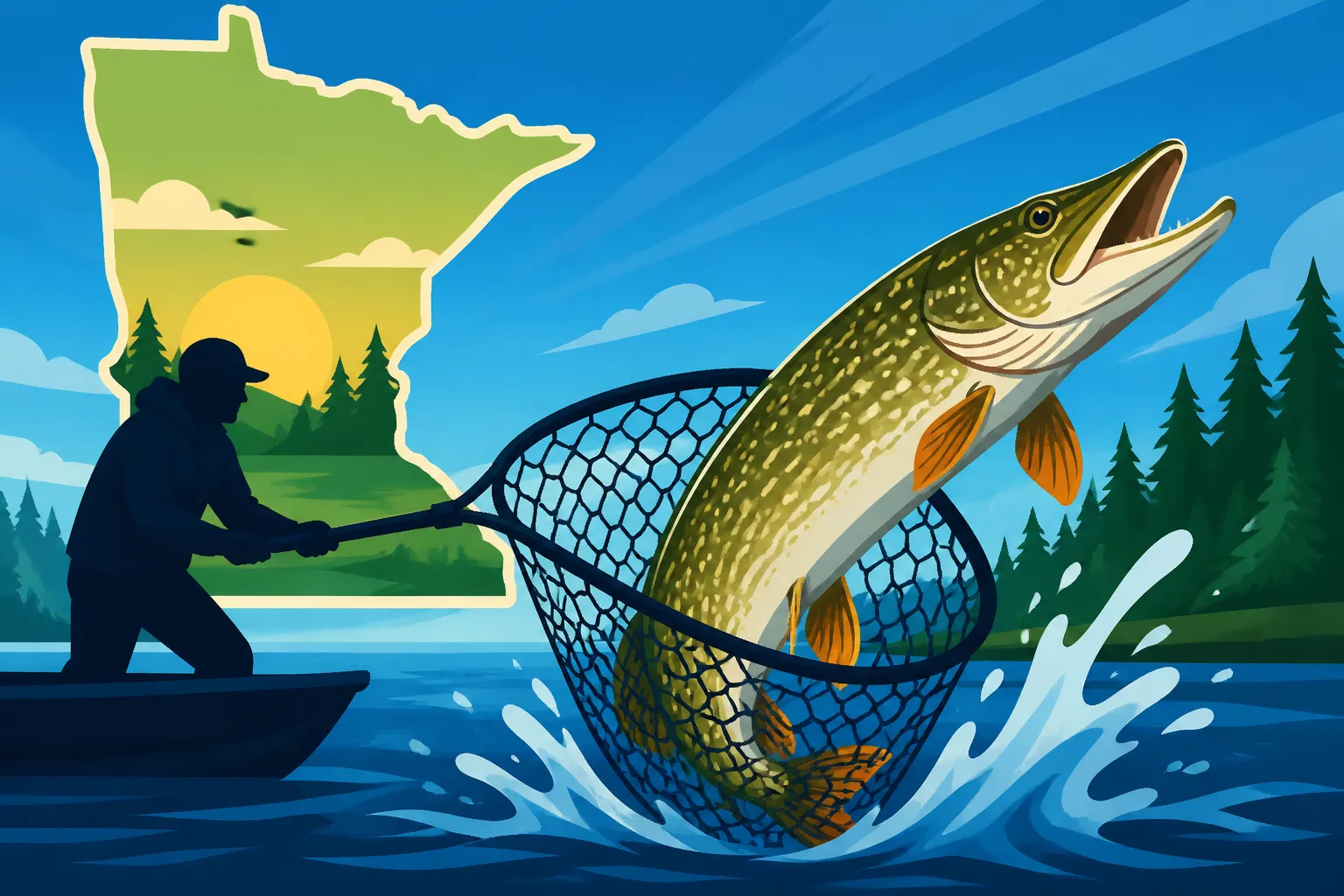
This is perhaps the single most important factor. Forget those dainty panfish nets. For muskie and pike, you need a net with a massive hoop opening. We're talking about hoops that are typically 30-40 inches wide, or even larger, and equally deep. Why so big? Because you want to be able to scoop the entire head and a significant portion of the fish's body into the net in one smooth motion, minimizing the fight at the boat. Trying to "slide" a fish into a shallow net is a recipe for disaster.
A deep basket is crucial because once the fish is in, you don't want it flopping out. A net that’s 36-48 inches deep provides ample room for the fish to settle, allowing you to control its movements while it's still in the water or partially submerged. This depth also helps to contain any hooks that might be flopping around, preventing them from catching on you or the boat. Many top muskie nets feature a "flat bottom" design, which allows the fish to lie more naturally and reduces stress, making it easier to manage for unhooking and measuring.
Robust Handle Design for Control and Reach
The handle of your muskie or pike net needs to be more than just long; it needs to be incredibly strong and offer excellent grip, even when wet. Think about battling a 40-pound northern pike on Lake of the Woods, and then trying to scoop it up with a flimsy handle. It’s not going to end well. Handles typically come in two main types: fixed or telescoping.
Fixed handles are often the most robust, as they don't have moving parts that can weaken or seize up. However, they can be cumbersome to store. Telescoping handles offer excellent versatility, allowing you to extend them for maximum reach when a fish is boat-shy, and then collapse them for easier storage. When choosing a telescoping handle, look for heavy-duty aluminum or composite materials with strong locking mechanisms. You want positive stops that won't slip under the weight of a thrashing fish. A good grip material, like molded rubber or textured foam, will prevent slippage when your hands are wet or cold. Some popular brands, often found at places like Bass Pro Shops, offer handles with integrated rulers for quick measurements, which can be a real time-saver.
Fish-Friendly Netting Materials
The old-school knotted nylon nets are a definite no-go for muskie and pike, especially if you plan on releasing them. Those knots can strip slime coat, damage fins, and even lead to eye injuries. The ideal netting material is soft, knotless, and preferably rubber or rubber-coated.
- Knotless Mesh: This is a basic requirement. It prevents abrasion and reduces entanglement, especially when a fish rolls or thrashes.
- Rubberized Mesh: This is often the preferred choice. Rubber or rubber-coated mesh is incredibly gentle on the fish's slime coat, which is their primary defense against disease. It also helps prevent hooks from getting tangled in the mesh, saving you precious time and frustration when unhooking. Plus, rubber nets don't absorb water or fish slime, making them much easier to clean and significantly reducing the transfer of Aquatic Invasive Species (AIS) Rules for Boaters.
While standard nylon mesh nets might be lighter or cheaper, the benefits of rubber or rubber-coated mesh for the fish's health and your ease of use far outweigh the alternatives when targeting trophy predators.
Uncompromising Frame and Yoke Durability
The entire structure of your net needs to be built like a tank. The hoop frame, the yoke (the junction where the hoop meets the handle), and the handle itself must be able to withstand immense pressure. Think about the force exerted by a large, green muskie trying to escape the net, or the leverage applied when you lift a heavy fish out of the water.
Look for a hoop made from heavy-gauge aluminum, stainless steel, or a robust composite. Welded or solid-piece frames are generally more durable than those with rivets or flimsy joints. The yoke area is often a weak point on lesser nets, so examine it closely. It should be constructed from a strong, rigid material that won't bend or flex under load. Some nets feature oversized yokes for added strength, which is a great indicator of quality. A net like those offered by Frabill or StowMaster, known for their durable construction, often provide the peace of mind you need when that monster hits.
Practical Considerations for Minnesota Anglers
Beyond the technical specifications, there are several practical aspects to consider that will influence your net choice and overall fishing experience here in Minnesota's diverse waters.
Matching Your Net to Your Fishing Style (Boat, Shore, Wading)
How you fish will largely dictate the optimal net design for you.
- Boat Fishing: If you're primarily fishing from a boat – whether it's a dedicated walleye boat, bass boat, or a spacious pontoon – you'll want a net that offers good reach but also stores away efficiently. A long, fixed handle might be best for maximum strength if you have the space, but a quality telescoping handle is often more practical. You'll likely be dealing with fish boatside, so reach is important, but excessive length can be cumbersome in tighter quarters. Consider where it will lie when not in use to avoid tripping hazards. Many anglers keep their nets clipped to a railing or laid out on the casting deck, ready for action.
- Shore or Wading: This is where things get tricky with muskie and pike. Most serious trophy hunters won't be targeting these fish exclusively from shore. However, if you are, or if you're fly-fishing for pike in shallower areas, a net with a shorter, perhaps folding, handle might be more appropriate. You'll need to be able to carry it comfortably, and a massive, rigid net can be a real pain. Some specialized nets designed for wading or float tube fishing offer compact storage. Be realistic about the size of fish you expect to encounter versus the portability you need. Sometimes, a long-handled Boga Grip or a similar lip-gripper, combined with proper handling skills, might be a more practical solution for shore anglers if a full-sized net is too unwieldy.
Navigating Storage and Transportation Challenges
Let's face it, muskie and pike nets are big. They take up space, and if you have a smaller boat or car, this can be a real headache.
- Storage in the Boat: Many boat designs now feature dedicated rod lockers or side storage compartments that might fit a telescoping net when collapsed. Otherwise, you'll need to find a spot on the deck or against a gunnel where it's out of the way but still easily accessible. Some anglers use bungee cords or specialty net clips to secure their nets during travel and while running across choppy water.
- Transportation in Vehicles: A fixed-handle net can be a challenge to transport in a sedan or even some SUVs. A telescoping or folding net becomes invaluable here. Make sure it collapses down to a manageable size that fits in your trunk, truck bed, or across your back seat. Brands like StowMaster are renowned for their compact folding designs, making them a favorite for anglers with limited space or those who often travel to different lakes. You don't want your prize net flopping around or, worse, getting damaged on the way to your favorite fishing spot.
| Feature | Recommended for Muskie/Pike | Why It Matters |
|---|---|---|
| Hoop Size | 30-40+ inches wide | Accommodates entire fish body, minimizes thrashing |
| Net Depth | 36-48+ inches deep | Contains fish fully, prevents escape, protects hooks |
| Handle Length | 3-8 feet (fixed or telescoping) | Provides reach for boat-shy fish, control for large fish |
| Handle Material | Heavy-duty aluminum, composite | Strength and rigidity under load |
| Netting Material | Knotless, rubber or rubber-coated mesh | Fish-friendly (protects slime coat), hook-free, easy to clean, AIS prevention |
| Frame Construction | Heavy-gauge aluminum/stainless steel, welded joints | Durability to withstand powerful fish and repeated use |
| Yoke Design | Oversized, reinforced, robust connection | Prevents breakage at stress point between hoop and handle |
| Portability | Telescoping or folding designs (for transport/storage) | Essential for smaller boats, vehicle transport, and diverse fishing scenarios |
Where to Find Quality Nets and What to Expect
When it comes to buying a net for muskie and pike, don't cheap out. This is one piece of gear where the investment truly pays off. You can find a fantastic selection at specialty fishing retailers like Bass Pro Shops or Cabela's, where you can often get hands-on with different models. Online platforms like Amazon also offer a vast array of options, often with detailed reviews from fellow anglers, which can be incredibly helpful for comparing features and real-world performance. Look for brands known for their heavy-duty construction and dedication to muskie and pike fishing, such as Frabill, StowMaster, Beckman, and Promar.
Expect to pay anywhere from $100 to $300 or more for a high-quality muskie or pike net. While that might seem like a lot for "just a net," remember that you're investing in the safety of both yourself and the fish, and ultimately, ensuring the successful culmination of all your hard work on the water. Paired with other essential items from your Best Fishing Gear for Beginners in Minnesota (By Budget) list, a good net completes your arsenal for chasing giants.
Disclaimer
The information provided in this guide is for general informational purposes only and does not constitute professional advice. Fishing regulations, gear recommendations, and safety practices can change. Always consult the latest Minnesota Department of Natural Resources (DNR) regulations and local guidelines before fishing, and prioritize safety on the water.