Best Tackle for Flathead Catfish in Minnesota
If you've ever hooked into a true Minnesota flathead catfish, you know the raw power they possess. These river monsters aren't your average panfish; they demand a completely different approach and, most importantly, specialized tackle that can handle their incredible fight. Trying to land a big flathead on walleye gear is a recipe for heartbreak, usually ending in snapped lines or broken rods. This guide is all about equipping you with the right gear, so you can confidently target and land these incredible freshwater giants.
Understanding the Flathead Catfish Challenge in Minnesota
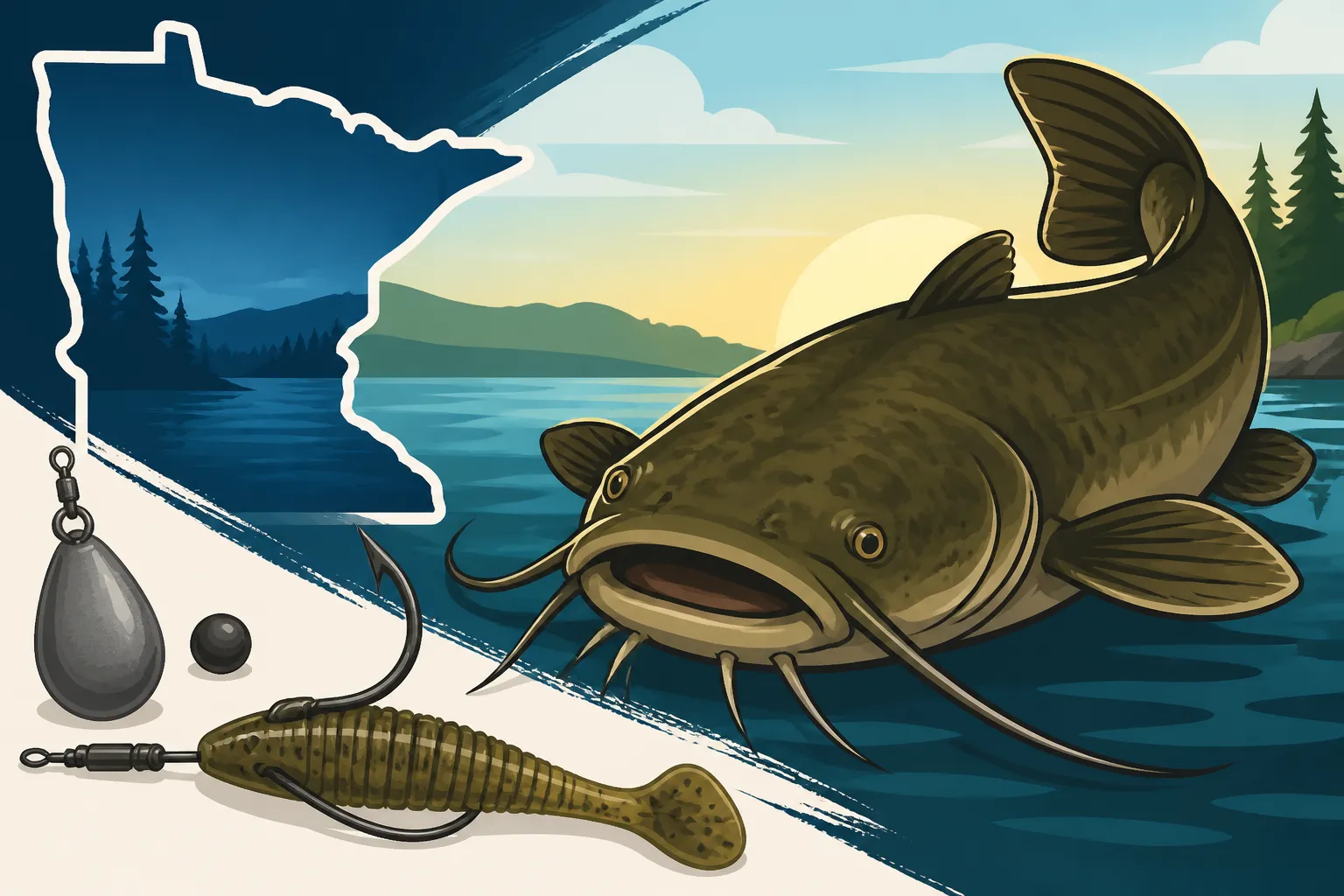
Flathead catfish are unique among Minnesota's freshwater species. Unlike their scavenger cousins, the channel catfish, flatheads are ambush predators that prefer live bait and often hold in heavy cover like submerged logs, rock piles, and deep holes in rivers. This means your tackle needs to withstand not just the initial powerful run, but also the constant grinding against structure as these fish try to escape.
Why Standard Tackle Falls Short
Many anglers start out targeting flatheads with their everyday walleye or bass setups, only to quickly learn that it’s simply not enough. A flathead pushing 30-40 pounds, common in the Mississippi or Minnesota Rivers, will absolutely demolish lighter gear.
Imagine this: You're fishing a deep current break on the St. Croix River, a juicy live sucker soaking on the bottom. Suddenly, your rod doubles over, and line screams off the reel. This isn't a walleye, or even a big pike; it's a flathead, and it's headed straight for that snag pile you knew was there. If your rod can't absorb the shock, your line can't handle the abrasion, or your reel can't deliver consistent drag, you'll be left with nothing but a story of the one that got away. That sinking feeling of a snapped line or a bent hook is a frustration many of us have faced, and it's why dedicated flathead tackle is non-negotiable.
Prime Minnesota Flathead Waters
While flatheads can be found in several rivers, the prime hunting grounds in Minnesota are undoubtedly the mighty Mississippi River and its major tributaries like the Minnesota River and St. Croix River. These larger river systems provide the deep, turbid waters, abundant snags, and healthy populations of baitfish that flatheads thrive on. You'll find them lurking near wing dams, deep current seams, log jams, and bridge pilings. Understanding their habitat is the first step, and pairing that knowledge with the right gear makes all the difference. For more insights into these specific areas, check out our guide on Minnesota River Fishing: Mississippi, Minnesota & St. Croix.
The Foundation: Heavy-Duty Rods and Reels
When it comes to flathead catfish, think heavy. Everything about your rod and reel setup needs to scream "power and durability." This isn't the place to skimp on quality.
Selecting the Right Rod
Your rod is your backbone in the fight against a flathead. It needs to be incredibly strong to handle the fish, but also sensitive enough to detect bites, which can sometimes be subtle, despite the size of the fish.
Power and Action Considerations
For flathead catfish, you're looking for heavy to extra-heavy power rods, typically between 7 and 9 feet long. The extra length helps with casting heavier baits, provides better leverage during a fight, and helps keep your line away from underwater snags. A medium-heavy rod might suffice for smaller flatheads (under 15 lbs), but for true trophy potential, you need to go big.
The action should be moderate-fast or fast. This combination gives you enough backbone to set a big hook into a tough flathead jaw and turn its head when it tries to dive into cover, while still having enough flex in the tip to absorb sudden surges and prevent line breakage. A rod that's too stiff can tear the hook out, and one that's too limber won't give you the control you need. Brands like Ugly Stik offer incredibly durable and affordable options in their Catfish Special series, which are favorites among many hardcore catfishermen. You can find robust options for specific techniques in guides like Best Walleye Rod for Jigging or Best Walleye Rod for Trolling, but remember to up the power rating significantly for flatheads.
Material and Durability
Most quality flathead rods are made from fiberglass or a composite blend of fiberglass and graphite. Fiberglass offers incredible durability and a more parabolic bend, which is excellent for fighting powerful fish and absorbing shock. Composite rods can offer a lighter feel and increased sensitivity, which can be a nice bonus if you're holding your rod for extended periods. The handle should be comfortable and long enough to tuck under your arm for leverage during a prolonged battle. EVA foam or cork handles are common choices. Look for double-footed guides that are securely wrapped, as single-footed guides can bend or break under extreme pressure.
Choosing a Reliable Reel
Your reel is the engine of your fishing setup. For flathead catfish, you'll almost exclusively be looking at baitcasting reels, specifically conventional or "round" baitcasters, not the low-profile models typically used for bass.
Baitcasting Reels for Heavy Hauling
Conventional baitcasting reels are designed for brute strength, high line capacity, and a smooth, powerful drag system – all critical components for flathead fishing. You need a reel that can hold a substantial amount of heavy line (we'll get to that next) and has the cranking power to pull a large fish away from cover.
Look for reels with a low gear ratio (e.g., 4.1:1 or 5.3:1) for maximum torque, allowing you to winch in stubborn fish. A high-quality drag system is paramount. It should be smooth and consistent, not jerky, to prevent line snaps during powerful runs. Carbon fiber drag washers are a common feature in top-tier reels. Many anglers swear by reels from brands like Abu Garcia, such as their Ambassadeur series, or Daiwa's Millionaire models for their proven reliability and power. These are heavy-duty workhorses built to withstand the abuse of big cats. You can often find great deals on these robust reels at places like Bass Pro Shops or even through online retailers like Amazon.
Line Capacity and Drag Power
A good rule of thumb for flathead reels is a line capacity of at least 200 yards of 50-80 lb braided line or 25-40 lb monofilament. This ensures you have enough line to let a large flathead run if it needs to, especially in strong river currents. As for drag, aim for a reel with at least 15-20 pounds of maximum drag. This gives you the stopping power to control a big fish before it reaches heavy snags. Testing the drag before you head out is crucial; make sure it’s smooth and can be adjusted precisely.
Terminal Tackle: The Crucial Connection
The right rod and reel are just part of the equation. Your terminal tackle – the business end of your fishing line – is what directly interacts with the fish and holds it captive. For flatheads, every component needs to be oversized and incredibly strong.
Heavy-Duty Fishing Line
This is not the place for finesse lines. Flathead fishing demands the toughest line you can get your hands on.
Braided Line: The Preferred Choice
Braided line is almost universally recommended for flathead catfish. Its incredible strength-to-diameter ratio means you can use a much thinner line for its breaking strength compared to mono, which helps with casting distance and cutting through current. More importantly, braid has virtually no stretch, providing superior sensitivity for detecting bites and maximizing hook-setting power. The abrasion resistance of quality braided lines is also a huge advantage when fishing around sharp rocks and submerged timber, which flatheads love.
For flatheads in Minnesota, most anglers opt for 50-80 lb test braided line. If you're targeting truly monstrous fish in areas with extreme snags, some go even higher to 100 lb. Brands like PowerPro or Berkley X9 are popular choices, known for their durability and knot strength. While our guide on Best Fishing Line for Walleye (Braid vs Mono vs Fluoro) covers various lines, remember to dramatically increase the pound test for flatheads.
Monofilament Line for Leaders
While braid is great for your main line, many anglers still prefer a monofilament or fluorocarbon leader, especially in clearer water, or when fishing around very abrasive cover. Monofilament has some stretch, which can act as a shock absorber during violent headshakes, and its abrasion resistance can be superior to braid in certain situations. For flatheads, a 25-40 lb test monofilament leader of about 18-36 inches is common, often tied directly to the braided main line with a strong knot like a Blood Knot or an Albright Knot.
Robust Hooks
Forget those thin-wire hooks; flathead catfish have incredibly tough, bony mouths, and you need a hook that won't straighten out under pressure.
Circle Hooks are King
For flathead catfish, circle hooks are the absolute standard. Not only are they incredibly effective at hooking fish in the corner of the mouth, leading to fewer gut-hooked fish (which is vital for catch and release), but their design also makes them incredibly strong. When a flathead takes the bait, you simply let the fish swim away with it. The rod loads up, and as the fish pulls, the hook naturally rotates and sets itself in the corner of the jaw. No need for a dramatic sweep-set! This is particularly important with live bait.
Sizes typically range from 7/0 to 10/0, depending on the size of your bait and the target fish. Larger baits like 8-10 inch suckers warrant larger hooks. Brands like Gamakatsu, Owner, and Mustad offer excellent heavy-duty circle hooks designed specifically for catfish. Always choose hooks made from heavy-gauge wire.
J-Hooks for Specific Situations
While circle hooks are dominant, some anglers still use heavy-duty J-hooks, particularly when fishing with cut bait or if they prefer a traditional hookset. If you do opt for J-hooks, ensure they are forged, extra-strong, and in similar large sizes (e.g., 8/0 to 12/0). However, be mindful of potential deep hooking, especially with flatheads that tend to swallow bait quickly.
Heavy Sinkers and Rigging
You need weight to get your bait down and keep it there, especially in strong river currents.
Sinker Types and Weights
Flathead fishing often involves substantial weights to combat current and hold your bait on the bottom. Egg sinkers, flat no-roll sinkers, and pyramid sinkers are common. Egg sinkers are popular for slip-sinker rigs, allowing the line to run freely through the weight, so the fish doesn't feel resistance when it bites. Flat no-roll sinkers are excellent in current as they resist tumbling. Pyramid sinkers dig into the bottom, providing maximum holding power.
The weight required varies greatly with current speed and depth, but expect to use anywhere from 2 ounces to 8 ounces, or even more in extreme conditions. Have a variety on hand. It's not uncommon to lose a few weights to snags, so bulk purchases from a place like Amazon can be economical.
Catfish Rigs: Simple and Strong
The most common and effective rig for flathead catfish is a simple slip-sinker rig. This involves threading your main line through an egg sinker, then tying on a heavy-duty swivel. To the other end of the swivel, attach your monofilament or fluorocarbon leader, and then your circle hook. This setup allows the fish to pick up the bait and move off without immediately feeling the weight of the sinker, giving them more time to commit to the bait. Some anglers also use a three-way swivel rig, particularly when trying to suspend a bait slightly off the bottom or to present two baits at once, though the slip-sinker is generally preferred for flatheads targeting large live bait.
Here’s a quick overview of essential tackle:
| Tackle Component | Recommended Specification | Key Benefits for Flatheads |
|---|---|---|
| Rod | 7-9 ft, Heavy to Extra-Heavy power, Moderate-Fast to Fast action | Power to turn fish, leverage, casting heavy baits |
| Reel | Conventional Baitcaster, low gear ratio (4.1:1-5.3:1), 200+ yd 50-80lb braid capacity, 15-20+ lb drag | Brute strength, line capacity, powerful drag |
| Main Line | 50-80 lb Braided Line | No stretch, sensitivity, abrasion resistance |
| Leader | 25-40 lb Monofilament/Fluorocarbon (18-36 inches) | Shock absorption, added abrasion resistance |
| Hooks | 7/0-10/0 Heavy-Duty Circle Hooks | Jaw hook-ups, prevents deep hooking, strong |
| Sinkers | 2-8+ oz Egg, Flat No-Roll, or Pyramid Sinkers | Holds bait in strong current, gets to bottom |
Essential Accessories and Baits
Beyond your core rod, reel, and terminal tackle, a few key accessories and the right bait can make or break your flathead fishing experience.
Landing Gear: Nets and Gloves
Bringing a big flathead to the boat or shore requires proper landing gear. A small bass net simply won't cut it.
Large, Heavy-Duty Landing Net
You'll need a large, robust landing net with a deep, rubberized mesh. The rubber coating helps protect the fish's slime coat (important for release) and prevents hooks from tangling. Look for nets with strong, extendable handles. Brands like Frabill or Beckman offer models specifically designed for large freshwater fish, often marketed towards muskie or pike, but perfectly suited for flatheads. Our guide on Best Landing Net for Muskie & Pike will give you an idea of what size and strength you'll need. Trying to horse a 40-pound flathead into a small net is a surefire way to lose the fish right at the boat.
Protective Gloves
Flatheads have sandpaper-like skin and sharp pectoral and dorsal fins. A good pair of heavy-duty fishing gloves, preferably with some puncture resistance, is essential for safely handling these fish, especially if you plan on releasing them. This protects both you and the fish.
Bait: Live is Best
Flathead catfish are primarily piscivores, meaning they eat other fish. While they will occasionally take cut bait, live bait is almost always the most effective presentation for catching big flatheads. For a broader look at bait options, check out Best Live Bait for Walleye (Leeches, Minnows, Crawlers), but remember flatheads demand larger presentations.
Preferred Live Baits
Think big, lively baitfish. Common choices in Minnesota include:
- Suckers: White suckers or common suckers, often in the 6-10 inch range, are a top choice. They are hardy and irresistible to flatheads.
- Bullheads: Small bullheads (5-7 inches) are another excellent, tough bait that flatheads love. Their hardiness means they stay lively for a long time.
- Large Chubs: Creek chubs or golden shiners, if available in larger sizes, can also be effective.
The key is to present your live bait in a way that allows it to swim naturally and stay alive. Hook them through the back, just behind the dorsal fin, being careful not to hit their spine, or through both lips.
Keeping Bait Alive
Because live bait is so crucial, you'll need a good aeration system to keep your baitfish lively throughout your fishing trip, especially on warm days. A quality bait bucket with a portable aerator, or a livewell in your boat, is indispensable. Healthy, active bait is far more attractive to a flathead than a lethargic or dead one.
Other Handy Tools
- Pliers/Hook Remover: Long-nosed pliers or a dedicated hook remover are essential for safely dislodging large hooks from a flathead's jaw, especially with circle hooks.
- Headlamp/Lantern: Flatheads are often most active at night, so a reliable light source is a must.
- Rod Holders: Heavy-duty rod holders that can withstand powerful strikes are crucial if you're fishing multiple rods from a boat or shore.
- Line Cutters: Heavy-duty scissors or braid cutters are needed for thick braided line.
Ultimately, gearing up for flathead catfish in Minnesota means recognizing their power and adjusting your tackle accordingly. By investing in heavy-duty rods, reels, and terminal tackle, and understanding the importance of live bait and strong landing gear, you'll be well on your way to experiencing the thrill of battling one of Minnesota's most formidable freshwater fish. For those just starting out, our guide on Best Fishing Gear for Beginners in Minnesota (By Budget) can help identify some initial robust options that can be adapted for targeting smaller flatheads before fully committing to trophy gear. And remember to always check the latest Flathead Catfish Season & Limit in Minnesota regulations before you head out!
Disclaimer
Fishing regulations, seasons, and limits can change. Always consult the official Minnesota Department of Natural Resources (DNR) website or their current fishing regulations booklet before heading out on the water. This guide is for informational purposes only and should not be considered a substitute for official regulations.