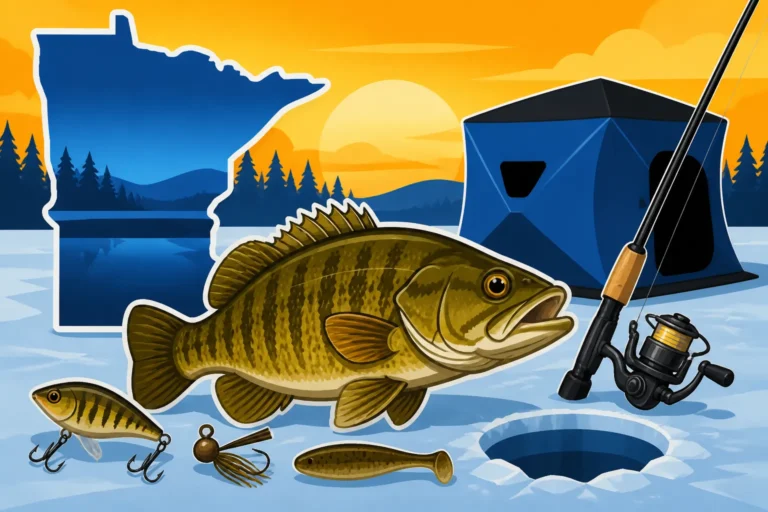
Best Gear for Smallmouth Bass Fishing in Minnesota
Catching smallmouth bass in Minnesota can be an incredibly exhilarating experience, but it's also a common frustration for many anglers when they realize their general-purpose gear just isn't cutting it. These feisty, hard-fighting fish demand a specific approach, and having the right tackle can make all the difference between a few missed bites and a memorable day on the water. This guide is all about equipping you with the best gear to tackle Minnesota's smallmouth bass, ensuring you're ready for those powerful runs and acrobatic jumps.
Rods and Reels: The Foundation of Your Smallmouth Setup
When it comes to smallmouth bass, your rod and reel aren't just tools; they're an extension of your senses. You need to feel every subtle bump, every delicate pick-up, and have the backbone to set the hook firmly and control a strong fish in often rocky, snag-filled environments. Skimping here is a surefire way to end up with a lot of "almost" stories.
Choosing the Right Rod Action and Power
This is where many anglers get tangled up. "Action" refers to where the rod bends when pressure is applied, and "power" is about how much force it takes to bend the rod. For smallmouth, you'll want a combination that offers sensitivity for subtle bites, but enough backbone to handle the fight.
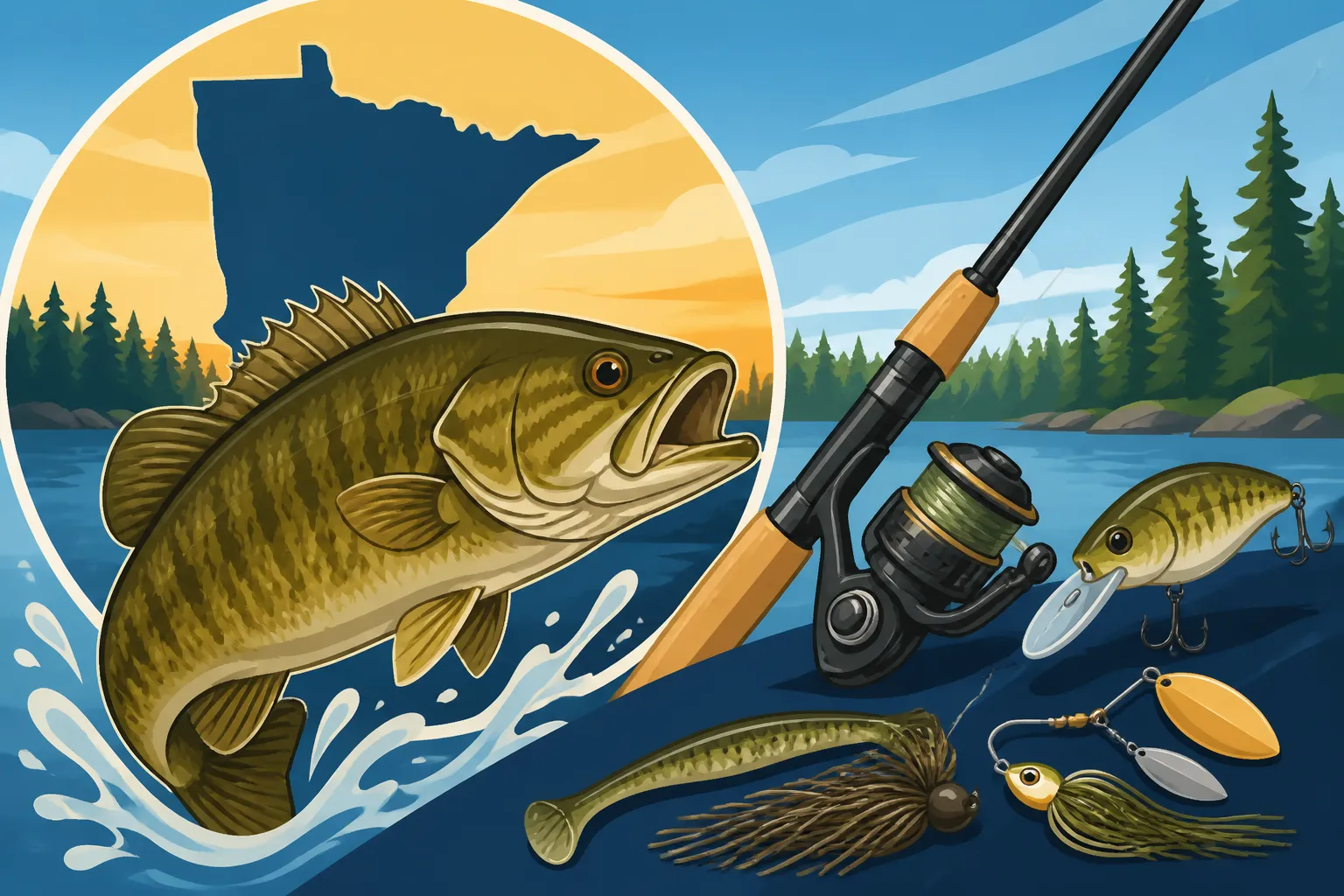
A medium-light to medium power spinning rod, typically 6'6" to 7'3" in length, is a fantastic starting point. The longer length offers better casting distance, crucial for covering water and reaching those offshore smallmouth haunts. A medium-light rod offers excellent sensitivity for lighter presentations like Ned rigs or small tubes, while a medium power rod gives you more muscle for throwing slightly heavier baits or fighting fish in current. As for action, a fast to extra-fast action is generally preferred. This means the rod bends mostly in the tip section. Why fast action? It transmits subtle bites more effectively, allowing you to react quickly, and it provides a strong backbone for powerful hooksets. Imagine you're fishing a clear, rocky point on Lake Vermilion; you need to feel that faint tick when a smallmouth inhales a tube jig from 30 yards away, and then have the power to drive the hook home without losing contact. Brands like St. Croix, a Minnesota staple, or Abu Garcia offer excellent rods that fit this bill, providing a great balance of sensitivity and strength.
Selecting a Compatible Spinning Reel
For the rods we just talked about, a spinning reel is almost always the way to go for smallmouth. Their light line capabilities and ease of casting lighter baits make them superior to baitcasters for most smallmouth techniques. You're looking for a reel that balances well with your chosen rod, has a smooth drag system, and offers reliable line management.
A 2000 to 3000 series spinning reel is ideal. These sizes strike a perfect balance, providing enough line capacity for longer runs, a comfortable retrieve speed, and a compact feel that won't make your setup feel clunky. Key features to look for include a smooth, consistent drag system, which is paramount for fighting powerful smallmouth on lighter lines, preventing break-offs during sudden surges. Also, pay attention to the gear ratio; a mid-range ratio (around 5.2:1 to 6.2:1) is versatile for various retrieves. A quality reel from a brand like Shimano or Daiwa will provide years of reliable service. You can often find great deals on these at Bass Pro Shops, and their staff can help you pair a reel perfectly with your rod. If you're looking for a comprehensive guide on different rod and reel setups, you might find our article on Best Walleye Rods & Reels helpful, as many principles carry over.
Line Choices: Strength, Sensitivity, and Stealth
Your fishing line is the direct connection between you and the fish, and for smallmouth, it's a critical component. They're often found in clear water, are incredibly visually oriented, and put up a fierce fight. Your line choice needs to account for all of these factors.
Monofilament, Fluorocarbon, or Braided Line?
Each line type has its place in a smallmouth angler's arsenal, and often, a combination works best.
-
Braided Line: This is your sensitivity powerhouse. With almost zero stretch, braid transmits every vibration, making it fantastic for feeling subtle bites, especially when fishing deeper water or using finesse techniques. Its incredible strength-to-diameter ratio also means you can use a lighter pound test than mono or fluoro for the same breaking strength, which helps with casting distance. The downside? Braid is highly visible in clear water, and its lack of stretch can sometimes rip hooks out of a fish's mouth if you're not careful. This is why it's almost always paired with a leader. I often run 10-15 lb braided line as my main line when fishing smallmouth on places like Mille Lacs Lake. For more advanced techniques, our guide on How to Read a Flasher (Vexilar/Humminbird) can help you pinpoint those fish you're trying to reach with your sensitive braid setup.
-
Fluorocarbon Line: The "invisible" line. Fluorocarbon has a refractive index very similar to water, making it nearly undetectable underwater, which is a huge advantage for skittish smallmouth in clear Minnesota lakes. It also has less stretch than monofilament, offering a good balance of sensitivity and shock absorption. Fluorocarbon is quite abrasion-resistant, a big plus when fishing rocky bottom. The main drawbacks are its higher cost and a bit more stiffness, which can sometimes lead to memory issues on spinning reels. I typically use 6-10 lb fluorocarbon as a leader when paired with braid, or sometimes as a main line if I'm prioritizing invisibility and sensitivity for a specific finesse presentation.
-
Monofilament Line: The old reliable. Monofilament offers excellent knot strength, good stretch (which can be forgiving during a fight), and is the most affordable option. However, it's more visible than fluorocarbon and less sensitive than both braid and fluoro. While it can be used as a main line, particularly for topwater baits where its stretch can be an advantage, it's generally outclassed by braid and fluorocarbon for most smallmouth applications in Minnesota's clear waters.
The Art of the Leader for Smallmouth
Given the clarity of many Minnesota smallmouth waters and the fighting prowess of the fish, using a leader is almost non-negotiable for serious smallmouth anglers. You'll typically tie a fluorocarbon leader to your braided main line. This gives you the best of both worlds: the casting distance and sensitivity of braid, combined with the invisibility and abrasion resistance of fluorocarbon.
The length of your leader can vary, but a 3-6 foot leader is a good starting point. This gives you enough invisible line near your lure without making casting difficult. For leader strength, match it to your main line and target conditions. If you're using 10 lb braid, a 6-8 lb fluorocarbon leader is usually perfect. If you're fishing heavier cover or targeting bigger fish, you might bump it up to 10 lb fluorocarbon. The best knots for connecting braid to fluorocarbon are the Alberto knot or the FG knot, both of which are strong and pass through rod guides smoothly.
Essential Lures and Baits: What Smallmouth Crave
Smallmouth bass are opportunistic predators, but they can also be incredibly selective, especially in heavily fished waters. Having a diverse tackle box is key to adapting to changing conditions and fish moods.
Soft Plastics: Versatility and Finesse
Soft plastics are absolutely deadly for smallmouth, offering a range of presentations from subtle finesse to aggressive jigging.
-
Tube Jigs: If there's one lure I wouldn't leave home without for smallmouth, it's a tube jig. Rigged on an internal jig head, tubes mimic crawfish (a smallmouth favorite) and goby, two primary forage sources in many Minnesota lakes and rivers. They have an irresistible spiraling action on the fall. I usually carry them in green pumpkin, watermelon, and brown/black, in sizes from 2.75 to 4 inches. Fishing tubes around rocky points, ledges, and breaks is a classic way to catch smallmouth. You can let it sink, twitch it, or drag it slowly. For instance, when fishing the rocky shores of Lake Superior's North Shore tributaries for smallmouth, a tube jig is often the first thing I'll tie on.
-
Ned Rigs: This finesse presentation has exploded in popularity, and for good reason—it simply catches fish, especially when they're finicky. A small, buoyant soft plastic (often 2.5-3 inches) paired with a mushroom-shaped jig head, the Ned rig stands up off the bottom, presenting an easy meal. Colors like green pumpkin, PB&J, and black-blue are consistent producers. It's fantastic for slowly dragging or hopping along rocky bottom or hard sand flats. This technique excels in clearer, colder waters and for pressured fish.
-
Creature Baits and Craws: These mimic crawfish, a primary food source for smallmouth. Rig them on a Texas rig, a Carolina rig, or a football jig head. Their bulk and action can trigger aggressive strikes, especially from larger fish. Use them when you want to imitate a fleeing or defensive crawfish on the bottom. Colors that mimic natural crawfish (greens, browns, oranges) are best.
Hard Baits: Reaction Strikes and Covering Water
While soft plastics excel in finesse, hard baits are fantastic for covering water, locating active fish, and triggering aggressive reaction strikes.
-
Crankbaits (Deep Diving and Lipless): Crankbaits are workhorses for smallmouth. Deep-diving crankbaits (like those from Rapala's Shad Rap or Storm's Original Wiggle Wart lines) are excellent for targeting fish on deeper points, humps, and rock piles. Choose colors that mimic baitfish or crawfish. Lipless crankbaits, like a ½ oz Rat-L-Trap or a Bill Lewis Lures Rat-L-Trap, are great for covering vast flats or shallower areas quickly, emitting loud rattles that call fish in. They are especially effective in spring and fall. Our article on Best Bass Lures for Minnesota Lakes delves deeper into popular choices.
-
Jerkbaits: A staple for suspending fish or when they're chasing baitfish. Jerkbaits are designed to be retrieved with a "twitch, twitch, pause" cadence, mimicking a wounded baitfish. The pause is often when the smallmouth strikes. Suspending jerkbaits (like those from the Lucky Craft Pointer series or Megabass Vision 110) are preferred because they stay at a specific depth during the pause, keeping them in the strike zone longer. Clear water and rocky main lake points are prime jerkbait territory.
-
Topwater Baits: Nothing beats the thrill of a smallmouth blowing up on a topwater lure. Poppers, walk-the-dog baits (like Heddon Super Spook Jr.), and prop baits are all effective. Use them during low light conditions (dawn, dusk), on cloudy days, or when smallmouth are actively feeding on the surface, especially around shallow rocky areas or submerged grass beds. Our article on Topwater Bass Fishing in Minnesota offers more specific techniques.
Jigs: Versatility for Bottom Contact
Jigs, in various forms, are incredibly effective for smallmouth bass, especially when they're holding tight to structure.
-
Football Jigs: Named for their head shape, football jigs are designed to crawl and bounce over rocky and gravel bottoms without snagging. They're usually paired with a craw-style or creature bait as a trailer. The jig's head helps it stand up on the bottom, mimicking a defensive crawfish. These are fantastic for targeting deep smallmouth on offshore humps and transition areas.
-
Hair Jigs: Often overlooked, a simple hair jig can be incredibly effective, especially in cold water or for highly pressured fish. Their subtle action and natural breathing appearance can entice bites when other lures fail. Tipping them with a small piece of live bait like a minnow or a soft plastic grub can enhance their appeal.
Lure Selection Table for Minnesota Smallmouth
| Lure Type | Best Conditions | Retrieve Style | Primary Forage Imitated | Pros | Cons |
|---|---|---|---|---|---|
| Tube Jig | Rocky points, clear water, any depth | Drag, hop, shake, dead stick | Crawfish, Goby | Highly versatile, subtle, natural action | Can twist line if not rigged straight |
| Ned Rig | Finicky fish, clear/cold water, hard bottom | Drag, slight hops, shake in place | Small prey, fleeing | Catches fish when nothing else will, easy | Smaller profile, less weedless |
| Deep Crankbait | Deeper rock piles, humps, ledges | Steady retrieve, occasional stop-and-go | Baitfish, Crawfish | Covers water, triggers reaction strikes | Can snag easily in heavy cover |
| Jerkbait | Suspending fish, active chasing, clear water | Twitch, twitch, pause (vary cadence) | Wounded baitfish | Entices strikes on the pause, versatile | Requires specific retrieve cadence |
| Topwater | Low light, calm water, shallow cover, aggressive fish | Walk-the-dog, pop, chug, steady retrieve (depending on lure) | Injured baitfish, bugs | Exciting strikes, good for locating fish | Less effective in rough water/wind |
| Football Jig | Deeper rocky structure, crawfish habitats | Drag, hop, lift-and-drop | Crawfish | Good weed/rock penetration, bulky profile | Can be slow, requires trailer |
Beyond the Basics: Accessories for Success
Beyond the core rod, reel, line, and lures, a few key accessories can significantly improve your smallmouth fishing experience and success. Don't underestimate the small things!
Essential Tools and Gear
Having the right tools at hand makes a big difference, especially when you're trying to quickly unhook a feisty smallmouth and get it back in the water healthy.
- Pliers/Forceps: Smallmouth bass have surprisingly tough mouths, and hooks can be deeply embedded. A good pair of long-nose pliers or forceps is invaluable for quickly and safely removing hooks, minimizing stress to the fish. I prefer pliers with a cutting tool integrated for snipping line if needed. Keep them easily accessible.
- Line Clippers/Scissors: While some pliers have cutters, a dedicated pair of sharp line clippers or braid scissors makes quick work of tying knots and re-tying lures. Trying to bite braid with your teeth is a recipe for frustration and dull teeth.
- Landing Net: While smallmouth can be wrestled to the boat by hand, a rubberized landing net is much safer for the fish and makes landing those acrobatic jumpers much easier, especially if you're fishing solo. The rubber coating protects the fish's slime coat and prevents hooks from getting tangled. You can find robust options at most sporting goods stores or on Amazon.
- Scale and Measuring Board: If you're interested in documenting your catches or participating in catch-and-release tournaments, a reliable digital scale and a measuring board are must-haves. Always handle fish gently when weighing and measuring.
Sun Protection and Comfort
Minnesota summers can be intense, even out on the water. Protecting yourself from the elements ensures you can focus on fishing longer and more comfortably.
- Polarized Sunglasses: These are absolutely crucial for smallmouth fishing. They cut through the glare on the water, allowing you to see submerged rocks, weed lines, and, most importantly, cruising smallmouth. Seeing the structure and the fish before you cast gives you a massive advantage. Quality polarized lenses also protect your eyes from harmful UV rays.
- Sunscreen and Lip Balm: Don't forget the basics! UV exposure is no joke. A broad-spectrum sunscreen with high SPF and lip balm with SPF are essential for long days on the water.
- Hat and Performance Clothing: A wide-brimmed hat or a baseball cap offers protection for your face and head. Lightweight, long-sleeved fishing shirts made from moisture-wicking, UV-protective fabric are game-changers for staying cool, dry, and protected from the sun.
Watercraft Considerations
While many Minnesota lakes offer fantastic shore fishing opportunities for bass, smallmouth often relate to offshore structure, making a boat or kayak a huge advantage.
- Boat or Kayak: If you're serious about smallmouth, especially on larger lakes like Mille Lacs or Lake Vermilion, a boat allows you to reach those productive offshore humps, rock piles, and deep points. Even a smaller Jon boat or a fishing kayak can open up a world of possibilities, allowing you to quietly sneak into shallow coves or navigate rocky shorelines inaccessible to larger craft. If you're considering a more portable option, you might want to read our guide on Best Fishing Kayaks for Minnesota Lakes.
- Electronics (Fish Finder/GPS): For pinpointing offshore structure and marking fish, a quality fish finder with GPS and mapping capabilities is invaluable. Units from Garmin, Humminbird, or Lowrance can show you depth contours, rock piles, and even individual fish. This is especially true for fishing deeper water and finding those subtle transitions where smallmouth often ambush prey. Modern electronics, like those discussed in How to Use Garmin LiveScope for Walleye, though focused on walleye, use technology that is highly transferable to finding smallmouth.
Ultimately, the "best" gear is what helps you catch more smallmouth bass and enjoy your time on the water. By focusing on quality rods and reels, smart line choices, versatile lures, and essential accessories, you'll be well-equipped to tackle Minnesota's formidable smallmouth fishery. Remember, every trip is a learning experience, and adapting your gear to the specific lake, weather, and fish behavior is part of the fun! For a broader understanding of how to target these amazing fish, check out our How to Catch Smallmouth Bass in Minnesota Step by Step guide.
Disclaimer
Fishing regulations, seasons, and limits can change frequently. Always consult the latest Minnesota Department of Natural Resources (DNR) fishing regulations before heading out on the water. This guide is for informational purposes only and does not supersede state or local regulations.