Best Gear for Muskie Fishing in Minnesota
Chasing muskie in Minnesota waters is an obsession for many, a true test of patience, skill, and, let's be honest, your gear. There's nothing quite like the heartbreak of losing a monster fish because your equipment wasn't up to the challenge, or the sheer frustration of trying to cast massive lures with an undersized rod. This comprehensive guide is here to ensure you're armed with the best gear, giving you the confidence to tackle Minnesota's legendary "fish of 10,000 casts" and turn those frustrating moments into triumphant memories.
The Right Rod and Reel: Powering Your Pursuit
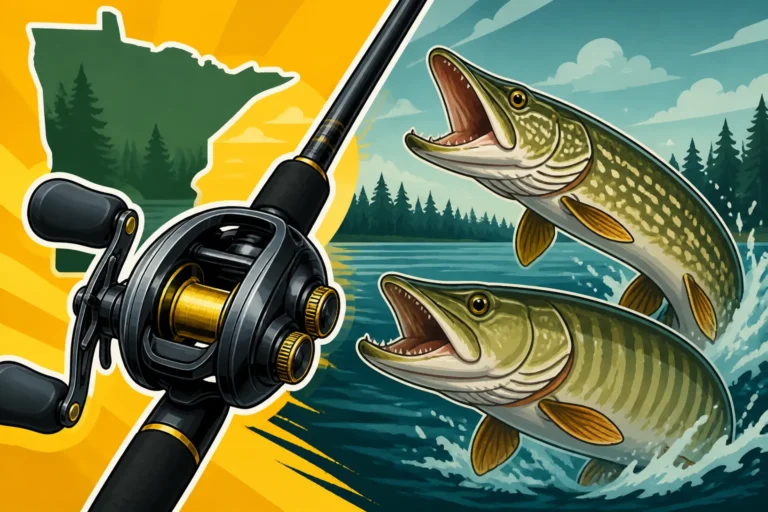
Muskie fishing isn't for the faint of heart, and your rod and reel combo is the absolute cornerstone of your setup. You're not just casting a little panfish jig; you're launching heavy artillery designed to attract and subdue some of the largest, most aggressive freshwater predators out there. Investing in quality here pays dividends, preventing snapped rods, stripped gears, and most importantly, lost fish.
Rod Selection: Length, Power, and Action
Choosing the right muskie rod is critical for both casting performance and fighting power. These aren't your typical bass rods. You need something specialized that can handle the sheer force and size of muskie lures and the explosive strength of the fish itself.
Muskie rods are typically much longer and heavier than rods used for other species. You'll commonly see rods in the 8 to 10-foot range. This extra length serves several purposes: it helps generate the leverage needed to cast hefty baits like large bucktails or heavy jerkbaits long distances, it aids in making the crucial "figure-8" at the boat, and it gives you better line control when a big muskie decides to run. For power, you're almost exclusively looking at heavy (H) or extra-heavy (XH) ratings. Anything less simply won't have the backbone to effectively work large baits, set hooks into bony jaws, or turn a thrashing 50-inch fish away from snags. As for action, a fast or extra-fast tip is preferred. This means the rod bends mostly in the tip section, allowing for powerful, accurate casts and quick hook sets, while the strong backbone remains stiff to handle the fight. Popular choices might include an 8'6" heavy power, fast action rod for all-around use, or perhaps a slightly shorter, stiffer rod for specific techniques like twitching heavy glide baits. You can explore a vast array of options at reputable retailers like Bass Pro Shops, where you can often get hands-on with different models to feel their balance and power.
Reel Selection: Gearing Up for the Fight
Pairing your heavy muskie rod with an equally robust baitcasting reel is non-negotiable. Spinning reels simply don't have the necessary line capacity, gear strength, or drag power to consistently handle muskie gear and muskie fights.
When selecting a baitcasting reel for muskie, prioritize durability, a strong drag system, and sufficient line capacity. Look for reels with metal frames, robust gearing, and a smooth, consistent drag that can withstand prolonged battles with powerful fish. A minimum of 20 pounds of drag is advisable, but many muskie-specific reels offer much more. Gear ratios are important for how quickly you can retrieve line and how much torque the reel generates. A mid-range ratio, like 5.X:1 or 6.X:1, often provides a good balance between cranking power for big baits and faster retrieval for burning bucktails. Reels with higher gear ratios (7.X:1 and up) are excellent for quickly picking up slack or retrieving baits rapidly, while lower ratios (4.X:1) offer more cranking power for deep-diving crankbaits or heavy resistance lures. Line capacity is also key; you'll typically be spooling 80-100 lb braided line, so ensure your chosen reel can hold at least 100-150 yards of that heavy line. Companies like Shimano and Daiwa offer excellent muskie-specific baitcasting reels that are built to last and perform under extreme pressure. Learning how to properly use a baitcasting reel is crucial for successful muskie fishing, especially when you consider how often you'll be casting. If you're looking for more guidance on specific models, check out our guide on Best Baitcasting Reels for Muskie & Pike.
Line, Leader, and Lures: Connecting to the Monster
Once you've got your rod and reel sorted, it's time to think about what connects you to the fish: your line, your leader, and the lures that entice these elusive giants. This isn't a place to cut corners, as muskie teeth are notoriously sharp and their fights are notoriously brutal.
Braided Line and Fluorocarbon Leaders
The line you choose for muskie fishing needs to be incredibly strong, durable, and have virtually no stretch. This is where braided line shines, and why a heavy-duty leader is absolutely essential.
For your main line, braided superline is the undisputed champion for muskie fishing. Its zero-stretch properties provide maximum sensitivity, allowing you to feel every subtle twitch of your lure and every bump or follow from a curious muskie. More importantly, it delivers incredible hook-setting power, which is crucial for penetrating the hard, bony mouth of a muskie. You'll want to use heavy test braid, typically in the 80 to 100-pound range. This might sound like overkill, but it's necessary for several reasons: to handle the strain of casting heavy lures, to absorb the shock of a violent strike, and to prevent break-offs when a big fish buries itself in weeds or wraps around submerged timber. The thicker diameter also makes it easier to handle when tying knots or pulling snagged lures free. While braided line is incredibly strong, it's not invisible, and muskie have incredibly sharp teeth. This is where your leader comes in. You need a strong, bite-proof leader to prevent the muskie from severing your main line. Many anglers opt for heavy fluorocarbon leaders, typically 100-200 lb test, which are highly abrasion-resistant and nearly invisible underwater. These leaders are usually 18-36 inches long and are connected to your main line with a strong knot, like a Albright or PR knot, and then to your lure via a heavy-duty snap or split ring. Some anglers prefer steel leaders for maximum bite protection, especially when targeting fish with aggressive, lure-swallowing tendencies.
Essential Muskie Lures for Minnesota Waters
The world of muskie lures is vast and exciting, with a dizzying array of sizes, shapes, and colors designed to trigger strikes from these apex predators. Having a diverse selection in your tackle box is key to adapting to different conditions and preferences of Minnesota's muskie population. When looking for new lures, both online retailers like Amazon and local tackle shops or large sporting goods stores like Bass Pro Shops offer a huge variety.
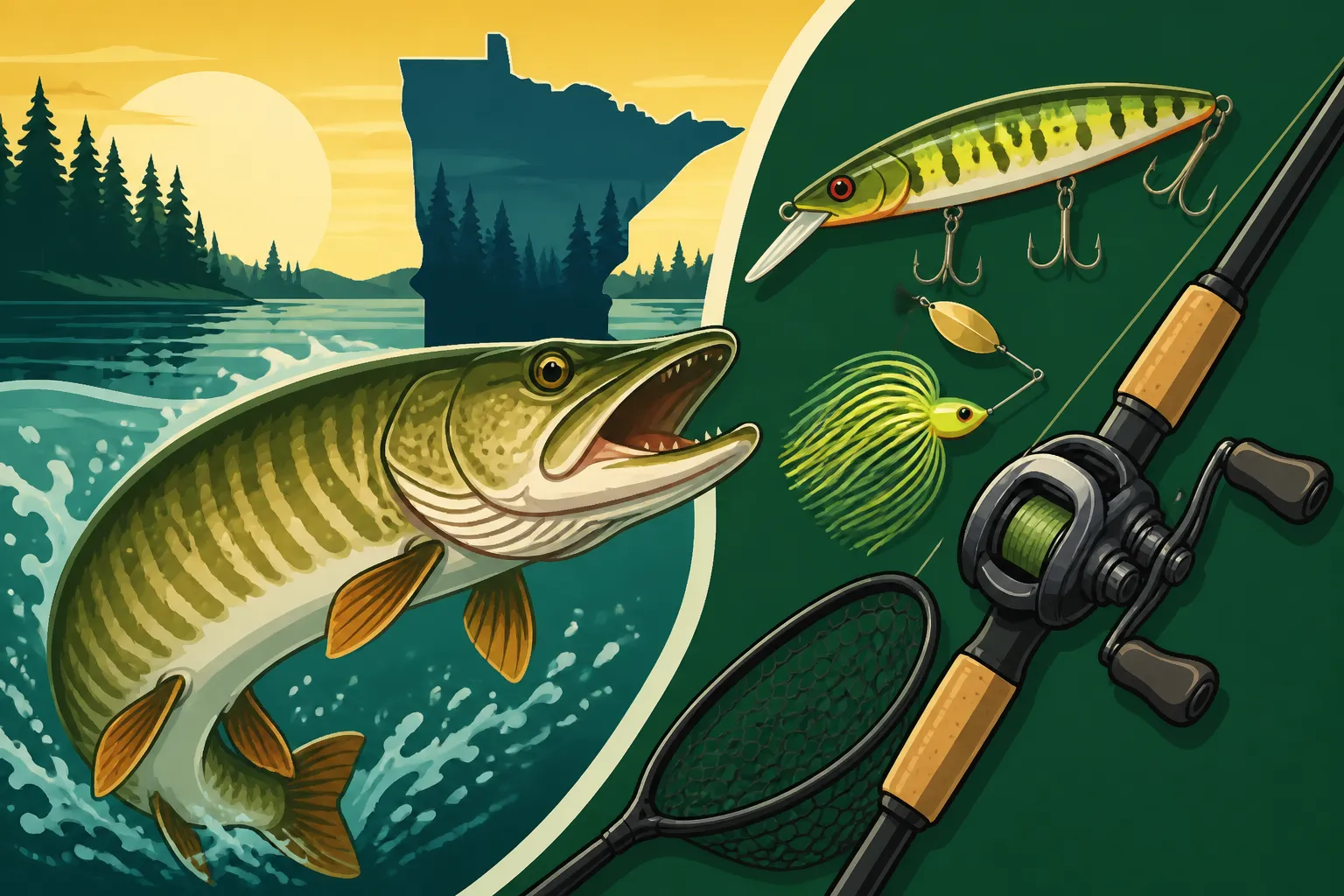
- Bucktails: These are often considered the bread and butter of muskie fishing, especially in Minnesota. They consist of a wire shaft with blades (Colorado, Indiana, Willowleaf, or combinations), a weighted body, and a skirt of deer hair or synthetic material. They create significant flash and vibration, which muskie find irresistible. Sizes range from smaller #5 or #7 blades up to massive "double 10s" or "double 12s" (referring to the blade size). Popular bucktails like those from Musky Mayhem Tackle (e.g., Cowgirl) are staples in many anglers' arsenals. Varying retrieve speeds is key, from a steady crank to a "burn and kill" technique.
- Jerkbaits: These lures are designed to be worked with rod sweeps and pauses, mimicking an injured baitfish. There are two main types: gliders and dive-and-rise baits. Gliders, like those from Salmo or Musky Innovations, are retrieved with sharp twitches, causing them to "glide" from side to side just below the surface. Dive-and-rise jerkbaits are typically heavier and sink on the pause, then rise when retrieved. The erratic action of jerkbaits can be incredibly effective when muskie are finicky. Our guide on Best Muskie Lures (Bucktails, Jerkbaits, Topwater) delves deeper into specific models and situations.
- Crankbaits: Large crankbaits are fantastic for covering water quickly, especially when trolling open water or casting over submerged structures. Deep-diving crankbaits can reach impressive depths, while shallower models are great for weed edges. Sizes can be immense, often exceeding 10 inches in length, and they come in various lip designs to control dive depth and action. Brands like Rapala and Bagley produce effective muskie-sized crankbaits.
- Topwater Lures: The explosive strike of a muskie on a topwater lure is one of fishing's most exhilarating experiences. These lures sit on the surface and create commotion through propellers, wobbling bodies, or "walking the dog" actions. Whopper Ploppers, Creepers, and Doc-style baits are all popular choices. Topwater fishing is most effective during low-light conditions or when muskie are actively hunting in shallower water.
- Soft Plastics: Large soft plastic baits, such as swimbaits, paddle tails, and curly tail grubs, have gained popularity for their realistic profiles and versatile rigging options. They can be rigged on heavy jig heads or weighted swimbait hooks and worked through various depths. The subtle, natural swimming action of a big soft plastic can often tempt a muskie that's ignored other presentations.
Tools and Accessories: Handling Your Catch Responsibly
Muskie are powerful, toothy creatures, and catching them is only half the battle. Responsible handling and safe release are paramount to ensuring the health of the fish and the sustainability of Minnesota's incredible muskie fishery. Having the right tools isn't just a convenience; it's an ethical imperative.
Landing Nets and Release Tools
When a muskie hits the net, the real work often begins. Without the proper tools, safely handling and releasing a large, thrashing fish can be dangerous for both the angler and the fish.
A large, rubber-coated landing net is arguably the most crucial piece of muskie gear after your rod and reel. The net needs to be big enough to fully engulf a trophy-sized muskie, typically with a hoop size of 30-40 inches and a deep, tangle-free basket. The rubberized mesh is vital because it protects the fish's slime coat (its natural defense against infection) and prevents hooks from getting tangled, making release much quicker and less stressful. Trying to land a big muskie with an inadequate net often leads to chaos, injury to the fish, and lost fish. Once the fish is in the net, having a good set of release tools close at hand is critical. This includes long-nose pliers, specifically designed for muskie, or heavy-duty hook removers. These tools allow you to safely extract hooks without putting your hands too close to those razor-sharp teeth. Sometimes, hooks can be deeply embedded, requiring careful manipulation. Investing in quality tools from brands like Dr. Shade or Frabill can make a huge difference in your efficiency and the well-being of the fish. Remember, quick and efficient release is a hallmark of a responsible muskie angler. For more information on safely handling these powerful fish, consider reading our guide on Catch and Release Best Practices in Minnesota.
Safety and Measurement Gear
Beyond the net and pliers, a few other essential items will ensure your safety and allow you to properly document your impressive catch without harming the fish.
Always carry a pair of heavy-duty bolt or hook cutters. These are indispensable if a hook becomes deeply embedded in the fish's mouth or gill plate, or even in your own hand (it happens!). Rather than struggling and prolonging the fight, it's often best to cut the hook and leave a small piece in the fish, which will usually rust out naturally. Protecting your hands is also smart; a good pair of fishing gloves can prevent scrapes and cuts from gill rakers or teeth, especially when handling a lively fish. For those who enjoy capturing memories, a large, durable measuring board (at least 60 inches) is essential for accurately measuring your muskie before release. Quick measurements are important, so practice your routine beforehand. Some anglers also use a weigh sling for quick, accurate weight measurements, but this should only be done if you are experienced and can safely support the fish without causing injury. Knowing the current Muskie Season & Limit in Minnesota is also important, as regulations often dictate whether a fish must be immediately released or can be kept within certain slot limits.
Storage and Transport: Keeping Your Gear Organized
Muskie gear is big, bulky, and often expensive. Proper storage and transport not only protect your investment but also ensure you're organized and ready to hit the water efficiently. There's nothing worse than fumbling for a specific lure when you've got a hot bite going.
Tackle Boxes and Rod Holders
The sheer size of muskie lures means your standard tackle box just won't cut it. You need robust storage solutions that can accommodate these oversized baits and secure your valuable rods.
Muskie lures often range from 6 to 15 inches or even larger, and they frequently feature multiple treble hooks. This means you'll need specialized tackle storage with deep compartments or adjustable dividers to prevent hooks from tangling and lures from getting damaged. Many anglers opt for large, rugged utility boxes or soft-sided tackle bags with multiple large-capacity trays. Brands like Plano and Lakewood make excellent muskie-specific storage options that are durable and designed to protect your valuable baits. These larger boxes can be heavy, so consider how you'll transport them in and out of your boat or vehicle. Keeping your lures organized by type (bucktails, jerkbaits, topwaters) or by color can save precious time on the water. For your rods, secure rod holders are essential, whether you're in a boat, on an ATV, or transporting them in your vehicle. Rod socks can prevent guides and blanks from getting scratched or tangled during transport. In a boat, sturdy rod racks or horizontal rod storage systems keep your rods safe and readily accessible, preventing them from bouncing around in rough water or getting stepped on. Many anglers use horizontal or vertical rod racks in their garages too, to keep these longer rods from getting damaged when not in use.
| Gear Category | Recommended Item | Key Features & Why It's Important |
|---|---|---|
| Rod | 8'6" – 10' Heavy/Extra-Heavy Power, Fast Action | Longer length for casting heavy lures and figure-8s; heavy power for hook sets and fighting; fast action for sensitivity and power. |
| Reel | Heavy-Duty Baitcasting Reel (e.g., Shimano Tranx, Daiwa Lexa) | Strong drag (20lb+), high line capacity (80-100lb braid), durable metal frame, appropriate gear ratio (5.X-6.X:1 common). |
| Main Line | 80-100 lb Braided Superline (e.g., PowerPro, Sufix) | Zero stretch for sensitivity and hook sets; extreme strength for heavy lures and powerful fish. |
| Leader | 100-200 lb Fluorocarbon or Wire Leader (18-36") | Bite-proof protection from sharp teeth; abrasion resistance; stealth (fluorocarbon). |
| Lures | Large Bucktails, Jerkbaits, Crankbaits, Topwaters | Diverse selection to match conditions; specific lure types trigger different feeding responses. |
| Landing Net | Large, Rubber-Coated Net (30-40" hoop) | Protects fish slime coat; prevents hook tangles; safe for fish and angler during landing. |
| Release Tools | Long-Nose Pliers/Hook Remover, Bolt Cutters | Safe and quick hook removal; ability to cut hooks if deeply embedded. |
| Safety/Measure | Fishing Gloves, Large Measuring Board (60"+) | Protects hands from teeth/gill plates; accurate measurement for release documentation. |
| Tackle Storage | Large Utility Boxes/Bags with Deep Compartments | Accommodates oversized lures; keeps hooks organized and prevents tangles. |
Disclaimer
Fishing regulations, including seasons, limits, and gear restrictions, can change. Always consult the most current Minnesota Department of Natural Resources (DNR) fishing regulations before heading out on the water. This article is for informational purposes only and should not be considered a substitute for official DNR guidelines.