Lake Winnibigoshish Walleye Fishing Tips
Lake Winnibigoshish, affectionately known as "Big Winnie," can be an incredibly rewarding walleye fishery, but its vast, often shallow, and sometimes featureless expanses can feel intimidating for new anglers or those who haven't quite cracked its code. Many seasoned fishers, myself included, have spent frustrating days scratching our heads, wondering where those elusive golden shiners have gone. This guide is designed to cut through that confusion, offering practical, time-tested tips to help you consistently find and catch walleye on this incredible Minnesota lake.
Understanding Lake Winnibigoshish Walleye Behavior
Big Winnie isn't just a big lake; it's a dynamic ecosystem where walleye movements are heavily influenced by forage, water conditions, and seasonal changes. Knowing why they are where they are is often more important than simply knowing where to cast.
Seasonal Walleye Movements
Walleye in Lake Winnibigoshish are creatures of habit, but their habits shift with the calendar. Understanding these broad patterns can save you countless hours of searching.
In the spring, right after the ice melts and the Minnesota Fishing Seasons & Opener Dates (2026) kicks off, walleye are often found in shallower water, particularly near spawning areas. Think about the rivers flowing into Winnie, like the Mississippi, or shallow, protected bays with gravel bottoms. As the water warms slightly, they'll start to spread out, often lingering in these shallower zones for feeding before transitioning to summer patterns. This early season bite can be incredibly strong, but it's often fleeting as they recover from the spawn.
Come summer, as the water temperatures rise, walleye typically move deeper, seeking out cooler, more oxygenated water. This is when main lake structures become critical. They'll relate to mud flats, humps, breaks, and submerged points. Fall brings another transition, often referred to as the "fall turnover," where water temperatures equalize, and walleye can be found anywhere from shallow weed edges to deep basins, gorging themselves in preparation for winter. Finally, How to Catch Walleye Through the Ice in Minnesota on Winnie means focusing on those same key structural elements, often with different presentations, as they become accessible from permanent ice houses or portable shelters.
Forage and Feeding Habits
Walleye are opportunistic predators, and on Big Winnie, their diet plays a huge role in where you'll find them. The primary forage here is typically yellow perch, shiners, and sometimes young-of-the-year panfish.
When shiners are abundant, especially during the shiner run, walleye can be found chasing schools of these baitfish over large, open expanses or along subtle breaks. If perch are the dominant forage, walleye will often relate more closely to weeds, rocky bottoms, or areas where perch are known to congregate. Paying attention to what's in the belly of any walleye you catch, or even observing baitfish activity on your electronics, can provide crucial clues. For instance, if you're seeing massive schools of bait suspended off the bottom, a jigging rap or a spoon might be more effective than a bottom-bouncer rig, mimicking an injured baitfish.
Essential Gear and Baits for Winnie Walleye
Having the right tools for the job is paramount on a lake like Winnibigoshish. It's not about having the most expensive gear, but rather the most appropriate.
Rods, Reels, and Line Choices
For most walleye fishing on Winnie, you'll want a versatile spinning setup. A 6'6" to 7' medium-light or medium-action rod with a fast tip is ideal. This allows for good sensitivity when jigging, yet enough backbone for handling bigger fish or setting hooks on trolled baits. Popular brands like St. Croix, Fenwick, or G. Loomis offer excellent options across various price points.
Pair your rod with a reliable spinning reel in the 2000-3000 size range, spooled with 6-10 lb test monofilament or fluorocarbon for jigging and live bait, or 10-20 lb braided line for trolling or heavier applications. Braided line offers superior sensitivity and hook-setting power, especially in deeper water or when using longer leads, but a fluorocarbon leader is often critical to avoid spooking wary walleye in clear water conditions. For specific recommendations, check out a guide on Best Walleye Rods & Reels.
Live Bait and Artificial Lures
On Winnibigoshish, both live bait and artificial lures have their moments to shine. It's wise to have a selection of both.
Live bait, especially leeches, nightcrawlers, and minnows, are often unbeatable, particularly for finesse presentations like How to Fish a Lindy Rig for Walleye or How to Use a Slip Bobber for Walleye & Crappie. Leeches are fantastic in warmer water, nightcrawlers excel on crawler harnesses, and minnows (shiners, fatheads) are prime for colder water periods, especially during the opener and in late fall. Remember to check local bait regulations before bringing bait to the lake.
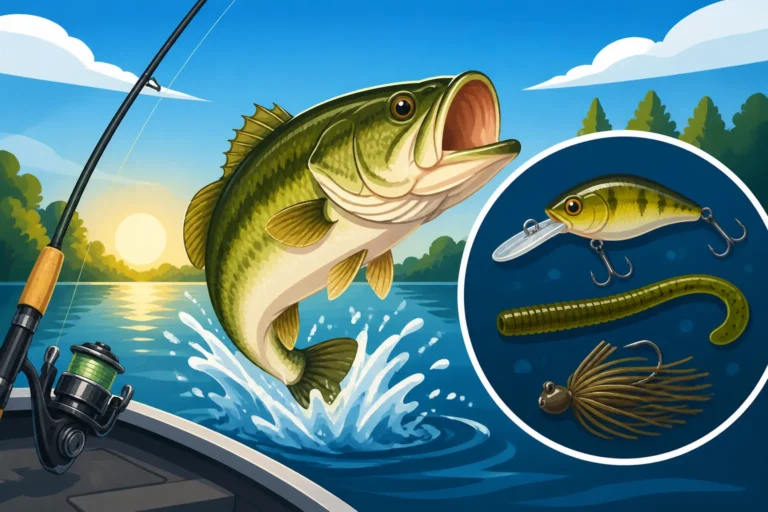
For artificials, jigs are a perennial favorite. A variety of weights (1/8 oz to 3/8 oz) and colors (chartreuse, orange, pink, natural patterns) will cover most situations. Pair them with soft plastics like Berkley Gulp! minnows or twister tails for added scent and action. Crankbaits are crucial for trolling. Deep-diving crankbaits like Rapala Shad Raps or Berkley Flicker Shads in natural or bright patterns can be deadly when walleye are spread out over structure or mud flats. For a detailed breakdown of options, refer to Best Walleye Lures: Jigs, Cranks & Spinners.
Top Walleye Fishing Techniques on Lake Winnibigoshish
Success on Winnie often comes down to adapting your technique to the specific conditions and walleye behavior you encounter. Flexibility is key.
Live Bait Rigging
Live bait rigging, especially with a Lindy Rig or a plain hook and slip sinker, is a classic and highly effective method on Winnibigoshish. This technique allows you to present a lively minnow, leech, or crawler naturally on or near the bottom, irresistible to hesitant walleye.
When employing this strategy, focus on the edges of mud flats, the transitions where sand meets gravel, or along the subtle breaks of underwater humps. The key is to keep your boat speed slow, often just a crawl (0.5-1.0 mph), and use your bow-mount trolling motor to maintain control. Pay close attention to your rod tip; walleye often "mouthing" the bait before fully committing. Drop your rod tip back towards the fish, feed line for a few seconds, then slowly sweep to set the hook. Patience is a virtue here, as sometimes a walleye will carry the bait for a while before swallowing it. Don't be afraid to experiment with leader length – sometimes a longer, almost invisible fluorocarbon leader is what it takes.
Jigging and Pitching
Jigging, whether vertical or cast-and-retrieve, is another fundamental technique for Winnie walleye, especially when fish are concentrated or you're targeting specific pieces of structure.
Vertical jigging involves positioning your boat directly over the fish you see on your electronics and dropping a jig straight down. This is particularly effective on defined humps, rock piles, or sharp breaks. A quick lift and fall, followed by a slight pause, can trigger strikes. Experiment with the cadence – sometimes a more aggressive snap is needed, other times a subtle quiver is best. Pitching jigs, casting them out and retrieving them along a break or weed line, is excellent for covering more water in shallower areas or when walleye are scattered. Tipping your jig with a live minnow or a scented soft plastic like a Best Live Bait for Walleye (Leeches, Minnows, Crawlers) can significantly increase your hook-up ratio. Early morning or late evening often provides the best bite for shallow water jigging.
Trolling Techniques
Trolling crankbaits is a highly efficient way to cover large expanses of Lake Winnibigoshish, especially when walleye are scattered across mud flats or suspended over deeper water.
For trolling, you'll want to use your main motor or a kicker motor to maintain consistent speeds, typically between 1.5-2.5 mph, depending on the lure. Deep-diving crankbaits are excellent for reaching fish holding at specific depths, while shallow-running crankbaits can be effective over weed tops or shallower structures. Experiment with different colors and sizes until you find what the walleye prefer that day. Employing planer boards can allow you to spread out your lines, covering a wider swath and increasing your chances of running a lure past a willing walleye. Many anglers rely on specific brands like Rapala or Salmo for their trolling success on Winnie. If you're new to this, learning Trolling Crankbaits for Walleye: Speed & Depth can dramatically improve your results.
Navigating and Finding Walleye Hotspots
Lake Winnibigoshish is big, and without good navigation skills and an understanding of its unique topography, you might spend more time searching than fishing.
Reading Lake Maps and Electronics
Modern lake maps, whether on a dedicated fish finder like a Humminbird or Garmin unit, or through apps like Navionics or LakeMaster, are indispensable on Winnie. Study the contour lines to identify subtle breaks, humps, and points. Look for areas where depth changes abruptly, as these are often walleye magnets.
Your fish finder is your best friend on this lake. Use it to locate schools of baitfish, identify individual walleye, and distinguish between hard and soft bottom compositions. Walleye often relate to transitions, so marking where a mud flat meets a hard bottom, or where weeds end and open water begins, can be key. Don't just look directly under your boat; use side imaging or forward-facing sonar if you have it, to scan wider areas and pinpoint schools of fish off to the sides. Knowing How Many Lines Can You Fish in Minnesota? and understanding your electronics will allow you to maximize your efforts.
Key Walleye Structures and Areas
Lake Winnibigoshish is famous for its vast mud flats and submerged humps, which are prime walleye habitat.
The major mud flats, like those in the main basin, are incredible feeding grounds. Walleye will cruise these flats, often relating to the edges or subtle rises within them. During low-light conditions, they might push up onto the shallower parts of the flats. Pay close attention to current patterns here, especially near the river connections, as walleye often use current breaks for ambush points. Humps, even those with only a few feet of relief off the bottom, can concentrate fish. Look for humps that top out around 10-18 feet, especially if they have some gravel or rock mixed in. Weed edges, particularly healthy cabbage weeds, can also hold good numbers of walleye, especially during the summer and fall. Some anglers find immense value in hiring a local guide, often found through services like FishingBooker, to quickly learn the nuances of Winnie's hotspots. Many of the best fishing spots are not widely publicized and are learned through years of experience on the water.
Adapting to Weather and Wind Conditions
Winnie can get rough, and wind plays a huge role in walleye behavior. Always check the forecast before heading out.
Strong winds can push baitfish and create current, often making walleye more active on the windy side of structures. However, fishing in rough water can be challenging and dangerous. On calm days, walleye might be more spread out or spooky, requiring a finesse presentation or targeting deeper, less disturbed areas. Overcast days are often preferred for walleye fishing, as their light-sensitive eyes make them more comfortable in lower light conditions, and they may be found shallower. Conversely, bright, sunny days often mean the walleye will retreat to deeper water or dense cover. Being flexible with your spot selection and technique based on the day's conditions is crucial for consistent success on Big Winnie. Remember, local guides often monitor these conditions closely, and services like FishingBooker can connect you with an expert who knows how to adapt to Winnie's changing moods.
| Season | Typical Depth Range | Preferred Structures | Key Baits/Lures |
|---|---|---|---|
| Spring (Opener – Mid-June) | 5-15 feet | River mouths, shallow bays, early weed lines | Jig & minnow, slip bobber & leech |
| Summer (Mid-June – August) | 12-30 feet | Mud flat edges, deep humps, main lake breaks | Lindy Rig & crawler/leech, crankbaits, jigging raps |
| Fall (September – Ice Up) | 10-25 feet (variable) | Main lake humps, rock piles, deep weed edges | Jig & minnow, crankbaits, blade baits |
| Winter (Ice Fishing) | 15-35 feet (variable) | Humps, break lines, deep mud flats | Jigging spoons, minnows on dead sticks, rattle baits |
General Fishing Advice for Lake Winnibigoshish
Beyond techniques and locations, a few general principles can make your time on Big Winnie more enjoyable and productive.
Respecting Regulations and Conservation
Minnesota is committed to maintaining healthy fish populations, and Lake Winnibigoshish is a prime example of successful fisheries management. Always be sure you're up to date on the latest Lake Winnibigoshish Fishing Regulations (2026), including bag and possession limits for walleye.
Practicing catch and release, especially for larger breeding females, helps ensure future generations of walleye for everyone. If you plan to keep fish, handle them carefully and only keep what you're legally allowed. Understanding Minnesota Fishing Limits: Bag & Possession (2026) isn't just about avoiding a ticket; it's about being a responsible steward of our natural resources. Also, be mindful of Aquatic Invasive Species (AIS) Rules for Boaters – always clean, drain, and dry your boat and gear to prevent the spread of unwanted guests.
Safety First on Big Winnie
Lake Winnibigoshish is a large body of water that can become very dangerous quickly, especially when strong winds whip up. Always prioritize safety.
Ensure your boat is in good working order, with all necessary safety equipment including life jackets for everyone on board, a throw cushion, a whistle or horn, and working navigation lights. Tell someone where you're going and when you expect to return. Be aware of changing weather conditions and don't hesitate to head for shore if a storm is brewing. Hypothermia is a real threat, even in shoulder seasons, so dress in layers and bring extra warm, dry clothing. During ice fishing season, always check ice thickness thoroughly and be aware of current conditions, especially near river inlets or outlets. Knowing Minnesota Ice Fishing & Shelter Rules is just as crucial as knowing how to catch a walleye.
Disclaimer
Fishing conditions and regulations in Minnesota, including on Lake Winnibigoshish, can change rapidly. Always consult the most current Minnesota Department of Natural Resources (DNR) fishing regulations before heading out on the water. This guide provides general tips and information and should not be considered a substitute for official DNR publications.