Steelhead Rivers on the North Shore
Finding and successfully fishing for steelhead on Minnesota's North Shore rivers can feel like trying to solve a beautiful, complex puzzle. These elusive, powerful fish offer an incredible angling experience, but knowing where to start, what to use, and when to go is half the battle. The swift, cold waters flowing into Lake Superior present unique challenges and immense rewards for those willing to brave the elements and learn the nuances. This guide is here to demystify the magic of North Shore steelhead, offering you realistic, in-depth advice to make your next trip a successful one.
Understanding North Shore Steelhead Fishing
Steelhead fishing along Minnesota's North Shore is more than just catching fish; it's an immersive experience in some of the most stunning, rugged landscapes the state has to offer. These aren't your typical lake dwellers; they're magnificent migratory fish with a fascinating life cycle and a fight that can test even the most seasoned angler.
What Makes Steelhead So Special?
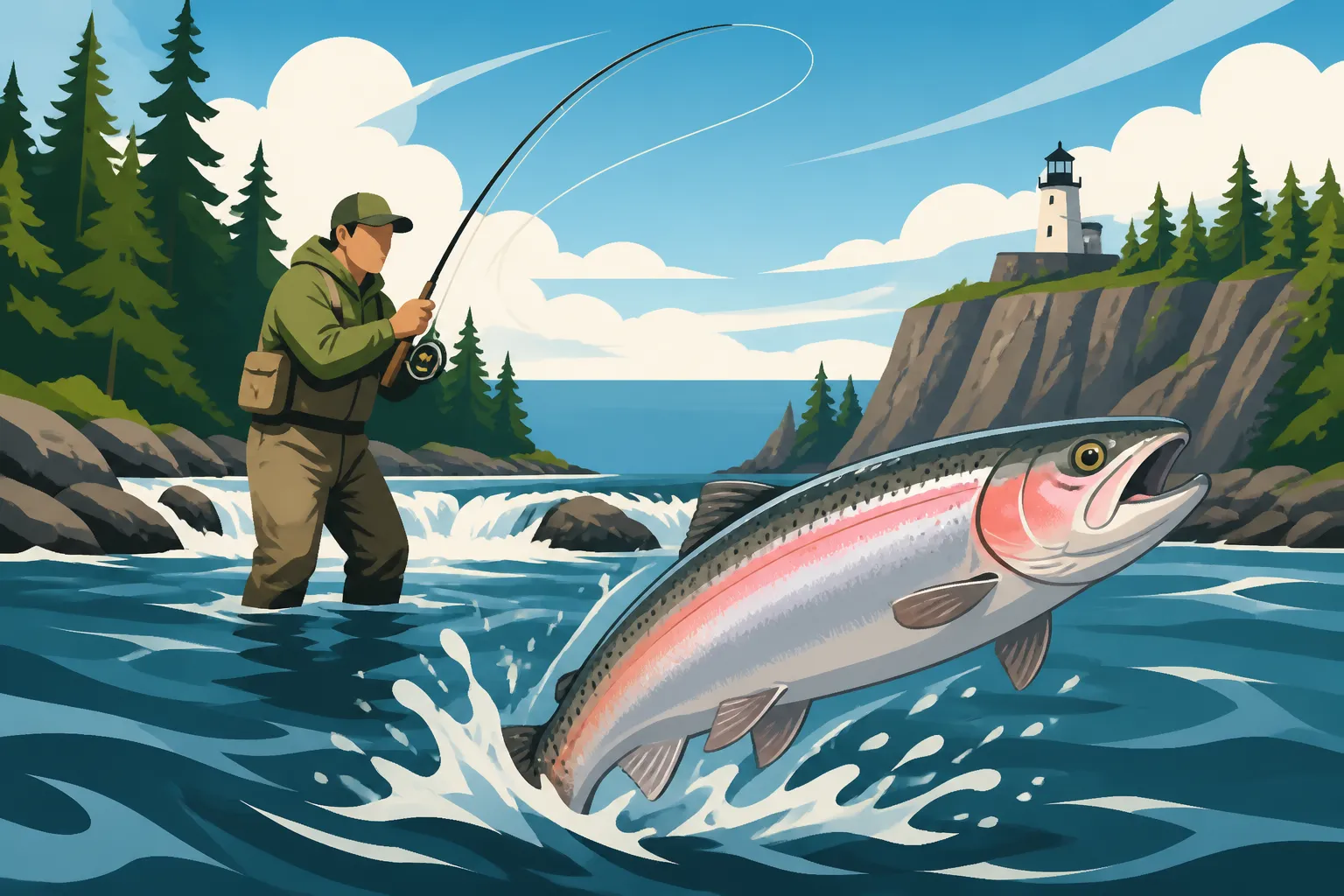
Steelhead are essentially rainbow trout that migrate from Lake Superior into its tributary rivers to spawn. This anadromous lifestyle is what gives them their unique characteristics: immense power, stunning silver coloration, and often larger sizes compared to their resident rainbow trout cousins. They spend most of their lives in the vast, nutrient-rich waters of Lake Superior, growing strong and feisty, before making their annual journey upstream. This migration imbues them with incredible stamina, making them one of the hardest-fighting freshwater fish you'll encounter. The thrill of hooking into a chrome bright steelhead in a rushing river current is truly unparalleled, a moment that often stays with an angler long after the fish is released.
Their beauty is another draw. Fresh from the big lake, steelhead shimmer with iridescent silver flanks, dark spots, and a subtle, rosy band along their lateral line. They're often referred to as "chrome" for their pristine, metallic appearance. Beyond their fighting prowess and aesthetics, there's a certain mystique to pursuing these fish. They are wild, migratory creatures, subject to the whims of weather, water levels, and instinct, which adds an element of unpredictability and adventure to every outing.
The Challenges of Steelhead Angling
Let's be honest, steelhead fishing isn't for the faint of heart. It presents a unique set of challenges that can certainly test your patience and resolve. The fish themselves can be incredibly finicky, especially when water temperatures fluctuate or during heavy angling pressure. You might spend hours casting, walking, and re-rigging without a single bite, only to have a flurry of action in a short window. The weather on the North Shore can be brutal, with sudden cold snaps, strong winds, and heavy precipitation common, even during the "prime" seasons.
Accessing many of these rivers can also be an adventure in itself. While some spots offer relatively easy access, others require hiking through rough terrain, slippery riverbanks, and wading in fast-moving, icy water. You need to be prepared for strenuous activity and changing conditions. Additionally, river conditions, such as water clarity and flow, are constantly changing and dictate success. A river that was perfect yesterday might be blown out and unfishable after a night of rain. Understanding these variables and adapting on the fly is crucial. It's a game of persistence, observation, and often, a little bit of luck, which is part of what makes the eventual reward so incredibly satisfying.
When to Fish for North Shore Steelhead
Steelhead runs along the North Shore are primarily dictated by water temperature and flow, typically occurring during two distinct seasons: spring and fall. Knowing these windows is critical for planning your trip.
The spring run is arguably the most popular, usually kicking off in late March and continuing through May, sometimes even into early June, depending on the year. This is when the rivers begin to thaw and snowmelt swells the currents, signaling to the steelhead that it's time to migrate upstream for spawning. Early in the spring, when ice is just breaking up, the fish might still be somewhat lethargic, hugging the bottom of deeper pools. As water temperatures rise into the 40s Fahrenheit, they become more active, moving more freely and aggressively taking baits. This period often sees larger numbers of fish in the rivers.
The fall run is a bit more subtle but can offer incredible fishing for those who brave the colder weather. Steelhead begin entering the rivers in late September and continue through November, and even into early December until ice sets in. These "fall-run" or "early-run" steelhead are often pre-spawners that move into the river systems to feed and stage, sometimes overwintering in deeper pools before the spring spawn. While not as numerous as the spring run, the fish caught in the fall are often very aggressive and in prime condition. The fall season also offers the bonus of stunning autumn foliage along the bluffs, making for a truly picturesque angling experience. Successful trips during either season often involve monitoring local conditions and reports, as the exact timing can vary year to year. You can often find current reports through local bait shops or by checking online forums before you head out, or even consider a guided trip found on a platform like FishingBooker to leverage local expertise.
Key Steelhead Rivers on Minnesota's North Shore
Minnesota's North Shore boasts numerous rivers that flow into Lake Superior, and many of them host steelhead runs. However, a few stand out as prime destinations for serious anglers. Each river has its own unique character, access points, and challenges. For more general information on fishing seasons, check out Minnesota Fishing Seasons & Opener Dates (2026).
The Brule River: A Premier Destination
The mighty Brule River, located within Judge C.R. Magney State Park near Grand Marais, is arguably the crown jewel of Minnesota's steelhead rivers. It's known for its significant runs of large steelhead and coho salmon, drawing anglers from across the region. What makes the Brule so appealing is its length and diversity of water, offering everything from deep, slow pools to faster riffles and runs. The lower river, especially within the state park, has well-maintained trails that provide excellent bank access, though wading is often necessary to effectively fish certain sections.
Anglers often focus on the many bends and deep seams where fish tend to hold. Popular access points include the parking areas within Judge C.R. Magney State Park, which offer trails leading to prime fishing stretches. The "Devil's Kettle" waterfall, a geological marvel where half the river disappears into a mysterious pothole, is a famous landmark, but fishing is generally more productive downstream of it. The Brule is particularly popular during the spring run, with fish moving upstream to spawn, but it also sees good fall runs. If you're planning a multi-day trip, finding lodging near Grand Marais can enhance your experience.
The Poplar River: Accessibility and Action
Nestled near Lutsen, the Poplar River offers a fantastic balance of accessibility and productive steelhead fishing, making it a favorite for many anglers, including those looking for a slightly less strenuous experience than some of the more rugged rivers. Its proximity to Highway 61 and several resorts means that prime fishing spots are often just a short walk from parking areas. The river features a mix of smaller waterfalls and rapids, with many excellent pools and runs in between where steelhead frequently rest.
The Poplar is known for consistent spring and fall runs. Its relatively clear waters can make stealth important, but also offer the advantage of sight fishing in certain conditions. Anglers often find success by drifting spawn bags or small spoons through the deeper slots or by swinging flies through the current. Being close to Lutsen also means amenities are nearby, which can be a huge plus on a long day of fishing. While it can get crowded during peak times, the Poplar consistently produces good numbers of fish and is a great starting point for those new to North Shore steelhead.
The Knife River: Early Runs and Strong Fish
Located closer to Duluth, the Knife River holds a special place in the hearts of many steelhead enthusiasts for its reputation for strong, early spring runs. Often, the Knife is one of the first rivers to open up after winter, drawing eager anglers who are itching to get their lines wet. While not as large as the Brule, the Knife River packs a punch with its powerful currents and impressive fish. Access can be found off Highway 61, often involving some walking along designated trails or through DNR land.
The river's structure, with its rocky bottom and deeper pools, provides excellent holding water for migratory steelhead. Anglers frequently target the plunge pools below rapids or the slower water along cut banks. Given its relatively early runs, fishing the Knife often requires dealing with colder temperatures, so appropriate gear and clothing are essential. For those interested in learning more about specific gear, consider reviewing guides like Best Fishing Gear for Beginners in Minnesota (By Budget). This river also sees good numbers of coho and pink salmon in the fall, adding variety to the angling opportunities.
Temperance River: Scenic and Challenging
The Temperance River, flowing through Temperance River State Park north of Tofte, is another beautiful and productive steelhead destination. True to its name, it flows without major rapids or falls directly into Lake Superior, but that doesn't mean the fishing is easy. The river features picturesque gorges, bedrock falls, and deep, clear pools that hold fish. Access is readily available within the state park, with well-marked trails that follow the river.
The Temperance can be challenging due to its clear water and the need for precise presentations, but the rewards are well worth the effort. It's a fantastic river for stealthy approaches and accurate casting. Anglers often find success drifting small spawn imitations or nymphs through the deeper runs. The stunning scenery, especially during the fall run when the leaves are changing, makes a trip to the Temperance a memorable experience, even if the fish aren't always cooperative. It's a great place to combine fishing with hiking and enjoying the natural beauty of the North Shore.
Other Notable Rivers
While the Brule, Poplar, Knife, and Temperance are often highlighted, Minnesota's North Shore offers many other rivers that hold steelhead. The Lester River and Sucker River, both near Duluth, can offer good fishing, especially during peak migration periods, and often provide closer-to-town options. Further north, the Baptism River near Tettegouche State Park is another beautiful river with good runs, though access can be more challenging in some sections. Smaller creeks, often unnamed, can also hold fish, especially after a good rain, providing opportunities for adventurous anglers. Always check the current regulations for specific river sections, as rules can vary. For those looking for broader information, the guide to North Shore Fishing: Lake Superior & Tributaries offers excellent context.
Here's a quick comparison of some key North Shore steelhead rivers:
| River Name | Location (Nearest Town) | Primary Access Notes | Typical Run Timing | Key Characteristics |
|---|---|---|---|---|
| Brule River | Grand Marais | Judge C.R. Magney State Park, trails, wading | Strong Spring, Good Fall | Long, diverse water, large fish, very popular |
| Poplar River | Lutsen | Hwy 61 access, resort proximity, easy wading | Consistent Spring & Fall | Accessible, clear water, good action |
| Knife River | Duluth (North) | Hwy 61 access, trails, rocky sections | Early Spring, Decent Fall | Strong currents, early runs, powerful fish |
| Temperance River | Tofte | Temperance River State Park, scenic trails | Consistent Spring & Fall | Clear water, picturesque gorges, stealthy fishing |
| Lester River | Duluth | City parks, urban access, some wading | Variable Spring & Fall | Closer to Duluth, can be crowded |
| Baptism River | Silver Bay (Tettegouche) | Tettegouche State Park, more rugged access, scenic | Moderate Spring & Fall | Beautiful scenery, challenging but rewarding |
Essential Gear and Techniques for North Shore Steelhead
Being prepared with the right gear and understanding effective techniques will significantly increase your chances of success on these challenging waters. Steelhead are not easily fooled, and precision often makes the difference.
Rods, Reels, and Lines
When it comes to steelhead, you need tackle that can handle strong fish and fast currents. For spinning gear, a medium-light to medium power rod, typically 8 to 9.5 feet long, is ideal. The extra length helps with casting lighter presentations, managing line in the current, and absorbing the shock of a powerful run. Pair this with a reliable spinning reel in the 2500-3000 size range, spooled with 8-10 lb monofilament or fluorocarbon main line, or 10-15 lb braided line with a fluorocarbon leader (6-8 lb). The leader is critical for invisibility in clear water.
For fly fishing, a 9 to 10-foot rod in a 7 or 8-weight is standard. The longer rod aids in line control, roll casting, and fighting larger fish. A good quality large arbor fly reel with a smooth drag is essential, spooled with a weight-forward floating line. Depending on techniques, you'll want a variety of tapered leaders (9-12 feet, 0X-2X) and tippet material (4-8 lb fluorocarbon). Sometimes, a short sink-tip or even a full sinking line might be employed for deeper presentations in specific conditions. Don't forget a quality net; it's invaluable for landing and safely releasing fish.
Lures, Baits, and Flies
Steelhead can be incredibly picky eaters, but there are a few tried-and-true presentations that consistently produce. For bait anglers, spawn bags are king. These are small mesh sacs filled with cured trout or salmon eggs, mimicking the natural food source. They can be drifted under a float or bottom-bounced. Single eggs (real or artificial, like Berkley Gulp! Eggs) are also very effective, especially in clearer water. Small, brightly colored spoons like Little Cleos or Kastmasters, particularly in silver, blue, or chartreuse, can entice aggressive fish in faster water. Small floating Rapalas or similar stickbaits can also be effective in low light or slower pools.
Fly anglers have a diverse arsenal. Egg patterns (like the Glo Bug or Otter's Soft Egg) are perennial favorites, drifted under an indicator. Nymphs such as Prince Nymphs, Hare's Ears, and Stoneflies can imitate aquatic insects. When fish are aggressive, streamers like Woolly Buggers, Sculpzillas, or flashy patterns can trigger a strike, especially when swung through a run. The key with all these presentations is to achieve a natural, drag-free drift that mimics how the natural food item would move in the current. Learning How to Catch Stream Trout: Nymphs & Dries can provide more specific insights into these fly-fishing techniques.
Wading Safety and River Etiquette
Safety should always be your top priority when fishing these cold, fast-moving rivers. Always wear waders with felt soles or studded rubber soles for maximum grip on slippery rocks. A wading belt is crucial; it prevents your waders from filling with water if you take a spill, which can be life-saving. A wading staff provides an extra point of contact and can help you test depth and footing in unfamiliar water. Always let someone know where you're going and when you expect to return. The water is often frigid, so hypothermia is a real concern; dress in layers, even on warmer days.
River etiquette is equally important. These are popular waters, and courtesy goes a long way. Maintain a respectful distance from other anglers – a good rule of thumb is to give at least one cast length of space. If you see someone fishing a run, don't walk directly in front of them or cast over their line. Start downstream and work your way up, or wait your turn if a spot is occupied. When walking along the bank, try to do so quietly to avoid spooking fish. If you land a fish, do so quickly and efficiently, and consider moving to a less pressured spot after a successful catch to give other anglers a chance. Remember, we all share these precious resources. If you're using a guide, perhaps found through a platform like FishingBooker, they will often guide you on proper river etiquette for that specific area.
Navigating Regulations and Conservation
Fishing on the North Shore, especially for migratory trout and salmon, comes with specific regulations designed to protect these valuable resources. Understanding and adhering to these rules is not just about legality; it's about being a responsible steward of the environment.
Understanding Minnesota DNR Steelhead Rules
First and foremost, you'll need a valid Minnesota fishing license. If you're specifically targeting trout and salmon, you'll also need a Minnesota Trout Stamp. Information on these can be found in our comprehensive guide, Minnesota Fishing License: Cost, Types & How to Buy (2026), and specifically, Minnesota Trout Stamp & Trout Regulations. The Minnesota Department of Natural Resources (DNR) manages these fisheries with great care, and regulations can vary significantly depending on the specific river, time of year, and even sections of a river.
For most North Shore trout and salmon streams, common regulations include specific open seasons (often different for designated trout streams compared to Lake Superior tributaries), daily bag and possession limits, and special tackle restrictions. For instance, many streams are "artificial lures and flies only," and some may require "single hook" use, especially during certain periods to minimize harm to fish intended for release. It's crucial to check the current Minnesota Fishing Regulations handbook or the DNR website before each trip, as rules can change annually. Pay close attention to trout and salmon stream maps, often found in the regulations, which delineate specific sections and their corresponding rules. Ignoring these rules can lead to significant penalties, including fines and loss of fishing privileges.
Practicing Catch-and-Release Best Practices
Given the migratory nature and conservation importance of steelhead, many anglers practice catch-and-release, especially for wild fish. Proper handling is absolutely vital to ensure the fish's survival after it swims away. Our guide on Catch and Release Best Practices in Minnesota offers detailed advice, but here are the key takeaways:
- Minimize Fight Time: Bring the fish in quickly to reduce exhaustion. Prolonged fights can deplete a fish's energy reserves, making it more vulnerable to predators or disease.
- Keep Fish in Water: If possible, unhook the fish while it's still in the water. If you must remove it, do so for the absolute minimum time needed for a quick photo, then immediately return it.
- Wet Your Hands: Always wet your hands before touching a fish. Dry hands remove the protective slime coat, leaving the fish susceptible to infection.
- Support the Fish: Support the fish horizontally with two hands, especially if it's a larger one. Avoid holding it vertically by the jaw or tail, which can damage its internal organs or spine.
- Remove Hook Gently: Use needle-nose pliers or a hemostat to quickly and carefully remove the hook. If the fish is deeply hooked, cut the line as close to the hook as possible rather than trying to rip it out. Using barbless hooks or crimping down barbs makes hook removal much easier and less traumatic for the fish.
- Revive the Fish: Hold the fish gently in the current, facing upstream, until it regains its strength and can swim away on its own. Don't just toss it back; ensure it's vigorously swimming before letting go.
By following these practices, you help ensure that these magnificent steelhead can continue their life cycle and provide thrilling angling experiences for years to come.
Disclaimer
The information provided in this guide is for general informational purposes only and is subject to change. Fishing regulations, seasons, and access points can vary and are updated periodically by the Minnesota Department of Natural Resources (DNR). Always consult the most current official Minnesota Fishing Regulations handbook or the DNR website before planning any fishing trip to ensure compliance with all applicable laws and rules. Fishing involves inherent risks; always prioritize safety on the water.