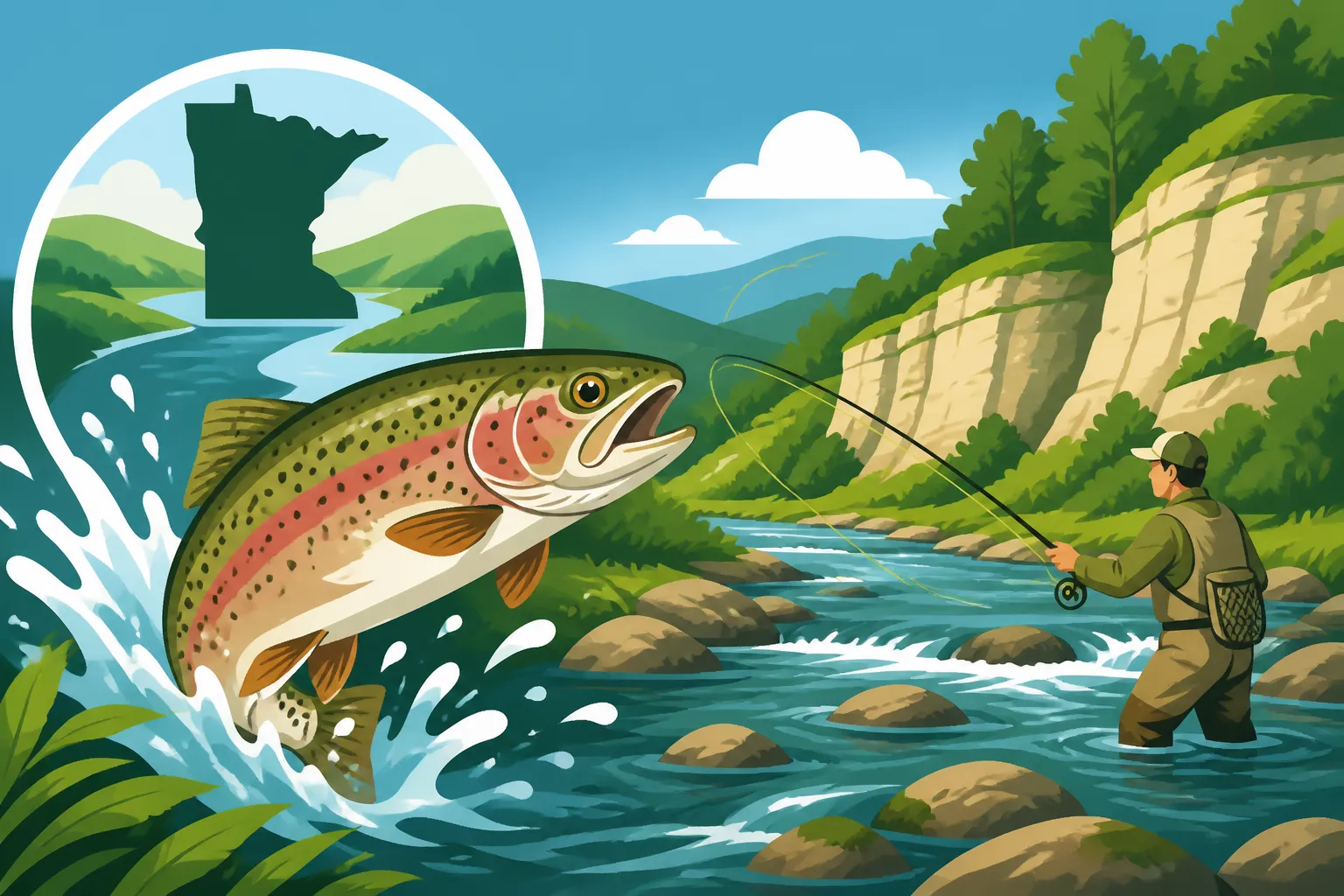
Best Trout Streams in the Driftless Area
If you've ever dreamt of fly fishing for wild trout in serene, spring-fed streams, but felt completely overwhelmed by the sheer number of small creeks and rivers winding through Minnesota's southeastern corner, you're not alone. It's tough to know where to start when every bend in the road seems to offer another promising stretch of water. This guide is here to cut through the confusion, helping you discover the best trout streams in Minnesota's famous Driftless Area and equip you with the knowledge to make your next fishing trip a truly memorable one.
Understanding Minnesota's Driftless Area for Trout Fishing
The Driftless Area is truly a unique slice of Minnesota, especially for us anglers. It's a region that escaped the flattening power of the last glaciers, leaving behind a landscape of steep bluffs, deep valleys, and winding rivers. This distinctive topography is what makes it such a phenomenal habitat for trout, offering pristine conditions that are hard to find elsewhere in the state.
What Makes the Driftless Area Unique for Trout?
The magic of the Driftless Area lies in its geology, specifically its karst topography. Imagine a landscape riddled with limestone bedrock, where rainwater seeps down, carves out underground channels, and then emerges as cold, clear springs. These springs feed the numerous small streams and creeks that crisscross the region, maintaining a consistently cool water temperature throughout the year. Trout, being cold-water fish, absolutely thrive in these stable conditions. The spring-fed nature means less temperature fluctuation, even during hot summers, and the water typically has a healthy pH and plenty of oxygen.
These streams are often characterized by their gravel and rock bottoms, lush streamside vegetation, and a constant flow of nutrient-rich water. This combination creates an ideal environment for aquatic insects – the primary food source for trout. Caddisflies, mayflies, and stoneflies hatch in abundance, providing a veritable buffet for hungry trout. The steep valley walls offer natural shade, further helping to keep water temperatures down, and the winding nature of the streams creates plenty of holding water, riffles, runs, and deep pools where trout can lie in wait. It’s a truly picturesque and productive place to cast a line.
Types of Trout You'll Find Here
When you're wading through the Driftless streams, you'll primarily encounter three species of trout, each with its own charm and preferred haunts. Knowing what to expect can help you tailor your approach.
First up are the Brook Trout. These are often the native kings of the smaller, colder headwater streams. They're typically smaller than their brown or rainbow cousins, but what they lack in size, they make up for in dazzling colors: iridescent spots of red and blue on a dark olive background, often with white-tipped fins. Brook trout prefer the coldest, most pristine waters, often hiding under undercut banks or around fallen logs. Catching a wild brook trout from a tiny stream feels like finding a piece of living history. If you're wondering how to catch Brook Trout in Minnesota (Step by Step), focusing on delicate presentations in tight cover is key.
Then there are the Brown Trout, often the most abundant and largest trout in the Driftless. Browns are known for their hardiness and willingness to feed on a wide variety of prey, making them a favorite for many anglers. They can tolerate slightly warmer water than brook trout and often inhabit the mid-to-lower sections of streams where water flow is a bit stronger and insect life is plentiful. Their coloration varies widely, from golden brown to silvery, with distinctive dark spots and sometimes red or orange halos. Browns are notorious for being wary, making them a challenging but rewarding catch. Learning how to catch Brown Trout in Minnesota (Step by Step) often involves stealth and precise casts.
Finally, you'll sometimes find Rainbow Trout, especially in streams that have been stocked or have tributaries connected to larger river systems. Rainbows are known for their acrobatic fights once hooked and their prominent pink or red band running down their sides. While less common as naturally reproducing populations in the smallest Driftless streams compared to browns and brookies, they offer an exciting fishing experience where they are present. They generally prefer faster, oxygen-rich water. For tips on how to catch Rainbow Trout in Minnesota (Step by Step), consider areas with good current and deeper pools.
Top Trout Streams to Explore in the Minnesota Driftless
With so many streams to choose from, picking a starting point can be daunting. But a few standout rivers and creeks consistently deliver fantastic trout fishing experiences in Southeast Minnesota.
Southeast Minnesota's Premier Trout Fisheries
These are the backbone of Minnesota's Driftless trout fishing, offering diverse conditions for anglers of all skill levels.
The Root River system, particularly its South Branch and Middle Branch near Lanesboro, is arguably the most famous and productive trout fishery in the Minnesota Driftless. The town of Lanesboro itself is often called the "Bed and Breakfast Capital" and "Bluff Country" gateway, making it a perfect hub for a fishing weekend. The Root River offers miles of accessible public water, with plenty of designated trout stream easements marked clearly. You'll find a healthy mix of brown and rainbow trout here, with some wild brookies in the colder headwaters. The stream itself is relatively wide in many sections, offering good opportunities for both fly and spin fishing. Access points are plentiful, including state parks and DNR parking areas. You can spend days exploring different stretches, from gentle riffles to deeper, inviting pools.
Another jewel is the Whitewater River in the Whitewater State Park area, especially its North and Middle Forks. Located nearAltura, the Whitewater is a truly scenic river, flowing through steep bluffs and dense forests. This system is heavily managed by the Minnesota Department of Natural Resources (DNR) and boasts excellent populations of brown and rainbow trout. The park offers great public access, camping, and well-maintained trails that follow the river, making it easy to hop from one promising spot to another. The water can be a bit more challenging to wade in spots due to varying depths and currents, but the rewards are often worth the effort. It's a fantastic place for a dedicated day of stream fishing.
Hay Creek near Red Wing is another consistent performer. This stream is renowned for its strong population of wild brown trout, offering a more intimate fishing experience compared to the wider Root or Whitewater. Hay Creek flows through a mix of private and public lands, so paying attention to access points and respecting landowners is crucial. The creek features classic trout stream characteristics: clear water, defined runs, and plenty of bends and undercut banks that hold fish. It's a great spot for those who enjoy a bit more solitude and the challenge of fooling wily browns.
| Stream Name | Primary Trout Species | Typical Fishing Experience | Notes |
|---|---|---|---|
| Root River | Brown, Rainbow, Brook | Accessible, diverse, good for all skill levels | Popular sections near Lanesboro, plenty of public easements, often stocked. |
| Whitewater River | Brown, Rainbow | Scenic, managed, good for wading, consistent action | Flows through Whitewater State Park, multiple forks, can have strong currents. |
| Hay Creek | Brown (wild) | More intimate, challenging, rewarding for experienced anglers | Good wild brown trout population, check public access points carefully near Red Wing. |
| Rush Creek | Brown, Brook | Smaller, good for stealthy approaches, can be less crowded | Excellent wild trout, often requires careful wading and presentation. |
Hidden Gems and Lesser-Known Spots
While the big names draw a lot of attention, part of the joy of fishing the Driftless is discovering those smaller, less-pressured streams. These hidden gems often require a bit more exploration but can offer incredibly rewarding experiences.
Rush Creek near Lewiston is a prime example. It's a smaller stream compared to the Root or Whitewater, but it holds a fantastic population of wild brown and brook trout. The beauty of Rush Creek is its more untamed feel. You'll often find yourself navigating brushy banks and wading through narrower channels, which deters some anglers, leaving more fish for those willing to put in the effort. Stealth and precise casting are paramount here. These smaller creeks force you to slow down, observe the water, and truly hunt for fish, making the catches feel even more earned.
Similarly, Beaver Creek in Beaver Creek Valley State Park near Caledonia offers a beautiful and often less crowded experience. This stream, like many others in the Driftless, is spring-fed and holds a good population of brown trout, with some brook trout in its colder reaches. The park setting provides easy access and a picturesque backdrop for your fishing adventure. While it might not produce the sheer numbers of fish as some larger rivers, the quality of the experience and the opportunity for solitude make it a top pick for many local anglers. These smaller waters are also excellent places to practice catch and release best practices in Minnesota, ensuring healthy populations for future trips.
Don't overlook the countless unnamed or minimally signed tributaries that feed into these larger systems. Often, a quick look at a detailed map (like those found on the DNR website or fishing apps) will reveal tiny blue lines that hold surprising numbers of small, feisty brook trout, especially in their upper reaches. These require a spirit of adventure and a willingness to explore, but they often lead to some of the most memorable and solitary fishing moments in the Driftless.
Essential Gear and Tactics for Driftless Trout
Successfully targeting trout in the Driftless Area requires a blend of appropriate gear and well-honed techniques. Whether you prefer the graceful art of fly fishing or the straightforward approach of spin fishing, there's a method for you.
Recommended Gear for Stream Trout Fishing
For many, fly fishing is synonymous with Driftless trout. A lightweight fly rod, typically a 7 to 9-foot rod in a 3 or 4-weight, is ideal for the smaller streams and delicate presentations required. Pair this with a matching reel and a weight-forward floating line. Your fly box should be stocked with a variety of patterns that imitate the prevalent aquatic insects:
- Dry Flies: For surface feeders, include Adams, Caddis, Parachute Hare's Ear, and various 'hopper patterns for summer.
- Nymphs: When fish are feeding subsurface, a selection of Pheasant Tail, Hare's Ear, Prince Nymph, and Scud patterns are indispensable.
- Streamers: Small Woolly Buggers in olive or black can entice larger, more aggressive trout.
Beyond the rod and reel, a good pair of waders (chest waders are often preferred) and wading boots with felt or sticky rubber soles are crucial for comfortable and safe wading in the sometimes slick, rocky streambeds. A vest or sling pack for carrying your fly box, tippet, nippers, and forceps is also essential.
If spin fishing is more your style, you'll want an ultra-light spinning rod, typically 5 to 6 feet long, paired with a small spinning reel spooled with 4-6 lb test monofilament or fluorocarbon line. Small inline spinners like Mepps Aglia or Panther Martin, tiny spoons, and micro jigs (tipped with a small piece of nightcrawler or a wax worm) are highly effective. When considering what is the best bait for walleye in Minnesota, you might think of larger offerings, but for stream trout, downsize dramatically. A few small split-shot weights and an assortment of tiny hooks are also good to have on hand. Even a simple worm and bobber setup can be incredibly effective in certain pools, particularly for beginners or those seeking panfish alongside trout.
Effective Fishing Techniques and Etiquette
Regardless of your chosen method, stealth is paramount in these clear, often shallow streams. Trout are incredibly wary. Approach the stream cautiously, keeping a low profile and avoiding sudden movements. Wearing drab colors, like greens and browns, can also help you blend into the surroundings.
For fly fishing, learning how to catch stream trout: nymphs & dries involves mastering various casting techniques to present your fly naturally. Often, short, accurate casts are more effective than long, ambitious ones. Focus on upstream presentations, allowing your fly to drift naturally downstream without drag. "Reading the water" is a critical skill: look for current breaks, deeper pools, undercut banks, and submerged logs – these are prime holding lies for trout. A good drift is often the difference between catching and spooking a fish.
Spin fishing also benefits from a stealthy approach. Cast upstream or across-stream, allowing your lure to drift or be retrieved naturally with the current. Vary your retrieve speed and depth until you find what the fish are responding to. Pay attention to structure and try to mimic small baitfish or insects.
Stream etiquette is also vital for preserving the quality of the experience for everyone. Always respect private property signs and never trespass. Leave no trace behind; pack out everything you pack in. If you encounter another angler, give them plenty of space – often 50-100 yards is considered polite, or simply ask if you can pass. Consider practicing catch-and-release, especially for larger breeding-size trout, to help maintain healthy fish populations. If you do keep fish, be mindful of Minnesota fishing limits: bag & possession.
Planning Your Driftless Trout Fishing Adventure
A little preparation goes a long way in ensuring a successful and enjoyable trip to the Driftless Area. From understanding regulations to knowing where to find local intel, these tips will help you hit the water with confidence.
Regulations, Licenses, and Season Dates
Before you even think about casting a line, you need to be familiar with Minnesota's fishing regulations. Every angler 16 and older needs a valid Minnesota fishing license: cost, types & how to buy (2026). For trout fishing specifically, you'll also need a Minnesota trout stamp & trout regulations, which is an additional endorsement on your license. This stamp helps fund trout stream habitat improvements, so it's money well spent!
The Minnesota DNR website is your go-to source for the most up-to-date regulations. Pay close attention to the specific Minnesota fishing seasons & opener dates (2026) for stream trout. Unlike other species, trout streams often have distinct open and closed seasons, as well as special regulations that can vary by stream or even by specific stretch of river. For example, some sections might be catch-and-release only, artificial lures only, or have specific slot limits. Always consult the current Minnesota fishing regulations PDF: where to find it. Make sure you check the Stream Trout Season & Limit in Minnesota details before you head out. These rules are in place to protect the fragile trout populations and their habitats.
Access Points and Local Resources
Finding public access to these streams can sometimes be tricky due to the mix of public and private land. The Minnesota DNR provides excellent online mapping tools that highlight designated trout streams and public easements. These maps are invaluable for scouting locations before you go. State parks, like Whitewater State Park and Beaver Creek Valley State Park, offer fantastic public access and often have staff on hand who can provide local advice.
Local bait shops and sporting goods stores in towns like Lanesboro, Preston, Rushford, and Caledonia are treasure troves of information. The folks working there are often avid anglers themselves and can tell you what flies or lures are currently working, water conditions, and even point you to less-pressured spots. They often carry the specific local patterns that are deadly on their home waters.
If you're new to trout fishing or the Driftless Area, consider hiring a local guide. A good guide can rapidly accelerate your learning curve, show you productive water, and teach you the nuances of stream etiquette and presentation. Websites like FishingBooker allow you to find and book experienced local guides for a day on the water, providing all the gear and expertise you'll need. It's a fantastic way to maximize your time and learn from a seasoned pro. Another great resource is local conservation groups, many of which focus specifically on trout stream preservation and improvement in the Driftless Area and can often offer advice or host public events.
Disclaimer
Please remember that fishing regulations, seasons, and conditions can change. Always consult the latest official Minnesota Department of Natural Resources (DNR) regulations before heading out on the water. This guide is for informational purposes only and does not constitute legal advice.