Rainy Lake Walleye Limit & Slot
Getting out on the expansive, island-dotted waters of Rainy Lake is a dream for many, but the complexity of border water regulations can quickly turn a relaxing trip into a stressful exercise in legal navigation. Whether you are launching from International Falls or Ranier, understanding the specific 18-to-26-inch slot limit and the shared harvest rules with Ontario is essential to avoid heavy fines. This guide breaks down every nuance of the current walleye regulations to ensure your cooler stays legal and your focus remains on the bite.
Understanding the Rainy Lake Walleye Regulations for 2026
Rainy Lake is managed as a border water, which means the rules differ significantly from an inland lake like Mille Lacs or Gull Lake. The primary goal of the Minnesota Department of Natural Resources (DNR) is to maintain a healthy age structure in the walleye population, which requires protecting the "spawners"—those mid-sized fish that are most productive for the lake's future. For the 2026 season, the most critical rule to memorize is the protected slot limit, which dictates exactly which fish must go back into the water immediately.
The Protected Slot Limit Breakdown
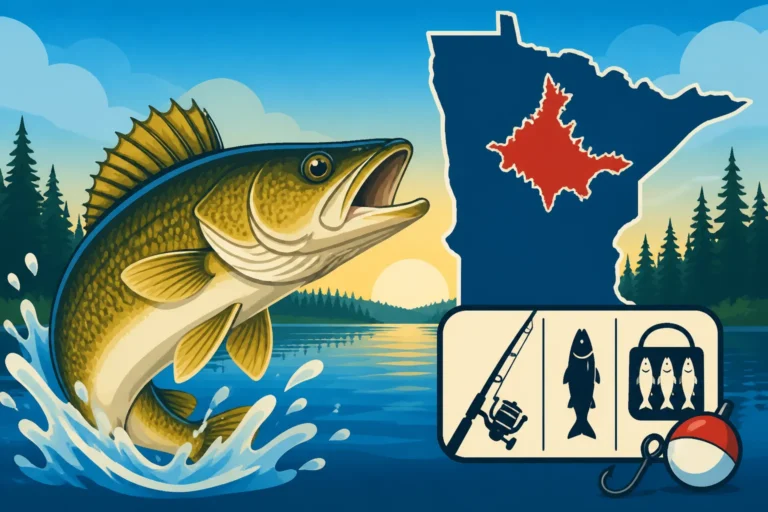
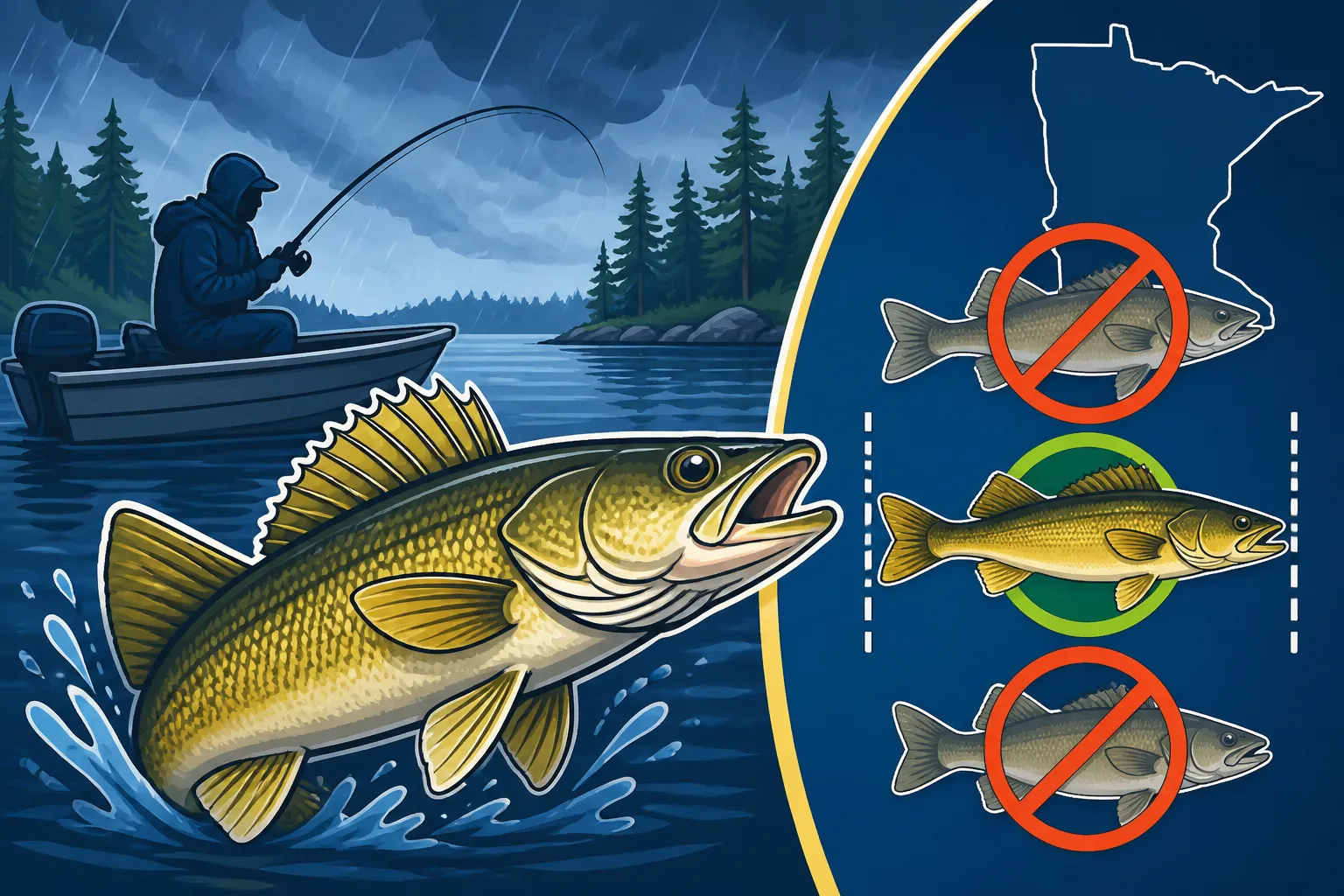
The current regulation for the Minnesota side of Rainy Lake mandates that all walleye between 18 and 26 inches must be immediately released. This is often referred to as the "protected slot." If you pull up a beautiful 21-inch walleye that would look perfect in a frying pan, the law is very clear: it cannot even go into the livewell for a quick photo later. It must be measured and returned to the water right away. Many anglers find this frustrating because the 18-to-22-inch range often represents the most aggressive biters in the system.
The "one over" rule applies here as well. You are allowed to keep exactly one walleye that exceeds 26 inches in your daily possession. However, most veteran Rainy Lake anglers choose to release these trophy-sized fish to preserve the genetics of the lake. If you do catch a 28-inch giant, you have a choice to make, but remember that once you put that one fish in the livewell, any other fish over 18 inches caught for the rest of the day must be released, no exceptions. Understanding Rainy Lake Fishing Regulations (2026) is the first step in planning a successful trip to the Northwoods.
Daily and Possession Limits
On the Minnesota side of Rainy Lake, the combined limit for walleye and sauger is eight fish. However, there is a "sub-limit" for walleye specifically: you cannot have more than four walleye in your possession. This means your bag of eight could be four walleye and four sauger, or one walleye and seven sauger, but never five walleye. This distinction catches many people off guard, especially those who are used to inland limits where the numbers might be different.
It is also vital to understand the definition of "possession." In Minnesota, possession includes fish in your livewell, fish in your cooler at the cabin, and fish in your freezer at home. If you have four walleye fillets in the freezer from yesterday's catch, you are at your legal limit and cannot keep any more walleye today until you eat those fillets. Reviewing the Minnesota Possession Limits Explained can help clarify these often-misunderstood rules before you hit the boat ramp.
Why the 18-to-26 Inch Slot Exists
Conservation isn't just a buzzword on Rainy Lake; it’s a necessity for a body of water that faces intense pressure from both sides of the border. Walleyes in these cold, northern waters grow slowly. A 20-inch walleye might be seven to ten years old. By protecting the fish in that 18-to-26-inch range, the DNR ensures that the most fertile females are allowed to spawn multiple times before they either reach trophy size or eventually succumb to natural causes.
This management strategy has proven incredibly effective. Rainy Lake consistently produces high numbers of walleye, and the average size of the fish remains impressive compared to lakes without such strict slot limits. When you release a 22-inch fish, you aren't just following a rule; you are contributing to the longevity of one of the finest fisheries in North America. For those interested in the broader picture, the Minnesota Walleye Limit & Size Rules provide context on how these strategies vary across the state.
Navigating the Minnesota-Ontario Border Rules
One of the biggest challenges of fishing Rainy Lake is that the fish don't care about international borders, but the game wardens certainly do. The lake is split between Minnesota and Ontario, and the regulations change the moment you cross that invisible line in the water. Navigating these two sets of rules requires a high level of situational awareness and the right paperwork.
Fishing Across the International Line
If you are fishing on the Minnesota side, you must follow Minnesota rules and possess a valid Minnesota Fishing License: Cost, Types & How to Buy (2026). However, if your GPS shows you have drifted into Canadian waters, you are now subject to Ontario provincial regulations. You cannot fish in Ontario waters with only a Minnesota license, and you cannot keep fish according to Minnesota rules if you are physically in Ontario.
If you intend to fish both sides, you must have both a Minnesota license and an Ontario Outdoors Card with a fishing tag. Furthermore, you must be aware of the "Ontario Sport" vs. "Ontario Conservation" license limits. The Ontario side often has different size restrictions, such as a requirement to release all walleye between 13.8 and 18.1 inches, depending on the specific zone. Always check the current Ontario border water rules if you plan to cross over, as the penalties for illegal possession in Canada can include the seizure of your fishing gear and even your boat.
Remote Area Border Crossing and Customs
In the past, simply having two licenses was enough, but security requirements have tightened. To legally cross the border by water to fish in Ontario, you generally need to have a Remote Area Border Crossing (RABC) permit or report to customs through a designated port of entry. The RABC permit allows you to cross the border in remote areas without reporting to a physical customs office, making it a favorite for Rainy Lake anglers.
However, keep in mind that an RABC does not allow you to land your boat on Canadian soil, nor does it allow you to bring "prohibited" bait across. For example, Minnesota allows certain live baits that Ontario may ban to prevent the spread of invasive species. If you are crossing the line, it is often safer to stick to artificial lures or buy your bait in the country where you plan to fish. Understanding Aquatic Invasive Species (AIS) Rules for Boaters is crucial when moving between different water bodies and jurisdictions.
Transiting with Fish Between Jurisdictions
A common point of confusion occurs when an angler catches fish legally in Ontario and then tries to boat back to their resort in Minnesota. Under Minnesota law, you cannot possess fish on Minnesota waters that do not comply with Minnesota's size and limit rules, regardless of where they were caught, unless you are in "direct transit." This means you should not stop to fish on the Minnesota side if you already have a limit of Canadian fish in your livewell that doesn't match Minnesota's slot.
To stay safe, most guides recommend fishing one side or the other for the day. If you start in Ontario and get your limit, head straight back to the dock. Mixing fish from two different jurisdictions in one livewell is a recipe for a long and expensive conversation with a conservation officer. If you’re a visitor, looking into Nonresident Fishing in Minnesota: Licenses & Rules can help you stay on the right side of the law.
| Regulation Category | Minnesota Side (Rainy Lake) | Ontario Side (Rainy Lake – Sport License) |
|---|---|---|
| Daily Walleye Limit | 4 (within a combined 8 walleye/sauger) | 4 |
| Protected Slot | 18" to 26" (Must be released) | 13.8" to 18.1" (Must be released) |
| Trophy Allowance | 1 over 26" | 1 over 18.1" |
| Sauger Limit | Combined with walleye for 8 total | Usually 4 (check specific Zone 5 rules) |
| Bait Restrictions | Standard MN rules apply | No live bait from MN across border |
Practical Tips for Measuring and Handling Rainy Lake Walleye
When you are dealing with a slot limit that is measured to the inch, precision is your best friend. A fish that is exactly 17.9 inches is a delicious dinner; a fish that is 18.1 inches is a $200 fine. Because fish can flop, stretch, or be measured incorrectly, you need a system that ensures accuracy every single time.
Accurate Measurement Techniques
Every boat on Rainy Lake should be equipped with a high-quality, flat measuring board. Soft tape measures are notoriously inaccurate because they follow the curve of the fish's body, making them appear longer than they actually are. When measuring a walleye, lay it flat on the board with its snout touching the upright "zero" mark.
Close the fish's mouth to get an accurate reading. For the tail, Minnesota DNR rules state that you can squeeze the tail lobes together to get the maximum length. If any part of the tail touches the 18-inch mark, that fish is legally in the slot and must be returned. It is always better to be conservative. If it’s too close to call, let it go. The frustration of losing a meal is nothing compared to the frustration of a citation. Learning How to Catch Walleye in Minnesota (Step by Step) involves mastering these small but vital details.
Proper Catch and Release for Trophy Fish
Handling a walleye over 26 inches requires care. These are the "legacy" fish of the lake. When you land a big one, try to keep it in the water as much as possible while removing the hook. If you must bring it into the boat for a photo, have your camera ready before you lift the fish.
Avoid "vertical hangs" by the gill plate, as this can damage the fish's internal organs and jaw. Instead, support the fish with two hands—one under the belly and one gripping the tail or the base of the head. In the summer, when the water is warm, these large fish can stress quickly, so minimize their time out of the water to under 30 seconds. For more on this, check out Catch and Release Best Practices in Minnesota.
Dealing with Deeply Hooked Slot Fish
It’s a scenario every angler hates: you catch a beautiful 22-inch walleye, but it has swallowed the jig deep in its throat. You know that if you release it, the fish might not survive, and it feels like a waste of a resource. However, the law in Minnesota is absolute. A fish in the protected slot must be returned to the water immediately, regardless of its condition.
If the fish is bleeding or looks unlikely to survive, you still cannot keep it. Attempting to keep a "dead" slot fish is one of the most common excuses conservation officers hear, and it rarely works to avoid a ticket. The best practice is to cut the line as close to the hook as possible rather than ripping the hook out. Walleyes have strong stomach acids that can sometimes dissolve hooks, or the hook will eventually rust out, giving the fish a fighting chance. If you find yourself catching too many slot fish and want to keep a few for a meal, consider moving to a different depth or using larger Best Walleye Lures: Jigs, Cranks & Spinners to target different schools.
Best Gear and Times for Rainy Lake Walleye
To make the most of your trip while staying within the regulations, you need to understand the seasonal patterns of the lake. Rainy Lake is a massive system, and the walleyes move significantly between the spring spawn and the late fall deep-water transition.
Seasonal Movements and Tactics
In the early season, right after the Minnesota Fishing Seasons & Opener Dates (2026), walleyes are often found in shallow bays and near moving water where they have recently spawned. This is a great time for shore anglers and those with smaller boats to find success. As the water warms in June and July, the fish move toward the main lake reefs and humps.
During the mid-summer, you will often find walleyes suspended off the edges of these reefs in 25 to 35 feet of water. This is where a good depth finder becomes invaluable. If you find you are catching nothing but small fish, try moving slightly deeper. Conversely, if every fish you pull up is in the 20-inch slot, you may need to move to shallower, sandier flats where the "eater" sized fish (14-17 inches) often congregate to feed on perch and minnows. Using a Vexilar vs Humminbird Ice Flasher: Which to Buy? style of electronics is just as important in the summer for vertical jigging as it is in the winter.
Effective Lures for Rainy Lake
The "Rainy Lake Special" is a simple 1/4 ounce or 3/8 ounce jig tipped with a minnow or a leech. Gold, orange, and chartreuse are perennial favorite colors due to the tea-colored, "stained" water of the lake. The stain is caused by tannins from the surrounding forests, and it means that walleyes are often active during the day, not just at dawn and dusk.
Trolling with crankbaits is another highly effective way to cover water and find active schools. This is particularly useful in the late summer and fall when fish are spread out across the flats. When trolling, you can often target specific size classes of fish by adjusting your depth and lure size. If you do get lucky and bring home a limit of non-slot fish, knowing How to Fillet a Walleye (Step by Step) will help you make the most of your harvest.
Minnesota Fishing Regulations Disclaimer
Fishing regulations are subject to change by the Minnesota Department of Natural Resources at any time based on biological surveys and emergency conservation needs. While this guide provides information based on the 2026 outlook, always consult the official Minnesota Fishing Regulations handbook or the DNR website before your trip to ensure you have the most current information regarding slot limits, bag limits, and special lake-specific rules.
Rainy Lake Fishing Regulations Disclaimer
This guide is for informational purposes only and does not constitute legal advice. While every effort has been made to ensure accuracy for the 2026 season, regulations on border waters like Rainy Lake are complex and can be updated mid-season by both Minnesota and Ontario authorities. Always verify current laws with the Minnesota DNR and Ontario Ministry of Natural Resources before fishing.