Lake Osakis Walleye Limit & Slot
Standing on the deck of your boat at Battle Point on a breezy morning, the last thing you want to do is second-guess whether that 19-inch walleye belongs in the livewell or back in the water. Regulations can feel like a maze of legalese when you just want to fish. This guide breaks down the current Lake Osakis walleye limit and slot rules to ensure you stay legal and protect this incredible fishery.
Understanding the Current Lake Osakis Walleye Limit and Slot
Navigating the rules on Lake Osakis requires a clear understanding of both the daily bag limit and the specific size restrictions that apply to walleye. Osakis is a unique "border" lake in a sense, straddling the line between Douglas and Todd counties, and it has long been a crown jewel of the Alexandria area. Because it faces significant fishing pressure from both locals and tourists staying at the many resorts lining its shores, the Minnesota Department of Natural Resources (DNR) maintains specific standards to keep the population healthy.
The Daily Bag and Possession Limit
For the 2026 season, the daily bag limit for walleye on Lake Osakis remains at six fish. However, it is vital to distinguish between a "daily limit" and a "possession limit." You are allowed to catch and keep six walleye in a single day, but you cannot have more than six walleye in your possession at any time—this includes fish in your freezer at home or in your cooler at the cabin. If you’ve already got four fillets in the fridge from yesterday’s haul, you can only legally keep two more fish today. For a deeper dive into how these rules apply across the state, you should check out our guide on Minnesota Possession Limits Explained to avoid any costly misunderstandings with a conservation officer.
Many anglers mistakenly believe that if they eat fish for lunch, those fish no longer count toward their daily limit. This is a common misconception that can lead to a ticket. Once a fish is reduced to your possession, it counts toward your daily limit. If you catch six, eat three for lunch, and then catch three more in the evening, you have technically harvested nine fish in one day, which is a violation.
The Size Restrictions and One Over Rule
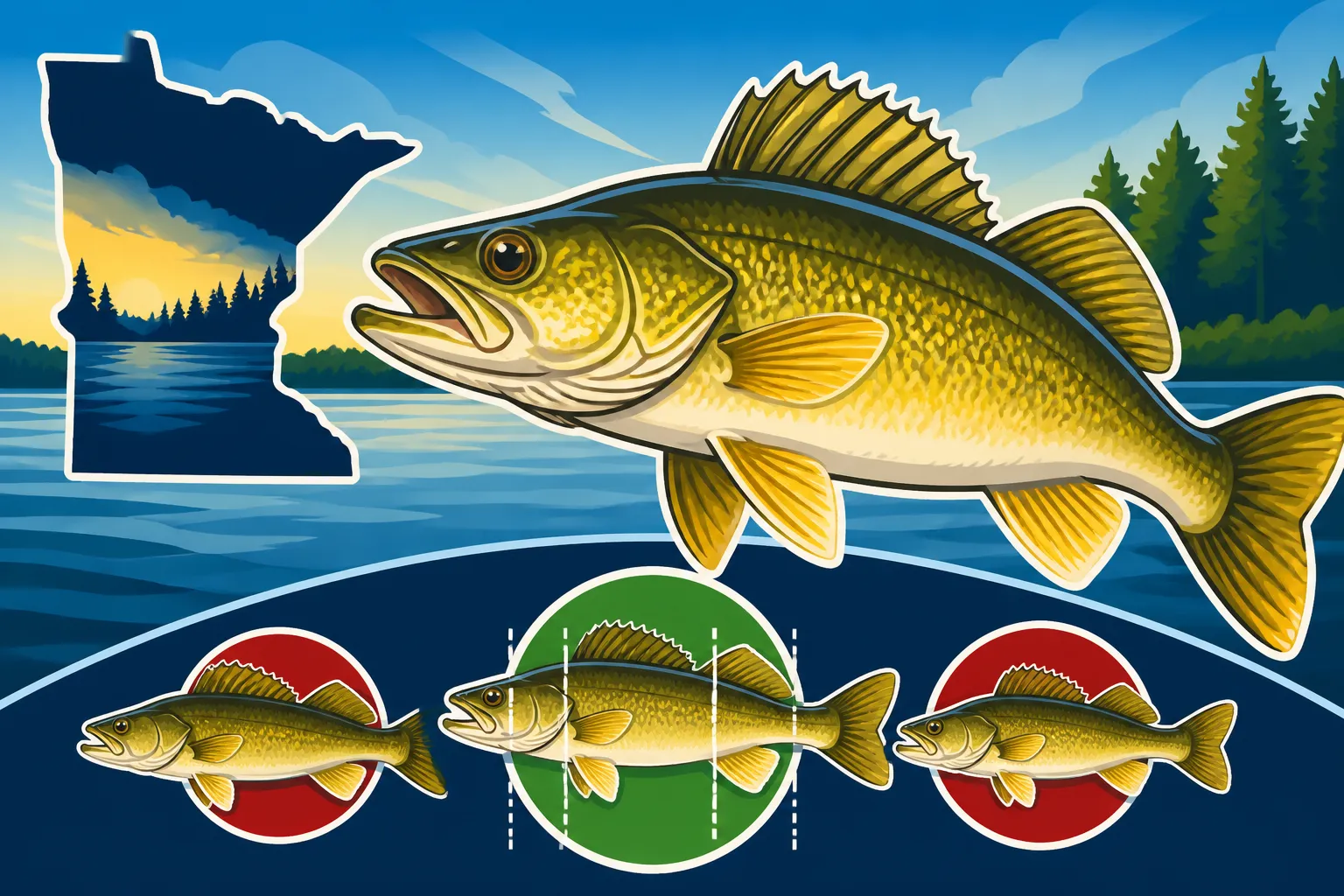
The most critical part of the Lake Osakis walleye regulations is the size restriction. While some lakes in Minnesota have a specific "protected slot" (a range of inches where fish must be released), Osakis currently follows the statewide standard for walleye unless a temporary emergency rule is enacted. This means all walleye under 20 inches can be kept, but you are only allowed to keep one walleye that is over 20 inches in length as part of your six-fish limit.
This "one over 20" rule is designed to protect the large, spawning-age females that are essential for the lake's natural reproduction. Lake Osakis has a fantastic growth rate due to its high-nutrient water and abundant forage, meaning fish can reach that 20-inch mark relatively quickly. When you're out on the water, having a high-quality measuring board is non-negotiable. A fish that looks 20 inches might actually be 20.25 inches, and if you already have a big fish in the boat, that quarter-inch could result in a fine.
Why These Regulations Exist on Lake Osakis
It might feel frustrating to release a beautiful 24-inch walleye because you already have one in the livewell, but these rules are the reason Lake Osakis remains a top-tier destination. The lake is relatively shallow and fertile, which makes it a "walleye factory," but that also makes the fish more vulnerable to being over-harvested during peak times, such as the spring opener or the winter ice fishing season.
Managing Fishing Pressure and Year Classes
Lake Osakis sees a massive amount of "fishing effort"—a term the DNR uses to describe the number of hours anglers spend with lines in the water. Because it is so accessible and has a reputation for producing "eater" sized fish (14 to 17 inches), the pressure is constant. By limiting the harvest of larger fish, the DNR ensures that there are always enough mature walleye to spawn.
The lake’s biology is also prone to "year-class" fluctuations. Some years, the conditions are perfect, and millions of fry survive; other years, the hatch is weak. By keeping the limit at six but restricting the size, the state can smooth out these fluctuations, ensuring that even after a poor spawning year, the lake doesn't get "fished out." Before you head out to test these rules, make sure your paperwork is in order by reading about the Minnesota Fishing License: Cost, Types & How to Buy (2026).
The Impact of Invasive Species on Regulations
Lake Osakis, like many lakes in the Alexandria chain, has been impacted by Zebra Mussels. These invasive species filter the water, making it much clearer than it was twenty years ago. Clearer water means walleye can see your line more easily, but it also means that the sunlight penetrates deeper, shifting where the fish live and how they grow.
When water clarity increases, walleye often move to deeper structures or heavier weeds during the day. This shift in behavior can sometimes lead to an "apparent" decline in fish numbers because they are harder to catch, even if the population is stable. The DNR monitors these environmental changes closely and adjusts limits to ensure that the combination of clear water and modern technology (like forward-facing sonar) doesn't lead to an unsustainable harvest of the lake's prime specimens.
How to Legally Measure and Transport Your Catch
The moment you decide to keep a fish, you are responsible for its legal status. This begins with an accurate measurement and ends with how those fish are packaged for the trip home. On Lake Osakis, where the wind can whip up quickly, trying to measure a squirming walleye on a cheap plastic tape measure is a recipe for disaster.
Proper Measurement Techniques
To measure a walleye legally in Minnesota, the fish must be laid flat on its side. The mouth should be closed and pressed against a headboard at the "zero" mark. The tail should be pinched together to achieve the maximum possible length. This is known as the "total length." On Lake Osakis, if you are lucky enough to hook into a trophy, remember that a fish is considered "over 20 inches" the moment it touches that 20-inch line on the ruler.
If you are unsure if a fish is a legal keeper, the safest and most ethical choice is to release it. With the abundance of fish in Osakis, you’ll likely find another one that is clearly within the legal limit soon enough. If you’re planning on a fish fry, knowing How to Fillet a Walleye (Step by Step) will help you make the most of those "eater" sized fish once you get them back to the dock.
| Species | Daily Limit | Size Restrictions |
|---|---|---|
| Walleye | 6 | Only 1 over 20" |
| Northern Pike | 3 | See Minnesota Northern Pike Limits by Zone |
| Crappie | 10 | Special regulation for Lake Osakis |
| Sunfish | 10 | Special regulation for Lake Osakis |
| Yellow Perch | 20 | No size limit |
Transporting Fish From Lake Osakis
Minnesota law is very specific about how fish must be transported. You cannot transport "mystery fillets." Each fillet must have a 1-inch square patch of skin (with scales) attached so that a conservation officer can identify the species. Furthermore, if you are transporting fish that have a size limit—like the walleye on Osakis where only one can be over 20 inches—you must transport those fish in a way that they can still be measured if they are not already filleted.
Most anglers on Osakis choose to fillet their fish at the resort or a public cleaning station. If you do this, ensure your "one over 20" is clearly identifiable if it was a trophy you decided to keep for the pan. Also, be aware of the rules regarding Aquatic Invasive Species (AIS) Rules for Boaters before you leave the access; you must drain all water from your livewell and pull your plug before leaving the Lake Osakis landing.
Tips for Catching Keeper-Sized Walleye on Osakis
Finding walleye on Lake Osakis is rarely the problem; finding the ones that fit your desired size profile can be more of a challenge. Because the lake has a lot of "numbers," you might find yourself sorting through many 10-to-12-inch fish before hitting that 15-to-18-inch "sweet spot" for the frying pan.
Seasonal Patterns and Locations
In the early season, following the May opener, walleye are often found in the shallower bays like Miller’s Bay or near the emergent vegetation on the north end. During this time, they are hungry and aggressive. As the water warms in June and July, the fish migrate toward the "humps" and mid-lake bars. The famous "Two-Mile Bar" and the various rock piles in the central basin become hotspots.
When fishing these deeper structures, you are more likely to encounter those larger fish over 20 inches. If you find yourself consistently catching fish that are too big to keep (a "good" problem to have), consider moving slightly off the structure or targeting different depths to find the schools of "eaters." Experimenting with Best Walleye Lures: Jigs, Cranks & Spinners can also help you target specific size classes. Often, a larger profile lure like a #7 or #9 Rapala will discourage the smaller fish and attract the legal-sized keepers.
Mastering the Special Panfish Rules
It is worth noting that while you are targeting walleye, Lake Osakis has special regulations for other species that might end up on your line. Currently, there is a reduced limit on Minnesota Crappie & Sunfish Limits for Lake Osakis, which is 10 for each species. Many anglers enjoy a "mixed bag" approach, and Osakis is legendary for its "jumbo" sunfish. Just remember that if you are out for walleye, you must still adhere to the specific possession limits for every species in your boat.
If you happen to catch a Northern Pike while trolling for walleye, be sure you understand the zone-based rules. Osakis falls within the North-Central Zone, which has its own specific set of regulations regarding what you can keep. Always have a copy of the current Minnesota Fishing Regulations handy, or better yet, download the PDF to your phone so you can check it even when you're miles from shore.
Minnesota Fishing Regulations Disclaimer
Regulations are subject to change by the Minnesota Department of Natural Resources (DNR) at any time, including mid-season emergency closures or slot adjustments. The information provided in this guide is for educational purposes and reflects the rules for the 2026 season as currently understood. Always verify the most up-to-date regulations on the official MN DNR website or at a local bait shop in Osakis before hitting the water. Responsibility for legal compliance rests solely with the individual angler.