Best Gear for Walleye Fishing in Minnesota
Trying to navigate the seemingly endless choices of fishing gear for walleye in Minnesota can feel like a daunting task, even for seasoned anglers. With so many techniques, lake types, and seasonal changes, it's easy to get overwhelmed wondering if you have the right rod, the best lure, or the necessary electronics. This guide will cut through the noise, breaking down the essential gear you need to confidently target walleye across Minnesota's diverse waters, ensuring your next trip is a success.
Understanding Walleye Behavior and Habitat for Smart Gear Choices
Before we even talk about specific rods or lures, it's crucial to understand a bit about walleye themselves. These elusive, light-sensitive predators dictate the gear we choose. Knowing where they like to hang out and what they like to eat through the seasons will make your gear selection much more intuitive and effective.
Seasonal Movements and Preferred Depths
Walleye are constantly on the move, driven by water temperature, light conditions, and spawning cycles. In early spring, right after the ice melts and leading up to the opener, they're often found in shallower areas near river mouths or rocky points where they spawn. During this time, lighter jigs and live bait presentations are key. As the water warms in summer, walleye tend to migrate to deeper structures like humps, reefs, and breaklines, especially during the day. This is when deep-diving crankbaits and bottom bouncers really shine. Come fall, they often move back to shallower flats and transition areas as they feed heavily before winter, presenting opportunities for both jigging and trolling. During winter, when the lakes are locked under ice, they might be found suspended over deep water or hugging structure, requiring specialized ice fishing gear.
Being able to adapt your presentation to these depths is paramount. If you’re targeting fish in 8 feet of water, a heavy 1-ounce jig isn't going to be nearly as effective as a lighter 1/8th or 1/4-ounce jig. Conversely, trying to get a small jig down to walleye holding in 30 feet of water can be incredibly frustrating. Thinking about the average depths you'll be fishing during a particular season or on a specific lake, like when you're targeting fish on the Mille Lacs mud flats, will directly influence the weight of your lures and the action of your rod.
Forage and Presentation Styles
What walleye eat significantly impacts what lures or bait they'll strike. In Minnesota, their primary forage often includes yellow perch, cisco (tullibee), shiners, and various minnow species. Sometimes, they'll key in on leeches or nightcrawlers. This varied diet means you need a versatile tackle box. Matching the hatch, as they say, can be incredibly effective. If the walleye are gorging on small perch, a perch-pattern crankbait or jig might be the ticket. If shiners are abundant, a jig and shiner minnow combo becomes a deadly choice.
This brings us to presentation styles. Are the walleye aggressive and chasing down fast-moving baits? Then trolling crankbaits or snap-jigging might be best. Are they lethargic and requiring a slower, more subtle approach? A Lindy Rig or a slip bobber setup with live bait could be exactly what they want. Understanding these nuances helps you choose the right type of lure and, in turn, the appropriate rod and reel combination to fish it effectively. You wouldn't use a heavy trolling rod for delicate slip bobber presentations, just as you wouldn't try to pull a deep-diving crankbait with an ultralight spinning rod.
Essential Rods and Reels for Minnesota Walleye
The rod and reel are your connection to the fish, and having the right setup for each technique can make all the difference between a frustrating day and a successful one. Minnesota walleye anglers often carry multiple combos to cover their bases.
Spinning Combos for Jigging and Live Bait
For many Minnesota walleye anglers, especially those targeting fish with jigs, live bait, or slip bobbers, a quality spinning combo is the workhorse.
- Jigging Rods: When you're "feeling" the bite, sensitivity is king. A medium-light to medium power, fast or extra-fast action spinning rod, typically 6'6" to 7' in length, is ideal. This action allows for quick hook sets and excellent feel for those subtle walleye bites. Brands like St. Croix, Fenwick, and G. Loomis are popular among serious walleye anglers for their sensitivity and durability. Pair this with a lightweight, smooth spinning reel in the 1000 to 2500 size range, like a Shimano Stradic or a Daiwa Fuego LT. This combination is perfect for pitching jigs, vertically jigging, or working a jig and minnow. For more insights on this technique, check out our guide on Jigging for Walleye: Jig & Minnow Basics.
- Slip Bobber and Live Bait Rigs: For soaking leeches or minnows under a slip bobber, or fishing a classic Lindy Rig, a slightly longer, medium-light to medium power rod with a moderate-fast action, usually 7' to 7'6", provides excellent casting distance and shock absorption. The longer length helps manage line and keep bait away from the boat, while the moderate action prevents tearing the hook out of a walleye's mouth on the hookset. A 2500 to 3000 size spinning reel offers a good balance of line capacity and smooth drag. Learning How to Use a Slip Bobber for Walleye & Crappie can drastically increase your success.
- General Purpose: If you're just starting out or on a budget, a versatile 6'6" to 7' medium-power, fast-action spinning combo can handle many different presentations adequately. You can find excellent value options from brands like Bass Pro Shops' own house brands or offerings from Ugly Stik.
Trolling Setups for Open Water
When walleye are scattered over large flats, suspended, or holding tight to deep breaklines, trolling often becomes the most efficient way to cover water and find them.
- Crankbait Trolling Rods: For pulling crankbaits, you'll want a rod with a moderate action that absorbs the surges of a hooked fish and the resistance of the lure. A medium to medium-heavy power rod, 7' to 9' in length, is common. Shorter rods (7-footers) are good for fishing close to the boat, while longer rods (8-9 footers) help spread out lines and provide a wider trolling path, reducing tangles. Ugly Stik rods are famously durable and forgiving for trolling. For reels, a line-counter baitcasting reel is nearly essential. These reels, like the Daiwa Accudepth or Okuma Cold Water, allow you to precisely replicate presentations once you find the fish, which is key to consistent trolling success. You'll find a wide selection of these setups at retailers such as Bass Pro Shops, making it easy to compare models side-by-side.
- Bottom Bouncer and Crawler Harness Rigs: Similar to crankbait trolling, bottom bouncer fishing requires a rod that can handle weight and a fighting fish. A medium to medium-heavy power, moderate-fast action rod, 7' to 8'6" in length, is ideal. The softer tip allows the fish to grab the bait without immediate resistance, while the strong backbone handles the weight of the bouncer and the fight. Line-counter reels are also preferred here for consistent depth control. These rigs are fantastic when walleye are hugging the bottom on main lake points or humps. For deeper dives into this technique, consider exploring Trolling for Walleye: Crankbaits & Leadcore.
Ice Fishing Rods and Reels
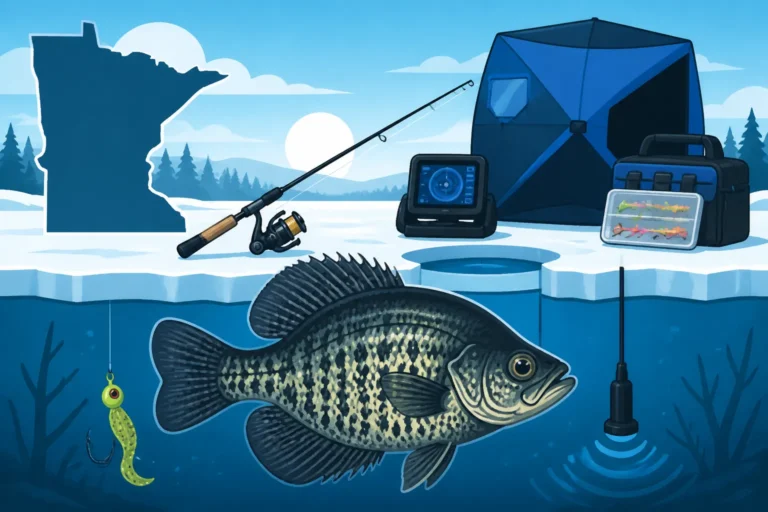
Ice fishing is a cornerstone of Minnesota fishing, and walleye are a prime target. The gear here is specialized for the unique challenges of fishing through a hole in the ice.
- Jigging Rods for Walleye: Ice rods are much shorter, typically 28 to 36 inches, to accommodate fishing in a small shelter or out in the open. For walleye, a medium to medium-heavy power, fast to extra-fast action rod is preferred. The sensitive tip allows you to detect light bites, while the strong backbone gives you the leverage to fight a fish in close quarters. Brands like Tuned Up Custom Rods, Thorne Bros., and Clam offer excellent ice rods designed specifically for walleye.
- Deadstick Rods: A "deadstick" is often a second rod set up with live bait, typically a shiner or a lively sucker minnow, under a bobber or with a rattle reel. These rods are usually medium power with a softer, more moderate action to let the fish take the bait naturally without feeling resistance. A simple spinning reel in the 1000-2000 size range works perfectly for this setup. Knowing How Many Lines Can You Use Ice Fishing in Minnesota is important for compliance.
- Ice Reels: Standard small spinning reels (500-1000 size) are common, but some anglers prefer "inline" ice reels that prevent line twist, especially when using small jigs. These specialized reels, while not strictly necessary, can improve your presentation.
| Walleye Fishing Technique | Recommended Rod Power | Recommended Rod Action | Typical Rod Length | Ideal Reel Type |
|---|---|---|---|---|
| Vertical Jigging | Medium-Light to Medium | Fast to Extra-Fast | 6'6" – 7' | Spinning (1000-2500) |
| Casting Jigs/Lures | Medium-Light to Medium | Fast to Extra-Fast | 6'6" – 7' | Spinning (1000-2500) |
| Slip Bobber / Live Bait | Medium-Light to Medium | Moderate-Fast | 7' – 7'6" | Spinning (2500-3000) |
| Trolling Crankbaits | Medium to Medium-Heavy | Moderate | 7' – 9' | Line Counter Baitcaster |
| Bottom Bouncers | Medium to Medium-Heavy | Moderate-Fast | 7' – 8'6" | Line Counter Baitcaster |
| Ice Jigging | Medium to Medium-Heavy | Fast to Extra-Fast | 28" – 36" | Spinning (500-1000) or Inline |
| Ice Deadsticking | Medium | Moderate | 28" – 36" | Spinning (500-1000) or Rattle Reel |
The Best Lines and Lures to Fill Your Tackle Box
Your line is the invisible connection, and your lures are what trick the fish. Both need to be chosen carefully to maximize your chances of success.
Line Choices: Mono, Fluoro, and Braid
Each type of fishing line has its strengths and weaknesses, making a combination of them often the most effective approach for walleye.
- Braided Line: Braid is incredibly strong for its diameter, has virtually no stretch, and is very sensitive. It's excellent for jigging, allowing you to feel every subtle tap. A common setup is 8-15 lb test braid as your main line, tied to a fluorocarbon leader. The no-stretch quality also makes for powerful hook sets, especially at deeper depths. Brands like PowerPro and Sufix 832 are widely trusted.
- Fluorocarbon Line: Fluorocarbon is nearly invisible underwater, extremely abrasion-resistant, and has less stretch than monofilament. It's fantastic as a leader material (6-12 lb test) when tied to braided main lines, offering invisibility and toughness where it counts. Some anglers also spool their reels entirely with fluorocarbon for trolling or certain casting applications where sensitivity and invisibility are paramount.
- Monofilament Line: Monofilament, or "mono," is stretchy and forgiving, which can be an advantage when trolling crankbaits, as the stretch helps absorb strikes and prevent hooks from pulling out. It's also more affordable and easier to tie knots with. For trolling, 10-14 lb test mono is a common choice. However, its stretch can reduce sensitivity when jigging. Many traditional live bait anglers still prefer mono for its shock absorption and knot-tying properties, especially when using lighter presentations.
Ultimately, a combination is best. Braid with a fluorocarbon leader is a fantastic all-around setup for many jigging and casting scenarios. Mono shines for trolling.
Top Walleye Lures for Different Situations
Your lure selection should cover a variety of depths, colors, and actions to adapt to the changing moods of walleye.
- Jigs: Jigs are arguably the most versatile walleye lure. You'll want a variety of weights (1/8 oz to 1 oz) and colors (chartreuse, orange, white, black, metallic hues). Lead jigs are standard, but tungsten jigs are becoming popular for their smaller profile and increased sensitivity, especially for ice fishing. They can be tipped with live bait (minnows, leeches, crawlers) or soft plastics. Knowing how to properly present a jig is critical; check out our guide on Best Walleye Fishing Tactics in Minnesota.
- Crankbaits: These are essential for trolling and casting. Have a mix of shallow divers, medium divers, and deep divers in various patterns (perch, shiner, firetiger, chrome/blue). Popular brands include Rapala (Shad Raps, Husky Jerks, Deep Tail Dancers), Berkley (Flicker Shads), and Salmo (Hornet). Color choices can be highly situational, so having a range is beneficial. For a deeper dive into trolling, refer to our article on Trolling Crankbaits for Walleye: Speed & Depth.
- Spinner Rigs/Crawler Harnesses: These are deadly when walleye are feeding on crawlers. Consisting of a snelled hook, beads, and a spinner blade (often Colorado or Indiana style), they are typically pulled behind a bottom bouncer. Have a variety of blade sizes and colors. Firetiger, chartreuse, and perch patterns are common producers.
- Blade Baits & Spoons: For aggressive walleye, particularly when vertically jigging in deeper water or through the ice, blade baits (like a Heddon Sonar or a Sebile Vibrato) and spoons (like a Northland Buck-Shot Rattle Spoon) can be extremely effective. Their erratic action and vibration can trigger strikes when other lures fail.
- Soft Plastics: Artificial worms, paddle tails, and grub bodies can be rigged on jigs and offer a durable, reusable alternative to live bait. The Kalin's Sizmic Grub, Z-Man MinnowZ, and Berkley Gulp! Alive! are excellent options.
Live Bait Essentials
Sometimes, nothing beats the real thing. Live bait is a walleye staple in Minnesota, and often the best choice for finicky fish.
- Minnows: Fatheads, shiners (especially golden shiners or redtails), and dace are common choices. Minnows are fantastic on jigs, under slip bobbers, or on Lindy Rigs. Keep them lively in a good minnow bucket with an aerator.
- Leeches: Ribbon leeches are gold for summer walleye. They are incredibly tough, stay on the hook well, and have an enticing natural action. They are excellent on slip bobbers, Lindy Rigs, or even tipped on jigs.
- Nightcrawlers: Nightcrawlers are best presented on a crawler harness behind a bottom bouncer or on a plain hook under a slip bobber. They give off a strong scent and irresistible wiggling action. For the ultimate guide on these baits, check out Best Live Bait for Walleye (Leeches, Minnows, Crawlers).
You can find all these lure types and live bait at most local bait shops around Minnesota lakes, or online retailers like Amazon offer a vast selection of artificials and tackle box organizers.
Electronics and Accessories for the Serious Walleye Angler
Beyond rods, reels, and tackle, certain electronics and accessories can significantly enhance your walleye fishing experience, helping you locate fish, understand structure, and ensure safety.
Fish Finders and Mapping
Modern fish finders are indispensable tools for walleye anglers, especially on large, complex lakes like Lake of the Woods or Leech Lake.
- Standard Sonar/Down Imaging: These technologies help you visualize the bottom, identify structure (like humps, points, and breaklines), and mark fish arches or bait balls. Understanding your sonar display is a learned skill, but it will dramatically improve your ability to locate walleye holding areas. Brands like Humminbird and Lowrance offer excellent units.
- Side Imaging/SideVü: This technology allows you to see out to the sides of your boat, scanning large areas quickly for submerged structure and fish schools. It’s incredibly useful for finding hidden features or schools of walleye off to the side of your trolling pass. Many anglers consider it a game-changer for covering water efficiently.
- GPS and Lake Mapping: Integrated GPS with detailed lake maps (like those from Lakemaster or Navionics) allows you to navigate safely, mark productive spots (waypoints), and follow precise contours. On massive bodies of water, knowing exactly where you are and where you've caught fish before is paramount. This can be the difference between aimlessly searching and efficiently targeting known walleye haunts. You can find robust units that combine all these features, with some good options for a Best Fish Finder Under $500.
- Forward-Facing Sonar (e.g., Garmin LiveScope): While a significant investment, systems like Garmin LiveScope offer a real-time, live view of what's happening directly in front or to the side of your boat. For finesse jigging or pitching to specific structure or individual fish, it’s an incredible advantage, allowing you to see how fish react to your bait.
Landing Nets, Tools, and Safety Gear
Don't overlook the crucial role of basic accessories and safety equipment.
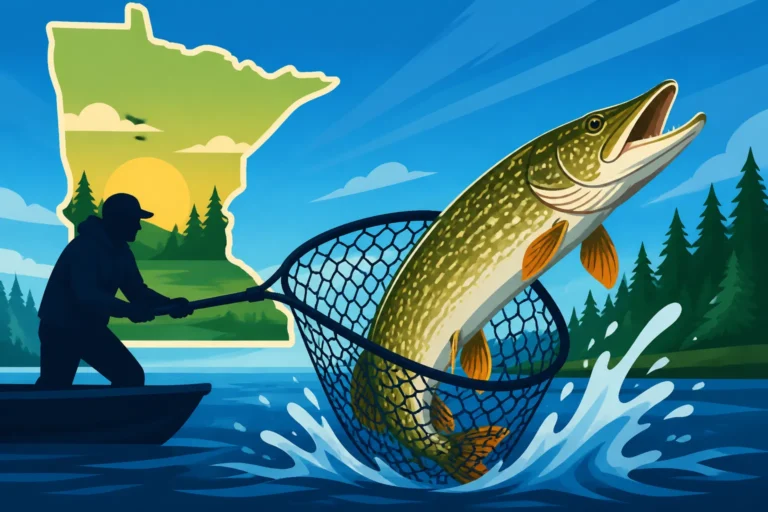
- Landing Net: A good, wide-mouthed landing net with a rubberized mesh is essential. The rubber coating protects the fish's slime coat (important for catch and release) and prevents hooks from getting tangled. Walleye can be spirited fighters boatside, and a net makes landing them much safer for both you and the fish. For those targeting larger walleye, make sure the hoop is substantial enough to handle a trophy.
- Pliers/Forceps: You'll need long-nosed pliers or forceps for safely removing hooks, especially from toothy walleye. Having a pair of line cutters or scissors readily accessible is also very helpful.
- Headlamp/Nav Lights: If you're planning on Night Fishing for Walleye in Minnesota, a reliable headlamp is non-negotiable for tying knots, rigging baits, and safely moving around your boat or shoreline. If fishing from a boat after dark, proper navigation lights are also legally required and critical for safety.
- First-Aid Kit: Accidents happen. A well-stocked first-aid kit in your boat or tackle bag can address minor cuts, hook punctures, or other mishaps quickly.
- PFDs (Personal Flotation Devices): Always, always, always have enough PFDs for everyone on board, and ensure they are easily accessible. Wearing one is even better, especially in cold water or rough conditions. Safety should always be your top priority on the water.
- Rod Holders: For trolling, quality rod holders that securely hold your rods while allowing for easy removal when a fish strikes are essential. Brands like Berts Custom Tackle or Cisco Fishing Systems offer robust track systems and holders.
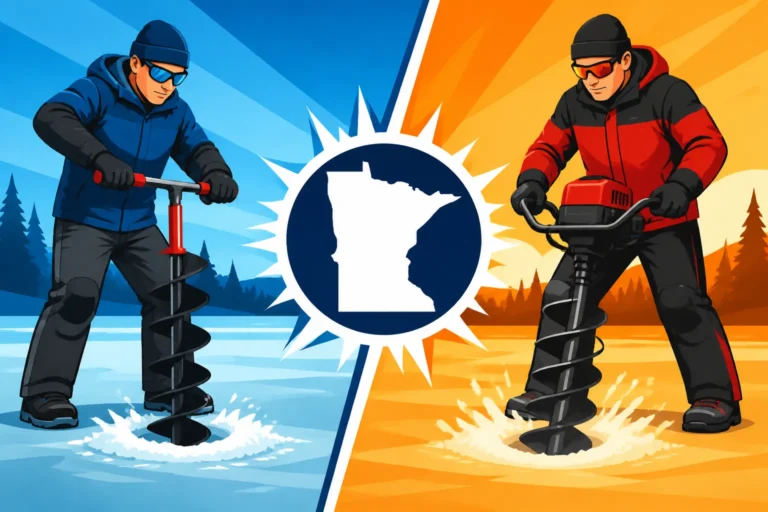
- Ice Auger: For ice fishing, a reliable ice auger is a must. Whether it's a hand auger for portability, a propane auger for power, or a battery-powered electric auger like a Strikemaster Lithium 40V, you need to be able to punch holes quickly and efficiently.
Taking the time to equip yourself with the right gear, from the rods you hold to the electronics that guide you, will not only improve your success rate for walleye but also make your time on Minnesota's beautiful waters more enjoyable and safer.
Disclaimer
Fishing regulations, seasons, and limits can change frequently. Always consult the official Minnesota Department of Natural Resources (MNDNR) regulations before heading out on the water. This guide is for informational purposes only and should not replace official sources.