Otter Tail Lake Walleye Limit & Slot
We have all been there: the sun is setting over the water, the walleye are finally biting, and you pull up a beautiful, healthy fish. But then the panic sets in because you cannot remember if the slot limit on this specific lake is the same as the one you fished last weekend. This guide clears up the confusion surrounding the Otter Tail Lake Walleye Limit & Slot so you can fish with confidence and avoid a costly conversation with a conservation officer.
Understanding the Specific Walleye Regulations for Otter Tail Lake
Otter Tail Lake is the namesake and crown jewel of Otter Tail County, a region famous for having more lakes than any other county in the United States. Because of its size and the sheer amount of fishing pressure it receives, the Minnesota Department of Natural Resources (DNR) maintains specific regulations here that differ from the general statewide rules. As of the 2026 season, the walleye regulation on Otter Tail Lake is a protected slot limit designed to keep the most productive spawning fish in the water while allowing anglers to take home a decent meal.
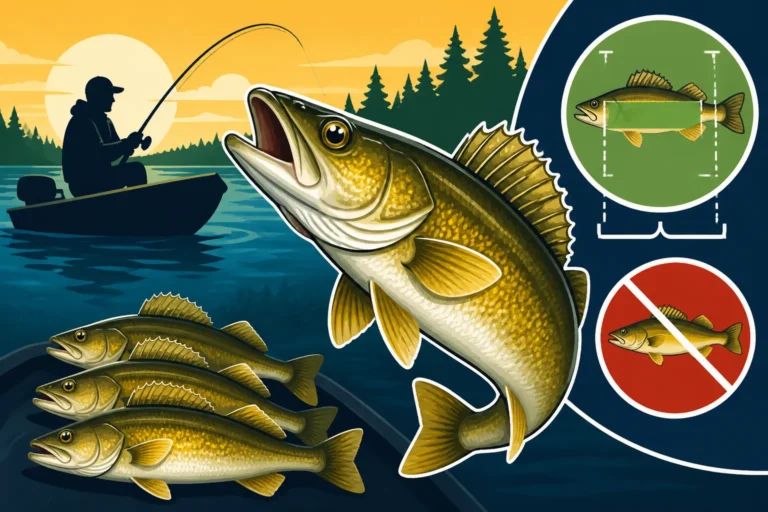
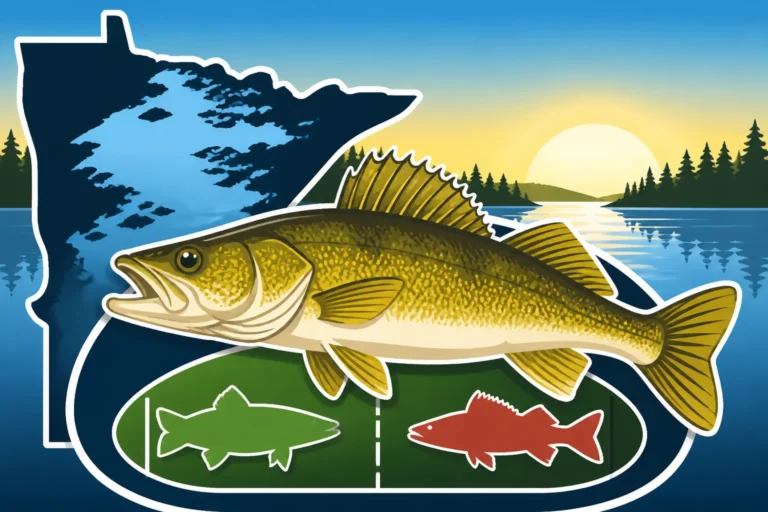
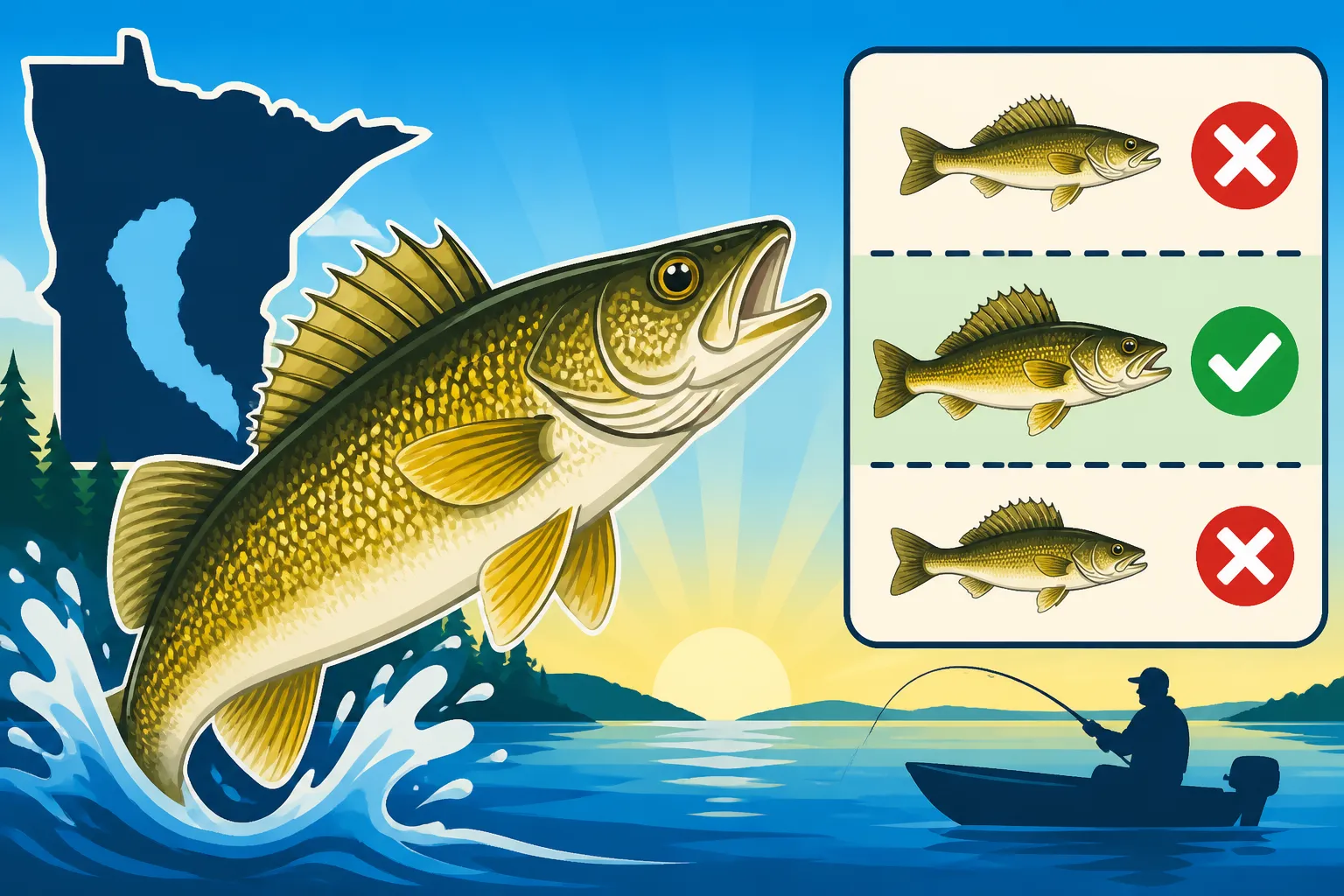
The current regulation for walleye on Otter Tail Lake is a limit of four fish, with a protected slot between 18 and 26 inches. This means that any walleye you catch that measures between 18 and 26 inches must be released immediately back into the water. You are allowed to keep fish that are under 18 inches, and you are allowed to keep exactly one fish that is over 26 inches as part of your four-fish daily limit.
This can be a bit of a mental hurdle for folks used to the general state limit. It is vital to understand Minnesota Fishing Limits: Bag & Possession (2026) because while the "bag limit" refers to what you can catch in a single day, your "possession limit" includes everything you have in your freezer at home or in your cooler at the cabin. On Otter Tail, those numbers are strictly monitored. If you are out on the water and already have three 17-inch walleyes in the livewell, and you land a 20-inch fish, that 20-incher must go back. If you land a 27-inch trophy, you can keep it, but that completes your limit if you already had three smaller ones.
The Protected Slot Range Explained
The "protected slot" is a management tool used to protect the "teenagers" and "young adults" of the walleye population. In Otter Tail Lake, fish in the 18-to-26-inch range are the prime spawners. These are the fish that produce the highest quality and quantity of eggs. By protecting this specific size bracket, the DNR ensures that even during years with high fishing pressure, there is a consistent "engine" of reproduction occurring.
When you are out on the lake, it is easy to get caught up in the excitement. However, a fish that is 17.9 inches is a keeper, while an 18.1-inch fish is a potential fine. This is why having a high-quality, flat measuring board (often called a bump board) is a necessity rather than a luxury. You cannot accurately measure a slot-limit fish by holding a floppy tape measure over its back while it wriggles on the floor of the boat. To stay legal, you need to pinch the tail and get a precise measurement from the tip of the snout to the furthest point of the tail.
Daily vs Possession Limits on Otter Tail
One of the biggest points of confusion for visiting anglers is the difference between what they can catch today and what they can have in their possession. Even though Otter Tail Lake has a four-fish limit for walleye, the statewide possession limit still applies to your total inventory. It is helpful to review Minnesota Possession Limits Explained to ensure you aren't breaking the law back at the resort.
Imagine a scenario where you fish Otter Tail Lake on Friday and keep your limit of four walleyes under 18 inches. On Saturday, you decide to go out again. Before you even cast a line, you must have consumed or given away some of those fish if you intend to keep more. You cannot have eight walleyes in your possession if the legal limit is lower. Many anglers forget that "possession" starts the moment the fish is reduced to the bag—meaning in your livewell, in your cooler, or in your freezer at the hotel.
Why Otter Tail Lake Uses Special Regulations
You might wonder why the DNR doesn't just use the same rules everywhere. The answer lies in the unique biology of "The Otter." This lake is relatively shallow, very fertile, and has a massive forage base of perch and shiners. Because the habitat is so good, walleyes grow quickly here. However, because it is such a popular destination for both locals and tourists, the "harvest pressure" is incredibly high.
Without a slot limit, the most common size of fish kept would be those in the 18-to-22-inch range—the exact fish needed to keep the population stable. By implementing these Minnesota Slot Limits: Which Lakes & Why, the DNR is able to shift the harvest to smaller "eater" fish (14 to 17 inches) and allow the larger fish to continue growing into true trophies. This management style has turned Otter Tail into one of the most consistent walleye factories in the Midwest.
Impact of High Fishing Pressure
Otter Tail Lake isn't just a fishing spot; it's an economic engine for towns like Battle Lake and Ottertail. On a busy Saturday in June, you might see hundreds of boats targeting the same mid-lake humps and weed lines. This level of pressure would decimate a walleye population in a matter of years if there were no size restrictions.
The 18-to-26-inch protected slot ensures that even if thousands of fish are caught, the majority of the breeding population remains in the lake. This sustainability is why we continue to see Minnesota Fishing Regulations Changes for 2026 that lean toward conservation. It is about protecting the future of the sport for the next generation. If you are bringing your kids along, it is a great time to teach them why we release those "big ones." If they are under 16, make sure you know the rules for Minnesota Fishing License for Kids & Youth so they are legal from day one.
The Role of Natural Reproduction
Unlike some lakes that rely heavily on stocking, Otter Tail Lake has a very high rate of natural reproduction. The walleye spawn on the numerous reefs and in the flowing water of the Otter Tail River which enters and exits the lake. Because the lake "makes" its own fish so well, the regulations are designed to protect that natural process.
When you release a 22-inch walleye on Otter Tail, you aren't just following a rule; you are helping to stock the lake for three years from now. Those fish are the primary contributors to the "year classes" that anglers will be catching as 15-inch keepers in the future. It is a cycle that only works if everyone plays by the same set of rules.
Comparing Otter Tail Lake to Statewide Standards
To help you visualize how Otter Tail Lake differs from the standard Minnesota fishing rules, look at the table below. Note that while many lakes follow the "General Inland" rules, Otter Tail is part of a group of lakes with "Special Regulations" that you must look up individually in the DNR handbook.
| Regulation Type | Otter Tail Lake (Special) | General Minnesota Inland Waters |
|---|---|---|
| Daily Walleye Limit | 4 Fish | 6 Fish (usually) |
| Protected Slot | 18" to 26" (Must be released) | None (usually) |
| Over-Size Allowance | 1 over 26" | 1 over 20" |
| Possession Limit | 4 Fish | 6 Fish |
| Species Focus | High Natural Reproduction | Mixed Stocked/Natural |
It is worth noting that while the general limit is often six, many of the best lakes in the state have moved to a four-fish limit to preserve quality. If you are planning a multi-lake trip, always check the Minnesota Fishing Regulations PDF: Where to Find It to ensure you have the latest info for every stop on your itinerary.
Handling and Releasing Slot Fish Safely
Since a large portion of the fish you catch on Otter Tail Lake will likely fall into that protected 18-to-26-inch window, knowing how to handle them is just as important as knowing the limit itself. A fish that is released but dies a few hours later due to poor handling is a waste of a precious resource.
When you land a slot walleye, time is of the essence. You should aim to have the fish back in the water in under 60 seconds. Use a rubber-coated net to protect the fish's slime coat, and try to keep the fish in the water while you remove the hook. If the fish is hooked deeply, it is often better to cut the line than to tear at the gills or stomach. Following Catch and Release Best Practices in Minnesota is the hallmark of an ethical angler.
Tools for Accuracy and Safety
To stay within the Otter Tail Lake walleye limit, you need to be precise. A simple "eye-balling" of a fish is never enough. We recommend a rigid measuring board. When measuring, place the fish's nose firmly against the "bump" at the start of the board and lay it flat. Do not "arch" the fish, as this can make it appear shorter than it actually is.
If you are fishing in the winter, be especially careful. On a sub-zero day, a walleye’s eyes and gills can freeze in seconds. If you pull a 24-inch fish through the ice and want a photo, make sure your camera is ready before the fish leaves the water. For more tips on winter success, check out Best Lures for Ice Fishing Walleye.
Avoiding Penalties and Fines
Let's talk about the unpleasant side of things: what happens if you get it wrong. Conservation officers in the Otter Tail area are very familiar with the lake's boundaries and rules. If you are caught with a 19-inch fish in your livewell, "I didn't know the rule" is not a legal defense. Fines for over-limit or "in-the-slot" fish can range from $100 to several hundred dollars plus court costs, and in extreme cases, you could lose your fishing equipment or even your Minnesota Fishing License: Cost, Types & How to Buy (2026).
If you ever find yourself unsure, the safest bet is always to release the fish. It is much better to go home with three fish and your pride intact than four fish and a court date. If you need to refresh your memory while on the water, you can usually How to Get a Minnesota Fishing License Online and view the digital regulations at the same time.
Seasonal Tactics for Legal "Eaters" on Otter Tail
Knowing the rules is step one, but catching the fish you're actually allowed to keep is step two. On Otter Tail Lake, the "eaters" (those under 18 inches) often hang out in different areas than the big "slot" females, especially as the seasons change.
In the early spring, right after the opener, walleyes of all sizes are often found in the shallow water, specifically on the sandy flats and near the mouth of the Otter Tail River. As the water warms in June and July, the larger fish tend to move to the deep mid-lake humps and the "mud" (the deep basin of the lake). The smaller, legal keepers often stay a bit shallower, patrolling the 12-to-18-foot weed lines. If you find yourself catching nothing but 20-inchers on a deep hump, try moving into the nearby weeds to find the 15-inchers for the frying pan.
Summer and Fall Patterns
By mid-August, the walleye bite on Otter Tail can be legendary, but the fish are mobile. Using electronics is key here. Many successful anglers look for schools of fish on the transition zones where the hard bottom meets the soft mud. If you want a real-time update on what people are using, keep an eye on the Otter Tail Lake Fishing Report & What's Biting.
In the fall, the fish move shallow again as the water cools. This is often the best time to catch a trophy over 26 inches. Trolling large crankbaits along the shoreline breaks at night is a classic Otter Tail tactic. Just remember, even if you catch the fish of a lifetime, you only get to keep one over 26 inches per day, and it still counts toward your total limit of four.
Staying Legal While Using Multiple Lines
During the winter months, many anglers head to Otter Tail for the excellent ice fishing. It is important to remember that while you can use two lines through the ice in Minnesota, the size and bag limits do not change. If you have two lines down and two fish on at the same time, and they both happen to be 19 inches, both must go back. It is also a good idea to know What Happens If You Fish Without a License in Minnesota? because officers are just as active on the ice as they are on the water.
Frequently Asked Questions
Can I keep a walleye that is exactly 18 inches?
No. The protected slot is 18 to 26 inches, inclusive. If the fish touches the 18-inch mark on your board, it is protected and must be released.
Does the limit change if I am fishing with a guide?
No. The daily bag limit of four walleyes applies to every individual angler, regardless of whether you are on a guided trip or your own boat. Guides are also prohibited from "filling" your limit for you.
What if a slot-limit fish is "gut-hooked" and won't survive?
Legally, you must still release it. It sounds harsh, but the law does not make exceptions for the health of the fish. This is to prevent people from intentionally injuring fish to keep them. If a fish is bleeding, cut the line and let it go as quickly as possible. Nature is resilient, and many "doomed" fish actually survive.
Can I keep four fish over 26 inches?
No. You are allowed a maximum of one fish over 26 inches in your daily limit. The other three must be under 18 inches.
Disclaimer
This guide is intended for informational purposes and reflects the regulations as of the 2026 fishing season. Fishing laws are subject to change by the Minnesota Department of Natural Resources at any time. Always consult the official Minnesota Fishing Regulations handbook or the DNR website before your trip to ensure you are operating under the most current rules. Local bait shops in the Battle Lake and Ottertail area are also excellent sources for the most recent updates on lake-specific restrictions.