What Size Walleye Can You Keep in Minnesota?
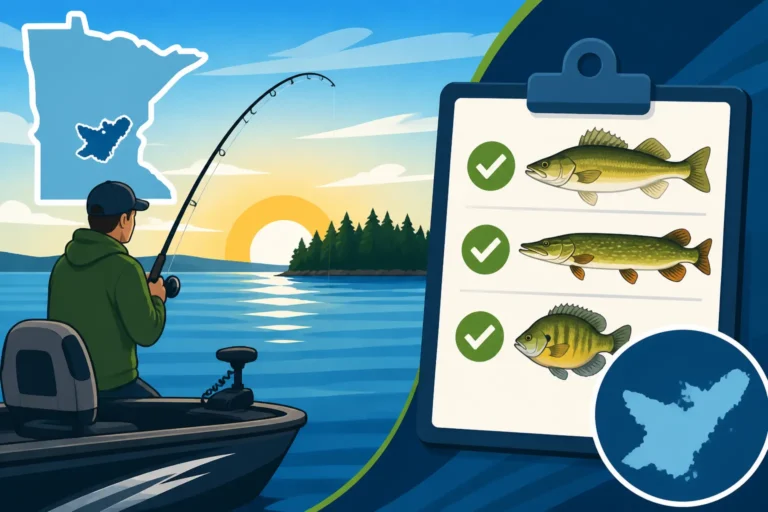
You have finally reached that perfect "walleye chop" on the water, the bite is on, and you land a beautiful 19-inch fish. But then the anxiety hits: is this legal to keep on this specific lake, or are you looking at a hefty fine? Minnesota's walleye regulations are notoriously complex and vary significantly by water body. This guide breaks down exactly what size walleye you can keep to ensure your fish fry is legal and stress-free.
The Statewide Standard and the One Over Rule
When you are fishing a lake in Minnesota that does not have "special regulations" posted at the boat launch or in the DNR handbook, you fall under the general statewide rules. For the 2026 season, the most important thing to understand is that while there isn't a universal "minimum" size for every single pond in the state, there is a very strict rule regarding trophy-sized fish. On most inland waters, the daily and possession limit for walleye is six, but only one of those fish can be over 20 inches in length.
Imagine you are out on a smaller, unnamed lake in Otter Tail County. You have a banner day and catch four walleyes that are 18 inches and two that are 22 inches. Under the statewide rule, you would actually be in violation if you kept both of those 22-inchers. You would have to release one of the larger fish. This rule is designed to protect the "spawners"—the larger females that produce the most eggs and keep the population healthy for future generations. It is a common point of confusion for folks who think a "limit" just means any six fish. In reality, Minnesota Walleye Limit & Size Rules are as much about the length as they are about the number of fish in your bucket.
Furthermore, many anglers ask if they can keep those tiny "cigar" walleyes that are only 10 or 11 inches. Technically, on a lake with no special regulations, there is no minimum size. However, from a veteran's perspective, there isn't much meat on a fish that small. Most of us locals wait until a fish hits at least 14 or 15 inches before we even consider getting the fillet knife out. If you are curious about how these numbers are tallied up for your freezer, you should look into how Minnesota Possession Limits Explained works, as it covers the difference between what you catch in a day and what you have stored at home.
Understanding Protected Slot Limits
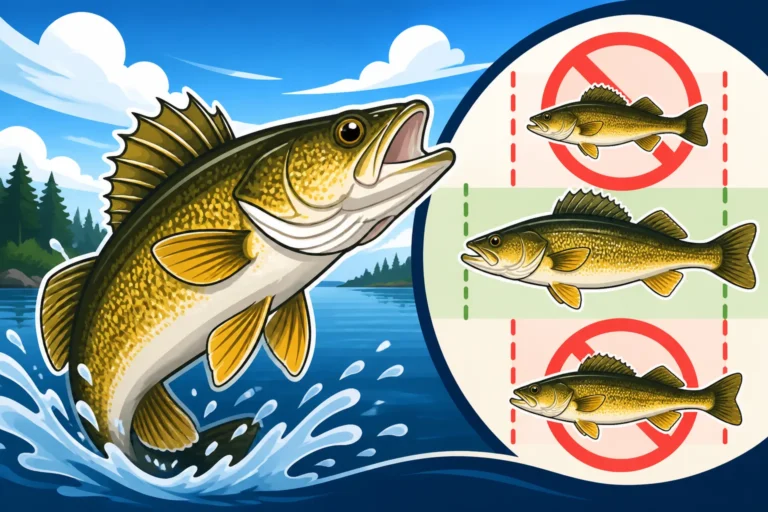
The term "slot limit" is enough to make any visiting angler’s head spin. A slot limit is a range of lengths where you are legally required to release the fish. For example, if a lake has a 17-inch to 26-inch protected slot, any walleye you catch that measures anywhere in that range must go back into the water immediately. You can keep fish that are shorter than 17 inches, and you might be allowed to keep one fish that is longer than 26 inches, depending on the specific lake's rules.
These rules are implemented on lakes that have high fishing pressure or specific biological needs. The DNR uses Minnesota Slot Limits: Which Lakes & Why to manage the size structure of a lake. If a lake is "top-heavy" with big fish but lacks smaller ones, they might implement a different rule than a lake that is stunted with millions of 12-inchers. It can be incredibly frustrating to catch a "perfect" 19-inch walleye—the kind that makes for the best fillets—only to realize you are on a lake where 18 to 22-inch fish are protected. This is why it is vital to check the signs at the public access before you even back your boat into the water.
Let’s look at a real-world scenario. You are fishing Lake Vermilion, a massive and beautiful destination in Northern Minnesota. Vermilion often has a special regulation where all walleye from 20 to 26 inches must be released, with only one over 26 inches allowed in your possession. If you are having a lucky day and every fish you hook is 21 inches, you are going to have a lot of fun catching and releasing, but you aren't going to have anything for the frying pan. Validating that frustration is easy—it’s tough to put back "keeper" sized fish—but it’s the reason Lake Vermilion Walleye Limit & Slot rules have kept that fishery world-class for decades.
Regulations on Minnesota’s Big Three Lakes
If you are heading to the "Big Three"—Mille Lacs, Upper Red Lake, or Lake of the Woods—you need to throw the general statewide rules out the window. These lakes are managed with extreme precision, and the rules can change not just every year, but sometimes in the middle of the summer. Staying updated on Minnesota Fishing Regulations Changes for 2026 is the only way to stay out of trouble on these high-profile waters.
Mille Lacs Lake Specifics
Mille Lacs is perhaps the most regulated walleye factory in the world. In recent years, we have seen everything from a complete "catch and release only" season to a "one fish" limit with a very narrow window, such as 21 to 23 inches. Because the population has faced challenges with young fish survival, the DNR keeps a very tight lid on the harvest. If you are planning a trip to the Garrison or Wahkon area, you must check the Mille Lacs Lake Walleye Limit & Slot daily. It isn't uncommon for the lake to be open for harvest in May and June, but switch to catch-and-release only in July to protect the fish from "hooking mortality" when the water gets warm.
Upper Red Lake Harvest Rules
Upper Red Lake is another unique animal. Because it is so shallow, it warms up fast and the walleye grow at a specific rate. Often, the rule here allows for a larger bag limit (like 4 or 5 fish) but with a requirement that only one can be over 17 inches. This creates a "perfect" harvest for those looking for eaters, as you are encouraged to take the smaller, 14 to 16-inch fish. You can find more detail on this in the Upper Red Lake Walleye Limit & Slot guide. It is a favorite for ice fishermen, but remember that the "one over" rule still applies to your total count.
Lake of the Woods and Rainy River
Up on the Canadian border, the rules get even more specific because you are dealing with "border waters." On Lake of the Woods, the combined limit for walleye and sauger is usually six, but only four can be walleye. There is also a protected slot that often covers the 18 to 26-inch range. If you are fishing the Rainy River during the spring spawn, it is almost always catch-and-release only for walleye to protect the massive females moving up from the lake to spawn. Always double-check the Lake of the Woods Walleye Limit & Slot before heading out from Baudette or the Northwest Angle.
| Lake Type | Common Walleye Limit | Typical Size Restriction |
|---|---|---|
| Standard Inland Lake | 6 Fish | Only 1 over 20 inches |
| Mille Lacs Lake | 0 – 1 Fish | Highly variable; check current month |
| Upper Red Lake | 4 – 5 Fish | Often only 1 over 17 inches |
| Lake of the Woods | 6 (Walleye/Sauger combo) | 18-26 inch protected slot common |
| St. Croix / Mississippi | 4 – 6 Fish | 15-inch minimum often applies |
How to Correctly Measure Your Catch
You might think measuring a fish is straightforward, but when a half-inch is the difference between a legal meal and a $200 ticket, technique matters. The Minnesota DNR requires that fish be measured in a "flat" position. You should not be wrapping a flexible sewing tape around the curve of the fish's body, as this will give you an artificially long reading.
The correct way to measure a walleye is to lay it flat on a measuring board with its mouth closed and pressed firmly against the headblock. While the fish is flat, you should squeeze the lobes of the tail fin together to get the "maximum" total length. This is crucial because a fish that looks like 19.75 inches with a relaxed tail might actually hit that 20.25-inch mark when the tail is pinched. If you are on a lake with a 20-inch maximum, that pinch could make your fish illegal. If you are unsure, the best practice is always to lean toward conservation and release the fish. Using Catch and Release Best Practices in Minnesota ensures that even if you can't keep the fish, it survives to be caught by someone else.
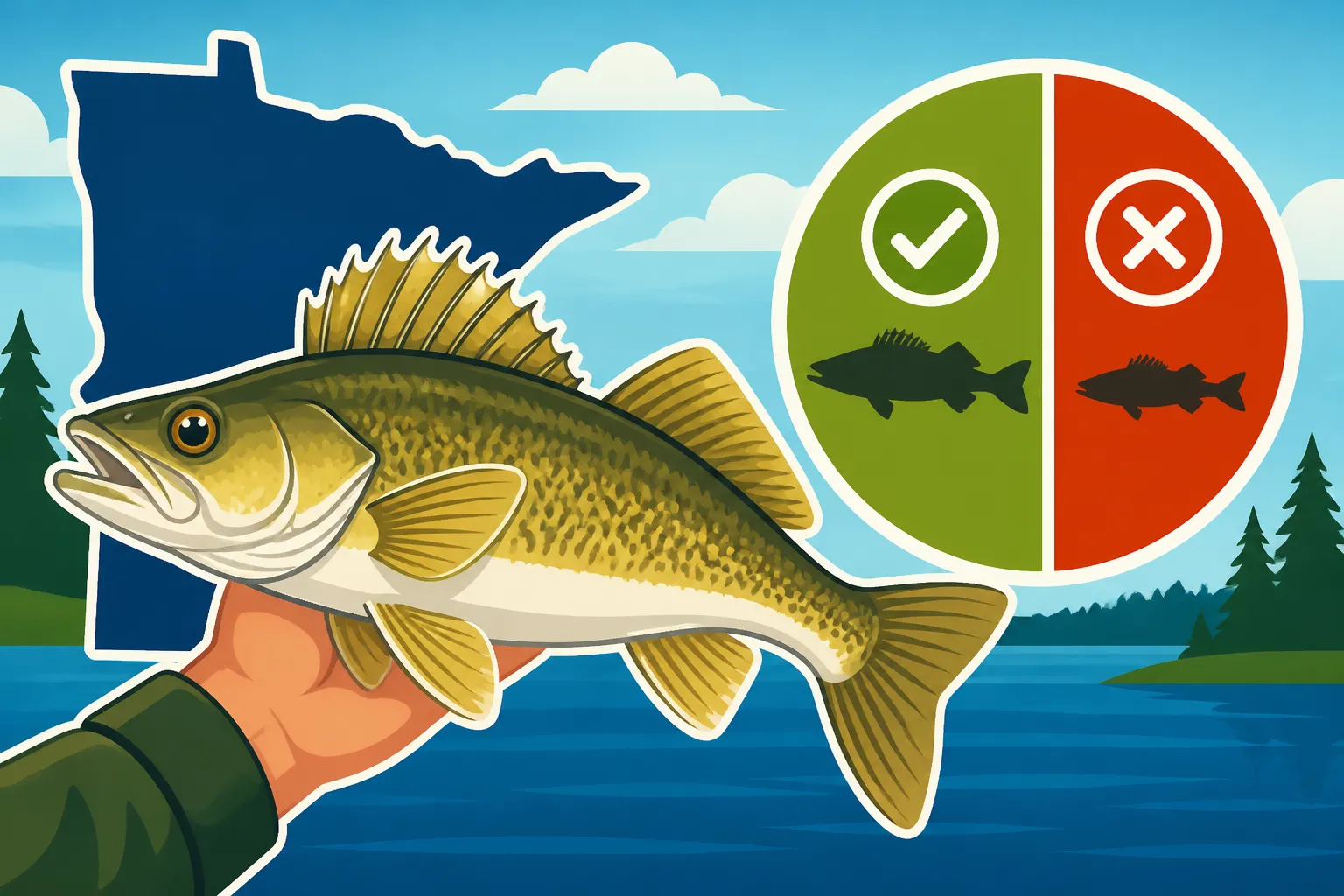
Another common mistake is misidentifying the species. In many of our northern lakes and rivers, walleyes live side-by-side with saugers. Saugers look very similar but often have different size limits and aren't subject to the same "one over 20" rule in certain border waters. Learning How to Identify a Walleye vs Sauger is a fundamental skill for any Minnesota angler. Saugers have distinct spots on their dorsal fin and lack the white tip on the lower tail lobe that is the trademark of a walleye.
Why Size Limits Exist: Conservation and Economics
It is easy to get grumpy when you have to throw back a gorgeous fish, but these regulations are the only reason Minnesota remains a premier fishing destination. Without size limits, high-traffic lakes near the Twin Cities or Brainerd would be fished out in a matter of years. The "one over 20" rule ensures that the biggest, most genetically superior fish stay in the lake to reproduce.
When you follow the rules for How to Catch Walleye in Minnesota, you are participating in a massive conservation effort that supports thousands of local jobs, from bait shops in Walker to resorts in Ely. The DNR uses data from "creel surveys"—those guys in the orange vests who meet you at the boat ramp to ask what you caught—to determine if a slot limit is working. If they see that a lake is becoming overpopulated with small fish, they might actually remove a minimum size limit to encourage harvest. Conversely, if the big fish are disappearing, the slot will tighten. It’s a delicate balance that requires every angler to be honest and accurate with their measurements.
Minnesota Fishing Regulations Disclaimer
The information provided in this article is for educational and informational purposes only. Minnesota fishing regulations, including size limits, bag limits, and season dates, are subject to frequent changes by the Minnesota Department of Natural Resources (DNR) and may vary by specific body of water. Always consult the official Minnesota Fishing Regulations handbook or the DNR website for the most current and localized rules before heading out on the water. Conservation officers enforce the law based on the official regulations, not third-party guides.