How to Catch Crappie in the Spring
There's nothing quite like the anticipation of spring fishing in Minnesota, but for many anglers, figuring out exactly where those crappies vanish to after the ice melts can feel like solving a complex puzzle. You’ve had success through the ice, but now the lake has opened up, and finding those hungry slabs seems impossible. This guide is dedicated to demystifying spring crappie behavior, offering clear strategies, gear recommendations, and specific locations to help you consistently find and catch crappie as the water warms and the fishing season kicks into high gear.
Decoding Spring Crappie Behavior in Minnesota Waters
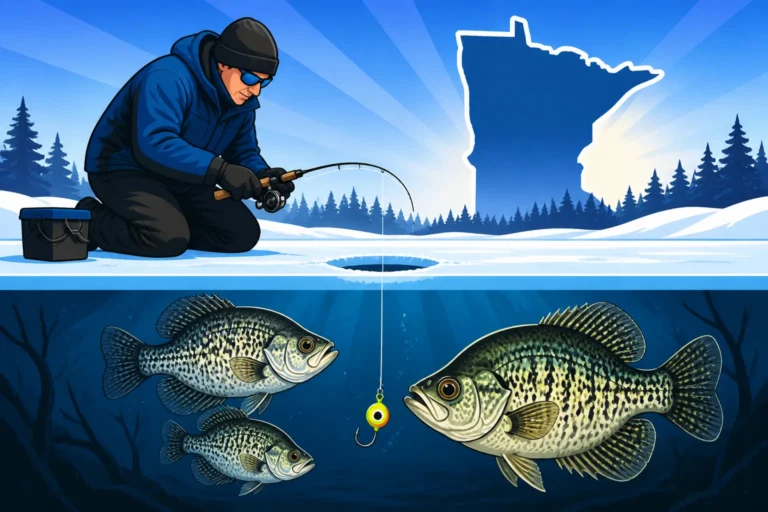
Catching crappies in the spring is all about understanding their annual migration from wintering grounds to shallow spawning beds. It's a journey dictated almost entirely by water temperature and the availability of food and cover. If you can get inside their heads and predict their movements, you’re already halfway to a successful day on the water.
From Ice-Out Lethargy to Warming Waters
Right after the ice goes out, crappies are usually in a bit of a shock from the sudden change in their environment. The water is still bitterly cold, often in the low 30s to low 40s Fahrenheit. During this initial phase, crappies tend to be lethargic and somewhat scattered. They'll often hold in deeper basin areas or transition zones, especially near the deepest weed lines if any old vegetation remains. Their metabolism is slow, so they aren't actively chasing bait, but rather waiting for food to come to them.
As the days get longer and the sun starts to beat down, certain parts of the lake will begin to warm faster than others. These are the crappies' first targets. Think shallow, dark-bottomed bays, protected coves, and the extreme northernmost shores of a lake. These areas act like giant solar panels, absorbing heat and raising the water temperature a degree or two, which is a massive incentive for cold-blooded fish. They'll start to move into these slightly warmer pockets, still somewhat sluggish, but beginning to think about food. If you've been focused on How to Catch Crappie Through the Ice in Minnesota all winter, this post-ice-out period is a crucial transition, requiring a shift in mindset and tactics.
The Pre-Spawn Staging Game
Once the water temperatures creep into the upper 40s and low 50s, crappies shift into their pre-spawn staging phase. This is when they really start to gather in predictable locations. They’ll congregate in areas adjacent to their eventual spawning grounds, often holding along the first significant break line leading into a shallow bay or channel. Look for submerged wood, old bulrushes, or emergent weeds that are just starting to show life. These spots offer both cover and proximity to food sources.
During this time, crappies are often suspended in the water column, rather than hugging the bottom. They’re looking for stability in water temperature and waiting for the right conditions to push into the even shallower spawning zones. This staging period can last for days or even weeks, depending on how quickly the spring weather progresses. It's a fantastic time to find large schools of hungry crappies that are bulking up before the energy-intensive act of spawning. Understanding these movements is key to successful Crappie & Panfish Fishing Techniques throughout the spring.
Spawning in the Shallows
The real excitement begins when water temperatures hit the ideal range for spawning, typically between 58 and 68 degrees Fahrenheit, though it can vary slightly by lake and specific crappie subspecies (Black Crappie vs White Crappie). During the spawn, crappies will move into very shallow water, often just 1-5 feet deep, seeking out protected areas with plenty of cover. They love to build their nests near submerged brush, fallen trees, dock pilings, lily pad fields, or dense emergent vegetation like reeds and cattails.
The males typically move into these shallow areas first, preparing the nests and guarding the eggs, while the females move in, lay their eggs, and then retreat to slightly deeper water. This intense period of activity makes them vulnerable and aggressive, leading to some of the most consistent and exciting crappie fishing of the year. The spawn doesn't happen all at once; it's often a staggered event, starting in the warmest bays and gradually spreading to cooler sections of the lake. Knowing the optimal Crappie Season & Limit in Minnesota is vital here, as regulations often protect spawning fish.
Gearing Up for Spring Crappie Success
Having the right tackle can make a monumental difference when targeting finicky spring crappies. You’re not trying to horse in a muskie, so light, sensitive gear is your best friend for detecting subtle bites and enjoying the fight of these fun-sized fish.
Rod, Reel, and Line Essentials
For spring crappie, an ultralight or light-action spinning rod, typically 5 to 7 feet long, is ideal. Look for a fast or moderate-fast tip that allows for precise casting of light lures and quick hook sets, while still offering enough backbone to handle a good-sized slab. A sensitive graphite blank will transmit even the lightest tap from a cautious crappie right to your hand, which is crucial when they're not aggressively biting. Many anglers find the St. Croix Panfish Series or Fenwick Eagle rods to be excellent choices, providing the perfect balance of sensitivity and power.
Pair your rod with a small spinning reel, size 500 to 1000, that has a smooth drag system. This will prevent break-offs when a feisty crappie makes a run, especially on light line. As for line, 2 to 6-pound test monofilament or fluorocarbon is generally sufficient. Monofilament offers a bit more stretch, which can be forgiving, while fluorocarbon is virtually invisible underwater and has less stretch for better sensitivity. Braided line in 6-10 pound test can also be used for increased sensitivity and casting distance, especially if you plan to use a fluorocarbon leader. You can find an excellent selection of these specialized rods, reels, and lines on Amazon, often with great reviews from fellow crappie enthusiasts.
Lures and Live Bait That Trigger Bites
When it comes to tempting spring crappies, you need offerings that are small, subtle, and appealing to fish that might still be a bit sluggish or focused on spawning. Live bait is often king, especially early in the season. Small fathead minnows, hooked lightly through the lip or back, are irresistible to crappies. Wax worms, maggots, or even small pieces of nightcrawler can also be effective, especially for panfish generally.
For artificial lures, tiny jigs are your bread and butter. Think 1/32 to 1/16 ounce jig heads, paired with small soft plastic bodies like tube jigs, paddle tails, curly-tail grubs, or crappie minnows ranging from 1 to 2 inches. Colors matter; natural shades like smoke, clear, or white often work well in clear water, while chartreuse, pink, or orange can be excellent in stained or murky conditions. Hair jigs, especially marabou jigs, offer a subtle pulsing action that crappies can't resist. Sometimes, a tiny spinnerbait or a micro crankbait, like a Rapala Ultra Light Minnow, slowly retrieved or trolled, can also entice bites from more aggressive fish. For a convenient way to stock up on a variety of crappie jigs and soft plastics, check out the offerings on Amazon before your next trip. To learn more about specific presentations, check out our guide on the Best Lures & Baits for Minnesota by Species.
Mastering Spring Crappie Fishing Techniques
Once you've got your gear sorted, it's time to talk tactics. Spring crappie fishing isn't usually about fast retrieves or power fishing; it's about finesse, presentation, and understanding how to target fish that might be moving slowly or holding tight to cover.
The Tried-and-True Slip Bobber Presentation
If there's one technique synonymous with spring crappie fishing, it's the slip bobber. This setup allows you to present your bait at a precise depth, whether you’re targeting fish suspended 5 feet down in 15 feet of water or just a foot under the surface in shallow spawning beds. The beauty of the slip bobber is its versatility: you can fish live minnows, wax worms, or small jigs under it, and it clearly signals even the most delicate bite.
To set up a slip bobber, you'll need a bobber stop (thread or rubber), a small bead, the slip bobber itself, a small split shot or two (just enough to make the bobber stand up straight), and your hook or jig. Start by sliding the bobber stop onto your main line, followed by the bead, then the slip bobber. Tie on your jig or hook, add a split shot a foot or so above it, and then adjust the bobber stop to the desired depth. Fan cast around likely crappie holding areas, letting your bait slowly sink and keeping an eye on the bobber for any movement. A slight twitch, a horizontal drift, or a slow dip can all indicate a bite. For a detailed walkthrough, you can find our guide on How to Use a Slip Bobber for Walleye & Crappie particularly helpful.
Active Jigging and Casting Strategies
While slip bobbers are fantastic, sometimes an active approach is necessary, especially when crappies are slightly more aggressive or holding tight to specific cover. Vertical jigging is excellent when you've located a school of crappies on your electronics or around a specific piece of structure like a submerged brush pile. Drop a small jig (1/32 to 1/16 ounce) directly over the fish, and gently lift and drop it, pausing frequently. The key is to keep the jig in the strike zone for as long as possible.
Casting small jigs with soft plastics is another effective method, particularly when crappies are staging along weed lines or cruising shallow bays. Cast your jig towards likely cover, let it sink to the desired depth, and retrieve it very slowly, using subtle twitches or a steady, ultra-slow retrieve. Sometimes, a dead-stick retrieve, where you simply let the jig sink and pause, is all it takes. Pay close attention to your line for any unusual movement, as crappies often "mouth" the bait rather than hitting it hard. These methods share principles with Jigging for Walleye: Jig & Minnow Basics, emphasizing subtle presentations.
Stealthy Trolling for Scattered Crappies
When crappies are scattered or suspended in open water during the pre-spawn or post-spawn periods, slow trolling can be an incredibly effective way to cover water and find them. This technique is especially useful in larger lakes where crappies might be following baitfish schools. Use small crankbaits like Rapalas, Custom Jigs & Spins trolling jigs, or even simply a small jig tipped with a minnow.
The trick is to troll at very slow speeds, often less than 1 mph, to allow your bait to get down to the desired depth and remain in the strike zone. You might need to use a small trolling motor or even drift with the wind, using a drift sock to control your speed. Experiment with different depths until you find where the crappies are holding. Often, they’ll be suspended just above the thermocline or in baitfish schools. Trolling allows you to present your bait to a wider range of fish, increasing your chances of finding a hot bite, especially if you're exploring the Best Crappie Lakes in Minnesota.
Where to Pinpoint Crappies in Minnesota Lakes During Spring
Knowing what to use and how to fish is crucial, but it’s all moot if you’re not fishing in the right spots. Crappies have very specific preferences in the spring, largely driven by their need for warmth, food, and safe places to spawn.
Warm, Shallow Bays and Northern Shores
After ice-out, your best bet for finding early spring crappies is to focus on the warmest water available. This almost universally means shallow, dark-bottomed bays, especially those with northern exposures. These areas receive the most direct sunlight throughout the day and tend to absorb heat more efficiently, raising the water temperature a few critical degrees faster than the rest of the lake. Look for bays that are protected from prevailing winds, as these will also warm up quicker and retain heat better.
Consider bays that have a muddy or sandy bottom rather than hard rock, as darker bottoms absorb more heat. Inlets where small creeks or drainage ditches flow in can also be hotspots, as these can bring in warmer water and nutrients that attract baitfish, which in turn attract crappies. These spots are often the first to produce after the official Minnesota Fishing Seasons & Opener Dates, providing some of the earliest opportunities to catch good numbers of fish.
Docks, Fallen Trees, and Aquatic Vegetation
Crappies are cover-oriented fish, and this becomes even more pronounced in the spring. As they move into shallower water, they actively seek out structure for protection from predators, ambush points for feeding, and eventual spawning sites. Docks and boat lifts, particularly those with dark pilings that absorb heat, are prime targets. Fish around and under them, paying attention to the shaded areas.
Fallen trees, brush piles, and submerged logs are absolute magnets for crappies. These provide excellent overhead cover and create current breaks where crappies can rest and feed. In later spring, as new weed growth begins, focus on the edges of emergent vegetation like bulrushes, cattails, and developing lily pad fields. Old, decaying vegetation from the previous year can also hold fish early on. These types of cover are critical throughout the Crappie & Panfish in Minnesota: Complete Guide, regardless of the season.
Inlets, Outlets, and Connecting Channels
Don't overlook any moving water in the spring. Inlets and outlets of lakes, as well as connecting channels between different bodies of water, can be crappie highways. These areas often have slightly more current, which can bring in warmer water, circulate nutrients, and concentrate baitfish. Crappies will stage along current breaks, such as eddies behind points or submerged structures, waiting for an easy meal.
Pay attention to where smaller streams or rivers flow into larger lakes. These confluences often attract fish because they can offer a temporary refuge of warmer water and a steady supply of food. Similarly, narrow channels connecting a large main lake to a shallow, protected bay can be excellent travel corridors and holding areas for crappies on their way to or from spawning grounds. Using your electronics to spot schools in these transition zones can be incredibly effective.
Here's a quick reference table to help visualize spring crappie strategies:
| Spring Stage | Water Temperature Range | Crappie Location | Key Techniques | Recommended Baits/Lures |
|---|---|---|---|---|
| Early Spring | 35-48°F | Deeper basins, protected dark-bottom bays, main lake breaks near channels | Slow vertical jigging, dead-sticking, slow trolling | Small minnows, wax worms, 1/32 oz jigs with small plastics |
| Mid-Spring | 49-57°F | Pre-spawn staging areas, main lake points leading to bays, submerged timber, deeper dock lines | Slip bobber, active casting with plastics, slow trolling | Minnows, 1/16 oz jigs (tubes, grubs), tiny crankbaits |
| Late Spring | 58-68°F | Shallow spawning bays, emergent weeds, fallen trees, docks, brush piles | Slip bobber, casting small jigs, sight fishing | Small minnows, wax worms, 1/16 oz jigs (curly tails, paddle tails) |
No matter the stage of spring, crappies offer some of the most consistent and exciting fishing opportunities in Minnesota. By understanding their seasonal movements and adapting your tactics accordingly, you'll be well on your way to catching plenty of these delicious panfish. Remember to always check current Minnesota Fishing Regulations Changes for 2026, including specific bag and possession limits like How Many Crappie Can You Keep in Minnesota?, before heading out on the water.
Disclaimer
Fishing regulations can change frequently. Always consult the latest Minnesota Department of Natural Resources (DNR) fishing regulations before heading out on the water. This guide is for informational purposes only and does not constitute legal advice regarding fishing laws.