How to Catch Smallmouth Bass in Minnesota (Step by Step)
Catching smallmouth bass in Minnesota can be an incredibly rewarding experience, but let's be honest, these bronzebacks can be feisty and unpredictable, often leaving anglers scratching their heads. You've probably spent hours casting, trying different lures, and still come up short, wondering where these elusive fighters hide. This guide is designed to cut through the confusion, offering you a clear, step-by-step approach to understanding and successfully targeting smallmouth bass across Minnesota's diverse waters.
Understanding Minnesota's Smallmouth Bass
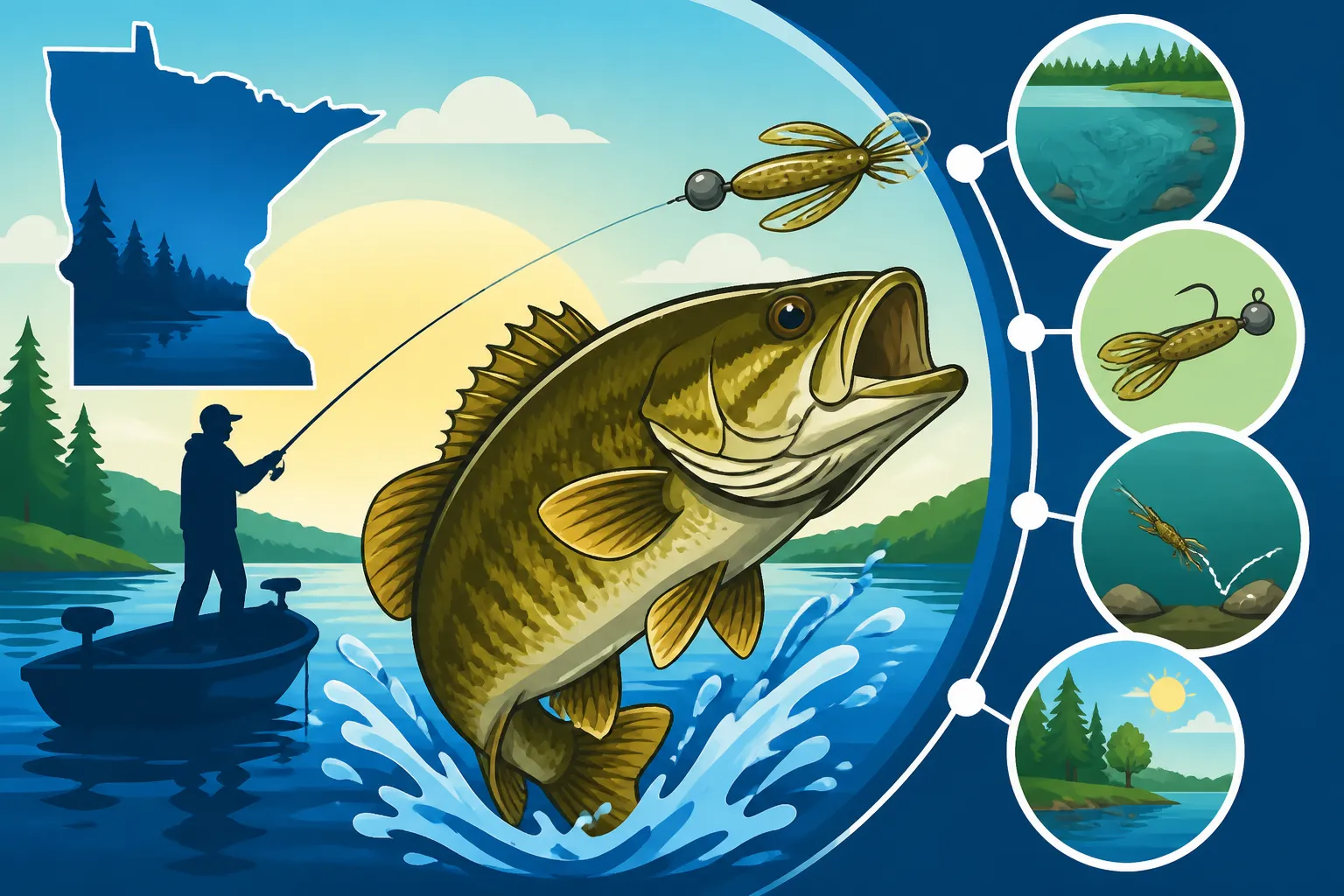
Smallmouth bass, often affectionately called "bronzebacks" for their distinctive coloration, are one of Minnesota's most sought-after game fish. They're renowned for their incredible fighting ability, leaping acrobatics, and willingness to chase down a well-presented lure. But before you can catch them, you need to understand them. They're not like their largemouth cousins, who often lurk in dense weeds. Smallmouth have their own specific preferences that, once understood, can unlock some truly spectacular fishing.
Where to Find Them: Habitat and Structure
Smallmouth bass are particular about their living arrangements. Unlike largemouth that prefer the thick cover of lily pads and dense submerged vegetation, smallmouth are structure-oriented. Think rocky, hard bottom. They thrive in clear, cool waters and gravitate towards areas that offer cover, ambush points, and access to deeper water.
You'll typically find them congregated around:
- Rocky Shorelines and Points: These are classic smallmouth haunts. Look for chunk rock, boulders, and rubble piles that extend into the lake. Points that drop off quickly into deeper water are especially productive, as they act as highways for bass moving between shallow feeding areas and deeper sanctuaries.
- Humps and Reefs: Offshore structures like submerged humps and reefs, particularly those with rock or gravel bottoms, are prime smallmouth territory. These areas often hold schools of baitfish, attracting hungry bass.
- Transition Areas: The edges where different types of bottom meet – say, sand meeting rock, or gravel meeting weeds – can be fantastic. These subtle changes often concentrate bait and provide diverse foraging opportunities for smallmouth.
- Submerged Timber and Riprap: While they prefer rock, smallmouth will use submerged trees, stumps, and artificial structures like riprap (rocky embankments) on bridge abutments or causeways, especially if these structures are near deeper water or current.
- Current Breaks in Rivers: In river systems like the St. Croix River or portions of the Mississippi, smallmouth will stack up behind current breaks. Think eddies, large boulders, bridge pilings, or fallen trees that create a calmer pocket of water where they can ambush prey without fighting the main current.
Lakes like Mille Lacs Lake Fishing Guide: Walleye, Bass & More are famous for their world-class smallmouth fisheries, with expansive rock reefs and deep clear water. Other gems include Lake Vermilion Walleye & Muskie and many of the clearer, deeper lakes in central and northern Minnesota.
Smallmouth Behavior: Aggression and Feeding Patterns
One of the most exciting aspects of smallmouth bass fishing is their aggressive, often schooling nature. They're true predators, and when they're on, they're on.
- Aggressive Strikes: Smallmouth hit lures with incredible force. Don't be surprised if your rod nearly gets yanked out of your hand! They often chase lures for a considerable distance, and seeing them streak out of the depths to crush a bait is an unforgettable experience.
- Schooling Behavior: Unlike solitary largemouth, smallmouth frequently travel and feed in schools. If you catch one smallmouth, there's a very good chance there are more in the immediate vicinity. This makes them a blast to target, as you can often experience multiple hook-ups in a short amount of time once you locate a school.
- Preferred Forage: Their diet primarily consists of crayfish, various minnows (like shiners and ciscoes), and aquatic insects. Understanding their diet helps you choose the right lures that imitate these food sources.
- Seasonal Movements: Smallmouth movements are heavily influenced by water temperature and spawning cycles.
- Spring: As water temperatures rise into the 50s and 60s, smallmouth move shallower, often staging on rocky points and flats adjacent to spawning areas. The Smallmouth Bass Season & Limit in Minnesota typically opens later than walleye season to protect these vulnerable spawning fish.
- Summer: Once the spawn is over and water temperatures are warm, smallmouth will often move to deeper offshore structures like humps, reefs, and rocky ledges. They'll still move shallow to feed during low light conditions or on cloudy, windy days.
- Fall: As waters cool, smallmouth engage in a major feeding frenzy, bulking up for winter. They can be found shallower again, especially on steep breaks and deep rock transitions, often in large schools. This is a fantastic time for trophy smallmouth.
Essential Gear for Minnesota Smallmouth Fishing
You don't need a boatload of specialized gear to catch smallmouth, but having the right tools for the job can significantly increase your success and enjoyment. Smallmouth are hard fighters, so durable and sensitive equipment is key.
Rods, Reels, and Line Choices
The foundation of any successful smallmouth setup starts with your rod, reel, and line.
- Rods:
- Power: A medium-light to medium-heavy power rod is ideal for most smallmouth applications. A medium-light might be better for finesse presentations, while a medium-heavy is great for heavier jigs, larger crankbaits, or fishing in cover.
- Action: A fast or extra-fast action rod is generally preferred. This means the rod bends mostly in the tip section, providing excellent sensitivity for detecting subtle bites and quick hook sets.
- Length: 6'6" to 7'3" is a versatile range. Shorter rods offer more accuracy for casting in tight spots, while longer rods provide better casting distance and leverage for fighting fish.
- Many anglers prefer a dedicated Best Bass Rod and Reel for Minnesota Lakes setup, ensuring the balance and sensitivity are dialed in for these hard-fighting fish.
- Reels:
- Spinning Reels: For lighter lures, finesse techniques like drop-shotting, and beginners, a 2000-3000 size spinning reel is perfect. Look for smooth drag and a good retrieve ratio (around 6.0:1) for versatility.
- Baitcasting Reels: If you're throwing heavier jigs, larger crankbaits, or need more power for fighting big fish, a baitcasting reel is an excellent choice. A gear ratio around 7.0:1 or 8.0:1 will allow you to quickly pick up slack and keep up with running fish.
- Line:
- Fluorocarbon: This is often considered the gold standard for smallmouth fishing due to its low visibility, excellent sensitivity, and good abrasion resistance. Use 6-10 lb test for spinning setups, and 10-15 lb for baitcasters.
- Braided Line: Braid offers incredible strength, sensitivity, and no stretch, making it great for detecting subtle bites at long distances. Its visibility can be a concern in clear water, so many anglers tie a 6-10 foot fluorocarbon leader to their braid. Use 10-20 lb test braid. You can learn more about different line types in guides like Best Fishing Line for Walleye Braid vs Mono vs Fluoro, which applies well to smallmouth too.
- Monofilament: While less popular than fluoro or braid for primary smallmouth applications, monofilament still has its place, particularly with topwater lures where its buoyancy can be an advantage. Use 8-12 lb test.
Lure Selection: Top Picks for Smallmouth
The world of smallmouth lures is vast and exciting. Having a diverse tackle box will allow you to adapt to different conditions and fish moods.
- Hard Baits:
- Crankbaits: These are excellent for covering water and mimicking baitfish. Deep-diving crankbaits are perfect for probing those offshore humps and rocky breaks, while medium divers work well on points. Brands like Rapala and Strike King offer fantastic options.
- Jerkbaits: Suspended jerkbaits, retrieved with a "twitch, twitch, pause" cadence, are incredibly effective, especially in cooler water or when fish are finicky. The flash and darting action perfectly imitate a wounded baitfish.
- Topwater Lures: There's nothing quite like a smallmouth blowing up on a topwater bait. Poppers, walk-the-dog baits (like Heddon Super Spooks), and prop baits are exhilarating choices, particularly during low light conditions or over shallow rocky flats. You can find many excellent topwater options on Amazon Topwater Bass Fishing in Minnesota.
- Soft Plastics: These are versatile and can be fished in countless ways.
- Tube Jigs: A staple for smallmouth. Rigged on an internal jig head, tubes imitate crayfish or gobies. Drag them, hop them, or swim them along the bottom over rocky areas.
- Grubs and Swimbaits: Small paddle-tail grubs on jig heads, or larger swimbaits, are fantastic for imitating minnows. Cast and retrieve, or use them as a trailer on a jig.
- Ned Rigs: This finesse presentation, a small mushroom-head jig paired with a buoyant, short plastic worm, is deadly when smallmouth are finicky. It stands up off the bottom, presenting an irresistible meal.
- Creature Baits/Craws: Mimicking crayfish, these are excellent when fished on a jig head or as a trailer on a football jig.
- Jigs:
- Football Jigs: Perfect for dragging over rocky bottoms and humps, their shape helps them resist snagging. Tip them with a soft plastic craw or creature bait.
- Marabou Jigs: A classic, these jigs have a natural, pulsing action that's irresistible to smallmouth, especially in clear water.
Step-by-Step Smallmouth Bass Techniques
Now that you know what to look for and what gear to use, let's dive into the actual fishing techniques. Smallmouth often require a varied approach, so being proficient in a few key methods will make you a much more successful angler.
Jigging and Dragging for Bottom-Dwellers
Many smallmouth spend a lot of time hugging the bottom, especially when they're feeding on crayfish or gobies. This is where jigging and dragging techniques shine.
- Locate Structure: Use your electronics to find rocky humps, points, or deep-water shelves. If fishing from shore, target areas with visible rock or gravel.
- Choose Your Bait: A tube jig (1/4 to 3/8 oz is common), a Ned rig, or a football jig tipped with a plastic craw are excellent choices.
- Position Your Boat/Cast: Position yourself so you can cast past your target structure and work your bait over it, or drift over it if you're in a boat. If shore fishing, cast parallel to rocky banks or fan cast offshore.
- Bottom Contact is Key: Let your jig sink all the way to the bottom on a semi-slack line. Watch your line for any twitch or jump—that could be a bite on the fall.
- Work the Bait:
- Dragging: For football jigs or tubes, simply drag the bait slowly along the bottom, making occasional short pauses. The goal is to imitate a crayfish scurrying along.
- Hopping: With tubes or Ned rigs, give your rod tip a subtle lift to hop the bait a few inches off the bottom, then let it fall back on a controlled slack line. Most bites happen on the fall.
- Feel for the Bite: Smallmouth bites can range from a violent thump to a subtle "tick" or simply feeling "mushy" resistance. When in doubt, set the hook!
Crankbait and Jerkbait Retrieves for Active Fish
When smallmouth are active and chasing bait, hard baits like crankbaits and jerkbaits can be incredibly effective for covering water and eliciting aggressive strikes.
- Match the Hatch and Depth: Choose a crankbait or jerkbait that mimics the size and color of the local baitfish. More importantly, select one that dives to the depth where you expect the bass to be. If you're fishing a 15-foot hump, a crankbait that dives to 10-15 feet is perfect.
- Crankbait Retrieve:
- Cast your crankbait out and retrieve it steadily. The lure's lip will cause it to dive.
- Focus on "cranking and grinding" – making sure the lure periodically deflects off rocks, logs, or other structure. This erratic action often triggers strikes.
- Experiment with retrieve speeds. Sometimes a faster, more aggressive retrieve works; other times, a slower, more deliberate retrieve with pauses is better.
- Jerkbait Retrieve:
- Cast your jerkbait out and let it sit for a moment.
- Give your rod tip a sharp downward "twitch, twitch" (or "rip, rip"), reeling in slack as you do.
- Then, pause for several seconds. This pause is crucial! Many smallmouth will strike during this suspended, vulnerable moment.
- Vary your twitching and pausing rhythm until you find what the fish prefer. This technique is often effective in clear water and for suspended fish.
Topwater Excitement: Surface Strikes
For sheer adrenaline, nothing beats a smallmouth smashing a topwater lure. This technique is best during periods of low light or on cloudy days when bass are more willing to come to the surface.
- Choose Your Lure: Poppers, walk-the-dog baits (like a Zara Spook or Super Spook), and prop baits are excellent choices. Each has a slightly different action.
- Target Shallow, Rocky Areas: Look for shallow rock flats, points, or rocky shorelines, especially where you see baitfish flickering on the surface.
- Popper Retrieve:
- Cast and let the ripples settle.
- Give the rod tip a sharp, short twitch to make the popper "pop" and splash, imitating a struggling baitfish.
- Pause for a few seconds. Vary the length of your pauses and the aggressiveness of your pops.
- Walk-the-Dog Retrieve:
- Cast out and keep a slight bit of slack in your line.
- Using a rhythmic, downward twitch of your rod tip while simultaneously reeling in slack, make the lure "walk" from side to side across the surface. This takes practice but is incredibly effective.
- Be Patient, Then Set the Hook: It can be hard, but try not to set the hook the instant you see the splash. Wait until you feel the weight of the fish on your line before sweeping the rod back firmly. Often, they miss the first strike and come back for more!
Drop-Shot and Finesse Tactics for Tricky Conditions
Sometimes, smallmouth get picky. Maybe the pressure is high, the water is super clear, or they're just not actively chasing. This is when finesse techniques like the drop-shot rig come into play. It's a fantastic way to fish vertically or present a bait exactly where the fish are holding. You can find more specific advice in our guide on Drop-Shot for Smallmouth Bass.
- The Drop-Shot Rig:
- Tie a hook (usually a specialized drop-shot hook or a small octopus hook) directly to your main line using a Palomar knot, leaving a long tag end.
- Tie a drop-shot weight to the end of that tag line, about 12-24 inches below the hook. This allows your bait to suspend above the bottom.
- Attach a small soft plastic bait (like a minnow imitation, small worm, or grub) to the hook.
- Target Suspended or Bottom-Oriented Fish: Use your fish finder to locate schools of smallmouth, especially if they are suspended off the bottom, or position your boat over a rocky hump.
- Vertical Presentation: Drop the rig straight down to the depth of the fish.
- Work the Bait:
- Keep your line taut and gently shake the rod tip. This makes the soft plastic dance enticingly in place without moving the weight from the bottom.
- You can slowly drag the weight along the bottom as you gently shake the rod, covering ground while keeping the bait in the strike zone.
- The beauty of the drop-shot is that you're constantly in contact with the weight on the bottom, giving you excellent feel and allowing you to detect even the most subtle bites.
Navigating Minnesota's Prime Smallmouth Waters
Minnesota is a treasure trove of smallmouth bass fishing opportunities. From massive natural lakes to winding river systems, there's a bronzeback adventure waiting for every angler. Knowing where to go and when to go can make all the difference.
Key Lakes and Rivers for Trophy Smallmouth
The "Land of 10,000 Lakes" boasts numerous waters that consistently produce quality smallmouth. If you're looking for that next big fight, these spots should be on your radar:
- Mille Lacs Lake: Often hailed as one of the best smallmouth bass fisheries in the world, Mille Lacs offers vast expanses of rocky reefs, points, and humps. It's not uncommon to catch multiple smallmouth over 4 pounds, with true giants pushing 6-7 pounds. The lake's clear water and abundant forage create an ideal environment for these hard-fighting fish. Check out the Mille Lacs Lake Fishing Guide: Walleye, Bass & More for a deeper dive.
- Lake Minnetonka: Located right in the heart of the Twin Cities metro area, Minnetonka is a surprisingly productive smallmouth lake. Its numerous bays, points, and riprap shorelines hold good numbers of quality fish, offering excellent metro fishing opportunities.
- Rainy Lake / Rainy River: Up on the Canadian border, Rainy Lake and the connecting Rainy River offer incredible smallmouth action, especially in the river where current breaks and rocky sections hold big fish. The scenery is spectacular, and the fishing can be even better. You can read up on the general area in our Rainy Lake Fishing Guide.
- Lake Vermilion: Another northern gem, Lake Vermilion is known for its rugged beauty and excellent multi-species fishing, including fantastic smallmouth. Its countless islands, rocky reefs, and deep clear water provide perfect bronzeback habitat.
- St. Croix River: This National Scenic Riverway forms part of the border with Wisconsin and is a renowned smallmouth bass fishery. Its diverse habitats, from shallow rocky rapids to deep pools and timber, provide endless opportunities for both boat and shore anglers. Smallmouth here are scrappy and plentiful.
- Leech Lake: While famous for its walleye, Leech Lake also holds a strong population of smallmouth, particularly around its many rocky points and island structures.
- Lake Superior Shoreline & Tributaries: Along the North Shore, the cold, clear waters of Lake Superior's shallower bays and the lower stretches of its tributary rivers can offer unique smallmouth opportunities, especially during warmer months.
These are just a few highlights. Many other lakes throughout Minnesota, particularly those with clear water and abundant rock, will also hold healthy populations of smallmouth. Consulting local bait shops and fishing reports can provide current insights into What Fish Are Biting in Minnesota Right Now in specific areas.
Seasonal Strategies for Success
Understanding the seasonal movements of smallmouth bass is crucial for consistent success. Their behavior changes dramatically with water temperature and spawning cycles.
- Spring (Pre-Spawn & Spawn):
- As ice melts and water temperatures climb into the 40s and low 50s, smallmouth begin to move from their deep wintering holes to shallower staging areas. Look for them on the sunny, wind-protected side of large rock points or shallow rock flats adjacent to deeper water.
- Lures that work well include jerkbaits, tube jigs, and small swimbaits. Fish slowly and deliberately.
- Once temperatures reach the mid-50s to low 60s, smallmouth will begin to spawn on gravelly flats and shallow rocky areas. Remember that the Minnesota Bass Season New 2026 Catch-and-Release is usually a delayed opener to protect these spawning fish, often becoming fully open for harvest around late May or early June.
- Summer (Post-Spawn & Deep Water):
- After the spawn, smallmouth move to their summer patterns. In many clear lakes, this means moving to offshore structures like rock humps, deep reefs, and rocky ledges in 15-30 feet of water. They'll relate to the deepest available cover in the summer heat.
- Early mornings and late evenings might see them move shallower to feed, but during the day, focus on deeper areas.
- Techniques like vertical jigging with tubes or Ned rigs, drop-shotting, and deep-diving crankbaits are highly effective. For active fish, you might find them chasing topwater baits during low-light conditions, especially on wind-blown points.
- Fall (Feeding Frenzy):
- As water temperatures begin to cool in late summer and early fall (from the high 60s down into the 50s and 40s), smallmouth enter a major feeding period. They're trying to pack on weight for winter.
- They often congregate in large schools on main lake points, steep rocky breaks, and offshore humps. They can be found in a wide range of depths, from shallow to very deep.
- This is a prime time for power fishing with larger jerkbaits, crankbaits, and spinnerbaits to cover water. Don't overlook slower presentations like football jigs or Ned rigs on deep structure, as fish may be schooled up and reluctant to chase.
Consistency in smallmouth fishing comes from adapting to these seasonal changes. Pay attention to water temperature, observe baitfish activity, and don't be afraid to experiment with different depths and presentations.
Here's a quick overview of some popular smallmouth techniques and when they shine:
| Technique | Primary Lures | Ideal Conditions | Notes |
|---|---|---|---|
| Jigging/Dragging | Tube jigs, Ned rigs, Football jigs, Marabou jigs | Cool to warm water, deep rock, finicky fish | Slow, deliberate retrieve, excellent for imitating crayfish. Works year-round on deep structure. |
| Jerkbaiting | Suspended jerkbaits (Rapala, Lucky Craft) | Cooler water (spring/fall), clear water | Erratic twitch-pause retrieve. Great for suspended fish or those chasing baitfish. |
| Crankbaiting | Deep-diving crankbaits, square bills | Warm water, covering water, active fish | Retrieve to hit structure, vary speed. Good for searching large areas on points and humps. |
| Topwater | Poppers, Walk-the-dog baits (Zara Spook) | Low light, calm water, warm water, active fish | Explosive strikes! Great for shallow rocky flats during dawn/dusk. |
| Drop-Shot | Small worms, minnow imitations | Finicky fish, clear water, suspended fish | Finesse technique, excels at keeping bait in strike zone without much movement. |
| Swimbaits | Small paddle-tail swimbaits | Searching, suspended fish, imitating minnows | Can be rigged on jig heads or as trailers, good for active fish. |
Disclaimer
Fishing regulations, including seasons, limits, and specific lake rules, can change. Always consult the most current Minnesota Department of Natural Resources (DNR) fishing regulations handbook before heading out on the water. This guide is for informational purposes only and should not replace official DNR publications.