Best Spinning Rod for Walleye Under $100
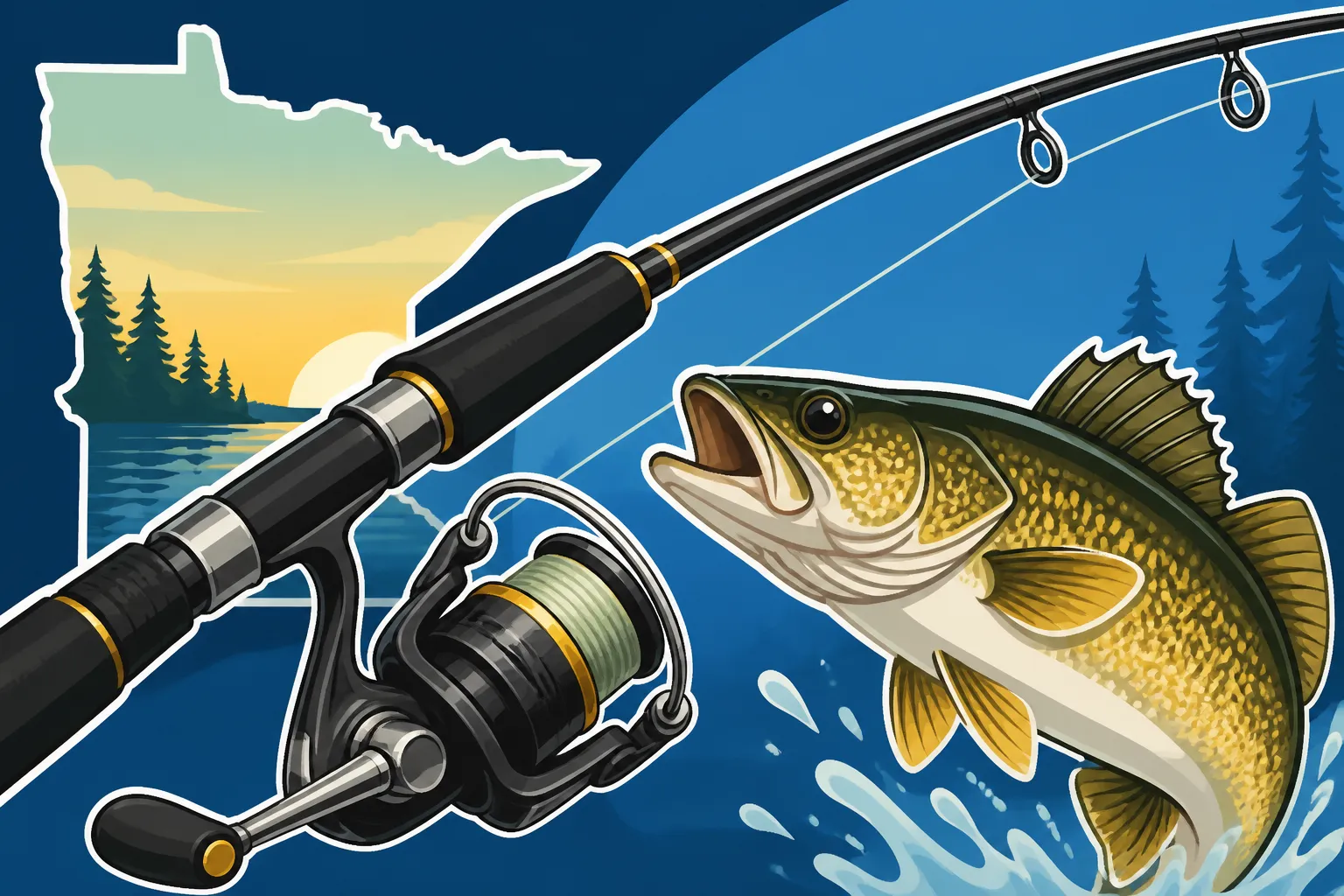
Let's be real, finding quality fishing gear on a budget can feel like trying to catch a walleye with a bare hook. You want something that performs, gives you that crucial sensitivity for subtle bites, and doesn't make your wallet scream. But with so many options out there, all claiming to be "the best," it's tough to sift through the noise, especially when you're trying to keep the cost under $100. This guide is all about cutting through the confusion, helping you identify the key features to look for, and pointing you toward the best spinning rods for walleye that won't empty your tackle fund here in Minnesota.
Why a Dedicated Walleye Spinning Rod Makes a Difference
You might be thinking, "A rod's a rod, right? Why can't I just use my old bass rod or panfish stick?" While you certainly can catch walleye on just about any rod, having a spinning rod specifically designed for walleye fishing techniques and their often finicky bites can dramatically improve your success rate. Walleye are notoriously subtle biters, sometimes feeling like little more than added weight or a slight tick, rather than an aggressive thump. A good walleye rod is built to transmit those nuances directly to your hand.
The Crucial Role of Sensitivity
When you're fishing for walleye, especially with jigs or a Lindy Rig, sensitivity is paramount. Imagine you're fishing a deep breakline on Lake Vermilion, trying to feel for that slight "thump" as a walleye inhales your jig. A cheap, fiberglass rod might just feel like dead weight, leaving you guessing. A quality graphite spinning rod, even one under $100, is designed to be lightweight and responsive. It acts like an extension of your arm, translating every subtle vibration from your line to the rod blank, and then right to your fingertips. This means you're more likely to detect those faint bites that indicate a walleye has taken your bait, giving you the precious split second needed to set the hook. Without this sensitivity, you'll be missing fish you didn't even know were there.
Optimized for Common Walleye Techniques
Walleye anglers in Minnesota employ a variety of techniques, and a versatile spinning rod can handle many of them. Whether you're pitching jigs on Upper Red Lake, working a slip bobber rig over weeds on Lake Winnibigoshish, or casting crankbaits along a rocky shore, your rod needs to perform. A rod with the right action and power allows for efficient casting of different lure weights, from lightweight jigs to heavier crankbaits. It also provides the backbone needed to properly set the hook into a walleye's bony mouth and then control the fish during the fight, preventing it from shaking free. Without a rod suited to these demands, you'll find yourself struggling with casting distance, hook sets, and ultimately, landing fish. A well-matched rod simply makes fishing more enjoyable and effective.
Key Features to Prioritize in a Budget Walleye Spinning Rod
When you're shopping for a walleye spinning rod, especially when keeping it under that $100 mark, it's essential to know where to compromise and where to hold firm on quality. Not all rods are created equal, and understanding the core components will help you make an informed decision.
Understanding Rod Length and Action
The length and action of your spinning rod are crucial for various walleye presentations. Generally, for most common walleye applications like jigging, slip bobber fishing, or throwing lighter crankbaits, you'll want a rod in the 6'6" to 7'6" range.
- Rod Length: Shorter rods (6'6" to 6'10") offer more precision and are excellent for vertical jigging or working small jigs in tight spaces. They're also often favored when fishing from a boat where long casts aren't always necessary. Longer rods (7'0" to 7'6") excel at longer casts, which is beneficial when targeting wary walleye from shore or covering expansive flats. They also provide better leverage for fighting fish and can absorb lunges more effectively.
- Rod Action: This refers to where the rod bends when pressure is applied. For walleye, a "Fast" or "Extra Fast" action is almost universally preferred. A fast-action rod bends mostly in the top third of the blank, providing incredible sensitivity for detecting light bites and a quick, powerful tip for snappy hook sets. An extra-fast action takes this a step further, bending only in the very tip, maximizing sensitivity and quickness. These actions are vital for feeling subtle walleye pickups and driving a hook home effectively. A slower action rod (like a moderate or slow action) might be fine for casting big crankbaits, but it sacrifices the sensitivity and quick hook-setting power you need for jigging or live bait presentations where a subtle bite might otherwise go unnoticed.
Power and Lure Weight Ratings
Rod power refers to the amount of pressure required to bend the rod. For walleye, you'll typically be looking at Medium-Light (ML) to Medium (M) power rods.
- Medium-Light Power: This is a fantastic choice for lighter presentations, like 1/8 oz to 1/4 oz jigs, small live bait rigs, or finesse techniques. An ML rod offers excellent sensitivity and a softer tip, which can be great for delicate bites or when using light line. It still has enough backbone to handle a good-sized walleye, but it's not overpowering for smaller fish.
- Medium Power: A medium power rod is a versatile workhorse, capable of handling a wider range of lure weights, typically from 1/4 oz up to 5/8 oz or even 3/4 oz, depending on the specific rod. This is a great choice if you only plan to buy one walleye rod, as it can cover jigging, slip bobbers, and many crankbait applications effectively. It provides more lifting power for heavier fish or when fishing in current.
- Lure Weight and Line Rating: Always check the rod's specifications for its recommended lure weight and line rating. This tells you the optimal range of baits and line strengths the rod is designed to handle. Using lures too light or too heavy, or line that's too strong or too weak, will compromise the rod's performance and could even lead to breakage. For instance, a medium-light rod might be rated for 1/8 to 3/8 oz lures and 4-10 lb test line, while a medium power rod could handle 1/4 to 5/8 oz lures and 6-14 lb test line. Matching your gear correctly is key to getting the most out of your setup.
Rod Materials and Components
Even in the sub-$100 category, advancements in materials mean you can get a decent performing rod.
- Graphite Blanks: For sensitivity and lightness, graphite is the undisputed champion for walleye rods. While you might find some composite or even fiberglass rods at this price point, prioritize graphite if sensitivity is your main goal. Graphite blanks transmit vibrations much more efficiently than fiberglass, allowing you to feel those subtle bites. Look for rods advertised as "high-modulus graphite" or simply "graphite" for the best performance within your budget. Fiberglass tends to be more durable but also heavier and less sensitive, often leading to missed strikes.
- Guides: The guides on your rod (the rings that your line passes through) play a vital role in casting distance, line protection, and overall rod feel. Look for guides with ceramic inserts, such as aluminum oxide or silicon carbide. These reduce friction, allowing your line to cast smoother and farther, and they also protect your line from wear and tear, especially important when using braided lines. Avoid cheap metal guides without inserts, as they can quickly fray your line and impede casting. Many budget-friendly rods from brands like Ugly Stik now feature durable, corrosion-resistant stainless steel guides with quality inserts.
- Reel Seat and Handle: A comfortable reel seat and handle are often overlooked but contribute significantly to your fishing experience. The reel seat should hold your reel securely without any wobble, and the locking mechanism should be easy to operate. Handles are typically made of cork or EVA foam. Cork offers a classic look and feel, and excellent grip, especially when wet. EVA foam is often more durable and easier to clean. Choose what feels most comfortable in your hand, as you'll be holding this rod for hours on end, jigging for walleye or waiting for that bobber to dip. A comfortable grip also enhances sensitivity by creating a better connection between your hand and the rod blank.
Finding the Best Value Walleye Spinning Rods Under $100
Now that we know what to look for, let's talk about actually finding these gems without breaking the bank. It's totally possible to get a fantastic walleye spinning rod for under $100, but it often requires a bit of savvy shopping.
Recommended Rod Characteristics and Where to Buy
Instead of naming specific models, which can fluctuate in price, let's focus on the types of rods that consistently offer great value in this price range. You'll often find excellent options from reputable brands known for their quality entry-to-mid-level gear. Brands like Fenwick, St. Croix (their lower-end series), Ugly Stik, Berkley, and Shimano often have spinning rod series that fit the bill.
For example, a Fenwick Eagle series rod is a perennial favorite, offering incredible sensitivity for its price point and excellent build quality that holds up to serious fishing. You might find a 6'6" or 7'0" Medium-Light Fast action in this series right around the $100 mark, sometimes even less when on sale. Another great choice is the Ugly Stik Elite series. While perhaps not as sensitive as pure graphite, these rods are legendary for their durability and still offer a surprisingly good feel thanks to a higher graphite content than traditional Ugly Stiks. They're nearly indestructible, which is a huge plus if you're hard on your gear.
You might also find a Shimano Sienna or Daiwa Aird-X series spinning rod that pairs well with a budget reel. These rods are often well-balanced and designed for general freshwater fishing, but a 6'8" Medium-Light Fast action in one of these series can be a killer walleye jigging rod. When you are looking for new gear, I recommend checking out reputable sporting goods stores like Bass Pro Shops or online retailers such as Amazon. They often have sales and a wide selection to compare.
Here's a quick reference table to help match rod specs to common walleye techniques:
| Technique | Recommended Rod Length | Recommended Rod Power | Recommended Rod Action | Ideal Lure Weights |
|---|---|---|---|---|
| Vertical Jigging | 6'0" – 6'8" | Medium-Light to Medium | Fast to Extra Fast | 1/8 oz – 3/8 oz |
| Casting Jigs | 6'6" – 7'0" | Medium-Light to Medium | Fast | 1/8 oz – 1/2 oz |
| Slip Bobber Fishing | 7'0" – 7'6" | Medium-Light to Medium | Moderate Fast to Fast | Varies (float & bait) |
| Casting Crankbaits | 6'6" – 7'0" | Medium to Medium-Heavy | Moderate Fast to Fast | 1/4 oz – 5/8 oz |
| Live Bait Rigs | 7'0" – 7'6" | Medium-Light to Medium | Moderate Fast to Fast | Varies (sinker & bait) |
Smart Shopping Strategies to Maximize Your Budget
Sticking to a sub-$100 budget means being a smart shopper. You won't always find the top-tier models, but you can certainly find excellent value.
- Sales and Clearance: This is your best friend. Keep an eye out for seasonal sales events, especially around holidays or at the end of a fishing season. Retailers like Bass Pro Shops often have incredible deals on popular rod series that bring them well under the $100 mark. Online platforms like Amazon also frequently run lightning deals or daily sales on fishing gear. Subscribing to newsletters from your favorite outdoor stores can give you a heads-up on these promotions. Sometimes, an older model that's being phased out can be snagged at a significant discount, offering performance comparable to newer, more expensive versions.
- Retailer Brands: Don't overlook store-brand rods. Sometimes, major retailers like Cabela's (often sold through Bass Pro Shops) or even regional tackle shops have their own branded rods manufactured to their specifications. These can offer surprisingly good performance for the price because they cut out some of the marketing costs associated with national brands. Read reviews and ask staff for recommendations.
- Bundle Deals: Occasionally, you'll find a rod and reel combo deal that offers a decent rod for around $100 total. While typically the reel might be the weaker link in these bundles, the rod itself can sometimes be quite good. If you already have a quality reel, you might consider buying the rod separately. However, if you're starting from scratch, a combo can be a cost-effective way to get on the water quickly. Just make sure the rod component of the combo meets the sensitivity and action requirements we discussed earlier. You can always upgrade the reel later. If you're looking for an all-around setup, you might want to consider our guide on the Best Fishing Gear for Beginners in Minnesota (By Budget).
- Local Tackle Shops: While often slightly more expensive than big box stores, your local tackle shop can be an invaluable resource. The staff often have direct experience with the rods they sell and can offer personalized recommendations based on your local fishing conditions, such as Walleye Fishing in Minnesota: Complete Guide or the Best Walleye Fishing Tactics in Minnesota. They might also have clearance items or gently used gear that offers fantastic value. Plus, you're supporting a local business!
Regardless of where you shop, always take a moment to "feel" the rod. Hold it, pretend to cast, and notice its balance and weight. Flex the tip to get a sense of its action. Even a budget rod should feel comfortable and responsive in your hand. If you're serious about jigging, check out our article on Jigging for Walleye: Jig & Minnow Basics. For other techniques, you might be interested in How to Use a Slip Bobber for Walleye & Crappie or even Trolling for Walleye: Crankbaits & Leadcore if you decide to expand your techniques later. Knowing How Many Lines Can You Fish in Minnesota is also important for staying compliant. For those longer casting scenarios, don't forget to consider Best Live Bait for Walleye (Leeches, Minnows, Crawlers).
Maintaining Your Budget Walleye Spinning Rod
Even a budget-friendly rod can last for many seasons if you treat it right. Proper care and maintenance are crucial for preserving its performance and extending its lifespan. Neglecting your gear, regardless of its cost, will inevitably lead to premature wear and tear or even breakage. Taking a few simple steps after each fishing trip can make all the difference.
Cleaning and Storage Best Practices
After a long day of chasing walleye on Leech Lake or Lake of the Woods, it's tempting to just toss your rod and reel in the corner until next time. However, a little effort goes a long way.
- Rinsing: If you've been fishing in brackish water, or even just in dusty conditions, take a damp cloth and gently wipe down the rod blank, guides, and handle. This removes dirt, grime, and any salt residue that can corrode guides and reel seats over time. Avoid harsh chemicals, as they can damage the rod's finish or components. For the guides, a cotton swab can help get into those tight spots to remove any gunk that might accumulate and abrade your line.
- Drying: Always ensure your rod is thoroughly dry before storing it. Moisture trapped in reel seats or under guide wraps can lead to corrosion and mold. Hang your rod vertically or lean it against a wall in a well-ventilated area until it's completely dry.
- Storage: Store your rod in a place where it won't be exposed to extreme temperatures or direct sunlight, which can weaken the rod blank over time. A rod sock or case is an excellent investment, even for a budget rod, as it protects the guides and tip from accidental damage during transport or storage. Never lean your rod against a wall with a bend in it for extended periods, as this can take a permanent set in the blank. Ideally, store your rods horizontally or vertically in a rod rack, keeping them straight and free from undue stress.
Checking for Wear and Tear
Regularly inspecting your rod for minor issues can prevent them from becoming major problems down the line. A quick check after each use or before your next outing is all it takes.
- Guide Inserts: This is one of the most common failure points. Run a cotton swab around the inside of each guide insert. If the cotton snags or frays, it indicates a crack or groove in the ceramic insert. A damaged guide can quickly abrade and weaken your fishing line, leading to unexpected break-offs. If you find a damaged insert, it's usually possible to replace just the insert or the entire guide, which is a much cheaper fix than replacing the entire rod.
- Reel Seat: Ensure the reel seat still holds your reel securely. Over time, threads can wear, or the locking mechanism can loosen. A wobbly reel will compromise sensitivity and can be incredibly annoying. If it's a minor issue, sometimes a simple tightening or cleaning of the threads is all that's needed.
- Rod Blank: Look for any visible cracks, nicks, or deep scratches on the rod blank, especially near the ferrules (where rod sections connect) or around the guides. While minor surface scratches are often harmless, anything that penetrates deeper into the graphite could be a weak point that could lead to a break under pressure. Also, check the connection points of multi-piece rods; they should fit snugly without any play.
- Handle and Cork: Check the handle for any signs of degradation. Cork can get dirty and pitted over time; a gentle scrub with mild soap and water can clean it up. EVA foam handles are generally more durable but can still get cuts or tears. Keeping your handle clean not only prolongs its life but also maintains a comfortable and sensitive grip.
By putting in a little time for maintenance, your budget walleye spinning rod will remain a reliable tool for many successful fishing trips here in Minnesota, helping you land those elusive walleyes season after season.
Disclaimer
The information provided in this guide is for general informational purposes only and does not constitute professional advice. Fishing regulations, product availability, and prices can change rapidly. Always consult the most current Minnesota fishing regulations from the Department of Natural Resources (DNR) before heading out, and verify product details with retailers. Fishing involves inherent risks, and adherence to safety guidelines is essential.