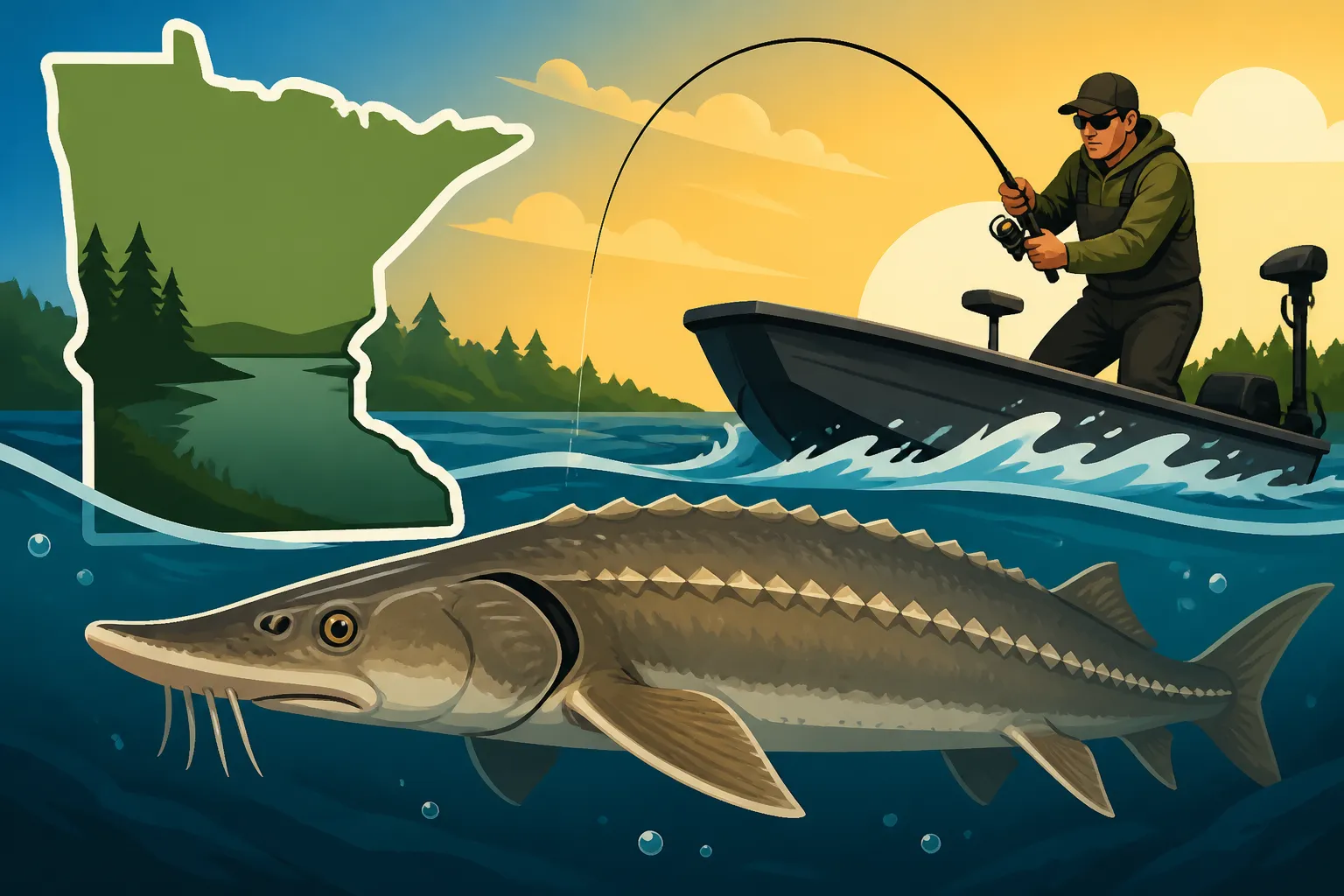
How to Catch Lake Sturgeon in Minnesota
There’s something truly primal and awe-inspiring about lake sturgeon. These ancient giants, with their armor-plated bodies and distinct, shovel-like snouts, can give you a fight like no other fish in Minnesota. If you've ever dreamt of battling a fish that can easily top 50 pounds, stretching well over five feet, and looks like it swam straight out of the Jurassic period, then chasing lake sturgeon is for you. This comprehensive guide will walk you through everything you need to know to successfully target and, more importantly, safely release these magnificent creatures in Minnesota's waters.
Unraveling the Mystery of Lake Sturgeon Habitats
Finding lake sturgeon isn't like finding panfish; they have specific preferences that dictate where they spend their time. These majestic fish are primarily bottom dwellers, preferring deep, slow-moving water in large rivers and the connecting lakes. They're often found in areas with soft, muddy or sandy bottoms where they can easily root for their food, using their sensitive barbels to detect crustaceans, insect larvae, and small invertebrates.
Premier Sturgeon Fishing Destinations
When we talk about lake sturgeon in Minnesota, a few locations immediately jump to mind as undisputed hotspots. These aren't just any rivers or lakes; they are historical strongholds where sturgeon populations have been carefully managed and have truly rebounded in recent decades.
The Rainy River is hands down the most famous and productive lake sturgeon fishery in Minnesota, and arguably one of the best in North America. This river, which forms part of the international border with Ontario, connects Rainy Lake to Lake of the Woods. Its deep channels, significant current, and abundant food sources make it prime habitat for these leviathans. Anglers flock to the Rainy during spring and fall, particularly downstream from the dam in International Falls and in the deeper holes and bends near Baudette. The concentration of fish during these cooler periods can be incredible, offering unparalleled opportunities for trophy-sized sturgeon. If you're planning a trip, understanding the specific rules for the Rainy River, which sometimes differ due to border water agreements, is crucial. You might also want to consult the "Rainy Lake Fishing Regulations (2026)" for a broader understanding of the region's rules.
Another fantastic option, particularly for those in the southern part of the state, is the St. Croix River. As part of the national scenic waterway, the St. Croix also boasts a healthy and growing sturgeon population, especially in its lower reaches, from Stillwater down to its confluence with the Mississippi River. This river offers a beautiful, less crowded experience compared to the Rainy, though the fish might not be as numerous or consistently large. The St. Croix's deep pools and gradual bends, often with soft substrates, provide ideal feeding and resting areas for sturgeon. For those interested in this beautiful waterway, a general guide to "Minnesota River Fishing: Mississippi, Minnesota & St. Croix" can offer more context.
Finally, Lake of the Woods itself, fed by the Rainy River, holds a significant population of lake sturgeon. While they can be found throughout the lake, the areas closest to the Rainy River mouth and deeper basins tend to be the most productive. Fishing here often requires larger boats and a good understanding of navigation, as the lake is vast and can be intimidating. Early ice fishing season on Lake of the Woods can also offer some unique opportunities for sturgeon, though it's less common than open water pursuits. You can learn more about this incredible fishery through a dedicated "Lake of the Woods Fishing Guide".
Seasonal Patterns and Best Times to Target
Like many fish, sturgeon fishing success is heavily influenced by the seasons. Understanding their movements and feeding patterns can dramatically increase your chances of a hook-up.
Spring is a prime time, especially on the Rainy River, shortly after the ice goes out. As water temperatures begin to rise, sturgeon become more active and move into shallower areas to feed and eventually spawn. This post-spawn period, usually from mid-May through June, sees them ravenously feeding to regain strength. The current regulations mean that the season generally aligns with this period, but it's always best to check the latest "Minnesota Fishing Seasons & Opener Dates (2026)".
Summer fishing can be a bit tougher, as sturgeon often retreat to deeper, cooler waters. They're still catchable, but you'll need to focus on deep holes and channels, often requiring heavier weights to keep your bait on the bottom in the current. Night fishing during the summer can sometimes be productive as they might move into shallower feeding areas under the cover of darkness.
Fall, particularly from September through October, rivals spring for top honors. As water temperatures drop, sturgeon once again become highly active, feeding heavily in preparation for winter. This is another fantastic window to target them, especially on the Rainy and St. Croix Rivers, before ice-up truly sets in. The fish are often fat and feisty, making for memorable battles.
Essential Gear for Taming a Lake Sturgeon
You wouldn't bring a butter knife to a sword fight, and you certainly wouldn't bring a panfish rod to tackle a lake sturgeon. These fish are incredibly powerful, capable of long, sustained runs and headshakes that will test every piece of your tackle. Investing in the right gear isn't just about landing the fish; it's about doing it efficiently and minimizing stress on the fish for a healthy release.
Rods, Reels, and Line Built for Battle
Your rod and reel setup is the foundation of your sturgeon arsenal. Think heavy-duty, robust, and reliable.
For rods, you'll want something with a heavy or extra-heavy power rating and a fast to moderate-fast action. A length of 7 to 9 feet is ideal. The added length helps with casting heavier weights, managing long runs, and absorbing the shock of a powerful fish. Graphite composites or fiberglass rods are excellent choices for their durability and backbone. You don't need the most expensive rod out there, but you do need one that can handle serious strain. Many anglers opt for a sturdy catfish rod or a heavy saltwater setup.
Matching that rod, you'll need a reel with a high line capacity and a smooth, powerful drag system. Large conventional baitcasting reels, like those often used for salmon or saltwater applications, are popular choices because of their robust gears and ability to hold hundreds of yards of heavy line. Heavy-duty spinning reels can also work, but ensure it's a model designed for serious abuse, not your average bass reel. Brands known for strong, reliable reels, though I won't name specific models, are what you'll want to look for. The key is that it can hold at least 200 yards, preferably more, of heavy line.
Line choice is critical. Most sturgeon anglers use braided main lines ranging from 50 to 80 pounds test. Braid offers incredible strength for its diameter, excellent sensitivity to detect subtle bites, and minimal stretch for solid hooksets. Because braid can be somewhat visible and easily abraded by a sturgeon's rough scutes or rocky bottoms, it's essential to use a heavy monofilament or fluorocarbon leader. A leader of 40 to 60 pounds test, about 2-4 feet long, will provide the necessary abrasion resistance and a bit of stretch, acting as a shock absorber during the fight. For more on line choices, check out our guide on "Best Fishing Line for Walleye (Braid vs Mono vs Fluoro)", though you'll need to size up for sturgeon.
Terminal Tackle Essentials
Beyond the main setup, your terminal tackle needs to be equally robust.
Hooks: This is non-negotiable for sturgeon. You must use single, barbless circle hooks. Circle hooks are designed to hook fish in the corner of the mouth, greatly reducing gut-hooking and increasing the chances of a healthy release. This is paramount for the conservation of this long-lived species. Sizes typically range from 5/0 to 8/0, depending on your bait. Make sure they are strong enough not to straighten under pressure.
Weights: To hold your bait on the bottom in strong currents, you'll need substantial weight. Pyramid sinkers or no-roll sinkers are popular, ranging from 4 to 12 ounces, sometimes even more, depending on the current speed and depth. A sliding sinker rig is almost universally preferred, allowing the sturgeon to pick up the bait and move off without immediately feeling the weight of the sinker.
Swivels and Leaders: Use heavy-duty barrel swivels (rated 80-100+ pounds) to connect your main line to your leader. The leader itself should be made of heavy monofilament (40-60 lb test) for abrasion resistance. Some anglers also use heavy-duty snelled leaders to connect their circle hook to the swivel.
Master the Art of Sturgeon Bait and Presentation
Sturgeon aren't typically picky eaters, but presentation and bait freshness are key. They are primarily scavengers, relying on their keen sense of smell and touch to find food along the river or lakebed.
The Irresistible Bait Buffet
When it comes to bait, the general rule is "stinky and natural."
Nightcrawlers: A big, juicy wad of nightcrawlers is perhaps the most popular and effective bait for lake sturgeon. You'll want to thread multiple large nightcrawlers onto your circle hook, creating a substantial, wriggling ball of scent and movement. The more scent, the better. Consider a full "gob" of 4-6 worms. If you need a refresher on bait basics, our "Best Live Bait for Walleye (Leeches, Minnows, Crawlers)" guide can provide some tips on handling worms, though for sturgeon, bigger is definitely better.
Cut Bait: Fresh cut bait, such as pieces of sucker, cisco, or even oily fish like smelt, can be incredibly effective, especially for larger sturgeon. The strong scent trail it leaves in the current is a major attractant. Cut a strip or chunk about 2-3 inches long and an inch wide, making sure it’s tough enough to stay on the hook in the current.
Stink Baits: While not as universally used as nightcrawlers or cut bait, commercial stink baits designed for catfish can sometimes attract curious sturgeon, especially those with a strong, pungent odor. These are often used as a supplement or in areas where live bait is harder to keep on the hook.
Setting Up Your Rig and Waiting Game
The standard setup for sturgeon fishing is a simple but effective bottom rig, typically a sliding sinker rig. Here’s how it works:
- Main Line to Sinker: Thread your main braided line through a large-eye sliding sinker (pyramid or no-roll).
- Sinker to Swivel: Tie a heavy-duty barrel swivel to the end of your main line. The sliding sinker will rest against this swivel. This setup allows the fish to pull the bait without immediately feeling the resistance of the heavy sinker, which is often enough to make them drop the bait.
- Swivel to Leader: Tie a 2 to 4-foot section of heavy monofilament leader (40-60 lb test) to the other end of the barrel swivel.
- Leader to Hook: Tie your barbless circle hook to the end of the leader. Ensure your knots are strong and reliable; a failed knot means a lost trophy.
Once your bait is deployed, patience becomes your most important virtue. Sturgeon are slow-moving and can take their time to investigate and mouth the bait. Don't be surprised if you go hours without a bite. When a sturgeon does pick up your bait, the bite can range from a series of light taps to a slow, steady pull. With circle hooks, resist the urge to violently set the hook. Instead, let the fish take the bait, then slowly reel in until the rod loads up and the hook finds its mark in the corner of the mouth. This self-setting nature of circle hooks is why they are so effective and crucial for sturgeon.
The Fight and Crucial Release Protocols
Hooking into a big lake sturgeon is an experience you won't soon forget. They are powerful, long-distance runners, and their fight is more of a sustained tug-of-war than a series of acrobatic jumps. Knowing how to properly fight and, more importantly, release these magnificent creatures is part of being a responsible angler.
Battling a Prehistoric Giant
When a sturgeon takes your bait and the rod bends over, hold on tight! Keep your rod tip up, maintain steady pressure, and let your drag do the work. Don't try to horse them in; you'll exhaust yourself and potentially injure the fish or break your gear. They will often make powerful, steady runs, stripping line from your reel. Be patient and allow them to tire themselves out.
The fight can last anywhere from 15 minutes for a smaller fish to over an hour for a true monster, especially if you're fighting them in a strong current. During the fight, avoid putting the reel in free spool unless absolutely necessary, as they can spool you quickly. Keep the line tight, even when they seem to stop, as they might suddenly surge again.
Responsible Catch and Release Practices
Due to their long lifespan, slow reproductive rates, and historical conservation efforts, lake sturgeon are primarily a catch-and-release fishery in Minnesota. Even when a harvest season is open (which is rare for lake sturgeon, often limited to specific, short windows or through a lottery tag), most anglers choose to release these ancient fish. This makes proper handling absolutely critical for their survival. You can learn more about general best practices in our guide on "Catch and Release Best Practices in Minnesota".
Here are crucial steps for a healthy release:
- Minimize Fight Time: While a long fight is often inevitable, use appropriate tackle to bring the fish in as efficiently as possible.
- Keep Fish in Water: This is paramount. Sturgeon are heavy, and their internal organs are not designed to support their weight out of water. Do not drag them onto rocky or sandy banks. If you absolutely need to take a photo, keep the fish submerged as much as possible, lift it only briefly for a quick shot, supporting its entire body horizontally. Never hold a large sturgeon vertically by its head or tail.
- Remove Hook Quickly: With barbless circle hooks, removal is usually straightforward. Use long-nosed pliers or a hook remover. If the hook is deeply set (rare with circle hooks), cut the line as close to the hook as possible rather than tearing at the fish.
- Revive the Fish: Hold the sturgeon gently upright in the water, facing into the current. Allow water to flow over its gills. You'll feel it regain strength and eventually kick away on its own. This might take several minutes, especially after a long fight.
- No Snagging: It is illegal to intentionally snag sturgeon. They must be hooked in the mouth.
Following these practices ensures that future generations can also experience the thrill of catching these magnificent "living dinosaurs."
Navigating Lake Sturgeon Regulations
Before you even cast a line for lake sturgeon, it is absolutely essential to understand and abide by Minnesota's fishing regulations. These rules are in place to protect and manage a species that was once severely endangered and is still considered vulnerable. Ignorance of the law is never an excuse, and penalties for violations can be steep.
Understanding Seasons and Limits
Lake sturgeon fishing seasons and limits are highly specific and can vary by water body. The Minnesota Department of Natural Resources (DNR) publishes detailed regulations each year. For instance, the Rainy River often has a different set of regulations compared to the St. Croix or Mississippi. These regulations dictate:
- Open Seasons: When you are legally allowed to fish for sturgeon. These are often divided into different periods, with some being strictly catch-and-release, while others might allow for a very limited harvest.
- Possession Limits: For lake sturgeon, possession limits are almost always zero. Harvest is extremely rare and typically requires a special tag obtained through a lottery.
- Size Limits: If harvest is allowed, specific minimum and maximum size limits will be in place to protect younger, growing fish and large, spawning adults.
- Sturgeon Tag Requirements: For any lake sturgeon kept, even if it's during a rare harvest season, a special sturgeon tag is usually required in addition to your regular fishing license. This tag must be immediately attached to the fish upon harvest. Dive deeper into this topic with our guide on "Lake Sturgeon Regulations & Tag in Minnesota".
Always consult the most current Minnesota Fishing Regulations handbook or the DNR website before each fishing trip, as rules can and do change to reflect the health of the fishery.
Prohibited Methods and Ethical Angling
To ensure the sustainability of lake sturgeon, certain fishing methods are strictly prohibited. These generally include:
- Snagging: Intentionally foul-hooking sturgeon is illegal. They must be legally hooked in the mouth.
- Multiple Hooks: Only a single hook per line is typically allowed when fishing for sturgeon.
- Unattended Lines: Keep a close eye on your lines. You need to be able to respond immediately when a sturgeon bites to ensure a proper hookset and to prevent the fish from swallowing the bait or getting tangled. You can learn more about general line rules in "How Many Lines Can You Fish in Minnesota?".
Ethical angling goes beyond just following the rules; it's about treating the resource with respect. This means using appropriate gear to prevent excessive fight times, practicing proper catch and release techniques, and minimizing your impact on their habitat. Remember, these fish have been around for millions of years; it's our responsibility to ensure they continue to thrive for millions more.
| Location | Best Season (Primary) | Typical Size (Range) | Key Characteristics | Special Considerations |
|---|---|---|---|---|
| Rainy River | Spring, Fall | 30-70+ lbs | High fish density, trophy potential, strong current | Border water regulations, popular destination, can be busy |
| St. Croix River | Spring, Fall | 20-50 lbs | Beautiful scenery, growing population, less crowded | National Scenic Riverway rules, slower current |
| Lake of the Woods | Spring, Fall | 30-60 lbs | Vast lake, connection to Rainy River, deeper basins | Requires larger boat, can be challenging to navigate |
| Mississippi River | Spring, Fall | 10-40 lbs | Specific pools and deeper stretches, less concentrated | Lower numbers than Rainy/St. Croix, more general fishing |
Disclaimer
Fishing regulations, seasons, and limits can change frequently. The information provided in this guide is for general informational purposes only and does not constitute legal advice. Always consult the most current official Minnesota Department of Natural Resources (DNR) fishing regulations before engaging in any fishing activities. It is the angler's responsibility to know and follow all applicable laws.