How to Catch Brook Trout in Minnesota
Catching brook trout in Minnesota can feel like a quest, especially when you’re navigating tight, brushy streams or trying to find those elusive pockets of clear, cold water where these beautiful fish thrive. Many anglers struggle to identify the best habitats or choose the right presentation to entice a bite from these wary gems. This guide is designed to cut through the confusion, offering practical, in-depth advice on everything you need to know to successfully target and catch brook trout across Minnesota’s diverse trout waters.
Understanding Minnesota's Brook Trout Habitat
Brook trout are particular fish, and understanding their preferred environment is the first step to finding them. They aren't found just anywhere; they have specific requirements that dictate where they can survive and flourish. If you know what to look for, you'll dramatically increase your chances of success.
The Allure of Cold, Clear Water
Brook trout, often called "brookies," are true indicators of water quality. They demand pristine, cold, and well-oxygenated water to survive. In Minnesota, this typically means spring-fed streams, smaller rivers, and certain deep, cold lakes, primarily found in two distinct regions: the southeastern "Driftless Area" and the North Shore tributaries leading to Lake Superior.
The Driftless Area in southeastern Minnesota is a unique landscape of rolling hills, deep valleys, and numerous cold-water springs. These springs create a network of streams like those found near Preston, Lanesboro, and Rushford that maintain consistent, frigid temperatures year-round, even through hot summers. The surrounding bluffs provide ample shade, preventing excessive water warming. You’ll often find these streams flowing over rocky, gravelly bottoms, which are crucial for spawning. The water is usually crystal clear, allowing you to see the bottom structure – and sometimes the fish themselves – but also demanding extreme stealth from anglers.
Along the North Shore, streams like the Baptism River, Temperance River, and many smaller creeks cascade down ancient rock formations into Lake Superior. These waters are often fed by snowmelt and cold groundwater, staying chilly even during peak summer. They tend to be faster flowing, with more dramatic drops, rapids, and plunge pools. While less spring-fed than the Driftless, their proximity to the cold vastness of Lake Superior and the rugged, forested terrain ensures cooler temperatures and excellent oxygenation.
Identifying Prime Trout Holds
Once you’ve found a promising stretch of water, the real detective work begins. Brook trout are ambush predators and will seek out specific structures that offer cover, a break from the current, and easy access to passing food. Learning to "read the water" is an essential skill for any serious trout angler.
Look for areas where the natural flow of the stream is interrupted or where the water's depth changes abruptly. Undercut banks are goldmines. The current erodes the bank beneath the surface, creating a hidden cavity where trout can hide, safe from predators and strong currents, waiting for insects or small baitfish to drift by. A subtle ripple on the surface might betray an undercut bank or a submerged log. Logjams and fallen trees create similar sanctuaries. They disrupt the current, forming slack water pockets where fish can rest, and the woody debris itself provides shade and cover. When approaching these spots, think about where a trout would feel safest and most comfortable.
Deep pools, especially those at the base of waterfalls or rapids, are another prime location. The churning water oxygenates the pool, and the depth offers both thermal refuge and a sense of security. Trout will often hold near the bottom or along the edges of these pools. Conversely, don't overlook riffles – shallower, faster-moving sections. While trout might not hold directly in the fastest current, they'll often position themselves just behind a large rock or other obstruction in a riffle, using the current break to conserve energy while scanning for dislodged insects. The transition zone where a riffle flows into a deeper run or pool is often incredibly productive.
Essential Gear for Brook Trout Success
Brook trout, particularly in smaller streams, require a thoughtful approach to gear. You're not casting heavy lures on open water; you're often making precise presentations in tight quarters. The right setup can make all the difference between a frustrating day and a memorable one.
Rod, Reel, and Line Setup
For stream fishing for brook trout in Minnesota, two primary setups dominate: ultralight spinning gear and lightweight fly fishing tackle. Both have their merits depending on your preference and the specific water you’re fishing.
Ultralight Spinning Gear: This is an excellent choice for beginners and experienced anglers alike, particularly in brushy streams where fly casting might be difficult. A rod in the 5 to 6-foot range, with an ultralight power and a fast action tip, is ideal. This combination allows for sensitive bite detection and accurate casting of small lures, while still having enough backbone to handle a decent brook trout. Pair it with a small spinning reel (e.g., a 1000 or 2000 size) spooled with 2 to 4-pound test monofilament or fluorocarbon line. Monofilament offers good knot strength and stretch, acting as a shock absorber for light lines. Fluorocarbon, on the other hand, is nearly invisible underwater and has less stretch, providing more direct feel, which can be crucial for subtle trout bites. The light line is critical for finesse presentations and avoiding spooking fish in clear water.
Fly Fishing Gear: For many, fly fishing is the quintessential way to pursue brook trout. A lightweight fly rod, typically a 2-weight to 4-weight in a 6.5 to 7.5-foot length, is perfect for the intimate nature of small stream fishing. This allows for delicate presentations and protects the light tippets often required. A matching fly reel, primarily used for line storage rather than fighting large fish, and a weight-forward floating fly line are standard. Your leader and tippet system should be tapered, starting thicker and ending with a fine tippet (e.g., 5X or 6X fluorocarbon) for stealth. This setup allows you to cast tiny dry flies, nymphs, or small streamers with precision, mimicking the natural insects and forage in the trout's diet.
Lure and Bait Choices
Brook trout are opportunistic feeders, and a variety of small lures and natural baits can be incredibly effective. The key is size and presentation – think small and subtle.
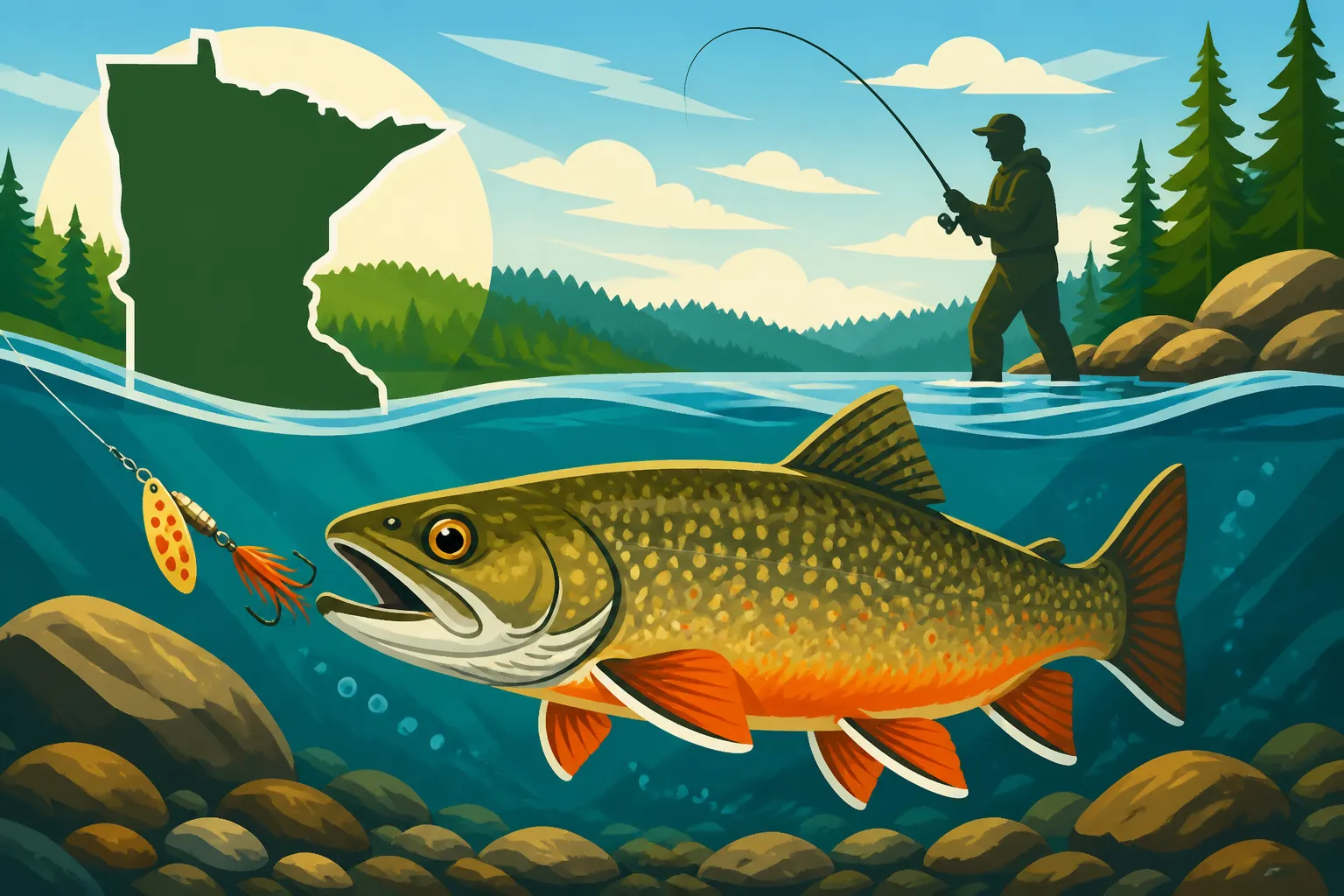
For spinning anglers, tiny inline spinners like those made by Mepps or Rooster Tail are perennial favorites. Sizes #00, #0, or #1, with natural finishes (silver, gold, copper) or those with some orange or yellow accents, often trigger aggressive strikes. Small spoons, such as those from Thomas or Kastmaster in 1/16 to 1/8 ounce, also work well, especially in deeper pools or runs. Tiny crankbaits, mimicking small minnows or aquatic insects, can also be deadly. Brands like Rapala offer ultra-light models perfect for brookies. Live bait, particularly small earthworms (garden worms or "red wigglers"), remains a classic and highly effective choice. They're natural, readily available, and brook trout simply can't resist them. Small minnows, if legal and available, can also entice larger brook trout, especially in lakes or wider stream sections.
Fly anglers have an incredible array of choices that mimic everything from hatching insects to terrestrial bugs and baitfish. For dry flies, patterns like an Adams, Parachute Adams, Elk Hair Caddis, or a Stimulator in sizes #14-20 are excellent when fish are rising to eat insects on the surface. When trout are feeding subsurface, nymphs are indispensable. Patterns like a Pheasant Tail, Hare's Ear, Prince Nymph, or small caddis larva imitations in sizes #14-20 are highly effective. You might also want to carry a few small streamers like a Woolly Bugger (black or olive) in sizes #10-14 to imitate baitfish or leeches, especially when targeting larger fish or probing deeper pockets.
Waders, Boots, and Other Necessities
Your personal comfort and safety are paramount when fishing for brook trout, especially in colder waters.
Waders and Wading Boots: For most stream fishing, a good pair of breathable chest waders is essential. They allow you to safely navigate the stream, get to prime casting positions, and stay warm and dry in often chilly water. Pair them with sturdy wading boots that provide excellent ankle support and grip on slippery rocks. Felt soles offer superior traction on slimy streambeds but can transfer aquatic invasive species if not properly cleaned and dried. Rubber soles with studs are another popular and often more environmentally conscious option.
Beyond waders, consider a few other items:
- Polarized Sunglasses: These are not a luxury; they are a necessity. Polarized lenses cut glare from the water's surface, allowing you to see submerged structure, detect fish, and even spot your fly or line in the water. They also protect your eyes from stray hooks.
- Fishing Vest or Pack: A well-organized vest or backpack keeps your tackle, fly boxes, tippet spools, and other essentials readily accessible.
- Small Landing Net: A fine-mesh, rubberized net helps protect the fish's slime coat if you plan on releasing them. For specific guidance on fish handling, check out our guide on Catch and Release Best Practices in Minnesota.
- Line Nippers and Hemostats/Pliers: Essential for trimming line and safely removing hooks.
Effective Techniques for Catching Brook Trout
Brook trout are notoriously wary, especially in clear, shallow streams. Your approach and presentation are often more critical than the specific lure or bait you're using. Developing a stealthy and precise technique will yield far more success.
Stealth and Presentation
When targeting brook trout in small streams, think like a hunter. These fish are easily spooked by sudden movements, shadows, and heavy footfalls.
Approach the Stream Quietly: Move slowly and deliberately along the bank. If possible, stay low, crouching or kneeling as you approach a promising spot. Avoid wearing brightly colored clothing that might stand out against the natural backdrop. Often, the best approach is from downstream, casting upstream, so you're less likely to be seen by the fish facing into the current. Your shadow falling over the water is a common culprit for spooking fish; always be mindful of where your shadow is landing.
Accurate and Delicate Casting: Precision is key. You'll often be casting into tight pockets, under overhanging branches, or next to an undercut bank. False casts (for fly fishing) should be minimized, and your lure or fly should land softly on the water, mimicking natural debris or an insect falling in. For spinning gear, a gentle roll cast or a short, accurate flick of the wrist is often more effective than a powerful overhead cast that might create too much splash. The goal is for your bait or lure to appear as natural as possible, not like a threat dropping from the sky.
Mastering Lure and Bait Fishing
Once you've managed a stealthy approach, the next step is presenting your offering in a way that entices a strike.
When fishing spinners or small spoons, cast slightly upstream and across, letting the current carry your lure downstream. Begin your retrieve as soon as the lure hits the water, just fast enough to get the blade spinning or the spoon wobbling. The goal is to imitate a struggling baitfish or insect dislodged by the current. Pay close attention to current seams – where fast water meets slow water – and retrieve your lure right along that line. Don't be afraid to vary your retrieve speed; sometimes a sudden burst or pause can trigger a strike. If using live bait like worms, a simple hook and a small split shot (or no weight at all in slow current) is often best. Let the worm drift naturally downstream, allowing it to tumble along the bottom as if it were truly swept away by the current. Keep your line tight enough to feel the bite but loose enough for a natural drift. You might be surprised at how aggressively brookies hit a well-presented worm!
Fly Fishing Strategies
Fly fishing for brook trout offers a nuanced and rewarding experience. Each technique is designed to present a specific imitation to the fish. For a deeper dive into these methods, consider our guide on How to Catch Stream Trout: Nymphs & Dries.
Nymphing: This is often the most effective method, as trout feed primarily subsurface. Cast your nymph upstream and allow it to drift naturally downstream, ideally with an indicator (like a small bobber or highly visible line section) to help detect subtle takes. The key is to achieve a "dead drift," meaning your fly travels at the same speed as the current, without drag. Mending your line (tossing a loop of line upstream) helps achieve this by extending the drag-free drift. Pay attention to changes in current speed and depth, adjusting your leader length and weight accordingly to get your nymph into the strike zone near the bottom.
Dry Fly Fishing: There's nothing quite like seeing a brook trout rise to sip your dry fly from the surface. This technique is most effective during active insect hatches. Look for rising fish and try to "match the hatch" with a fly pattern that closely resembles the size, shape, and color of the natural insects. Cast your dry fly upstream, allowing it to float naturally downstream without any drag. A perfect, drag-free drift is paramount. If your fly drags, it creates an unnatural wake that will immediately put trout off.
Streamer Fishing: While less common for small stream brook trout, streamers can be incredibly effective for larger fish, particularly in deeper pools or larger river sections. Cast your streamer across or slightly downstream and use a retrieve that gives it an erratic, darting action, mimicking a struggling baitfish. Stripping the line in short, quick pulls, or using a "swing" across the current, can provoke aggressive territorial strikes from bigger brookies.
Seasonal Considerations and Conservation
Fishing effectively for brook trout also means understanding how their behavior changes throughout the year and, crucially, how to ensure these precious fisheries remain healthy for future generations. Minnesota has specific regulations for trout, and knowing them is part of being a responsible angler.
Best Times to Fish for Brook Trout
The Minnesota trout season dates & streams typically open in spring, often in April, and extend into the fall. Within this framework, certain times offer better fishing than others, depending on water temperature, insect activity, and fish metabolism.
Spring (Opening Day to Early June): This is often a fantastic time. Water temperatures are rising, stimulating trout activity, but not yet so warm that they become stressed. Insect hatches, particularly caddis and mayflies, begin in earnest, offering excellent dry fly opportunities. After a long winter, brook trout are typically hungry and less selective. The downside can be higher water levels from snowmelt and spring rains, which can make wading challenging and reduce visibility. When the water is a bit higher and off-color, worms or small, brightly colored spinners can be particularly effective.
Summer (June through August): As summer progresses, water temperatures become the dominant factor. Brook trout will seek out the coldest water available, often congregating in spring-fed sections, deep pools, or near cold tributary inflows. Early mornings and late evenings, when ambient temperatures are lower, are usually the most productive times. During the heat of the day, trout can become lethargic and less willing to chase lures or rise to flies. Stealth is even more critical during summer, as low, clear water conditions make fish incredibly spooky. Focusing on heavily shaded areas can also pay dividends.
Fall (September through October): Many seasoned trout anglers consider fall the prime time for brook trout. As water temperatures cool down, brookies become very active, feeding heavily in preparation for winter and their spawning season. They often exhibit brilliant spawning colors, making them even more spectacular to catch. Terrestrial insects like grasshoppers and ants are still active, and various minnows are abundant, making both dry flies and streamers effective. Angler pressure typically decreases, and the changing foliage creates a beautiful backdrop for your fishing adventures. Be mindful of spawning fish; it's generally best to avoid disturbing them on their redds (spawning beds). For specific regulations on trout and other species, consult the Minnesota Fishing Seasons & Opener Dates (2026) and Minnesota Fishing Limits: Bag & Possession (2026).
Catch and Release Best Practices
Minnesota's brook trout fisheries, especially the native strains, are precious resources. Practicing proper catch and release is vital for their long-term health. Even if you plan to keep a limit, handling all fish with care is a sign of respect for the resource.
Minimize Stress: The goal is to get the fish in, unhooked, and back into the water as quickly and gently as possible. Avoid playing the fish to complete exhaustion, especially in warmer water. Use a light touch; if you can keep the fish in the water, do so.
Wet Hands Only: Always wet your hands before touching a trout. Dry hands remove the fish's protective slime coat, leaving it vulnerable to disease and infection.
Barbless Hooks: Consider crimping down the barbs on your hooks or using barbless hooks. This makes hook removal much easier, faster, and less damaging to the fish's mouth.
Proper Hook Removal: Use hemostats or needle-nose pliers to gently remove the hook. If the fish has swallowed the hook deeply, it’s often better to cut the line as close to the hook as possible rather than risk damaging its vital organs. Trout have a remarkable ability to shed hooks naturally.
Revival: Hold the fish gently in the water, facing upstream in a gentle current, until it regains its strength and can swim away on its own. Never throw or drop a fish back into the water. Support its belly and allow water to flow over its gills. When it tries to swim out of your hand, let it go. Remember, even a brief moment out of the water can be detrimental, especially in warm conditions. For further details on responsible angling, you can review information on Catch and Release Best Practices in Minnesota. Always be aware of the specific Stream Trout Season & Limit in Minnesota regulations for the water you're fishing. Also, remember that a Minnesota Trout Stamp & Trout Regulations is required for most trout fishing.
Comparison of Brook Trout Fishing Setups
Choosing between spinning and fly fishing can depend on personal preference, skill level, and the specific conditions of the stream. Here's a quick comparison to help you decide which might be best for your next brook trout adventure.
| Feature | Ultralight Spinning Gear | Lightweight Fly Fishing Gear |
|---|---|---|
| Rod Length | 5-6 feet | 6.5-7.5 feet |
| Rod Weight/Power | Ultralight power, fast action | 2-4 weight (line class) |
| Reel | Small spinning reel (1000-2000 size) | Matching fly reel (line storage) |
| Line Type | 2-4 lb monofilament or fluorocarbon | Floating fly line, tapered leader, 5X-6X tippet |
| Lures/Baits | Small inline spinners, spoons, tiny crankbaits, worms, minnows | Dry flies, nymphs, small streamers, terrestrials |
| Casting Ease | Generally easier for beginners, effective in tight spaces | Requires more practice, excels with delicate presentations |
| Presentation | Casting small lures, natural bait drift | Mimicking insects with various fly patterns |
| Visibility | Line can be more visible in clear water | Tippet is nearly invisible, fly acts as natural food |
| Versatility | Good for various conditions, especially wind/brush | Best for matching specific insect hatches and delicate work |
Disclaimer
Fishing regulations can change frequently. Always consult the most current Minnesota Department of Natural Resources (DNR) fishing regulations before heading out. This guide provides general information and recommendations, but it is your responsibility to know and follow all applicable rules and laws.