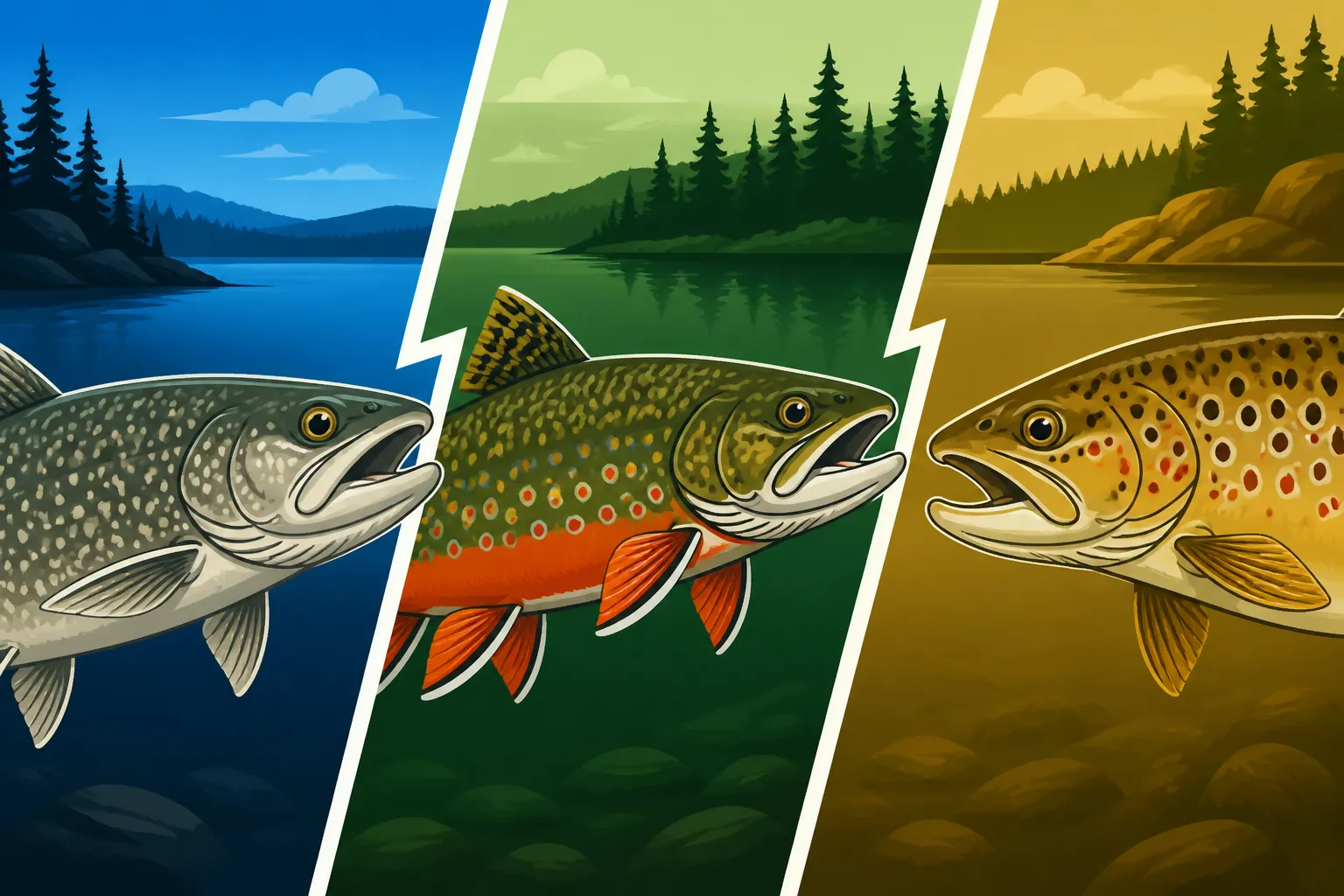
Lake Trout vs Brook Trout vs Brown Trout
There's nothing quite like the thrill of chasing trout in Minnesota's pristine waters, whether it's the quiet solitude of a winding stream or the vast depths of a northern lake. But let's be honest, staring at a fish in your net and trying to figure out if it's a Lake Trout, Brook Trout, or Brown Trout can sometimes feel like a pop quiz you didn't study for. It's a common struggle, and knowing the difference isn't just for bragging rights; it's crucial for understanding where to find them, how to catch them, and most importantly, how to follow regulations. This comprehensive guide will help you confidently identify and target each of these magnificent species, making your next Minnesota trout adventure even more rewarding.
Understanding the Minnesota Trout Landscape
Minnesota is a state blessed with incredible fishing opportunities, and its trout fisheries are a shining example. From the rugged North Shore to the serene streams of the Driftless Area, trout hold a special place in the hearts of many anglers. But not all trout are created equal, and understanding their unique characteristics is the first step to becoming a more successful and knowledgeable angler.
The Diverse World of Minnesota Trout
When we talk about trout in Minnesota, we're really talking about a family of fish that thrive in cold, clean, oxygen-rich waters. These aren't just pretty fish; they are powerful predators, sensitive indicators of water quality, and a testament to Minnesota's commitment to conservation. Whether you're casting tiny dry flies on a spring creek or dropping heavy spoons into the abyss of Lake Superior, the pursuit of trout offers a unique challenge and connection to nature. We also have Rainbow Trout in Minnesota, which are commonly stocked, but today, we're diving deep into the distinctions between the "big three" native and established trout species.
Why Identification Matters for Anglers
You might think, "A trout is a trout, right?" Not so fast! Knowing which species you've hooked can dramatically impact your fishing strategy, your compliance with regulations, and even your approach to playing and landing the fish. For instance, a small stream holding wild Brook Trout might have incredibly restrictive limits, while a large lake managed for trophy Lake Trout could have completely different rules. Misidentification can lead to inadvertently breaking a rule or, perhaps less critically but still important, using the wrong tackle or technique for the specific species you're targeting. Each trout species has its own preferred habitat, diet, and fighting style, and recognizing these nuances is key to consistent success and ethical angling.
Lake Trout: The Deepwater Giants
Lake Trout are the titans of Minnesota's cold, deep waters. These magnificent fish are true coldwater specialists, embodying power and resilience. Often targeted by anglers seeking a deep-water challenge, they represent a unique segment of Minnesota's diverse trout fishing.
Distinguishing Features of Lake Trout
When you pull a Lake Trout from the icy depths, its appearance is usually quite distinct from its stream-dwelling cousins. They generally have a sleek, elongated body, often with a grayish, olive, or brownish hue on their backs, fading to lighter sides and a white belly. Their most defining visual characteristic, however, is their deeply forked tail. This isn't just a slight indentation; it's a pronounced, V-shaped fork that is unmistakable once you know what to look for.
Their bodies are typically covered in numerous light-colored, irregular spots, which can sometimes appear yellowish or even reddish, depending on the lake and their diet. Lake Trout possess a large mouth, extending well past the eye, indicative of their predatory nature. While their coloration can vary, the combination of the deeply forked tail, overall spot pattern, and large size potential usually makes them relatively easy to identify compared to other trout species once you're familiar with the key traits.
Preferred Habitats and Behavior
Lake Trout are true masters of the cold, dark world beneath the surface. They thrive in large, deep, oligotrophic (nutrient-poor) lakes with abundant cold, oxygenated water throughout the water column, even in the heat of summer. In Minnesota, this means you'll find them primarily in the expansive waters of Lake Superior, the Boundary Waters Canoe Area Wilderness (BWCA), and other deep northern lakes like Lake Vermilion, Rainy Lake, and Saganaga Lake.
During the warmer months, Lake Trout retreat to the deepest, coolest sections of these lakes, often suspending over structure or near thermoclines where temperatures are to their liking. They are highly predatory, feeding on a variety of forage fish such as ciscoes (tullibee), smelt, sculpins, and whitefish. Their behavior shifts with the seasons; in spring and fall, they may move shallower as water temperatures cool, offering different fishing opportunities. Ice fishing for these giants is also extremely popular. Understanding their seasonal movements and reliance on specific cold water temperatures is critical for locating them. For a deeper dive into their seasonal patterns, check out our guide on Lake Trout Season & Limit in Minnesota and for specific locations, our article on Where to Catch Lake Trout in Minnesota.
Best Fishing Techniques for Lake Trout
Catching Lake Trout often involves specialized techniques that cater to their deepwater habits and powerful fight. Trolling is a hugely popular method, especially when targeting suspended fish over vast expanses of water. Anglers often use downriggers, lead core line, or heavy diving crankbaits to get spoons, stickbaits, or dodger-and-fly combinations down to the desired depths. Brands like Rapala offer deep-diving crankbaits that can reach impressive depths. Spoons, in particular, are incredibly effective, mimicking the flash and erratic movement of their prey.
When Lake Trout are holding near structure or during the ice fishing season, vertical jigging becomes a dominant strategy. Heavy tube jigs, spoons (like a Northland Tackle Buck-Shot Rattle Spoon or a Swedish Pimple), and large jigging raps are common choices. You'll need stout tackle – medium-heavy to heavy action rods and reels spooled with strong braided line are essential to handle the aggressive strikes and powerful runs of these deepwater giants. For a full breakdown of the tactics, take a look at our article on How to Catch Lake Trout: Jigging & Trolling.
Brook Trout: The Stream Gems
Brook Trout, often simply called "brookies," are arguably the most visually stunning of Minnesota's trout species. They are a beloved native species, particularly treasured by fly anglers who appreciate their beauty and the pristine wild environments they inhabit.
Identifying the Beautiful Brook Trout
The Brook Trout's vibrant coloration makes it one of the easiest trout to identify once you know what to look for. Their backs are typically dark olive-green to black, adorned with distinctive, wavy, worm-like markings called vermiculations. These patterns are unique and run from their head all the way to their dorsal fin. Along their sides, you'll find an array of small, scattered red spots, each encircled by a bluish halo, giving them a jeweled appearance.
Another key identifier is the presence of white leading edges on their lower fins – pectoral, pelvic, and anal fins – often bordered by a thin black line, followed by a vibrant orange or reddish hue. Their belly can range from white to a brilliant orange or red, especially pronounced in males during the spawning season. The tail of a Brook Trout is typically square or only slightly emarginate, rarely deeply forked. These combined features create a breathtaking mosaic of color, making them truly stand out among other trout species.
Where Brook Trout Thrive in Minnesota
Brook Trout are true indicators of ecological health, preferring incredibly cold, clear, and highly oxygenated water. They are typically found in small, spring-fed streams, beaver ponds, and some coldwater lakes. In Minnesota, the prime habitat for wild Brook Trout is found in the southeastern "Driftless Area," a region known for its limestone bluffs and cold spring creeks. Here, you'll find them nestled in undercut banks, behind log jams, and in the deeper pools of small streams.
They are also present in many of the North Shore streams that flow into Lake Superior, though often in the upper reaches where water remains consistently cold. These fish are highly sensitive to water temperature and habitat degradation, making their presence a good sign of a healthy aquatic ecosystem. Their wild nature and preference for secluded, often difficult-to-access waters, add to their allure for anglers seeking a truly unspoiled fishing experience. Learn more about the specific rules that apply to these fragile populations in our guide to Stream Trout Season & Limit in Minnesota.
Effective Brook Trout Fishing Strategies
Fishing for Brook Trout often involves a more subtle and finessed approach, particularly in the small, clear streams they call home. Stealth is paramount, as these fish are easily spooked by shadows or heavy footsteps along the bank.
Fly fishing is perhaps the most iconic and effective method for brookies. Small dry flies mimicking aquatic insects, delicate nymph patterns, or even tiny streamers can be incredibly productive. A light-action fly rod (2-4 weight) is ideal for presenting these small offerings with precision. For those new to fly fishing, or for those who prefer spinning gear, ultra-light spinning rods paired with 2-4 pound test line work wonderfully. Small inline spinners (like Panther Martin or Mepps), tiny spoons, or even a small hook tipped with a piece of garden worm can entice a strike. When fishing streams, focus on areas with cover, such as fallen logs, submerged rocks, and undercut banks, where brookies often lie in wait for an easy meal. Dive deeper into fly fishing specifics with our guide, How to Catch Stream Trout: Nymphs & Dries.
Brown Trout: The Wary Survivors
Brown Trout, originally native to Europe, have found a welcoming home in many Minnesota waters and are renowned for their cunning, size potential, and resilience. They often present a formidable challenge to even the most experienced anglers.
Key Identifiers for Brown Trout
While Brown Trout share some similarities with other trout species, particularly Brook Trout, there are distinct features that set them apart. Their overall body color ranges from golden brown to olive on the back, fading to yellowish or creamy sides and a white or yellowish belly. Their most distinguishing characteristic is the presence of prominent dark spots (black or sometimes reddish-brown) on their sides, often surrounded by a light "halo." Unlike brook trout, these spots typically extend onto the dorsal fin and sometimes the tail. Critically, Brown Trout lack the worm-like vermiculations on their back that are a hallmark of the Brook Trout, and they also do not have the bright white leading edges on their lower fins.
Their tail is typically square or only slightly forked, similar to a Brook Trout but distinctly different from the deeply forked tail of a Lake Trout. Brown Trout also have a relatively large mouth, extending back to or slightly beyond the eye. While they can grow to impressive sizes, particularly in lakes or larger rivers, their spot pattern and lack of vermiculations and white fin edges are your best clues for accurate identification.
Brown Trout Habitat and Resilience
Brown Trout are perhaps the most adaptable of the trout species found in Minnesota, exhibiting a higher tolerance for warmer water temperatures and a wider range of habitats compared to the sensitive Brook Trout. While they prefer cold, clean water, they can thrive in conditions that might stress other trout species. This adaptability is part of what makes them such successful introduced species.
You'll find Brown Trout primarily in the larger, cooler streams and rivers of Minnesota's Driftless Area, where they often coexist with Brook Trout but can occupy different sections of the watershed. They are also stocked in some of the North Shore streams and in certain lakes across the state, particularly those with a suitable coldwater layer. Brown Trout are notoriously wary, using their excellent eyesight and acute senses to avoid detection. They often lurk around structure such as large rocks, submerged logs, deep pools, and undercut banks, especially during daylight hours. Their ability to survive and even flourish in slightly degraded habitats makes them an important sportfish, but their wariness makes them a true test of an angler's skill. If you're looking for prime trout country, our general guide to Trout Fishing in Minnesota: Streams & Lakes is a great resource.
Techniques for Landing a Wary Brown Trout
Successfully catching Brown Trout demands patience, stealth, and often a bit of cunning. Because they are so wary, presenting your lure or fly without spooking them is half the battle. Many dedicated Brown Trout anglers swear by targeting them during low light conditions – dawn, dusk, or even at night – when these nocturnal feeders become more active and less cautious.
Fly fishing remains incredibly effective for Brown Trout, with a diverse range of patterns producing results. Streamers mimicking baitfish, nymphs drifted naturally along the bottom, and well-presented dry flies can all work. For spin anglers, small crankbaits that imitate minnows (like the classic Rapala Original Floater or a Countdown), small spoons, and weighted spinners are excellent choices. Using light line (4-6 pound test) is crucial for a natural presentation. When fishing streams, make accurate casts, often targeting the opposite bank's cover or the seams between currents. Patience is a virtue when pursuing Brown Trout; often, the largest fish are the most elusive and will only strike after many careful presentations.
Side-by-Side Comparison: Lake, Brook, and Brown
To help solidify these distinctions, let's put our three trout species side-by-side. Visual cues are critical, but understanding their preferred environments also goes a long way in identification.
Visual Distinctions at a Glance
Here's a quick reference table to help you tell these beautiful fish apart at a glance. Remember, coloration can vary significantly depending on the water body, diet, and time of year, but the structural and pattern details are usually consistent.
| Feature | Lake Trout | Brook Trout | Brown Trout |
|---|---|---|---|
| Tail Shape | Deeply forked (V-shaped) | Square or slightly emarginate | Square or slightly emarginate |
| Back Pattern | Light spots, no vermiculations | Distinctive worm-like vermiculations | No vermiculations, plain or spotted |
| Side Spotting | Light-colored, irregular spots, no halos | Red spots with blue halos | Dark spots (black/red-brown) with light halos |
| Fin Edges | No distinct white edges | White leading edges on pectoral, pelvic, anal fins | No distinct white edges |
| Mouth Size | Large, extends well past the eye | Moderate, extends to or slightly past eye | Large, extends to or slightly past eye |
| General Color | Gray, olive, or brown back; lighter sides | Dark green/olive back; vibrant belly (orange/red) | Golden brown to olive back; yellowish/cream belly |
| Typical Size | Can be very large (trophy class) | Small to medium (often under 12-15 inches) | Medium to large (can reach trophy size in lakes) |
Habitat and Behavioral Differences
Beyond their looks, these trout species have distinct preferences for where they live and how they behave. These differences are precisely why they often require varied fishing approaches.
Lake Trout are the deepwater specialists. They are built for endurance and power, constantly cruising the cold, oxygenated depths of large lakes. Their behavior is often tied to finding schools of baitfish, making them pelagic hunters. They are less wary than stream trout, largely because their deep, dark habitat offers fewer visual threats. Targeting them means understanding deep-water structure, thermoclines, and using electronics to locate both fish and their prey.
Brook Trout, on the other hand, are delicate denizens of small, pristine coldwater streams and spring ponds. They are ambush predators, often hiding in small pockets of current, undercuts, or around submerged vegetation, waiting for insects to drift by. Their survival depends on extreme caution and pristine water conditions. Their movements are limited to the confines of their small waterways, and their diet is heavily influenced by terrestrial and aquatic insects. Fishing for brookies is an exercise in stealth, delicate presentation, and understanding micro-habitats within a stream.
Brown Trout bridge the gap somewhat. While they prefer cold water, they are more tolerant of slight variations in temperature and habitat quality than brook trout. They are highly adaptable and often grow larger than brook trout in streams and can reach impressive sizes in lakes. Browns are incredibly wary, especially larger individuals, and are known for their strong nocturnal feeding habits. They are powerful fighters, famous for their dogged resistance and often leaping acrobatics. Catching a trophy Brown Trout, especially from a stream, is considered a significant accomplishment due to their intelligence and evasiveness.
Minnesota's Trout Regulations and Conservation
Understanding the differences between these trout species isn't just an academic exercise; it's a practical necessity for every responsible angler in Minnesota. Our state is committed to protecting its valuable trout resources, and that means specific rules apply to specific fish in specific places.
Navigating Minnesota's Trout Regulations
Minnesota's fishing regulations are designed to manage fish populations sustainably, and this is especially true for trout. The rules can be quite granular, often varying by lake or even by specific stream section. For example, a certain stream stretch in the Driftless Area might be designated for catch-and-release only for Brook Trout, while a nearby lake allows a daily limit for Brown Trout. Lake Trout regulations on Lake Superior are entirely different from those on a smaller inland lake.
It's crucial to always consult the current Minnesota Department of Natural Resources (DNR) fishing regulations booklet or their website before heading out. Pay close attention to:
- Season Dates: When is the trout season open for each species?
- Daily and Possession Limits: How many can you keep per day, and how many can you have in your possession?
- Size Limits (Slot Limits): Are there minimum or maximum sizes you can keep?
- Special Regulations: Are there any tackle restrictions (e.g., artificial lures only) or specific designated waters?
You'll also need a valid Minnesota fishing license, and if you're targeting trout in designated trout streams or lakes, you'll likely need a Minnesota Trout Stamp & Trout Regulations. Many anglers often wonder, Do You Need a Trout Stamp in Minnesota?, and the answer is generally yes for those specific waters. These stamps contribute directly to habitat restoration and trout management efforts, so it's money well spent!
The Importance of Catch and Release
For many trout anglers, especially those pursuing wild Brook or Brown Trout in streams, catch and release is a deeply ingrained ethic. These fish, particularly the wild populations, are precious resources, and careful handling ensures their survival to spawn again and be caught another day. Large Lake Trout, while robust, are also slow-growing, and releasing mature individuals helps maintain trophy fisheries.
When practicing catch and release, remember these best practices:
- Minimize Fight Time: Land the fish as quickly as possible to reduce stress.
- Keep Fish in Water: If possible, unhook the fish while it's still in the water.
- Wet Hands: Always wet your hands before touching the fish to protect its protective slime coat.
- Use Barbless Hooks: They make unhooking much easier and less damaging.
- Cut Line if Deeply Hooked: If a fish is gut-hooked, cut the line as close to the mouth as possible rather than trying to rip the hook out.
- Revive Gently: Hold the fish upright in the water, facing into the current, until it swims away under its own power.
Adhering to Catch and Release Best Practices in Minnesota not only promotes healthy fish populations but also ensures that future generations can enjoy the same incredible trout fishing experiences we cherish today.
Where to Find Specific Trout in Minnesota
To recap, knowing your trout's preferred haunts can save you a lot of time and increase your chances of success:
- Lake Trout: Head to the largest, deepest, coldest lakes in Minnesota. Think Lake Superior, as well as the deep, clear lakes of the BWCA like Saganaga, Basswood, and Knife Lake. Lake Vermilion and Rainy Lake are also known for their lakers.
- Brook Trout: Seek out the small, spring-fed streams and tributaries, particularly in the southeastern Driftless Area of Minnesota, near towns like Lanesboro, Preston, and Caledonia. You'll also find them in the headwaters of some North Shore streams. If you're a fly fishing enthusiast, the Fly Fishing the Driftless Area: A Beginner's Guide is an essential read.
- Brown Trout: These adaptable fish are found in many of the same streams as Brook Trout in the Driftless Area, often in the larger, slightly warmer sections. They are also stocked in various lakes and rivers across the state, including some North Shore tributaries. For general techniques that apply across species, check out our guide on Best Stream Trout Fishing Tactics in Minnesota, and for gear considerations, our article on Best Gear for Stream Trout Fishing in Minnesota is a must-read.
Disclaimer
Fishing regulations are subject to change. Always consult the most current Minnesota Department of Natural Resources (DNR) fishing regulations booklet or website before heading out on the water. This guide is for informational purposes only and should not be considered a substitute for official DNR publications.