Best Gear for Stream Trout Fishing in Minnesota
Heading out to the picturesque trout streams of Minnesota can be an incredibly rewarding experience, but let's be honest, it can also feel a bit overwhelming when you're trying to figure out what gear you really need. With so many specialized items and passionate opinions out there, it’s easy to feel like you're missing something crucial or just plain getting it wrong. This guide is here to cut through the noise, helping you understand the essential equipment that will make your stream trout fishing adventures in Minnesota both successful and enjoyable, without breaking the bank.
Understanding Stream Trout and Their Habitats in Minnesota
Before we even talk about rods and reels, it's really helpful to understand the fish you're targeting and the unique environments they call home here in Minnesota. Trout aren't just any fish; they thrive in specific conditions, and knowing those conditions helps inform your gear choices.
Types of Stream Trout in Minnesota
Minnesota is blessed with several species of stream trout, each with its own charm and characteristics. You’re most likely to encounter three main types:
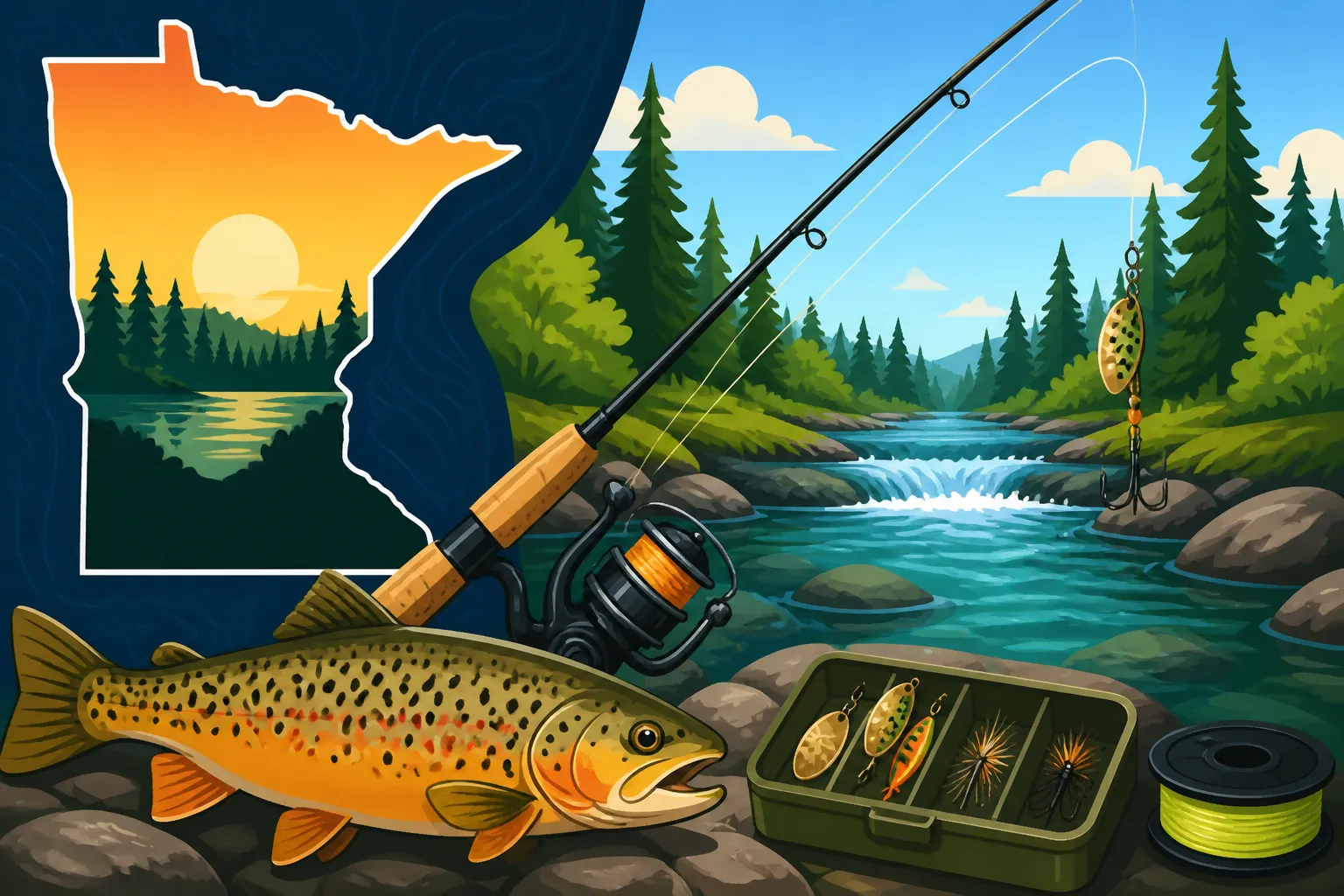
- Brown Trout: Often the largest and wariest of the stream trout, brown trout are known for their golden-brown bodies, often adorned with dark spots ringed in lighter halos. They're incredibly resilient and can tolerate slightly warmer water than their brook and rainbow cousins. You'll find them in many of our state's larger, cooler streams, often lurking under cut banks and deep pools, making them a challenging but thrilling catch.
- Rainbow Trout: Recognized by the iridescent pink or red stripe along their sides, rainbow trout are typically strong fighters, often jumping acrobatically when hooked. They prefer cold, clear, well-oxygenated water and are frequently stocked in many of Minnesota's designated trout streams to supplement natural populations. They're a favorite for many anglers due to their spirited battles.
- Brook Trout: These are Minnesota’s only native stream trout species, and they are truly a gem. With their beautiful worm-like markings (vermiculation) on their backs, red spots with blue halos on their sides, and white-tipped fins, they are undeniably stunning. Brook trout are indicator species, thriving only in the coldest, purest headwaters and spring-fed creeks. While they might not reach the size of a brown trout, catching a wild brook trout in a pristine Minnesota stream is an experience truly unmatched. To learn more about how these differ, check out our guide on Lake Trout vs Brook Trout vs Brown Trout.
Understanding which species you're targeting can influence your approach and, to some extent, your gear. For instance, smaller, more delicate presentations are often key for skittish brook trout, while a slightly heavier setup might be appropriate for larger brown trout in wider rivers.
Key Characteristics of Minnesota Trout Streams
Minnesota’s trout streams are incredibly diverse, ranging from small, brush-choked trickles to wider, more open rivers. However, they share some common characteristics that dictate effective fishing techniques and gear:
Most trout streams require cold, clear, well-oxygenated water to thrive. You'll find them primarily in two distinct regions:
- The Driftless Area: Located in southeastern Minnesota, this region avoided glaciation, resulting in deeply carved river valleys with numerous spring-fed creeks that maintain consistent cold temperatures year-round. These streams often feature a mix of riffles (shallow, fast-moving water), runs (deeper, flowing sections), and pools (deep, slow-moving sections). Overhead cover from trees, undercut banks, and submerged logs are crucial hiding spots for trout. This area is fantastic for both fly and spin fishing due to its varied terrain. For a deep dive, read our comprehensive guide on Driftless Area Trout Streams Southeast Minnesota.
- The North Shore Tributaries: Along Lake Superior, numerous short, steep rivers cascade down to the big lake. These streams are generally very cold and rocky, offering prime habitat, especially for steelhead (migratory rainbow trout) and brook trout. Access can be more challenging here, with steep banks and dense forests, requiring durable gear and careful wading.
Regardless of the region, understanding stream structure is vital. Trout will position themselves where they can find food with minimal effort while remaining hidden from predators. This means targeting current seams where fast and slow water meet, deep pools where they can rest, and areas with structure like fallen trees, boulders, or undercut banks. Your gear needs to allow you to present your bait or fly effectively in these varying conditions, often with precision and stealth.
Essential Rod and Reel Setups for Stream Trout
When it comes to stream trout fishing, you generally have two main approaches: fly fishing and spin fishing. Both are effective, but they require different gear and techniques. Let’s break down what you’ll need for each.
Fly Fishing Gear
Fly fishing is often seen as the quintessential method for stream trout, offering a delicate presentation that can be incredibly effective on wary fish. It does involve a bit of a learning curve, but the reward is immense.
- Fly Rod: For most Minnesota trout streams, a rod in the 2- to 5-weight range is ideal. A 3-weight is a versatile choice for smaller to medium streams, offering enough backbone for average trout while still being delicate enough for smaller presentations. A 4 or 5-weight might be better if you anticipate larger fish or need to cast heavier flies or in windy conditions. Rod length is also important; a 7'6" to 9' rod is common, with shorter rods (7'6" or 8') being easier to maneuver in brushy streams, while a 9' rod offers better line control on wider waters. Brands like Orvis, Redington, or Fenwick offer excellent options for various budgets.
- Fly Reel: The reel in fly fishing primarily acts as a line holder and a counterbalance for the rod. For smaller trout, a basic click-and-pawl or disc drag reel is perfectly sufficient. The key is that it should balance well with your chosen rod. Don't feel pressured to spend a fortune here; a reliable, smooth drag system is more important for larger fish, but for most stream trout, its primary role is storage.
- Fly Line: This is arguably the most crucial component. A weight-forward (WF) floating line is the standard for most stream trout applications. The "weight-forward" design means the front portion of the line is heavier, making it easier to cast. A good quality fly line from a brand like Scientific Anglers or Rio will dramatically improve your casting experience and durability. Match the line weight to your rod's recommended weight (e.g., a 4-weight line for a 4-weight rod).
- Leaders and Tippet: A tapered leader connects your fly line to your fly. It’s thicker at the butt end (connecting to the fly line) and gradually tapers down to a thinner section called the tippet. This taper helps transfer casting energy smoothly and provides a delicate presentation. Leaders are typically 7.5 to 9 feet long. Tippet material is then tied to the end of the leader, allowing you to easily change flies without constantly shortening your main leader. Fluorocarbon tippet is popular for its low visibility underwater and abrasion resistance, while nylon monofilament is often more supple and floats better for dry fly presentations. You'll want a range of tippet sizes, typically 4X to 6X, with 5X being a good all-around choice.
When putting this setup together, many anglers opt to visit a local fly shop or large outfitter like Bass Pro Shops, where they can handle different rods and get expert advice on matching components.
Spin Fishing Gear
Spin fishing (or ultralight spinning) is a fantastic and often more approachable method for stream trout, especially for beginners or those fishing in tight quarters where overhead casting isn't feasible. It uses more traditional rod and reel setups.
- Spinning Rod: An ultralight or light action spinning rod, typically 5' to 7' long, is perfect. The lighter action allows you to cast very small, lightweight lures and baits accurately, which is often key for tempting finicky trout. A fast or extra-fast action tip will give you better feel for subtle bites and quicker hooksets. Shorter rods are easier to manage in brushy stream environments, while longer rods can offer better casting distance on wider rivers. Look for brands known for sensitive blanks, like St. Croix or Ugly Stik, which offer great options for stream fishing.
- Spinning Reel: Pair your ultralight rod with a small, lightweight spinning reel, usually in the 1000 to 2500 size range. A smooth, reliable drag system is crucial here, as trout can put up a surprisingly strong fight on light line. Look for models with a good retrieve ratio that allows for quick line pickup. Brands like Shimano, Daiwa, or Pflueger make excellent ultralight reels suitable for trout.
- Fishing Line: For stream trout, you want light line for maximum casting distance with small lures and for minimal visibility to the fish. Monofilament line in 2-pound to 6-pound test is a classic choice, offering good knot strength and shock absorption. Fluorocarbon line is also an excellent option, especially for leaders, as it’s nearly invisible underwater and very abrasion resistant. Some anglers prefer a thin braided line (4-6 lb test) for its sensitivity and casting distance, often adding a 2-4 foot fluorocarbon leader with a small swivel to the braid for stealth. Experiment to see what feels best for your style and the conditions you encounter.
Here's a quick comparison of fly fishing versus spin fishing gear:
| Feature | Fly Fishing Gear | Spin Fishing Gear |
|---|---|---|
| Rod | 2-5 weight, 7'6" – 9' (delicate, specialized) | Ultralight/Light action, 5' – 7' (sensitive, versatile) |
| Reel | Line storage, counterbalance (drag important for big fish) | Smooth drag, good retrieve (critical for fighting fish) |
| Line | Weight-forward floating fly line, tapered leader, tippet | 2-6 lb monofilament or fluorocarbon (braid with fluoro leader) |
| Lure/Bait | Artificial flies (dry, nymph, streamer) | Small spinners, spoons, crankbaits, live bait |
| Casting Style | Loop-driven, specialized casting motion | Overhead/sidearm, more conventional |
| Learning Curve | Higher | Lower |
| Precision | Excellent for delicate, specific presentations | Good for covering water, accurate short casts |
When deciding which route to take, consider your comfort level and the specific conditions. Both methods can be incredibly effective, and sometimes having gear for both can open up more opportunities.
Crucial Terminal Tackle and Baits for Streams
Once you've got your rod and reel sorted, it's time to think about what actually goes in the water to entice those trout. This is where your tackle box or fly box really comes into play, and having the right selections can make all the difference.
Fly Fishing Flies
The world of fly fishing flies is vast and can be a bit intimidating. However, for stream trout in Minnesota, you can cover most situations with a solid selection of a few key categories.
- Dry Flies: These flies imitate insects that float on the water's surface, like mayflies, caddis, and stoneflies. Trout will rise to these when there's an active hatch. Essential patterns include Elk Hair Caddis, Adams, Parachute Adams, and Griffith's Gnat in various sizes (12-20). When trout are actively feeding on the surface, there's nothing more exciting than watching them sip your perfectly presented dry fly. Understanding local hatches can significantly improve your success with dry flies, and you can often get updates from local bait shops or online forums about what's currently active.
- Nymphs: By far the most common food source for trout, nymphs imitate the immature aquatic insect forms that live on the stream bed. Most of a trout's feeding happens subsurface, so a well-drifted nymph is often your best bet. Popular patterns for Minnesota streams include Hare's Ear Nymph, Pheasant Tail Nymph, Prince Nymph, and Squirmy Wormy in sizes 10-18. You'll often fish these under a strike indicator (a small bobber-like device) to detect subtle bites. Learning How to Catch Stream Trout: Nymphs & Dries is a fundamental skill for any fly angler.
- Streamers: These flies imitate baitfish, leeches, or larger insects. They are excellent for targeting larger, more aggressive trout, especially brown trout, which are often piscivorous (fish-eating). Patterns like Woolly Bugger (black, olive, brown), Sculpzilla, and Clouser Minnow (in smaller sizes) can be very effective. You typically strip these through the water to mimic a swimming baitfish, often producing aggressive strikes. Streamers are a great choice when water levels are slightly higher or off-color, or when you’re specifically hunting for that trophy fish.
Don’t feel like you need every fly under the sun. Start with a selection of proven patterns in various sizes, and you can always expand your collection as you gain experience and understand specific stream conditions.
Spin Fishing Lures and Baits
Spin anglers have a wide array of options, often allowing them to cover more water and fish different depths more easily.
- Spinners: These are classic trout lures for a reason – they work! The spinning blade creates flash and vibration that fish can't resist. Popular brands include Mepps Aglia, Panther Martin, and Roostertail. Sizes from 0 to 2 are generally ideal for stream trout. Carry a variety of blade colors (silver, gold, copper) and body colors (black, white, yellow, brown) to match conditions. Spinners are particularly effective when cast upstream and retrieved just fast enough to get the blade turning, allowing them to drift naturally through runs and pools.
- Small Spoons: Like spinners, small spoons create flash and wobble that can attract trout. Cast Master and Little Cleo spoons in sizes 1/16 oz to 1/8 oz are excellent choices. They can be cast and retrieved steadily or jigged in deeper pools. Their compact size makes them good for longer casts and cutting through current.
- Small Crankbaits: While less common than spinners or spoons for general stream fishing, tiny crankbaits can be deadly for larger trout, especially in wider sections of rivers or deeper pools. Look for models from brands like Rapala (e.g., Ultra Light Minnow or CD series) or Berkley, in sizes 1.5 to 2 inches, mimicking small baitfish. Suspending or shallow-diving models are usually best for stream applications.
- Live Bait Options: Sometimes, nothing beats the real thing.
- Worms (Nightcrawlers, Red Worms): A classic trout bait. Drift a small section of a nightcrawler or a whole red worm on a small hook (size 8-12) with a split shot or two to get it down. Fishing worms under a bobber can also be very effective in slower pools.
- Minnows: Small fathead minnows or shiners can be rigged on a small hook (size 8-6) and drifted or slow-retrieved. This is especially good for larger brown trout. Check local regulations regarding minnow use, as some streams may have restrictions.
- Salmon Eggs/PowerBait: These manufactured baits, often brightly colored and scented, can be very effective, particularly in heavily stocked streams where fish are accustomed to hatchery food. Rig them on a small treble or single hook with a light sinker to drift near the bottom.
Remember to always check the Stream Trout Season & Limit in Minnesota and specific regulations for the stream you are fishing, as some waters have tackle restrictions (e.g., artificial flies and lures only). You can find many of these terminal tackle options easily at sporting goods stores or through online retailers like Amazon, offering a convenient way to stock up before your trip.
Waders, Boots, and Essential Apparel
Beyond your fishing specific gear, what you wear can significantly impact your comfort, safety, and overall enjoyment of a day on the stream. Trout streams are often cold, slippery, and sometimes surrounded by dense vegetation, so dressing appropriately is non-negotiable.
Waders and Wading Boots
Getting into the water is often essential for effective stream trout fishing, allowing you to access prime spots and make better presentations. This is where good waders and wading boots come in.
- Chest Waders: For serious stream fishing, chest waders are the most popular choice. They keep you dry from the chest down, allowing you to wade into deeper water without getting soaked. Look for breathable materials like Gore-Tex or similar synthetics, which allow perspiration to escape while keeping water out. Neoprene waders are warmer but less breathable and generally better suited for colder conditions or stillwater fishing. Choose stockingfoot waders (which require separate wading boots) over bootfoot waders for better ankle support and grip, especially on uneven stream beds. Brands like Simms, Orvis, and Redington are well-regarded for quality and durability.
- Wading Boots: Paired with stockingfoot waders, good wading boots provide crucial traction and ankle support. The stream bottom can be incredibly slick, covered in algae-coated rocks. Felt soles offer superior grip on slimy rocks but are restricted in some areas due to aquatic invasive species concerns (as they can harbor organisms). Rubber soles, often with aggressive lug patterns or studded options, are becoming more popular, especially with felt restrictions or for those concerned about AIS. Always clean your wading boots thoroughly between fishing trips, especially when moving between different watersheds, to prevent the spread of Aquatic Invasive Species (AIS) Rules for Boaters.
- Safety Considerations: Wading can be dangerous. Always wade carefully, shuffle your feet, and use a wading staff for added balance, especially in unknown waters or strong currents. Never wade alone if possible, and always let someone know where you’re going and when you expect to return. A wading belt (often integrated with chest waders) is also critical, as it cinches around your waist and helps prevent your waders from filling completely with water if you take a spill, giving you more time to recover.
Layering and Outerwear
Minnesota weather can be unpredictable, even in the middle of summer. Dressing in layers is key to staying comfortable throughout your day.
- Base Layers: Start with a moisture-wicking base layer (synthetic or merino wool) against your skin. This pulls sweat away, keeping you dry and regulating your body temperature. Avoid cotton, as it retains moisture and chills you when wet.
- Mid-Layers: Depending on the temperature, add a fleece jacket or a heavier synthetic layer for insulation. This layer traps warm air, providing warmth without excessive bulk. In colder weather, you might even wear two mid-layers.
- Outerwear (Rain Gear): A lightweight, waterproof, and breathable rain jacket is indispensable. Even on sunny days, pop-up showers are common, and getting wet quickly leads to being cold and miserable. Look for jackets with good hoods and adjustable cuffs to seal out water. Brands like Patagonia, Columbia, and Frogg Toggs offer great options for fishing-specific outerwear.
- Sun Protection: Don't forget sun protection! A wide-brimmed hat, sunglasses (polarized lenses are a huge advantage for seeing fish and structure underwater, as well as protecting your eyes from errant hooks), and sunscreen are non-negotiable, even on cloudy days. UV rays reflect off the water, increasing your exposure. Long-sleeved shirts made from quick-drying, UV-protective fabric are also excellent choices.
Remember, comfort equals endurance, and endurance often equals more fish caught. Investing in quality apparel designed for outdoor activity will pay dividends on the stream.
Must-Have Accessories for Streamside Success
Having the right primary gear is crucial, but it's often the small accessories that truly make your stream trout fishing experience seamless and more enjoyable. These items might seem minor, but they significantly enhance your efficiency and even your ability to practice good conservation.
Landing Nets and Release Tools
Proper handling of fish is paramount, especially when practicing catch-and-release, which is common and often required on many Minnesota trout streams.
- Landing Net: A small, lightweight landing net with a rubberized or "ghost" mesh is ideal for stream trout. The rubber mesh is much gentler on the fish's delicate slime coat, fins, and scales compared to traditional knotted nylon nets, which can strip away protective slime and cause damage. It also prevents hooks from getting tangled, saving you time and frustration. A net with a magnetic release or a clip to attach to your vest or pack makes it easily accessible when you hook a fish.
- Forceps or Pliers: These are absolutely essential for quickly and safely removing hooks, especially if a fish swallows the hook deeply. Long-nosed fishing forceps (often called hemostats in medical settings) are perfect for this task. They allow you to grasp the hook firmly and back it out with minimal stress to the fish. A pair of small pliers can also work, but forceps generally offer better precision for smaller hooks.
- Nippers: For fly anglers, a small pair of nippers (often integrated into a zinger or attached to your vest) is invaluable for quickly cutting leader and tippet material. A small pair of nail clippers can work in a pinch, but dedicated fishing nippers are designed to make clean cuts on various line types.
- Hook Sharpener: A small, fine-grit hook sharpener can quickly restore the point on a dull hook. A sharp hook is critical for penetration and a solid hookset, especially with delicate trout mouths. Always check your hook points regularly.
These tools are not just about convenience; they are about responsible angling and ensuring the fish you release have the best chance of survival. For more on this, check out our guide on Catch and Release Best Practices in Minnesota.
Vests, Packs, and Storage
Keeping your gear organized, accessible, and protected from the elements is key to a hassle-free day on the water.
- Fishing Vest or Chest Pack: Traditional fishing vests, with their multitude of pockets, are a classic choice for fly anglers. They keep all your fly boxes, tippet spools, tools, and other small items right at your fingertips. For those who prefer a more minimalist approach or want to keep their back free, a chest pack or a small sling pack can be an excellent alternative. These options keep your essentials front and center without interfering with casting or wading.
- Backpack or Hydration Pack: If you're planning a longer hike into a remote stream, or simply like to carry extra layers, water, snacks, and perhaps a small camera, a lightweight fishing-specific backpack or a hydration pack is invaluable. Some larger packs integrate a chest pack or sling pack, offering the best of both worlds. Look for packs with external attachment points for your net and rod tube.
- Fly Boxes/Tackle Boxes: Depending on your chosen method, dedicated fly boxes (for fly fishing) or small utility boxes (for spin fishing lures) are essential for organizing and protecting your terminal tackle. Clear lids are often helpful for quickly identifying contents. For fly boxes, foam inserts securely hold flies, preventing them from crushing or falling out. Small, waterproof boxes are always a good idea.
Having a system for your gear means less time fumbling around and more time fishing. It also ensures you’re not leaving valuable items scattered along the streambank.
Navigation and Safety Gear
While stream fishing is often a peaceful pursuit, it's always wise to be prepared for the unexpected, especially when venturing into remote areas.
- Maps and Navigation: Before heading out, study detailed maps of the area. Physical maps are great, but many anglers also rely on fishing apps like Fishbrain or Navionics on their smartphones or dedicated GPS units. These can show access points, parking, and often even stream features or public land boundaries. Knowing where you are and how to get back is crucial.
- First-Aid Kit: A compact, waterproof first-aid kit is a must-have. Minor cuts, scrapes, or even a hook in the finger are not uncommon when fishing. Include antiseptic wipes, bandages, pain relievers, and any personal medications.
- Water and Snacks: Staying hydrated and fueled is important for maintaining focus and energy, especially during long days or when hiking between spots. Carry more water than you think you'll need, especially on warmer days. Energy bars or trail mix are great for quick boosts.
- Communication Device: While cell service can be spotty in remote stream valleys, always carry a fully charged phone. For truly remote areas, consider a satellite messenger device for emergency communication.
Being prepared with these accessories ensures you can focus on the fishing, knowing you have the tools and safety measures to handle most situations that might arise.
Final Considerations for a Rewarding Stream Trout Experience
As you prepare for your stream trout adventures in Minnesota, a few final thoughts can help you make the most of your time on the water, ensuring you not only have the right gear but also the right mindset.
Regulations and Conservation
Minnesota is committed to maintaining its pristine trout fisheries, and anglers play a crucial role in that effort.
- Know the Rules: Before you ever wet a line, make sure you understand the specific regulations for the stream you're visiting. Many trout streams have special regulations, such as artificial lures only, single-hook restrictions, or mandatory catch-and-release seasons. These rules are put in place by the Minnesota DNR to protect sensitive trout populations. Ignorance of the law is no excuse, and wardens do patrol. You can often find a current Minnesota Fishing Regulations PDF Where to Find It online or at license vendors.
- Trout Stamp: Remember that in Minnesota, if you're 18 or older and under 65, you need a trout stamp in addition to your regular fishing license to fish designated trout waters. This stamp directly funds trout management and habitat improvement. Details can be found in our guide, Do You Need a Stamp to Fish for Trout in Minnesota?.
- Practice Leave No Trace: Pack out everything you pack in, and perhaps even a little more. This means all your trash, discarded line, and any other litter. Leaving the stream better than you found it ensures these beautiful places remain healthy and enjoyable for everyone.
- Fish Handling: As mentioned with landing nets and release tools, proper fish handling is essential for catch-and-release success. Minimize air exposure, wet your hands before touching fish, and handle them gently. If a fish is deeply hooked and cannot be easily unhooked, it's often better to cut the line as close to the hook as possible rather than tearing vital organs trying to extract it.
Being a responsible angler contributes directly to the longevity of Minnesota's incredible stream trout fishing.
Where to Acquire Your Gear
Getting your hands on all this gear is easier than ever, with a mix of local options and online retailers catering to every need and budget.
- Local Bait and Tackle Shops: These local gems are often your best resource. The staff usually have firsthand knowledge of local stream conditions, what flies or lures are currently working, and can provide invaluable advice. Supporting them also supports the local fishing community. They can often provide a more tailored fit for items like waders and boots.
- Large Retailers: Stores like Bass Pro Shops offer a massive selection of gear, from entry-level to high-end, across both fly and spin fishing disciplines. You can often find competitive prices and a wide range of brands under one roof. They’re great for getting a general overview and comparing different products in person.
- Online Retailers: Websites like Amazon provide unparalleled convenience and selection. You can often find niche items, read countless reviews, and compare prices from the comfort of your home. Just be sure to double-check sizing for apparel and waders, as you won't be able to try them on. Many anglers find great deals on lines, leaders, tippets, and lures online.
No matter where you choose to shop, prioritize quality for critical items like your rod, reel, and waders. You don't have to break the bank, but investing in reliable gear will save you headaches and enhance your fishing experience for years to come. Remember, the goal isn't just to catch fish, but to enjoy the process and the beautiful surroundings that Minnesota's trout streams offer.
Disclaimer
Fishing regulations, seasons, and limits can change. It is every angler's responsibility to consult the most current Minnesota Department of Natural Resources (DNR) fishing regulations booklet or website before heading out on the water. This guide is for informational purposes only and should not be considered a substitute for official DNR publications.