How to Jig for Walleye From a Boat
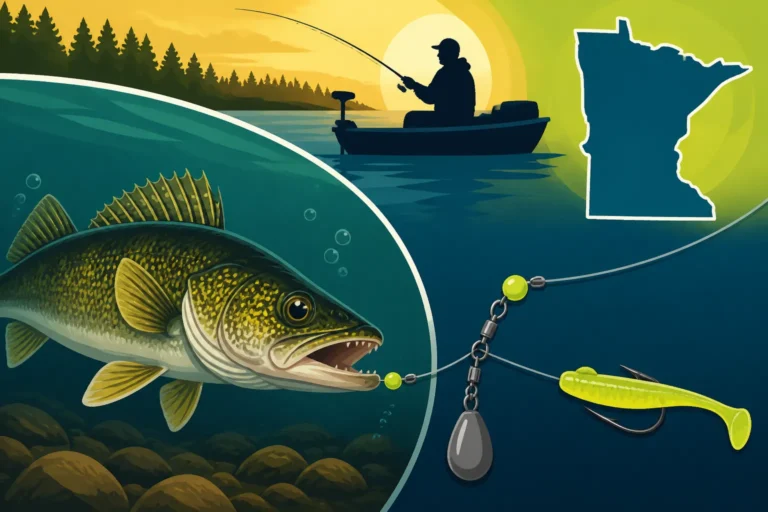
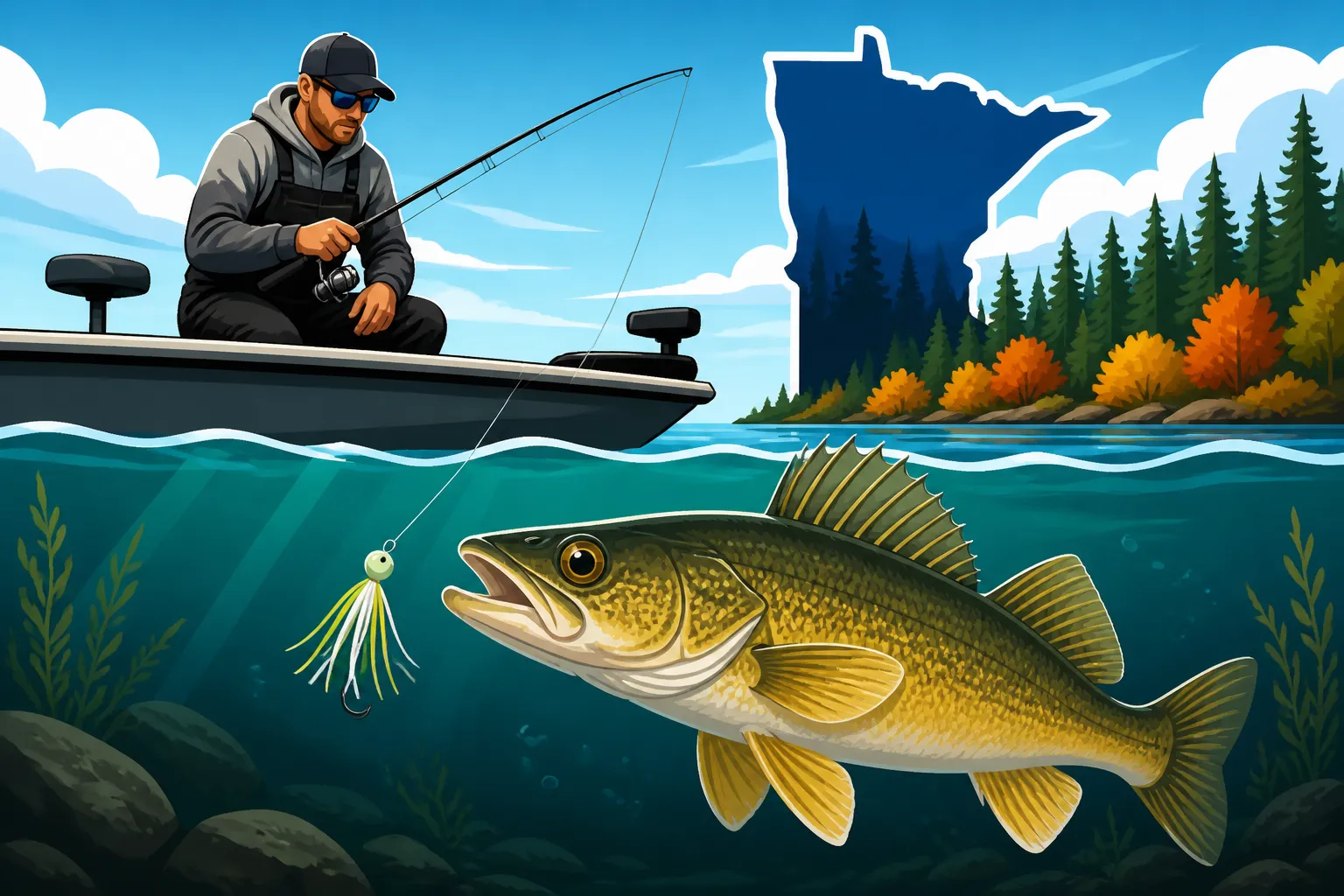
One of the most satisfying ways to target walleye in Minnesota is by precisely presenting a jig to them from a boat, but it's also a technique that can leave even seasoned anglers scratching their heads when the bite is tough. Whether you're struggling to feel those subtle "thunks" or just looking to refine your presentation, this comprehensive guide will break down everything you need to know about jigging for walleye from a boat, helping you put more fish in the livewell or on the release board.
Understanding Walleye Behavior and Habitat for Jigging Success
Before you even think about dropping a jig, you've got to think like a walleye. These finicky eaters are constantly on the move, dictated by factors like water temperature, light conditions, and available forage. Understanding their movements and preferred hangouts is the first step to successful boat jigging.
Seasonal Movements and Preferred Depths
Walleye are highly migratory within a lake or river system, adapting their location based on the season. In spring, right after the ice melts and into the post-spawn period, you'll often find them shallower, sometimes as shallow as 5-10 feet, especially near spawning areas like rocky points, river mouths, or hard-bottom flats adjacent to deep water. This is when the "opener" buzz is in full swing, and understanding these patterns is key to productive Early Season Walleye After the Opener fishing. They might be recovering from the spawn, but they're still hungry.
As summer progresses and water temperatures rise, walleye typically transition to deeper, cooler water. You'll find them concentrating around main lake points, humps, deep weed lines, and structural elements in 20-40 feet of water, or even deeper in clear lakes. This is when those classic Summer Walleye Patterns: Deep Structure really come into play. During the dog days of summer, especially mid-day, they often relate directly to the thermocline if one exists, which offers optimal oxygen and cooler temperatures. Come fall, as water temperatures drop again, walleye often move back to shallower breaks and rock piles, gorging themselves before winter. This can be a fantastic time for aggressive jigging, as detailed in many Fall Walleye Fishing: Turnover & Cold Water guides.
Key Structures Where Walleye Hold
Walleye are structure-oriented fish, meaning they'll relate to changes in the lake or river bottom. For a boat angler, these structural elements are your hunting grounds. On natural lakes, look for distinct breaks, meaning where the bottom transitions sharply from shallow to deep. Points extending into the lake, submerged humps or islands, and the edges of expansive flats are prime locations. If there's rock or gravel present, even better. In rivers, current breaks are paramount. Walleye will tuck themselves behind boulders, submerged logs, or in slack water areas out of the main current to ambush baitfish.
Weed lines, particularly those with a defined edge, are also fantastic places. Walleye will patrol these edges, especially those composed of cabbage or coontail, using the cover for ambush. Think about the "inside turn" of a weed line or where a hard bottom transitions to soft bottom right along a weed edge. Sometimes, in larger, featureless basins, walleye will suspend over deep water, often following schools of baitfish like cisco or perch. This makes finding them more challenging, but when they're congregated, they can be caught with vertical presentations or even by using a jigging rap. Knowing the specific types of Walleye Fishing in Minnesota: Complete Guide will significantly improve your success.
Essential Gear for Boat Jigging Walleye
Having the right tools for the job can make a world of difference when you're trying to detect those subtle walleye bites. Precision and sensitivity are key, and the right combination of rod, reel, line, and jig can elevate your game significantly.
Rods, Reels, and Line Selection
For boat jigging walleye, sensitivity is paramount. You want to feel every pebble, every weed, and especially every soft tap from a walleye. A medium-light to medium power spinning rod, typically between 6'6" and 7'6" in length, with a fast or extra-fast action, is ideal. The fast tip allows for quick hook sets and maximum sensitivity, while the backbone handles fighting larger fish. Brands like St. Croix, Fenwick, and G. Loomis are popular choices among serious walleye anglers for their quality and feel. You can find a wide selection of these on platforms like Amazon. For a deeper dive, check out our guide on Best Walleye Rods & Reels.
Pair your sensitive rod with a lightweight, smooth spinning reel in the 1000 to 2500 size range. A good drag system is crucial, as is a smooth retrieve. You'll be making many casts and retrieves, so comfort and balance are important. For line, many anglers prefer a low-stretch braided line, such as 8-10 pound test Berkley X5 or PowerPro, for its incredible sensitivity and strength. The lack of stretch transmits even the slightest bite directly to your hand. However, because braid is visible, it's almost always paired with a fluorocarbon leader of 6-10 pound test. Fluorocarbon is nearly invisible in water and abrasion-resistant, making it perfect for tying your jig directly to. Alternatively, some anglers still prefer a high-quality monofilament line, typically 6-8 pound test, for its stretch and forgiveness, which can be beneficial in certain situations, especially for new anglers.
The Right Jigs and Baits
The world of walleye jigs is vast, but a few staples will cover most situations. Lead-head jigs ranging from 1/16 oz to 1/2 oz are the bread and butter. The weight you choose depends on depth, wind, and current – you want the lightest jig possible that still allows you to maintain bottom contact. Colors matter too, and it's always good to have a variety. Common go-to colors include chartreuse, orange, white, black, and various patterns that imitate perch or minnows. Northland Fishing Tackle and VMC produce excellent jigs that are widely available.
For bait, live bait is often king when jigging for walleye. Fathead minnows, shiner minnows, and chubs are all excellent choices. Leeches are deadly in warmer water, and nightcrawlers (often tipped on a jig and spinner combination, or a plain jig) can also be effective. The key is to tip your jig with just enough live bait to entice a bite without hindering the jig's action or making it difficult for the walleye to inhale. Sometimes, a full minnow is best; other times, just the head or a small piece is enough. When live bait isn't biting, or if you prefer artificials, soft plastics are a fantastic alternative. Paddle tail swimbaits, grubs, and worm imitators rigged on a jig head can be incredibly effective. Scented plastics from brands like Gulp! Alive! or Z-Man often outperform unscented options, adding another layer of attraction. Our guide on Best Live Bait for Walleye (Leeches, Minnows, Crawlers) offers more specific details.
| Jig Type | Weight Range (oz) | Common Baits | Best Use | Notes |
|---|---|---|---|---|
| Round Head | 1/16 – 3/4 | Minnows, Plastics, Crawlers | Versatile, general purpose | Good for subtle presentations, lighter line. |
| Stand-Up | 1/8 – 1/2 | Minnows, Leeches, Plastics | Soft bottom, current | Keeps bait upright, less snagging in muck. |
| Bullet Head | 1/16 – 1/2 | Plastics, Minnows | Casting, faster retrieve | Slices through water, good for swimming jigs. |
| Mushroom Head | 1/16 – 1/4 | Small Plastics, Finesse Baits | Finesse, drop-shot style | Subtle presentation, great for picky fish. |
| Hair Jigs | 1/8 – 1/2 | No added bait, or tipped | Cold water, vertical jigging | Natural action, often triggers reaction bites. |
Beyond traditional jigs, specialized options like jigging raps (Rapala Jigging Rap, Northland Puppet Minnow) are incredibly effective, especially when walleye are suspended or feeding aggressively. These lures are designed to be fished vertically, dropping quickly and swimming in a wide circle on the retrieve, imitating a wounded baitfish. They are excellent for ice fishing but equally deadly from a boat, particularly when targeting deep, aggressive fish found by your electronics. For more options, see Best Walleye Lures: Jigs, Cranks & Spinners.
Mastering Jigging Techniques from a Boat
Jigging from a boat isn't just about dropping a lure over the side; it's a dynamic dance between boat control, lure presentation, and constantly reading the environment. Becoming proficient requires practice and a keen eye on your electronics.
Vertical Jigging for Precision
Vertical jigging is perhaps the most fundamental and effective technique for walleye when fishing from a boat. The goal is to keep your jig directly below your boat, allowing for maximum control and direct bottom contact. This is crucial when walleye are tightly schooled or holding on specific pieces of structure. You’ll want to position your boat directly over your target area – a rock pile, a breakline, or a submerged humps. Using your electric trolling motor with spot-lock (like a Minn Kota Ulterra or Terrova) is a game-changer for maintaining this precision, especially in wind or current.
Once positioned, drop your jig to the bottom and engage your reel. The most common retrieve involves lifting your rod tip sharply about 6-12 inches, then immediately dropping it back down, allowing the jig to fall back to the bottom on a semi-slack line. The bite often occurs on the fall, so watching your line for any twitch or hesitation is critical. After the jig settles, let it sit for a few seconds before repeating the process. Experiment with the height of your lift, the speed of your drop, and the pause at the bottom. Sometimes a subtle "deadstick" approach, barely moving the jig, is what triggers bites, while other times an aggressive "snap jig" is needed. For detailed insights on your fish finder, learning How to Read a Flasher (Vexilar/Humminbird) will significantly enhance your vertical jigging success.
Pitching and Casting Jigs
While vertical jigging is deadly for fish directly under the boat, pitching and casting jigs allows you to cover more water and approach fish that might be spooked by the boat overhead. This technique is particularly effective in shallower water, along weed lines, or when fish are scattered across a flat. You cast your jig out, typically upwind or upcurrent, and allow it to sink to the bottom. Once it hits, use a retrieve similar to vertical jigging: lift, drop, pause. The difference is that you're working the jig back towards the boat, covering a fan-shaped area with each cast.
The retrieve for pitching often involves a slightly more horizontal movement than pure vertical jigging, allowing the jig to "swim" or "hop" along the bottom. This can be achieved with a steady retrieve punctuated by short snaps or by sweeping the rod to the side instead of straight up. Pay close attention to the feel of your line as the jig falls; a walleye often intercepts the jig before it reaches the bottom, and the only indication might be a slight "thump" or your line suddenly going slack when it should still be falling. Utilizing different retrieve speeds and depths will help you determine what the walleye prefer on any given day. When the bite is slow, a slow, methodical retrieve is often best, whereas active fish might respond to a more erratic, aggressive presentation. This also offers a different approach compared to Casting vs Trolling for Walleye: When to Use Each.
Reading Your Electronics for Success
Your fish finder is your eyes beneath the surface, and knowing how to interpret its readings is crucial for efficient boat jigging. Modern units from brands like Humminbird, Garmin, and Lowrance offer incredible detail, allowing you to identify fish, baitfish, and bottom structure with precision. Start by understanding how to read your 2D sonar for arches (fish) and bottom hardness. Walleye often appear as distinct arches near the bottom, sometimes tightly grouped. Look for baitfish schools, as walleye are rarely far from their food source.
Side imaging and down imaging are powerful tools for locating structure and fish away from directly under the boat. Use side imaging to scan wide swaths of the bottom, identifying break lines, rock piles, or isolated pieces of cover that you can then move to and target with vertical jigging. Down imaging provides a photographic-like view directly below, helping you distinguish between different types of bottom composition and identify fish holding tight to structure. Many top-tier fish finders, which you can often find on Amazon, incorporate these advanced features. For optimal performance, familiarize yourself with our Best Fish Finders & Electronics for Minnesota Fishing guide.
If you're marking fish on your screen but not getting bites, it might be a subtle presentation issue, or the fish might be suspended higher in the water column than your jig. Adjust your jigging depth, lure size, or bait choice. Sometimes, simply watching how fish react to your jig on the sonar screen (especially with 2D sonar or forward-facing sonar like Garmin LiveScope) can give you immediate feedback, allowing you to fine-tune your presentation in real-time.
Advanced Tips and Troubleshooting for Walleye Jigging
Even with the right gear and techniques, walleye can be notoriously fickle. Learning to adapt to changing conditions and understanding common troubleshooting tactics will significantly boost your success rate.
Dealing with Wind and Current
Wind and current are two of the biggest challenges when boat jigging, but also two of the most important factors for positioning. Walleye often use current breaks or position themselves on the windblown side of structures to ambush bait. However, too much wind or current can make it impossible to keep your jig vertical or feel bites.
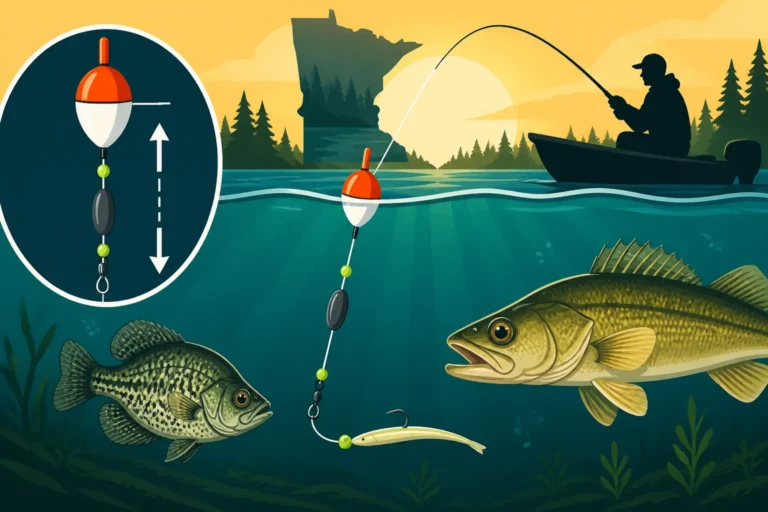
When facing strong wind, a good electric trolling motor with a spot-lock feature is indispensable. It allows you to hold your position precisely over structure without constantly having to adjust with your main engine. If you don't have spot-lock, you'll need to constantly feather your main engine or trolling motor to maintain boat control, often "slipping" with the wind at a controlled pace. Increasing your jig weight slightly can help maintain bottom contact in these conditions. Sometimes, dropping a drift sock or two off the bow or stern can slow your drift enough to allow for effective jigging. If the wind is truly too strong for vertical jigging, consider pitching jigs into the wind and retrieving them as you drift, or switch to a different technique like using a How to Use a Slip Bobber for Walleye & Crappie setup which can be easier to manage in heavy chop.
In river systems, current is a constant factor. Identify eddies, slack water pockets behind obstructions, or the seams where fast current meets slow current. These are prime walleye holding areas. Position your boat slightly upstream of your target, using your trolling motor to slowly ease downstream, keeping your jig vertical as you drift over the fish. Again, adjusting jig weight is key – you want the lightest jig that still allows you to feel bottom without being swept away too quickly.
Adapting to Different Bite Preferences
Walleye bites can range from a violent strike that nearly yanks the rod out of your hand to a barely perceptible "mushy" feeling, or simply your line going slack. Learning to distinguish these subtle bites from bottom contact is a skill developed over time. Always assume any unusual sensation or visual cue (like your line twitching or moving sideways) is a bite and set the hook.
If fish are present on your electronics but not biting, start experimenting. Change your jig color – sometimes a subtle shift from chartreuse to orange or even black can trigger a response. Vary your retrieve: try higher lifts, shorter drops, longer pauses, or more aggressive snap-jigging. Switch up your bait: if minnows aren't working, try a leech or a piece of nightcrawler. If live bait is failing, try a soft plastic or a jigging rap. Sometimes, going to a lighter line (e.g., 6 lb fluorocarbon leader instead of 8 lb) or a smaller jig can make a difference. The time of day can also influence activity; walleye are often most active during low-light periods, so Night Fishing for Walleye in Minnesota can be incredibly productive.
Another common scenario is when walleye seem to "short strike," meaning they're nipping at the tail of the bait without fully inhaling the hook. In this case, try using a jig with a stinger hook. This small treble hook is attached to the main hook and positioned towards the tail of your minnow, greatly increasing your hook-up ratio on those light biters. Don't be afraid to keep moving; if you've worked an area thoroughly with several different presentations and haven't gotten a sniff, it's often more productive to move to a new spot and try again. Persistence and adaptability are hallmarks of successful walleye anglers.
Disclaimer
Fishing conditions and regulations in Minnesota can change frequently. Always consult the latest Minnesota Department of Natural Resources (DNR) fishing regulations before heading out on the water. This guide is for informational purposes only and does not constitute legal advice.