How to Fish Bucktails for Muskie
Most anglers spend hundreds of hours on the water without seeing a single "green ghost," and the physical toll of casting heavy lures can be genuinely exhausting. The frustration of watching a massive fish follow your lure all the way to the boat only to turn away at the last second is a heartbreak unique to this sport. This guide solves those challenges by breaking down the mechanics, gear, and seasonal patterns needed to master bucktails and finally put a Minnesota muskie in the net.
Why Bucktails are the Bread and Butter of Minnesota Muskie Fishing
If you ask any seasoned guide from Lake Vermilion to the St. Croix River what their most productive lure is, the answer is almost always a bucktail. There is something primal about the way a muskie reacts to the vibration and flash of a spinning blade. In Minnesota’s often stained or "muskie green" waters, the physical displacement of water caused by these lures allows a fish to track the bait using its lateral line long before it ever sees the flash. This is why Muskie Fishing Techniques for Beginners almost always starts with the humble bucktail; it’s a high-percentage lure that covers a lot of water.
The versatility of the bucktail is its greatest strength. Whether you are fishing the dense cabbage beds of Leech Lake Fishing Guide or the rocky reefs of Mille Lacs, a bucktail can be adjusted to fish different depths simply by varying your retrieval speed. I’ve spent countless mornings on the water where the fish wouldn't touch a topwater or a glide bait, but the moment a double-bladed bucktail came "bulging" across the weed tops, the lake seemingly erupted. It validates the effort you put in when you finally feel that "thump-thump-thump" stop and turn into a heavy, dead-weight pull.
Furthermore, bucktails are incredibly forgiving for those who are still learning the ropes. Unlike a jerkbait that requires precise rod rhythmic movements, or a crankbait that can be tricky to tune, a bucktail just requires you to cast and wind. However, the difference between a "cast and winder" and a "muskie hunter" lies in the subtle nuances of the retrieve. Understanding how to trigger a strike when a fish is undecided is what separates a long day of "follows" from a day of "catches."
The Vibration and Flash Factor
The secret sauce of any bucktail is the blade. In Minnesota, we deal with a variety of water clarities. In clear lakes like Lake Vermilion Fishing Guide, the flash of a silver or gold blade can be seen from a distance, drawing fish out of deep cover. However, in the tea-colored waters of the north, the vibration is king. Large Colorado blades create a massive "thump" that acts like a dinner bell for a predatory muskie. When the blades spin, they create a chaotic signature in the water that mimics a fleeing school of fish or a distressed bird.
I remember a specific afternoon on a small lake near Brainerd where the water was particularly churned up after a storm. I switched from a single-blade to a double-bladed "Showgirl" style bucktail. The increased vibration was so intense I could feel it in my forearms. Within ten casts, a 48-inch fish crushed the bait five feet from the boat. That fish didn't see the lure; it felt it. This is why understanding blade physics is crucial. A larger blade offers more resistance and lift, allowing you to fish slower over shallow weeds without snagging.
Versatility Across Diverse Lake Profiles
Minnesota is famous for its diversity of muskie water. You have the classic "Shield" lakes with granite cliffs and deep water, and you have shallow, weedy basins. Bucktails excel in both. On a shallow basin lake, a bucktail with a lighter weight and larger blades can be "burned" across the top of the vegetation. This creates a "bulge" on the surface that muskies find irresistible. It’s a high-energy presentation that triggers a predatory response rather than a feeding one.
On the deeper, rockier lakes, you can let a heavy bucktail sink before starting your retrieve, ticking the tops of submerged boulders. This is often where the big girls hang out, waiting for an easy meal to pass over their heads. If you're looking to stock up on various weights and blade configurations, you can often find a wide selection of specialized muskie components and pre-made lures on Amazon to build out your "MN-specific" tackle box. Having the right tool for the specific lake profile you’re fishing is the first step in How to Catch Muskie in Minnesota (Step by Step).
Choosing the Right Bucktail for Minnesota Waters
Not all bucktails are created equal, and choosing the wrong one for the conditions is a common mistake. You have to consider blade size, blade shape, and color. In the world of Best Muskie Lures (Bucktails, Jerkbaits, Topwater), the bucktail is the most customizable. For example, a "Number 10" blade is a massive piece of metal that requires a specific rod to throw, whereas a "Number 5" or "6" is much more manageable for an all-day outing.
I’ve seen many anglers show up to a lake like Minnetonka with lures that are far too small for the aggressive mid-summer bite. Conversely, I’ve seen people throwing "magnum" blades in the early season when the fish are looking for smaller, "snack-sized" meals. The "match the hatch" rule applies here too. In early June, the forage is often smaller, so smaller blades are better. As the summer progresses and the baitfish grow, you should increase your lure size accordingly to keep up with the Minnesota Muskie Season & Size Limit progression.
Blade Size and Configuration
The "standard" Minnesota bucktail usually features double Colorado blades. The double blade setup provides more lift and significantly more vibration than a single blade. However, don't sleep on willow blades. Willow blades are thinner and create less drag, which allows you to retrieve the lure much faster. This is a deadly tactic when the water temperature spikes in July and August and the fish are looking for a fast-moving target that they don't have time to inspect.
If you are fishing in heavy timber or very thick cabbage, a single-blade bucktail often handles the "junk" better than a double-blade. It’s less likely to foul on every cast. I always keep a few of each in my bag. If you're starting out, look for a "Double 8" or "Double 10" configuration. These are the workhorses of the industry. You can easily find these on Amazon if your local bait shop is sold out during the peak of the season.
Color Selection for Stained vs. Clear Lakes
Minnesota’s "muskie green" water is legendary. In these conditions, black and orange (often called "Halloween") or chartreuse are the gold standards. Black creates a very strong silhouette against the sky, making it easy for a fish looking up to spot the bait. Orange and chartreuse are highly visible in stained water. I can’t tell you how many fish I’ve caught on a simple black-skirted bucktail with orange blades on a cloudy day in northern Minnesota.
In clearer water, like the BWCA or certain sections of the St. Croix, you want to move toward more natural colors. Silver blades with white or grey skirts mimic ciscoes or suckers. Gold blades with brown or green skirts are perfect for mimicking perch. A common pro tip is to always have one "oddball" color, like a hot pink or bright blue, for those days when the fish have seen a thousand black-and-orange lures and need something different to trigger a strike.
| Bucktail Type | Best Conditions | Target Structure | Recommended Blade Size |
|---|---|---|---|
| Double Colorado | Stained water / Low light | Weed tops / Cabbage | #8 or #10 |
| Single Colorado | Heavy cover / Early season | Timber / Reeds | #5 or #7 |
| Willow Blade | Clear water / High sun | Deep rock reefs | #6 or #8 |
| Hybrid / Fluted | High pressure lakes | Scattered weeds | Mixed sizes |
Essential Gear for Slinging Heavy Bucktails
You cannot fish bucktails effectively with a standard bass rod. I’ve seen people try it, and it usually ends with a snapped rod or a reel that has its gears stripped within a week. A "Double 10" bucktail creates an incredible amount of drag in the water. You need a rod with enough backbone to handle the lure's weight and the power to set the hook into a muskie’s bony mouth. This is the core of Best Gear for Muskie Fishing in Minnesota.
The reel is equally important. You need a high-capacity baitcaster with a powerful drag system. Many modern muskie reels have a "power handle" which gives you more leverage when grinding big blades back to the boat all day. It’s a physical grind, and having the right ergonomics can prevent the dreaded "muskie shoulder" that plagues many of us by mid-July. If you're looking for high-quality reels, you can often find models like the Shimano Tranx or Abu Garcia Revo Toro on Amazon, which are the industry standards for this type of heavy-duty fishing.
Rod and Reel Selection
A good all-around bucktail rod for Minnesota is roughly 8'6" to 9 feet long with a "Heavy" or "Extra-Heavy" action. The extra length serves two purposes: it helps you cast these heavy lures further, and more importantly, it makes the figure-8 maneuver at the boat much more effective. A short rod limits the size of the circles you can make in the water, and a big muskie needs a big circle to turn its body.
When it comes to reels, look for something with a gear ratio around 5.4:1 to 6.2:1. While "high speed" might sound good, a lower gear ratio actually provides more "winching power." Think of it like a truck in low gear; it’s easier to pull a heavy load. Check out the Best Baitcasting Reels for Muskie & Pike guide for a deeper dive into the specific specs that will keep your gear from failing when a trophy is on the line.
Line and Leader Basics
Don't skimp on your line. Most muskie hunters in Minnesota use 80lb to 100lb braided line. It sounds like overkill, but you aren't just fighting the fish; you're fighting the lure's weight and the possibility of the fish wrapping you around a thick cabbage stalk. Braid has zero stretch, which is essential for getting a solid hookset at the end of a long cast.
Your leader is the final link. For bucktails, I prefer a heavy fluorocarbon leader (around 100lb to 130lb test). Fluorocarbon is nearly invisible in the water and provides enough "stiffness" to keep the blades from tangling in the line during the cast. Some people still prefer steel leaders, which are fine, but I find fluorocarbon to be more versatile across different water clarities. You can pick up spools of high-end leader material on Amazon to tie your own, which is a great way to save money and ensure your knots are perfect.
Mastering the Figure-8: The Ultimate Muskie Closer
The figure-8 is not just a fancy trick; it is a mandatory part of every single cast. In Minnesota, muskies are notorious for "lazy follows." They will shadow a bucktail for forty feet, staying just inches behind the blades, but they won't commit until the lure changes direction. The figure-8 is your last chance to trigger that "predatory flight or fight" response. If you don't do it, you are leaving fish in the lake.
I’ve had days where 50% of my fish came on the figure-8. It is heart-stopping to see a 50-inch fish appear out of the depths and follow your lure into a turn. The key is to keep the lure moving. Do not stop! If you stop the lure, the fish will realize it’s fake and swim away. This is the most critical aspect of the Muskie Figure-8 Technique. You want to lead the fish into a wide, sweeping turn, then accelerate the lure on the straight-away.
Timing and Technique
As your bucktail approaches the boat (about 10 feet out), you should already be looking behind it for a shadow. Even if you don't see anything, transition into the figure-8. Reach your rod tip down into the water—sometimes a foot or two deep—and start a large, smooth figure-8 pattern. The deeper the rod tip, the less likely the fish is to be spooked by the boat's hull or your silhouette against the sky.
The turn is where most people fail. You need to make the turns wide. A muskie is a long, stiff fish; it cannot turn on a dime. If you make your circles too tight, the fish will lose interest because it physically cannot follow the lure. Accelerate the lure as it comes out of the turn and into the "straight" part of the 8. This mimics a baitfish trying to escape, which is often the final trigger a muskie needs to chomp down.
Dealing with Heart-Stopping Follows
When you actually see a fish behind your lure, the adrenaline will spike. Your first instinct will be to pull the lure out of the water or to speed up frantically. Resist this. Stay calm. Keep your eyes on the fish's head, not its tail. If the fish is "hot" (meaning its fins are flared and it’s moving aggressively), keep the figure-8 going. If the fish seems disinterested, try changing the depth of the lure during the 8.
I once had a fish follow for nearly two minutes on a lake in the Arrowhead region. I did figure-8 after figure-8 until my back was aching. Finally, I let the bucktail sink just six inches deeper on the turn, and she inhaled it. It was a 49.5-inch beast that taught me never to give up on a follow. If you're nervous about landing these giants, make sure you have a massive net, which you can find on Amazon to ensure you're prepared for the moment of truth.
Seasonal Strategies for Bucktail Success
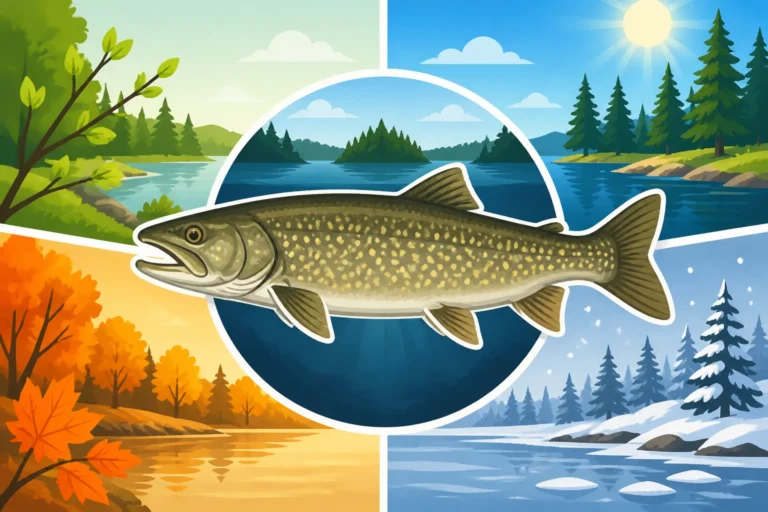
Minnesota’s seasons dictate where the muskies live and how they react to bucktails. In the early summer, right after the Minnesota Muskie Season & Size Limit opener, the fish are often in shallow, dark-bottomed bays where the water warms up first. During this time, smaller bucktails are king. The fish are often somewhat lethargic after spawning, so a smaller meal that’s easy to catch is more appealing.
As we move into the "dog days" of July and August, the big girls move to the main lake structure—the big weed flats and rocky reefs. This is when you break out the big "Double 10" blades. The water is warm, the fish's metabolism is at its peak, and they are looking for a massive calorie payout. This is the prime time for "burning" bucktails over the top of the cabbage.
Early Season Shallow Water Tactics
In June, I focus on the "new" weed growth. Fresh, green weeds produce oxygen and attract baitfish. Look for areas where the cabbage is just starting to reach toward the surface. A smaller bucktail, like a #7 or #8 blade, can be worked slowly through these openings. I often use a "stop and go" retrieve this time of year, which you can read about in Early Season Walleye After the Opener (the principle of targetting new weeds is similar).
One of my favorite early-season spots is where a small creek or river enters a lake. The moving water brings in nutrients and creates a "hot spot" for all species. Casting a bucktail into these current seams can be incredibly productive. Just remember that the water is still relatively cool, so don't feel the need to reel at breakneck speeds yet. Give the fish time to see and react to the lure.
Mid-Summer Cabbage and Rocks
By late July, it’s "game on." The muskies have settled into their summer homes. In lakes like Mille Lacs Lake Fishing Guide: Walleye, Bass & More, this often means the deep rocky humps. You’ll want to cast your bucktail past the crest of the hump and pull it across the "drop-off." This is where muskies wait to ambush perch.
In the weedy lakes, look for the "thickest" cabbage you can find. I like to find the "pockets" inside a massive weed bed. If you can land a bucktail in a three-foot opening in the weeds and start your retrieve immediately, you are putting the lure right in the living room of a trophy fish. This high-intensity summer fishing is what makes Minnesota a world-class muskie destination. If you need to upgrade your electronics to find these hidden humps, check out the latest sonar units on Amazon to give yourself an edge.
Common Mistakes to Avoid When Bucktailing
Even veteran anglers fall into bad habits. One of the biggest mistakes I see is "lazy casting." Because muskie fishing is a game of numbers, people tend to go into "autopilot" mode. They cast, they wind, they check their phone. If you aren't focused on the lure every single second, you will miss the subtle follows and the "light" hits that happen more often than you'd think.
Another mistake is neglecting your equipment. A bucktail is only as good as its hooks. After dragging a lure through the rocks of Lake Vermilion Fishing Guide all day, those hooks are going to get dull. A dull hook is the fastest way to lose a fish of a lifetime. I carry a small hook sharpener at all times—you can grab a high-quality one on Amazon for a few dollars—and I touch up my hooks every few hours.
Inconsistent Retrieval Speed
Many anglers reel too fast or too slow for the specific blades they are using. Every bucktail has a "sweet spot" where the blades are humming perfectly. If you reel too slow, the blades will "flop" rather than spin, losing all their vibration. If you reel too fast, the lure might roll over on its side, which looks unnatural to a fish.
The key is to watch your lure as it nears the boat. Is it running straight? Are the blades spinning consistently? If not, adjust your speed. I also like to add a "twitch" to my retrieve every few feet. This causes the skirt to flare and the blades to stutter for a split second, which can be the exact trigger a following fish needs to commit. This is a pro-level nuance discussed in Best Walleye Fishing Tactics in Minnesota, and it applies equally well to muskies.
Ignoring the Importance of Hook Sharpening
I cannot stress this enough: sharpen your hooks! Muskie mouths are made of bone and gristle. To get a hook to penetrate, it needs to be needle-sharp. Most lures come from the factory with "okay" hooks, but they aren't truly sharp. I spend five minutes with every new bucktail I buy, filing the hooks until they can scratch my fingernail with zero pressure.
If you are fishing a lake with a lot of rocks, you should be checking your hooks after every "clink." It only takes one rock to bend a point or dull the edge. It’s a small detail, but it’s often the difference between a "long distance release" and a photo with a 50-inch fish. For more on maximizing your success, check out How to Catch Muskie in Minnesota (Step by Step) for a full breakdown of the landing and handling process.
Minnesota Fishing Regulations Disclaimer
Fishing regulations in Minnesota are subject to change annually and can vary significantly by lake and river. It is the responsibility of every angler to stay informed about the current rules. For the most up-to-date information on seasons, bag limits, and size restrictions, please consult the official Minnesota Department of Natural Resources (DNR) website or the current Minnesota Fishing Regulations handbook. Always ensure you have a valid fishing license and any necessary stamps before heading out on the water. Following these rules ensures the sustainability of our world-class fisheries for generations to come.