How to Catch Lake Sturgeon in Minnesota (Step by Step)
Catching a lake sturgeon in Minnesota is often considered a bucket-list achievement for many anglers, and for good reason. These prehistoric giants are notoriously challenging to hook and land, requiring specialized gear and a deep understanding of their habits. If you've been dreaming of battling one of these magnificent fish but aren't sure where to start, you're not alone. This guide will walk you through everything you need to know, from understanding their biology to the step-by-step techniques that will put you on the path to landing your own Minnesota sturgeon.
Understanding Minnesota's Lake Sturgeon Fishery
Lake sturgeon are incredible creatures, a true testament to resilience. They've been around since the dinosaurs, and their presence in Minnesota's waters today is a remarkable conservation success story. Before you even think about dropping a line, it's really important to understand these fish and the special place they hold in our ecosystem.
A Brief History and Conservation Success Story
Not too long ago, lake sturgeon populations in Minnesota were in serious trouble. Overfishing, dam construction that blocked their spawning migrations, and pollution really took a toll, pushing them to the brink. Thankfully, dedicated conservation efforts by the Minnesota DNR and other organizations have worked tirelessly to bring them back. This has included stocking programs, habitat restoration, and strict regulations to protect them. Today, thanks to these efforts, we're seeing thriving populations in several key rivers and lakes, making them a viable, albeit challenging, target for anglers once again. Their slow growth and late maturity mean that every fish caught and released responsibly contributes to the continued success of the species. It's a privilege to fish for them, and with that privilege comes a big responsibility to ensure their future.
Key Sturgeon Waters in Minnesota
When you're looking to target lake sturgeon, location is everything. While they are present in various waters across the state, a few key areas stand out as prime destinations for serious sturgeon anglers. The mighty Rainy River, especially the stretch flowing into Lake of the Woods, is hands-down the most famous. It's a world-renowned sturgeon fishery, producing incredibly large fish regularly. Anglers flock to towns like Baudette and International Falls for a chance at these giants.
Another fantastic spot is the St. Croix River, which forms part of the border with Wisconsin. This federally protected Wild and Scenic River boasts a healthy sturgeon population, particularly in its lower stretches. Further south, the Mississippi River also holds sturgeon, with good numbers found below dams. You might also find them in certain areas of the Red River of the North. Before you head out, always double-check the specific regulations for the body of water you plan to fish, as rules can vary. For instance, the Rainy River often has specific seasonal closures or restrictions, so make sure you're up to date on the latest Lake Sturgeon Season & Limit in Minnesota.
Essential Gear for Targeting Lake Sturgeon
Fishing for lake sturgeon isn't like panfishing with a light spinning rod. These are powerful, ancient fish that can reach immense sizes, and you need gear that can stand up to the challenge. Skimping on tackle here will almost certainly lead to heartbreak and lost fish.
Heavy-Duty Rods, Reels, and Line
Let's talk about the backbone of your sturgeon setup: the rod and reel. You'll need something seriously robust. Think catfish gear, but even beefier. For rods, look for heavy or extra-heavy power rods, typically 7 to 9 feet in length, with a fast action. This will give you the backbone to turn a large fish and the sensitivity to detect subtle bites. Brands like Ugly Stik or Penn Battle offer rods that can handle the abuse.
When it comes to reels, a large, high-capacity baitcasting reel is usually preferred, especially for river fishing where you might be casting heavy weights. Look for something with a strong drag system, capable of holding at least 200-300 yards of heavy line. For line, braided line is the undisputed champion for sturgeon. Its no-stretch properties give you incredible sensitivity, crucial for detecting those faint sturgeon bites on a slack line, and its strength is unmatched. I'm talking 60 to 100-pound test braided line here. You might feel like it's overkill, but trust me, it's not. These fish can put a serious bend in a rod and test even the strongest gear. A good quality braid from PowerPro or Sufix is a solid choice. If you're wondering what makes a good walleye rod, you can look into what makes the Best Walleye Rods & Reels, but just know you'll need to go much heavier for sturgeon.
Terminal Tackle: Rigs, Hooks, and Weights
Your terminal tackle is where the magic happens, and it needs to be as tough as your rod and reel. The basic sturgeon rig is designed to keep your bait on the bottom, in the current, and easily accessible to a cruising sturgeon. You'll need substantial weights – often 3 to 8 ounces, sometimes even more, especially when fishing in strong river currents like the Rainy River or St. Croix. Flat pyramid weights or no-roll sinkers work well to keep from tumbling downstream.
For hooks, forget about small treble hooks. You need large, extremely strong circle hooks. Circle hooks are paramount for responsible catch and release, as they almost always hook fish in the corner of the mouth, minimizing gut hooks. Sizes ranging from 5/0 to 10/0 are common, depending on the bait and target size. Brands like Gamakatsu or Owner produce excellent heavy-duty circle hooks. Tie your hook to a heavy monofilament or fluorocarbon leader, typically 80 to 100-pound test, about 12 to 18 inches long. This leader provides a bit of abrasion resistance against their rough mouths and the river bottom. A simple snell knot is effective for attaching the hook, and a barrel swivel connects your leader to your main braided line, preventing line twist. You can often find pre-made sturgeon rigs on platforms like Amazon, or assemble them yourself.
The Best Baits for Lake Sturgeon
Sturgeon are primarily bottom feeders, with an excellent sense of smell. They're not chasing flashy lures; they're sifting through the riverbed for anything that smells good. So, when it comes to bait, think scent and natural food sources.
The absolute undisputed champion bait for lake sturgeon in Minnesota is fresh nightcrawlers, often presented in a large gob. We're talking 3-5 worms threaded onto a single hook, creating a juicy, aromatic ball. Other excellent options include cut bait, such as shad, suckers, or even oily fish like cisco. A chunk of fresh sucker meat, especially the gut or a bloody piece, can be irresistible. Some anglers also have success with shrimp, especially those that have been allowed to "stink up" a bit. The key is freshness and a strong scent trail. When fishing in areas known for a specific type of forage, try to match it. For example, if there are a lot of suckers in the Rainy River, using a fresh sucker fillet might be your best bet. Remember, presenting a natural, smelly offering right on the bottom is crucial for enticing these ancient bottom dwellers.
Step-by-Step Lake Sturgeon Fishing Techniques
Now that you've got your gear dialed in, it's time to talk tactics. Catching a lake sturgeon isn't just about showing up with the right equipment; it's about understanding their behavior, presenting your bait correctly, and having the patience of a saint.
Locating Sturgeon Hotspots
Finding sturgeon usually means finding specific types of structure and current. In rivers like the Rainy or St. Croix, sturgeon love to congregate in deeper holes, especially those with slower current or eddies that provide a break from the main flow. They'll also hold on the edges of channels, around current seams, or near transitions from hard bottom to soft bottom where their food sources gather. Look for areas downstream of rapids or major bends in the river, as these spots often create the ideal conditions.
Sonar units with good down-imaging can be invaluable for identifying these deeper holes and seeing potential fish marks, though sturgeon often hug the bottom so closely they can be tough to distinguish from structure. Many anglers rely on local knowledge, fishing reports (especially for popular spots like the Rainy River), and simply trial and error to find productive spots. Remember, these are migratory fish, and their exact locations can shift with water levels and seasonal patterns. Checking a detailed map like those offered by Navionics or LakeMaster can help identify potential holding areas and river depths. For a broader view of top fishing locations, you might consult a guide on the Best Fishing Lakes in Minnesota.
Setting Up Your Sturgeon Rig
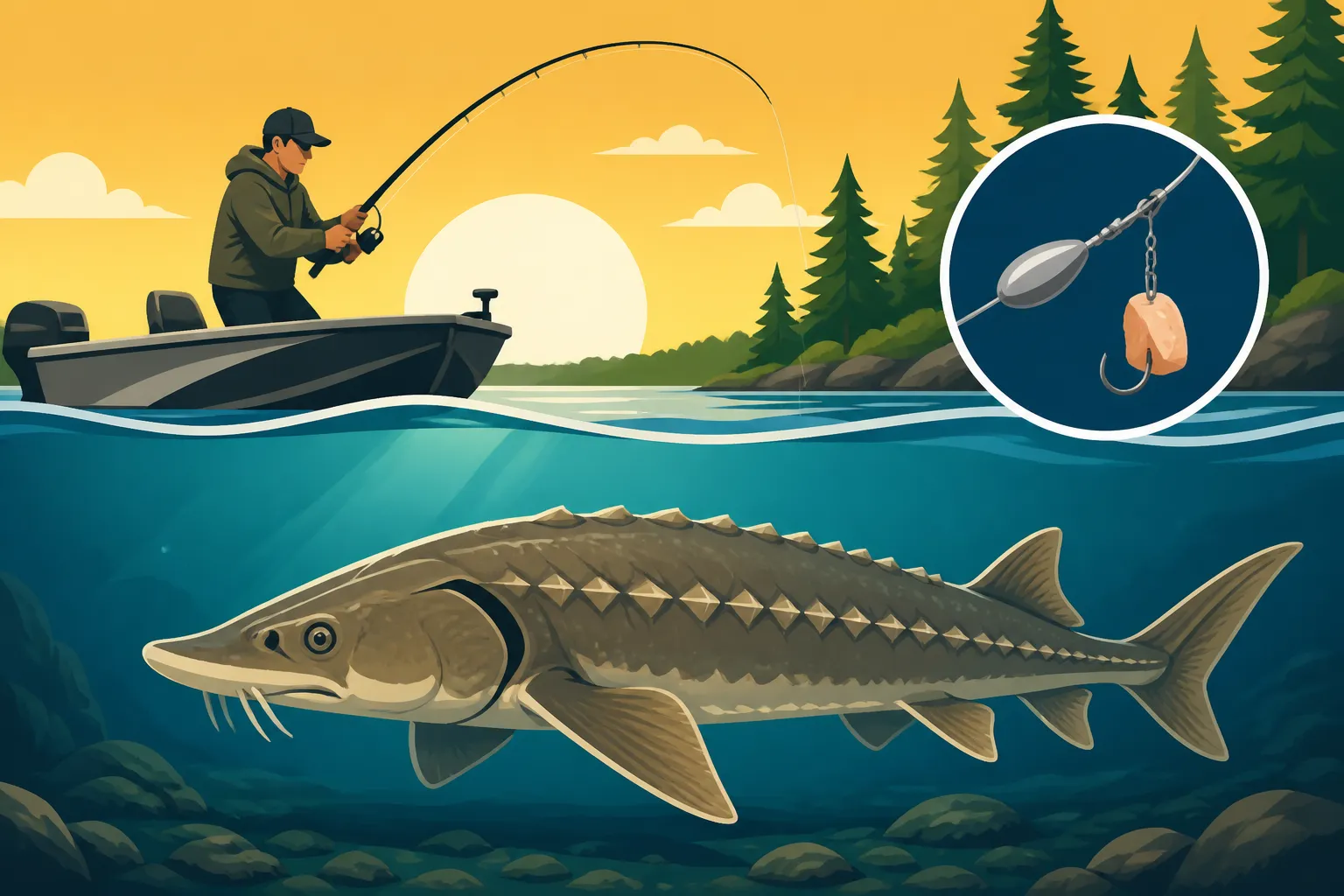
Once you've found a promising spot, it's time to deploy your bait. The standard sturgeon rig is quite simple to tie. Start by sliding your heavy sinker (3-8 oz, or more depending on current) onto your main braided line. Below the sinker, tie on a heavy-duty barrel swivel. To the other end of the swivel, attach your 12-18 inch, 80-100 pound test fluorocarbon or monofilament leader. Finally, snell your 5/0-10/0 circle hook to the end of your leader.
Now, for the bait: take a generous handful of nightcrawlers (3-5 is a good start) and thread them onto the circle hook, making sure the hook point remains exposed. You want to create a bulky, tempting ball of worms. If using cut bait, pierce the hook through a firm piece of sucker or shad, again ensuring the hook point isn't buried. Cast your rig upstream and across the current, allowing it to sink and drift naturally until it settles on the bottom. The goal is for your bait to sit stationary in a likely feeding lane, wafting its scent downstream. Avoid repeatedly reeling in and recasting; once it's set, leave it. Anglers often deploy multiple rods, if legal (check How Many Lines Can You Fish in Minnesota?), to cover a wider area.
| Component | Recommendation | Purpose |
|---|---|---|
| Rod | Heavy/Extra-Heavy Power, 7-9 ft, Fast Action | Power to fight big fish, sensitivity for bites |
| Reel | Large Baitcasting, Strong Drag, 200-300+ yd capacity | Handle heavy line & powerful runs |
| Main Line | 60-100 lb Braided Line | Max sensitivity, strength, abrasion resistance |
| Leader | 80-100 lb Fluoro/Mono, 12-18 inches | Abrasion resistance, knot strength |
| Hook | 5/0 – 10/0 Circle Hook | Secure mouth hooksets, safe release |
| Weight | 3-8+ oz Pyramid/No-Roll Sinker | Hold bait on bottom in current |
| Bait | Fresh Nightcrawlers (gob), Cut Bait (Sucker, Shad) | Strong scent, natural food source |
The Waiting Game and Hookset
Sturgeon fishing is a test of patience, sometimes more than skill. Unlike a frenzied walleye bite, sturgeon often take their time. You might see subtle taps, a slight bowing of the rod tip, or the line simply going slack or moving slowly downstream. Resist the urge to yank the rod immediately! This is where the magic of the circle hook comes in. When you see a bite, slowly pick up your rod and reel down until you feel the weight of the fish. As the sturgeon begins to move away, the circle hook will naturally rotate and set itself in the corner of its mouth.
Do not perform a hard "bass-style" hookset. Instead, apply steady pressure. Once you feel that solid weight and the rod bends deeply, you know you're connected. Then, it's time for the fight. Lake sturgeon are incredibly strong and will make powerful, deliberate runs. Keep a steady bend in your rod, let the drag do its work, and slowly but surely, gain line back. This can be a long battle, especially with a truly large fish from a river like the Rainy, so be prepared for a workout! Consider exploring resources like "Sturgeon Fishing on the Rainy River: What to Know" for more specific regional tips.
Responsible Sturgeon Handling and Release
After what might feel like an eternity, you've finally brought that magnificent sturgeon alongside the boat or to the shore. Congratulations! But the job isn't done. Proper handling and release are absolutely critical for the survival of these long-lived fish. Remember, conservation is paramount. Many areas, like those covered by Lake Sturgeon Regulations & Tag in Minnesota, are strictly catch-and-release, or have very limited harvest seasons.
Handling Large Fish Safely
When dealing with a fish that can easily be as long as you are and weigh over a hundred pounds, safety for both you and the fish is key. Never try to lift a large sturgeon by its gills or tail alone. If you're on a boat, a large, heavy-duty net or a specialized sturgeon cradle/sling is highly recommended. If you're on shore, try to gently slide the fish onto a soft, wet surface like grass or a wet tarp. Keep the fish in the water as much as possible. If you must remove it for a quick photo, do so quickly, supporting its entire body, especially the head and tail. Avoid dragging it over rough surfaces.
Their mouths are cartilaginous, not bony, and their bodies are covered in bony plates called scutes, which can be sharp. Handle them firmly but gently. If you need to retrieve a deeply set hook (though circle hooks minimize this), use long-nosed pliers or a hook remover. Never put your fingers in their mouth. Minimize their time out of the water to just a minute or two if possible, especially during warmer weather.
Catch and Release Best Practices
The future of Minnesota's lake sturgeon fishery depends on us practicing impeccable catch and release. Once you've admired your catch and snapped a quick photo, it's time for release. Gently guide the sturgeon back into the water, ideally in an area with some current if you're in a river. Hold the fish upright by its tail and just behind its head, allowing water to flow over its gills. You'll feel it regain strength, often giving a strong kick when it's ready to swim away. Take your time with this, sometimes it might take a few minutes for them to revive, especially after a long fight.
Never just toss a sturgeon back. Ensuring a strong, healthy release means that fish can go on to spawn and contribute to the population for years to come. These fish can live for many decades, so releasing them carefully ensures future generations can enjoy the thrill of catching them too. For more general advice on ethical angling, you can read up on Catch and Release Best Practices in Minnesota. Seeing one of these ancient beasts swim away strong is truly the most rewarding part of the experience.
Disclaimer
Fishing regulations, seasons, and limits can change annually. While we strive to provide the most up-to-date information, it is always your responsibility to consult the official Minnesota Department of Natural Resources (DNR) fishing regulations booklet or website before heading out on the water. This guide is for informational purposes only and should not be considered a substitute for official regulations.