Early Season Walleye After the Opener
The excitement of the Minnesota fishing opener is like a second Christmas, but the week following that initial rush can often leave anglers scratching their heads in frustration. After the opening weekend pressure settles, walleyes often shift their patterns, leaving many people staring at empty livewells and wondering where the fish disappeared to. This guide solves that post-opener puzzle by breaking down the specific movements, locations, and techniques you need to master early-season walleye success.
Understanding Early Season Walleye Movement
The period immediately following the When Is the Minnesota Walleye Opener 2026 is a time of massive transition in our lakes and rivers. To catch them consistently, you have to understand their biological state. Most fish have just finished the grueling process of spawning and are in a state of recovery. They aren't necessarily looking for a massive meal, but they are looking for easy calories in shallow, warmer water where the ecosystem is waking up first.
The Post-Spawn Transition: From Rivers to Lake Flats
In many of our premier fisheries, like those covered in the Lake Winnibigoshish (Winnie) Fishing Guide, walleyes spend their spring in tributary rivers or rocky shorelines. Once the eggs are dropped, the fish don't just vanish into the abyss. Instead, they begin a slow migration toward the first available feeding shelves. These are often expansive sand or mud flats in 6 to 12 feet of water.
Think of this as the "nursery" stage of the season. The fish are often lethargic, moving in small pods rather than massive schools. If you find one fish, you’ve likely found a dozen, but they won't chase a lure 20 feet like they might in July. You have to put the bait right in their kitchen. I’ve spent many mornings on Leech Lake hovering over these flats, and the key is always finding that specific depth where the water temp is just a degree or two higher than the main lake.
Water Temperature: The Invisible Boundary
Early season success is almost entirely dictated by the thermometer. In May and early June, a difference of two degrees can be the difference between a limit and a "skunk" on the boat. North shorelines get the most sun and are protected from those biting north winds, meaning they warm up faster. This warmth attracts baitfish, and the walleyes follow shortly behind.
When you are out on the water, pay close attention to your electronics. If you see the temperature gauge jump from 48 to 51 degrees as you enter a shallow bay, drop your trolling motor immediately. These warm pockets act like magnets. You’ll find that Best Walleye Fishing Tactics in Minnesota often emphasize these thermal refuges because they represent the most active life in the lake during the shoulder season. Don't be afraid to fish in water so shallow you can see the bottom; if it’s warm, the walleye will be there.
Top Presentations for Post-Opener Success
Once you’ve located the fish, the next hurdle is convincing them to bite. Early season walleyes can be notoriously "mushy" in their strike. You won't always feel that sharp "thump" you get in the fall. Instead, the line might just feel heavy, or your jig might seem like it’s dragging through weeds. Having the right tools and patience is essential here.
Jigging Basics: Precision and Patience
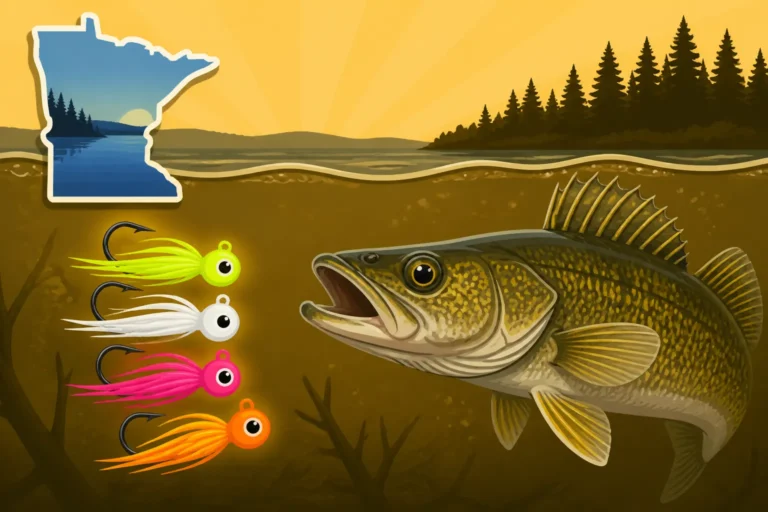
A 1/8-ounce or 1/16-ounce jig tipped with a fathead minnow is the gold standard for How to Catch Walleye in Early Spring (Opener). Because the fish are shallow and somewhat spooky, a heavy jig crashing into the bottom will often clear out a school faster than you can say "fish on." You want a slow, tantalizing fall that keeps the bait in the strike zone as long as possible.
When I’m outfitting my boat for the season, I often pick up a bulk variety pack of lead-head jigs on Amazon to ensure I have every color imaginable. Sometimes, the fish on a stained lake like Red Lake want bright chartreuse, while the clear-water fish on Gull Lake prefer a natural silver or white. The cadence should be subtle—short hops or even just a slow drag across the bottom. If you are moving your rod tip more than six inches, you are likely overworking the bait for this time of year.
The Lindy Rig Strategy: Slow and Steady
If the jig bite is slow, it’s time to transition to a Lindy Rig. This is essentially a slip-sinker setup that allows the fish to take the bait without feeling the weight of the sinker. In the early season, a long snell (the line between your hook and the swivel) of 4 to 7 feet is often necessary. This allows your minnow to swim naturally and stay a good distance away from the boat’s shadow and noise.
The beauty of the Lindy Rig is its simplicity. You can buy pre-tied rigs, or better yet, grab some high-quality fluorocarbon leader material and a set of walking sinkers on Amazon and tie your own. Using a plain hook with a lively shiner or fathead is often more effective than any fancy lure in May. You want to back-troll or use your electric motor to move at a snail's pace—roughly 0.3 to 0.6 mph. This slow crawl is exactly what a recovering post-spawn walleye is looking for.
Slip Bobber Magic: Picking Apart Structure
When you find a specific rock pile or a small patch of new weed growth, nothing beats a slip bobber. This technique allows you to suspend a leech or minnow exactly where the fish are holding and keep it there indefinitely. It is a surgical approach that is incredibly effective on lakes with high clarity where fish might be boat-shy.
I highly recommend learning How to Set Up a Slip Bobber Rig Step by Step because it is a skill that will save your weekend when the wind dies down and the sun comes out. Set your depth so the bait is about 6 to 12 inches off the bottom. Watch that bobber closely; in the early season, it might not plunge under. It might just tip sideways or slowly migrate across the surface. That’s your signal to reel in the slack and set the hook firmly.
Locating High-Percentage Areas
Minnesota has over 10,000 lakes, but not all of them hold fish in the same spots after the opener. You have to look for specific structural elements that provide both protection and a food source for these transitioning fish.
Shoreline Points and Sand Flats
Points that extend into the main lake act as "rest stops" for walleyes moving out of spawning areas. If the wind is blowing into a point, it pushes warm surface water and plankton toward the shore, which brings in the shiners. This is where you want to be. A wind-swept point in 8 feet of water is a classic early-season honey hole.
On many of our larger lakes, the Upper & Lower Red Lake Fishing Guide notes that the fish will hold on massive sand flats for weeks after the opener. These flats don't have much "structure" in the traditional sense, but the walleyes roam them looking for schools of minnows. In this scenario, horizontal coverage is key. Cast your jigs far away from the boat or use side-imaging electronics to find small depressions or "potholes" in the sand where fish might be tucked away.
Early Season Vegetation: The Green Cabbage Factor
As the water warms, the first signs of aquatic vegetation begin to appear. We call this "green cabbage," and it is a walleye magnet. Plants produce oxygen and provide cover for baitfish, making them the ultimate grocery store for hungry predators. However, you have to find the green stuff. Brown, dying weeds from last year actually consume oxygen and will generally be avoided by fish.
If you can find a bed of fresh, bright green weeds in 10 feet of water, you’ve found a gold mine. You’ll need a slightly heavier jig or a weedless setup to keep from snagging constantly. I often find that a high-quality braided line, which you can easily find on Amazon, helps "rip" the jig through the stalks, which often triggers a reactionary strike from a lurking walleye.
| Feature | Preferred Depth | Best Presentation | Why It Works |
|---|---|---|---|
| Sand Flats | 6 – 10 Feet | Lindy Rig / Jigging | Easy travel route for post-spawn fish |
| River Mouths | 4 – 8 Feet | Bright Jigs / Minnows | Proximity to spawning grounds |
| Windward Points | 5 – 12 Feet | Slip Bobbers / Casting | Wind-driven baitfish accumulation |
| New Weed Growth | 8 – 11 Feet | Weedless Jigs | Oxygen and cover for forage |
Weather and Its Impact on Early Season Bites
In Minnesota, May weather can range from 80 degrees and sunny to a literal blizzard. Your success depends on your ability to adapt to these shifts. The "bluebird sky" days that are great for a tan are often the worst for walleye fishing, while the miserable, overcast days are when the giants come out to play.
The Walleye Chop and Wind-Driven Bites
There is a reason the phrase "walleye chop" exists. Wind breaks up the surface of the water, reducing light penetration. Since walleyes have light-sensitive eyes, they feel much more comfortable feeding in shallow water when the surface is turbulent. A 10-15 mph wind is your best friend.
If you are fishing a lake like those mentioned in the Mille Lacs Lake Fishing Guide: Walleye, Bass & More, the wind will often dictate exactly where the fish are. The "lake effect" means the water on the windward side will be slightly turbid and warmer. Don't be afraid of a little spray on the windshield; that’s usually when the bite turns on. Just ensure you have a reliable life jacket and follow all Minnesota Fishing Limits: Bag & Possession (2026) while you’re out there filling the livewell.
Cold Front Management: Downsizing and Slowing Down
We’ve all been there: you plan a trip for weeks, only for a massive cold front to move in the night before you launch. When the barometric pressure spikes and the temperature drops, walleyes often "lock jaw." They retreat into the thickest cover available or move slightly deeper and sit tight on the bottom.
To catch fish during a cold front, you must downsize. If you were using a 1/8-ounce jig, drop down to a 1/16-ounce. If you were using large minnows, switch to the smallest fatheads in the bucket. You essentially have to hit the fish on the nose with the bait to get a response. This is also when having the Best Walleye Rods & Reels pays off—you need extreme sensitivity to feel those tentative, "is that a fish or a leaf?" bites.
Gear and Equipment for the Early Season
Using the right gear isn't just about spending money; it's about having the right tool for a very specific job. Early season walleye fishing is a game of finesse, and your equipment should reflect that.
Selecting the Right Rod and Reel
For jigging and rigging in May, I always recommend a 6’6” to 7’0” medium-light power rod with a fast action tip. You want enough backbone to set the hook, but a soft enough tip that the fish doesn't feel immediate resistance when they pick up the bait. Pairing this with a high-quality 1000 or 2500 series spinning reel is the way to go.
If you are looking for a reliable setup without breaking the bank, you can find some excellent Best Spinning Reels for Walleye on Amazon that offer the smooth drag systems necessary for protecting light 6-pound monofilament or fluorocarbon lines. Remember, these fish aren't the tackle-busting monsters of the mid-summer yet; they are delicate, and your gear should be too.
Essential Early Season Terminal Tackle
Your tackle box should be stocked with more than just hooks. You need a variety of sinker weights, snap swivels, and bead colors. Many veteran anglers believe that a single red or chartreuse bead above the hook on a Lindy Rig acts as a "trigger" for walleyes. It’s a cheap addition that can make a huge difference.
Also, don't forget your electronics. While you don't need a $3,000 graph to catch fish, having a basic depth finder to identify those 8-to-12-foot transitions is vital. I always keep a waterproof dry bag in the boat, which I picked up on Amazon, to keep my extra maps, licenses, and phone safe from the inevitable spring rain showers. Staying organized and comfortable on the water allows you to stay out longer, and in the early season, persistence is often the most important "technique" of all.
Minnesota Fishing Regulations Disclaimer
Fishing regulations in Minnesota can change based on the specific body of water, the time of year, and updated biological surveys. Always consult the most recent Minnesota Department of Natural Resources (DNR) handbook before heading out. This guide is for informational purposes and does not replace official state laws regarding bag limits, size restrictions, or seasonal closures. Ensure you have a valid license and are aware of any special experimental regulations on the lake you choose to fish.