Trolling for Walleye: Crankbaits & Leadcore
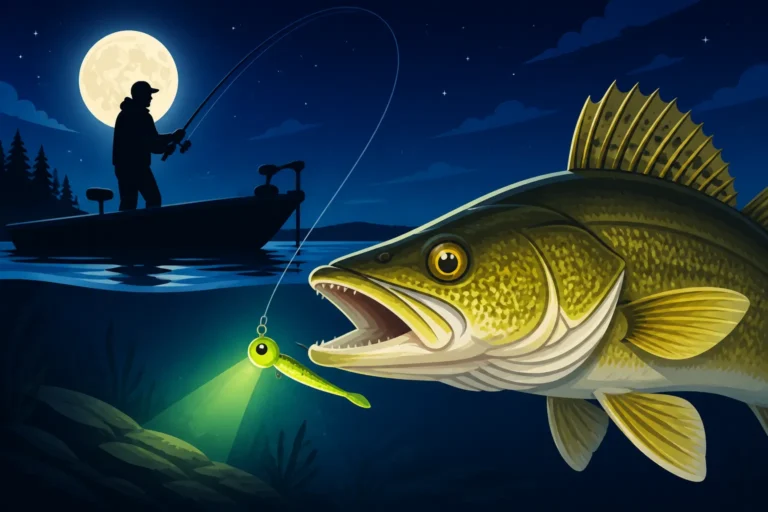
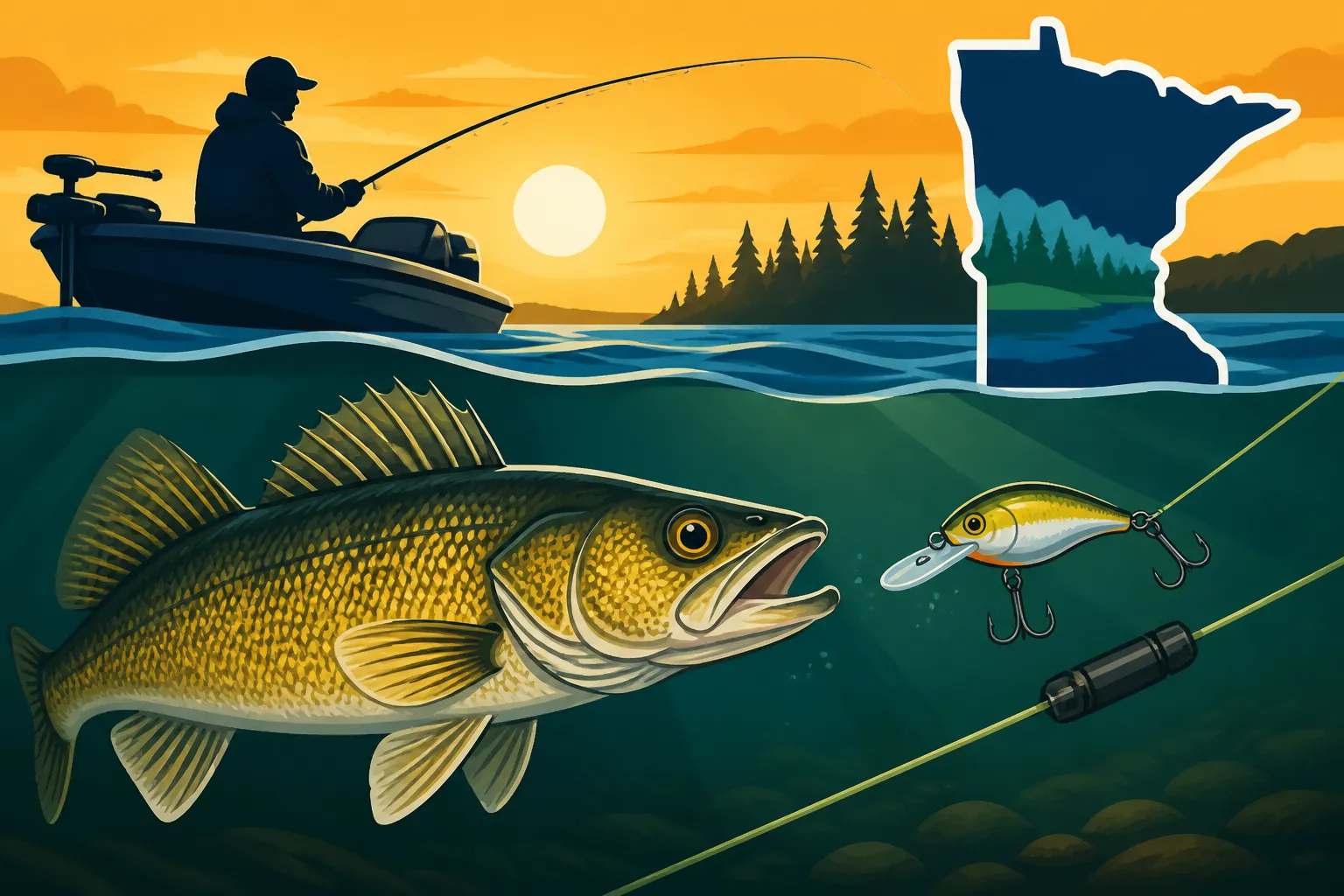
Staring at a blank sonar screen while the sun beats down on a glass-calm Minnesota lake is a special kind of mid-summer torture. You know the fish are there, but the shallow weed bite has evaporated, and the fish have retreated to parts unknown. This guide solves that mystery by mastering the precision of trolling with crankbaits and leadcore line.
The Art of the Troll: Why Crankbaits and Leadcore Rule Minnesota Summers
There is a common misconception among many weekend warriors that trolling is just "driving the boat and hoping for the best." I used to think the same thing until I spent a week on Lake Winnibigoshish getting absolutely out-fished by a neighbor who seemed to be doing nothing more than idling his motor. The truth is that trolling is a game of inches and precise mathematics. In the land of 10,000 lakes, walleyes don't just stay in one spot once the water temperature climbs above 70 degrees. They become nomadic, following schools of baitfish across massive mud flats or suspending over deep basins.
When the fish spread out like this, a jig and minnow becomes a needle-in-a-haystack approach. You need to cover water, and you need to do it at a depth where the fish are actually living. This is where the Walleye Fishing Techniques: Complete Minnesota Guide comes into play, emphasizing that movement is your best friend during the dog days of July and August. Trolling allows you to present a lure to thousands of fish in a single afternoon, rather than waiting for a small school to pass under your stationary boat.
The magic of leadcore line, specifically, is its ability to get small, buoyant lures down to depths they could never reach on their own. Most crankbaits have a "max depth" printed on the box, but with leadcore, that ceiling is shattered. You can take a lure designed for 8 feet and put it right in the face of a walleye sitting at 30 feet. It is an equalizer that turns the entire lake into your strike zone. If you have ever felt the frustration of seeing fish on your electronics at 35 feet and knowing your deepest diver only hits 20, leadcore is the answer you have been searching for.
Mastering Leadcore Line: The Poor Mans Downrigger
If you have never spooled up leadcore, the first thing you will notice is the weight. This isn't your standard monofilament; it is a lead filament wrapped in a nylon braid. The brilliance of the design is that the line itself acts as your sinker. Because the weight is distributed evenly across the line, it creates a "dive curve" that is incredibly predictable once you learn the rhythm of the colors. Most leadcore is color-coded every ten yards, which allows you to track exactly how much line you have out without needing a degree in physics.
A general rule of thumb that we veterans use on lakes like Mille Lacs is the "five feet per color" rule. At a standard trolling speed of around 2.0 mph, every ten-yard segment of leadcore you let out will pull your lure down approximately five feet. Of course, this changes based on your speed—if you slow down, the leadcore sinks deeper; if you speed up, the water resistance lifts it. This gives you a dynamic way to adjust your depth just by nudging your throttle. It is far more versatile than a heavy snap weight, which tends to create a sharp angle in the line that can make feeling a delicate walleye strike nearly impossible.
When it comes to rigging, you cannot just tie leadcore directly to your lure. You need a leader, typically 10 to 20 feet of fluorocarbon or high-quality monofilament. This provides a stealthy presentation and allows the crankbait to have its natural action without being dampened by the heavy lead line. Connecting the two requires a specific knot, like the Willis Knot, where you actually slide the leader inside the braided sheath of the leadcore before tying a grander knot. It sounds complicated, but once you do it on the deck of a boat a few times, it becomes second nature. If you're looking for the right materials, you can often find bulk spools of leadcore on Amazon to save a few bucks before the season starts.
Choosing the Right Crankbaits for Minnesota Walleye
Not all crankbaits are created equal, and in Minnesota, we tend to be very picky about our profiles. Broadly speaking, you are choosing between "minnow" profiles and "shad" profiles. Minnow profiles are long and slender, mimicking the shiners and perch that are staples in our northern waters. Shad profiles are shorter and fatter, providing a much more aggressive vibration. When you are Trolling for Walleye: Crankbaits & Leadcore, matching the forage of the specific lake you are fishing is the difference between a limit and a long boat ride home.
On clear water lakes like Ten Mile or even parts of Leech Lake, I almost always lean toward natural colors. Silver, blue, and black are my go-to choices because the fish are hunting primarily by sight. However, if you find yourself in the tea-colored waters of the northern border or the stained basins of the Minnesota River, you need to go loud. Firetiger, orange, and "wonderbread" patterns are legendary for a reason. They provide a silhouette that stands out against the murky background, giving the walleye a target to home in on.
Action is just as important as color. Some lures have a tight, high-frequency shimmy, while others have a wide, lazy wobble. In the early summer, when the water is still warming up, that tight shimmy often triggers more strikes. As the water hits its peak temperature in August, the fish are more aggressive and will often chase down a wide-wobbling lure that looks like a wounded baitfish struggling to stay upright. You can check the latest reviews on Amazon to see which lures are currently trending among Midwest anglers, but always trust your gut based on the water clarity in front of you.
Speed and Precision: The Physics of Trolling
Speed is perhaps the most overlooked variable in the trolling equation. Most beginners troll too fast. They see a 2.5 mph reading on their GPS and think that is "slow," but to a walleye, that is a sprinting baitfish. Generally, the sweet spot for Minnesota walleye is between 1.8 and 2.2 mph. There are days, especially after a cold front, when you might need to drop down to 1.5 mph just to get them to commit. Conversely, on a hot, sunny day with a "walleye chop" on the water, bumping it up to 2.8 mph can trigger those reaction strikes that a slower presentation simply won't.
One trick I have learned over the years is the "S-turn." Instead of driving in a perfectly straight line across the mud flats, move your motor back and forth to create a serpentine path. This causes the lures on the inside of the turn to slow down and sink, while the lures on the outside of the turn speed up and rise. This momentary change in speed and depth is often the exact trigger a following walleye needs to bite. It mimics a baitfish trying to escape or failing to keep up with the school.
Using planer boards is another way to increase your precision. These devices clip onto your line and pull your lures out away from the sides of the boat. This serves two purposes: it allows you to run more lines without tangling, and it prevents the boat’s shadow and motor noise from spooking fish in shallow or ultra-clear water. If you are serious about Mille Lacs Walleye Fishing: Tips & Best Spots, you will see almost every professional guide running boards to get their lures away from the "spook zone" of the hull. It turns your trolling spread from a narrow 10-foot path into a 60-foot-wide vacuum.
Seasonal Patterns for Trolling in Minnesota
The transition from late June into July is the "golden hour" for trolling. This is when the fish move off their spawning reefs and begin to inhabit the transitions—places where the hard bottom turns to soft mud. In the Leech Lake Walleye Fishing Tips archives, you'll find that this "transition bite" is legendary. The fish are hungry, the insect hatches are in full swing, and they are looking for easy calories. During this time, I focus my trolling on depths of 12 to 18 feet, often using shallower diving crankbaits on straight monofilament.
As we move into August, the "Deep Basin" pattern takes over. This is when the leadcore really earns its keep. The walleyes will often suspend in the middle of nowhere, hanging out 25 feet down over 40 feet of water. This is incredibly intimidating for most anglers because there is no "structure" to fish. You are literally fishing in the abyss. However, if you trust your electronics and put your lures at the same depth as the baitfish clouds you see on the screen, you can have some of the best days of the year.
By the time fall rolls around and the water temperatures begin to drop, the fish move back toward the shallows, but they are looking for much larger meals. This is the time to put away the small #5 shads and break out the #9 or #11 minnow imitators. The walleyes are bulking up for winter and don't want to waste energy on small snacks. Trolling large crankbaits along the edges of remaining green weedlines can produce the largest trophy fish of the season. Always check the Minnesota Walleye Limit & Size Rules before you head out, as fall often brings special regulations on certain trophy lakes.
Essential Gear for Trolling Success
You cannot effectively troll leadcore with a standard medium-light jigging rod. The sheer weight of the line and the resistance of the lure will bent a light rod into a permanent U-shape, leaving you with zero "backbone" to set the hook. You need a dedicated trolling rod, usually 7 to 9 feet long, with a "moderate" or "parabolic" action. This means the rod bends throughout its entire length, acting like a giant shock absorber when a big fish hits at 2 mph. If the rod is too stiff, the hooks will simply rip out of the fish's mouth.
The reel is equally important. A line-counter reel is non-negotiable for leadcore trolling. You need to know exactly how many feet of line you have out to replicate a successful depth. If you catch a fish at 150 feet back, you need to be able to put your lure back at exactly 150 feet on the next pass. Reels from reputable brands can be found on Amazon, and they are worth every penny for the consistency they provide. Make sure the reel has a large enough spool to hold at least 10 colors of 18lb leadcore, as it is much thicker than standard line.
Finally, don't forget the small stuff. High-quality ball-bearing swivels are essential to prevent line twist, which can ruin a $20 spool of leadcore in a single afternoon. I also recommend a good set of long-nose pliers for unhooking fish. Walleyes have a nasty habit of inhaling crankbaits, and you don't want your fingers anywhere near those treble hooks when a 25-inch fish starts thrashing in the net. You can stock up on these accessories through Amazon to ensure your tackle box is ready for the grind.
| Lure Type | Typical Speed (MPH) | Depth with 3 Colors Leadcore | Best Water Clarity |
|---|---|---|---|
| Shallow Minnow | 1.8 – 2.2 | 15 – 18 Feet | Clear to Stained |
| Deep Diving Shad | 2.0 – 2.5 | 22 – 26 Feet | Stained to Murky |
| Jointed Minnow | 1.5 – 2.0 | 14 – 17 Feet | Clear |
| Large Profile Muskie-style | 2.5 – 3.0 | 18 – 22 Feet | Murky |
Top Minnesota Destinations for Trolling Success
If you are looking for the ultimate testing ground for your trolling skills, look no further than the Mille Lacs Lake Fishing Guide: Walleye, Bass & More. The "Mud Flats" of Mille Lacs are a trolling paradise. These massive, underwater plateaus rise out of the deep water and provide miles of consistent depth. It is the perfect place to learn how to dial in your leadcore because you don't have to worry about constantly changing your depth. You can put your lures out, set the cruise control on your motor, and focus on the fish.
Another world-class destination is the Lake of the Woods Fishing Guide area. Because this lake is so massive and often stained a dark "root beer" color, trolling is the primary way people find fish. The sheer volume of walleye in the Big Traverse Bay is staggering, and they are almost always willing to chase a well-presented crankbait. Here, the "gold" color pattern is king, mimicking the shiners that the walleye depend on. It is not uncommon to see hundreds of boats all trolling the same general area, all catching fish.
For those who prefer a more scenic, island-studded experience, Lake Winnibigoshish Walleye Limit & Slot regulations make it a great "eater" lake. The large flats on the north end of Winnie are perfect for mid-summer trolling. It is a bit shallower than Mille Lacs, so you might only need two or three colors of leadcore to reach the bottom. It is a fantastic place for beginners to practice because the bottom is relatively clean, meaning you won't spend your whole day pulling weeds off your hooks.
Troubleshooting Common Trolling Mistakes
The biggest mistake I see anglers make is "setting it and forgetting it." If you haven't had a bite in 30 minutes, something is wrong. You might have a tiny piece of "snot" weed on your lure that has killed its action. Even a blade of grass the size of a fingernail can stop a crankbait from vibrating, and a walleye will never hit a lure that isn't moving correctly. Check your lures frequently. If you're not feeling that rhythmic "thump-thump-thump" on your rod tip, reel it in and clean it off.
Another issue is lure tuning. Straight out of the box, some crankbaits don't run straight. If your lure is pulling to the left or right, it won't reach its maximum depth and is more likely to tangle with your other lines. You can "tune" a lure by using pliers to gently bend the eyelet in the opposite direction of the pull. Test it alongside the boat at trolling speed; it should track perfectly straight. This is a pro-level tip that separates the experts from the amateurs.
Finally, pay attention to the "blown-out" side of the lake. If the wind has been howling from the north for two days, the southern shore will have a lot of turbid, nutrient-rich water pushed against it. This baitfish-heavy water is a magnet for walleye. Many people avoid the "waves," but the best trollers know that the wind is your friend. It breaks up the light penetration and makes the fish much more aggressive. Invest in some quality foul-weather gear from Amazon and embrace the chop—that is where the big girls live.
Why Your Lure Isn't Running True
If you’ve done everything right—got the Best Fishing Gear for Beginners in Minnesota, spooled the leadcore, and found the fish—but you’re still getting skunked, it might be your lure’s "attitude." A lure that isn't running true is essentially invisible to a walleye's lateral line. They sense the vibration before they see the flash. If that vibration is off-kilter, it signals that the "prey" is unnatural or unappealing.
Check your knots and your snaps. I always use a small, high-quality snap (without a swivel) to attach my leader to the crankbait. This allows the lure to pivot freely. If you tie your line directly to the eyelet with a bulky knot, you can inadvertently pull the lure to one side. Also, make sure you aren't using a leader that is too heavy. Using 20lb mono for a tiny #5 Flicker Shad is like trying to fly a kite with a chain; the weight of the line will kill the lure's ability to dive and dance. Stick to 8lb or 10lb fluorocarbon for the best results.
If you find yourself constantly snagging on the bottom, you have too much line out. Leadcore is unforgiving. If it hits the bottom and drags, the lead inside the braid will kink and eventually break. You want your lure to "tick" the bottom occasionally, not plow a trench in the mud. If you see your rod tip bouncing erratically, reel in a half-color of line. Successful trolling is about hovering just inches above the structure, teasing the fish into an upward strike. If you need new lures to replace the ones you've lost to the rocks, you can always find a Best Crankbaits for Trolling Walleye list and order a fresh batch on Amazon.
Final Thoughts on Trolling Tactics
Trolling with crankbaits and leadcore is the ultimate "work smarter, not harder" approach to Minnesota fishing. It removes the guesswork of wondering if there are fish nearby and replaces it with a systematic search pattern. Whether you are navigating the deep basins of Lake Superior or the flats of the Brainerd Lakes area, these techniques will put more fish in your boat when the traditional methods fail.
Remember that fishing is a continuous learning process. Every lake has its own personality, and every day on the water presents a new puzzle. Don't be afraid to experiment with different speeds, colors, and depths. Talk to the locals at the bait shop, keep an eye on the Best Walleye Rods & Reels trends, and most importantly, stay patient. The "trolling grind" can be long, but the reward of a screaming line-counter reel and a golden walleye surfacing behind the boat makes every minute worth it.
Disclaimer
Please note that fishing regulations in Minnesota, including bag limits, size restrictions, and season dates, are subject to change annually. Always consult the official Minnesota Department of Natural Resources (DNR) handbook or website before heading out to ensure you are in compliance with the most current laws for the specific body of water you are fishing. Safe and legal fishing ensures our resources remain healthy for generations to come.