Best Crankbaits for Trolling Walleye
There's nothing quite like the thump of a walleye on your line, especially when you've been putting in the effort trolling across a vast Minnesota lake. But let's be honest, picking the right crankbait can feel like navigating a maze blindfolded. With so many options out there – different sizes, colors, diving depths, and actions – it's easy to get overwhelmed and wonder if you're ever using the "right" one. This guide is here to untangle that confusion, offering a clear roadmap to selecting the best crankbaits for consistently catching walleye while trolling in our beautiful Minnesota waters.
Understanding Walleye and Their Forage for Crankbait Selection
Before we even dive into specific lures, it's crucial to understand the fish we're after: the walleye. These finicky eaters have preferences, and knowing what those are will make your crankbait choices much more effective. Think of it like this: you wouldn't go to a fancy dinner wearing swim trunks, right? Walleye have a dress code for their meals too, and our crankbaits need to match.
Walleye Behavior and Preferred Habitat
Walleye are masters of camouflage and low light. Their large, light-sensitive eyes give them an advantage in dim conditions, which is why they're often most active during dawn, dusk, cloudy days, or in deeper, darker waters. They are ambush predators, preferring to lurk near structure that offers cover and a convenient dining table for passing prey. This "structure" can be anything from rocky points, sunken islands, weed lines, humps, sharp break lines, or even the subtle contours of mud flats on lakes like Mille Lacs.
Their depth preferences change throughout the seasons, driven by water temperature, oxygen levels, and food availability. In spring, they'll often be shallower, warming themselves and staging for the spawn. As summer progresses, they'll migrate to deeper, cooler waters, often suspending over basins or clinging to the thermocline. Understanding these seasonal movements and where walleye live in a lake is paramount, because it directly impacts how deep your crankbait needs to run.
Mimicking Natural Prey: The Key to Success
The golden rule of walleye fishing, especially with artificials, is to "match the hatch." This means selecting a crankbait that closely resembles the size, shape, and color of the baitfish walleye are actively feeding on in that particular body of water at that specific time. In Minnesota, the primary forage for walleye typically includes yellow perch, cisco (tullibee), various shiner species, and sometimes even smaller crappies or juvenile walleye.
If you're fishing a lake known for a strong perch population, a crankbait with a perch pattern makes perfect sense. On a deep, clear lake with abundant cisco, a slender, silver or blue-backed bait that mimics a fleeing tullibee will often be irresistible. Pay attention to what's in the water when you're launching your boat or even when you clean a fish. Small clues, like minnows darting around the dock, can give you a hint. Remember, a walleye is looking for an easy meal, and a crankbait that acts and looks like its natural food is an easy target. This principle is a cornerstone of effective walleye fishing techniques.
Essential Crankbait Characteristics for Walleye Trolling
Now that we understand the walleye's mindset, let's talk about the features of crankbaits themselves. Not all crankbaits are created equal, and knowing what each design element does will empower you to make smarter choices. It's not just about grabbing the prettiest lure off the shelf at Bass Pro Shops or scrolling through countless options on Amazon; it's about understanding how it performs underwater.
Diving Depth and Lip Design
The lip on a crankbait is its engine, determining how deep it dives and often, its action. Generally, the longer and more parallel to the body the lip is, the deeper the bait will dive. A short, steep lip means a shallower dive.
- Shallow Divers: These typically run from 0-8 feet deep. They have small, often round lips that create a subtle wobble. These are fantastic for targeting walleye in shallow weed beds, rock piles, or along shorelines, especially during spring or low-light conditions. Think of baits like the classic Rapala Shad Rap or certain sizes of the Berkley Flicker Shad.
- Medium Divers: These hit the 8-15 foot range. Their lips are usually a bit longer and angled more acutely. They're incredibly versatile and probably the most commonly used for general trolling, excellent for targeting break lines, submerged humps, and points.
- Deep Divers: These are your workhorses for getting down to 15 feet or more, often reaching 25-30+ feet on long lines. They feature long, prominent lips that dig into the water, pulling the bait down quickly. Baits like the Reef Runner, Rapala Deep Husky Jerk, and larger Berkley Flicker Minnow models fall into this category. These are crucial for summer walleye patterns when fish often hold tight to deep structure or suspend over main lake basins.
Matching the diving depth of your crankbait to the depth where walleye are holding is non-negotiable. If your bait is running 10 feet over their heads, you might as well be trolling a bare hook.
Action, Vibration, and Sound
Beyond depth, a crankbait's "action" is its personality. This refers to how it wobbles, shimmies, or dives as it moves through the water.
- Tight Wobble: Baits with a tight, subtle wobble are often preferred in colder water or when fish are less aggressive. They mimic a natural, easy movement. Many balsa wood baits or slim profile plastics excel here.
- Wide Wobble: A wide, aggressive wobble displaces more water and can call in active fish from a greater distance, especially in warmer water or when walleye are feeding aggressively. These are often flat-sided or have a more pronounced profile.
- Roll and Shimmy: Some baits have a combination, rolling from side to side while wobbling, flashing their sides. This flash can be a major attractor in clear water or bright conditions.
Many crankbaits also incorporate internal rattles, which create sound and vibration. These rattles are designed to imitate the clicks and clacks of baitfish or the distress sounds of a struggling meal. In stained or turbid water, or low light, rattles can be highly effective at attracting walleye that are relying more on their lateral line to detect prey. However, sometimes in clear, calm conditions, silent baits can be more productive if fish are particularly wary. Experimentation is key to figuring out what the walleye prefer on any given day.
Color Patterns and Water Clarity
Color is often debated, but it undeniably plays a role. The general rule of thumb is "bright and bold in dirty water, subtle and natural in clear water."
- Natural Patterns: In clear lakes like Lake Vermilion or certain parts of Leech Lake, colors that mimic natural forage like silver, white, perch, or bluegill patterns are usually highly effective. Look for baits with realistic scale patterns and subtle variations.
- Bright and Fluorescent: When fishing stained or dark water, or on overcast days, fluorescent colors like chartreuse, firetiger, or bright oranges and yellows can be incredibly productive. These colors stand out in low visibility, making it easier for walleye to spot them.
- Metallic Finishes: Chrome, gold, and other metallic finishes provide flash and reflectivity, which can be a huge advantage on sunny days. This flash imitates the scales of a fleeing baitfish.
- UV and Glow: Some modern crankbaits incorporate UV (ultraviolet) or glow finishes. UV colors are designed to be more visible to fish in deeper water or low light, as UV light penetrates deeper than visible light. Glow baits are particularly effective for night fishing for walleye or in deep, dark conditions, though their glow charge typically fades over time and needs re-exposure to light.
Always start with a selection of colors, paying attention to local forage and water conditions. If you're not getting bites, switch it up. Sometimes the slightest shift in color can make all the difference.
Top Crankbait Styles and Brands for Minnesota Walleye
Okay, let's get down to the brass tacks: what specific crankbaits should you be tying on in Minnesota? While personal preference and local hot baits always vary, there are some undeniable workhorses that have proven their worth time and again for trolling walleye across our state's diverse fisheries.
Shallow to Mid-Depth Runners (0-15 feet)
These baits are your go-to for targeting walleye early in the season, on shallow flats, around emerging weed lines, or when fish are actively cruising shallower breaks. They don't require heavy line or specialized equipment to reach their target depth, making them ideal for many setups.
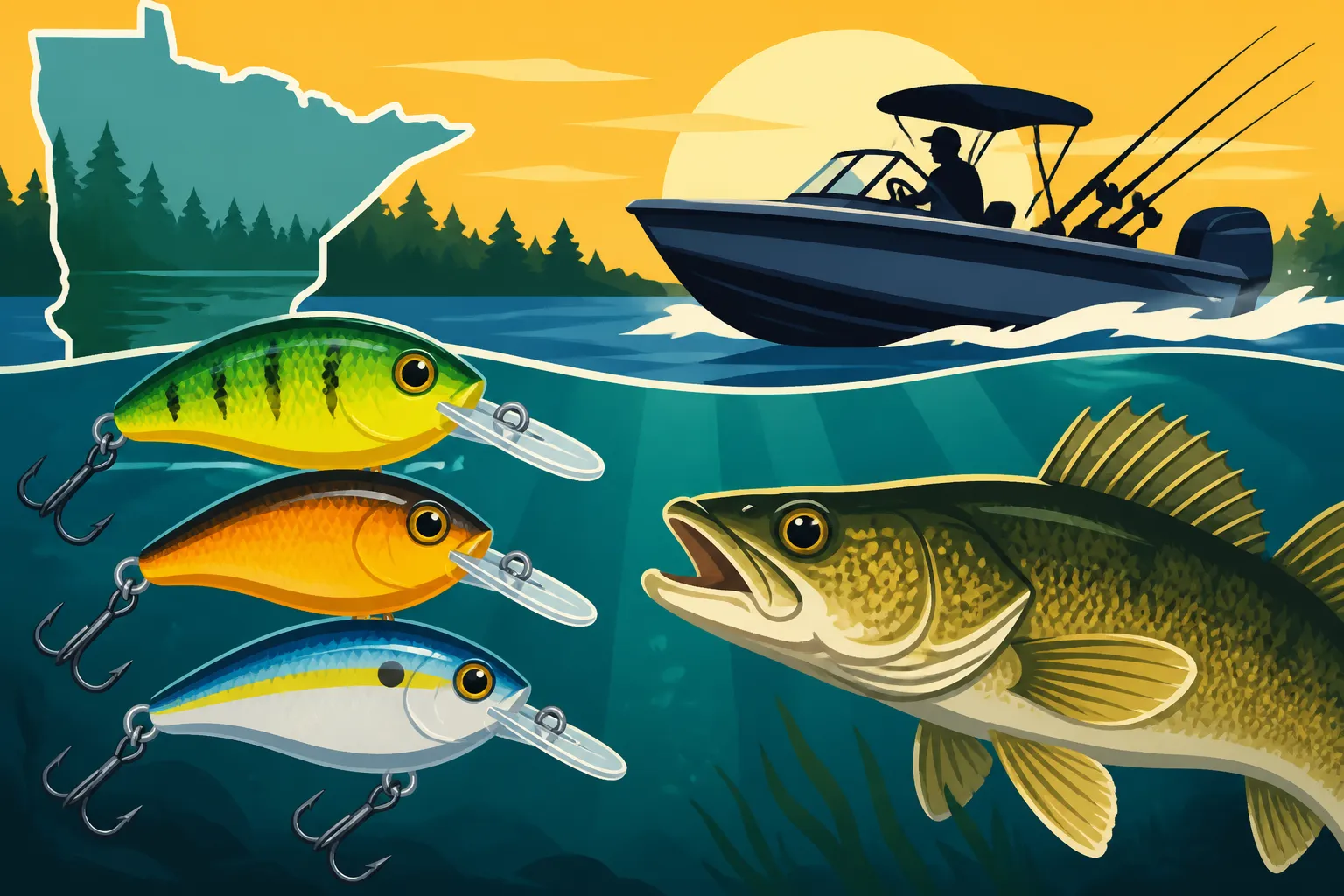
- Rapala Shad Rap: This balsa wood classic is probably the most iconic walleye crankbait ever created. Its tight wobble and realistic profile make it deadly in clear to slightly stained water. Available in a huge range of sizes (SR-5, SR-7, SR-8 being popular for walleye), it's a staple for a reason. They don't dive super deep, but are fantastic for covering that 5-12 foot zone. You'll find these easily at any serious tackle shop or department store, including Bass Pro Shops.
- Berkley Flicker Shad: These baits are designed to mimic a fleeing shad, offering a tight, natural wobble and impressive casting distance. They come in various sizes, with the #5 and #7 being popular choices for walleye. They are known for running true right out of the box and diving efficiently, making them an excellent value and a must-have for any walleye angler.
- Salmo Hornet: Often overlooked by some, the Salmo Hornet is another balsa wood gem that can produce incredible results. Its aggressive, high-frequency wobble is particularly effective when walleye are actively feeding. The smaller sizes (3-5 cm) are perfect for shallow to mid-depth trolling, especially in clearer water.
These baits are excellent choices for targeting walleye during the spring opener and through the early summer months when fish haven't yet moved to their deepest summer haunts.
Deep Divers (15+ feet)
When the sun gets high and the water warms up, walleye will often retreat to deeper, cooler water. This is when you need crankbaits that can dig down to their comfort zone, whether it's 15 feet or 30 feet. These baits typically have larger, more aggressive lips to achieve those depths.
- Reef Runner 600 Series (Deep Diver): If you're serious about deep trolling for walleye, you likely have a collection of Reef Runners. These slender, banana-shaped baits have an unmistakable erratic swimming action and can dive exceptionally deep. The 600 series is a workhorse, easily reaching depths beyond 20 feet on standard trolling setups. They are particularly effective on large, open water lakes with deep structure like Lake of the Woods or Leech Lake.
- Bandit Walleye Deep Diver: Similar in profile and action to the Reef Runner, the Bandit Walleye Deep Diver is another highly popular option. They run true, dive quickly, and come in a vast array of colors. Many anglers swear by them for targeting walleye holding between 15-25 feet, often when covering large expanses of water.
- Rapala Deep Husky Jerk: While the original Husky Jerk is a classic shallow jerkbait, its deep-diving cousin is a fantastic trolling option. It offers a more subtle, tight wobble than some other deep divers, making it great for neutral fish or in extremely clear water. It's also effective when you're looking to target suspended fish.
- Berkley Flicker Minnow: While the Flicker Shad excels at mid-depths, the Flicker Minnow series offers deeper diving options with a more elongated, minnow-like profile. They are a reliable choice for getting down into that 15-20+ foot range, providing a natural presentation.
When using deep diving crankbaits, understanding how to troll for walleye without electronics can be a bit tricky, but practice with dive charts and a line counter reel will get you there.
Lipless Crankbaits and Jerkbaits (Situational)
While not traditional trolling baits for walleye in most scenarios, it's worth a quick mention that certain situations might call for variations.
- Lipless Crankbaits: Baits like the Rat-L-Trap or the Strike King Redeye Shad are primarily casting baits, but can be briefly effective for "power trolling" in very shallow, weedy situations where you want to rip them free of vegetation. Their loud rattles and aggressive vibration can call in active fish. However, for consistent walleye trolling, they're less common.
- Jerkbaits (Trolled): Longer, slender jerkbaits like the Rapala Husky Jerk or Smithwick Rattlin' Rogue can be effective when trolled, particularly in colder water or when fish are keying in on a very specific baitfish profile. They typically run shallower but can be excellent for covering large shallow flats or the tops of submerged humps.
For a comprehensive understanding of how these different lure types fit into the broader picture, check out our guide on walleye fishing techniques.
Trolling Techniques and Setup for Optimal Crankbait Presentation
Having the right crankbait is only half the battle; knowing how to present it effectively is just as crucial. Trolling isn't just about dragging a lure behind the boat; it's a nuanced art form that requires attention to detail.
Speed, Line, and Leader Considerations
The devil is in the details when it comes to trolling. Each component of your setup works together to ensure your crankbait is performing at its best.
- Trolling Speed: This is perhaps the most critical factor. For walleye, a general starting point is between 1.5 to 2.5 miles per hour (MPH). However, the optimal speed can vary dramatically based on water temperature, fish mood, and the specific crankbait you're using. Some days, a slower 1 MPH might trigger strikes from sluggish walleye, while other days a brisk 3 MPH will entice aggressive biters. Experimentation is key. Watch your rod tips – if the lure isn't vibrating properly or if it's snagging too often, adjust your speed.
- Fishing Line:
- Monofilament (Mono): Mono is buoyant and has stretch. Its buoyancy can reduce the diving depth of your crankbait slightly, while the stretch acts as a shock absorber, helping to prevent hooks from pulling out of a walleye's mouth during the fight. A 10-12 lb test mono is a common choice for crankbait trolling.
- Braided Line: Braid has almost no stretch, offering incredible sensitivity and allowing your crankbait to dive deeper due to its thinner diameter. However, the lack of stretch means you need to be careful not to rip the hooks out, and a softer rod action can help. Many anglers opt for 10-20 lb braid.
- Fluorocarbon Leaders: Regardless of your main line, adding a 6-10 foot fluorocarbon leader (10-14 lb test) is often a smart move. Fluorocarbon is nearly invisible underwater, helping to conceal your line from wary walleye. It also provides abrasion resistance, which is great around rocks or zebra mussels. The best fishing line for walleye often involves a combination of these.
- Line Counter Reels: These are indispensable for consistent trolling. A good line counter reel allows you to precisely repeat successful presentations, knowing exactly how much line you have out and therefore, how deep your crankbait is running. Brands like Daiwa and Okuma offer excellent, affordable line counter reels perfect for walleye trolling.
Leadcore and Planer Boards for Spreading Out
Sometimes, you need to get your baits deeper or cover a wider area than traditional long-lining allows. That's where leadcore line and planer boards shine.
- Leadcore Line: This specialized line has a lead core wrapped in a braided sheath. Its density causes it to sink, allowing you to achieve significant depths with relatively short lengths of line out, even with shallower-running crankbaits. Each color section (typically 10 yards) of leadcore sinks to a predictable depth at a given speed, making it a powerful tool for precision depth control. Many anglers use a short fluorocarbon leader off the end of the leadcore to connect to the crankbait. Leadcore is especially effective for presenting baits to walleye suspended over deep water or along deep contour lines without needing super-long lines behind the boat. Our guide on how to use leadcore line for walleye trolling delves into this in more detail.
- Planer Boards: These devices attach to your line and pull your crankbaits out to the side of the boat, effectively widening your trolling spread. This allows you to present multiple baits at different depths and distances from the boat, covering more water and targeting fish that might be spooked by the boat's shadow or motor noise. Offshore Tackle and Church Tackle are two popular brands for inline planer boards. Running multiple boards with varying crankbaits and line lengths can help you quickly identify what the walleye are biting on that day.
Fine-Tuning Your Spread and Depth
A successful trolling pass is rarely about simply dropping a single line out. It's about creating a "spread" – a combination of baits, depths, and distances that maximizes your chances of intercepting walleye.
- Staggering Lines: Don't run all your lines at the same length. Stagger them! For example, one line might be 50 feet back, another 75, another 100, and so on. This helps avoid tangles when turning and allows you to present baits at different depths and "personalities" to the fish.
- Varying Crankbaits: Don't be afraid to run different types of crankbaits simultaneously. A deep diver on one side, a medium diver on the other, maybe a leadcore setup with a shallow runner in between. This helps you figure out not only what depth the fish are at but also what action or profile they prefer.
- Understanding Dive Curves: Each crankbait has a specific dive curve – a chart that shows how deep it runs based on line length, line type, and trolling speed. Familiarize yourself with these curves for your favorite baits. Many lure manufacturers publish this data, and apps like Precision Trolling Data provide comprehensive dive curves for hundreds of baits. This knowledge is gold for putting your bait in the exact strike zone.
- Turns and Pauses: Don't always troll in a straight line. Slight turns cause your inside baits to slow down and sink, while outside baits speed up and rise. These changes in speed and depth often trigger strikes from following fish. A brief pause in your retrieve or a quick turn can be enough to turn a curious follower into a committed bite.
Seasonal Crankbait Strategies for Minnesota Walleye
Minnesota's fishing calendar is a dynamic one, with walleye behavior shifting significantly from the spring thaw to the late fall chill. Tailoring your crankbait choices and trolling strategies to the season is paramount for consistent success. Our seasonal fishing patterns in Minnesota article provides an even broader look at this.
Spring Opener and Early Season Tactics
The walleye opener in Minnesota is a sacred tradition, and for good reason: hungry walleye are often shallow and accessible.
- Shallow Water Focus: After ice-out and spawning, walleye are often found in relatively shallow, warmer water (5-15 feet) in bays, along shorelines, and on emerging weed flats. These areas warm up first and attract baitfish.
- Smaller, Tighter Wobble Cranks: In cooler water, walleye tend to be less aggressive. Smaller crankbaits (like Rapala Shad Rap SR-5 or SR-7, Berkley Flicker Shad #5 or #7, Salmo Hornet 4 cm) with a tighter, more subtle wobble are often more effective. These mimic the smaller baitfish available in spring.
- Slow and Steady: Trolling speeds should generally be on the slower side, typically 1.0 to 1.8 MPH. Give the walleye time to find and commit to the bait.
- Targeting Transition Areas: Focus on areas where shallow water transitions to deeper breaks, or the edges of developing weed beds. Points and shallow rock piles that warm up quickly are also prime spots. This strategy is perfectly outlined in our guide on early season walleye after the opener.
A classic spring strategy might involve long-lining a few Rapala Shad Raps in perch or silver patterns at 1.5 MPH along a 10-foot contour line, making wide turns to change the bait's action slightly.
Summer Structure and Open Water Trolling
As Minnesota's lakes heat up, walleye will move to their deeper summer haunts, often relating to main lake structure or suspending in open water.
- Deep Diving and Leadcore Dominance: This is prime time for your deep-diving crankbaits (Reef Runner 600, Bandit Walleye Deep Diver, Rapala Deep Husky Jerk) to shine. If fish are suspended, leadcore line becomes an invaluable tool to present baits at precise depths over vast open water.
- Targeting Main Lake Structure: Focus on deep humps, main lake points, large rock reefs, and expansive mud flats on lakes like Mille Lacs. Walleye will often hug the bottom or suspend just above these structures.
- Faster Trolling Speeds: With warmer water, walleye are generally more active, and you can often increase your trolling speed to 2.0 to 3.0 MPH. This aggressive presentation can trigger reaction bites.
- Spreading Out with Planer Boards: Use planer boards to cover a wide swath of water, especially when fish are scattered or suspending over large areas. This strategy is key for understanding summer walleye patterns: deep structure.
Imagine a summer afternoon on Lake of the Woods, with several lines out on planer boards, some with Deep Husky Jerks, others with Reef Runners, all ticking along a deep break line at 2.5 MPH. This is how you find those summer giants.
Fall Turnover and Cold Water Presentation
Fall presents a unique challenge and opportunity. After the lake "turns over" (when surface and deep waters mix), walleye can be scattered. As water temperatures continue to drop, their metabolism slows.
- Search for Stable Water: Walleye will often relate to the deepest, most stable water they can find, or concentrate around remaining baitfish schools. Main lake basins, deep channels, and the deepest portions of break lines become important.
- Bigger Profile, Slower Action: As water cools, walleye often prefer a larger, slower-moving meal. Cranks with a slightly wider wobble or a larger profile can be effective. Consider baits in perch, cisco, or firetiger patterns if water is stained from the turnover.
- Very Slow Trolling Speeds: Like spring, fall often calls for slow trolling, sometimes as low as 0.8 to 1.5 MPH. The fish aren't going to chase down a speeding bait. Let it wobble enticingly in front of them.
- Vertical Presentations: While this guide focuses on trolling, remember that in very cold fall conditions, vertical jigging can often outperform trolling, so be prepared to adapt. Our guide on fall walleye fishing: turnover & cold water offers more insights.
A typical fall strategy might involve using leadcore to present a Rapala Deep Husky Jerk or a larger Berkley Flicker Minnow very slowly along the edge of a deep basin, perhaps near where baitfish are schooling.
Walleye Crankbait Comparison Table
| Crankbait Model | Typical Diving Depth (on 10lb mono) | Action | Ideal Walleye Situation |
|---|---|---|---|
| Rapala Shad Rap (SR-7) | 5-12 feet | Tight wobble, subtle | Early season, shallow breaks, clear water, neutral fish |
| Berkley Flicker Shad (#7) | 8-15 feet | Tight wobble | Versatile, mid-depth breaks, slightly stained water |
| Salmo Hornet (5 cm) | 5-12 feet | Aggressive wobble | Active fish, clear to stained water, spring/early summer |
| Reef Runner 600 Series | 15-30+ feet | Erratic, wide wobble | Deep structure, open water suspension, aggressive summer walleye |
| Bandit Walleye Deep Diver | 15-25+ feet | Tight to medium wobble | Deep breaks, consistent depth, all-season deep trolling |
| Rapala Deep Husky Jerk | 10-20+ feet | Tight wobble, subtle | Suspended fish, clear water, finicky walleye |
| Berkley Flicker Minnow (#9) | 12-20+ feet | Minnow-like, tight | Deeper breaks, natural forage mimicry, all-season deep |
This table provides a quick overview, but remember that line type, speed, and overall trolling setup will affect the actual diving depth and action of any crankbait. Always consult dive charts or test your baits to confirm their running depth.
Disclaimer
Fishing regulations, conditions, and fish behavior can change rapidly. Always consult the most current Minnesota Department of Natural Resources (DNR) fishing regulations before heading out. This guide provides general information and recommendations, but safe boating practices, responsible angling, and adherence to all local laws are your personal responsibility.