Lake Kabetogama Walleye Limit & Slot
You are standing on the dock at Lake Kabetogama, the sun is just peeking over the towering pines, and your boat is finally loaded with gear. But then that nagging feeling hits: what exactly is the slot limit here? Getting caught with a fish that is a quarter-inch too long can turn a dream vacation into an expensive headache. This guide breaks down the Lake Kabetogama Walleye Limit & Slot so you can fish with confidence and keep your focus on the water.
Understanding the Lake Kabetogama Walleye Slot Limit
If you have ever fished the legendary waters of the Namakan Reservoir, which includes Kabetogama, Namakan, Sand Point, Crane, and Little Vermilion lakes, you know that these border waters play by a slightly different set of rules than your local pond in the Twin Cities. The Minnesota Department of Natural Resources (DNR) implements a "protected slot" to ensure that the prime breeding-age fish stay in the water to keep the population healthy for the next generation of anglers.
The 18 to 26 Inch Protected Slot
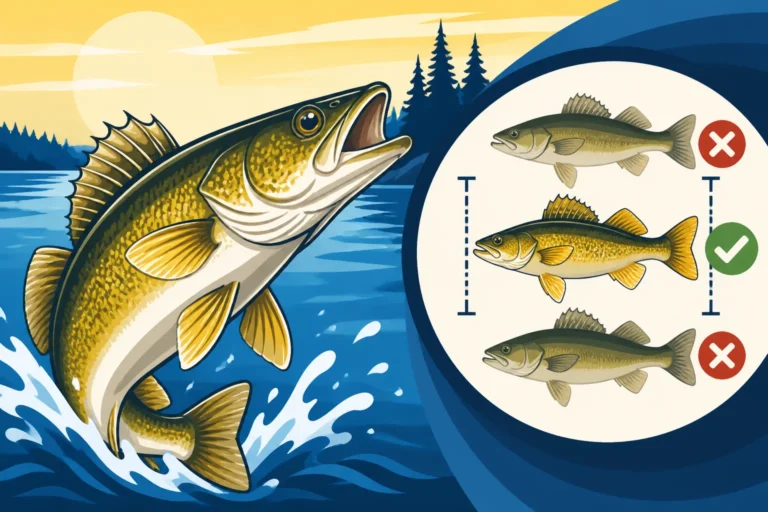
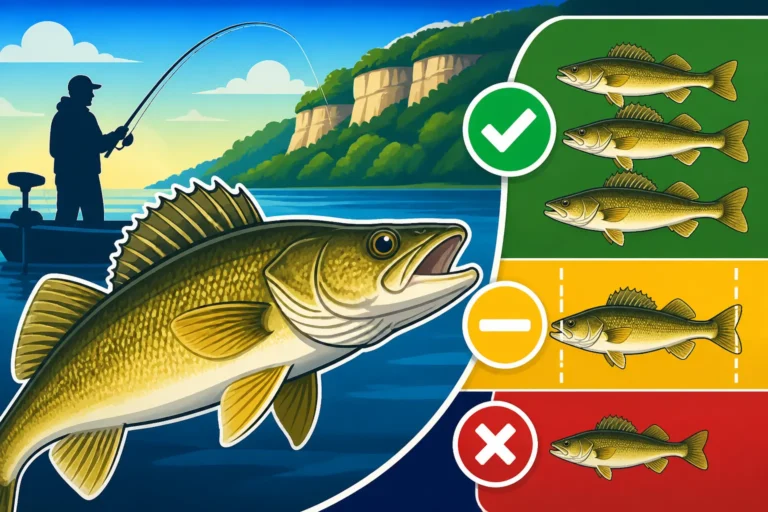
On Lake Kabetogama, the current regulation dictates that all walleye between 18 and 26 inches must be immediately released. This is often referred to as the "protected slot." These are the "teenagers" and "young adults" of the walleye world—fish that are fast-growing and highly productive spawners. By protecting this specific size range, the DNR ensures that even during years with high fishing pressure, there is a consistent "seed crop" of fish to keep the lake stocked naturally.
I have seen plenty of heartbroken anglers pull up a beautiful 21-inch walleye—the perfect "wall hanger" in some states—only to realize it has to go right back into the drink. It feels counterintuitive at first, especially when you are hungry for a fish fry, but this specific regulation is why Lake Kabetogama remains one of the premier walleye destinations in North America. When you are out there, make sure you have a high-quality bump board or a flat measuring tape. Using a flimsy sewing tape or just "eyeballing it" against your rod is a recipe for a citation.
The One Over 26 Inch Exception
While the slot is strict, there is a "trophy" provision. You are allowed to keep one walleye that is over 26 inches in length as part of your daily bag limit. However, just because you can keep a 28-inch monster doesn't always mean you should. In the local community, many veteran guides encourage "selective harvest." This means keeping the smaller, tastier "eaters" (those under 18 inches) and taking a quick photo of the big girls before letting them go to continue their legacy.
If you do decide to keep a trophy, remember that it still counts toward your total possession limit. If you are staying at a resort for a week, that 27-inch fish sitting in the freezer counts as one of your fish until it is consumed or transported home. Always double-check the Minnesota Fishing Limits: Bag & Possession (2026) rules if you plan on bringing a limit back to the freezer.
Measuring Your Catch Correctly
In Minnesota, the legal way to measure a fish is from the tip of the snout to the farthest tip of the tail, with the tail lobes squeezed together to get the maximum length. This is a critical distinction. If a fish measures 17.9 inches with the tail relaxed but hits 18.1 inches when you squeeze the tail, that fish is technically in the protected slot and must be released.
I always tell people to "measure twice and keep once." If it’s even remotely close to the 18-inch mark, let it go. It isn't worth the risk. When the DNR is checking boats near the Ash River or the Kettle Falls Hotel, they are looking for exact compliance. If you are unsure of the general start dates for the season, always verify the Minnesota Fishing Seasons & Opener Dates (2026) before you hook up the trailer.
Bag and Possession Limits for Walleye and Sauger
One of the most confusing aspects for newcomers to the Voyageurs National Park area is how the DNR handles the "combined" limit. On Lake Kabetogama, you aren't just looking at walleye; you are also likely catching their cousin, the sauger (often called "sand pike" by the locals).
The Combined Limit Explained
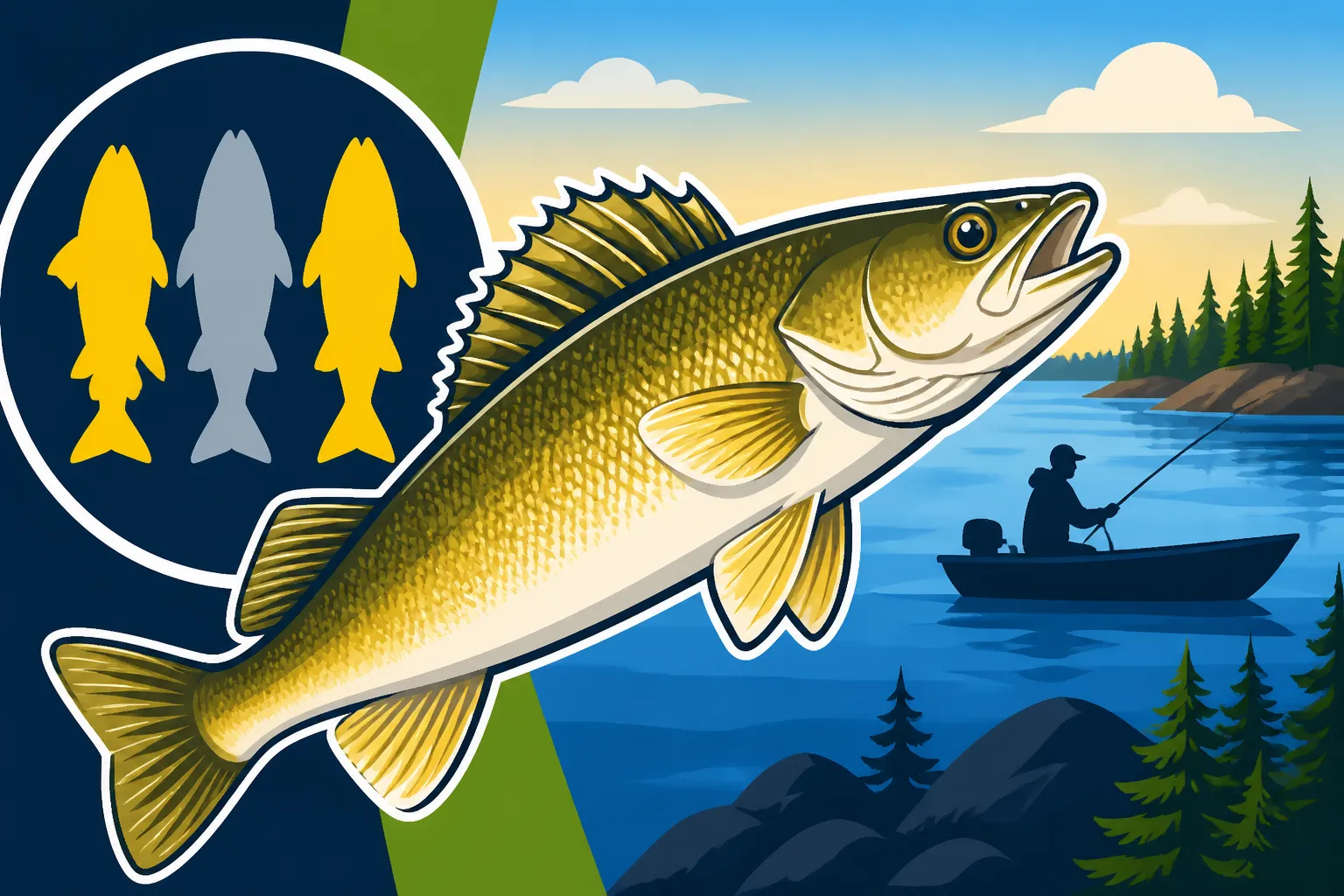
The current daily and possession limit for the Namakan Reservoir, including Kabetogama, is a combined total of 6 walleye and sauger. However, there is a "sub-limit" within that 6: you can have no more than 4 walleye in your possession.
This means you could have:
- 4 walleye and 2 sauger
- 2 walleye and 4 sauger
- 0 walleye and 6 sauger
But you cannot have 5 walleye and 1 sauger. This nuance is where many people get tripped up. The sauger do not have a slot limit on Kabetogama, but they do count toward that total bucket of 6 fish. If you are confused about the difference between the two species, a Minnesota Fish Species: Identification Guide can be a lifesaver. Generally, look for the spots on the dorsal fin (sauger have them, walleye don't) and the white tip on the bottom of the tail (walleye have it, sauger don't).
Possession Limits vs Daily Bag Limits
It is vital to understand the difference between a "daily bag limit" and a "possession limit." In Minnesota, these are usually the same number. If the possession limit is 4 walleye, that means you can only have 4 walleye in your possession at any given time—whether they are in your livewell, your cooler, your resort freezer, or your fridge at home.
You cannot catch 4 walleye on Monday, put them in the freezer, and catch 4 more on Tuesday. That would put you at 8 fish, which is a major violation. If you are fishing as a group, remember that "party fishing" (where one person catches the limit for another) is legal in Minnesota only under specific circumstances, but it is always safer for every angler to catch their own fish. If you are visiting from out of state, make sure you understand the requirements for a Nonresident Fishing in Minnesota: Licenses & Rules to avoid any legal snags.
| Species | Daily / Possession Limit | Size Restrictions |
|---|---|---|
| Walleye | 4 (within combined limit) | 18" to 26" must be released; only one over 26" allowed |
| Sauger | 6 (within combined limit) | No size limit |
| Combined Total | 6 | Total of both species cannot exceed 6 |
Seasonal Considerations and Best Practices
Lake Kabetogama is a massive, complex body of water filled with rock reefs, weed beds, and deep trenches. The way you fish the slot limit often changes depending on when you visit during the season.
Spring Opener Tactics
When the Minnesota Walleye Opener 2026 finally arrives in May, the fish are often still in the shallow bays or near the river mouths spawning. During this time, the bite can be fast and furious. You might find yourself catching dozens of fish in the 14 to 17-inch range—the perfect "eater" size. This is the best time to fill your limit without having to worry too much about the slot, as the larger females often move out to deeper water shortly after spawning.
A simple jig and minnow combination is the gold standard here. If you are looking for specific advice on how to target these fish in the early season, check out our guide on How to Catch Walleye in Early Spring (Opener). The key is to look for warmer water in the shallow northern bays of the lake where the sun hits the most.
Summer and Fall Transitions
As the water warms in July and August, the walleye move to the mid-lake reefs and the "mud flats." This is when you start encountering more fish in that protected 18 to 26-inch slot. It can be frustrating to catch five 22-inch fish in a row and have nothing for the frying pan, but that is just part of the Kab experience.
During the summer, many anglers switch to trolling crankbaits or using a Bottom Bouncer & Crawler Harness for Walleye. This allows you to cover more ground and find the specific reefs that are holding the "under-slot" fish. In the fall, the fish move deep again, often congregating near steep drop-offs. If you find yourself catching too many slot fish and want eaters, try moving slightly shallower or deeper; often, different size classes of fish will hold at different depths on the same structure. For more real-time info, the Lake Kabetogama Fishing Report & What's Biting is an excellent resource for tracking these movements.
Essential Regulations for Fishing Voyageurs National Park
Since Lake Kabetogama is a central part of Voyageurs National Park, there are a few extra layers of rules you need to be aware of beyond just the fish limits.
Licensing and Park Permits
First and foremost, you need a valid Minnesota fishing license. You can easily find information on a Minnesota Fishing License: Cost, Types & How to Buy (2026) online. While there is no "entry fee" to fish the park itself, you do need to be aware of where you are camping or docking. If you are staying at a resort outside the park, you’re fine, but if you plan on using park campsites, you need to reserve those through the National Park Service.
Always keep your license on your person. Digital versions on your phone are generally accepted in Minnesota, but in the remote areas of Kabetogama, cell service is spotty at best. I always recommend keeping a paper copy in a waterproof bag inside your tackle box just in case your battery dies or you have no signal.
Aquatic Invasive Species (AIS) Compliance
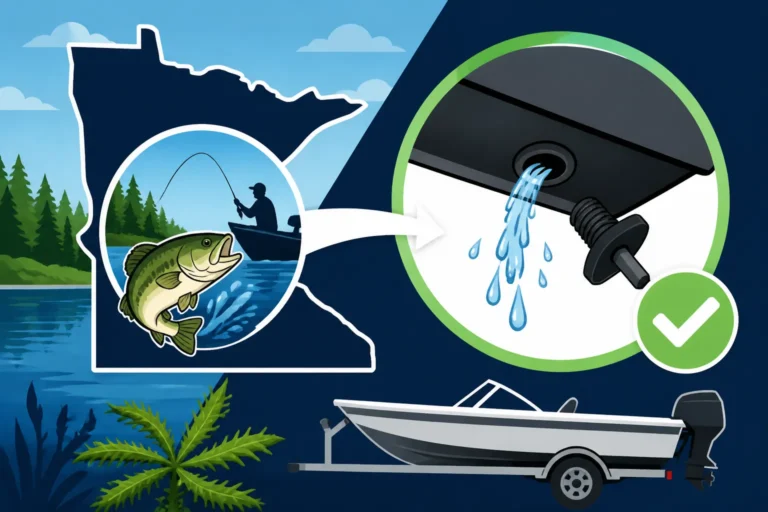
Voyageurs National Park is a pristine wilderness, and the DNR is incredibly strict about preventing the spread of invasive species like zebra mussels or spiny waterfleas. You are required by law to drain all water from your boat, livewells, and bait buckets before leaving the boat launch.
Failure to pull your drain plug before driving away can result in a significant fine. If you are moving your boat between different bodies of water, you should know How to Decontaminate Your Boat (AIS) properly. Most major launches on Kabetogama have cleaning stations—use them! It only takes five minutes and protects the lake we all love. For a deep dive into these rules, see the Aquatic Invasive Species (AIS) Rules for Boaters guide.
Summary of Success on Kabetogama
Fishing Lake Kabetogama is a bucket-list experience for any serious walleye angler. The combination of stunning scenery and a world-class fishery is hard to beat. By respecting the 18 to 26-inch protected slot and keeping your combined limit of walleye and sauger to 6 (with only 4 being walleye), you are doing your part to ensure this lake stays healthy.
Pack a good measuring board, learn the difference between a walleye and a sauger, and always keep an eye on the latest Minnesota Fishing Regulations PDF: Where to Find It to stay updated on any mid-season changes. Now, get out there, enjoy the call of the loons, and hopefully, you’ll find some of those 17-inch "golden" eaters for your next shore lunch.
Disclaimer
While we strive to provide the most accurate and up-to-date information regarding Minnesota fishing regulations, rules can change due to emergency DNR orders or seasonal adjustments. Always consult the official Minnesota DNR Fishing Regulations handbook or the official DNR website before your trip to ensure you are in full compliance with the law. All fishing is done at your own risk.