Lake Vermilion Fishing Regulations (2026)
Is there anything more frustrating than getting out on the water, excited for a day of fishing, only to realize you’re not entirely sure about the ever-changing regulations for the specific lake you're on? Lake Vermilion, with its vast waters and incredible fishing, is a prime example of a destination where the rules can be a bit more nuanced than your average neighborhood pond. This guide is here to cut through the confusion and lay out the complete fishing regulations for Lake Vermilion, ensuring your next trip is both successful and fully compliant.
Why Lake Vermilion's Regulations Matter So Much
Lake Vermilion isn't just any lake; it's an iconic Minnesota fishery, renowned for its stunning beauty and its diverse, high-quality fish populations. Because of its unique characteristics and the pressure it receives from anglers, the Minnesota Department of Natural Resources (DNR) has implemented very specific regulations here to ensure its long-term health and to maintain its status as a premier fishing destination.
The Unique Fishery of Lake Vermilion
When you think of Lake Vermilion, you probably picture trophy walleye, giant northern pike, and muskie that will test your tackle to its limits. This lake is a true gem, stretching over 40,000 acres with countless bays, islands, and complex structures. It offers everything from shallow, weedy flats perfect for bass and panfish to deep, rocky reefs that hold big walleye and lake trout. This incredible diversity means the DNR needs a sophisticated management plan. Unlike smaller, simpler lakes, Vermilion requires a delicate balancing act to sustain its various species, especially the highly sought-after ones. The goal isn't just to have fish, but to have healthy, reproducing populations that can provide quality angling experiences for generations to come. That's why you often find special regulations here that you might not encounter elsewhere in the state.
The DNR's Balancing Act
The Minnesota Department of Natural Resources isn't just making rules for the sake of it; they're constantly monitoring fish populations, angler harvest rates, and environmental factors on Lake Vermilion. This scientific approach helps them determine what regulations will best protect the fishery while still allowing for reasonable angling opportunities. For instance, if walleye numbers are struggling, they might implement a stricter slot limit or reduce the bag limit. Conversely, if a species like northern pike becomes overabundant or stunted, they might liberalize regulations to encourage harvest. This dynamic management means that while statewide regulations provide a baseline, many of Minnesota's top lakes, like Vermilion, have special or experimental regulations tailored to their specific needs. It's a constant balancing act between conservation and recreation, and sometimes it can feel a bit like trying to hit a moving target for us anglers.
Decoding Lake Vermilion's 2026 Walleye Regulations
Walleye are the undisputed kings of Lake Vermilion for many anglers, and as such, their regulations are often the most detailed and frequently adjusted. For 2026, it's crucial to be aware of the specific rules to avoid any issues.
The Current Walleye Season and Limits
The walleye season on Lake Vermilion typically opens around mid-May, aligning with the statewide Minnesota Fishing Seasons & Opener Dates (2026). However, the daily bag and possession limits often diverge from the general statewide rules due to Vermilion's special management status.
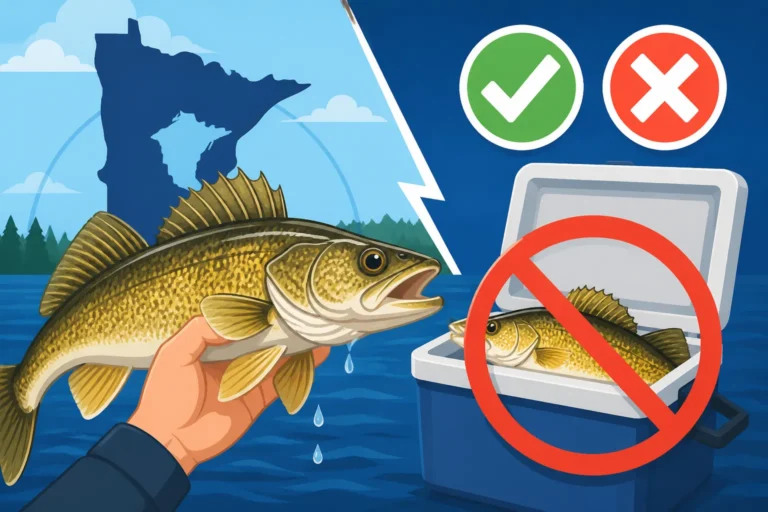
For 2026, the Lake Vermilion walleye regulation specifies a daily bag limit of four walleye, with a possession limit of four. This means you can't keep more than four walleye per day, and you can't have more than four walleye in your possession at any time, whether on the lake or at your cabin. Crucially, there's a protected slot limit in place. This slot limit typically means all walleye from 17 to 26 inches must be immediately released. You're usually allowed to keep one walleye over 26 inches as part of your four-fish bag.
Let's walk through a few scenarios:
- Scenario 1: You catch a 15-inch walleye. Great! This fish is under the protected slot and can be kept as part of your four-fish bag.
- Scenario 2: You catch a 20-inch walleye. Uh oh! This fish falls directly into the protected slot (17-26 inches). You must release it immediately and unharmed. Trying to keep it could lead to significant penalties. This is where understanding Minnesota Walleye Limit & Size Rules becomes critical.
- Scenario 3: You catch a 27-inch walleye. Congratulations on a true trophy! You can keep this fish, but remember it counts as one of your four-fish daily and possession limit, and it must be the only fish over 26 inches you keep that day or have in possession.
These specific regulations are designed to protect the breeding stock (the fish in the slot) and allow them to grow to trophy sizes, which then contributes to a healthier, more robust fishery. It rewards anglers who target smaller, eating-sized fish while offering the chance for a true wall-hanger.
Possession Limits and How They Differ
Understanding the difference between a daily bag limit and a possession limit is fundamental, especially when you're planning a multi-day fishing trip to Lake Vermilion. Many anglers get tripped up here. The daily bag limit refers to the maximum number of fish you can harvest and keep in a single day. The possession limit refers to the maximum number of fish you can have in your possession at any given time, whether they're fresh from the lake, filleted and in your cooler, or even frozen back at your resort or home.
For Lake Vermilion's walleye, both the daily bag and possession limits are four, with the aforementioned slot rule. This means if you fish for three days and catch four legal walleye each day, you can only keep a maximum of four total fish. You can't accumulate fish day after day to exceed the possession limit. So, if you've already got four walleye in the freezer at the cabin, you cannot keep any more until you consume or dispose of some of those fish, bringing your possession total back under four. This rule is designed to prevent excessive harvest over extended stays. For a deeper dive, check out our guide on Minnesota Possession Limits Explained.
Northern Pike, Muskie, Bass, and Panfish Rules for 2026
While walleye often steal the spotlight, Lake Vermilion offers fantastic fishing for other species, each with its own set of rules you need to know.
Northern Pike Zones and Vermilion's Specifics
Minnesota has implemented a "Northern Pike Zone" regulation system across the state, dividing it into Northeast, North-Central, and Southern zones, each with different bag and size limits. Lake Vermilion falls within the Northeast Zone, which typically has a more liberal bag limit to encourage the harvest of smaller, more abundant pike. However, like walleye, Vermilion often carries its own specific regulations that supersede the general zone rules.
For 2026, Lake Vermilion's northern pike regulation typically allows for a daily bag limit of three pike, with a protected slot limit where all pike from 24 to 36 inches must be immediately released. You're generally allowed to keep one pike over 36 inches as part of your three-fish bag. This special regulation aims to improve the size structure of pike in Vermilion, reducing the number of smaller, "hammer-handle" pike and fostering the growth of larger, more desirable fish. This is a common strategy to combat stunted pike populations that you can learn more about in Minnesota Northern Pike Limits by Zone. So, if you catch a 28-inch pike, you absolutely must release it. If you land a monster 38-inch pike, you can keep it, but it counts as one of your three and must be the only one over 36 inches.
Muskie and Bass: Catch-and-Release Focus
Lake Vermilion is legendary for its muskie fishing, often considered one of the top muskie lakes in the country. Anglers come here specifically to chase the "fish of 10,000 casts." The regulations reflect this trophy status. For muskie on Lake Vermilion, the daily and possession limit is typically one fish, and that fish must be at least 54 inches long. This extremely high minimum size limit means that virtually all muskie caught are released, ensuring the continued health of this incredible trophy fishery. It also aligns with the ethos of most muskie anglers, who are dedicated to catch and release. If you're new to muskie fishing, understanding the importance of proper handling and release is paramount; our guide on Muskie Fishing in Minnesota: The Fish of 10,000 Casts offers great insights.
Bass fishing on Lake Vermilion is also excellent, particularly for smallmouth bass. While not always subject to the same hyper-specific rules as walleye or muskie, it's still important to be aware. For 2026, the general bass regulations on Vermilion typically allow for a daily bag limit of six bass (largemouth and smallmouth combined), with a protected slot limit where all bass from 14 to 20 inches must be immediately released. You're usually permitted to keep one bass over 20 inches as part of your six-fish bag. This regulation aims to maintain a healthy population of larger bass. For more detailed information on species and techniques, check out Smallmouth & Largemouth Bass in Minnesota.
Panfish: Crappie and Sunfish Considerations
Panfish, including crappie (both black and white) and sunfish (bluegill, pumpkinseed, etc.), offer fantastic action on Lake Vermilion, especially for families or when the walleye bite is slow. While panfish regulations are generally more lenient statewide, some lakes do have special rules to prevent overharvest and maintain larger size structures.
For Lake Vermilion in 2026, the general statewide limits for crappie and sunfish typically apply, meaning a daily bag limit of 10 for black and white crappie combined, and a daily bag limit of 20 for sunfish species combined. However, always double-check the latest regulations booklet, as panfish rules can change on specific bodies of water to manage local populations, especially on heavily fished lakes. While Vermilion hasn't historically had drastically reduced panfish limits, vigilance is key. It's always a good idea to practice selective harvest with panfish, taking only what you need for a meal and releasing the larger breeding stock. Our guide on Minnesota Crappie & Sunfish Limits provides more general information that is helpful for all Minnesota waters.
Here's a quick summary table of the typical 2026 Lake Vermilion fishing regulations for key species. Remember, these are based on current patterns and subject to change, so always verify with the official DNR source.
| Species | Daily Bag Limit | Possession Limit | Protected Slot Limit | Special Notes |
|---|---|---|---|---|
| Walleye | 4 | 4 | 17-26 inches (release all) | One over 26 inches allowed in possession. |
| Northern Pike | 3 | 3 | 24-36 inches (release all) | One over 36 inches allowed in possession. |
| Muskellunge | 1 | 1 | Minimum 54 inches | Almost entirely catch-and-release. |
| Smallmouth Bass | 6 | 6 | 14-20 inches (release all) | One over 20 inches allowed in possession. |
| Largemouth Bass | 6 | 6 | 14-20 inches (release all) | One over 20 inches allowed in possession. |
| Crappie | 10 | 10 | None (Statewide) | Check for lake-specific changes. |
| Sunfish | 20 | 20 | None (Statewide) | Check for lake-specific changes. |
Staying Compliant and Enjoying Your Trip
Navigating fishing regulations can feel like a chore, but it's an essential part of responsible angling. A little preparation goes a long way in ensuring a smooth and enjoyable trip to Lake Vermilion.
Essential Tools for Regulation Navigation
The absolute best tool you can have in your tackle box (or at least on your person) is the official Minnesota Fishing Regulations booklet. The DNR publishes an updated version every year, usually available in print at bait shops, sporting goods stores, and DNR offices, or as a convenient PDF online. I always keep a copy in my boat, even if I think I know the rules by heart, because let's be honest, things change! You can find the latest version by searching for Minnesota Fishing Regulations PDF: Where to Find It. Beyond the physical booklet, the Minnesota DNR website is an excellent resource, often providing real-time updates and clarifications. Some anglers also swear by fishing apps that integrate regulation data, but always cross-reference with official sources.
The Importance of a Valid License
Before you even cast a line, make sure your Minnesota fishing license is current and valid. It might seem obvious, but you'd be surprised how many people forget, or they think their license from another state is sufficient (it's not!). Even if you're just dipping a toe in the water from shore, if you're over 16 and under 90 (unless an exception applies), you need a license. You can purchase your Minnesota Fishing License: Cost, Types & How to Buy (2026) online, over the phone, or at authorized agents like bait shops and retailers across the state. Trust me, the fines for fishing without a license are a far bigger headache than the cost of a permit!
Practical Tips to Avoid Violations
Beyond just knowing the rules, applying them correctly on the water can be tricky. Here are a few practical tips to keep you on the right side of the law and protect the fishery:
- Measure Accurately: Always carry a reliable measuring device in your boat or tackle box. A bump board or a stick-on ruler on your boat's gunwale is invaluable. When measuring, lay the fish flat, pinch its mouth shut, and measure to the tip of the tail. Don't eyeball it; a couple of inches can make all the difference between a legal fish and a fine.
- Immediate Release of Slot Fish: If a fish falls into a protected slot, release it immediately. Don't put it in your livewell "just to measure again" or "to show your buddy." That's a violation. Have your camera ready, snap a quick photo if you want, and get that fish back in the water as quickly and gently as possible. This is where Catch and Release Best Practices in Minnesota truly comes into play for sustaining our fisheries.
- Understand Filleting Rules: If you plan to fillet your fish while on the water or before returning to your lodging, be aware of specific rules. For walleye, for example, a one-inch square patch of skin must often remain on the fillet for identification purposes until you reach your final lodging. This allows conservation officers to easily identify the species and ensure it meets length requirements.
- Be Prepared for Inspection: Conservation officers are out there doing important work, and they have the right to inspect your catch, tackle, and license. Be courteous, cooperative, and have everything readily accessible. They're not trying to ruin your day; they're ensuring everyone plays by the rules so the resource can thrive. Ignorance of the law is never an excuse, and serious Penalties for Keeping Over-Limit Fish in Minnesota can apply.
By taking the time to understand these regulations, especially for a prized fishery like Lake Vermilion, you're not just protecting yourself from legal trouble—you're contributing to the long-term health and prosperity of Minnesota's incredible fishing heritage.
Disclaimer
Please remember that fishing regulations can change. While this guide provides the most accurate information available for Lake Vermilion's 2026 fishing season based on current trends and projections, it is always your responsibility to consult the official Minnesota Department of Natural Resources (DNR) fishing regulations booklet or website for the most up-to-date and legally binding rules before you head out on the water.