Best Muskie Lures (Bucktails, Jerkbaits, Topwater)
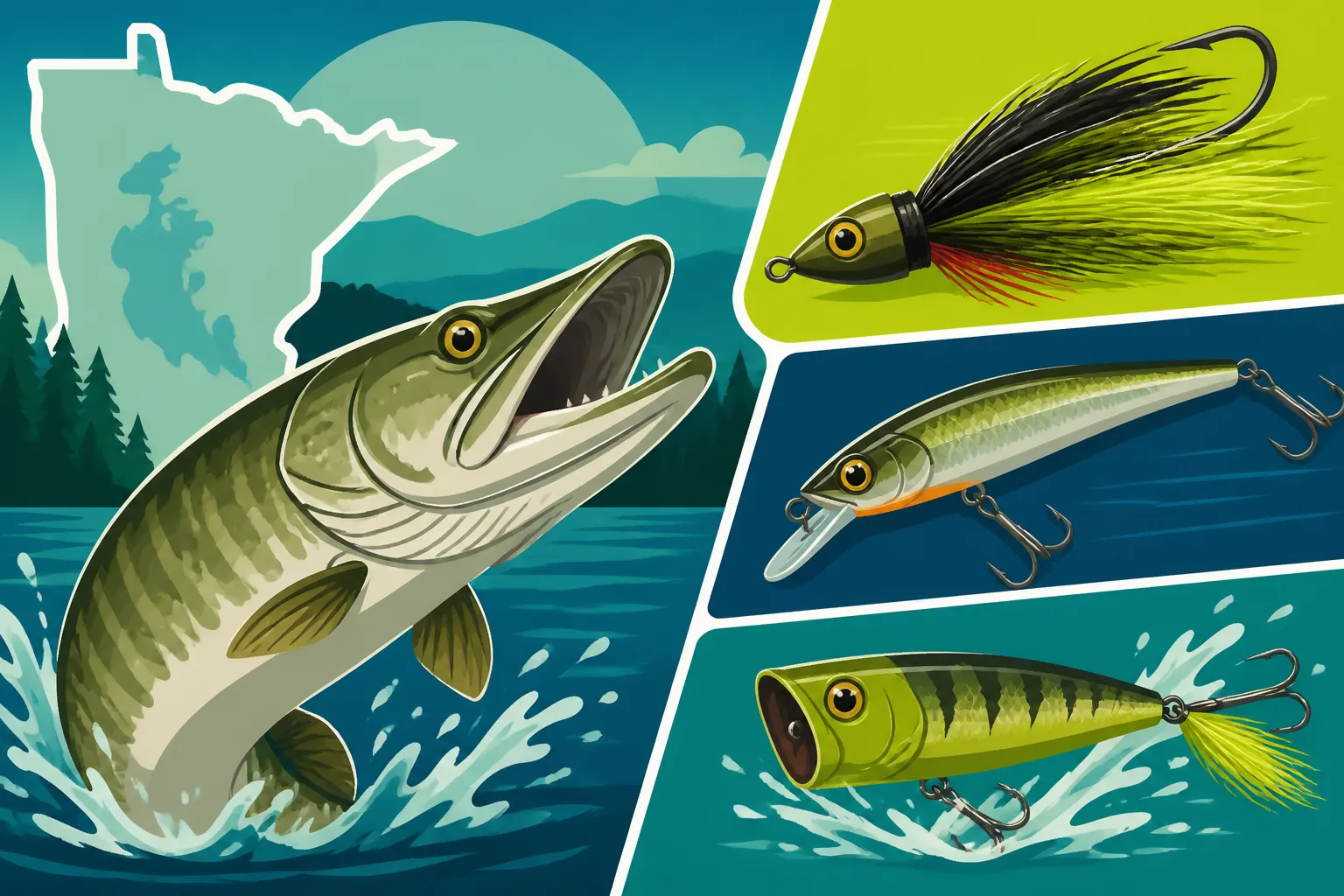
Muskie fishing in Minnesota is often dubbed the "sport of a thousand casts," or even "ten thousand casts," and it’s a moniker that can certainly test your patience and resolve. The frustration of endless retrieves with no follows or strikes is real, making many anglers wonder if they’re even using the right gear or if that legendary "fish of a thousand casts" truly exists. But when that moment comes—that explosive strike, the rod nearly ripped from your hands, the sheer power of a massive muskie fighting at the boat—it’s all worth it. This comprehensive guide is here to equip you with the knowledge to pick the absolute best muskie lures, focusing on the heavy-hitting trio of bucktails, jerkbaits, and topwater lures, to maximize your chances and finally land that elusive toothy critter.
Understanding Muskie Behavior and Lure Presentation
Before we dive into the nitty-gritty of specific lures, let's talk about the muskie itself. These apex predators are incredibly smart, opportunistic, and notoriously finicky. They are creatures of habit but also masters of surprise, often following a lure to the boat for inspection before disappearing, leaving you with shaking hands and a racing heart. Understanding their basic behaviors will drastically improve your lure selection and presentation.
The Elusive Nature of Muskie
Minnesota's muskie, often found in trophy waters like Lake Vermilion, Leech Lake, or Mille Lacs, are not like your average panfish. They're built for speed and power, residing in ambush points near structure like weed lines, rock reefs, or submerged timber. Their keen eyesight, especially in low light conditions, and their lateral line system make them highly aware of their surroundings. This means your lure needs to not only look good but also feel right, sending the correct vibrations and profile to trigger a strike rather than just a follow. The sheer size and predatory nature of these fish are what make Muskie Fishing in Minnesota: The Fish of 10,000 Casts such a compelling challenge.
One of the biggest frustrations for muskie anglers is the "follow." You've worked your lure perfectly, kept your focus, and then, out of nowhere, a behemoth appears behind your bait, tracking it right to the boat. Sometimes they nose it, sometimes they turn away, and sometimes they simply vanish. It’s enough to make you pull your hair out! This behavior isn't because they're not interested, but often because something about the lure's action, size, or color, or perhaps the retrieve speed, didn't quite seal the deal. This is precisely why having a diverse lure arsenal and understanding how each one behaves is so vital.
Matching the Hatch and Beyond
"Matching the hatch" is a common fly-fishing term, but it applies perfectly to muskie angling too. Muskie are primarily piscivores, meaning they eat other fish. In many Minnesota lakes, their diet might consist of tullibee (cisco), suckers, perch, or even smaller walleye or northern pike. Your lure should ideally mimic these forage species in terms of size, shape, and color. However, muskie also strike out of pure aggression or territoriality, meaning sometimes the most outlandish, non-natural presentation can trigger a bite.
Think about the environment you're fishing. Is the water clear or stained? What time of year is it? In colder water during spring or fall, fish might prefer slower, more methodical presentations, while in warmer summer waters, a fast, erratic retrieve can be deadly. If you're fishing a lake known for a strong population of cisco, a silver or white lure with a slender profile will likely be more effective than a bright orange bait meant to mimic a perch. Yet, sometimes a bright, contrasting color can be just what's needed to stand out in murky water. It's a delicate balance between imitation and innovation, always keeping the local forage and Seasonal Fishing Patterns in Minnesota in mind.
Triggering Reaction Strikes
Muskie don't always feed because they're hungry. Often, a well-presented lure can trigger a "reaction strike"—an instinctual lash out due to irritation, territorial defense, or simply the sudden appearance of a vulnerable-looking meal. This is where the action of your lure becomes paramount. A bucktail creating a massive thump, a jerkbait doing an unpredictable dart, or a topwater churning and splashing can all provoke this instinctual response.
The key to triggering these strikes lies in disrupting the muskie's comfort zone. That could mean a sudden change in retrieve speed, a pause that makes the lure seem injured, or a wild, erratic movement that screams "easy meal." Experimentation is crucial. Don't be afraid to try different cadences, speeds, and depths until you find what the fish are reacting to on a given day. And remember, the strike zone for a muskie can be surprisingly small; often, you need to put the lure right in front of their nose and make it irresistible.
Bucktails: The Spinning Blade Sensation
When you think of muskie fishing, bucktails are often the first lure that comes to mind for good reason. They are incredibly versatile, effective, and often the confidence bait for many anglers. Their design, featuring one or more spinning blades and a skirt of deer hair (bucktail), creates an irresistible combination of flash, vibration, and profile that muskie can't ignore.
Anatomy and Types of Bucktails
A typical bucktail consists of a wire shaft, one or more clevises holding spinning blades, a body (often weighted), and a skirt, typically made from dyed deer hair, but sometimes synthetic materials. The blades are the heart of the bucktail, creating flash and vibration. Common blade shapes include Colorado (round, creates maximum thump), Indiana (oval, good balance of flash and vibration), and Willowleaf (long and narrow, maximum flash, less vibration). The size and shape of the blades, along with the amount of hair in the skirt, dictate the lure's profile and resistance in the water.
You'll find bucktails in various configurations:
- Single-Bladed: Often lighter, good for smaller presentations or when muskie are finicky.
- Double-Bladed (Tandem): These are the workhorses. Two blades create more flash and vibration, making them highly visible and felt. The popular "double-10s" (two size 10 blades) are a go-to for many trophy hunters. Brands like Musky Mayhem Tackle and Livingston Lures produce some exceptional double-bladed bucktails that are widely favored by Minnesota anglers. You can often find a great selection of these on Amazon or at local tackle shops.
- Triple-Bladed: For maximum presence, these create a huge disturbance, often used in stained water or to really call in fish from a distance.
- Inline vs. Safety Pin: Most bucktails are inline, with the blades directly on the main shaft. Some smaller bucktails use a safety pin design, similar to a spinnerbait.
The Art of the Retrieve
Retrieving a bucktail isn't just about reeling it in. It's about finding the cadence that triggers a strike. The most common retrieve is a straight, fast burn. Muskie often react violently to a rapidly moving bait, seeing it as a fleeing prey that they must catch. Varying your retrieve speed, however, is critical. Try short bursts of speed, followed by a slight pause or a slower pull, just enough to change the blade's rotation. This erratic action can often be the trigger.
Another crucial technique, especially when a muskie follows your lure to the boat, is the Muskie Figure-8 Technique. Instead of lifting your lure out of the water, smoothly sweep your rod tip into a figure-8 pattern right at the boat side. This keeps the lure in the water, continuing its action, and often provokes a hesitant muskie into striking at the last second. Many trophy muskie are caught this way, turning a frustrating follow into a memorable catch. It takes practice, but it's an absolute game-changer for serious muskie anglers.
When Bucktails Shine Brightest
Bucktails are incredibly versatile, but there are certain situations where they truly excel.
- Summer & Early Fall: When water temperatures are warm, and muskie are active and aggressive, a fast-retrieved bucktail can be deadly. They thrive in these conditions, covering vast amounts of water quickly, allowing you to locate active fish.
- Weed Lines & Open Water: Bucktails are excellent for running along the edges of weed beds, over submerged humps, or through open water where muskie are suspended. Their inline design helps them shed weeds better than some other lure types, though they are still prone to snagging if you're not careful.
- Stained or Choppy Water: The flash and vibration from the blades make bucktails highly visible and detectable in low-light conditions, stained water, or when there's a good chop on the water. The increased turbulence helps disseminate the lure's presence, drawing fish in.
While bucktails are often considered "search baits" for covering water, don't underestimate their ability to trigger a reaction strike from a fish already located. They are a staple in any muskie angler's tackle box, and for good reason—they simply catch fish.
Jerkbaits: Mastering the Erratic Dance
If bucktails are the speed demons, jerkbaits are the erratic dancers of the muskie lure world. Designed to mimic an injured or fleeing baitfish with unpredictable movements, jerkbaits require active angler participation to impart their unique action. This engagement makes them incredibly rewarding to fish, and their ability to stay in the strike zone longer can be the difference between a follow and a fish in the net.
Hard Jerkbaits: Gliders, Dive-and-Rise, and Minnowbaits
Hard jerkbaits come in a dazzling array of shapes, sizes, and actions, each designed to elicit a different response from muskie.
- Gliders (Side-to-Side Baits): These lures, like the classic Hell Hounds or Salmo Sliders, are designed to glide horizontally through the water with a wide, sweeping action. A short snap of the rod tip makes them dart to the side, and then they slowly glide back on the pause. The length of the glide and the sink rate can be finely tuned by the angler. They are particularly effective in clear water, where their realistic profile and smooth, injured-fish action are highly visible. The beauty of a glider is its ability to spend a lot of time in a potential strike zone with minimal forward movement.
- Dive-and-Rise Baits: These baits, often fat-bodied with a diving lip, dive deep on the retrieve and then slowly float or suspend on the pause. The classic example is the Musky Mania Doc. A hard jerk and reel-down makes them dive, then releasing tension allows them to slowly rise or suspend, mimicking a disoriented baitfish. The pause is critical here; many strikes occur as the bait suspends or rises. These are excellent for working over deeper weed beds, rock piles, or along breaks.
- Minnowbaits (Twitchbaits): While often smaller, these elongated baits with diving lips (like the Rapala Super Shad Rap) are incredibly effective, especially in colder water or when muskie are less aggressive. They have a tighter wobble and can be twitched and paused, creating a subtle, natural presentation. These are good options when Muskie Season & Limit in Minnesota might mean colder water temperatures in early spring or late fall.
The key to all hard jerkbaits is the pause. Muskie often hit these lures when they are completely still or slowly rising/falling, presenting an easy target.
Soft Plastic Jerkbaits and Swimbaits
While hard baits dominate the jerkbait category, soft plastics have carved out a significant niche. These lures offer a different texture and often a more natural, subtle presentation.
- Soft Jerkbaits: These are typically unweighted, slender soft plastics designed to be fished with a wide-gap hook. Brands like Bondy Bait Co. offer large, paddle-tail style soft plastics that can be jigged, ripped, or slowly retrieved. Their softer profile and fluid movement are incredibly lifelike. They can be particularly effective in pressured waters where muskie have seen every hard bait imaginable.
- Swim Baits: These large, soft plastic lures often have a paddle tail or segmented body, designed for a lifelike swimming action on a straight retrieve. They can be weighted internally or externally. While not strictly "jerkbaits," many anglers fish them with an erratic retrieve, pausing and twitching them to mimic an injured fish. The advantage of soft plastics is their incredible realism and versatility; they can often be fished at various depths and speeds depending on how they are rigged. Many anglers will head to Bass Pro Shops or check online through Amazon for a wide variety of these specialized soft plastic muskie offerings.
When using soft plastics, pay close attention to the rigging. A properly rigged soft plastic will swim true and have the most enticing action, while a poorly rigged one will spin or swim unnaturally.
Techniques for Effective Jerkbait Presentation
Fishing jerkbaits effectively is a hands-on experience that requires a good feel for your lure and a bit of rhythm.
- Rip and Pause: This is the foundational technique. Cast your jerkbait, let it settle for a moment, then give a series of hard, downward rips with your rod tip, reeling up slack as you go. Crucially, follow these rips with a significant pause. The duration of the pause is often the secret ingredient—sometimes it's a quick 1-2 count, other times it's a much longer 5-10 second suspend. Experiment to see what the fish prefer.
- Rod Angle and Sweep: The angle of your rod tip is important. A downward sweep or rip will make the bait dive deeper or dart more aggressively. A sideways sweep can impart a wider glide. Keep your rod tip pointed towards the water to maintain contact with the lure and feel for subtle bites.
- Line Management: Since much of the action is imparted by rod movement, managing slack line is crucial. You want just enough slack to allow the lure to perform its erratic dance, but not so much that you can't feel a strike or set the hook effectively. Using a low-stretch line like braided superline (often 80-100 lb test) is essential for this, providing direct contact with the lure and powerful hooksets. This is where insights from a guide on Best Fishing Line for Walleye (Braid vs Mono vs Fluoro) can be adapted for muskie, emphasizing the need for robust braid.
Jerkbaits truly test your angling skills, but the reward of a muskie exploding on a carefully manipulated bait is one of the most exciting experiences in fishing.
Topwater Lures: The Surface Explosion
There’s nothing quite like a muskie exploding on a topwater lure. It’s a visual, heart-stopping experience that transcends the ordinary fishing trip. These lures are designed to create commotion on the surface, drawing fish up from below for a truly unforgettable strike. While not always the most consistent producers, the sheer thrill of a topwater muskie strike makes them an essential part of any serious angler's arsenal.
The Thrill of Topwater Muskie Fishing
Imagine casting your lure near a lush weed bed in the golden hours of dawn or dusk. You retrieve it, making it gurgle and splash across the surface, and then, without warning, the water erupts in a violent boil, a massive head breaks the surface, and your lure vanishes in a shower of spray. That's topwater muskie fishing in a nutshell. It's not just about catching a fish; it's about witnessing the raw power and aggression of one of Minnesota's top predators.
The anticipation alone is enough to get your heart racing. Every gurgle, every splash, every pause becomes a potential prelude to chaos. It’s a fishing experience that gets deeply etched into your memory, often more vividly than a deep-water jig bite. While it might take a lot of casting, the reward is immeasurable.
Types of Topwater Lures and Their Actions
Topwater muskie lures are engineered to create various surface disturbances, each with its own unique appeal.
- Walkers (Walk-the-Dog Lures): These lures, like the popular Heddon Super Spook, are slender and designed to "walk" from side to side across the surface with a rhythmic twitch-and-retrieve action. They don't have blades or props, relying solely on the angler to impart their zig-zagging motion. This action perfectly mimics a distressed baitfish struggling on the surface. They are incredibly effective in calm water, where their subtle, natural movement is less likely to spook wary fish.
- Poppers & Chuggers: Characterized by a cupped face, these lures create a "chugging" or "popping" sound and splash when twitched. Think of a giant Rapala Skitter Pop. The sound and spray simulate a struggling fish or a creature falling into the water, drawing aggressive strikes. They work well when muskie are looking for a bigger disturbance, perhaps in slightly choppy water or around heavy cover.
- Prop Baits (Whopper Ploppers & Tailbaits): These are perhaps the most popular and often easiest topwater lures to fish. They feature one or more propellers, typically at the tail, that churn and gurgle when retrieved. The Berkley Choppo or the River2Sea Whopper Plopper are prime examples. Their constant noise and surface disturbance call fish from a distance, and their action is consistent with a straight retrieve. These are great for covering water quickly and are often more forgiving for beginners.
- Creepers & Crawlers: These less common but highly specialized baits feature wings or large lips that cause them to wobble and "creep" across the surface, creating a distinctive plopping or waddling sound. They are fantastic for slow, methodical retrieves, especially at night or in very calm conditions.
Prime Conditions for Topwater Success
While you can technically throw a topwater at any time, certain conditions dramatically increase your chances of success.
- Low Light Conditions: Dawn and dusk are prime times for topwater muskie. The reduced light levels make muskie feel more confident hunting in shallower water, and their upward vision is excellent. Overcast days can also extend this topwater window throughout the day.
- Calm Water: Generally, calm or lightly rippled water allows the subtle actions of walkers and creepers to be most effective. Poppers and prop baits can handle a bit more chop, but extreme wind often makes topwater fishing less productive as the lure's action gets lost in the waves.
- Warmer Water & Summer Months: Muskie are most active and aggressive in warmer water temperatures, typically from late spring through late summer. This is when they are most likely to chase down a fast-moving, noisy surface lure. Shallow bays, weed flats, and areas with submerged timber are classic topwater haunts.
- Overhead Cover: Fishing topwater near docks, overhanging trees, or thick weed mats creates an ambush scenario where muskie expect prey to be vulnerable. The lure dropping onto the water surface near this cover can often draw an immediate strike.
Remember, patience is a virtue with topwater. Don't be too quick to set the hook; wait until you feel the weight of the fish before delivering a powerful hookset. It's truly one of the most exciting ways to target these magnificent fish.
Strategic Lure Selection and Presentation
Now that we’ve explored the big three muskie lure categories, it’s time to put it all together. Choosing the right lure isn’t just about having the coolest new bait; it’s about understanding the nuances of the environment, the season, and the muskie's mood. This strategic approach is what separates consistent anglers from those who only catch fish by chance.
Considering Water Conditions and Forage
The environment provides crucial clues for lure selection.
- Water Clarity: In clear water, realistic colors, subtle actions, and gliders or minnowbaits often perform best. Muskie have excellent vision, and they'll scrutinize your presentation. In stained or murky water, louder bucktails with bright, contrasting colors (chartreuse, orange, black) or noisy topwaters that rely on sound and vibration to attract attention will be more effective.
- Water Temperature: As a rule of thumb, colder water usually means slower retrieves and more pauses. Jerkbaits with a long hang time or large soft plastics that can be slowly jigged are excellent choices. Warmer water often means more aggressive fish, perfect for burning bucktails or working noisy topwaters.
- Forage Base: Always consider what the muskie are eating. If your lake is full of silvery tullibee, a long, slender silver bucktail or a natural-colored jerkbait will be a good starting point. If perch are dominant, a shorter, fatter lure with perch patterns might be the ticket. Sometimes, however, a completely different "attractor" color will stand out and trigger a bite.
Seasonal Muskie Patterns and Lure Choice
Muskie behavior changes significantly throughout the year, especially considering Minnesota Fishing Seasons & Opener Dates (2026).
- Spring (Post-Spawn): After the spawn, muskie are often recovering and found near shallower weed beds or spawning areas. Slower presentations with smaller bucktails or subtle jerkbaits can be effective. They may not chase a fast bait.
- Summer (High Activity): This is prime time for big, fast bucktails and aggressive topwater presentations. Muskie are metabolically active and willing to chase. They'll often be found relating to deep weed lines, rock reefs, and open water structures, making search baits like bucktails ideal for covering ground.
- Fall (The "Fall Feed"): As water temperatures drop, muskie enter a crucial feeding period, bulking up for winter. This is when big, slow-moving baits shine. Large jerkbaits, especially gliders with long pauses, large soft plastics, or even giant crankbaits, are popular. The "Big Bait, Big Fish" mentality often holds true in the fall.
Understanding Best Muskie Fishing Tactics in Minnesota often means adapting your lure strategy to these seasonal changes, which can vary even by a week or two depending on the specific lake and weather patterns.
The Critical Figure-8 Technique
No discussion of muskie lures and presentation would be complete without emphasizing the Muskie Figure-8 Technique. This maneuver is paramount for converting curious followers into aggressive biters. When a muskie trails your lure to the boat, don't just lift it out of the water. Instead, smoothly guide your rod tip into a large, wide figure-8 pattern right at the boat side, keeping the lure in the water and maintaining its action.
Make the loops as wide as your boat allows, and vary your speed. Sometimes a fast, frantic "escape" triggers a strike, other times a slower, more deliberate turn is what they need. Many muskie, even giants, are caught inches from the boat because the figure-8 makes them commit. It's a high-stakes, adrenaline-pumping moment, and mastering it will dramatically increase your muskie catch rate. Always be prepared with a Best Landing Net for Muskie & Pike when executing this technique.
Essential Gear and Lure Maintenance
Muskie fishing isn't just about the lures; it's about the entire system. From your rod and reel to the condition of your hooks, every detail matters when you're targeting fish that are capable of snapping lines and bending gear. Being prepared extends beyond just knowing which lure to throw.
Rods, Reels, and Line for Muskie Anglers
You wouldn't bring a butter knife to a sword fight, and you shouldn't bring light tackle to a muskie encounter.
- Rods: Muskie rods are typically heavy to extra-heavy power, with fast to extra-fast actions, ranging from 8 to 10 feet in length. The longer rods help with casting heavy lures, executing the figure-8, and controlling powerful fish. Brands like St. Croix and Shimano make excellent muskie-specific rods designed to handle the stress.
- Reels: Most muskie anglers use baitcasting reels due to their power, line capacity, and ability to handle heavy lures. Look for a low gear ratio for bucktails and a high gear ratio for jerkbaits to help manage slack. A strong drag system is non-negotiable. Check out a guide on Best Baitcasting Reels for Muskie & Pike for specific recommendations.
- Line: Braided superline is the standard for muskie fishing. Its zero-stretch properties provide maximum sensitivity for feeling subtle bites and incredible power for hooksets. Typical breaking strengths range from 80 to 120 pounds. Fluorocarbon leaders (100-200 lb test) are essential to prevent bite-offs from their razor-sharp teeth. Don't skimp on line; it's your only connection to the fish.
Keeping Your Lures Ready for Battle
Muskie lures are an investment, and proper maintenance will ensure they perform optimally and last longer.
- Hook Sharpening: This is arguably the most overlooked aspect of muskie fishing. Muskie have bony mouths, and a dull hook will result in missed fish. Always check your hooks for sharpness after every fish, or even after a few hours of casting, especially if you've hit submerged timber or rocks. Carry a hook sharpener and use it religiously.
- Leader Inspection: Constantly inspect your leader for nicks, abrasions, or kinks. A damaged leader is a weak point, and a trophy muskie will exploit it. Replace leaders often.
- Storage: Keep your lures organized in appropriate tackle boxes or binders. Storing lures correctly prevents hooks from tangling, skirts from getting crushed, and paint from chipping. Many muskie anglers use large tackle bags or specialized boxes from brands like Plano or Flambeau, available at Bass Pro Shops or online.
- Blade/Hardware Check: Ensure all blades spin freely on bucktails. Check split rings and snaps for bending or weakness. Replace any compromised components immediately.
Safety First: Handling and Releasing Muskie
Muskie are too valuable to only be caught once. Safe handling and proper release are paramount.
- Tools: Always have the right tools readily accessible: a large, rubberized landing net, long-nosed pliers or jaw spreaders, and bolt cutters (for cutting hooks in an emergency).
- Minimize Time Out of Water: Get the fish in the net quickly, unhook it while it's in the water, take a quick photo (if desired) and release it. Every second out of the water stresses the fish.
- Support the Fish: If you lift the fish for a photo, support its body horizontally with one hand under the belly and the other gripping the lower jaw. Never hold a large muskie vertically by the gill plate or jaw alone, as this can severely damage internal organs.
- Revive the Fish: Gently hold the fish in the water, facing into the current, until it's strong enough to swim away on its own. Watch for strong tail kicks before letting go.
By prioritizing ethical handling, we ensure these magnificent creatures continue to thrive in Minnesota's waters for future generations of anglers. For those hoping to join the ranks of anglers who catch exceptional fish, understanding the criteria for the Trophy Fish in Minnesota: Master Angler Program can be an added motivation for careful handling and accurate measurement.
Choosing Your Muskie Lure Arsenal: A Quick Comparison
To help you quickly decide which lure type might be best for your current fishing scenario, here's a brief comparison of bucktails, jerkbaits, and topwater lures.
| Lure Type | Primary Action | Ideal Conditions | Pros | Cons |
|---|---|---|---|---|
| Bucktail | Flash, vibration, erratic spin | All-around, stained water, current | Versatile, covers water fast, easy to cast | Can get snagged, less erratic than jerkbait |
| Jerkbait | Erratic dart, glide, dive-and-rise | Clear water, calm days, colder water | Highly imitative, triggers reaction strikes | Requires skill, slower retrieve, can be heavy |
| Topwater | Gurgle, splash, walk-the-dog | Low light, calm water, warm water | Incredibly exciting, visual strikes | Limited conditions, can be missed strikes |
Remember, the "best" muskie lure isn't a single bait; it's a diverse collection of options that you can confidently present to muskie in various conditions. Having a selection of bucktails, jerkbaits, and topwater lures in different sizes and colors will set you up for success.
Final Thoughts on Muskie Lures
The world of muskie fishing is one of passion, patience, and perpetual learning. There's no single magic lure that guarantees success, but by understanding the mechanics and applications of bucktails, jerkbaits, and topwater baits, you'll dramatically increase your odds. It's about adapting to the conditions, experimenting with retrieves, and having the confidence to keep casting, even when the "fish of 10,000 casts" seems to live up to its name.
The journey of muskie fishing is often more rewarding than the destination, but with the right lures and knowledge, you'll find that exhilarating destination a lot more frequently. So gear up, hit some of the Minnesota Muskie Lakes: Where to Find Them, and get ready for some heart-pounding action.
Disclaimer
The information provided in this guide is for general informational purposes only and does not constitute professional advice. Fishing regulations, seasons, and limits in Minnesota can change. Always consult the latest official Minnesota Department of Natural Resources (DNR) regulations before heading out on the water. Fishing involves inherent risks; always prioritize safety.