Best Value Fishing Boat for a Family in Minnesota
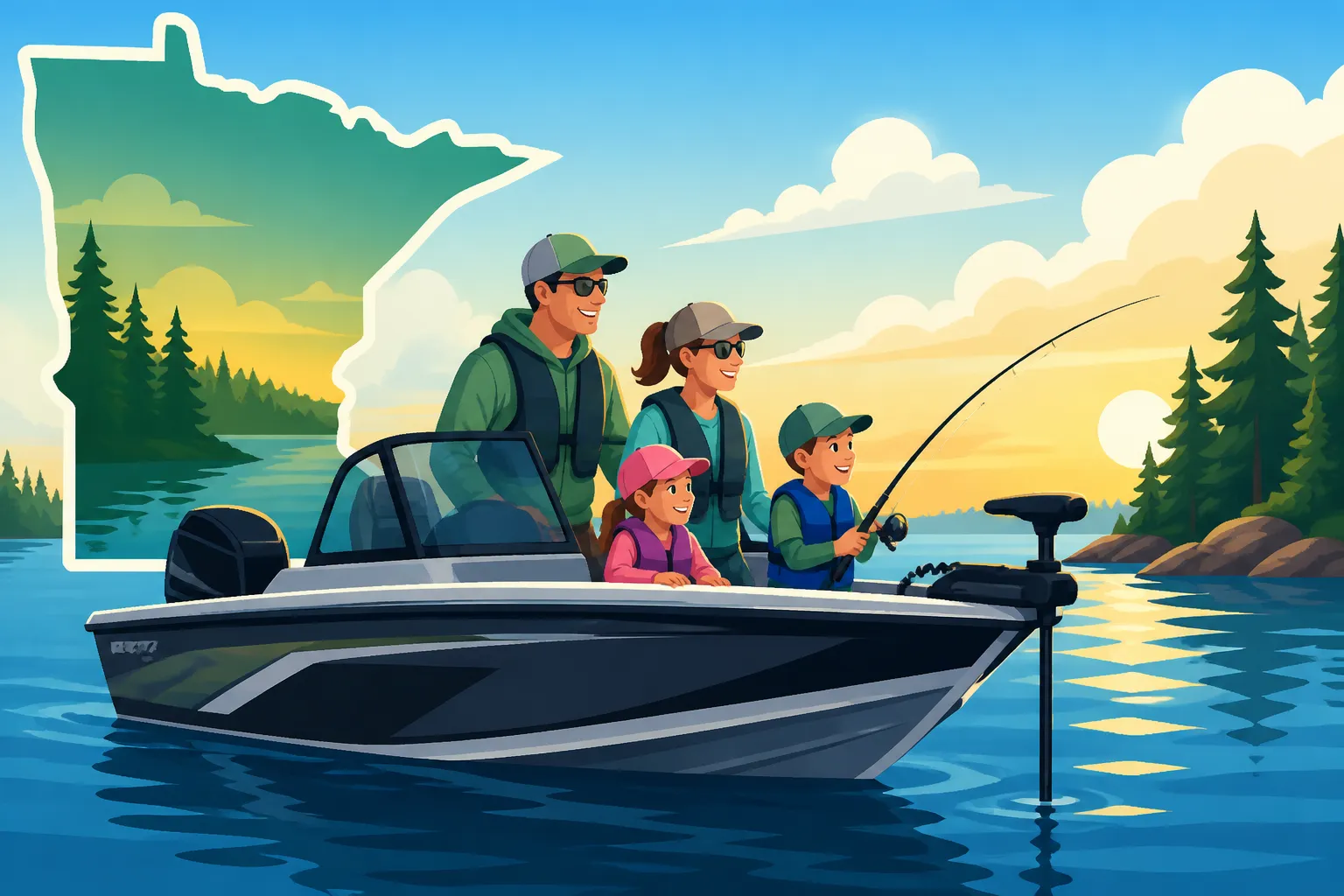
Finding the perfect fishing boat for your family in Minnesota can feel like trying to catch a muskie on a panfish rod – it’s a big challenge! Many families struggle to balance their love for fishing with the need for comfort, safety, and a reasonable price tag. You want a boat that can chase walleyes on Mille Lacs one weekend and comfortably ferry the kids for tubing on Lake Minnetonka the next, all without breaking the bank. This guide is here to cut through the confusion and help you navigate the waters of boat buying, ensuring you find the best value fishing boat that truly fits your family's unique Minnesota adventures.
Understanding What "Value" Means for a Minnesota Family Fishing Boat
When we talk about "value" in a family fishing boat, it's so much more than just the initial price tag you see advertised. It's easy to get caught up in the excitement of a shiny new vessel, but a truly valuable boat delivers on multiple fronts: cost-effectiveness over its lifetime, versatility for both serious angling and family fun, and durability to handle Minnesota's diverse waters. You’re not just buying a boat; you’re investing in countless memories on the water, and that requires a thoughtful approach.
Beyond the Sticker Price: Long-Term Costs and Resale Value
Let's be real, the sticker price is just the beginning of your boat ownership journey. Many first-time buyers, or even seasoned anglers, often overlook the myriad of costs that come with owning a boat in Minnesota. You need to factor in everything from fuel efficiency, especially with today's fluctuating gas prices, to annual maintenance like oil changes, winterization, and occasional repairs. Insurance is another non-negotiable expense, and storage, whether at a marina, a dedicated storage facility, or even in your driveway, adds up over time. Thinking about these ongoing expenses before you buy is crucial for determining true long-term value. For example, a slightly more expensive boat with better fuel economy or a reputation for low maintenance might actually save you money down the line.
Then there’s resale value. In Minnesota, certain boat brands and types hold their value remarkably well, which is a huge consideration if you ever plan to upgrade or sell. Brands like Lund and Alumacraft, for instance, are incredibly popular among Minnesota anglers, and their sturdy aluminum deep-V hulls tend to fetch good prices even after years of use. Pontoons also tend to retain value due to their broad appeal. When you look at a boat, consider its popularity and reputation within our state. A boat that holds its value well means your initial investment is better protected, making it a smarter long-term decision for your family. This aspect significantly contributes to the overall "value" proposition.
Balancing Fishing Functionality with Family Comfort
This is often the biggest tightrope walk for Minnesota families. Dad wants a spacious casting deck and plenty of livewell capacity for those trophy walleye, while the kids and mom might be dreaming of comfy seats, a sun deck for tanning, and a powerful engine for tubing. Trying to find a boat that genuinely excels at both can feel impossible, leading to endless debates and compromises. The trick is to identify your family's core priorities. Is fishing the primary goal, with family fun a close second? Or is it vice-versa?
Many modern boat designs now incorporate clever features to bridge this gap. Convertible bow sections that transform from a casting platform to a comfortable seating area, removable cushions for easy cleaning after a messy fish, or integrated swim ladders and tow pylons are becoming standard on many models. You might have to sacrifice a little bit of dedicated fishing space for more family seating, or vice versa, but the goal is to find that sweet spot where everyone feels catered to. A boat that causes constant arguments on the water isn't a good value, no matter how cheap it was. Consider how a boat’s layout facilitates both serious angling and relaxing family time.
The Minnesota Lake Life: Versatility is Key
Minnesota boasts over 10,000 lakes, each with its own character and fishing challenges. From the vast, sometimes choppy waters of Lake of the Woods to the calm, shallow bays of smaller panfish lakes, your family boat needs to be a jack-of-all-trades. A boat that's perfect for chasing muskie on Lake Vermilion might be overkill for bluegill fishing on a small, calm metro lake. Conversely, a tiny utility boat won't cut it when the winds pick up on Leech Lake. This is where versatility truly defines value.
A boat that can handle various conditions and activities means you don't need multiple boats (unless you're really lucky!). For instance, a well-equipped aluminum deep-V can effectively fish walleye in rough water, but can also pull a tube and offer a decent ride for cruising. A pontoon, while primarily a leisure craft, can be customized with fishing amenities like rod holders, livewells, and even a dedicated fishing station, making it surprisingly capable for panfish or even bass fishing. The key is to think about all the ways your family wants to use the boat throughout the year and across different Minnesota waters. Don't forget to understand the specific rules for different bodies of water, which might influence your choice, like unique regulations for Mille Lacs Walleye Regulations (2026). The more versatile your boat, the more value you extract from your investment in the unique Minnesota lake life.
Top Boat Types for Family Fishing in Minnesota
Navigating the various types of fishing boats can be overwhelming, especially when you’re trying to find that sweet spot for family adventures. In Minnesota, a few boat types stand out as excellent choices for families looking to balance their fishing passion with comfort and budget. Each has its own strengths and weaknesses, so understanding these can help you narrow down your options significantly.
Aluminum Deep-V Boats: The Minnesota Workhorse
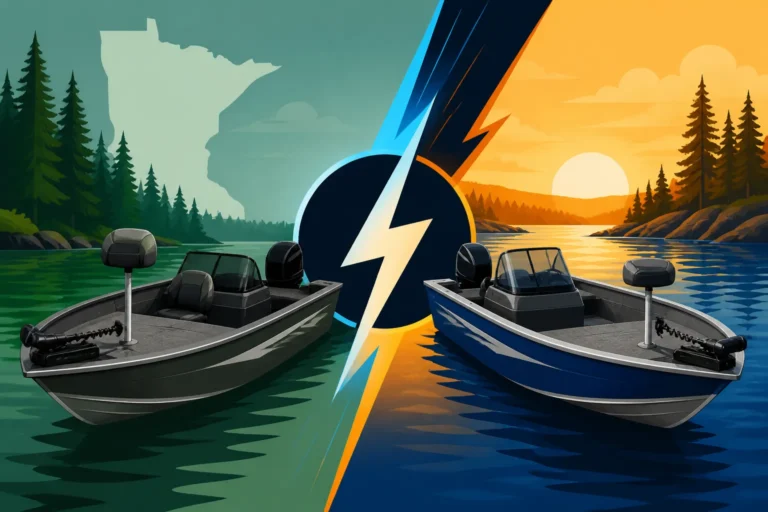
If there’s one boat that embodies Minnesota fishing, it’s the aluminum deep-V. These boats are ubiquitous on our lakes for a reason: they are incredibly durable, handle rough water exceptionally well (perfect for those windy walleye days), and offer a fantastic blend of fishing functionality and reasonable family comfort. Brands like Lund, Alumacraft, and Crestliner are household names here, and for good reason. They build boats that are designed to withstand the rigors of our diverse waters and seasons.
Pros of Deep-V Boats:
- Durability: Aluminum hulls are tough, resisting dents and dings better than fiberglass in many situations, and they don't rot.
- Rough Water Performance: The deep-V hull cuts through chop, providing a drier, more stable ride, which is crucial when fishing big lakes like Lake of the Woods or Lake Winnibigoshish.
- Fuel Efficiency: Generally lighter than fiberglass, many aluminum deep-Vs can be powered effectively with smaller, more fuel-efficient outboard motors, saving you money at the pump.
- Versatility: They are designed first and foremost for fishing, with features like livewells, rod lockers, and casting decks, but many models also offer comfortable seating and ski pylons for family fun. This dual purpose is what makes them such a great value for Minnesota families.
- Resale Value: As mentioned earlier, these boats hold their value extremely well in Minnesota.
Cons of Deep-V Boats:
- Comfort: While they've come a long way, they still can't match the plush seating and spaciousness of a pontoon for pure leisure. Seating is often more utilitarian.
- Space: With a larger family, especially if everyone wants to cast lines, space can feel a bit cramped compared to a pontoon.
- Aesthetics: Some prefer the sleek look of fiberglass, though modern aluminum boats have significantly improved in appearance.
Imagine the Larson family from Brainerd. They love chasing walleye on Gull Lake but also want to take the kids out tubing and swimming. A 17-19 foot Lund Pro-V or Alumacraft Competitor offers dedicated fishing features like a spacious bow casting deck and dual livewells, alongside comfortable stern seating and a removable ski pylon. It’s a perfect balance. They might consider comparing models like the Lund Pro Guide vs Alaskan: Tiller Walleye Boats to find the exact configuration that suits their family's primary needs.
Pontoons: The Family Fun and Fishing Hybrid
Pontoons have absolutely exploded in popularity in Minnesota, and it’s easy to see why. They are essentially floating living rooms, offering unparalleled comfort, space, and stability for family outings. While historically not considered serious fishing boats, modern pontoons have evolved significantly, with many models now featuring dedicated fishing layouts and amenities.
Pros of Pontoons:
- Space and Comfort: This is where pontoons shine. Ample seating, often couches and lounge areas, make them ideal for hosting larger families or groups. Kids have room to move around, and adults can relax in comfort.
- Stability: Their wide, multi-hull design makes them incredibly stable, perfect for little ones or those prone to seasickness. You can walk around without feeling tippy.
- Versatility for Leisure: Beyond fishing, pontoons are perfect for swimming, sunbathing, picnicking, and light tubing. Many come with integrated swim platforms and ladders.
- Customization: You can find pontoons with specific fishing packages that include pedestal seats, rod holders, livewells, and even small casting areas, transforming them into capable fishing platforms for certain species.
Cons of Pontoons:
- Fishing Performance: While improved, they are still not ideal for serious casting or navigating tight fishing spots. Their large footprint and slower speed can be a disadvantage when targeting fast-moving fish or covering lots of water.
- Speed and Maneuverability: Generally slower and less agile than deep-Vs, especially in turns. Wind can also push them around more, making boat control challenging without a robust trolling motor.
- Rough Water: While stable, they can pound and splash more than a deep-V in choppy conditions, making for a less comfortable ride in significant waves.
- Storage and Transport: Their width can make trailering and storage a bit more cumbersome than a traditional V-hull.
Consider the Johnson family from the Twin Cities, who spend their summers on Lake Minnetonka. They need a boat that can comfortably take grandparents, parents, and kids out for an afternoon of cruising, swimming, and maybe some leisurely crappie fishing. A pontoon, perhaps a Crestliner or Bennington model with a fishing package, would be an excellent choice. It provides the space and comfort for all generations, and they can still drop a line for panfish using techniques like How to Use a Slip Bobber for Walleye & Crappie.
Utility or Jon Boats: Budget-Friendly Entry
For families on a tighter budget or those primarily focused on smaller, calmer waters, a utility boat (often called a Jon boat) can be an incredibly practical and value-driven option. These are typically simple, flat-bottomed aluminum boats, no-frills but highly functional.
Pros of Utility/Jon Boats:
- Affordability: This is their strongest suit. They are by far the most budget-friendly option, making boat ownership accessible to many families.
- Easy to Transport and Launch: Lightweight and shallow draft, they are easy to trailer with smaller vehicles and can be launched in virtually any access point.
- Low Maintenance: Simple design means less to go wrong and easier upkeep.
- Great for Shallow Water: Their flat bottom allows them to access very shallow areas where other boats can't go, ideal for backwater panfish or river fishing.
Cons of Utility/Jon Boats:
- Comfort: Minimal seating, if any, and a very basic setup means comfort is not a priority. Expect to bring your own portable seats.
- Limited Space: Space is at a premium, making it challenging for a large family or for multiple anglers to cast simultaneously.
- Rough Water Performance: Their flat bottom makes them pound heavily in even moderate chop and they can be very wet. They are not suitable for large, open lakes on windy days.
- Minimal Amenities: Don't expect livewells, rod lockers, or fancy electronics. It’s a bare-bones fishing platform.
Picture a young family, the Andersons, just getting into fishing. They live near a quiet, small lake perfect for Crappie & Panfish Fishing Techniques. A 14-foot Jon boat with a small outboard and perhaps a portable trolling motor (like those found at Bass Pro Shops or on Amazon) could be their ideal entry into boating. It’s affordable, easy to manage, and gets them out on the water for quality time without a huge investment. While not designed for serious tournament fishing, it offers immense value for simple, enjoyable family outings.
Key Features to Look For in a Family Fishing Boat
Once you've got a handle on the general boat types, it’s time to drill down into the specifics. What features truly make a difference for a family that loves to fish in Minnesota? It's about finding those thoughtful design elements and practical additions that enhance both the fishing experience and the overall comfort and safety for everyone on board.
Layout and Seating Arrangements
The interior layout of your boat is paramount, especially when balancing fishing with family fun. Many traditional fishing boats were designed with maximum casting space in mind, often at the expense of comfortable passenger seating. However, modern designs understand the family dynamic better.
Look for boats with convertible bow areas. These are fantastic – a flat casting deck for Dad in the morning can transform into a padded sun lounge or a comfortable bowrider seating area for the kids in the afternoon. Jump seats in the stern that fold down to create a larger casting platform are another clever feature. Swivel seats for anglers are standard, but ensure there are also fixed, comfortable bench seats or bucket seats for passengers who aren't actively fishing. Some pontoons even feature L-shaped lounges that are perfect for relaxing, while also offering space for a couple of anglers to drop a line from the corners. Prioritize seating that is well-cushioned and offers back support, because long days on the water, especially in choppy conditions, can quickly become uncomfortable. Think about how many people will realistically be on the boat most of the time. If it's usually just you and one child, you might prioritize fishing space. If it's you, your spouse, two kids, and maybe grandma and grandpa, then comfort and ample seating become non-negotiable.
Storage Solutions and Amenities
Boats, especially those meant for families, accumulate stuff. Fishing rods, tackle boxes, life jackets, coolers, towels, sunscreen, snacks, extra clothes, and the kids' toys all need a home. A boat with insufficient or poorly designed storage will quickly become cluttered and frustrating.
Look for dedicated rod storage. This could be in-floor lockers, side wall tubes, or even vertical rod holders. This protects your valuable Best Walleye Rods & Reels from getting stepped on or tangled. Dry storage compartments are critical for keeping towels and electronics safe from spray. Many boats also offer integrated cooler spaces, which are a huge convenience, or dedicated spots for a removable cooler like a Yeti or Igloo. If you plan on doing a lot of panfish fishing, a livewell is a must-have, but for families, consider a convertible livewell that can also serve as a cooler or extra dry storage when not used for fish. A bimini top for shade is a non-negotiable amenity for family comfort on sunny Minnesota days, protecting everyone from sunburn. And if swimming or tubing is on the agenda, a sturdy, easily accessible swim ladder is essential for safety and convenience. Even small details like cup holders and a small trash receptacle can make a huge difference in keeping the boat tidy and enjoyable for everyone.
Power and Trolling Motor Considerations
The engine choice is a crucial decision, impacting both performance and long-term costs. For a family fishing boat, you need enough power to get across a large lake safely and quickly, pull a tube if desired, and still be relatively fuel-efficient. Don't underpower your boat – it can be dangerous and frustrating, especially on a windy day when you need to quickly get back to shore. Most aluminum deep-Vs in the 17-19 foot range will perform well with a 115-150 horsepower outboard, while pontoons might need slightly more power, often in the 90-150 HP range, to feel responsive.
Beyond the main engine, a reliable trolling motor is an absolute game-changer for serious fishing. Brands like Minn Kota are practically standard equipment on Minnesota fishing boats. A bow-mounted electric trolling motor with GPS capabilities (like a Minn Kota Terrova or Ultrex) allows for precise boat control, spot-locking over structure, and quiet maneuvering, which is essential for working a weed line for bass or hovering over a deep walleye hum. While it's an added expense, the value it brings to your fishing success and ease of boat control for everyone on board is immense. You can read more about options in our Best Trolling Motors: Minn Kota Buyer's Guide. Consider this a vital piece of equipment for maximizing your fishing enjoyment, as it frees you up from constantly tending the main engine, allowing you to focus on the fishing and your family.
Buying Your Family Fishing Boat: New vs. Used & Where to Look
So, you've got a good idea of what kind of boat features will best serve your family. Now comes the exciting, and sometimes daunting, part: actually finding and buying it. The decision between a new or used boat, and where you choose to shop, can significantly impact your "value" equation.
The Pros and Cons of New Boats
There's nothing quite like the smell of a brand-new boat. When you buy new, you're getting the latest technology, fresh warranties covering everything from the hull to the engine, and the ability to customize your boat exactly how you want it. You pick the colors, the electronics package (perhaps a top-tier Best Fish Finders & Electronics for Minnesota Fishing), and all the optional accessories. This peace of mind and personalization certainly holds a lot of appeal.
Pros of New Boats:
- Warranty: Full factory warranties on the engine, hull, and components provide significant peace of mind.
- Latest Technology: You get the newest innovations in design, electronics, and engine efficiency.
- Customization: The ability to choose your exact specifications and accessories.
- No Hidden Issues: You know the boat’s history (or lack thereof), and it's been cared for from day one.
Cons of New Boats:
- Higher Price Tag: New boats come with a premium price, which can stretch budgets considerably.
- Depreciation: Like cars, boats depreciate significantly in their first few years.
- Waiting Lists: Popular models, especially from brands like Lund or Ranger, can have long waiting lists, meaning you might not get your boat for the current fishing season.
A new boat is a fantastic option if your budget allows for it and you value the assurance of a warranty and modern features. For many, it's a dream purchase that promises years of worry-free family fun.
Finding Value in the Used Market
For families truly seeking the "best value," the used boat market often presents the most compelling opportunities. You can get significantly more boat for your money by opting for a well-maintained used model. A boat that's a few years old will have already taken the biggest depreciation hit, meaning your dollar goes a lot further.
Pros of Used Boats:
- Significant Savings: You can often buy a larger, more feature-rich boat used for the same price as a smaller, new entry-level model.
- Lower Depreciation: The steepest depreciation has already occurred, making your investment more stable.
- Instant Gratification: Used boats are usually available immediately, so you can hit the water sooner.
- Proven Performance: You can often find reviews and feedback on specific older models, giving you a better idea of their long-term performance and reliability.
Cons of Used Boats:
- Potential for Hidden Problems: This is the biggest risk. Without a warranty, you're responsible for any issues that arise. A thorough inspection is paramount.
- Less Customization: You get what's available; modifications might be needed to fit your exact preferences.
- Older Technology: Features and electronics might not be as advanced as newer models.
- Wear and Tear: Expect some cosmetic wear, and components might be nearing the end of their lifespan.
When looking at used boats, always get a marine survey or have a qualified mechanic inspect the engine and critical components. This small investment can save you thousands down the road. Check the condition of the trailer, electronics, and even the upholstery. Sometimes, a boat that needs a little TLC on the cosmetic front can be a fantastic deal if the engine and hull are sound.
Dealerships, Private Sellers, and Online Marketplaces
Where you look for your boat also plays a big role. Each avenue has its own set of advantages and disadvantages.
Dealerships: Buying from a local Minnesota dealership, such as MarineMax or a local independent dealer, offers several benefits. They often have both new and certified used inventory, provide financing options, handle all the paperwork, and can offer after-sale support, service, and rigging. Many Minnesota dealerships specialize in fishing boats and understand our local waters, so they can provide expert advice. While prices might be a bit higher than private sales, the convenience and assurance can be worth it. Even large retailers like Bass Pro Shops often have boat sales centers, offering a wide selection and nationwide support.
Private Sellers: Buying directly from an individual can often yield the best prices, as you cut out the dealer's overhead. This is where you might find a true hidden gem. However, it requires more diligence on your part. You'll need to arrange your own financing, handle the title transfer and registration (including understanding Minnesota Fishing License: Cost, Types & How to Buy (2026) if you’re a new angler), and thoroughly inspect the boat yourself or hire a professional. Be wary of deals that seem too good to be true, and always meet in a safe, public place.
Online Marketplaces: Websites like Facebook Marketplace, Craigslist, and specialized boat listing sites (e.g., Boat Trader, YachtWorld) have become incredibly popular. They offer a vast selection, allowing you to browse many options from the comfort of your home. However, you'll encounter a mix of private sellers and dealers, and you'll need to be savvy to filter through the listings. These platforms are excellent for getting a sense of market prices and what's available in your area. You might even find some great deals on accessories or components on sites like Amazon to outfit your newly acquired boat. Regardless of where you buy, remember to prioritize safety, inspect thoroughly, and consider the long-term implications for your family's enjoyment on Minnesota's beautiful waters.
| Boat Type | Average New Price Range (entry-mid) | Family Comfort | Fishing Performance | Rough Water Capability | Typical Uses |
|---|---|---|---|---|---|
| Aluminum Deep-V | $25,000 – $60,000 | Good | Excellent | Excellent | Walleye, Pike, Bass, Tubing, Cruising |
| Pontoon | $20,000 – $70,000 | Excellent | Good | Fair-Good | Cruising, Swimming, Panfish, Light Bass, Tubing |
| Utility/Jon Boat | $3,000 – $15,000 (boat only) | Fair | Fair-Good | Poor-Fair | Panfish, River Fishing, Small Lake Exploration |
Disclaimer
Please note that fishing regulations, boat registration requirements, and specific lake conditions in Minnesota can change. Always consult the latest Minnesota Department of Natural Resources (DNR) regulations and local advisories before heading out on the water. This guide provides general information and recommendations.