Best Walleye Lures: Jigs, Cranks & Spinners
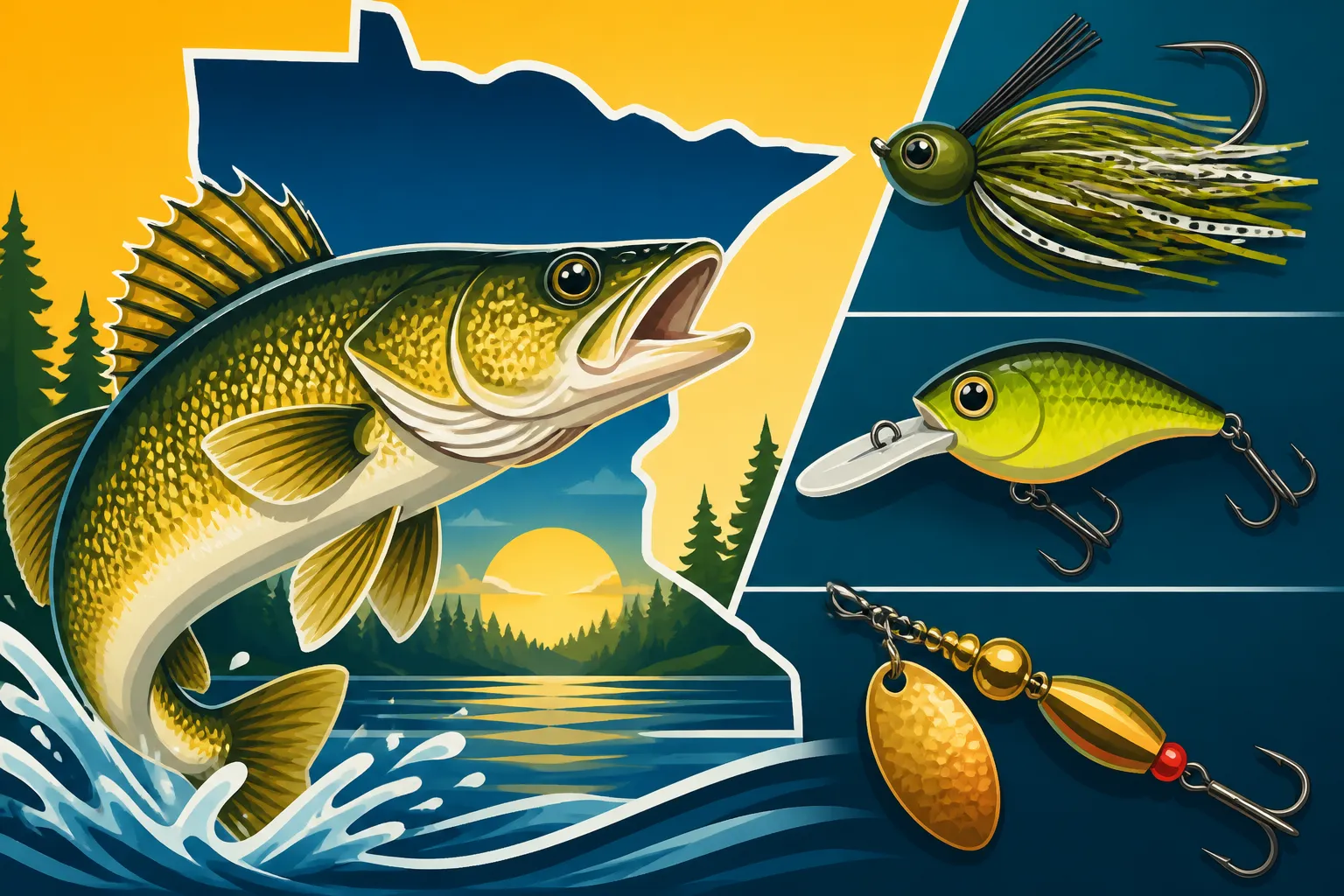
Trying to figure out which walleye lure to tie on can feel like solving a riddle, especially with how finicky these fish can be in Minnesota's diverse waters. You've got a tackle box overflowing, but knowing when to use that jig versus a crankbait or a spinner rig is the real secret sauce. This comprehensive guide is here to cut through the confusion, offering a deep dive into the best walleye lures – focusing on jigs, crankbaits, and spinner rigs – and how to effectively use them across the seasons in our beloved Land of 10,000 Lakes.
The Versatility of Jigs for Walleye
Jigs are arguably the most fundamental and versatile lure in any walleye angler's arsenal. From the cold waters of early spring to the depths of mid-summer, a properly presented jig can often be the ticket to consistent walleye action. They allow for incredible feel and control, making them perfect for precise presentations whether you're vertical jigging over structure or pitching into weed edges.
Jig Styles and Their Applications
Not all jigs are created equal, and understanding the nuances of different styles can dramatically improve your success. The classic round-head jig is a workhorse, great for nearly any situation. However, specialized designs often excel in specific scenarios. Stand-up jigs, for instance, are fantastic because they keep your bait upright off the bottom, presenting it perfectly to curious walleye without burying in muck or weeds. Banana-head jigs, with their elongated shape, cut through current effectively and can be excellent when drifting rivers or fishing strong lake currents.
Then there are unique variations like mushroom-head jigs, which often provide a more subtle fall, or football jigs, which are great for crawling over rocky bottoms without getting snagged as easily. Each design has its own hydrodynamic properties that influence how the lure falls, moves, and interacts with the bottom, making it critical to choose one that matches your presentation style and the prevailing conditions. If you're looking to master this core technique, understanding the fundamentals of Jigging for Walleye: Jig & Minnow Basics is a fantastic starting point.
The Importance of Weight and Color
Selecting the right jig weight is paramount. Too light, and you won't feel the bottom or even a subtle bite in wind or current. Too heavy, and your presentation will look unnatural, plunging to the bottom like a rock. A general rule of thumb for lakes like Lake Vermilion or Leech Lake is to use the lightest jig you can get away with while still maintaining bottom contact and feeling bites. This might mean a 1/8 oz jig in calm, shallow waters, or stepping up to a 3/8 oz or even 1/2 oz in deeper water, strong winds, or heavy currents. It's often a game of trial and error at the beginning of each outing.
Color, while sometimes overthought, absolutely plays a role. Natural colors like black, brown, green pumpkin, and pearl are often excellent in clear water or on bright days, mimicking natural forage. However, don't shy away from brighter, more aggressive colors like chartreuse, orange, or hot pink, especially in stained or dark water, during low light conditions, or when walleye are particularly aggressive. UV-reflective paints can also give your jig an edge in deeper or darker environments. Understanding Best Jig Color for Walleye in Stained Water can provide additional insights into this critical decision.
Tipping Jigs with Live Bait or Plastics
While jigs can be fished bare, tipping them is where the magic often happens for walleye. Live bait is the traditional choice and often the most effective. Minnows, particularly shiners, fatheads, or even larger creek chubs, are deadly when hooked lightly through the lips or dorsal fin on a jig. They provide natural scent, flash, and subtle movement that walleye find irresistible. The key is to keep them lively and allow them to dart and twitch naturally.
Leeches are another fantastic option, especially in summer. They are incredibly hardy, stay on the hook well, and offer a unique undulating action. Nightcrawlers, while more commonly associated with spinner rigs, can also be effective on jigs, particularly in warmer water. For those times when live bait is inconvenient or when fish are highly aggressive, soft plastics are an excellent alternative. Paddle tails, curly tails, and fluke-style plastics offer various actions and can be worked aggressively or subtly. Brands like Berkley Gulp! baits are designed to release scent, often mimicking the effectiveness of live bait with the added durability of plastic. For a deeper dive into the most effective live bait options, check out Best Live Bait for Walleye (Leeches, Minnows, Crawlers).
Crankbaits: Covering Water and Triggering Bites
Crankbaits are phenomenal for covering vast expanses of water, whether you're trolling open basins or casting along vast weed lines. Their built-in wobbling action, combined with their ability to dive to specific depths, makes them incredibly efficient tools for locating and catching active walleye.
Diving Depths and Lip Designs
Crankbaits come in an astounding array of shapes and sizes, but their diving depth is primarily determined by their lip design. Shallow divers, often with a short, wide lip, are perfect for targeting walleye in less than 10 feet of water, especially during the early season or when fish move onto shallow flats to feed. These might include classic shallow-running Shad Raps or Berkley Flicker Shads. They're excellent for casting to shorelines, over submerged weeds, or trolling in areas where depth changes rapidly.
Mid-divers and deep divers feature longer, more angled lips, allowing them to reach depths of 10-25 feet or more. These are your go-to lures for summer walleye holding on deeper breaks, humps, or main lake basins. Some deep-diving crankbaits are designed for extreme depths, often used with leadcore line or downriggers to target suspend fish or reach specific thermocline depths. Knowing which profile dives to which depth is crucial for presenting your lure exactly where the fish are holding. For more on how speed affects depth and action, exploring Trolling Crankbaits for Walleye: Speed & Depth can be incredibly helpful.
Trolling vs. Casting Crankbaits
The decision to troll or cast a crankbait largely depends on the water you're fishing and the activity level of the walleye. Trolling is a highly effective method for covering large areas quickly, making it ideal for searching out fish on expansive lakes like Lake of the Woods or Lake Superior. By deploying multiple lines at varying depths and distances behind the boat, you can present a wide spread of lures until you hit on a productive pattern. Trolling speed is critical, often ranging from 1.0 to 2.5 mph, depending on water temperature and fish mood. Line choice, such as monofilament for stretch and shock absorption or superline for direct feel, also impacts trolling depth and lure action.
Casting crankbaits is best when you've pinpointed specific structures like rocky points, weed edges, submerged timber, or current seams in rivers. It allows for a more targeted approach, letting you work the lure precisely through key strike zones. A common technique is to cast the crankbait, allow it to dive, and then retrieve it with a steady, moderate pace, occasionally incorporating pauses or erratic twitches to imitate a wounded baitfish. Both methods have their merits, and understanding Casting vs Trolling for Walleye: When to Use Each can help you decide which approach is best for your current situation.
Popular Crankbait Profiles and Colors
Crankbaits generally mimic two primary forage types: shad (a deeper body profile) and minnow (a slender body profile). Both are highly effective, but one might outperform the other depending on the dominant baitfish in a particular lake. Popular examples include the Rapala Shad Rap and its deep-diving cousin, the Deep Husky Jerk. Other notable brands like Berkley's Flicker Shad series and Bagley's Rattlin' B are also staples in many walleye anglers' boxes. Jointed crankbaits offer an exaggerated swimming action that can be irresistible to aggressive walleye.
Color selection mirrors jig color principles: natural baitfish patterns (perch, shiner, bluegill) in clear water or sunny conditions, and brighter, more aggressive patterns like firetiger, purpledescent, or fluorescent orange in stained water, low light, or during overcast days. Sometimes, a subtle, almost translucent pattern can work wonders when fish are finicky. It's always wise to have a selection of both natural and bright options available. When shopping at places like Bass Pro Shops or searching online at Amazon, you'll find an incredible array of options; start with proven patterns for your local waters.
Spinner Rigs and Crawler Harnesses: The Live Bait Advantage
When walleye are scattered, finicky, or simply prefer the tantalizing scent and action of live bait, spinner rigs and crawler harnesses become indispensable. These rigs combine the flash and vibration of a spinning blade with the undeniable appeal of a natural offering, making them deadly effective in many situations.
Components of a Spinner Rig
A basic spinner rig, often referred to as a crawler harness, is deceptively simple yet highly effective. The core components include a clevis, a spinning blade, colored beads, and a snell (leader) with one or two hooks. The blade is what generates flash and vibration, calling walleye in from a distance. Colorado blades offer the most thumping vibration and lift, making them great for slow speeds and dark water. Indiana blades provide a good balance of flash and vibration, while Willowleaf blades offer maximum flash with less vibration, ideal for faster trolling or clearer water. The beads not only add color attraction but also serve to separate the blade from the knot, allowing it to spin freely.
The snell itself is typically made of fluorocarbon line, known for its invisibility underwater, and ranges in length from a few feet to over six feet. The choice of hooks, usually #4 or #2 octopus-style, ensures a good hook-up ratio, especially with the delicate mouths of walleye. Some anglers prefer a single hook when tipping with leeches, while two hooks are standard for longer nightcrawlers to ensure proper presentation and hook exposure. For a comprehensive overview of setup and usage, check out Spinner Rigs for Walleye (Crawler Harness).
Fishing Spinner Rigs with Live Bait
Nightcrawlers are undoubtedly the king of baits for spinner rigs. To rig a nightcrawler, you typically thread the first hook through the very tip of the worm's head, then bring the second hook (if using two) through the mid-section, leaving a portion of the tail to wiggle freely. This ensures the worm trails enticingly behind the spinning blade. The natural scent and squirming action of a properly rigged nightcrawler are often too much for a walleye to resist.
While nightcrawlers are dominant, leeches can also be used effectively on spinner rigs, especially when walleye prefer a more compact bait profile. A single leech hooked through its sucker on a one-hook snell allows it to swim freely behind the blade. Minnows can also be used, though they are more commonly paired with jigs or plain snells. The key with all live bait presentations is to use fresh, lively bait, as a sluggish worm or leech will draw far fewer bites.
Bottom Bouncers and Weighting Options
To get a spinner rig down to the fish-holding depths and keep it there, various weighting options are available. The most common and popular choice in Minnesota is the bottom bouncer. This L-shaped weight design is specifically engineered to "bounce" along the lake bottom without snagging excessively, allowing your spinner rig to trail just above the structure where walleye often lurk. Bottom bouncers come in a range of weights, from 1/2 oz for shallower applications to 3 oz or more for deep water or strong currents. Matching the bouncer weight to your trolling speed and depth is crucial for maintaining proper bottom contact.
Other weighting options include three-way rigs, where a heavy sinker is tied to a dropper line, and the spinner rig is tied to a separate leader, allowing it to suspend above the bottom. Snap weights can also be used with standard monofilament or superline to reach specific depths while trolling. These are particularly useful when you need to quickly adjust depth without re-rigging. Understanding Bottom Bouncer & Crawler Harness for Walleye provides even more detailed guidance on how to employ these effective weighting systems.
Seasonal Strategies for Lure Selection
Walleye behavior changes dramatically throughout the year in response to water temperature, spawning cycles, and forage availability. Matching your lure selection and presentation to these seasonal patterns is key to consistent success.
Spring Walleye Opener to Early Summer
Spring in Minnesota, from the much-anticipated walleye opener to early summer, is all about cold water and fish recovering from the spawn. Walleye are often found in shallower areas, near spawning grounds, river mouths, and bays that warm up fastest. During this period, slower presentations are usually most effective. Jigs tipped with minnows are absolutely dominant, allowing you to slowly work areas where fish are staging or actively feeding. Think a subtle lift-and-drop presentation, or even just dragging the jig along the bottom.
Shallow-running crankbaits can also be very effective, particularly on warmer, sunny days when walleye might be cruising weed lines or rocky points in search of an easy meal. Trolling slowly with these baits can cover water and entice a reaction strike. As the water warms slightly, slip bobbers become an excellent tool for suspending a live minnow or leech just above potential structure, offering a subtle, natural presentation. If you're planning your early season trips, familiarizing yourself with Early Season Walleye After the Opener will give you a significant advantage.
Summer Walleye Patterns
As Minnesota's lakes fully warm up, walleye transition to deeper water and more predictable patterns. Summer walleye often relate to main lake structure like humps, reefs, deep points, and the thermocline (the layer where water temperature changes rapidly). This is prime time for trolling deep-diving crankbaits, especially on large lakes like Lake of the Woods, where fish might be suspended over open water or relating to vast mud flats. Using leadcore line or planer boards can help present multiple lures at precise depths.
Bottom bouncing with spinner rigs tipped with nightcrawlers or leeches is another summer staple, allowing you to meticulously work deep breaks and contour lines. Look for transitions from hard to soft bottom, or areas with scattered rock. When the sun goes down, walleye often move shallower to feed under the cover of darkness. This is when shallow-running crankbaits or even jigs fished with minnows or plastics can produce fantastic results in relatively shallow water. For more on how to target these fish, exploring Summer Walleye Patterns: Deep Structure is highly recommended.
Fall Walleye Turnover to Ice-Up
Fall is a dynamic and often incredibly productive time for walleye fishing in Minnesota. After the initial "turnover" period, when the water column mixes and can make fishing tough, walleye become incredibly aggressive, fattening up for winter. They will often move back to shallower depths, particularly on rocky main lake points, sharp breaks, and green weed beds, actively chasing baitfish.
Larger crankbaits, retrieved with an aggressive, erratic cadence, can trigger savage strikes. Snap jigging, where you aggressively rip a jig (often with plastic or a minnow) off the bottom and let it fall on a semi-slack line, is also a highly effective cold-water technique. As water temperatures continue to drop toward freezing, walleye may once again move to deeper, more stable environments before ice-up, congregating on deep main lake structure where vertical jigging or slow-trolling deep cranks can still be productive. Delving into Fall Walleye Fishing: Turnover & Cold Water can help you navigate this transition period.
Mastering Lure Presentation and Color Choices
Choosing the right lure is only half the battle; knowing how to present it effectively and when to adjust colors can make all the difference between a slow day and a banner day on the water.
Understanding Water Clarity and Light
Water clarity plays a huge role in walleye lure selection. In clear lakes, like many found in the Brainerd Lakes Area or parts of Lake Vermilion, walleye rely heavily on their eyesight. This means natural colors and subtle presentations are often best. Think natural baitfish patterns in your crankbaits, and shades of green, brown, or black for your jigs and plastics. Too much flash or overly bright colors can spook fish in these conditions.
Conversely, in stained or murky waters, such as Upper Red Lake or some of the larger river systems, visibility is limited. Here, walleye use their lateral line to detect vibrations and their keen low-light vision. This is where bright, high-contrast colors like chartreuse, orange, and firetiger truly shine. Lures with strong vibration (like a Colorado blade on a spinner rig or a rattling crankbait) become more effective, as they help fish locate your bait. Low light conditions, whether at dawn, dusk, or on heavily overcast days, also often favor brighter colors, even in relatively clear water, as walleye's eye structure allows them to see well in dim conditions.
| Water Clarity | Light Conditions | Recommended Lure Colors | Lure Characteristics |
|---|---|---|---|
| Clear | Bright Sun | Natural (silver, perch, shiner, green) | Subtle, realistic, low flash |
| Clear | Low Light/Overcast | Natural, sometimes bright (chartreuse, orange) | Moderate flash/vibration |
| Stained/Murky | Any | Bright (chartreuse, orange, firetiger) | High vibration, strong flash |
| Stained/Murky | Low Light/Overcast | Fluorescent, darker silhouettes (black/blue) | Maximum vibration |
Speed, Action, and Retrieve Techniques
The speed and action you impart to your lure are crucial for triggering strikes. Walleye are often described as "moody," and their willingness to chase or react can change by the hour. A slow, methodical retrieve is often best in cold water or when fish are lethargic, giving them plenty of time to inspect and commit. This might mean slowly dragging a jig, or trolling a crankbait just above stall speed.
When fish are more aggressive, a faster retrieve, aggressive snaps, or erratic pauses can mimic fleeing baitfish and trigger a reaction strike. This is where snap jigging comes into play, or rapidly ripping a crankbait through the water column. For trolling, subtle changes in boat speed can often be the difference-maker, causing your crankbaits or spinner rigs to speed up and slow down, creating an enticing "surge" in their action. Constantly experimenting with different speeds and retrieve cadences until you find what the walleye prefer is a hallmark of successful angling.
Reading Your Electronics and Adjusting
Modern fish finders and sonar units are powerful tools for walleye anglers, and knowing how to interpret what they're telling you can directly influence your lure choices and presentation. Using your electronics to locate schools of baitfish, identify subtle changes in bottom composition, or mark individual walleye holding tight to structure is invaluable. If you're seeing fish suspended high in the water column, a deep-diving crankbait trolled through that zone might be more effective than a bottom-hugging jig or spinner. Conversely, if fish are hugging the bottom on a rocky hump, a vertical jig or a bottom bouncer rig would be the better choice. Improving your ability to use these tools can drastically increase your catch rate; check out How to Catch More Fish With a Fish Finder for an in-depth guide.
Moreover, pay attention to how fish react (or don't react) to your lures on your sonar screen, if you have forward-facing sonar. Sometimes, a walleye might approach your lure but turn away. This is your cue to change something – perhaps the lure color, size, retrieve speed, or even the type of lure entirely. The fish are always providing feedback, and your electronics are the best way to listen.
Essential Gear Beyond the Lure
While lures are the stars of the show, they're only as good as the supporting cast. Having the right rod, reel, line, and accessories can enhance your presentation, improve your hook-up ratio, and make your time on the water more enjoyable and productive.
Rods, Reels, and Line for Walleye
For jigs and spinner rigs, which often require sensitivity and a lighter touch, a medium-light to medium power spinning rod, typically 6'6" to 7'6" in length with a fast or extra-fast action, is ideal. This combination allows for precise casting, excellent feel for subtle bites, and enough backbone to set the hook. Pair this with a smooth spinning reel in the 2000-3000 size range, spooled with 6-10 lb braided line and a fluorocarbon leader for sensitivity and stealth.
When trolling crankbaits or using heavier bottom bouncers, a medium to medium-heavy power casting or trolling rod, often 7' to 8'6" in length, is more appropriate. These rods need more backbone to handle the pull of larger lures and to absorb the shock of a strike while trolling. A baitcasting reel with a reliable drag system, spooled with 10-14 lb monofilament or braided line, is a common choice for these applications. The stretch of monofilament can be an advantage when trolling, while braid offers increased sensitivity and strength. For more detailed recommendations on pairing your tackle, exploring Best Walleye Rods & Reels can provide tailored advice.
Tackle Boxes and Storage
A well-organized tackle box is a true angler's friend. When you're out on the water, you don't want to be fumbling through a disorganized mess while the bite is on. Using clear, modular utility boxes (like those from Plano or Flambeau) allows you to categorize your lures by type, size, or color, making it easy to find exactly what you need. Dedicate separate boxes for jigs, crankbaits, and spinner rig components. This not only saves time but also protects your lures from damage and keeps hooks from tangling.
Many anglers find soft-sided tackle bags more convenient for boat fishing, as they are lighter and often feature external pockets for quick access to tools. When you're stocking up, popular retailers like Bass Pro Shops or online platforms such as Amazon offer a vast selection of tackle storage solutions to fit any style of fishing and budget. Investing in good organization will pay dividends in efficiency and enjoyment.
Other Essential Accessories
Beyond your rods, reels, and lures, a few key accessories can make your walleye fishing experience significantly smoother. A good pair of long-nose pliers or hook removers is essential for safely extracting hooks from a walleye's mouth, especially if you plan to practice catch and release. Line cutters or sharp scissors are crucial for quickly tying knots and changing lures.
Perhaps most overlooked, but incredibly important, is a quality landing net. Walleye, especially larger ones, can be lost right at the boat if you don't have a net. Look for a net with a rubberized or knotless mesh to protect the fish's slime coat, particularly if you intend to release them. This helps ensure the fish has the best chance of survival. A reliable headlamp or flashlight is also invaluable for early morning or late evening fishing, when the walleye bite often heats up. For a complete checklist of items to bring on your next outing, delve into Best Gear for Walleye Fishing in Minnesota.
Disclaimer
The information provided in this guide is for general informational purposes only and should not be considered legal advice. Fishing regulations, seasons, and limits in Minnesota can change. Always consult the most current Minnesota Department of Natural Resources (DNR) fishing regulations before heading out on the water.