White Crappie Season & Limits in Minnesota
Navigating Minnesota's fishing regulations can sometimes feel like trying to untangle a fishing line after a particularly enthusiastic cast – a little confusing, a lot to keep track of, and essential to get right. When it comes to popular panfish like white crappie, anglers often wonder if there are special rules for these feisty fighters. This comprehensive guide is here to cut through the confusion, clearly laying out the white crappie season and limits in Minnesota so you can fish with confidence and stay on the right side of the law.
Understanding White Crappie in Minnesota
Before we dive into the nitty-gritty of regulations, let's make sure we're all on the same page about what exactly a white crappie is. Minnesota is blessed with both black crappie and white crappie, and while they're both fantastic fish to catch and eat, there are some subtle differences that can be helpful for identification, especially when regulations might differentiate them (though for crappie, the rules are usually combined).
Identifying White Crappie vs. Black Crappie
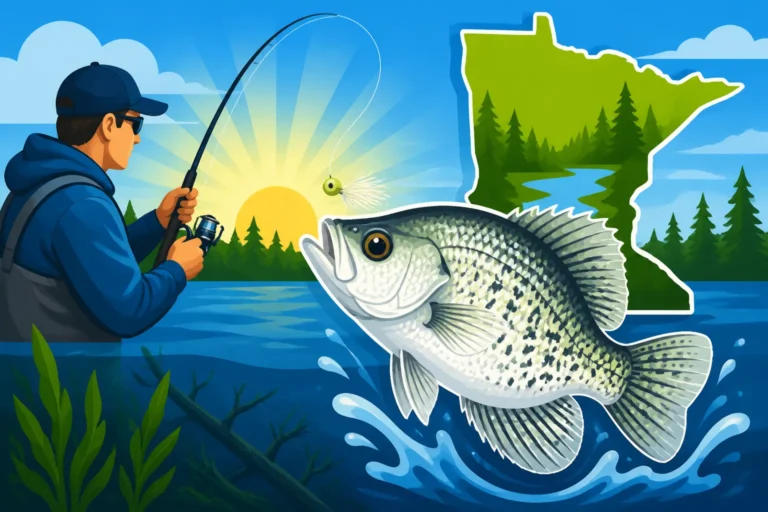
It’s easy to mix up your crappies, and honestly, many anglers don't give it a second thought. But knowing the difference can be a fun bit of trivia and, occasionally, genuinely useful. White crappie generally have a more elongated, slender body shape compared to the black crappie's rounder, deeper body. The most reliable visual cue, however, is counting the dorsal fin spines. White crappie typically have 5 or 6 dorsal spines, while black crappie boast 7 or 8. Another characteristic, though sometimes less distinct, is the pattern: white crappie often have faint, vertical bars on their sides, whereas black crappie tend to have more random speckling. Both are beautiful fish, but those small details are key. If you're keen on honing your fish identification skills, our full guide on Black Crappie vs White Crappie goes into even more detail.
Why White Crappie Regulations Matter
You might think, "They're just crappies, why all the fuss with regulations?" But the Minnesota Department of Natural Resources (DNR) sets these rules for a very important reason: to maintain healthy fish populations for future generations of anglers. Crappie populations can be quite sensitive to fishing pressure, especially in smaller lakes where they might be prone to stunting if too many are harvested, or conversely, overharvest if large numbers of big fish are taken. Regulations are a tool to balance angler enjoyment with ecological sustainability. They ensure that we can all continue to enjoy chasing these delicious panfish for years to come, keeping the fishing vibrant across the state.
White Crappie Seasons and General Regulations
One of the beauties of fishing for crappies in Minnesota is that their season is open nearly year-round, offering ample opportunities whether the ice is thick or the summer sun is blazing. However, "open season" doesn't mean "no rules." There are still important daily bag and possession limits to observe.
Statewide Open Season for Crappie
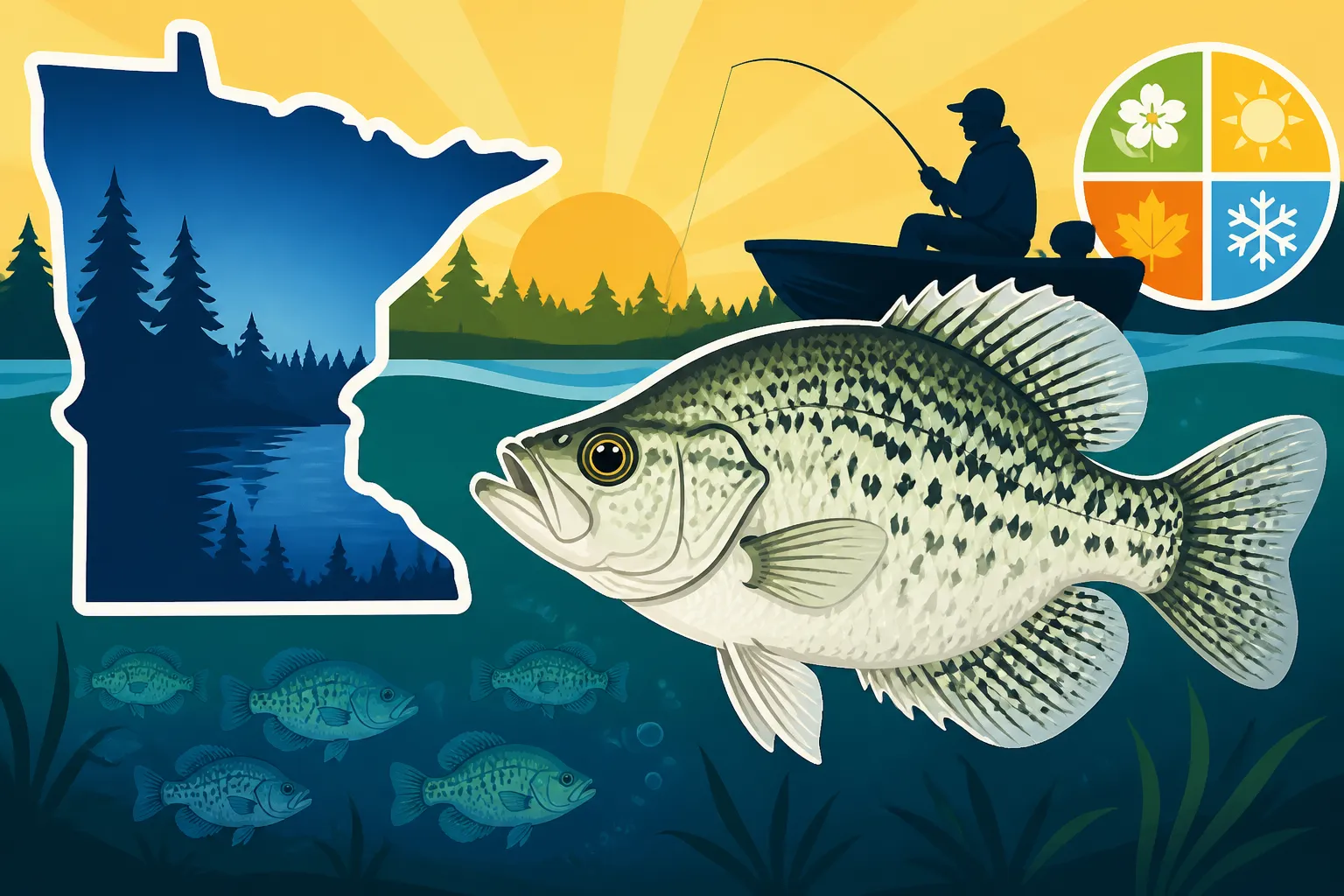
Good news for crappie fanatics: for most of Minnesota, the fishing season for both black and white crappie is continuous. This means you can pursue them all year long! Whether you're dropping a line through the ice in January, chasing them in the spring spawn, targeting them on deep weed lines in summer, or finding them schooled up in the fall, crappie fishing is always on the table. This continuous season offers incredible flexibility for anglers, making crappies a fantastic target species for any time of year. You can learn more about general fishing timelines in our article on Minnesota Fishing Seasons & Opener Dates (2026).
Daily Bag and Possession Limits
While the season is continuous, the limits on how many crappies you can keep are strictly enforced. The statewide regulation for crappie is a combined limit for both black and white crappie.
Statewide Crappie Limits:
- Daily Bag Limit: 10 crappies
- Possession Limit: 10 crappies
The daily bag limit is the maximum number of crappies you can harvest in a single calendar day. The possession limit, on the other hand, is the maximum number of crappies you can have on your person, in your cooler, in your vehicle, or at your temporary lodging at any given time. This means if you go out fishing multiple days in a row without consuming your catch, you still cannot exceed the possession limit. It’s a common point of confusion, but essential to understand. Our broader guide on Minnesota Fishing Limits: Bag & Possession (2026) covers this concept across all species.
It's important to note that these limits are statewide general regulations. Minnesota's waters are incredibly diverse, and the DNR manages individual lakes and rivers with specific goals in mind. Because of this, some bodies of water may have special regulations that differ from these general statewide rules. This is where it gets tricky, and where careful research becomes your best friend.
Navigating Special White Crappie Regulations
This is arguably the most critical section for any Minnesota crappie angler. While the statewide limits are straightforward, many of our favorite crappie lakes have specific rules designed to protect or enhance their unique fisheries. Missing these can lead to a hefty fine, so paying attention is key.
Lake-Specific Exceptions and Management Goals
Why would a lake have different crappie rules? It all comes down to science and management. A lake might have a special regulation for crappie if:
- Crappie populations are stunted: If a lake has too many small crappies and not enough larger ones, the DNR might implement a reduced bag limit or a protected slot limit to encourage anglers to harvest smaller fish and allow the remaining fish to grow bigger.
- Trophy fishery potential: Conversely, if a lake has the potential to produce truly large crappies, a protected slot or a reduced bag limit might be put in place to help more fish reach that trophy size.
- Heavy fishing pressure: Extremely popular lakes can see their crappie populations quickly depleted. Special regulations help distribute the harvest or reduce it to sustainable levels.
- Research or rehabilitation: Sometimes, specific rules are part of a broader study or an effort to restore a struggling crappie population.
You'll find these exceptions in popular crappie destinations, sometimes referred to as "designate crappie lakes." For instance, a lake known for large crappies might have a daily limit of 5 instead of 10, or a slot limit that requires you to release all crappies between 10 and 12 inches, for example. These are not arbitrary rules; they are carefully crafted by fisheries biologists to ensure the long-term health of that specific lake's ecosystem.
How to Find Specific Lake Regulations
This is the most crucial piece of advice for any angler in Minnesota: always check the current Minnesota Fishing Regulations booklet or the DNR website for the specific lake you plan to fish. Relying on old information, hearsay from a buddy, or general statewide rules without verifying is a recipe for trouble.
Here's how you can find the most up-to-date information:
- The Minnesota Fishing Regulations Booklet: This is your bible. You can pick up a physical copy wherever fishing licenses are sold, like bait shops, sporting goods stores, and even big retailers such as Amazon. It's usually available in March each year, detailing the rules for the upcoming season.
- The Minnesota DNR Website: The DNR provides a fantastic, searchable "LakeFinder" tool and also publishes the complete regulations online. This is often the quickest way to check a specific lake from your phone or computer. Just search for "Minnesota DNR fishing regulations" and you'll find it. Our article, Minnesota Fishing Regulations PDF: Where to Find It, offers even more tips on navigating this resource.
- Local Bait Shops: These are goldmines of information! The folks who run them are usually very knowledgeable about local regulations and conditions. Don't hesitate to ask when you're picking up your bait and tackle.
Let's look at a hypothetical example of how varying limits might appear in the regulations:
| Category | Statewide General Regulation | Example Lake A (Hypothetical) | Example Lake B (Hypothetical) |
|---|---|---|---|
| Daily Bag Limit | 10 (combined crappie) | 5 (combined crappie) | 10 (combined crappie) |
| Possession Limit | 10 (combined crappie) | 5 (combined crappie) | 10 (combined crappie) |
| Size Restrictions | None | All crappies between 9-12 inches must be immediately released. | None |
| Open Season | Continuous | Continuous | Continuous |
Note: The lake-specific examples above are purely illustrative. Always check official DNR regulations for actual rules for any given body of water.
As you can see, Lake A's rules are significantly different from the statewide general regulation. This is why checking is so vital. If you were planning to fish Lake A and only knew the statewide limit, you could easily end up with an illegal catch. For a direct look at the common question, refer to How Many Crappie Can You Keep in Minnesota?.
Best Practices for White Crappie Anglers
Beyond simply adhering to the letter of the law, being a responsible angler means adopting practices that contribute to the health of our fisheries. White crappie are delicious, and catching them is a joy, but treating them with respect ensures that the resource remains abundant.
Responsible Harvest and Conservation
Even when limits are generous, practicing selective harvest is always a good idea. This means keeping some fish for a tasty meal but considering releasing the larger, older crappies, especially those that are actively spawning. These big females are crucial for future generations of crappie. If you’re not planning to eat everything you catch, consider releasing some, particularly the larger ones, or focusing on taking home a modest meal. Learn more about ethical fishing in our guide to Catch and Release Best Practices in Minnesota. Crappies, like many panfish, can be prone to "stunting" in some lakes if there's an overabundance of small fish and not enough predators. In such cases, keeping a limit of smaller crappies can actually be beneficial for the lake's ecosystem, allowing the remaining fish to grow larger. However, always verify if a specific lake has regulations promoting this kind of harvest.
Gear for White Crappie Fishing
White crappies are often caught using light tackle, which makes for a really enjoyable fight. A light or ultralight spinning rod and reel combo, spooled with 4-6 lb monofilament or fluorocarbon line, is typically perfect. For baits, small jigs (1/32 to 1/16 oz) tipped with a small plastic grub, a live minnow, or a crappie tube jig are highly effective. A slip bobber rig is a fantastic way to present your bait at a precise depth, whether you're fishing brush piles, weed lines, or suspended crappies in open water. Many anglers find great deals on these essentials, from jig heads to crappie plastics, from online retailers like Amazon. Having the right tools, even simple ones, can make a huge difference in your success. If you're just starting, checking out a guide on Best Fishing Gear for Beginners in Minnesota (By Budget) can be incredibly helpful. You might also want to explore Best Lures & Baits for Minnesota by Species for more specific crappie bait ideas.
When ice fishing for white crappies, the same light tackle applies, often paired with sensitive ice rods. Small tungsten jigs tipped with wax worms, plastic crappie minnows, or even a small piece of live minnow are irresistible to them. A good flasher or fish finder can significantly improve your success by helping you locate schools of crappies, which often suspend in the water column.
Crappie: A Delicious Minnesota Tradition
Whether you call them papermouths, speckled perch, or slabs, white crappies offer some of the most consistent and enjoyable fishing opportunities in Minnesota. Their delicate, flaky white meat makes them one of the best eating fish in Minnesota lakes, perfect for a fish fry. By understanding and respecting the seasons and limits, both general and lake-specific, you're not just avoiding a ticket; you're actively participating in the conservation of a cherished natural resource. So grab your ultralight rod, check those regulations, and get out there to enjoy some fantastic white crappie fishing!
Disclaimer
Please remember that fishing regulations, including seasons and limits, are subject to change by the Minnesota Department of Natural Resources (DNR). While we strive to provide accurate and up-to-date information, it is always your responsibility to consult the official, current Minnesota Fishing Regulations booklet or the DNR website before heading out on the water. This article is for informational purposes only and should not be considered a substitute for official DNR publications.