Where to Catch Brown Trout in Minnesota
Finding that perfect spot for a specific trout species in Minnesota can sometimes feel like searching for a needle in a haystack, especially when you're dreaming of those elusive, hard-fighting brown trout. Many anglers get overwhelmed by the sheer number of lakes and rivers, unsure where to even begin their quest for these beautiful, wary fish. This guide is dedicated to cutting through the confusion, offering a comprehensive look at where you can realistically find and successfully target brown trout across Minnesota.
Understanding Brown Trout in Minnesota
Brown trout, with their distinctive golden-brown bodies, red and black spots, and often an attitude to match, are a prized catch for many Minnesota anglers. Unlike brook trout, which are native to some of Minnesota's coldest streams, brown trout were introduced here and have thrived in specific environments. They're known for their larger size potential and their often challenging nature, making them a true trophy for those who pursue them.
Brown Trout Identification and Characteristics
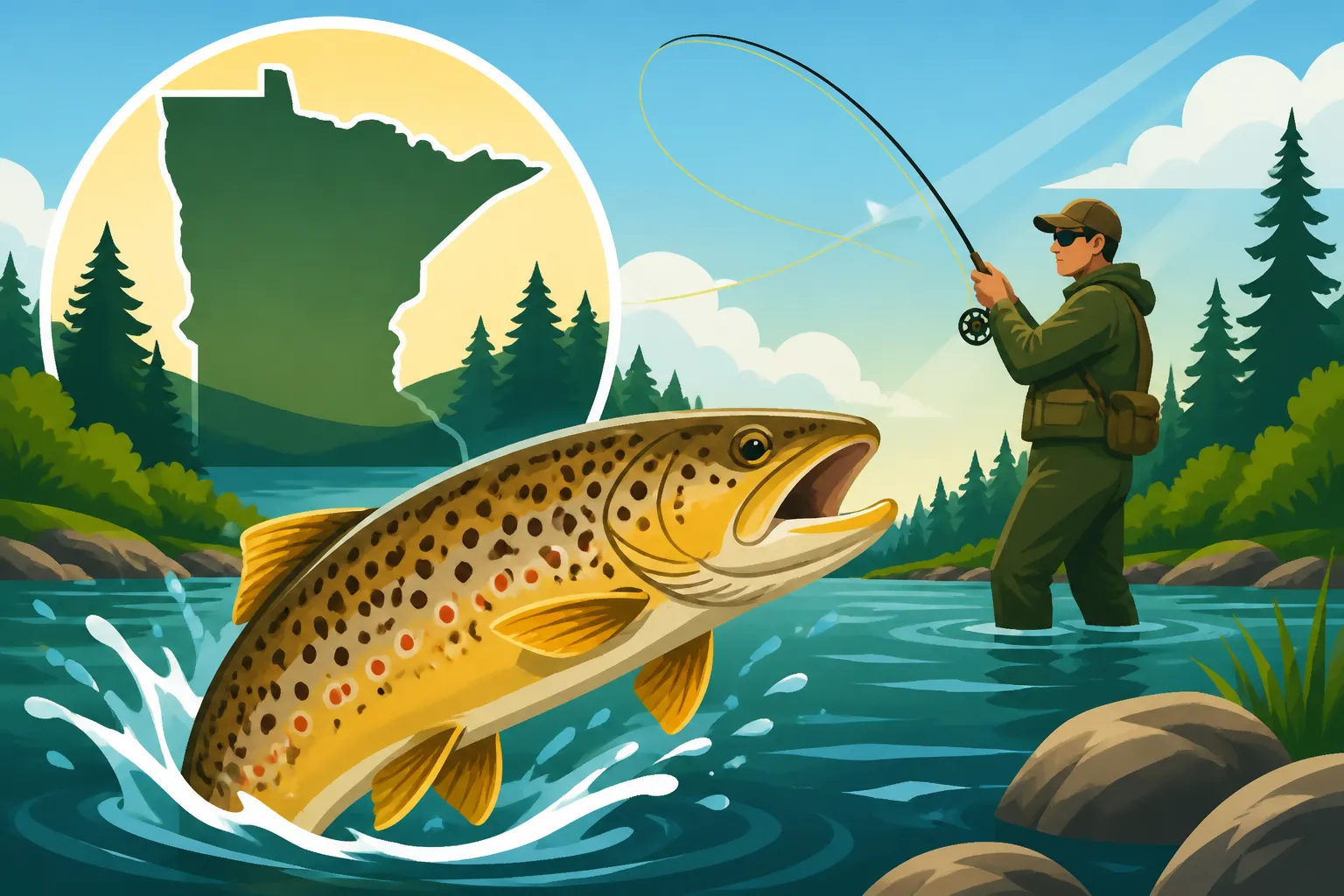
When you pull a brown trout from the water, you'll immediately notice its unique beauty. They typically have a brownish-golden to olive-green back, fading to silvery-yellow sides and a cream-colored belly. What really sets them apart are the numerous dark spots, often surrounded by lighter halos, which can extend onto their dorsal fin and adipose fin. Many of these spots, especially on their sides, are also accompanied by reddish or orange spots, sometimes with a pale halo around them. Their tail fin is usually square or slightly emarginate, and unlike brook trout, it doesn't have wavy lines (vermiculations).
Their jaws can extend past the back of their eye, and older, larger brown trout, especially males, develop a distinct hooked lower jaw, known as a kype. This makes them look incredibly formidable! They can grow quite large in Minnesota, especially in fertile streams and lakes, often reaching lengths of 15-20 inches, with some exceeding 25 inches. Their strong fighting spirit is legendary, characterized by powerful runs and sometimes acrobatic jumps, which adds to their appeal. If you're wondering how they compare to other trout, it’s worth checking out our guide on Lake Trout vs Brook Trout vs Brown Trout to help you distinguish them in the field.
Preferred Habitats and Behavior
Brown trout are incredibly adaptable but generally prefer cool, clear water with ample cover. This means stream sections with undercut banks, fallen logs, boulders, and deep pools are prime real estate for them. They're also quite tolerant of slightly warmer water temperatures than brook trout, which expands their range somewhat. They are primarily insectivores, feasting on a wide variety of aquatic and terrestrial insects, but as they grow larger, they become increasingly piscivorous, meaning they eat smaller fish. This predatory nature is why they can grow to such impressive sizes.
They are also largely nocturnal or crepuscular, meaning they are most active during low-light conditions like dawn, dusk, and night. This makes night fishing for big brown trout a popular and often effective strategy, especially in warmer months when they might be less active during the bright daylight hours. Their wariness and preference for hiding in complex cover make them challenging to catch, requiring stealth and precise presentations.
Top Brown Trout Fishing Regions in Minnesota
When it comes to brown trout fishing in Minnesota, one region stands head and shoulders above the rest, but there are other exciting opportunities if you know where to look.
The Southeastern Minnesota Driftless Area
Without a doubt, the crown jewel for brown trout fishing in Minnesota is the Driftless Area of the southeastern part of the state. This unique geographical region, which spans parts of Minnesota, Wisconsin, Iowa, and Illinois, was untouched by the last glacial advance. As a result, it boasts a deeply carved landscape of steep valleys, bluffs, and numerous spring-fed coldwater streams. These spring creeks maintain consistently cold water temperatures year-round, even through harsh Minnesota summers, providing the perfect conditions for thriving wild brown trout populations.
You'll find dozens upon dozens of designated trout streams crisscrossing counties like Fillmore, Houston, Winona, and Olmsted. Streams like the Root River and its many branches (South Branch, Middle Branch, Rush Creek), Trout Run, Vinegar Ridge Creek, and Beaver Creek are legendary among trout anglers. Many of these streams are managed by the Minnesota Department of Natural Resources (DNR) with different regulations for wild trout, catch-and-release sections, and stocked areas. These streams offer incredible opportunities for fly fishing, especially for those interested in Fly Fishing the Driftless Area A Beginner's Guide, but spin anglers can also find great success. The DNR works tirelessly to maintain habitat and access, often through angler easements on private land, making it easier for us to enjoy these pristine waters.
North Shore Tributaries and Lake Superior
While the North Shore of Lake Superior is more famously known for its steelhead (rainbow trout) and brook trout runs, several of the countless coldwater tributaries that tumble into Lake Superior also hold resident populations of brown trout. These fish often migrate between the streams and the vastness of Lake Superior, especially larger "trophy" browns. Streams like the Baptism River, Temperance River, and Brule River are all worth exploring. Fishing these North Shore streams can be a different beast compared to the Driftless Area, often involving rugged terrain and dealing with fluctuating water levels from snowmelt and rain.
Lake Superior itself can also hold impressive brown trout, particularly near the mouths of these rivers or along rocky shorelines. Trolling with crankbaits or spoons in the shallower nearshore waters can sometimes yield surprising results, especially during cooler periods of the year. While not as abundant as in the Driftless Area, the opportunity for a truly massive, chrome-sided brown trout from Lake Superior or its immediate tributaries is a strong draw.
Scattered Lakes and Stocked Fisheries
Beyond the primary trout streams, the Minnesota DNR also stocks brown trout into a select number of lakes across the state, particularly in areas where natural reproduction isn't viable but water temperatures remain suitable. These "designated trout lakes" are often deeper, cooler lakes, or even old mine pits, which provide a coldwater refuge.
Some examples include specific lakes in the Iron Range or central Minnesota, though the exact lakes can change based on stocking programs and management goals. These lake fisheries can offer a different angling experience, often involving boat fishing, trolling, or still-fishing with bait. It’s important to always consult the current Minnesota fishing regulations PDF, easily found on the DNR website, to verify specific lake regulations, stocking information, and if a Minnesota Trout Stamp & Trout Regulations is required for these waters. You might even discover that a Do You Need a Trout Stamp in Minnesota? answer differs based on the type of water you’re fishing.
Essential Gear and Tactics for Brown Trout
Successfully catching brown trout, especially the larger, more cautious ones, often comes down to having the right gear and employing smart tactics.
Rods, Reels, and Line Choices
For stream fishing in the Driftless Area, a lightweight setup is usually best.
- Spin Fishing: A light or ultralight spinning rod, typically 5.5 to 6.5 feet long, paired with a small spinning reel (size 1000 or 2000) spooled with 4-6 pound monofilament or fluorocarbon line is ideal. Monofilament offers a bit of stretch and good knot strength, while fluorocarbon is nearly invisible underwater and has excellent abrasion resistance. Brands like Shimano and Daiwa offer excellent value and performance for these setups, and you can often find great deals for specific rod and reel combos on Amazon.
- Fly Fishing: For fly anglers, a 3 to 5-weight fly rod, 7.5 to 9 feet long, is standard for trout streams. Pair this with a matching fly reel and a weight-forward floating fly line. Leaders and tippets typically range from 4X to 6X, depending on the fly size and how spooky the fish are. A 9-foot leader tapered to 5X is a good starting point. If you're just getting into it, a comprehensive starter kit can be a good investment, and several quality options are available on Amazon. For more detailed gear advice, check out our guide on the Best Gear for Stream Trout Fishing in Minnesota.
Lures, Baits, and Flies
Brown trout are opportunistic feeders, so having a variety of offerings can make a big difference.
- Spinning Lures: Small inline spinners (like Mepps Aglias or Panther Martins in sizes #0 to #2), small spoons (like Kastmasters or Little Cleos), and micro jigs tipped with a small piece of worm or soft plastic can be incredibly effective. Small stickbaits and crankbaits that imitate baitfish can also entice larger browns, especially when retrieved near cover.
- Live Bait: For a more natural approach, a simple hook and split shot rig with a small worm, piece of nightcrawler, or even a minnow (where legal and appropriate) can be deadly. Drifting bait naturally down a current seam or into a deep pool is often the most effective method.
- Flies: Fly anglers have a vast array of choices.
- Nymphs: Pheasant Tail Nymphs, Hare's Ear Nymphs, Prince Nymphs, and Caddis Larva patterns are staples for fishing below the surface. Dead-drifting these through runs and pools is a go-to tactic.
- Dry Flies: When trout are actively rising to insects on the surface, matching the hatch with dry flies like Elk Hair Caddis, Adams, or a Parachute Adams can be exhilarating.
- Streamers: For targeting larger, more aggressive brown trout, especially those that feed on smaller fish, streamer patterns like Woolly Buggers, Sculpin patterns, or Clouser Minnows can be incredibly effective. Stripping these through deeper pools or along undercut banks can provoke a powerful strike. For more specific patterns and techniques, read our guide on How to Catch Stream Trout Nymphs & Dries.
Reading the Water and Presentation
Trout fishing, especially for wary brown trout, is as much about stealth and understanding the water as it is about your tackle.
- Approach Stealthily: Brown trout are easily spooked. Approach the stream quietly, staying low and out of sight as much as possible. Avoid heavy footsteps or casting shadows over the water.
- Identify Prime Lies: Look for areas that offer food, shelter, and favorable currents. This includes:
- Undercut banks: Classic brown trout hiding spots.
- Deep pools: Especially those with boulders or submerged logs.
- Current seams: Where faster water meets slower water, concentrating food.
- Riffles and runs: Can hold active feeding trout, especially in low light.
- Log jams and brush piles: Offer excellent cover.
- Presentation is Key: Whether you're casting a spinner or drifting a fly, aim for a natural, drag-free presentation. For spin fishing, cast upstream and retrieve just faster than the current, or cast across and let your lure swing downstream. For fly fishing, a proper mend can eliminate drag and allow your fly to drift naturally. Experiment with different angles and retrieve speeds until you find what triggers a bite.
Conservation and Regulations for Brown Trout
Minnesota is committed to maintaining healthy trout populations, and as anglers, we play a crucial role in these efforts. Understanding and adhering to regulations, as well as practicing good conservation habits, ensures that these fisheries remain vibrant for future generations.
Catch and Release Best Practices
Many of the best brown trout fisheries in Minnesota, particularly in the Driftless Area, operate under special regulations that encourage or mandate catch-and-release. Even when keeping fish is allowed, practicing catch-and-release for larger or wilder brown trout is often a wise choice to preserve the population's breeding stock.
Here are some tips for responsible catch and release:
- Use Barbless Hooks: Crushing the barb on your hooks (or buying barbless hooks, which you can find readily on Amazon) makes it much easier to remove the hook with minimal damage to the fish.
- Minimize Handling: Try to keep the fish in the water as much as possible. If you must handle it, do so with wet hands to protect its slime coat, which is vital for disease prevention.
- Quick Release: Don't prolong the fight or the time the fish is out of water. Release it quickly and gently.
- Revive If Needed: If the fish seems sluggish, hold it gently upright in the current until it can swim away on its own. Don't throw it back; give it time to recover.
These practices are vital for the long-term health of our trout streams, and a deeper dive into these practices can be found in our article on Catch and Release Best Practices in Minnesota.
Key Regulations and Season Dates
Minnesota's trout regulations can be complex, varying by stream, lake, and even specific sections of a single river. It's absolutely critical to consult the most current Minnesota DNR fishing regulations booklet before heading out. This booklet is available online and at most bait and tackle shops.
Key things to look for:
- Season Dates: While some streams may have year-round catch-and-release seasons, the general stream trout season typically runs from April to October. However, specific regulations, especially for the winter season and special early/late seasons, can vary wildly. Our guide on Stream Trout Season & Limit in Minnesota provides a good overview, but always double-check the DNR.
- Bag Limits and Size Restrictions: Many trout streams have specific slot limits or reduced bag limits for brown trout to protect larger fish. For example, a regulation might state "no brown trout between 16-20 inches may be kept," or "only one brown trout over 20 inches allowed."
- Gear Restrictions: Some special regulation waters may only allow artificial lures or flies, or restrict the use of live bait.
- Trout Stamp: Remember, you almost always need a valid trout stamp in addition to your regular Minnesota fishing license if you're fishing for trout in designated trout waters.
Always carry a copy of the regulations (digital or physical) and a measuring tape. Misunderstanding a regulation can lead to penalties and harm the fishery we all cherish.
Disclaimer
Fishing regulations and conditions in Minnesota can change. Always check the current Minnesota Department of Natural Resources (DNR) fishing regulations before you head out. This guide is for informational purposes only and should not replace official DNR publications. Be safe, ethical, and enjoy your time on the water!