How to Catch White Crappie in Minnesota
Trying to dial in on white crappie in Minnesota can feel like a game of hide-and-seek. One day they're there, the next they've vanished, leaving you wondering if you're doing something wrong or if the fish just packed up and moved. It’s a common frustration for anglers, especially with how often conditions change and how crappie can be so particular. This guide is here to cut through that confusion, giving you the real-world tips and strategies you need to consistently find and catch white crappie in our beautiful Minnesota waters, no matter the season.
Understanding White Crappie in Minnesota
White crappie are a fantastic fish, known for their delectable fillets and exciting fights, but they can be a bit of a mystery if you don't know their habits. In Minnesota, these panfish are often found in different types of environments compared to their black crappie cousins, and understanding these nuances is key to consistent success. They're not just a "crappie is a crappie" situation, and recognizing their specific preferences will put you miles ahead of the angler just hoping for the best.
Identifying White Crappie: What Sets Them Apart
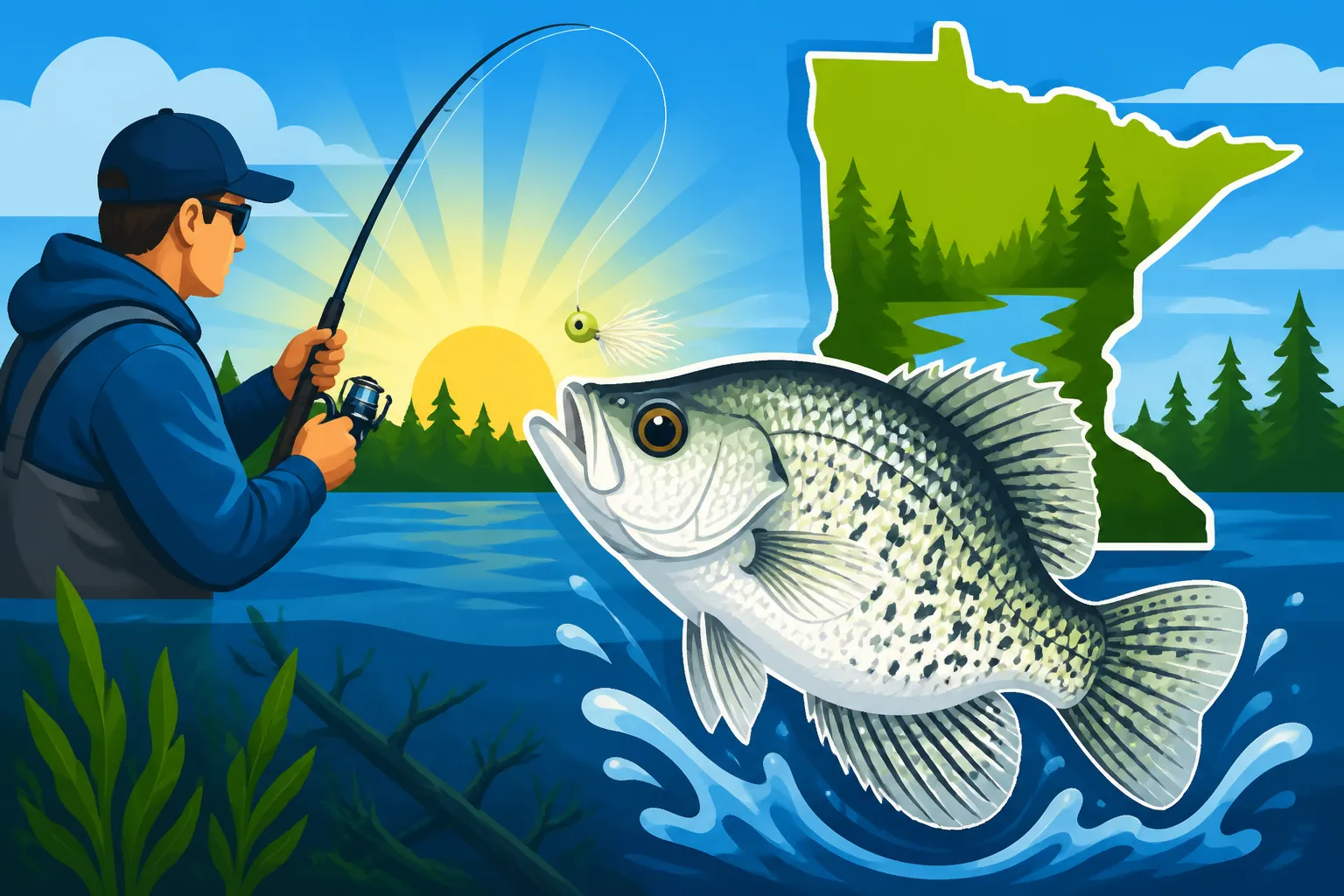
One of the first hurdles many anglers face is simply telling the difference between a white crappie and a black crappie, especially if they’re similar in size. While both are fantastic fish to catch, their subtle differences in appearance often hint at different behaviors and preferred habitats. White crappie typically have a lighter, more silvery body compared to the speckled, darker appearance of a black crappie. The most reliable way to tell them apart is to count the dorsal fin spines. A white crappie will usually have 5 or 6 dorsal spines, while a black crappie will have 7 or 8. This seemingly small detail is actually a big deal in the world of crappie identification.
Beyond the spine count, you'll notice that white crappie usually have distinct, dark vertical bars running down their sides. These bars can be quite prominent, almost like faint tiger stripes, setting them apart from the more uniformly speckled pattern of a black crappie. Their bodies also tend to be a bit more elongated than the rounder, disc-shaped black crappie. Knowing these visual cues helps you understand what you're targeting and, consequently, where you should be focusing your efforts. It's not just for bragging rights; it's about applying the right strategies to the right fish. If you're curious to learn more about these distinctions, check out our guide on Black Crappie vs White Crappie.
Preferred Habitats and Behavior Patterns
White crappie are notorious for favoring different environments than black crappie, a distinction that's crucial for anglers in Minnesota. While black crappie often prefer clearer, weedier lakes with abundant submerged vegetation, white crappie tend to thrive in murkier, more turbid waters, often with soft bottoms. Think lakes with higher nutrient levels or slower-moving river backwaters and impoundments. They’re less tied to dense weed beds and more often found relating to submerged wood, brush piles, bridge pilings, docks, and other forms of hard structure.
Their schooling behavior is another key aspect. White crappie are highly social fish, often congregating in large schools, sometimes numbering in the hundreds, especially during their feeding and spawning cycles. This means when you find one white crappie, there's a very good chance you've found a whole pile of them. Their nomadic nature means they can move around quite a bit, following baitfish or seeking optimal water temperatures and cover. Understanding this behavior pattern emphasizes the importance of mobility and thorough searching, rather than just dropping anchor in one spot and hoping they come to you. You really need to put in the legwork (or boat work!) to track them down, but when you do, the reward can be an incredible day of fishing.
Essential Gear and Tackle for White Crappie
Successfully targeting white crappie doesn't require an arsenal of expensive, high-tech gear, but having the right tools for the job certainly helps. It’s all about balance, sensitivity, and choosing tackle that enhances your ability to detect those subtle crappie bites, which can sometimes feel like nothing more than a slight pressure or a tiny tap. Forget the heavy-duty stuff; we're talking finesse here.
Rods, Reels, and Line Choices
When it comes to rods for white crappie, sensitivity is paramount. A light to ultra-light action spinning rod, typically 6 to 7 feet in length, is ideal. This rod action allows you to cast small, lightweight jigs and baits effectively, and more importantly, it transmits every little bump and nibble directly to your hand. A fast or extra-fast tip is a great choice, as it provides that crucial sensitivity for bite detection while still having enough backbone to set the hook firmly. Fiberglass rods offer excellent shock absorption and parabolic bends for fighting fish, while graphite rods deliver superior sensitivity, which is often preferred for feeling those delicate crappie bites. Many anglers, myself included, will often opt for a graphite composite rod to get the best of both worlds.
Pair your sensitive rod with a small, lightweight spinning reel in the 1000 to 2000 series size. These reels are designed to handle lighter lines and offer a smooth drag system, which is essential when fighting a feisty crappie on delicate tackle. The reel should balance well with your rod, preventing fatigue during long days on the water. For line, 4 to 6-pound test monofilament or fluorocarbon is generally the sweet spot. Monofilament offers good knot strength and some stretch, acting as a shock absorber. Fluorocarbon, on the other hand, is nearly invisible underwater, extremely sensitive, and has less stretch, which can be advantageous for deeper water presentations or when crappie are particularly finicky. Some anglers even prefer a braided mainline with a fluorocarbon leader for ultimate sensitivity and casting distance, especially when fishing very light jigs. Experimentation is key to finding what feels best in your hands for our Minnesota waters.
The Best Baits and Lures
White crappie aren't overly picky, but certain baits and lures consistently outperform others. Live bait is almost always a winner, with small minnows being the absolute king. A live minnow, hooked lightly through the lip or back, suspended under a bobber or fished on a small jig, is incredibly effective. The natural action and scent of a lively minnow are often irresistible to crappie. Crappie minnows are readily available at most bait shops across Minnesota, making them a convenient and reliable option.
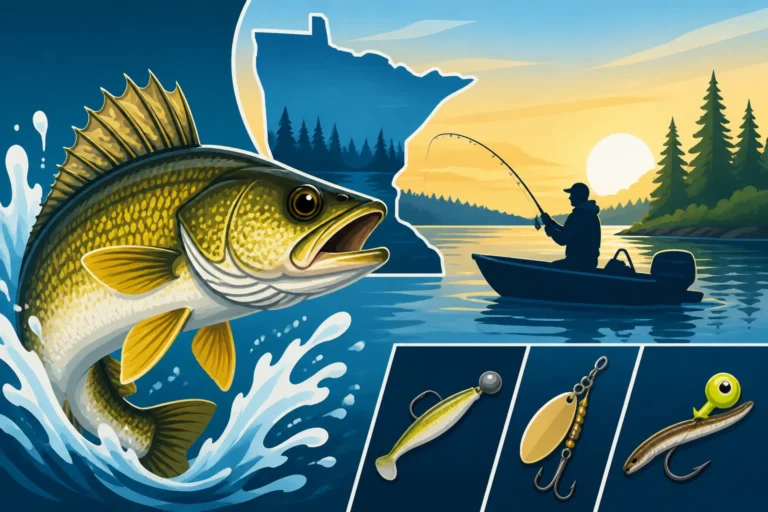
When it comes to artificial lures, small jigs are your best friend. Sizes ranging from 1/32 to 1/16 ounce are most common, but don't be afraid to go as light as 1/64 ounce or as heavy as 1/8 ounce depending on depth and wind. Soft plastic crappie baits, often called "plastics" or "crappie tubes," are designed to imitate small minnows or insects. Popular styles include tube jigs, small grubs, and tiny paddle-tail swimbaits. Colors can vary by water clarity and conditions, but chartreuse, white, black, pink, and various glitter combinations are perennial favorites. On clearer lakes, natural colors like smoke or pearl can be more effective. The key is to find a color and profile that mimics the local forage. Small spoons or blade baits can also be effective, particularly in deeper water or when jigging through the ice. Keep a variety in your tackle box; crappie preferences can change on a dime!
| Bait/Lure Type | Description | Ideal Conditions | Pros | Cons |
|---|---|---|---|---|
| Live Minnows | Small shiners, fatheads, or crappie minnows | All conditions, especially effective when fish are sluggish | Natural action and scent, highly enticing | Can be difficult to keep alive, messy, not always legal in certain waters/for species |
| Tube Jigs | Soft plastic tube body with tentacles, rigged on a jig head | Vertical jigging, casting, under a bobber | Versatile, great action, many color options | Can tear easily, not much natural scent |
| Paddle-tail Grubs | Soft plastic body with a vibrating paddle tail | Casting and retrieving, trolling, vertical jigging | Mimics minnows, strong vibration attracts fish | Tail can be bitten off by smaller fish, limited scent |
| Hair Jigs/Feather Jigs | Jig head with natural hair or feathers for a subtle, lifelike movement | Finesse presentations, clear water, cold water | Realistic action, durable | Fewer color options, can be more expensive |
| Small Spoons/Blade Baits | Metal lures that flutter and flash, often with treble hooks | Deeper water, aggressive fish, ice fishing | Strong flash and vibration, good for covering water | Can snag easily in heavy cover, less finesse |
Mastering White Crappie Fishing Techniques
Once you've got your gear sorted, it's time to talk tactics. White crappie fishing isn't usually about power-fishing; it's about finesse, precision, and understanding how to present your bait effectively. There are several tried-and-true methods that Minnesota anglers rely on, and mastering a few of them will significantly boost your catch rates. If you want to learn more general crappie tactics, check out our guide on Crappie & Panfish Fishing Techniques.
Classic Presentations: Jigs, Bobbers, and Trolling
The most common and often most effective way to catch white crappie is by vertical jigging or casting small jigs. When vertical jigging, you simply drop your jig straight down to the depth where you're marking fish on your electronics or suspect them to be. A slow, subtle lift-and-drop motion, perhaps with a slight pause, is often all it takes to entice a bite. Think of it as a delicate dance, not a jarring rhythm. This method is incredibly effective when crappie are schooled tightly around a specific piece of structure, like a submerged brush pile or a bridge piling. The subtle action of a small jig, perhaps tipped with a minnow or a small plastic, can be irresistible.
For casting, especially when fish are spread out a bit or when targeting shallow cover, a steady retrieve with a small paddle-tail grub or tube jig can be deadly. Cast towards submerged timber, weed edges, or docks, and retrieve slowly, allowing the lure to flutter on the fall. The key is to pay attention to your line for any twitch or hesitation that might indicate a bite. Another classic presentation, especially for beginners or when fish are suspended, is using a bobber rig. A slip bobber, in particular, allows you to set your bait at a precise depth and cast it further than a fixed bobber. Combine a small jig tipped with a minnow or a plastic under a slip bobber, and you've got a killer setup for crappie. Learning How to Use a Slip Bobber for Walleye & Crappie can seriously up your game.
Trolling can also be highly effective for covering water and finding scattered schools of white crappie, especially in larger lakes. Small crankbaits, often referred to as "crappie cranks," or even small jigs tipped with plastics, can be trolled slowly behind the boat. The speed is critical – often just 0.5 to 1.5 mph is all you need to impart a natural swimming action to your lure. Using multiple rods with different lures and depths can help you dial in on what the fish prefer on any given day. Long-lining, where you let out a significant amount of line, helps get your lures deeper without heavy weights and presents a more natural appearance to cautious fish.
Locating Crappie with Electronics and Lake Knowledge
Finding white crappie is half the battle, and this is where modern electronics and good old-fashioned lake knowledge truly shine. Crappie, especially white crappie, are often associated with structure. This could be anything from flooded timber, brush piles, rock reefs, humps, ledges, or man-made structures like bridge abutments and docks. They love vertical cover and places where they can ambush baitfish. Starting your search in these areas is always a good bet.
Using a fish finder is invaluable for locating white crappie schools and identifying prime structure. Side imaging or down imaging sonar can reveal brush piles and timber that are invisible from the surface, allowing you to pinpoint where crappie might be holding. Once you mark a school, switch to traditional 2D sonar or a live-scanning sonar system like Garmin LiveScope or Humminbird Mega Live to target them precisely. Pay attention to the depth at which you're marking fish, as crappie will often suspend at specific depths depending on water temperature, light conditions, and baitfish location. For instance, on lakes like Lake Waconia or Lake Minnetonka, finding those submerged brush piles or deep weed edges can be a game-changer for big crappie. Don't forget to mark these spots on your GPS so you can return to them later!
Beyond electronics, local knowledge and current fishing reports can be golden. Talk to bait shop owners, other anglers, or consult online forums for insights into what's working and where. Observing other successful anglers on the water can also provide clues. Are they fishing shallow or deep? Are they using bobbers or vertical jigging? Combine these observations with your own knowledge of crappie behavior and your electronics, and you'll become a much more efficient crappie angler.
Seasonal Strategies for Consistent White Crappie Catches
White crappie, like most fish, change their behavior and location with the seasons. What works in spring won't necessarily work in winter. Understanding these seasonal patterns is crucial for consistent success throughout the year in Minnesota. This isn't just about showing up; it's about showing up with a plan that matches the conditions.
Spring: Spawning and Shallow Water Action
Ah, spring! This is arguably the most anticipated time for many crappie anglers, myself included. As water temperatures begin to rise, typically into the high 50s Fahrenheit, white crappie move from deeper wintering holes into shallower, warmer waters to spawn. This is when they become incredibly accessible and aggressive. Look for them in bays, coves, and shallow flats with submerged vegetation, brush, or fallen trees. Anywhere the sun can warm the water quickly and provide cover for their nests is a potential hotspot. For more details on this crucial period, check out Crappie Spawn in Minnesota: When and Where.
During the spawn, male crappie guard their nests, making them easy targets. Small jigs, particularly tube jigs or marabou jigs, fished under a slip bobber or slowly retrieved through spawning areas, are incredibly effective. A small minnow suspended 1-3 feet deep is often irresistible. The key is a slow, methodical approach. Fan-cast an area, paying close attention to any bumps or visual cues like fins flashing. As the water warms further and post-spawn begins, the fish will often linger in these shallow areas for a bit, feeding aggressively to recover from the stresses of spawning before moving to deeper water. This is when a lot of our Spring Crappie Fishing in Minnesota happens, and it can be some of the best fishing of the year.
Summer: Deep Water and Structure
Once the spring spawn is over and water temperatures really heat up, white crappie retreat to deeper, cooler waters. They'll seek out thermoclines, which are layers of water where temperature changes rapidly, and relate to significant underwater structure. Think deep brush piles, offshore humps, rock piles, ledges, and submerged timber. They'll often suspend over these structures or along their edges, rather than sitting directly on the bottom. On a lake like Leech Lake, for example, finding those deep water humps can hold schools of big crappie all summer long.
During summer, vertical jigging is a prime technique. Use your electronics to locate schools of crappie suspending over or near structure. Drop a 1/16 to 1/8 ounce jig, tipped with a small minnow or a plastic grub, directly into the school. Sometimes, a subtle lift-and-drop is all it takes; other times, a more aggressive jigging motion might be needed to trigger a strike. Trolling small crankbaits or jigs at specific depths can also be very effective for covering larger areas of deeper water and finding those scattered schools. Pay close attention to your retrieve speed and depth, adjusting until you find the fish's preference. This is often a game of precision, where being just a foot or two off can mean the difference between an empty livewell and a full one.
Fall: Pre-Winter Feed and Transitions
As the crisp autumn air arrives and water temperatures start to drop, white crappie enter a "feed-up" mode, packing on calories in preparation for winter. This can be another fantastic time to target them, as they become very active and often school up in large numbers. Fish will begin to transition from their deep summer haunts towards more intermediate depths. You might find them relating to the deep edges of weed lines, subtle drop-offs, or brush piles closer to main lake basins.
The fall transition can be tricky because crappie can be anywhere from 10 to 30 feet deep, often moving with baitfish schools. Vertical jigging remains highly effective, especially with live minnows. Look for concentrations of baitfish on your sonar, as crappie will likely be nearby, shadowing their food source. Trolling can also be a good way to locate active schools in the fall, using small crankbaits or even spider rigging (multiple rods fanned out with different baits and depths) to cover a lot of water. As temperatures continue to fall, white crappie will consolidate into their wintering holes, often the deepest, most stable parts of the lake. This migration towards deeper, stable environments is your cue to shift gears towards ice fishing.
Winter: Ice Fishing for White Crappie
When Minnesota freezes over, the fishing doesn't stop; it just moves indoors! Ice fishing for white crappie is incredibly popular and can be highly productive. White crappie will typically school up in deep holes, along sharp breaks, or suspended over deep water structures, often in 15-40 feet of water. They'll relate to any submerged cover they can find, like brush piles, deep weed edges, or even subtle changes in bottom contour.
Small jigs, especially tungsten jigs, are the go-to for ice fishing white crappie. Tungsten is denser than lead, allowing you to use a smaller jig profile that still gets down quickly to the desired depth. Tip these jigs with a small plastic, a wax worm, or a eurolarvae. A sensitive ice rod is a must, paired with a small spinning reel or a specialized ice fishing reel. A flasher or an underwater camera like an Aqua-Vu is invaluable for locating schools, seeing how they react to your bait, and detecting those super subtle winter bites. Sometimes, a crappie will simply "lift" your bait rather than strike it, and only a sensitive rod and a keen eye will detect it. Our guide on Ice Fishing for Crappie & Panfish goes into much more detail on winter tactics. When you find a school, be prepared for some fast action, but remember that these fish can also be very light biters in the cold water.
Finding White Crappie Hotspots in Minnesota
Minnesota is truly the Land of 10,000 Lakes, and many of them hold fantastic white crappie populations. Knowing where to start and what to look for can save you a lot of time and frustration. It's not just about picking a random lake; it's about choosing the right kind of lake and then systematically breaking it down.
Identifying Productive Lakes and Areas
White crappie thrive in different environments than their black crappie counterparts, which means you should be looking at different types of Minnesota lakes. While black crappie often prefer clear, vegetated lakes, white crappie are more at home in larger, often shallower, and sometimes slightly murkier lakes or river backwaters. These lakes often have a good mix of submerged wood, brush piles, and perhaps some standing timber, which white crappie absolutely love for cover and ambush points. They do well in systems with a high forage base of small baitfish. Lakes that are prone to some turbidity or have softer, muddier bottoms can often be excellent white crappie fisheries.
Some lakes known for strong crappie populations in Minnesota include Lake Minnetonka (despite its clear-water reputation, it has plenty of crappie structure), Lake Waconia, Lake Marion, and many of the larger lakes in the southern and central parts of the state that have ample submerged timber or man-made structures. River backwater sloughs on the Mississippi River system, particularly pools 2 through 8, are also incredible white crappie factories. When researching a new lake, look for reports of good crappie numbers, especially if they mention brush piles, docks, or other hard structure. Our Best Crappie Lakes in Minnesota guide can provide even more specific recommendations for your next trip.
Reading the Water and Using Electronics
Once you've picked a promising lake, the real work begins: breaking down the water. As mentioned earlier, white crappie love structure. Start by targeting obvious structures like marinas, boat docks, bridge pilings, and visible brush piles. These are prime areas that hold fish year-round. However, the true hotspots are often the hidden structures beneath the surface. This is where your electronics become your most powerful tool.
Use your depth finder and side imaging to systematically scan creek channels, old river beds, humps, ledges, and deep points that feature submerged timber, rock piles, or artificial brush piles. Many fishing clubs and DNR offices partner to create fish habitat by sinking Christmas trees or building specialized brush piles, and these spots are often crappie magnets. Mark any significant structure you find on your GPS. When you locate a school of crappie on your sonar, pay attention to their depth. They might be suspended 10 feet off the bottom in 30 feet of water, or tight to a brush pile in 15 feet. Dialing in that depth is critical. Also, observe how the fish are positioned relative to the structure—are they on top, alongside, or just off to the side? This will tell you how to best present your bait. Sometimes, just a slight adjustment in boat position can put you right over the sweet spot.
Disclaimer
Fishing regulations can change frequently. Always consult the latest Minnesota Department of Natural Resources (DNR) fishing regulations handbook or website before heading out on the water. This guide provides general information and recommendations, but it is your responsibility to know and follow all current laws and regulations, including possession limits, size restrictions, and specific lake rules.