Lake of the Woods Fishing Rules & Limits
Planning a trip to the "Walleye Capital of the World" should be about the thrill of the strike and the beauty of the northern horizon, not stressing over whether that fish in your net is a legal keeper or a potential fine. Lake of the Woods has some of the most specific and nuanced regulations in the country. This guide breaks down the essential rules to keep you legal and confident on the water.
Navigating the Walleye and Sauger Aggregate Limits
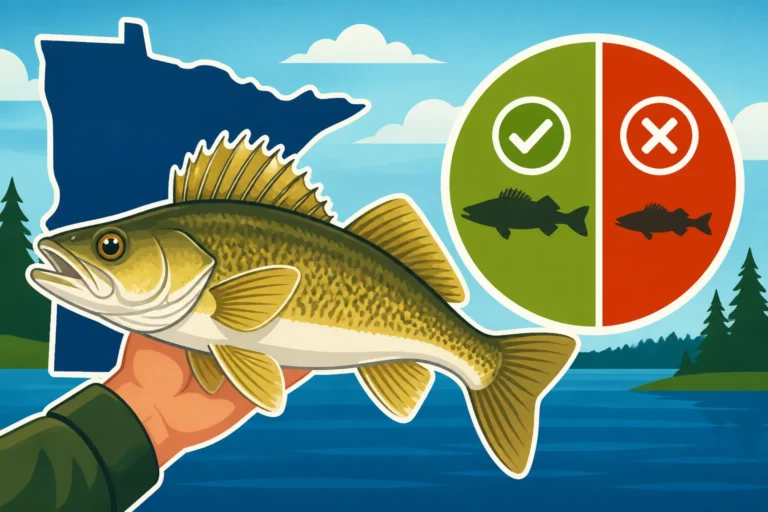
If you are heading to Baudette or Warroad, chances are you are hunting for walleye. However, unlike many interior lakes in Minnesota, Lake of the Woods operates on an "aggregate" limit system for walleye and sauger. This is where many newcomers get tripped up. The combined limit is six fish, but there is a very specific sub-limit: you cannot have more than four walleyes in your possession.
The strategy for most veterans is to fill the remainder of their bucket with sauger. Sauger look remarkably similar to walleye but are generally smaller and have distinct black spots on their dorsal fin. When you are out on the vast stretches of Big Traverse Bay, you might find yourself catching dozens of saugers for every one walleye. It is tempting to keep everything that hits the deck, but you must keep a mental tally. If you have four walleyes, the next two fish in your limit must be sauger.
The "slot limit" is the next hurdle. On Lake of the Woods, all walleye between 19.5 inches and 28 inches must be immediately released. This is often referred to as the "protected slot." You are allowed to keep one walleye over 28 inches, often considered a "trophy" fish, but many local guides encourage releasing these big spawners to keep the population healthy. When measuring, remember the Minnesota standard: the fish's mouth must be closed and the tail should be pinched to get the maximum length. For more details on these specific measurements, check out Lake of the Woods Walleye Limit & Slot.
Special Rules for the Rainy River and Four Mile Bay
The Rainy River is the lifeblood of Lake of the Woods, especially during the spring and fall runs. However, the rules here change depending on the calendar. During the spring walleye season (typically from early March until mid-April), the river is often "catch and release" only, or it may have very restrictive limits compared to the main lake. This is designed to protect the walleye while they are stacked in the river for spawning.
If you are fishing Four Mile Bay, which acts as the transition zone between the river and the lake, you must follow the river's regulations. It is incredibly easy to drift from the lake into the bay without realizing the rules have shifted. Always keep a GPS or a high-quality map handy to know exactly where you are. The frustration of catching a limit in the lake and then being caught with them in a catch-and-release zone on the river is a nightmare no angler wants to face.
Beyond walleye, the Rainy River is famous for its prehistoric giants. If you are targeting sturgeon, you need to be aware of the "keep" and "catch-and-release" seasons. To keep a sturgeon, you must purchase a specific tag in advance. You are only allowed one sturgeon per calendar year, and it must fall within a very tight size window (usually 45 to 50 inches, or over 75 inches, depending on the year's specific decree). For a deeper dive into these ancient fish, see Lake Sturgeon Regulations & Tag in Minnesota.
Northern Pike and Muskie Management
Lake of the Woods is a world-class trophy pike destination, especially in the early spring when they congregate in the shallow bays. Because of the lake's potential to produce 40-plus-inch fish, the regulations are strict. The current limit for northern pike is three, but all fish between 30 and 40 inches must be released. You are allowed to keep one fish over 40 inches.
This regulation has transformed the lake into a premier destination for "tip-up" fishing in March. Imagine sitting on the ice in a lawn chair, the sun finally showing some warmth, and seeing a flag pop. If that fish is 35 inches, it is a blast to catch, but it has to go back. Protecting that mid-size range is exactly why the lake consistently produces monsters. For a broader look at how these rules compare to the rest of the state, see Minnesota Northern Pike Limits by Zone.
Muskellunge (Muskie) fishing on Lake of the Woods is legendary, but it is almost entirely a catch-and-release culture. The minimum size limit to keep a muskie here is a staggering 54 inches. This is one of the highest limits in the world, ensuring that only a true world-record contender would ever be harvested. Most anglers who fish the "A-Zone" or the islands up north wouldn't dream of keeping a muskie, but the law is there to ensure the giants remain in the system.
| Species | Daily/Possession Limit | Size Restrictions |
|---|---|---|
| Walleye & Sauger | 6 (Max 4 Walleye) | Walleye 19.5" – 28" must be released. Only 1 over 28". |
| Northern Pike | 3 | 30" – 40" must be released. Only 1 over 40". |
| Muskie | 1 | 54" minimum size limit. |
| Lake Sturgeon | 1 per year (with tag) | 45" – 50" inclusive, or over 75". |
| Yellow Perch | 15 | No size limit. |
Border Water Nuances and the Northwest Angle
Perhaps the most confusing part of fishing Lake of the Woods is the international border. The lake is shared between Minnesota and the Canadian provinces of Ontario and Manitoba. If you are staying at a resort in Minnesota and plan to fish Canadian waters, you must have an Ontario fishing license and be aware of their specific limits, which are often different from Minnesota's.
A common pain point is the "possession" rule. If you catch fish in Ontario under an Ontario limit and then boat back into Minnesota waters, you are technically in possession of those fish in Minnesota. If the Ontario limit is higher or has different size restrictions than the Minnesota side, you could be in violation the moment you cross the GPS line. It is always safest to follow the most restrictive of the two regulations if you plan on crossing the border.
Furthermore, if you are headed to the Northwest Angle—the northernmost point of the lower 48 states—you have to deal with unique travel rules. Whether you drive through Canada or take a boat across the open water from the south shore, you are entering a remote area where help is far away and regulations are strictly enforced. To learn more about how these border rules work, check out Border Water Fishing Rules (Minnesota-Ontario, Wisconsin).
Ice Fishing and Shelter Regulations
Lake of the Woods is arguably the ice fishing capital of North America. When the lake freezes, it turns into a floating city of thousands of "sleeper" houses. Because of the unique nature of this fishery, there are specific rules regarding how many lines you can use and how you must handle your waste.
In Minnesota, you are generally allowed two lines through the ice. However, you must be within 200 feet of your lines at all times. On Lake of the Woods, where the wind can howl and visibility can drop to zero in a "whiteout," staying close to your gear isn't just a rule—it's a safety necessity. If you are staying in a large "wheel house" or a resort-rented sleeper, you must ensure your license is properly displayed.
The "ice house" removal dates are also a big deal. Because Lake of the Woods is considered a "border water," the deadlines for removing your shelter are often different than for lakes in the southern half of the state. Leaving a heavy house on the ice too long can lead to it being frozen in or, worse, sinking during the spring thaw, which carries heavy environmental penalties. You can find more information on these deadlines at Ice Shelter Removal Deadlines in Minnesota. For those planning a winter trip, it's also worth reading up on Lake of the Woods Ice Fishing: Sleeper Houses & Walleye to understand the logistical side of things.
Aquatic Invasive Species (AIS) Compliance
Protecting Lake of the Woods from invasive species is a top priority for the Minnesota DNR and local conservation groups. The lake is currently dealing with spiny waterfleas, which can clog eyelets on fishing rods and compete with small fish for food. Because of this, there are strict "Clean, Drain, Dry" laws in effect.
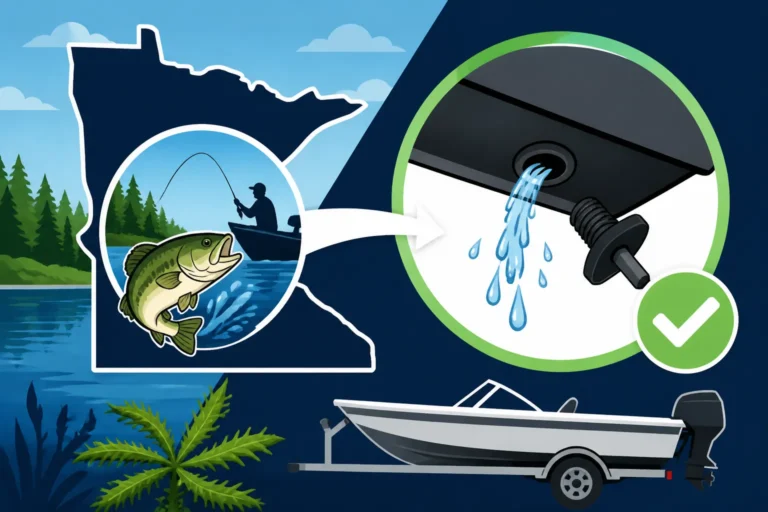
When you pull your boat out at a landing like Wheeler’s Point, you are legally required to pull your drain plug and keep it out during transport. This includes draining livewells and bait buckets. You cannot transport lake water away from the access point. If you have leftover minnows that you want to keep for the next day, you must transfer them to a container with fresh tap or bottled water. Failure to do this is one of the most common reasons for citations at the boat ramp.
These rules apply to everyone, including those using kayaks or personal watercraft. The goal is to prevent the spread of zebra mussels and other invasives to or from this massive water body. For a step-by-step guide on how to stay compliant, see How to Decontaminate Your Boat (AIS) and Minnesota AIS Drain Plug Law Explained.
Essential Licensing Requirements
Before you even hook up the boat trailer, you need to ensure your paperwork is in order. Every person fishing (with some exceptions for youth) must have a valid Minnesota fishing license. If you are a nonresident, the costs and types of licenses available differ from resident options. You can purchase a 24-hour, 72-hour, or full-season license depending on the length of your stay.
For many families, the Minnesota Fishing License for Kids & Youth is a great way to get the next generation involved without extra cost, but remember that even if the kids don't need a license, their fish still count toward the "family" or "party" limit if you are fishing together. If you are a visitor from out of state, be sure to check Nonresident Fishing in Minnesota: Licenses & Rules to see which permit fits your trip best.
Keep in mind that Lake of the Woods is often patrolled by both the DNR and the County Sheriff. They are generally friendly and more than willing to answer questions, but they expect you to have your license on your person (or a digital copy on your phone) and to be in compliance with all the gear and limit rules discussed above. If you're looking for the best way to get set up before you arrive, you can find info on How to Get a Minnesota Fishing License Online.
Lake of the Woods Fishing Rules Disclaimer
Fishing regulations are subject to frequent changes based on biological surveys and emergency orders. The information provided in this guide is for informational purposes and reflects the standard rules for the 2026 season. Always consult the most recent Minnesota Fishing Regulations handbook or the DNR website before your trip to ensure you have the most up-to-date information for the specific dates of your visit. Local signage at public water accesses should also be followed as the final authority on-site.