Walleye Spawning: When and Where
It's a frustrating but natural part of the angling experience: you're itching to get out on the water, but the walleye just aren't biting like they should. Often, this slowdown coincides with the vital period of walleye spawning. Understanding when and where walleye lay their eggs in Minnesota is crucial for both conservation and for knowing how to adapt your fishing strategies before, during, and after this incredible annual event. This guide will take you deep into the walleye spawning cycle, helping you decipher nature's signals and become a more knowledgeable and successful angler.
Understanding the Walleye Spawning Cycle in Minnesota
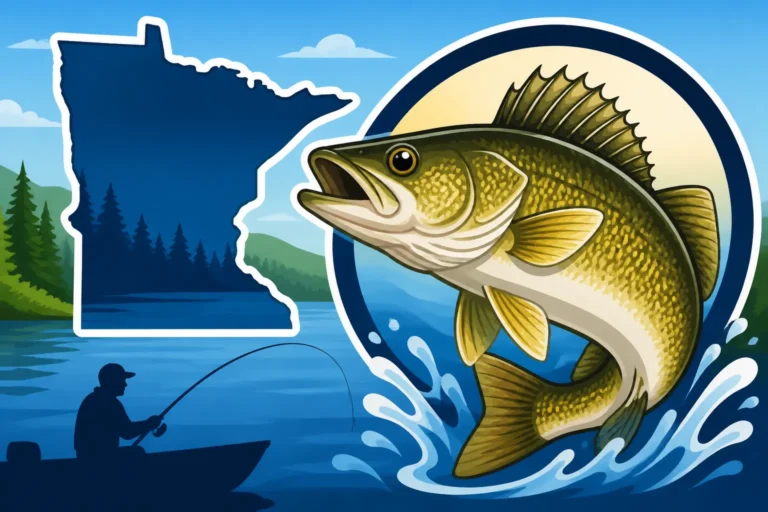
Walleye, our state fish, are remarkable creatures, and their annual spawning ritual is a testament to their resilience and instinct. This isn't just a simple biological event; it's a complex dance dictated by environmental cues, ensuring the continuation of their species. For us anglers, knowing this dance helps us appreciate the fish we pursue and understand the patterns that drive their behavior throughout the year.
The Biological Urge and Environmental Triggers
The urge to spawn is deeply ingrained in walleye, a primal drive that guides them to their chosen breeding grounds each spring. This powerful instinct isn't random; it's activated by a combination of precise environmental triggers. The most critical of these is water temperature. As the ice recedes from Minnesota's vast network of lakes and rivers, and the sun begins to warm the frigid waters, walleye start to feel the call. They typically begin their spawning activities when water temperatures reach a specific range, usually between 40 to 50 degrees Fahrenheit (4-10 degrees Celsius). This narrow window is critical, as it ensures the eggs and eventual fry have the best chance of survival.
Beyond temperature, the increasing length of daylight, known as photoperiod, also plays a significant role. The longer days of spring act as a secondary signal, reinforcing the message that it’s time to reproduce. This dual trigger system helps ensure that spawning occurs at the optimal time, even if there are unusual fluctuations in spring weather. For instance, a sudden cold snap might temporarily halt activity, but the consistent increase in daylight keeps the process on track. It’s a finely tuned biological clock that has served walleye well for millennia, allowing them to thrive in our diverse Minnesota waters.
The Pre-Spawn Gathering
Before the actual egg-laying begins, walleye undergo a fascinating pre-spawn gathering phase. As the ice melts and water temperatures begin to creep into the upper 30s and low 40s, walleye will leave their deeper wintering holes. They undertake significant migrations, sometimes traveling many miles upriver or from deep lake basins into shallower staging areas. These staging grounds are strategically located near the future spawning sites, often in areas that offer a temporary reprieve from strong currents while still providing access to the fertile grounds.
Common staging areas include river mouths, the deeper edges of current breaks, large transitional flats, or rocky humps just off prospective spawning reefs. Here, these fish will school up, sometimes in impressive numbers, preparing for the arduous task ahead. What’s particularly interesting for anglers is that during this pre-spawn period, walleye are often at their most aggressive and opportunistic when it comes to feeding. They are driven by the need to build up energy reserves for spawning, making them more willing to strike a lure or grab a bait. This can be one of the most exciting times to target them, if regulations allow.
When Does Walleye Spawning Happen in Minnesota?
Pinpointing the exact moment walleye spawn in Minnesota isn't a simple "x date" answer. It’s a dynamic process influenced by geography, climate, and the unique characteristics of each body of water. Understanding these nuances is key to anticipating their behavior and planning your early-season fishing trips.
Typical Timing Across the State
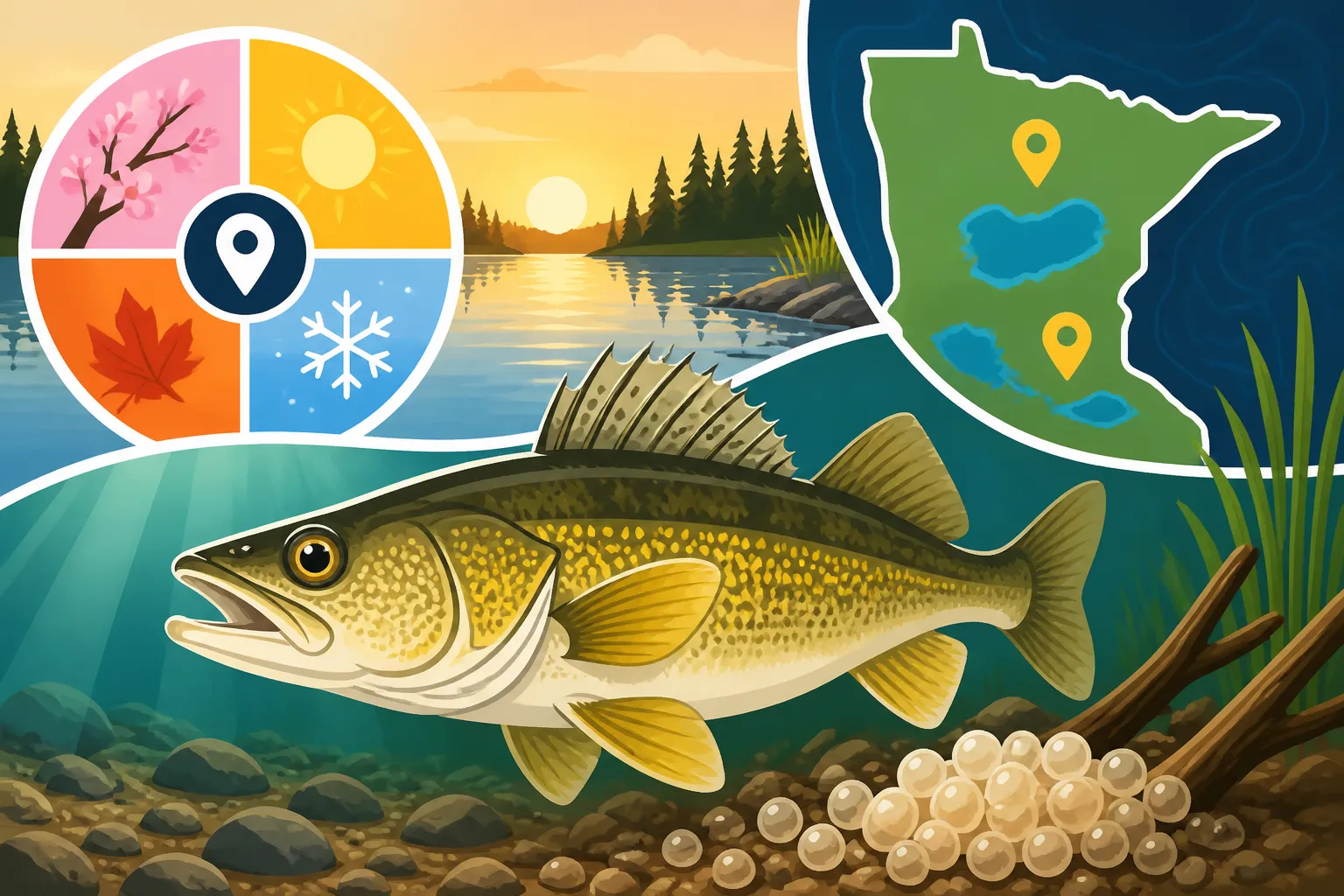
Generally speaking, walleye spawning in Minnesota typically unfolds from late April into early or even mid-May. However, this window can shift significantly depending on where you are in our vast state. In the southern parts of Minnesota, where spring arrives earlier and waters warm faster, you might see walleye spawning in the last week of April or the very beginning of May. For example, walleye on the Mississippi River, particularly near the Red Wing area and downstream into Lake Pepin, often begin their spawning runs before many northern lakes have even shed their ice cover. These river systems are usually the first to warm up due to shallower depths and constant flow.
As you move northward through the state, the timing shifts later. Central Minnesota lakes, like those in the Brainerd Lakes Area or the Alexandria chain, will usually see peak spawning activity in the first week or two of May. Then, further north, on iconic walleye factories like Upper Red Lake, Lake of the Woods, or the remote lakes of the Boundary Waters, spawning might not peak until mid-May, sometimes even stretching into the very end of the month if there's a prolonged cold spring. This geographical progression is a critical concept for any Minnesota angler to grasp when thinking about the yearly walleye calendar and the various Minnesota Fishing Seasons & Opener Dates (2026).
Factors Influencing Annual Variation
While the general timing is predictable, Mother Nature always has the final say, and several factors can significantly influence the precise timing of walleye spawning each year. One of the most impactful is the date of ice-out. A late ice-out, where lakes remain frozen well into April, will inevitably push back the entire spawning cycle. The walleye simply can't access their spawning grounds or find the necessary water temperatures until the ice is gone. Conversely, an unusually early ice-out might trigger an earlier spawn.
Spring weather patterns also play a huge role. A rapid warming trend in April can accelerate the process, bringing water temperatures up quickly. However, a series of cold snaps, especially after an initial warm spell, can stall or even temporarily reverse the spawning process, making fish lethargic and less active. Finally, individual lake characteristics are important. Shallow, dark-bottomed lakes tend to warm up much faster than deep, clear-water lakes, leading to earlier spawning in the former. For instance, a shallow, bog-stained lake near Bemidji might have walleye spawning a week or more before a deep, clear-water lake just a few miles away. All these variables combine to create the unique "when" of walleye spawning each year.
Where Do Walleye Lay Their Eggs? Prime Spawning Habitats
Knowing when walleye spawn is only half the battle; understanding where they choose to perform this vital act is equally important. Walleye are quite particular about their spawning sites, seeking out specific types of habitat that offer the best chance for their eggs to develop and hatch successfully.
Rocky Substrates and Current
Walleye are what we call "broadcast spawners," meaning the females release their eggs directly into the water column, and the males immediately fertilize them. Unlike some other fish species, walleye don't build nests or offer any parental care for their eggs. This means the chosen spawning substrate is incredibly important for egg survival. They absolutely prefer clean, hard-bottomed areas—think rock, rubble, gravel, and even coarse sand. These rough surfaces provide adhesion for the sticky eggs, keeping them from being washed away or settling into soft, mucky bottoms where they would suffocate due to lack of oxygen.
Rivers are absolutely crucial spawning grounds for many walleye populations in Minnesota. In riverine environments, walleye will seek out areas with a moderate current, such as rapids, riffles, stretches below dams, or the mouths of feeder streams. The current serves a dual purpose: it helps to keep the eggs continually oxygenated by constantly flowing fresh water over them, and it also helps prevent silt from settling on and suffocating the eggs. This is why famous walleye runs, like those on the Rainy River leading into Lake of the Woods, see massive congregations of fish heading upstream to spawn.
Even in lakes, the preference for rocky bottoms persists. Walleye will gravitate towards rocky shorelines, prominent points, shallow reefs, and expansive gravelly shoals. These areas are often exposed to wind and wave action, which, similar to river currents, helps to oxygenate the eggs and keep them clean. Imagine a classic Minnesota northwoods lake with granite outcroppings and boulder fields – those are prime walleye spawning areas. Without these hard, clean bottoms, the reproductive success of a walleye population would plummet, highlighting the importance of habitat preservation for this beloved species.
Specific Minnesota Examples of Spawning Grounds
Minnesota is blessed with incredible walleye fisheries, and many of our most famous lakes and rivers are also critical spawning grounds. Take the Rainy River, for instance, which is renowned for its incredible walleye run each spring. Millions of walleye from Lake of the Woods push upstream into the Rainy, navigating currents and rapids to find optimal rocky and gravelly stretches to deposit their eggs. Similarly, stretches of the mighty Mississippi River in Minnesota, particularly those with good current and rocky substrates, serve as vital spawning areas, drawing fish from connected lakes and reservoirs. These river systems are truly the lifeblood of many walleye populations.
Within our expansive lakes, you'll find walleye utilizing specific types of structure. On a lake as legendary as Mille Lacs Lake, for example, walleye seek out its numerous rocky reefs and shallow, windswept rock points. These submerged structures, often scattered across the expansive basin, become bustling nurseries during the spring. Leech Lake, another central Minnesota gem, sees walleye spawning in its hard-bottomed bays and over shallow, rocky flats that warm up earlier in the spring. Lake Vermilion, with its complex shoreline and countless islands, offers abundant rocky areas for walleye to reproduce.
It's not just the big-name lakes, either. Virtually every walleye lake in Minnesota, from the smallest to the largest, has its specific, traditional spawning grounds. These might be a particular rocky point on a local lake, a gravel bar in a small stream feeding into a larger body of water, or even rip-rap along a causeway. The key is always that combination of clean, hard bottom and sufficient water movement or exposure to waves to ensure proper oxygenation. Conservation efforts often focus on protecting these crucial habitats, recognizing their irreplaceable value to our walleye populations.
The Spawning Act and Post-Spawn Behavior
The actual act of spawning is a fascinating, if unseen, part of the walleye's annual cycle. What happens after the eggs are laid is equally important, dictating the fish's immediate behavior and their subsequent movements as they recover and transition into their summer patterns.
The Ritual of Spawning
The spawning ritual itself is quite straightforward but critical. Once the walleye reach their preferred spawning grounds and the water temperatures are optimal, the females will begin to release their eggs. A single large female walleye can lay tens of thousands to hundreds of thousands of eggs, depending on her size and health. As she broadcasts these sticky, adhesive eggs over the rocky or gravelly substrate, multiple smaller males, often referred to as "sattelites," will quickly move in to fertilize them with their milt. This mass spawning event can be quite chaotic, often occurring under the cover of darkness or in low-light conditions, providing some protection from predators.
What's unique about walleye, and something important for anglers to remember, is that there is absolutely no parental care after the eggs are laid. Once fertilized, the eggs are simply left to their own devices. They adhere to the rocks, relying on the natural flow of water to keep them oxygenated. This makes the eggs and newly hatched fry incredibly vulnerable to a host of factors: predation by other fish and aquatic insects, fluctuating water levels, sudden cold fronts, and sedimentation. The success of a walleye year-class is often determined by these critical weeks immediately following the spawn. Males, however, tend to linger on the spawning grounds for a longer period than females, sometimes for a week or two after the main event, continuing to release milt in case any late-arriving females are still spawning.
Post-Spawn Recovery and Dispersion
Once a female walleye has successfully released her eggs, her primary focus immediately shifts to recovery. Spawning is an incredibly energy-intensive process, leaving females depleted and often quite lean. They will typically move off the immediate spawning grounds relatively quickly, seeking out slightly deeper water adjacent to the spawning areas where they can rest and recuperate. During this post-spawn recovery period, females are often inactive and reluctant to feed, as their bodies prioritize rebuilding energy reserves over active foraging. This can be a challenging time for anglers, as these fish are less inclined to bite.
Males, as mentioned, often stick around the spawning grounds longer. They may still be focused on reproduction, but as the main spawning window closes, they too will begin to recover. While females might be sluggish, some males can still be found actively feeding near the spawning grounds or in nearby transition areas, making them a potential target for anglers. As water temperatures continue to climb into the mid-50s and 60s Fahrenheit, both sexes will gradually disperse from the spawning and recovery zones. They begin to move towards their traditional summer feeding grounds, often seeking out deeper structural elements such as humps, main-lake points, breaklines, and weed edges where forage fish are abundant. This is when the classic "Walleye Chop," or good wave action, becomes prime for triggering a bite as the fish spread out and become more active, ready to resume their normal feeding patterns. The entire cycle of Seasonal Fishing Patterns in Minnesota is heavily influenced by this crucial reproductive event.
Angler Considerations and Regulations During Spawning
For anglers, the walleye spawning period is a time of both anticipation and respect. It’s when the new year’s class of walleye is created, but it also directly impacts fishing success and demands careful attention to state regulations.
The Walleye Opener and Spawning Overlap
One of the most frequently asked questions in Minnesota fishing circles is about the exact timing of the walleye opener and how it relates to spawning. Minnesota's walleye season typically opens in mid-May, usually the Saturday two weekends prior to Memorial Day. This timing is carefully chosen by the Minnesota Department of Natural Resources (DNR) to balance angler opportunity with the critical need to protect walleye during their most vulnerable reproductive phase.
What this means for anglers is that the walleye opener often coincides with the tail end of the spawning cycle or the very beginning of the post-spawn recovery and dispersion phase. In southern and central Minnesota, many walleye populations may have completed their peak spawning by opener, with fish moving into recovery or transition areas. However, in colder, larger, or more northerly lakes, some walleye, especially males, might still be on or very near the spawning grounds when the season opens. This overlap means early season tactics are often focused on these transition zones – the areas immediately adjacent to traditional spawning sites. Knowing this helps anglers understand why fish might be scattered, lethargic, or concentrated in specific spots right after the opener. The guide on Early Season Walleye After the Opener delves deeper into this scenario.
Regulations and Conservation Efforts
Minnesota takes its walleye populations seriously, and for good reason. The health of these fisheries is paramount, both ecologically and economically. To protect spawning populations and ensure sustainable fishing for future generations, the state implements a comprehensive set of regulations. These include specific season dates, which often keep anglers off the water during the peak spawning period, as well as strict bag limits and size restrictions, such as the Minnesota Walleye Limit & Size Rules. These rules are not arbitrary; they are based on scientific data and aimed at allowing enough fish to successfully reproduce before harvest pressure begins.
Beyond statewide regulations, certain lakes, especially those with unique population dynamics or intensive management programs, may have highly specific rules. A prime example is Mille Lacs Lake, which frequently has very nuanced walleye regulations, including slot limits or even catch-and-release periods, which are often adjusted annually based on population assessments and spawning success. You can find detailed information on Mille Lacs Walleye Regulations (2026). Adhering to these regulations is not just about avoiding a fine; it's about being a responsible steward of our natural resources. Furthermore, practicing Catch and Release Best Practices in Minnesota, especially with larger, egg-bearing female walleye, is incredibly important. These large females are vital to a strong spawning class, and releasing them ensures they can contribute to future generations of walleye.
Angling Strategies During the Spawning and Post-Spawning Period
While the walleye spawning period itself might see reduced fishing activity or even closed seasons, the weeks leading up to and following the spawn offer some of the most exciting and productive walleye fishing opportunities. Understanding how walleye behave during these transition phases is key to success.
Targeting Pre-Spawn and Early Spawn Walleye
The pre-spawn period is a truly golden opportunity for anglers. As walleye stage near their spawning grounds, they are often feeding aggressively to pack on calories for the upcoming reproductive effort. During this time, focus your efforts on those staging areas: the deeper edges of current breaks, river mouths, transitional flats, and points adjacent to rocky spawning reefs. These are the highways and rest stops walleye use before hitting the actual spawning areas.
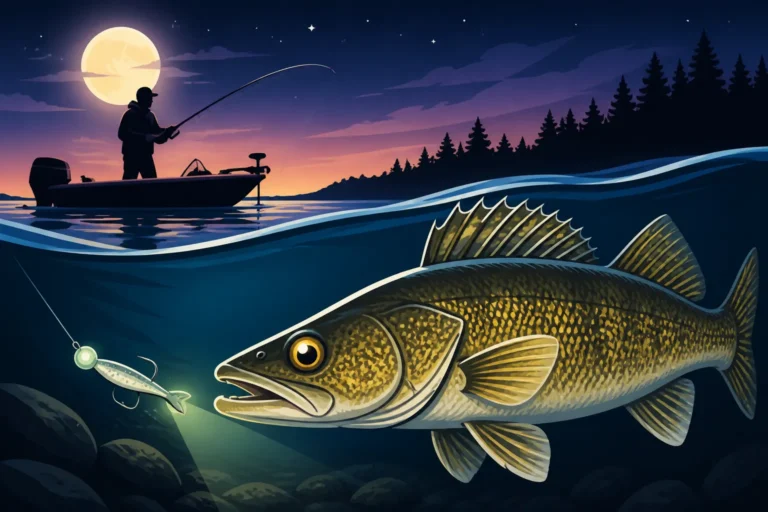
Given the still-cold water temperatures, slow and deliberate presentations are often the most effective. Jigs tipped with live bait, especially minnows like shiners or fatheads, are absolutely deadly. A classic jig-and-minnow presentation, slowly dragged or lightly hopped along the bottom, can entice even a sluggish pre-spawn walleye. Soft plastics on jigs can also be effective, mimicking baitfish. You'll want to target depths where these fish are holding, which can vary from 10-25 feet, depending on water clarity and available cover. For more specific tactics, check out Jigging for Walleye: Jig & Minnow Basics. During low-light conditions, particularly at dawn and dusk, walleye will often move even shallower to feed, sometimes right up onto the edges of the spawning areas themselves. The article on Best Walleye Fishing Tactics in Minnesota offers a broader look at techniques that can be adapted for this time of year.
Post-Spawn Patterns and Recovery Bites
Once the main spawning event concludes and the walleye opener is upon us, anglers need to adjust their thinking. Females, as we discussed, will have moved off the immediate spawning grounds to recover, often seeking out adjacent deeper breaks or flats. Think of areas offering easy access to both cover and potential forage, but where they can also rest. They might be sluggish, but they will eventually need to eat. This often means very subtle bites, so patience and sensitive equipment are crucial. The males, however, might still be lingering around the spawning grounds for a while longer, offering a more consistent bite as they recover and begin to feed more actively.
As the water continues to warm and walleye fully recover from the rigors of spawning, they will begin their seasonal migration towards summer feeding grounds. This is when they disperse from concentrated areas and spread out across the lake or river. Look for them to start relating to classic summer structure: main-lake points, submerged humps, weed lines, and deeper breaklines. Trolling crankbaits, especially with precise depth control, becomes increasingly effective as fish become more active and willing to chase. Techniques like Trolling Crankbaits for Walleye: Speed & Depth can be particularly potent. Bottom bouncers paired with crawler harnesses or live bait like leeches and nightcrawlers (see Best Live Bait for Walleye (Leeches, Minnows, Crawlers)) also shine as walleye scatter and move to these deeper, structure-oriented spots. Understanding this post-spawn transition is vital for consistent success throughout the early summer, as walleye fishing moves from concentrated staging areas to more expansive patterns. For a deeper dive into the species, read our Walleye Fishing in Minnesota: Complete Guide to learn Where to Catch Walleye in Minnesota throughout the year.
Walleye Spawning Conditions & Angling Impact
| Stage | Water Temperature | Primary Location | Walleye Behavior | Angler Strategy |
|---|---|---|---|---|
| Pre-Spawn | 35-45°F (2-7°C) | Deeper staging areas, river bends | Aggressive feeding to build energy, schooling | Vertical jigging with minnows, slow retrieves with plastics |
| Peak Spawning | 40-50°F (4-10°C) | Rocky reefs, river rapids/riffles | Focused on reproduction, minimal feeding | Regulations often close/restrict fishing, minimal success |
| Post-Spawn | 45-55°F+ (7-13°C+) | Recovery areas, adjacent breaks | Females recuperating, males lingering, gradually dispersing | Slower presentations, focus on transition lines, follow fish to structure |
Disclaimer
Fishing regulations, seasons, and limits can change. Always consult the most current Minnesota Department of Natural Resources (DNR) fishing regulations before heading out on the water. This guide is for informational purposes only and should not be considered a substitute for official DNR publications.