Drop-Shot for Smallmouth Bass
Smallmouth bass are arguably the most frustrating yet rewarding fish in the Land of 10,000 Lakes. You can spend hours watching world-class bronze-backs on your high-end sonar, only to have them ignore every crankbait and jig in your box while they hover over a rock pile on Mille Lacs. This guide solves the riddle of the "neutral" fish by mastering the drop-shot rig, a finesse technique designed to put a bait right in a smallmouth's face and keep it there until they simply can't help themselves.
The Mental Battle of Minnesota Smallmouth Fishing
If you have spent any time on the water in central or northern Minnesota, you know the specific brand of heartbreak that comes with smallmouth fishing. These fish are notorious for their "on-off" switch. One morning you are hammering them on topwater lures near the reeds, and by noon, it feels like the lake has been vacuumed clean. It is incredibly demoralizing to know the fish are there—perhaps tucked into a deep 20-foot trench or hugging a boulder—but having no way to trigger a strike.
When Fish Go Deep and Lock Jaws
Smallmouth bass are highly sensitive to barometric pressure and light penetration. In the crystal-clear waters of lakes like Rainy Lake or the Boundary Waters, a bright, bluebird sky can send trophy smallies scurrying for the shadows of deep structure. When they move deep, they often become lethargic. They aren't looking to chase down a fast-moving spinnerbait or a wide-wobbling crankbait. This is the primary reason why many anglers struggle during the mid-day "slump." They are using aggressive tactics for fish that are in a defensive, neutral mood.
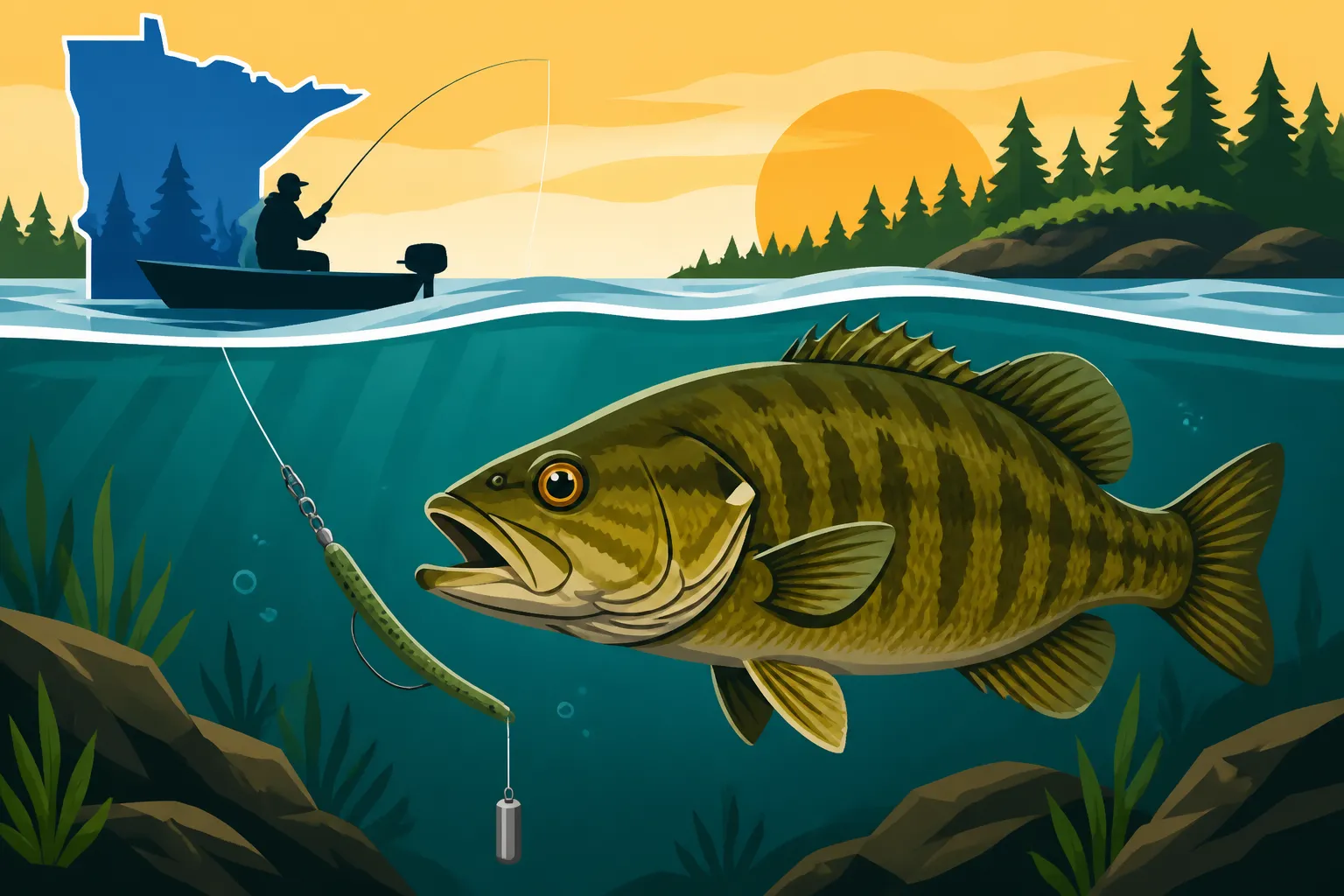
The drop-shot rig was essentially invented for this exact scenario. By suspending a small, soft plastic lure several inches to a few feet above the bottom, you are creating a presentation that looks vulnerable and easy to catch. It doesn't require the fish to expend much energy. For a veteran Minnesota angler, realizing that you need to slow down is the hardest part of the battle. We are often conditioned to "power fish" to find the active schools, but the drop-shot is about staying put and out-waiting the stubborn ones.
The Pressure on High-Traffic Metro Lakes
If you are fishing Lake Minnetonka or Prior Lake, you aren't just battling the fish; you are battling the pressure. These lakes see thousands of lures every single week. By the time mid-summer rolls around, a three-pound smallmouth has likely seen every popular lure sold at the big-box stores. They become "lure shy," flinching at the splash of a heavy jig or the vibration of a loud rattle. This pressure creates a cycle of frustration where the more you try to grab their attention, the more you actually repel them.
Using a drop-shot rig on these pressured waters provides a much more natural look. Because the weight is at the bottom and the hook is tied directly to the line above it, the lure has a unique, weightless action that mimics a dying minnow or a confused crayfish. It doesn't "thud" onto the rocks; it dances. This subtlety is often the only way to get a bite when you're fishing in the shadow of a multimillion-dollar mansion on a busy Saturday afternoon in the Twin Cities.
Navigating the Weather Rollercoaster
Minnesota weather is famous for changing every fifteen minutes. A cold front moving through can shut down the smallmouth bite faster than you can put on a sweatshirt. During these post-frontal conditions, fish often move slightly off their primary structure and tuck into the "transition zones"—where the rock meets the mud or where the weeds start to thin out. Finding these fish is one thing, but getting them to eat a bait when the water temperature has dropped five degrees is a different challenge entirely.
The drop-shot excels here because it allows for an extremely slow vertical presentation. You can literally "dead-stick" the bait, letting the natural movement of the water provide the action. When the fish are cold and sluggish, they won't move three feet to hit a lure. You have to put it within three inches of their nose. Mastering Best Smallmouth Bass Fishing Tactics in Minnesota means having the patience to use the drop-shot when the weather turns sour, rather than giving up and heading back to the cabin.
Building the Perfect Drop-Shot Rig
You can't just slap a weight on your line and expect it to work effectively. The drop-shot is a precision system, and the components you choose will dictate how much feel you have and how the bait behaves in the water. Many anglers make the mistake of using gear that is too heavy, which kills the subtle action of the plastic and makes the rig feel "clunky" on the bottom.
Choosing the Right Hook and Weight
The hook is the most critical part of the connection. For most Minnesota smallmouth applications, a size 1 or 2 drop-shot hook is the gold standard. These are small, fine-wire hooks designed for "nose-hooking" small plastics. The fine wire allows for easier penetration when you set the hook with a light-action rod. If you are fishing around heavier cover, like the thick cabbage weeds found in Leech Lake, you might opt for a "rebarb" style hook that allows you to rig the plastic weedless, but for open water rock piles, the exposed tiny hook is superior.
When it comes to weights, tungsten is your best friend. While lead is cheaper, tungsten is much denser and harder. This means it is smaller in profile for the same weight, and more importantly, it transmits vibrations much better. You can actually feel the difference between a sandy bottom and a gravel bottom through your rod tip when using tungsten. You can find a wide variety of these specialized tungsten weights on Amazon, which is often the best place to stock up on different sizes like 1/8 oz for shallow water and 3/8 oz for those windy days on the big lakes.
Rod, Reel, and Line Selection
A drop-shot rig requires a specialized touch. You want a 6'10" to 7'2" medium-light power spinning rod with a fast or extra-fast action. The "fast" tip is crucial; it needs to be sensitive enough to detect a fish "breathing" on the bait, but it also needs enough backbone to handle a charging four-pound smallie that decides to dive under the boat. If the rod is too stiff, you will pull the hook out of the fish's mouth; if it is too soft, you won't be able to maintain a good feel of the bottom.
Pair this rod with a high-quality 2500 or 3000 series spinning reel. Look for something with a smooth drag system, as smallmouth are famous for their last-second runs when they see the net. For your line, the "pro" setup is 8lb to 10lb braided main line tied to a 6lb or 8lb fluorocarbon leader. Braided line has zero stretch, providing incredible sensitivity, while the fluorocarbon leader is virtually invisible to the fish. If you're looking for a new reel to balance out your finesse setup, check out the Best Spinning Reels for Walleye guide, as many of those high-performance reels are perfectly suited for smallmouth drop-shotting as well.
The Importance of Leader Length
The distance between your hook and your weight—the "leader" portion of the drop-shot—is a variable that you must adjust throughout the day. A common mistake is tying the hook 12 inches above the weight and never changing it. If the fish are hugging the bottom, perhaps feeding on gobies or crayfish, you want a short leader, maybe only 4 to 6 inches. This keeps the bait in their immediate strike zone as they cruise the rocks.
However, if you are seeing fish suspended a few feet off the bottom on your electronics, you need to lengthen that leader. On lakes with high water clarity, smallmouth will often hover two or three feet above a rock pile to get a better vantage point for passing baitfish. In this case, a 24-inch or even 36-inch leader can be the difference between a limit and a "skunk." Always keep an eye on your sonar; if you're using the How to Catch More Fish With a Fish Finder techniques, you'll know exactly where those fish are sitting in the water column.
Prime Locations for Minnesota Smallmouth
Minnesota offers a diverse range of habitats for smallmouth bass, from the sprawling "inland seas" to the winding river systems of the southeast. The drop-shot is effective in almost all of them, but you have to know how to adapt your location-scouting to fit the technique. You aren't looking for just "any" spot; you are looking for specific high-percentage areas where fish congregate.
| Location Type | Key Characteristic | Why Use a Drop-Shot? |
|---|---|---|
| Deep Rock Piles | Isolated boulders in 15-25 ft | Keeps bait stationary in the "hot zone" |
| Weed Edges | Transition from cabbage to sand | Mimics baitfish darting in/out of cover |
| River Eddies | Calm water behind current breaks | Prevents the bait from getting swept away |
| Dock Pilings | Deep-water docks with shade | Precise vertical delivery in tight spaces |
| Sunken Islands | Submerged humps near deep basins | Targets fish moving up to feed at mid-day |
Deep Rock Piles on Mille Lacs Lake
Mille Lacs is arguably one of the best smallmouth lakes in the world, and the drop-shot is the king of techniques here. The lake is filled with massive rock reefs and isolated "transition" spots where the bottom changes from large boulders to smaller cobble. During the summer, the biggest smallmouth migrate to these deep-water haunts, often sitting in 18 to 24 feet of water.
The challenge on Mille Lacs is the wind. It is almost always blowing, making it difficult to keep a light lure on the bottom. This is where the drop-shot shines. By using a slightly heavier weight (up to 1/2 oz if needed), you can maintain contact with the rocks while your boat drifts. You are looking for those "sweet spots" on the edges of the reefs. Using a Mille Lacs Lake Map: Mud Flats & Structure can help you identify these specific underwater highways where the smallmouth travel. When you find a cluster of fish on your side imaging, drop the rig down and wait for the "thud."
Weed Edges and Docks on Lake Minnetonka
While many people associate the drop-shot with deep rocks, it is incredibly effective on the weed edges of Lake Minnetonka. The smallmouth here love the deep cabbage lines, especially where they intersect with a hard bottom. They use the weeds as an ambush point. If you try to drag a traditional jig through these areas, you will spend half your time cleaning off weeds. A drop-shot, however, allows the weight to sit in the muck while the lure stays clean and visible just above the vegetation.
Another overlooked spot on Minnetonka is the deep-water docks. Many of the docks on the main lake points extend out into 10 or 15 feet of water. Smallmouth will often suspend under the floats or cruise between the pilings. By "pitching" a drop-shot to the corners of these docks, you can let it sink vertically. Often, the fish will hit it on the initial fall. For more tips on navigating this complex metro fishery, our Lake Minnetonka Fishing: Metro Trophy Water guide offers a deep dive into the specific bays and points that hold the most "brown fish."
River Current Breaks on the St. Croix
The St. Croix River is a gem for smallmouth anglers, but river fishing presents the challenge of constant current. Traditional lures can get swept away too quickly, never reaching the fish tucked behind a fallen log or a wing dam. The drop-shot is surprisingly effective in rivers because the weight anchors the rig, allowing the current to provide all the action for your soft plastic.
You want to target the "seams" where fast water meets slow water. Cast the rig into the faster current and let it sweep down into the eddy. Once the weight hits the bottom, hold your rod tip high and let the lure dance in the flow. This looks like a minnow struggling to swim against the current—an easy meal for a hungry river smallie. Be mindful of the Minnesota Bass Season (New 2026 Catch-and-Release) rules, especially on border waters like the St. Croix, where regulations can differ from inland lakes.
Lure Selection and Soft Plastics
Choosing the right plastic for your drop-shot is where you can get creative. In Minnesota, the forage base varies wildly. In some lakes, the fish are keyed into perch and shiners; in others, they are gorging on crayfish or the invasive round goby. Your goal is to provide a profile that looks familiar but stands out just enough to trigger a predatory response.
Finesse Worms and Minnow Imitators
The most common choice for a drop-shot is a 4-inch finesse worm. These are usually straight-tail worms with a very soft salt-impregnated body. The lack of a "paddle tail" is actually a benefit here; you want a lure that moves with the slightest quiver of your hand. When the water is calm and the fish are skittish, a plain, dark-colored worm (like Green Pumpkin or Junebug) is hard to beat.
Minnow imitators are the other staple. These often have a split tail or a tiny "pin tail" that vibrates. On lakes with high populations of emerald shiners, a pearlescent or silver-flecked plastic can be deadly. If you find yourself running low on these essentials, jumping on Amazon to grab a bulk pack of "Roboworms" or "Strike King Dream Shots" is a quick way to ensure you're never caught without the right color. These specific brands are designed to float slightly, which helps keep the bait horizontal on the hook.
Matching the Hatch: Crawfish and Goby Patterns
In recent years, the arrival of the round goby in some Minnesota waters has changed smallmouth behavior. Gobies are bottom-dwellers, and smallmouth have learned to hunt them aggressively. A goby-style plastic—short, fat, and usually a mottled brown or olive color—is now a must-have in your tackle box. When fishing these, you want to keep your weight on the bottom and use very subtle hops to mimic the goby's darting movement.
Crayfish are the timeless staple of a smallmouth's diet. While a full-sized craw jig is great for active fish, a "baby craw" on a drop-shot is a finesse killer. Look for plastics with small claws that have a lot of action. In the spring and early summer, crayfish often have a reddish or orange tint after molting, so adding a bit of orange flake to your lure can be a "secret weapon." Referencing the Best Lures & Baits for Minnesota by Species can give you even more ideas on how to match the local forage perfectly.
Using Scent and Color to Your Advantage
Don't underestimate the power of scent in deep water. In depths of 20 feet or more, light is filtered, and colors start to fade. A fish's sense of smell becomes a primary tool for locating prey. Using plastics that are pre-scented or applying a gel-based scent (like coffee or crawfish) can encourage a fish to hold onto the bait longer, giving you that extra second to feel the bite and set the hook.
Color selection should follow the "clear water, natural colors" rule. In the clear lakes of the Northwoods, stick to translucents, olives, and browns. In the more stained waters of the southern Minnesota river systems, you might need something with a bit more "pop," like a chartreuse tail or a solid black profile that creates a strong silhouette. If you're looking for specialized scents or high-vis dyes, Amazon carries various "JJ's Magic" or "MegaStrike" products that can be applied to any soft plastic in seconds.
Step-by-Step Techniques for Mastering the Drop-Shot
The beauty of the drop-shot is its simplicity, but the nuance is in the "cadence." You aren't just throwing it out and reeling it in. There is a specific rhythm to the movement that separates the experts from the amateurs.
The Vertical Presentation for Deep Structures
When you are positioned directly over a rock pile or a school of fish you've spotted on your electronics, the vertical drop is your best friend. Release your bail and let the weight fall straight down. Once it hits the bottom, take up the slack until you just barely feel the weight of the sinker. Do not lift the weight off the bottom!
Instead, gently "shake" the rod tip. You want to move the tip only about an inch or two. This sends a vibration down the line that makes the lure dance while the weight stays anchored. Imagine you are trying to make the lure shiver, not jump. Every 30 seconds or so, lift the whole rig up a few feet and let it "flutter" back down. Most bites will feel like a slight "weightiness" or a subtle "tick" on the line. This is where How to Catch Smallmouth Bass on a River techniques often overlap, as maintaining verticality is key in moving water as well.
The Drag and Shake Method for Flats
If you are fishing a large, flat area—like the vast gravel bars on Lake Winnibigoshish—you need to cover more water. This is where the "drag and shake" comes in. Cast the rig out as far as you can and let it sink. Once it's on the bottom, instead of reeling, slowly sweep your rod to the side, dragging the weight across the floor.
As you drag, the weight will "clink" against rocks and pebbles, which actually attracts smallmouth from a distance. Stop every few feet and give the line that signature shake. You are essentially "walking" the bait across the lake bed. This is a fantastic way to find roving schools of fish that aren't tied to a specific boulder. It’s also a great way to learn the topography of a new lake, as the tungsten weight acts like a finger feeling the bottom for you.
How to Read Your Electronics with a Drop-Shot
Modern electronics have revolutionized drop-shotting. If you have "Live" sonar, you can actually watch your weight fall and see the fish's reaction in real-time. This is the ultimate "video game" fishing. If you see a fish approach the bait and then turn away, you know you need to change something—maybe a smaller lure, a different color, or a slower shake.
Even with traditional 2D sonar, you can see your "jig" as a line on the screen. If you see a thick arc (a fish) move toward your line, get ready. The anticipation of watching a fish track your lure on the screen is one of the most exciting parts of the sport. If you're struggling to interpret what you're seeing, check out the Vexilar vs Humminbird Ice Flasher: Which to Buy? discussion, as many of the principles of reading "lines" on a screen apply to open-water electronics as well.
Seasonality and Timing
Smallmouth behavior changes with the tilt of the earth. While the drop-shot works year-round, you need to adjust your depth and plastics to match the biological clock of the fish. In Minnesota, the seasons are distinct, and the bass follow a very predictable pattern.
Early Summer Post-Spawn Transitions
After the spawn (usually late June in Northern MN), smallmouth are hungry but tired. They often move from the shallow spawning flats to the first major drop-off. They might be in 8 to 12 feet of water, hanging around the edges of new weed growth. During this time, they are looking for high-protein meals to recover.
A drop-shot with a slightly larger profile, like a 5-inch worm, can be very effective now. The fish are more aggressive than they will be in the heat of August, so you can use a more "active" shake. Focus on the points and inside turns of the shoreline where the shallow water meets the deep basin. This is also a great time to review the Minnesota Walleye Opener 2026 dates, as smallmouth are often a fantastic "Plan B" if the walleye bite is slow on opening weekend.
Mid-Summer Heat and Deep Water Refuges
By late July and August, the surface water temperature in Minnesota can hit the high 70s or even 80s. Smallmouth prefer cooler, oxygen-rich water, so they head for the depths. This is the "classic" drop-shot season. You will find them on the deepest rock piles, sunken islands, and humps.
The bite during mid-summer can be very "light." You might not even feel a strike; your line will just start moving slowly to the side. Patience is the key. You have to be willing to sit on a spot for 20 minutes if you know the fish are there. This is the time to downsize your line to 6lb fluorocarbon and use your smallest, most natural-colored plastics. If you're fishing a big lake, remember that Mille Lacs Walleye Regulations (2026) can sometimes impact where you're allowed to fish, so always stay updated on the local rules.
Fall Feed Frenzy: Chasing the Schools
As the water cools in September and October, smallmouth sense that winter is coming. They begin to "school up" in massive numbers, often following schools of baitfish into deep basins or along steep bluffs. While this is often prime time for "cranking" or "swimbaits," the drop-shot remains a deadly tool for picking off the biggest fish in the school.
In the fall, the fish are often looking for larger forage to "fatten up." Switch to a minnow-imitation plastic with a bit of "flash" to it. You might find fish as deep as 30 or 40 feet during the late fall transition. It's a magical time to be on the water—the leaves are changing, the boat traffic is gone, and the smallmouth are at their heaviest weights of the year. Just make sure you have your Best Ice Fishing Gear for Minnesota (2027 Guide) ready, because in Minnesota, the transition from fall smallmouth to ice fishing can happen in the blink of an eye.
Minnesota Fishing Regulations and Ethics
As an angler in Minnesota, you have a responsibility to protect this world-class resource. The 2026 season has brought several updates to bass regulations, particularly regarding catch-and-release windows. Many of our premier smallmouth lakes are now strictly catch-and-release for part of the year to protect the spawning beds. Always check the latest Minnesota Fishing Regulations PDF: Where to Find It before you launch.
Smallmouth bass are slow-growing fish. A 20-inch "bronze-back" can be 15 to 20 years old. If you are fishing in deep water (over 25 feet), be aware of barotrauma. When a fish is pulled up quickly from deep water, its air bladder can expand, making it impossible for the fish to swim back down. If you plan on releasing your fish, try to bring them up slowly to allow them to acclimate to the pressure change. We all want to ensure that the next generation of anglers can experience the thrill of a screaming reel on a Minnesota lake.
Disclaimer
This guide is intended for informational and educational purposes only. Fishing regulations in Minnesota are subject to change by the Department of Natural Resources (DNR). Always verify current seasons, bag limits, and gear restrictions for the specific body of water you intend to fish. Practice safe boating and always wear a life jacket.