Best Tackle Box / Bag for Ice Fishing
It's a scene many of us have lived through: you've finally found the fish, your flasher is lit up, and the bite is on! But then, your excitement quickly turns to frustration as you dig through a disorganized tackle box or bag, fumbling with cold fingers trying to find that one specific jig or a fresh minnow. This endless search costs precious time, and often, precious fish. This guide is all about banishing that chaos, diving deep into choosing the best tackle box or bag specifically designed to keep your ice fishing gear organized, protected, and easily accessible, ensuring you're always ready when those Minnesota panfish, walleye, or pike decide to bite.
Why Your Ice Fishing Tackle Storage Matters Beyond Just Holding Gear
When you're out on the ice, especially during a hot bite, every second counts. Your tackle storage isn't just a container; it's a critical part of your overall fishing strategy, directly impacting your efficiency and enjoyment. Think about it: ice fishing presents unique challenges that open-water fishing often doesn't, making thoughtful organization even more vital.
The Frustration of Disorganization on the Ice
Imagine this: the lake is buzzing with activity, your buddies are reeling in crappies left and right, and you're there, gloved hands struggling to unzipper a frozen compartment, trying to remember which pocket holds your favorite tungsten jig. It's not just annoying; it actively detracts from the experience. That feeling of being unprepared or missing out because your gear isn't accessible is a common pain point for many ice anglers, myself included. We've all been there, cursing under our breath as a line snags on a stray hook, or a soft plastic gets mashed at the bottom of a pail.
The confined spaces of an ice shelter, the bitter cold that makes small tasks monumental, and the need for quick changes in presentation all amplify the problem of a messy tackle situation. Unlike a big boat where you might have room to spread out, a flip-over shelter or a hub-style ice house demands compact, efficient storage. A good tackle management system helps you streamline your process, allowing you to focus on the fish, not the frustration.
Furthermore, being organized means you're more likely to try different presentations or baits. If it's a hassle to switch from a minnow head to a wax worm, or from a rattle spoon to a small jig, you're less likely to experiment. And in ice fishing, experimentation can often be the key to cracking the code on a tough bite. An accessible system encourages you to adapt quickly, keeping you in the game.
Protecting Your Investment: Lures, Line, and Electronics
Ice fishing lures, especially the tiny tungsten jigs or delicate plastics, can be surprisingly expensive. A poorly chosen tackle box can lead to bent hooks, chipped paint, or crushed soft baits, essentially throwing money away. Your tackle isn't just a collection of items; it's an investment, and protecting it from the harsh ice environment is crucial for longevity and performance.
Beyond lures, consider your terminal tackle. Spools of fluorocarbon or monofilament line need protection from UV rays and physical damage. Hooks and swivels can rust if exposed to moisture, becoming weak and unreliable. A good tackle storage solution shields these essential items from the elements, preventing rust, tangles, and premature wear. This protection extends to your smaller, sensitive gear too, like spare batteries for your flasher or a small underwater camera that might fit into a specialized compartment.
The cold itself can also be detrimental. Plastics can become brittle, and some metals can corrode faster with exposure to moisture and freezing temperatures. A well-designed tackle system, often with features like water-resistant seals or durable, cold-weather tested plastics, ensures that your gear remains in prime condition, ready to perform when you need it most. Investing in a quality tackle storage system is a small price to pay to safeguard the larger investment you've made in your fishing equipment.
Key Considerations When Choosing an Ice Fishing Tackle System
Picking the right tackle storage for ice fishing isn't a one-size-fits-all situation. What works for a solo angler targeting panfish might be completely inadequate for a group chasing trophy walleye and pike. You need to assess your personal fishing style, the conditions you typically face, and the specific gear you bring along.
Size and Capacity Needs Based on Your Fishing Style
Before you even start looking, sit down and think about what you actually need to carry. Are you a minimalist, bringing just a handful of jigs and a couple of small spoons for a quick panfish outing? Or do you load up with dozens of different lures, multiple spools of line, various weights, and an array of tools for a full day of multi-species angling? Your choice of tackle system should reflect this reality. For example, if you primarily target panfish with tiny jigs, you'll need lots of small, secure compartments. If you're going after bigger fish with larger spoons and rattle baits, you'll need more spacious sections.
Consider the duration and type of your trips. A quick, mobile approach, perhaps hiking to remote spots, demands a compact, lightweight bag. In contrast, a comfortable day in a permanent ice house might allow for a larger, more robust box with more capacity. Family trips, especially with kids who love to bring "just one more lure," also often necessitate greater capacity and potentially more dedicated organization to keep everyone's gear separate and easy to find. It's about matching the storage to the scale of your adventures.
Finally, think about your primary shelter. A small, one-person flip-over like a Clam Kenai or an Otter XT Hideout has limited floor space, meaning a huge, unwieldy tackle box will be a hindrance. You might prefer something that tucks neatly into a corner or even hangs from a support bar. For larger hub shelters or permanent ice shacks, you might have more room to spread out, allowing for larger, multi-tray boxes or a more extensive modular system. Your fishing environment dictates a lot about the practical size and form factor of your tackle storage. If you're looking for guidance on setting up your ice house, check out our guide on Ice Fishing in Minnesota: Complete Beginner-to-Pro Guide
Material Durability and Cold-Weather Performance
Ice fishing gear lives a tough life. It's subjected to freezing temperatures, sharp hooks, wet slush, and often, rough handling. The materials used in your tackle box or bag are critical for its longevity and performance in these conditions. Cheap plastics can become brittle in sub-zero temperatures, leading to cracks and broken latches. Imagine a sudden crack in your box, spilling all your tiny jigs onto the ice – not ideal!
Look for tackle boxes made from high-impact, cold-resistant plastics or bags constructed from heavy-duty, denier-rated fabrics with reinforced stitching. Good quality zippers that won't freeze up or corrode are also essential. Many ice anglers prefer bags with a rubberized or waterproof bottom to prevent moisture from seeping in when sitting on wet ice or slush in a sled. Water resistance is paramount to prevent rust on hooks and lures, so sealed lids and durable, water-repellent fabrics are major pluses.
Consider how the components will hold up. Are the latches robust and easy to operate with gloved hands? Do zippers have large pulls? Are there any drainage holes if you're prone to getting water inside? A tackle system that can withstand the rigors of a Minnesota winter, from freezing rain to brutal wind chills, will serve you well for many seasons. Brands like Plano, often found at places like Bass Pro Shops, are known for their cold-weather resilient plastics, while many soft-sided bag manufacturers use heavy-duty coated fabrics to combat moisture.
Portability and Ease of Access
How you transport your gear to and from your fishing spot is a huge factor. If you're pulling a sled a long distance across a lake, a heavy, awkward tackle box can quickly become a burden. For mobile anglers, a soft-sided tackle bag with a comfortable shoulder strap or a backpack-style system might be ideal, allowing you to carry your gear hands-free.
Once you're at your spot, ease of access becomes the priority. Can you quickly open the box or bag and retrieve what you need without having to rearrange everything? This is where thoughtful design really shines. Some tackle boxes have multiple trays that fan out, while others have large, clear utility boxes that are easily removed and swapped. The best systems allow you to see your gear, grab it, and get back to fishing with minimal fuss.
Think about how you'll typically be positioned while fishing. Are you sitting on a bucket, kneeling, or standing in a large permanent house? Your tackle storage should be easy to reach from your fishing position. For example, a bucket caddy fits right on top of your pail, keeping essentials close. A compact bag might sit easily on your lap or next to your auger. Consider how quickly you can get to your most-used items like jigs, bait, and a pair of pliers.
Types of Tackle Storage Solutions for Ice Anglers
Just as there are many ways to fish through the ice, there are numerous options for organizing your gear. Each type has its own set of advantages and disadvantages, making the "best" choice highly personal.
Traditional Hard-Sided Tackle Boxes
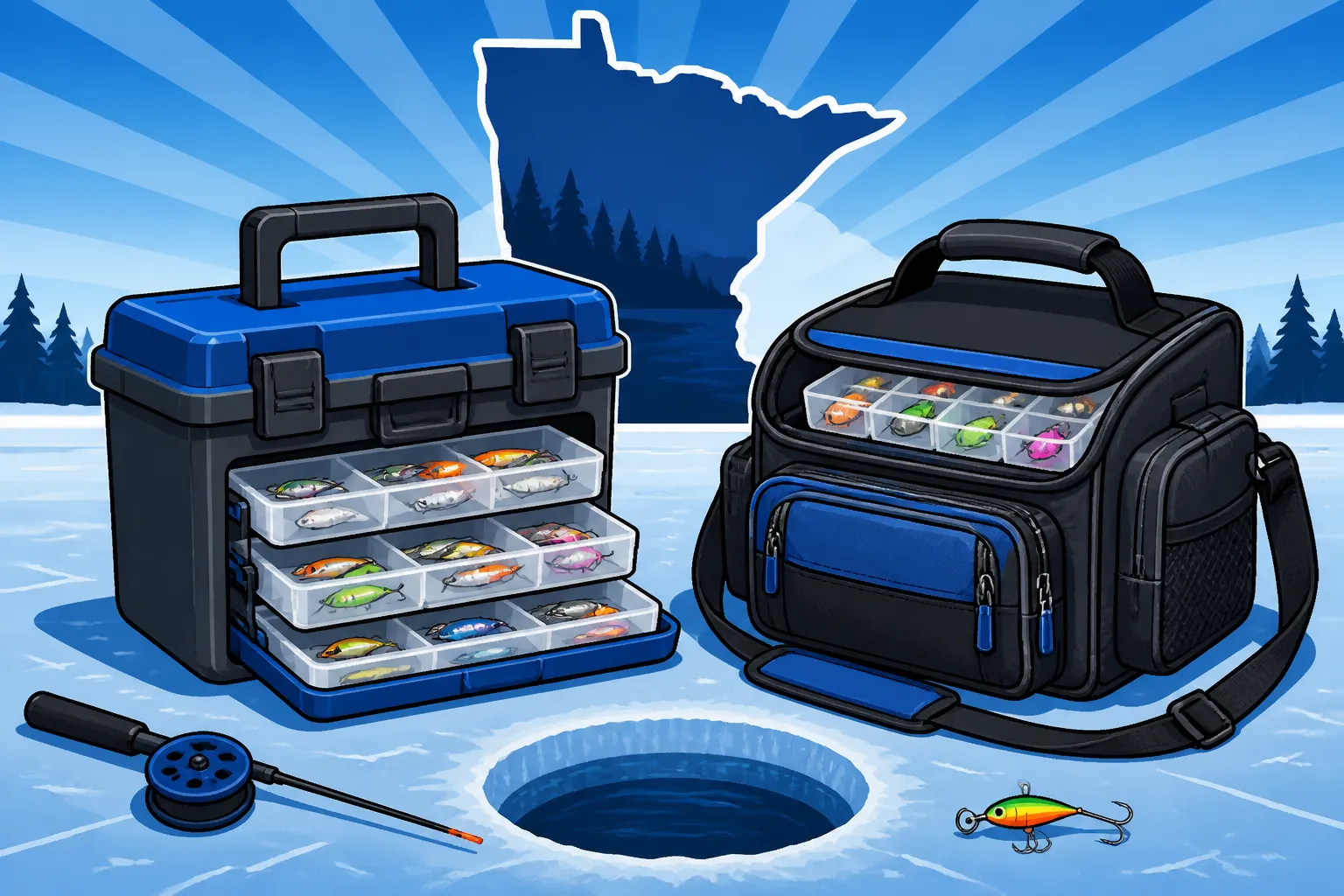
These are probably what most people envision when they think of a "tackle box." They often feature a sturdy, rigid plastic construction with a main compartment and several cantilevered trays that swing open as the lid is lifted. They've been a staple for generations of anglers for a good reason – they offer robust protection and decent organization.
Pros: Hard-sided boxes are excellent for protecting delicate items from being crushed. Their rigid shell is great for stacking other gear on top of them in a sled without worry. Many models offer a degree of water resistance, and some even feature O-ring seals for true waterproofing, which is a major benefit for ice fishing to prevent rust. They are also generally very durable and can withstand bumps and drops relatively well. You'll find a massive selection of all these types, from budget-friendly options to premium gear, at retailers like Bass Pro Shops, or with the incredible variety and quick shipping from online giants like Amazon.
Cons: The main downsides often include their bulk and weight. The fixed compartments, while organized, can be limiting if you need to carry unusually shaped items or want more flexibility. They can also be a bit cumbersome to dig through, especially if you have deep compartments and need to reach something at the very bottom. For ice fishing, opening the full clamshell design in a cramped shelter can sometimes be awkward.
Soft-Sided Tackle Bags and Backpacks
Soft-sided bags have soared in popularity among all types of anglers, and ice anglers are no exception. These are typically made from durable fabric (like polyester or nylon) and often come equipped with several clear, removable utility boxes (often from brands like Plano) that slide into designated slots. Many also feature external pockets for additional storage.
Pros: The flexibility of soft bags is a huge plus. They are generally lighter than hard boxes and can be molded into tight spaces within a sled or an ice shelter. The external pockets are fantastic for quick access to tools, gloves, or a thermos. When packed with modular utility boxes, they offer excellent customization – you can easily swap out boxes based on the species you're targeting or the specific lures you'll be using. Backpack versions are fantastic for mobile anglers who hike to their spots.
Cons: While many soft bags feature water-resistant materials and rubberized bottoms, they generally offer less crush protection than hard boxes. A heavy item placed on top of them in a sled could potentially damage lures inside. They might also be less completely waterproof, so care needs to be taken to keep them out of standing water or heavy slush.
Specialized Ice Fishing Buckets and Caddies
The humble 5-gallon bucket is an ice angler's best friend. It serves as a seat, a carrier for bait, and a general hauler of gear. But without proper organization, it can quickly become a black hole of tangled lines and lost jigs. This is where specialized bucket caddies and inserts come in.
Pros: The bucket system is incredibly versatile and cost-effective. You can pick up a good quality bucket for just a few dollars, and then add inserts or caddies to organize it to your heart's content. Many caddies fit snugly inside or on top of the bucket rim, keeping frequently used items easily accessible. Some bucket lids even double as a padded seat, enhancing comfort. It's a great choice for those who want a multi-purpose item that can carry anything from your Best Ice Fishing Gear for Minnesota (2027 Guide) to your lunch.
Cons: Without proper inserts, a bare bucket is the epitome of disorganization. Items can rattle around, get tangled, or fall to the bottom, requiring a deep dive. While the bucket itself is sturdy, the contents inside may not be as well protected from impacts as in a hard-sided box. Also, the open top (even with a caddy) can expose some gear to snow, slush, or direct cold.
Modular Systems and Utility Boxes
This category really speaks to the heart of organization and customization. Modular systems revolve around standardized clear plastic utility boxes, often referred to as 3600 or 3700 series (referring to their dimensions, typically by Plano). These boxes are designed to fit into many soft-sided tackle bags and even some hard boxes, allowing you to build a tackle system tailored exactly to your needs.
Pros: Customization is the biggest benefit here. These boxes usually come with adjustable dividers, allowing you to create compartments of various sizes for specific lures, hooks, or weights. Their clear lids mean you can see exactly what's inside at a glance, eliminating guesswork. They are fantastic for sorting specific lure types, like different colors of tungsten jigs for panfish, or various sizes of spoons for walleye. You can easily grab the box you need for a specific species or fishing scenario and leave the rest in your main bag. This also makes organizing your Best Lures & Baits for Minnesota by Species a breeze.
Cons: While the individual boxes are relatively inexpensive, building a comprehensive system can add up. You'll also typically need a larger soft bag or hard box to carry a collection of these utility boxes, as they aren't meant to be carried individually. The plastic, while durable, can still crack if subjected to extreme force or cold, so choosing quality brands is important.
Essential Features to Look for in a Quality Ice Fishing Tackle Box or Bag
Once you've decided on the general type of tackle storage that fits your style, it's time to drill down into the specific features that will make a real difference out on the ice. These small details can drastically improve your experience and extend the life of your gear.
Thoughtful Compartmentalization and Dividers
This is where the rubber meets the road for organization. Good tackle storage goes beyond just having "pockets" – it has compartments designed for the unique challenges of ice fishing. Look for systems that offer a variety of compartment sizes, with an emphasis on smaller, secure sections for tiny jigs, hooks, and swivels. Nothing is more frustrating than a dozen small tungsten jigs rattling around and getting tangled together.
Adjustable dividers are a huge plus, allowing you to customize the layout to fit your exact lure collection. Some bags also feature dedicated slots for things like spools of leader line, small tool sheaths, or even a specific pouch for your fishing license. Consider if there's a good place for pliers, line cutters, and forceps, keeping them easily accessible without them flopping around and snagging other gear. A well-designed interior prevents tangles, keeps hooks from dulling, and protects soft plastics from getting mashed. If you're focusing on Ice Fishing for Walleye: Tactics & Setups you might need specific compartments for rattle spoons and larger jigs.
Water Resistance and Drainage
Water is the enemy of fishing tackle, especially in the freezing environment of ice fishing where moisture can lead to rust and frozen components. Look for tackle boxes with tight-sealing lids, preferably with O-ring seals, to keep melting snow and slush out. For soft-sided bags, a waterproof or heavily rubberized bottom is a non-negotiable feature. This prevents moisture from wicking up into the bag when it sits on wet ice in your sled or on the floor of your shelter.
Some products even incorporate small drain holes, particularly in hard boxes, allowing any accumulated moisture to escape rather than festering inside. While absolute waterproofing might not always be achievable or necessary for soft bags, strong water resistance is key. This feature is especially important if you often find your gear sitting in a puddle of melting ice at the bottom of your sled or if you get caught in freezing rain. Preventing rust on your hooks, swivels, and even the internal mechanisms of your small reels is crucial for performance and longevity.
Easy-to-Use Zippers, Latches, and Handles
When your fingers are numb from the cold, or you're wearing thick gloves, fiddly zippers and small latches become incredibly frustrating. A quality ice fishing tackle system will feature oversized zipper pulls that are easy to grip, even with heavy mittens. Look for durable, corrosion-resistant zippers that won't seize up from moisture and cold. Many top-tier bags use self-healing zippers that can withstand more abuse.
Latches on hard-sided boxes should be robust and easy to operate with a simple push or pull, rather than requiring delicate manipulation. Avoid flimsy plastic latches that might snap off in the cold. For handles, comfort is key. Padded, ergonomic handles on hard boxes or a well-designed, adjustable shoulder strap on soft bags will make hauling your gear much more pleasant. If you're wearing bulky Best Ice Fishing Suits & Bibs (Float Suits) or similar winter attire, you'll appreciate these larger, more manageable features.
Integrated Rod Holders and Tool Storage
Some tackle bags and bucket systems go above and beyond by offering integrated features that further enhance convenience. External rod holders, often simple loops or sleeves, can be a game-changer for mobile anglers, allowing you to carry a couple of ice rods securely without them getting tangled in your hands or gear. This frees up your hands for pulling a sled or carrying an auger.
Dedicated external pockets or loops for tools like needle-nose pliers, line nippers, or a minnow dipper are also incredibly useful. These keep your essential tools within immediate reach, so you're not rummaging inside your main tackle compartment when you need them most. Some bags even have small, clear internal pockets for things like your Minnesota Fishing License: Cost, Types & How to Buy (2026) or a few hand warmers, ensuring everything you need for a day on the ice has its designated, easily accessible spot.
| Feature / Type | Hard-Sided Box | Soft-Sided Bag | Bucket System | Modular Utility Boxes |
|---|---|---|---|---|
| Durability | Excellent (crush-proof) | Good (fabric wear) | Very Good (bucket itself) | Good (plastic can crack) |
| Water Resistance | Often good, some waterproof | Varies, many water-resistant | Fair (top open), good with inserts | Good (sealed boxes) |
| Customization | Low (fixed dividers) | High (removable boxes) | Moderate (inserts) | Excellent (mix & match) |
| Portability | Moderate (heavy, bulky) | High (shoulder straps/backpack) | High (multi-use, sled-friendly) | High (within a larger bag/box) |
| Accessibility | Moderate (clamshell opening) | High (various pockets) | Moderate (reaching down) | Excellent (clear, organized) |
| Protection | High (for delicate items) | Moderate (can be crushed) | Moderate (depends on inserts) | High (individual item protection) |
| Price Range | $20 – $100+ | $30 – $150+ | $10 – $50+ (with inserts) | $5 – $20 per box |
Disclaimer
Fishing regulations, seasons, and limits can change. Always consult the latest Minnesota Department of Natural Resources (DNR) regulations before heading out on the ice. This guide is for informational purposes only and should not replace official DNR publications.