Brown Trout Season & Limits in Minnesota
It can be incredibly confusing trying to keep track of all the different fishing regulations here in Minnesota, especially when it comes to specific species like brown trout. You might wonder if the rules for catching a beautiful brown are the same as for a brook trout, or if that special stream you love has its own unique limits. This guide is here to clear up all that uncertainty, walking you through the current brown trout seasons and limits, helping you understand where to find them, and ensuring you're always fishing within the law.
Understanding Brown Trout in Minnesota's Waters
Brown trout are a beloved game fish in many parts of Minnesota, cherished for their challenging fight and beautiful, distinctive markings. They’re also a bit of a mystery to some, often confused with other trout species. Let's get to know them a little better.
A Brief History and Identification
Brown trout, scientifically known as Salmo trutta, aren't actually native to Minnesota. They were introduced from Europe in the late 19th and early 20th centuries, primarily to supplement existing trout populations and adapt to warmer, less pristine waters where native brook trout struggled. They've found a strong foothold in many of our state's cooler stream systems and even some lakes, proving to be incredibly resilient and a fantastic sport fish.
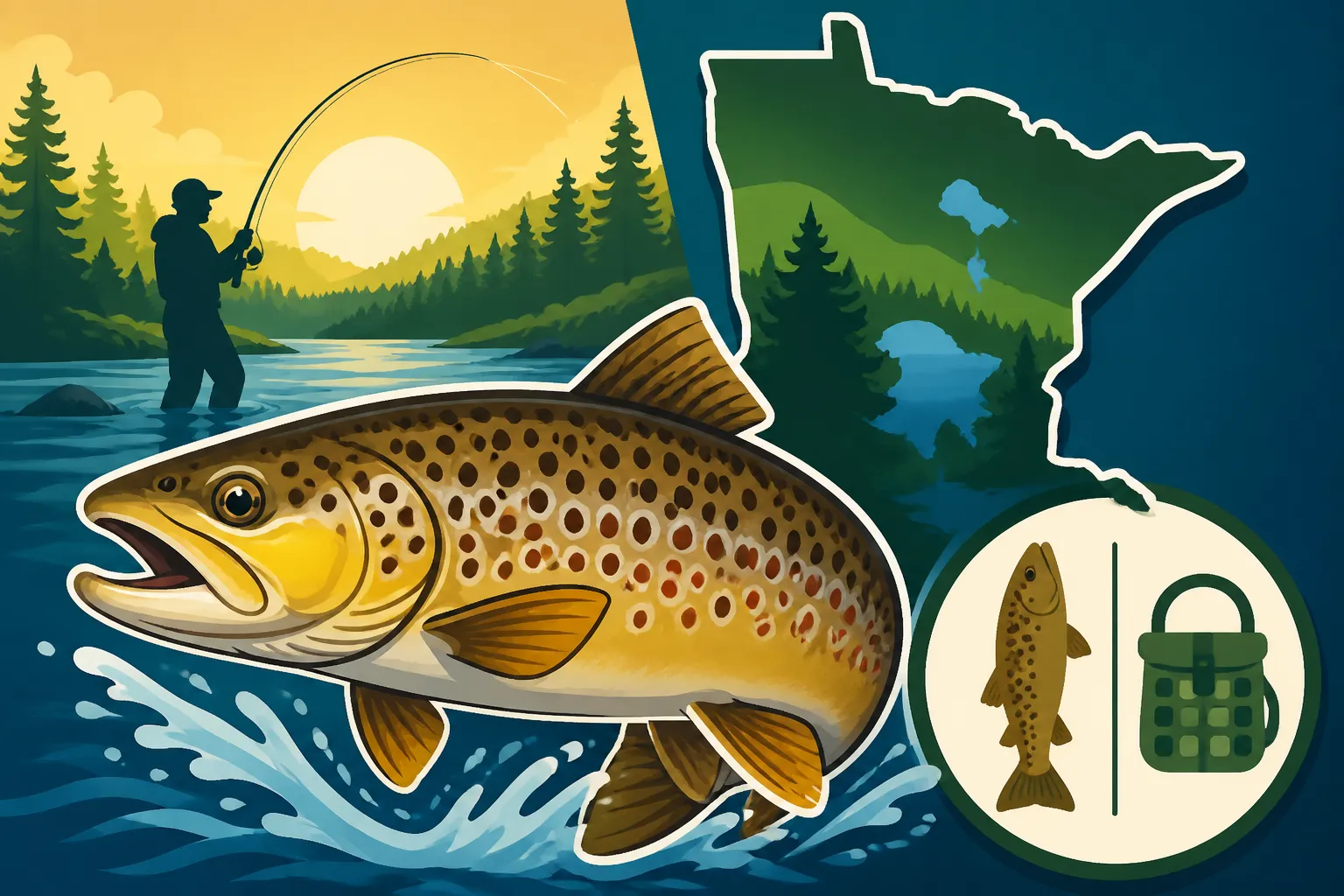
Identifying a brown trout is fairly straightforward once you know what to look for. They typically have a brownish-golden overall color, ranging from light tan to dark olive on their backs, fading to a lighter, often yellowish, belly. Their most defining features are the dark spots covering their body, often surrounded by lighter "halos" – particularly prominent on their flanks. You might also notice some red or orange spots mixed in, especially on vibrant, healthy fish. This distinctive spotting helps differentiate them from the worm-like markings of a brook trout or the iridescent band of a rainbow. They also tend to have a slightly more streamlined, torpedo-like body compared to the more stout brook trout.
Where to Find Brown Trout in Minnesota
When you think of brown trout in Minnesota, two main regions usually come to mind: the southeastern "Driftless Area" and the North Shore tributaries leading into Lake Superior. These areas provide the cool, clear, oxygenated water and varied habitat that brown trout absolutely thrive in.
The Driftless Area, with its unique geology of spring-fed streams and towering bluffs, is a prime brown trout haven. Here, you'll find countless miles of designated trout streams, many of which are specifically managed for wild brown trout populations. Think streams winding through counties like Houston, Fillmore, and Winona. These waters offer everything from deep pools and undercut banks to riffles and runs, providing ample cover and feeding opportunities. Anglers often explore streams like Hay Creek, Rush Creek, and the Root River system for some truly rewarding brown trout fishing. If you're looking for more details on these special waters, check out our guide on Driftless Area Trout Streams Southeast Minnesota.
Further north, the rivers and streams that flow into Lake Superior along the North Shore also hold impressive brown trout. While some of these are primarily known for their steelhead and brook trout runs, many of the lower stretches and estuaries offer excellent opportunities for resident browns, and even anadromous (lake-run) browns during certain times of the year. The Baptism River, Temperance River, and the Brule River are just a few examples where you might encounter these robust fish. These fish often feed on baitfish and insects, growing to substantial sizes in the cold, nutrient-rich waters.
Navigating Brown Trout Seasons in Minnesota
Understanding when you can legally fish for brown trout in Minnesota can be a little nuanced because their season often aligns with general "stream trout" regulations, but there are always exceptions and special waters to be aware of.
General Stream Trout Season Dates
For the vast majority of designated trout streams in Minnesota, including those holding brown trout, the season typically runs from mid-April through the end of October. This allows anglers ample opportunity to pursue these fish during the warmer months. However, it’s important to remember that these dates are for stream trout in general, which includes brook, rainbow, and brown trout. Always double-check the most current regulations from the Minnesota Department of Natural Resources (DNR) as dates can shift slightly from year to year. You can find detailed information about the statewide regulations in our article, Minnesota Fishing Seasons & Opener Dates 2026.
During the open season, conditions vary greatly. The early season, usually starting in April, can be challenging but rewarding, often finding fish hungry after the long winter. As summer progresses, water levels and temperatures can fluctuate, requiring different tactics. By fall, as water cools, brown trout become very active, often feeding aggressively in preparation for winter, making it a fantastic time to be on the water.
Lake Trout Season Specifics
While brown trout are predominantly found in streams, some Minnesota lakes are stocked with them, or they may exist as a naturalized population in lakes connected to trout streams. For brown trout caught in lakes, their season and limits generally fall under the "general inland waters" regulations for stream trout, or sometimes even specific lake trout regulations if they are listed.
However, it's rare for brown trout to have their own unique lake season distinct from other stream trout species. More often, if you catch a brown trout in a lake, it will adhere to the general stream trout lake regulations, which can differ from stream regulations. For instance, some deep, cold-water lakes might have continuous open seasons or different catch limits for stream trout compared to small, shallow streams. Always consult the specific lake's regulations in the DNR fishing guide to be absolutely certain, as general rules don't always apply to every single body of water. If you're interested in the larger, deeper dwelling trout, our article on Lake Trout Season & Limit in Minnesota might offer some useful comparisons.
Special Regulation Waters and Exceptions
This is where things get a bit more complex, and where paying close attention really matters. Many of Minnesota's prime brown trout streams, particularly within the Driftless Area, are managed under "Special Regulations." These regulations are designed to enhance the fishery, often promoting larger fish or protecting wild, self-sustaining populations.
These special regulations can include:
- Artificial Lures Only: Many streams prohibit the use of live bait to minimize fish mortality.
- Single Hook Only: Similar to artificial lures, single hooks can reduce harm to fish, especially during catch and release.
- Slot Limits: This means fish within a certain size range must be immediately released. For example, a slot limit might be "no harvest of fish between 12-16 inches," allowing smaller fish to grow and larger fish to spawn.
- Reduced Bag Limits: The number of fish you can keep might be significantly lower than the statewide general limit.
- Extended Seasons (Catch & Release Only): Some streams might have an extended season beyond the general October 31st closure, but only for catch and release fishing with specific tackle restrictions.
Before heading out, it's crucial to identify if the specific stream you plan to fish falls under special regulations. The Minnesota DNR fishing regulations booklet is your best friend here, as it lists these waters and their specific rules in detail. Missing these details can lead to fines and harm fish populations, so always do your homework! Our guide on Minnesota Trout Season Dates & Streams provides a general overview, but lake-specific or stream-specific rules always take precedence.
Brown Trout Limits: Bag and Possession Explained
Once you've understood the seasons, the next big piece of the puzzle is knowing how many brown trout you can actually keep. This is another area where general statewide rules meet specific local variations, making a little research essential for every trip.
Statewide Daily and Possession Limits
For most designated trout streams in Minnesota, brown trout fall under the general "stream trout" daily and possession limits. Currently, the statewide daily limit for stream trout (brown, brook, and rainbow combined) on designated trout streams is typically 5 fish, with only one fish over 16 inches allowed. The possession limit is usually the same as the daily limit, meaning you can't have more than 5 fish, with only one over 16 inches, in your possession at any time, whether on the stream or back at your vehicle or lodging.
However, keep in mind that "stream trout" also includes brook trout and rainbow trout. So, if you catch a mixed bag, the total number of all three species combined must not exceed the aggregate limit. This regulation is designed to manage the overall pressure on trout populations and ensure healthy numbers for future generations of anglers. For a broader understanding of statewide limits, check out Minnesota Fishing Limits: Bag & Possession 2026.
Size Restrictions and Slot Limits
Beyond the general daily and possession limits, size restrictions are very common in brown trout fisheries, especially in those special regulation waters we discussed earlier. These are implemented for a few key reasons:
- Protecting Spawners: Ensuring larger, mature fish can reproduce, contributing to the next generation of trout.
- Improving Fishery Quality: Allowing fish to grow to a larger size, creating opportunities for trophy catches.
- Managing Population Structure: Maintaining a healthy balance of different age classes within the population.
A common statewide rule for stream trout is that only one fish over 16 inches can be part of your daily limit of 5. However, in many special regulation streams, you might encounter more restrictive slot limits. For example, a stream might have a rule like "all trout between 10-16 inches must be immediately released." This means you could keep fish under 10 inches and one fish over 16 inches, but nothing in the middle. These specific slot limits are crucial for maintaining the quality of the fishing experience on those particular waters. Always consult the specific stream regulations to avoid any missteps.
Tackle and Gear Restrictions
In conjunction with special seasons and bag limits, many brown trout streams, particularly those managed for wild populations or trophy potential, also impose strict tackle and gear restrictions. The most common restrictions you'll encounter are "artificial lures only" and "single hooks only."
The "artificial lures only" rule means you cannot use live bait such as worms, minnows, or leeches. This is a conservation measure intended to reduce mortality rates for caught-and-released fish, as trout are less likely to swallow an artificial lure deep than a live bait. If a fish is caught on live bait and deeply hooked, its chances of survival after release are significantly reduced. The "single hook only" rule often goes hand-in-hand with artificial lures, further reducing potential injury to fish. Many anglers find the challenge of using only artificials to be part of the appeal, honing their casting and presentation skills. When you're shopping for specific trout gear, sites like Amazon often have great selections of compliant artificial lures and single-hook setups that adhere to these regulations. Remember, adhering to these rules is a vital part of ethical trout fishing and helps sustain these delicate ecosystems. Our guide on Best Gear for Stream Trout Fishing in Minnesota delves into some excellent options for these setups.
Why These Regulations Matter for Brown Trout
It’s easy to sometimes feel overwhelmed or even a little frustrated by the sheer volume of fishing regulations, especially when they differ from one stream to the next. But for a species like the brown trout, these rules are absolutely vital.
Conservation and Sustainable Fishing
Brown trout, while hardy, are not indestructible. They rely on cold, clean water, healthy insect populations, and undisturbed spawning grounds. Overfishing, especially of larger, spawning-sized fish, can quickly decimate a local population, taking years, if not decades, to recover. The Minnesota DNR implements these seasons, limits, and special regulations with extensive scientific research, considering factors like population size, reproduction rates, habitat quality, and angling pressure.
For example, restricting the harvest of larger fish through slot limits allows them to survive longer, grow bigger, and contribute more effectively to spawning. By limiting the number of fish an angler can keep, the overall harvest is controlled, ensuring that enough fish remain in the system to sustain themselves. The requirement for a Minnesota Trout Stamp & Trout Regulations also provides funding directly for trout stream habitat improvement and stocking programs, showcasing a direct link between angler participation and conservation efforts. These regulations are not arbitrary; they are carefully crafted tools for long-term health and vibrant fisheries, ensuring that future generations can enjoy the same pristine waters and thrilling catches we do today.
Impact on Anglers and the Fishery
Beyond conservation, these regulations directly impact the quality of your fishing experience. Imagine a stream with no limits – it would quickly be fished out, leading to smaller, fewer fish, and ultimately, a less enjoyable experience for everyone. By having thoughtful regulations in place, the DNR is actively working to create and maintain high-quality fisheries.
Special regulation waters, though more restrictive, often offer the best chance at catching truly large, wild brown trout. These streams become destinations for serious anglers who appreciate the challenge and the potential for a trophy fish. The "artificial lures only" rule, for instance, means fewer deeply hooked fish, which in turn means more fish survive to be caught another day, contributing to a healthy population that grows bigger. It shifts the focus from simply harvesting fish to the art and skill of the catch itself, often encouraging more thoughtful angling practices, which ultimately benefits everyone. This approach aligns perfectly with Catch and Release Best Practices in Minnesota, promoting responsible angling for all species.
Quick Guide to Brown Trout Regulations
Here's a simplified overview of current general brown trout regulations in Minnesota. Always consult the official Minnesota DNR Fishing Regulations for the most up-to-date and specific rules for your intended fishing location.
| Regulation Type | General Designated Trout Streams | Special Regulation Trout Streams (Examples) |
|---|---|---|
| Season Dates | Mid-April to Oct 31 | Varies; some C&R extended seasons |
| Daily Limit | 5 combined stream trout | Often reduced (e.g., 1-3 fish) |
| Possession Limit | 5 combined stream trout | Often reduced (e.g., 1-3 fish) |
| Size Limit | Only 1 over 16 inches | Often specific slot limits (e.g., 10-16" must be released) |
| Tackle | Artificial or live bait allowed | Often Artificial Lures Only, Single Hook Only |
| Trout Stamp | Required for anglers 18-64 | Required for anglers 18-64 |
Remember, this table is a general guide. Many streams in the Driftless Area, and some on the North Shore, have unique rules. Before you hit the water, consult the DNR's official guide to confirm the specific regulations for your chosen spot. It's available online and at most bait shops, and even on popular fishing apps like Fishbrain, which you can download from Amazon.
Gear Up for Brown Trout
Having the right gear makes all the difference when targeting brown trout, especially in those challenging streams. You'll want a lightweight spinning rod or fly rod, appropriate for the stream size and presentation you're planning. A good 5-6 weight fly rod is versatile for most Minnesota trout streams, allowing you to cast nymphs, dries, and streamers effectively. For spinning gear, a light-action rod with 4-6 pound test line is ideal.
When it comes to lures, consider small inline spinners (like Mepps or Panther Martin), tiny crankbaits, or various soft plastics for spinning gear. Fly anglers will want an assortment of nymphs (like Prince Nymphs or Pheasant Tails), dry flies (Caddis, Adams), and streamers (Woolly Buggers). Don't forget waders and wading boots for navigating slippery stream beds safely. A good pair of polarized sunglasses will help you spot fish and structure underwater. You can find a fantastic array of all these essentials on Amazon, from rod and reel combos to specialized fly-tying materials. Our guide on How to Catch Stream Trout: Nymphs & Dries can help you pick out some effective patterns.
Final Thoughts on Brown Trout Fishing
Fishing for brown trout in Minnesota is an incredibly rewarding experience. These cunning fish thrive in some of our most beautiful and serene natural settings. By understanding and respecting the seasons, limits, and special regulations, we ensure that these fantastic fisheries remain vibrant for years to come. Always do your homework before you go, prioritize conservation through responsible angling, and enjoy the pursuit of these magnificent fish. There’s truly nothing quite like the tug of a Minnesota brown trout on your line!
Disclaimer
Please note that fishing regulations, seasons, and limits are subject to change by the Minnesota Department of Natural Resources (DNR). While we strive to provide the most current and accurate information, it is the angler's responsibility to consult the official Minnesota DNR Fishing Regulations handbook or website before fishing to ensure compliance with all applicable rules. This guide is for informational purposes only and should not be considered a substitute for the official DNR regulations.