Where to Catch Bluegill in Minnesota
There's nothing quite like the sight of a bobber dancing on the water, then slowly sinking, signaling that a feisty bluegill has taken your bait. But in a state blessed with over 10,000 lakes, figuring out where to even start looking for these eager panfish can feel overwhelming. Many anglers, especially those new to Minnesota, struggle to pinpoint reliable spots amidst the vast aquatic landscape. This guide is here to cut through the confusion, offering a comprehensive look at the best places to catch bluegill across Minnesota, along with insights into their habits and the gear that'll put more fish in your cooler.
Understanding Bluegill Habitat and Behavior in Minnesota
Bluegills might seem like simple creatures, but understanding their preferred haunts and seasonal movements is the first step to consistently finding them. These little dynamos are prey for larger fish, so they're always looking for safety, food, and comfortable water conditions.
Shallow Water Sanctuaries: Weeds and Structure
Bluegills are truly creatures of the shallows. They thrive in areas where sunlight penetrates, fostering the growth of aquatic vegetation and providing abundant food sources. Think of these spots as their grocery store, nursery, and fortress all rolled into one. When you're scanning a lake, keep an eye out for tell-tale signs like extensive lily pad fields, dense cattail stands along the shore, or submerged grass beds. These aren't just pretty features; they are crucial elements of a bluegill's ecosystem.
Beyond plant life, bluegill also gravitate towards any kind of physical structure that offers cover. This could be a cluster of fallen trees from a shoreline storm, a brush pile intentionally sunk by a thoughtful angler, or even the shadows cast by a private dock extending into the lake. These structures provide refuge from predators like northern pike and bass, a place to ambush insects and smaller prey, and crucial shade during bright, sunny days. Identifying these types of shallow-water sanctuaries is a consistent key to successful bluegill fishing, no matter which lake you're on.
Seasonal Movements and Patterns
Just like clockwork, bluegill shift their locations throughout the year, driven by spawning instincts, food availability, and water temperature. Knowing these patterns will save you a lot of time and help you adapt your fishing strategy.
As spring warms the water, bluegill move into extremely shallow bays and flats, often congregating in water as little as two to three feet deep to create their distinctive circular spawning beds. This is often the easiest time to locate large numbers of fish, though it's also a critical time to practice catch-and-release to protect future populations. They prioritize warmth and security for their eggs, so look for protected areas that get a lot of sun.
Once summer fully arrives and water temperatures soar, bluegill tend to retreat slightly from the baking hot shallows. You'll often find them along the deeper edges of those same weed beds or suspended over nearby main lake points, especially those with access to deeper water. They still appreciate shade, so don't overlook areas where trees overhang the water or where deeper docks provide consistent cover. Later in the summer, as insect hatches wane, they might move to areas with small invertebrates or even tiny baitfish.
As fall cools the lakes, bluegill make a bit of a return trip, often congregating in slightly shallower water again, feeding aggressively to build up reserves for winter. They might be found around the same weed lines and brush piles, but perhaps a bit deeper than their spring spawning locations. Finally, during the long Minnesota winter, ice anglers find bluegill suspended over deeper basin areas or relating to remaining green weed growth under the ice. Understanding How to Catch Bluegill Through the Ice in Minnesota is a whole skill set in itself, but the core principle remains: find their food and shelter.
Top Minnesota Lakes Known for Productive Bluegill Fishing
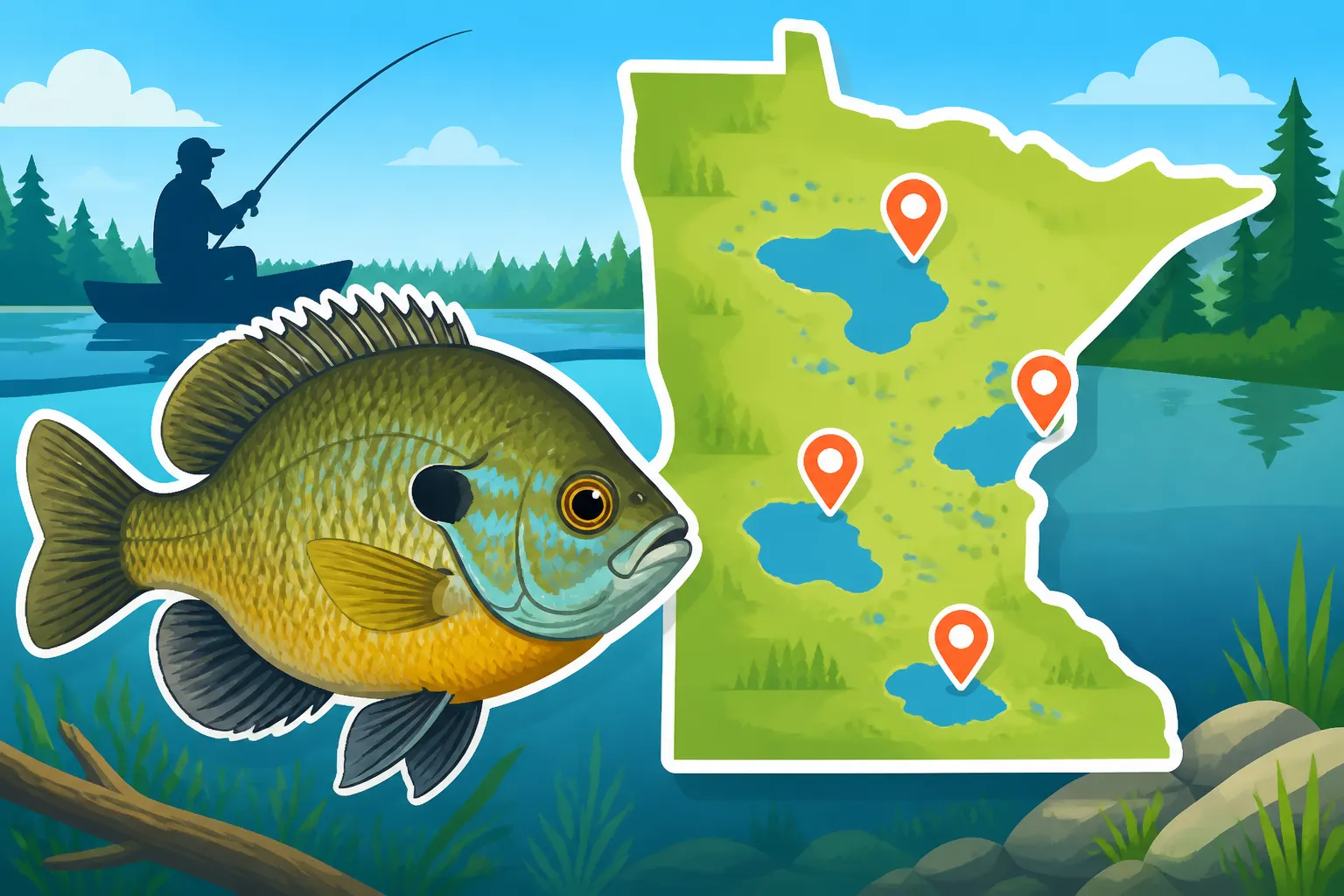
Minnesota truly lives up to its "Land of 10,000 Lakes" moniker, and thankfully, many of them are teeming with bluegill. While you can find them in almost any pond, some lakes stand out for their consistent populations and quality panfish action.
Northern Minnesota Bluegill Havens
Northern Minnesota is a treasure trove for anglers, and while walleye often steal the spotlight, many of these same vast, beautiful lakes offer incredible bluegill opportunities. They boast diverse structures, expansive weed beds, and rich aquatic ecosystems perfect for panfish.
Leech Lake, for instance, is famous for its walleye, but its numerous shallow bays, reeds, and wild rice beds also provide ideal habitat for bluegill. Areas like Steamboat Bay, Portage Bay, and Walker Bay, particularly around their shallower fringes and points, can hold impressive numbers of bluegill. Look for transitions where the hard bottom meets soft bottom or where submerged weeds create distinct edges. If you're planning a trip to this renowned fishery, our Leech Lake Fishing Guide offers even more detailed insights into its overall fishing potential.
Similarly, Lake Winnibigoshish, often affectionately called "Big Winnie," is another northern giant with excellent bluegill fishing, especially in its shallower, more protected areas. The lake's vast weed flats and submerged humps near shorelines are prime targets. The connected waters of Cut Foot Sioux Lake are particularly known for their abundant panfish. Cass Lake and its chain of lakes, including Lake Bemidji, also provide sprawling weed lines and numerous bays where bluegill thrive. These lakes have a strong forage base and diverse structures that support healthy populations of bluegill, making them a fantastic destination if you're willing to explore their expansive waters.
Central and Metro Area Gems
You don't always have to drive hours north to find great bluegill fishing. Central Minnesota and even the bustling Twin Cities metro area are home to some fantastic lakes where these sunfish thrive, offering convenient access for many anglers.
The Brainerd Lakes Area is a prime example, with countless lakes offering diverse fishing. While Gull Lake is renowned for its walleye and bass, its many bays and connecting channels, especially where docks and weeds intermingle, can be absolute bluegill hotspots. Smaller lakes like Pelican Lake (near Breezy Point) or Edward Lake are also often overlooked but productive for panfish. Our Gull Lake Fishing (Brainerd Lakes Area) guide can help you navigate that complex but rewarding system.
Closer to the metropolitan hustle, Lake Minnetonka stands out. Despite its popularity and heavy boat traffic, its sheer size, intricate shoreline, and hundreds of docks and weed lines make it an excellent bluegill lake. Exploring its countless bays and channels, especially early in the season or during less crowded times, can yield impressive results. Similarly, White Bear Lake and Forest Lake offer good panfish action, particularly around their public access points and weed beds. These metro lakes often experience more pressure, so fishing during weekdays or finding less accessible pockets can lead to better success. If you're in the area, our Lake Minnetonka Fishing: Metro Trophy Water article has more tips for fishing this iconic urban fishery.
Here's a quick look at some top bluegill spots:
| Lake Name | Region of Minnesota | Key Bluegill Features | Best Time to Fish | Notes |
|---|---|---|---|---|
| Leech Lake | North Central | Shallow bays, wild rice beds, submerged weeds | Spring/Early Summer | Explore Walker, Steamboat, & Portage Bays. |
| Lake Winnibigoshish | North Central | Extensive weed flats, connected Cut Foot Sioux Lake | Spring/Summer | Excellent for numbers. |
| Cass Lake Chain | North Central | Numerous bays, consistent weed lines, varied structure | Spring/Fall | Look around docks & brush piles. |
| Gull Lake | Central (Brainerd) | Many bays, docks, shallow flats, connecting channels | Summer/Fall | Avoid main lake traffic, focus on quieter bays. |
| Lake Minnetonka | Metro (Twin Cities) | Abundant docks, diverse bays, expansive weed edges | Spring/Early Summer | High pressure, target less accessible spots. |
| White Bear Lake | Metro (Twin Cities) | Public access points, established weed lines | Spring/Summer | Good for shore fishing too. |
| Lake Sarah | West Central | Smaller, calmer, good weed growth | All Season | Often overlooked, can produce big bluegill. |
| Lake Traverse | West Central (Border) | Extensive shallow water, heavy vegetation | Spring/Summer | Border water with South Dakota. |
Southern Minnesota and Southeastern Streams
While the sprawling northern lakes often get the headlines, southern Minnesota holds a quieter, but no less rewarding, bluegill fishery. These waters are often smaller, less pressured, and can offer delightful angling experiences. The southeastern part of the state, famous for its Driftless Area Trout Streams (Southeast Minnesota) also has numerous warm water lakes and ponds that are often overlooked for bluegill.
Lakes like Lake Waconia near the Twin Cities or Lake Pepin on the Mississippi River can surprise anglers with their panfish potential, particularly in backwaters and protected coves. Many of the smaller, unnamed lakes, county pits, and even larger farm ponds throughout southern Minnesota are stocked or naturally support healthy bluegill populations. These smaller bodies of water often warm up quickly in the spring, making for earlier bluegill action. They are also fantastic for Shore Fishing Spots in Minnesota (No Boat Needed), as bluegill frequently cruise close to shore. Don't be afraid to consult local bait shops or the Minnesota Department of Natural Resources (DNR) lake finder tool; they often highlight these smaller, but incredibly productive, panfish lakes.
Practical Tips for Locating and Catching Bluegill
Finding the right lake is only half the battle; knowing how to approach bluegill with the right gear and techniques will truly seal the deal. These fish are generally cooperative, but a little finesse goes a long way.
Essential Gear and Bait for Bluegill
Bluegill don't require heavy-duty tackle, which is great news for beginners and those looking for an affordable entry into fishing. Simplicity and sensitivity are your best friends when targeting these panfish.
For rods, think ultralight or light action spinning gear. A rod in the 5 to 6-foot range with a fast tip will allow you to feel even the most subtle bites. Pair this with a small, lightweight spinning reel spooled with light line, typically 2 to 4-pound test monofilament or fluorocarbon. This light line is crucial because bluegill can be finicky, and heavy line can deter them. If you're looking for a good starting setup, many reputable brands like Ugly Stik or Shakespeare offer affordable combos that are perfect for panfish, often available on Amazon.
When it comes to bait, bluegill are not particularly picky, but some options are more effective than others. Live bait is almost always a winner. Redworms, wax worms, and small leeches are absolute bluegill magnets. Thread a small piece onto a tiny hook (size 8 or 10 is ideal). For artificials, tiny jigs are incredibly effective. Think 1/64 to 1/32 ounce jigs, often tipped with a small plastic body (like a tiny twister tail or a micro-grub). Many anglers swear by Best Tungsten Jigs for Panfish because tungsten is denser than lead, allowing a smaller profile jig to sink faster and still be heavy enough to cast. You can also find these easily on Amazon, often in multi-packs with various colors. Don't forget a small bobber, preferably a slip bobber, which allows you to fish at various depths without constantly re-tying.
Reading the Water and Using Electronics
Developing an eye for bluegill habitat is a skill that improves with time, but there are definite visual cues you can start with. Beyond what you can see, modern electronics can give you a significant advantage, especially for those tougher-to-find schools.
On the surface, look for any disturbance that might indicate feeding activity. The smallest ripples in a calm bay could be bluegill slurping up insects. Of course, the most obvious visual cues are the structures themselves: expansive beds of lily pads, dense fields of reeds, or submerged fallen trees. If you can see it, chances are bluegill are using it for cover. Pay attention to the edges of these structures, where bluegill often patrol for food. Observing other anglers is also a great way to "read" the water – if someone is consistently pulling in fish from a particular spot, they've likely found a productive area.
While not strictly necessary for bluegill, a basic fish finder or flasher can significantly enhance your success, especially when you're looking for schools in deeper water or during the ice fishing season. These devices help you identify depth changes, weed lines, and, most importantly, show you where fish are suspended in the water column. You don't need the most expensive unit; even entry-level models from brands like Humminbird or Lowrance can provide valuable information. When ice fishing, a Vexilar or MarCum flasher is practically indispensable for locating those suspended bluegill schools and seeing how they react to your bait. Our article on How to Find Fish While Ice Fishing covers some of these principles in detail, which can be adapted for open water.
Techniques for Consistent Bluegill Success
Bluegill are often willing biters, but using the right techniques can dramatically increase your catch rate and the overall enjoyment of your fishing experience. It's about presenting the bait naturally and being ready for that light bite.
One of the most effective and popular techniques for bluegill, especially for beginners, is slip bobber fishing. This method allows you to precisely control the depth of your bait, suspending it just above the weed line or over a brush pile where bluegill are likely to be hiding. Setting up a slip bobber rig involves a small bobber stop on your main line, followed by a bead, then the slip bobber itself, a small split shot weight, and finally, your tiny hook with bait. The key is to adjust the bobber stop to position your bait at the depth where you're seeing fish or where you expect them to be, which might be anywhere from 3 to 15 feet. Learn more about how to set up this versatile rig in our guide on How to Set Up a Slip Bobber Rig Step by Step.
Another highly productive technique, particularly in denser cover or through the ice, is small jigging. This involves using those tiny 1/64 or 1/32 ounce jigs, tipped with live bait or a micro-plastic, and gently raising and lowering it. The movement mimics a struggling insect or a small minnow, which is irresistible to bluegill. The key is subtlety: small, slow lifts and drops. Sometimes just holding the jig perfectly still after it settles is what triggers the strike. Patience is paramount here; bluegill bites can be incredibly light, often feeling like just a slight tick or extra weight on your line. Stay focused, and be ready to set the hook with a gentle upward sweep of your rod. Remember, when bluegill are schooled up, they often compete for food, so if you catch one, there are likely more around!
Disclaimer
Please note that fishing regulations, including catch limits and seasons, can change. Always consult the most current Minnesota Department of Natural Resources (DNR) fishing regulations before heading out on the water. This guide is for informational purposes only and should not replace official DNR publications.