How to Catch Bluegill Through the Ice in Minnesota
There's nothing quite like a successful day of ice fishing for bluegill, but let's be honest, it can sometimes feel like you're fishing for ghosts. Many anglers struggle to locate those elusive big 'gills or find themselves only catching tiny ones, leaving them wondering what they're doing wrong. If you've ever spent hours staring at a hole, questioning your bait choice or jigging technique, this guide is for you. We're going to dive deep into how to consistently catch more and bigger bluegill through the ice in Minnesota, covering everything from their winter habits to the most effective gear and presentations.
Decoding Bluegill Behavior Under the Ice
Bluegill, like all fish, behave differently once the ice locks up our Minnesota lakes. They’re not as aggressive, and their movements are more restricted. Understanding these fundamental changes is the first step to putting more fish on the ice. It’s not just about dropping a line; it’s about understanding their world.
Winter Haunts and Hideouts
When the water turns cold and the surface freezes solid, bluegill seek out predictable areas that offer both food and protection. They are primarily a structure-oriented fish, meaning they'll relate to changes in the lake bottom or vegetation. Early ice often finds them still near residual green weeds, which continue to produce oxygen and host small insects, providing a food source. As winter progresses and weeds die off, bluegill will often transition to deeper basins, soft bottom flats, or areas with woody cover like submerged logs or brush piles.
Think about a classic Minnesota lake; you'll often find bluegill congregating in the deeper pockets adjacent to those dying weed lines, or nestled into the calm, slightly warmer waters of main lake basins. On lakes like those in the Brainerd Lakes Area or Otter Tail County, where shallow weed beds are abundant, these spots can hold impressive numbers. The key is to look for distinct features on your lake map – a sharp drop-off, a point extending into deeper water, or even a subtle hump. These features offer transition zones where bluegill can move between feeding and resting areas.
The Metabolism Slowdown
It's a common misconception that fish stop eating in winter. They don't! But their metabolism definitely slows down significantly due to the colder water temperatures. This means they're not expending as much energy, and therefore, they don't need to feed as often or as aggressively. This metabolic slowdown directly impacts your approach. What worked in the open water season – a fast retrieve or a large bait – probably won't cut it now.
Because of this reduced activity, bluegill become much more finicky. They're not going to chase a bait far, and they're often very subtle in their takes. You might see a faint twitch on your rod tip, or just feel a slight "mush" as they inhale a tiny offering. This is why ultra-sensitive gear and precise bait presentation are absolutely critical. It’s a game of finesse and patience, where every little detail can make a big difference in convincing a sluggish bluegill to bite. You're trying to appeal to a fish that's essentially on a slow-motion diet.
Essential Gear for Ice Fishing Bluegill Success
Walking out onto the ice with the right equipment can make the difference between a frustrating day and one where you're constantly reeling in fish. Bluegill ice fishing isn't about brute strength; it's about finesse and sensitivity.
Rods, Reels, and Line: The Finesse Triple Threat
For bluegill, light is right. You need gear that allows you to feel the most subtle bites and present tiny baits naturally.
- Rods: Look for ultra-light or light action ice fishing rods, typically ranging from 24 to 30 inches in length. These rods have very flexible tips that telegraph even the lightest tap. The softer action also prevents you from ripping tiny hooks out of their mouths. Brands like St. Croix, a proud Minnesota company, or Fenwick often have excellent panfish-specific ice rods. You're not looking for a broomstick; you're looking for a feather that bends with the slightest hint of a bite. If you're looking for some options, you might check out "Best Ice Fishing Rods for Walleye & Panfish" for some ideas, just keep in mind you'll want the lighter side of those recommendations for bluegill.
- Reels: A small spinning reel (500 to 1000 size) is perfect. It should have a smooth drag system, as even small bluegill can put up a surprising fight on light line, and a sticky drag can lead to break-offs. A good quality reel also prevents line twist, which is a constant battle with light line and tiny baits.
- Line: This is perhaps the most critical component. Monofilament or fluorocarbon lines in the 2-4 pound test range are ideal. Anything heavier is too visible and will deter bites, especially in clear water or on heavily pressured lakes. Fluorocarbon is less visible underwater and has less stretch, which helps with feeling those subtle bites. Monofilament offers a bit more stretch, which can be forgiving. Personally, I often spool up with a 3lb fluorocarbon leader tied to a 4lb monofilament main line. Remember, bluegill have excellent eyesight, and heavy, visible line is often a huge turn-off.
Augers and Electronics: Finding the Fish Faster
To catch fish, you first have to find them. This is where modern tools come in handy, allowing you to cover water efficiently and pinpoint activity.
- Augers: An auger is your portal to the underwater world. For bluegill, a 4-inch or 6-inch auger is perfect. A smaller hole cuts faster, requires less effort, and is less intimidating for first-timers. Electric augers like the StrikeMaster Lithium 40V or manual augers are both great choices. If you're hole-hopping frequently, an electric auger saves a ton of energy, but a sharp manual auger can be just as effective and much lighter on the wallet. If you're just getting started or only fish occasionally, a good manual auger from a brand like Eskimo or Nils Master will serve you well.
- Electronics (Flashers/Sonar): A flasher or sonar unit is a game-changer for ice fishing. It allows you to see your bait in real-time and detect fish approaching. Brands like Vexilar, Humminbird, and Garmin offer excellent ice-fishing specific units. You can watch your jig descend, see bluegill rise to meet it, and react instantly. This immediate feedback is invaluable for understanding how fish are responding to your presentation. If you want to learn more about these indispensable tools, check out our guide on "How to Read a Flasher (Vexilar/Humminbird)". Seeing is believing when it comes to active bluegill under the ice.
Shelters and Comfort: Extending Your Time on the Ice
While not strictly necessary for catching fish, a good ice fishing shelter dramatically improves your comfort and extends your fishing time, especially on those classic Minnesota blustery days.
- Portable Shelters: Flip-over style shelters from brands like Clam or Otter are incredibly popular. They're quick to set up, offer excellent protection from the elements, and often include built-in seating. Hub-style shelters are also great, offering more space for groups. For solo missions or frequent hole-hopping, a one-person flip-over is hard to beat.
- Heaters: Even a small propane heater can make a huge difference, keeping your fingers nimble and your spirits high. Just remember to always ensure proper ventilation if using a heater inside a closed shelter. There are many compact and efficient heaters available on Amazon that are perfect for ice shelters. Staying warm means staying focused, and staying focused means more fish.
Top Baits and Lures for Iced Bluegill
Bluegill have relatively small mouths, and their winter metabolism dictates a preference for small, subtle offerings. The right bait presented correctly can be irresistible.
Live Bait Gold Standards
You can never go wrong with live bait when bluegill are finicky. The natural scent and subtle movement are often enough to trigger a bite.
- Wax Worms: These are arguably the king of bluegill baits through the ice. Their soft bodies and gentle wiggles are exactly what a cold, slow-moving bluegill is looking for. Hook them once through one end, leaving the other end free to wriggle. You can buy these at any bait shop in Minnesota or find them from online retailers.
- Spikes (Maggots): Spikes are another excellent choice, similar to wax worms but often a bit tougher, meaning they stay on the hook better after a bite. They also offer continuous, subtle movement. A single spike on a small jig can be incredibly effective.
- Mousses (Larvae): Larger than spikes, mousses offer a slightly bigger profile and can be tempting for larger bluegill. They are very active and often irresistible.
- Small Minnows (Crappie Minnows): While not typically a primary bluegill bait, a tiny crappie minnow or a portion of one can sometimes tempt a truly jumbo bluegill or mixed bag of panfish. Use them sparingly and on slightly larger jigs.
Pint-Sized Artificials: Tungsten Power
Artificial lures have come a long way, and for bluegill ice fishing, tungsten jigs have revolutionized the game.
- Tungsten Jigs: Tungsten is denser than lead, allowing for a smaller jig profile that still gets down to the fish quickly. This is crucial for maintaining a stealthy presentation. Micro tungsten jigs in sizes 3mm to 5mm are fantastic. Colors vary, but glow-in-the-dark, chartreuse, pink, and black are often go-to choices. These jigs can be tipped with a single wax worm, spike, or a tiny piece of plastic. You can find a huge selection of tungsten jigs on Amazon, making it easy to experiment with different colors and sizes.
- Small Plastics: Tiny soft plastics designed for ice fishing are also highly effective. Companies like Clam, Custom Jigs & Spins, and Northland Tackle offer micro-plastics that mimic aquatic insects. These don't require live bait and can be incredibly durable, allowing you to catch multiple fish on one piece. Popular styles include tiny larvae imitations, small worms, or simple grub tails. Pair these with a matching tungsten jig.
- Ice Flies/Micro Spoons: For ultra-finicky bluegill, tiny ice flies or micro spoons can sometimes trigger strikes when nothing else will. These often have a subtle flash or an irresistible flutter that mimics a dying insect. Again, tipping them with a tiny piece of live bait can increase their appeal.
| Bait Type | Pros | Cons | Ideal Conditions |
|---|---|---|---|
| Wax Worms | Natural scent & movement, universally appealing, soft texture for easy bites. | Can be easily stolen, need to be kept alive/fresh. | All conditions, especially for finicky fish. |
| Spikes (Maggots) | Natural scent & movement, tougher than wax worms, good for multiple fish. | Smaller profile might not attract larger bluegill as much. | All conditions, good when fish are subtly nipping. |
| Mousses | Larger profile, very active, good for bigger bluegill. | Can be harder to find, sometimes more expensive. | Targeting bigger bluegill, when fish need a more enticing meal. |
| Tungsten Jigs (with live bait) | Small profile, sinks fast, excellent sensitivity, wide range of colors. | Can be pricier than lead jigs, requires careful handling of tiny hooks. | Deep water, windy days, subtle bites, targeting specific depths. |
| Micro Plastics (with tungsten) | Durable, no need for live bait, vibrant colors, active movement with jigging. | Lacks natural scent, might not appeal to extremely finicky fish. | Aggressive bluegill, searching for active schools. |
Mastering Bluegill Ice Fishing Techniques
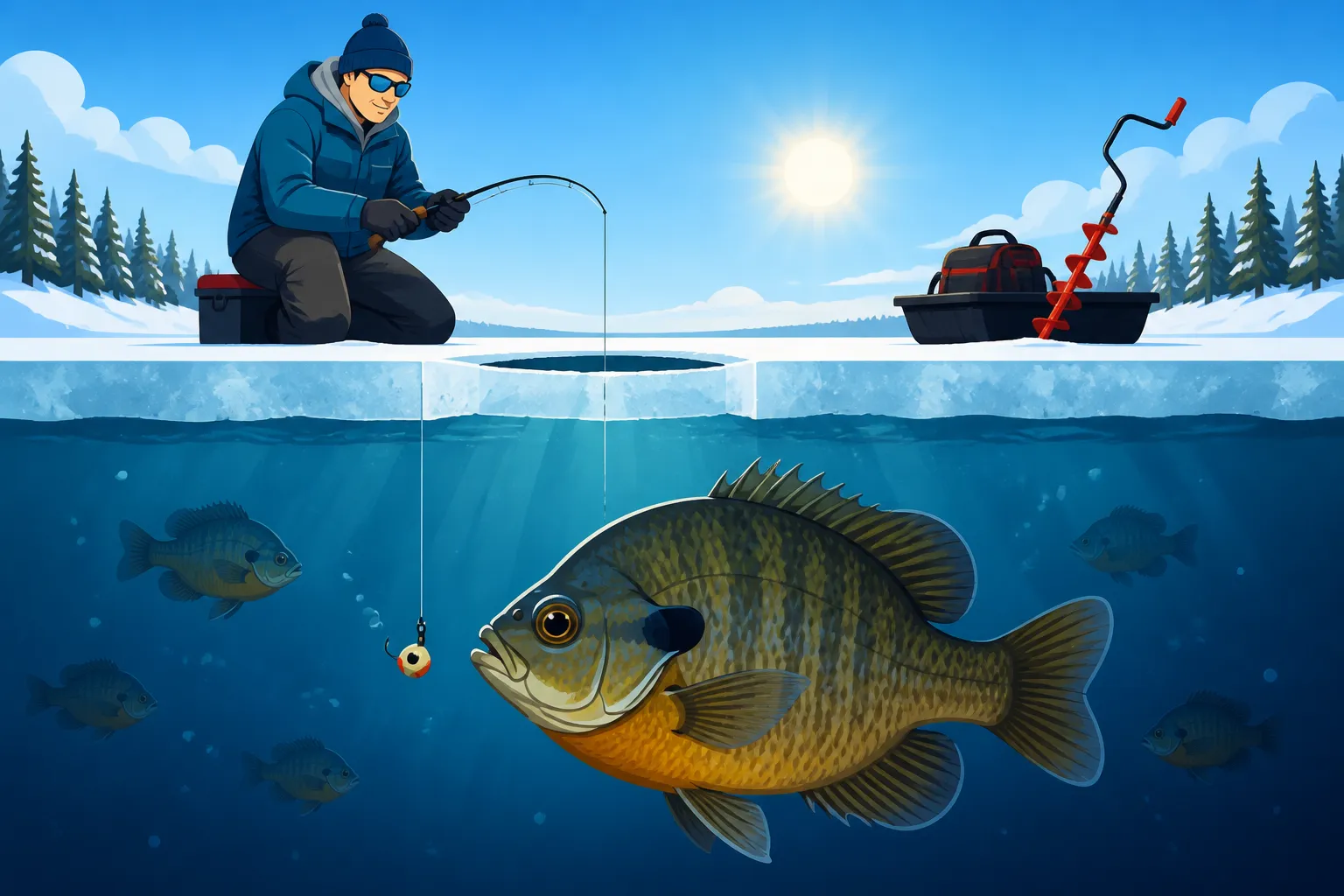
Beyond having the right gear and bait, how you present your offering is paramount. Bluegill ice fishing is a dance of subtle movements and knowing when to be aggressive and when to be still.
The Delicate Dance of Jigging
Jigging is the primary method for catching bluegill through the ice, but it's not a one-size-fits-all approach. The "delicate dance" is about tiny, controlled movements.
- Micro-Movements: Forget aggressive jigging motions. For bluegill, think small. A slight tremor, a tiny quiver of the rod tip, just enough to make your bait dance subtly. Often, a simple, slow lift and pause is all it takes. Experiment with different cadences: a short lift, hold, drop; or a rapid series of tiny twitches.
- The Pause: This is often the most critical part of the retrieve. After a series of micro-jigs, pause your bait completely still for 5-10 seconds, or even longer. Many times, a bluegill will study the bait during the jigging action but will only commit to striking when it's perfectly motionless. This is especially true for larger, more cautious fish.
- Lift and Drop: Another effective technique is to slowly lift your bait a foot or two, then let it flutter back down on a semi-slack line. The slow, controlled fall can imitate a dying insect, and fish often strike on the descent. Pay close attention to your line during the drop; any unnatural pause or twitch often indicates a bite.
Deadsticking for Finicky Fish
Sometimes, even the most delicate jigging is too much for cold-water bluegill. This is where deadsticking comes into its own, especially for those highly finicky or pressured fish.
- Passive Presentation: A deadstick rod is simply a second rod (where legal in Minnesota, you can use up to two lines) set up with a small bait or jig, placed in a rod holder, and left completely still. The idea is that the natural movement of a live bait, or the subtle presence of a tiny jig, is enough to entice a strike without any angler input.
- The Power of Stillness: Often, a bluegill that ignores a jigging lure will swim over to a deadsticked offering and inhale it. It's the ultimate test of patience and the perfect complement to an active jigging rod. Using a bright spring bobber or a sensitive strike indicator on your deadstick will help you detect those incredibly light bites. For more information on using multiple lines, make sure to check out "How Many Lines Can You Fish in Minnesota?".
- Bait Choice: Live bait like a single wax worm or spike is paramount for deadsticking, as their natural movement provides the attraction.
Hole Hopping for Success
Bluegill are often found in schools, and if you're not getting bites, it's highly likely there aren't many fish under your hole. That's when it's time to move.
- Covering Water: Don't be afraid to drill many holes and move frequently until you find an active school. Start by drilling a series of holes in a grid pattern or along a depth contour. Use your flasher to check each hole for activity.
- Targeting Depth Transitions: Bluegill often relate to depth changes. If you're fishing a flat, drill holes moving from deeper water towards shallower, or vice versa. If you find a good spot, don't leave it until the bite dies.
- Observe Your Surroundings: Pay attention to other anglers on the ice. If someone is consistently catching fish, they’ve likely found a productive depth or structure. A polite question can often lead to valuable insights. This is a crucial part of the "Ice Fishing in Minnesota: Complete Beginner-to-Pro Guide" mindset.
Finding Bluegill Hotspots in Minnesota
Minnesota is a bluegill paradise, with countless lakes offering incredible opportunities. Knowing where to look, both generally and within a specific lake, is key to consistent success.
Reading the Lake Bottom
Before you even step on the ice, studying a lake map can save you hours of unproductive drilling. Look for these key features:
- Weed Beds: Especially early in the ice season, look for the remnants of green weed beds. These provide oxygen, cover, and a food source for bluegill. Bassmaster has some great information about bluegill habitat, and their insights often align with prime ice fishing spots. As the winter progresses, focus on the deeper edges of these beds or where they transition to soft bottom.
- Drop-offs and Ledges: Bluegill often hold along sharp changes in depth. A drop-off provides easy access to different depths, allowing them to move up to feed and then retreat to deeper water for safety. Focus on the base of these drops, or suspended just off the break.
- Inside Turns and Points: These are classic fish-holding structures. An inside turn on a contour line creates a natural pocket, while a point extending into the lake often acts as a natural ambush or congregating spot.
- Soft Bottom Flats: In mid-winter, bluegill often gravitate towards large, soft-bottom flats in deeper basins where aquatic insects (like bloodworms) burrow in the sediment, providing a constant food source. Your flasher will show a "soft bottom" return, and you might even mark individual insect hatches.
Top Minnesota Bluegill Waters
While it’s hard to name every fantastic bluegill lake in Minnesota (there are so many!), certain types of lakes and regions consistently produce.
- Smaller, Weedy Lakes: Many smaller lakes, often less than 500 acres, that have abundant healthy vegetation are prime bluegill factories. These lakes may not produce trophy walleye, but they can hold massive populations of panfish.
- Metro Area Lakes: Don't overlook the lakes right around the Twin Cities. Places like Lake Minnetonka, White Bear Lake, and others, offer incredible bluegill fishing, often with easy public access. These lakes can be heavily pressured, so finesse techniques are even more critical. You can learn more about fishing these gems in our "Twin Cities Metro Fishing: Best Lakes Near Minneapolis & St. Paul" guide.
- Central and Northern Minnesota: Regions like the Brainerd Lakes Area, Park Rapids, and Otter Tail County (known as "Minnesota's Land of 10,000 Lakes") are dotted with thousands of lakes, many of which are fantastic for bluegill. Lakes in these areas often have diverse structures, providing ample habitat. For a broader look at prime panfish waters, check out "Best Panfish Lakes in Minnesota".
- Reservoirs and Flowages: Don't forget larger reservoirs or flowages, which can also have exceptional bluegill fishing, particularly in bays and backwaters that offer protection from currents.
When you're out on the ice, remember that bluegill are a fantastic species for all ages and skill levels. With the right approach, patience, and a bit of knowledge, you can enjoy some truly memorable days reeling in those feisty sunfish, especially if you snag some quality gear from Amazon beforehand!
Disclaimer
Fishing regulations, seasons, and limits can change frequently. Always consult the latest Minnesota Department of Natural Resources (DNR) fishing regulations before heading out on the ice to ensure compliance. This guide is for informational purposes only.