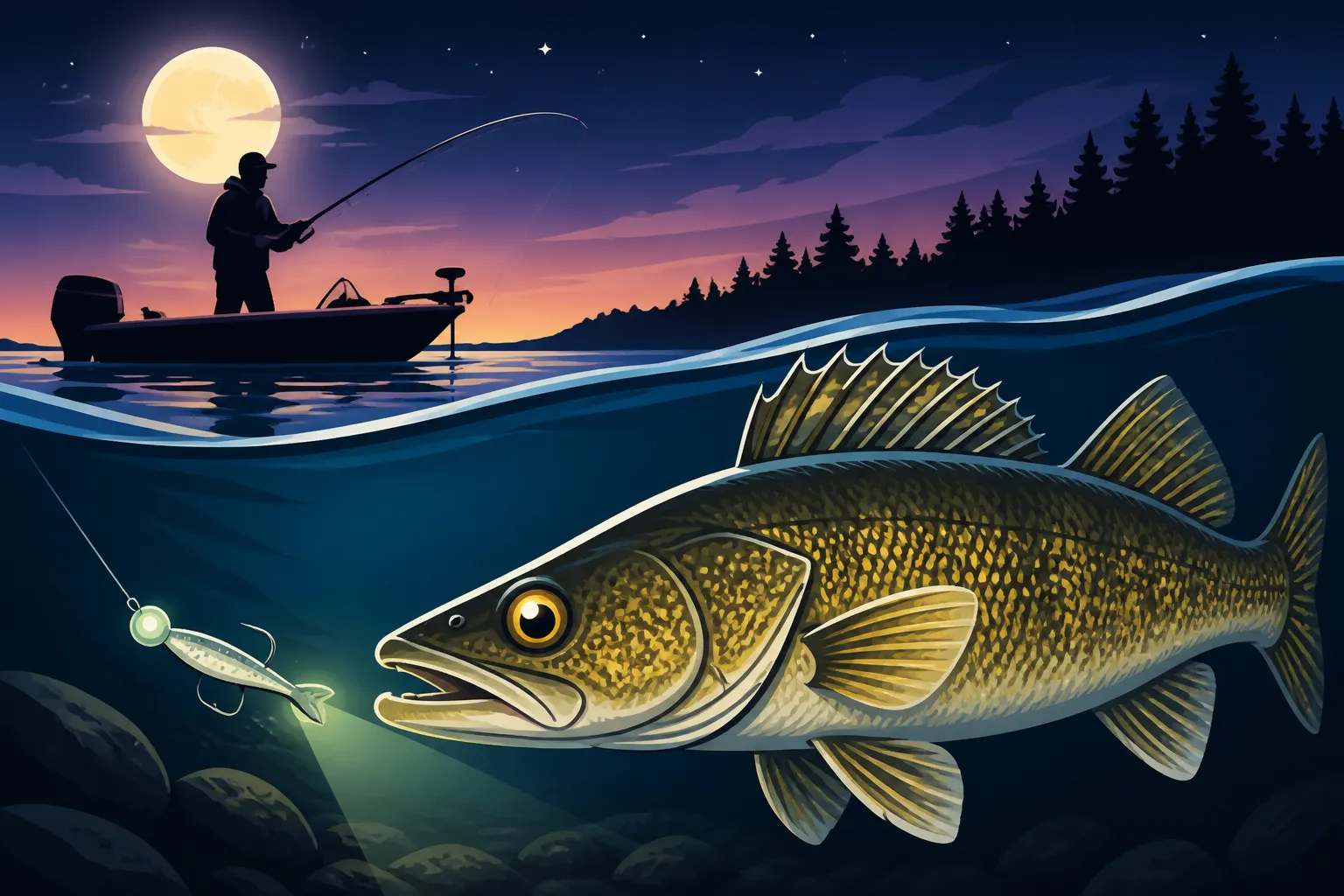
Walleye Eyes: Why They Bite at Night & Low Light
Ever wonder why those savvy walleye seem to vanish when the sun is high, only to become aggressive predators as dusk settles? It’s a frustration many anglers face, casting diligently during daylight hours with minimal reward, only to hear tales of nighttime success. The truth is, walleye are perfectly built for low-light conditions, and understanding their unique vision is the key to unlocking consistent bites. This comprehensive guide will peel back the curtain on the walleye's incredible eyes, explaining why they thrive when the lights go down and how you can use this knowledge to fill your livewell.
The Science Behind Walleye Eyes: A Nocturnal Advantage
It's not just a myth or an old angler's tale; walleye genuinely see better than most fish, and certainly better than us, when light is scarce. Their eyes are marvels of natural engineering, finely tuned to exploit the twilight hours. This isn't just a slight edge; it's a profound biological adaptation that dictates their behavior and feeding patterns, making them formidable predators in conditions where other fish species are practically blind.
Tapetum Lucidum: Nature's Built-In Night Vision
The secret weapon in a walleye's eye is a reflective layer behind their retina called the tapetum lucidum. If you've ever shined a flashlight at an animal in the dark and seen their eyes glow – like a deer in the headlights, or your cat on the couch – you've witnessed the tapetum lucidum at work. For walleye, this specialized tissue acts like a mirror, reflecting incoming light back through the retina a second time. This effectively doubles the amount of light that hits the photoreceptor cells, boosting their sensitivity in dim conditions.
Imagine trying to read a book in a dimly lit room. Now imagine someone holding a mirror behind the page, reflecting the meager light back onto the words. That's essentially what the walleye's tapetum lucidum does. It's a natural light intensifier. This allows them to gather every last photon of light, giving them an incredible ability to discern shapes, movements, and even subtle changes in water clarity that would be completely invisible to species lacking this adaptation. This is why when you catch a walleye, especially at night, their eyes often have that distinct milky, almost iridescent glow – it's the tapetum reflecting light back.
Rod-Dominated Retina: Seeing in Shades of Gray
Our human eyes are packed with both rods and cones. Cones give us our fantastic color vision in bright light, while rods are responsible for black-and-white vision and sensitivity in low light. Walleye, on the other hand, have retinas overwhelmingly dominated by rod cells. They possess a high density of these photoreceptors, which are highly sensitive to even faint light signals. This heavy bias towards rods means that while their color vision in bright light might not be as vibrant as some other fish, their ability to perceive movement and contrast in incredibly low light is unparalleled.
Think of it like this: a human eye is like a high-definition color camera, but it needs a lot of light to perform optimally. A walleye eye is more like a military-grade night-vision camera, perhaps not in full color, but exceptionally sensitive to any available light and movement. This rod-rich retina, combined with the tapetum lucidum, allows them to process the faintest glimmer, tracking the subtle silhouette of a minnow against the murky bottom or picking up the faint vibration of a jig. This adaptation is crucial for their survival, enabling them to hunt effectively when their prey is at a disadvantage.
Low-Light Advantage: An Evolutionary Edge
These two remarkable features – the tapetum lucidum and the rod-dominated retina – work in concert to give walleye a significant evolutionary advantage. In the competitive underwater world, being able to see and hunt when others can't means better survival and more successful feeding. While many sport fish like bass or pike rely heavily on sight and speed in brighter conditions, walleye transition into highly effective predators as the sun dips below the horizon or on heavily overcast days.
This is why, as anglers, we often struggle to find them in shallow, bright areas during midday. They prefer the deeper, darker waters or hide in dense cover to avoid the discomfort of bright light. Their eyes are simply not built for intense illumination, much like you wouldn't want to stare directly into a bright spotlight for extended periods. When the light dims, however, they become the undisputed kings of the hunt, patrolling their territories with keen vision, ready to ambush unsuspecting baitfish or your perfectly presented lure. Understanding this fundamental aspect of walleye biology is the first step in adapting your fishing strategies to their natural rhythms.
Why Walleye Are Night and Low-Light Hunters
It's no accident that walleye earned their reputation as prime targets during twilight and nocturnal hours. Their superb low-light vision isn't just a cool party trick; it's the cornerstone of their entire hunting strategy and their ecological niche. When you’re out on a Minnesota lake as the sun sets, and you feel that distinctive thump of a walleye hitting your bait, you’re experiencing firsthand millions of years of evolutionary fine-tuning.
Ambush Predators: Leveraging Their Vision
Walleye are classic ambush predators, and their low-light vision is perfectly suited for this style of hunting. Instead of actively chasing down prey in open water during bright conditions, they prefer to lie in wait, often near structure, breaks, or weed lines. As light levels drop, they become nearly invisible to their prey, while their keen eyes allow them to detect the faintest outline or movement of a passing meal.
Imagine a walleye lurking in the shadows of a rocky point on Lake Vermilion. During the day, that minnow swimming by might easily spot the walleye and dart away. But as dusk approaches, the minnow's vision deteriorates rapidly, while the walleye's remains sharp. The walleye can pinpoint its target, gauge the distance, and strike with lethal precision. This ability to see clearly in conditions where prey is disoriented or partially blind gives them a massive advantage, making them incredibly efficient hunters after dark. They don't need to expend excessive energy in long chases; they can wait for the opportune moment and capitalize on their superior vision.
Prey Vulnerability: The Advantage of Disorientation
The walleye's feast is often dictated by the vulnerability of its prey. Many of the small baitfish that walleye target – species like shiners, perch, and ciscoes – do not possess the same incredible low-light adaptations. Their vision is far more dependent on daylight. As the sun sets, these baitfish often become disoriented, less coordinated, and struggle to detect predators. They might move closer to shallow areas or come out of hiding, making them easier targets for the visually-superior walleye.
Consider a school of yellow perch in a shallow flat on Upper Red Lake. During bright daylight, they are nimble and alert. But as evening approaches, their senses are dulled. They might still be feeding on insects or small crustaceans, but their ability to spot a lurking walleye is severely diminished. This gives the walleye a significant tactical edge. The walleye can patrol the edges of these shallow flats, picking off individual perch that stray from the relative safety of the school or are simply too slow to react. This increased vulnerability of prey in low light directly translates to more active and aggressive feeding behavior from walleye.
Avoiding Predation: Safety in Darkness
It's not just about what walleye can catch; it's also about what can catch them. While walleye are apex predators in many Minnesota lakes, they are still vulnerable, especially when young, to larger fish like muskies or even larger pike. Birds of prey, like osprey and eagles, can also snatch a walleye from the surface in bright conditions. The cloak of darkness provides a crucial layer of protection, allowing walleye to move into shallower, more productive feeding grounds with less risk to themselves.
During the day, a walleye venturing into a brightly lit shallow bay might become an easy target. But under the cover of night or on a heavily overcast day, the risks are significantly reduced. This freedom from being easily seen allows them to exploit areas rich in baitfish that they might otherwise avoid during peak daylight. It’s a dual benefit: enhanced hunting capabilities coupled with increased personal safety. This strategic use of low-light periods for both offense and defense is a prime example of their evolutionary success in Minnesota's diverse waters.
Prime Times for Walleye Activity
Knowing that walleye thrive in low-light conditions is only half the battle. The real secret to consistent success lies in understanding when those prime low-light windows occur and how they manifest throughout the day and night. It's not just about "fishing at night"; it's about recognizing the subtle cues and seasonal patterns that trigger their feeding binges. For a comprehensive guide to their behavior, you might want to read our article on Seasonal Fishing Patterns in Minnesota.
Dawn and Dusk: The Classic Low-Light Windows
The periods just before sunrise and just after sunset are arguably the most reliable times for walleye fishing, often referred to as the "golden hours" or "magic hours." During these transitions, light levels are rapidly changing – decreasing in the evening and increasing in the morning – creating the perfect conditions for walleye to become active. As the sun dips, walleye begin to move from their deeper daytime haunts or dense cover, pushing into shallower feeding areas.
In the evening, as twilight deepens, you'll often find walleye migrating towards points, reefs, and weed lines where baitfish congregate. They feel more secure in the dimming light, and their superior vision allows them to pick off unsuspecting shiners or perch. Similarly, in the predawn hours, they continue their opportunistic feeding before retreating to deeper water or cover as the sun climbs higher. These brief windows of aggressive activity can be incredibly productive, sometimes lasting only an hour or two, but offering some of the most intense bites of the day. Many anglers plan their entire trip around these pivotal times, opting for short, focused bursts of fishing rather than an all-day grind.
Overcast Days: A Walleye Angler's Best Friend
While dawn and dusk are predictable, Mother Nature occasionally gifts us with extended low-light conditions in the form of heavily overcast or rainy days. These can be absolute game-changers for walleye fishing. A thick cloud cover effectively mimics twilight conditions, scattering and diffusing sunlight, preventing it from penetrating the water column with its full intensity.
On such days, walleye may remain active in shallower depths and more exposed areas throughout the entire day, not just during the traditional low-light windows. This means you can often find them on structure or along weed edges that would be completely barren during a bright, sunny afternoon. A continuous, steady rain can further enhance these conditions by roughening the water surface, which also helps to break up light penetration and provide additional cover for active walleye. Always pay attention to the forecast; a day promising persistent cloud cover or light drizzle might just be the perfect day to hit your favorite walleye spot on Lake of the Woods or Leech Lake.
Night Fishing Opportunities: Embracing the Darkness
For the truly dedicated walleye angler, the deep darkness of night offers some of the most exciting and productive fishing experiences. Once the sun is completely gone, walleye become masters of their environment. They move confidently into very shallow waters, sometimes only a few feet deep, especially if there's structure like rock piles, weed beds, or even submerged timber that offers ambush points.
Night fishing requires a different approach, often focusing on subtle presentations and relying on senses other than sight, even for the fish. For techniques specific to after-dark adventures, check out our guide on Night Fishing for Walleye in Minnesota. Many anglers find success trolling crankbaits along shallow breaks or casting jigs and plastics into prime feeding zones. The absence of boat traffic and bright sunlight often makes walleye bolder and less wary. Just remember to prioritize safety with good lighting, a trustworthy fishing partner, and always let someone know your plans when heading out after dark.
Adapt Your Tactics for Low-Light Success
Understanding why walleye bite at night and in low light is just the beginning. The real payoff comes when you translate that knowledge into actionable fishing strategies. You can't just keep doing what you do during high noon and expect the same results. Low-light conditions demand a shift in your arsenal and approach. To become a master of these techniques, our Walleye Fishing Techniques: Complete Minnesota Guide offers even more in-depth advice.
Lure and Bait Choices: Standing Out in the Dim
When visibility is limited, your lures and baits need to work harder to get noticed. While natural colors often excel in clear, bright water, low-light conditions call for options that create maximum disturbance and contrast.
- Vibration and Sound: Walleye don't just rely on sight; their lateral line system is incredibly sensitive to vibrations. Lures that displace a lot of water or have rattles can be game-changers. Crankbaits with internal rattles, blade baits, and lipless crankbaits are excellent choices. During ice fishing, spoons with a good wobble and rattle can be irresistible. Consider trying out a Rapala Shad Rap or a Northland Tackle Mimic Minnow to get their attention.
- Contrasting Colors: While walleye don't see color as vividly as we do in bright light, they can distinguish shades and contrasts. Darker colors like black, blue, or purple can create a strong silhouette against a lighter sky or water surface, making them easier to spot. Conversely, bright, fluorescent colors like chartreuse or orange can reflect what little UV light is available, appearing more vibrant to the fish. Often, a combination of dark and bright, like a black and chartreuse jig, can be deadly. Experimentation is key, but don't be afraid to go bold.
- Profile and Size: Sometimes, a larger profile can be more easily detected than a small, subtle bait. A bulkier soft plastic or a larger minnow on a jig can offer a more enticing target. Additionally, live bait like minnows (shiners, fatheads, rainbows), nightcrawlers, or leeches remain top choices, especially when presented on a simple Jigging for Walleye: Jig & Minnow Basics or How to Fish a Lindy Rig for Walleye. Their natural scent and subtle movements are often enough to trigger a strike when visual cues are limited. For more detailed lure suggestions, check out our list of the Best Lures & Baits for Minnesota by Species.
Presentation and Location: Where and How to Deliver
The effectiveness of your lure is heavily dependent on where and how you present it. Low-light conditions influence walleye positioning and their willingness to chase.
- Shallow Water Movement: As mentioned, walleye will often move shallower after dark. Focus on depths of 5-15 feet, especially near points, reefs, and sudden depth changes (breaks) that lead to deeper water. These are migratory highways for walleye moving to feed.
- Casting and Trolling: Both casting and trolling can be incredibly effective. When casting, target visible structure or use your electronics to pinpoint subtle contours. Fan-casting a jig and plastic or a shallow-running crankbait can cover water efficiently. For covering larger areas, especially on expansive lakes like Mille Lacs or Winnie, slow trolling crankbaits like a Berkley Flicker Shad or a Salmo Hornet along breaklines or over shallow flats is a proven technique. Learn more about it in our Trolling for Walleye: Crankbaits & Leadcore guide. The speed of your troll often needs to be slower in low light, allowing the walleye more time to react.
- Vertical Jigging and Deadsticking: If you're fishing a specific piece of structure, or when ice fishing, vertical presentations can be deadly. Jigging a spoon or a soft plastic directly beneath the boat or through an ice hole keeps the bait in the strike zone longer. Often, a "deadstick" rod with a live minnow on a plain hook or small jig, left completely still, can entice hesitant walleye who are more sensitive to subtle movements in the dark.
Sensitivity and Stealth: The Unseen Advantages
In low-light situations, the subtle details become amplified. How you approach a spot and the gear you use can significantly impact your success.
- Rod Sensitivity: With reduced visibility, you'll often be feeling for bites rather than seeing them. A sensitive graphite rod is crucial. It transmits even the lightest tap or "mushy" feel of a walleye mouthing your bait. Paired with low-stretch line like braid, you'll feel everything that happens at the business end of your line.
- Stealthy Approach: Walleye, even when aggressive, can be spooky. Avoid loud noises in the boat, excessive light (use a headlamp with a red-light setting to preserve your night vision and not scare fish), and abrupt movements. If fishing from shore or ice, minimize your silhouette and vibrations. A quiet approach allows you to get closer to active fish without alarming them.
- Electronics for Location: Even in the dark, your electronics are invaluable. Use your sonar to find baitfish schools, identify transitions in depth, and mark any submerged structure that walleye might be holding near. While you might not see the walleye directly, understanding the bottom topography and baitfish presence will guide your efforts.
Specific Minnesota Low-Light Hotspots
Minnesota is literally the "Land of 10,000 Lakes," and while walleye can be found in many of them, some bodies of water truly shine when it comes to low-light walleye opportunities. Knowing where to focus your efforts can cut down on wasted time and put you on fish faster. For a more comprehensive look at where to find these fish, dive into our Walleye Fishing in Minnesota: Complete Guide.
Large Lake Flats and Reefs: Walleye Superhighways
On Minnesota's larger, well-known walleye lakes, vast shallow flats and expansive submerged reefs become prime hunting grounds during low-light periods. These areas, often sparsely populated during bright daylight, transform into walleye feeding frenzies as dusk settles.
- Mille Lacs Lake: This iconic walleye factory is famous for its massive mud flats and numerous rock reefs. During the day, walleye might be deep, hugging the bottom or suspended over the deeper parts of the flats. But as evening approaches, they will cruise up onto the shallower edges and tops of these flats, often in 8-15 feet of water, to hunt ciscoes and perch. Key areas like the famous "Seven Mile Reef" or the vast "Wahkon Mud Flats" come alive after sunset. Anglers often focus on the transition zones where the flat meets deeper water, or any slight irregularities on the flat itself. Trolling crankbaits or casting jigs with plastic or live bait can be incredibly effective. For detailed regulations and fishing tips on this incredible lake, see our Mille Lacs Lake Fishing Guide: Walleye, Bass & More.
- Lake Winnibigoshish (Winnie): Known for its trophy walleye potential and huge expanse, Winnie also boasts extensive shallow sand and gravel flats. These flats, especially those adjacent to deeper channels or weed beds, are magnets for walleye at dawn and dusk. Areas like the "Highbanks" or "Muskie Bar" are well-known low-light producers. The sheer size of Winnie means walleye have vast areas to roam, and they use the low light as cover to move freely across these open, shallower feeding grounds.
- Leech Lake: With its complex structure of islands, bays, and offshore humps, Leech Lake offers endless low-light opportunities. The extensive shallow bars and rocky points, particularly around areas like "Walker Bay" or "Star Island," are prime targets. Walleye will stack up on these structures as they push shallow to feed. Casting jigs and minnows or working a slip bobber rig with a leech over the shallower tops of humps can be deadly as the light fades.
River Systems: Current and Ambush Points
Minnesota's mighty river systems, like the Mississippi, Minnesota, and St. Croix, present unique low-light challenges and opportunities. The constant current means walleye are often oriented towards current breaks, using minimal effort to ambush prey.
- Mississippi River: From the headwaters down through the metro pools, the Mississippi River offers fantastic walleye fishing. In low light, focus on wing dams, current seams, and the mouths of tributaries. Walleye will position themselves in slack water just out of the main current, waiting for baitfish to be swept past. The stained water of the river often means "low light" conditions can persist more throughout the day, but dawn, dusk, and overcast days are still peak times. Vertically jigging or slowly trolling with a three-way rig and a minnow or a crankbait are popular river techniques. For more on river fishing, consult the Minnesota River Fishing: Mississippi, Minnesota & St. Croix guide.
- St. Croix River: As a border water, the St. Croix offers beautiful scenery and excellent walleye fishing. Similar to the Mississippi, walleye will use current breaks and eddies, especially near deeper holes or rock piles. During low light, they become more aggressive, often moving up onto shallower flats adjacent to the main channel. Casting crankbaits into current seams or slowly drifting live bait can be very effective.
- Rainy River: While primarily famous for its lake sturgeon, the Rainy River also holds incredible numbers of walleye, particularly during their spring and fall migrations. The naturally stained water of the Rainy often creates low-light conditions all day, but fishing during twilight hours can still boost activity. Walleye will stack up in holes and along current seams, making them prime targets for jigging presentations.
Smaller Lakes with Darker Water: Hidden Gems
Don't overlook the countless smaller lakes across Minnesota, especially those with naturally darker or stained water. These lakes often maintain low-light conditions more consistently, leading to more predictable walleye activity.
- Bog-Stained Lakes: Many lakes in northern Minnesota, surrounded by bogs and wetlands, have a natural tea-stained appearance. This darker water filters sunlight, creating perpetual low-light conditions. Walleye in these lakes are often shallower and more active throughout the day, but still exhibit peak feeding during traditional low-light windows. Look for distinct weed lines, submerged timber, and subtle depth changes.
- Turbid Lakes: Lakes with naturally higher turbidity or those prone to wind-induced choppiness can also provide extended low-light fishing. The cloudy water acts as a natural filter, making walleye less light-sensitive. These conditions can turn an otherwise slow lake into a walleye hotspot. Always check local fishing reports or talk to bait shop owners; they'll often tell you which lakes are "turning on" in specific conditions. The Best Walleye Lakes in Minnesota can provide a great starting point for finding these types of waters.
Low-Light Walleye Tactics at a Glance
To simplify your low-light strategy, here's a quick reference table of considerations for fishing in dim conditions:
| Aspect | Daytime (Bright Sun) | Low Light (Dawn, Dusk, Overcast, Night) | Rationale |
|---|---|---|---|
| Walleye Location | Deeper water, dense cover, shady areas | Shallower flats, reefs, weed edges, points | Walleye move shallow under cover of darkness to hunt vulnerable prey. |
| Lure/Bait Color | Natural, subtle, transparent | High contrast (dark/bright), fluorescent | To create strong silhouettes or reflect limited UV light for visibility. |
| Lure/Bait Action | Finesse, subtle movements | Strong vibration, rattles, aggressive wobble | Walleye use lateral line to detect prey in reduced visibility. |
| Presentation Speed | Slower, more deliberate | Often slower, but can be aggressive | Allows fish more time to react; aggressive bites indicate confidence. |
| Retrieve Style | Lift & drop, slow retrieve | Steady retrieve, erratic jerk-pause | Mimics disoriented prey or fleeing baitfish. |
| Line Type | Fluorocarbon leader for stealth | Braid (main) with fluoro leader | Braid for sensitivity; fluoro still provides stealth. |
| Gear Focus | Visual cues, precise casting | Sensitivity, stealth, vibration detection | Feeling bites is crucial; avoiding spooking fish is paramount. |
| Noise Level | Minimize boat noise, subtle approach | Extremely quiet, no bright lights (use red) | Walleye are often more wary in close quarters, even in the dark. |
| Electronics Use | Finding structure, marking fish | Finding bait schools, identifying contours | Helps locate feeding zones and ambush points even when fish aren't visible. |
Disclaimer
Fishing regulations and conditions in Minnesota can change rapidly. Always consult the latest Minnesota Department of Natural Resources (DNR) fishing regulations booklet or their official website before heading out on the water. This guide is for informational purposes only and does not supersede official regulations.