Largemouth Bass Fishing Tips for Minnesota Anglers
You've stared at a beautiful Minnesota lake, brimming with potential, only to wonder why those elusive largemouth bass aren't biting, despite what feels like the perfect conditions. It's a common frustration for many anglers in our state, where bass can be notoriously finicky. This comprehensive guide will peel back the layers of largemouth bass behavior and equip you with the practical tips and techniques you need to consistently hook into these aggressive, hard-fighting fish across Minnesota's diverse waters.
Understanding Largemouth Bass in Minnesota
Largemouth bass are an incredible sportfish, known for their aggressive strikes and powerful fights. In Minnesota, they thrive in a wide array of lakes and rivers, often preferring different environments than their smallmouth cousins. Knowing their habits and how to identify them is the first step to becoming a more successful angler.
Identification and Characteristics
The largemouth bass, as its name suggests, is characterized by a jaw that extends beyond its eye when closed. They typically have a dark, horizontal stripe running along their flanks, though this can vary in intensity depending on the clarity of the water and the fish's natural camouflage. Their bodies are deep and stocky, built for explosive power and short, fast bursts of speed. Compared to smallmouth bass, which are often found in cooler, clearer, rocky waters, largemouth bass prefer warmer, often shallower, and weedier environments. They're a truly iconic fish, and catching a hefty one can be an absolute thrill.
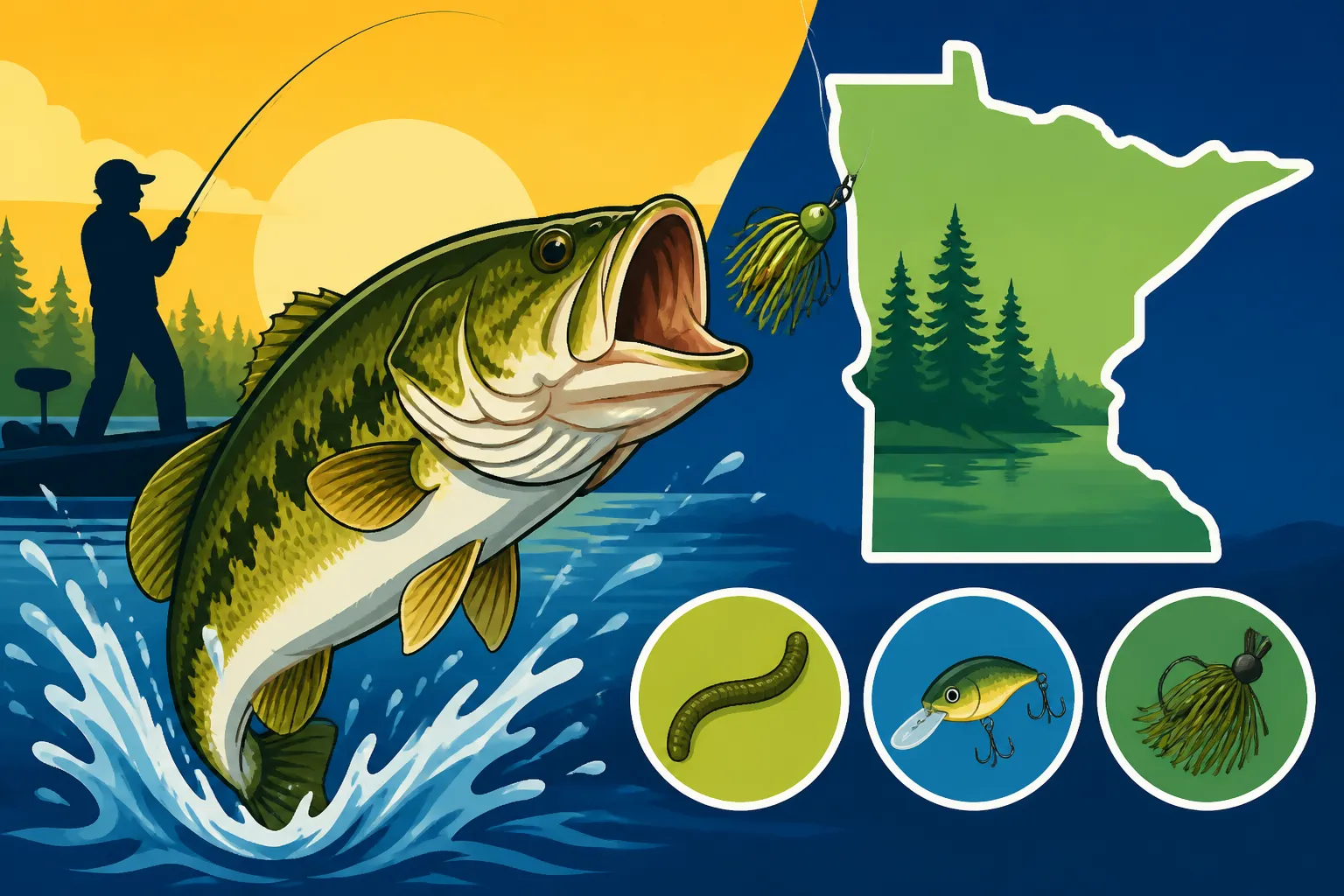
In Minnesota, while we often talk about the excitement of the walleye bite, the largemouth bass fishery has steadily grown in popularity, offering incredible opportunities for anglers across the state. They typically range from 1 to 5 pounds, but true giants in the 6-8 pound range, and even larger, are caught every year from our waters. Understanding their preferred habitats and forage can give you a significant advantage, helping you decide where to cast your line and what lures to tie on.
Behavioral Patterns and Feeding Habits
Largemouth bass are ambush predators. They love to hide in cover – think thick weeds, submerged logs, lily pads, or dock pilings – waiting for an unsuspecting meal to swim by. Their diet is incredibly varied, including minnows, crayfish, frogs, insects, and even small birds or rodents that happen to fall into the water. This opportunistic feeding behavior is what makes them so responsive to a wide variety of artificial lures.
Water temperature plays a crucial role in their activity levels. As the water warms up in late spring and summer, bass become much more active and aggressive, feeding frequently throughout the day. In cooler water, such as early spring or late fall, they tend to be more sluggish, preferring slower presentations and often holding tighter to cover. They are highly territorial, especially during the spawn, and will often strike at anything perceived as a threat to their nest or their domain. Knowing these fundamental behavioral patterns is key to predicting where they might be and what they might be willing to bite.
Prime Largemouth Bass Habitats
Unlike their smallmouth cousins who prefer rocky points and deep humps, largemouth bass are kings of the shallow, cover-rich environments. Identifying these key locations on a lake can drastically increase your chances of success. They are truly masters of camouflage and ambush, using their surroundings to their full advantage.
Weedlines, Docks, and Overhanging Cover
The dense vegetation found in many Minnesota lakes is a largemouth bass paradise. Think about the thick weedbeds, especially coontail, milfoil, and cabbage weeds, that grow from the bottom up. Bass use these weedlines for shade, ambush points, and protection from predators. The edges of these weedlines, where deep water meets shallow, are particularly productive, as bass can quickly move in and out to feed. Targeting pockets within these weedbeds or the deeper outside edge often yields the best results.
Beyond natural vegetation, man-made structures like boat docks and lifts are magnets for largemouth. They offer shade, cover, and a solid structure that often holds baitfish. Casting under and around these structures, especially those with pontoons or deep pilings, can be incredibly effective. Overhanging trees or bushes that dip into the water also provide excellent cover and shade, making them prime spots for bass to lie in wait. Think about places on your favorite local lake, like those tucked-away bays on Lake Minnetonka or the extensive weed flats of Gull Lake, and you’ll instantly recognize these bass havens.
Shallow Bays and Structure
Shallow bays, especially those with dark, mucky bottoms, tend to warm up faster in the spring, attracting baitfish and, consequently, hungry largemouth bass. These areas often feature lily pads, submerged logs, and scattered reeds, all providing excellent cover. Look for bays with access to slightly deeper water, allowing bass to retreat if conditions change or when water temperatures fluctuate.
Any significant change in bottom contour or structure within these shallow areas can hold bass. This includes subtle depth changes, isolated rock piles, old timber, or even man-made debris like old tires or sunken boats. These structures break up the monotony of the bottom and create unique ambush points. Consider using your electronics, like a How to Find Fish While Ice Fishing unit (even if not ice fishing, the principles of finding structure apply), or simply observing visible cover like fallen trees after a storm. Many anglers find success by thoroughly dissecting these types of areas, making multiple casts from different angles to ensure they cover every potential hiding spot.
Essential Largemouth Bass Techniques
Largemouth bass fishing is incredibly versatile, with a wide array of techniques that can be effective. Matching your technique to the specific cover, depth, and activity level of the bass is crucial for consistent success. Experimentation is often key to unlocking the bite on any given day.
Flipping and Pitching
Flipping and pitching are precision casting techniques designed to present a lure quietly and accurately into tight cover, such as thick mats of lily pads, dense cattails, or under boat docks. Instead of a long overhead cast, these techniques involve shorter, controlled movements that minimize splash and allow the lure to drop vertically into small openings. A heavy jig or soft plastic bait, like a creature bait or a Texas-rigged worm, is typically used.
The idea is to get the lure into the bass's living room without spooking it. Imagine a bass tucked deep in a dark pocket of weeds; a loud splash from a long cast might send it scattering. Flipping and pitching allow you to gently drop your bait right on its nose. Many anglers swear by a stout Best Bass Rod and Reel for Minnesota Lakes for this, typically a heavy power, fast action rod paired with a baitcasting reel spooled with heavy fluorocarbon or braided line. When you get a bite, it's often a solid thud, and you need to set the hook hard and horse the fish out of the cover quickly before it can wrap your line. This technique truly excels when bass are holding tight to cover in warmer water, and you can often find some excellent deals on specialized flipping and pitching gear on Amazon.
Topwater Excitement
There's arguably no more exhilarating way to catch a largemouth bass than on a topwater lure. Watching a bass explode on a bait on the surface is an experience that keeps anglers coming back for more. Topwater fishing is most effective during low-light conditions, such as early mornings, late evenings, or on cloudy days, and when the water is relatively calm.
Popular topwater lures include poppers, walk-the-dog style baits (like a Heddon Super Spook), buzzbaits, and hollow-body frogs. Poppers create a "chugging" sound and splash, mimicking a struggling baitfish. Walk-the-dog baits are retrieved with a rhythmic twitch-and-pause, making them zig-zag across the surface. Buzzbaits create a commotion with a spinning prop, and hollow-body frogs are excellent for fishing over dense lily pads or matted vegetation without snagging. The key to topwater is often patience and varying your retrieve until you find what the bass prefer. Sometimes a fast, erratic retrieve works, while other times, a long pause after a few twitches is what triggers the strike. Check out our Topwater Bass Fishing in Minnesota guide for more in-depth strategies.
Soft Plastics and Jig Fishing
Soft plastic baits and jigs are incredibly versatile and can mimic a wide range of bass forage. They are often the go-to choice when bass are less aggressive or holding deeper. Soft plastics come in countless shapes and sizes, from worms and craws to creature baits and swimbaits, and can be rigged in various ways.
- Texas Rig: This is perhaps the most popular way to fish a soft plastic worm or creature bait. The hook point is embedded into the plastic, making it weedless, perfect for fishing in heavy cover. A bullet weight is often threaded onto the line above the hook, allowing the bait to penetrate cover.
- Carolina Rig: Similar to a Texas rig, but with the weight positioned further up the line, creating a leader that allows the bait to float more freely above the bottom. Great for covering ground and fishing deeper structure.
- Jigs: Jigs, particularly weedless swim jigs or flipping jigs, are excellent for imitating crawfish or baitfish. Tipped with a soft plastic trailer, they can be dragged, hopped, or even swam through cover. Jig fishing requires a good feel for the bottom and detecting subtle bites.
- Drop-Shot: This technique involves a weight tied to the end of the line, with the hook tied a foot or two above it. It keeps the bait suspended off the bottom, making it ideal for presenting a worm or minnow imitation to suspended bass or those holding to subtle bottom structure. This is often an overlooked but highly effective technique, especially when bass are pressured.
Experiment with different colors and sizes. Natural colors like green pumpkin or junebug often work well, but bright colors can trigger reaction strikes in certain conditions. The right soft plastic or jig, presented correctly, can often tempt even the most reluctant bass.
Seasonal Largemouth Bass Strategies
Just like us, largemouth bass change their routines throughout the year, driven by water temperature and their biological needs. Understanding these seasonal patterns is crucial for consistent success on the water, especially in a state like Minnesota with its distinct four seasons.
Spring Pre-Spawn and Spawn
Spring is a time of transition and excitement for largemouth bass anglers. As ice leaves the lakes and water temperatures begin to rise, bass move from their deeper wintering holes into shallower, warmer bays and flats. This is the pre-spawn period, where they feed heavily to regain energy after winter and prepare for spawning. Look for them in shallow, sun-drenched areas with dark bottoms, often near developing weedbeds or submerged timber. Crankbaits, lipless crankbaits, and spinnerbaits can be highly effective during this aggressive feeding phase.
As water temperatures climb into the mid-60s (Fahrenheit), bass begin to move onto their spawning beds in shallow, protected areas. The spawn can be a challenging time to catch them, as they are focused on reproduction. However, they become very aggressive in protecting their nests. Sight fishing with soft plastics or jigs can be effective if you can spot beds, but remember to practice responsible catch and release during this sensitive time. The Largemouth Bass Season & Limit in Minnesota regulations outline the specific dates for catch-and-release and harvest, which are crucial to follow to protect our fishery.
Summer Heat and Deep Water
When the scorching Minnesota summer truly sets in and water temperatures soar into the 70s and 80s, largemouth bass often retreat from the extreme shallows during the brightest parts of the day. They'll seek cooler, deeper water, but always near cover or structure. This means targeting deeper weedlines, submerged humps, points, and offshore rock piles. During early mornings, evenings, and cloudy days, they might still venture into the shallower cover to feed.
During these hot summer months, bass can be found in deeper weed pockets or suspended over deeper water. Topwater lures are still excellent during low light, but during the day, focus on baits that can reach deeper. Deep-diving crankbaits, football jigs, and heavy Texas-rigged or Carolina-rigged soft plastics are prime choices. Remember that bass will still relate to cover, even if it's deeper. Learning Summer Walleye Patterns Deep Structure principles can often translate well to finding summer bass, as both species often use similar deep structures as ambush points. Don't be afraid to experiment with different depths until you find where the active fish are holding.
Fall Feeding Frenzy
As summer transitions to fall, and water temperatures begin to drop, largemouth bass enter another aggressive feeding period, often called the fall feeding frenzy. They sense the approaching winter and begin to gorge themselves on baitfish and other forage to build up reserves. This can be one of the best times of year to catch big bass, as they are often at their heaviest and most active.
During early fall, bass will often be found along deeper weedlines, points, and transition areas, chasing schools of baitfish. Spinnerbaits, swimbaits, and crankbaits that imitate baitfish are incredibly effective. As the water continues to cool into late fall, bass may move into even deeper water, concentrating on specific structures like submerged humps or steep breaks. Slower presentations with jigs and soft plastics, fished meticulously, can still draw strikes from lethargic but hungry fish. The key is to find the bait, as the bass will surely be nearby. Our guide to Best Seasonal Pattern for Largemouth Bass in Minnesota goes into even more detail about these transitions.
Key Gear for Minnesota Largemouth Bass
Having the right tools for the job can make a significant difference in your largemouth bass fishing success. While you don't need to break the bank to get started, understanding the basics of rods, reels, line, and lures will help you be more effective and prepared for Minnesota's diverse bass fisheries.
Rods, Reels, and Line Selection
For serious largemouth bass fishing, most anglers utilize both spinning and baitcasting setups, each excelling in different situations.
- Baitcasting Rods and Reels: These are generally preferred for heavier lures, thicker lines, and for casting into dense cover. A medium-heavy to heavy power, fast action rod (6'6" to 7'6") is a versatile choice. A common setup might be a 7-foot medium-heavy rod paired with a fast retrieve baitcasting reel (7.1:1 gear ratio or higher) spooled with 15-20 pound fluorocarbon or 30-50 pound braided line. Baitcasters give you excellent control and power for setting the hook and pulling fish out of cover. When shopping, you can often find reputable brands like Abu Garcia or Shimano reels on Amazon.
- Spinning Rods and Reels: Spinning gear is ideal for lighter lures, finesse presentations, and for beginners. A medium to medium-heavy power, fast action spinning rod (6'6" to 7'0") works well. Pair it with a 2500-3000 size spinning reel spooled with 8-12 pound fluorocarbon or braided line with a fluorocarbon leader. This setup is perfect for throwing weightless worms, small jigs, or shaky heads, especially when bass are pressured or in clear water.
| Technique/Lure Type | Rod Power/Action | Reel Type (Gear Ratio) | Line Type (Pound Test) | Best Use Case |
|---|---|---|---|---|
| Flipping/Pitching | Heavy/Fast | Baitcasting (7.1:1+) | Braid (40-65 lb) | Heavy Cover, close quarters |
| Topwater | Medium-Heavy/Fast | Baitcasting (6.4:1-7.1:1) | Mono/Braid (15-30 lb) | Surface lures, open water |
| Texas Rig (Worms) | Medium-Heavy/Fast | Baitcasting (6.4:1-7.1:1) | Fluorocarbon (15-20 lb) | Weeds, wood, moderate cover |
| Spinnerbaits/Crankbaits | Medium-Heavy/Moderate-Fast | Baitcasting (6.4:1-7.1:1) | Fluorocarbon (12-17 lb) | Covering water, reaction strikes |
| Finesse (Drop-Shot, Wacky Rig) | Medium/Fast | Spinning (2500-3000) | Fluoro/Braid+Fluoro Leader (6-10 lb) | Clear water, pressured fish |
Must-Have Lures and Baits
The world of bass lures is vast, but a few categories are indispensable for Minnesota anglers. Having a selection of these will prepare you for almost any situation.
- Jigs: Flipping jigs (1/4 to 3/4 oz) with weed guards are fantastic for pitching into heavy cover. Football jigs are great for fishing rocky bottoms. Always pair them with a soft plastic trailer (e.g., a Rage Craw or a small chunk).
- Soft Plastics: A cornerstone of bass fishing. Stock up on straight-tail worms (like a Senko), creature baits (e.g., Zoom Brush Hog), plastic craws, and finesse worms. Different colors like green pumpkin, junebug, and black/blue are highly effective. You can often buy these in bulk on Amazon for a good price.
- Spinnerbaits: These lures, with their thumping blades and pulsating skirt, are excellent for covering water and eliciting reaction strikes. Sizes from 1/4 to 3/4 oz with tandem willow or Colorado blades are great. White, chartreuse, and white/chartreuse are common productive colors.
- Crankbaits: Both lipless crankbaits and diving crankbaits have a place in your tackle box. Lipless cranks (like a Rat-L-Trap) are great for covering flats and ripping through weeds. Diving crankbaits, with their varying lip sizes, can reach different depths and are perfect for fishing points, breaks, and deep weed edges.
- Topwater Lures: Poppers, walk-the-dog baits (e.g., Zara Spook), and hollow-body frogs (like those from LiveTarget or Booyah) are essential for exciting surface bites.
- Swim Baits: Both soft plastic swimbaits (rigged on a jig head or belly-weighted hook) and hard-bodied swimbaits are incredibly realistic and can tempt larger, wary bass.
Remember, the best lure is the one you have confidence in and fish effectively. Don't be afraid to experiment, and always keep an eye on what the local bait shops are recommending, as they're often tapped into the current bite. For more specific lure recommendations, check out our guide on Best Bass Lures for Minnesota Lakes.
Disclaimer
Fishing regulations, seasons, and limits can change. While we strive to provide the most accurate and up-to-date information, it is ultimately the angler's responsibility to consult the current Minnesota Department of Natural Resources (DNR) fishing regulations handbook before heading out on the water. This guide is for informational purposes only.