Best Largemouth Bass Fishing Tactics in Minnesota
Trying to dial in your largemouth bass tactics in Minnesota can feel like a never-ending puzzle, especially with our diverse lakes and ever-changing weather. You spend hours casting, trying different baits, and still come up empty-handed while watching someone else reel in a lunker. It's frustrating, and it makes you question everything you thought you knew about bass fishing. This guide is here to untangle that frustration, offering proven strategies and insights specifically tailored for Minnesota's unique largemouth bass fisheries, helping you get more bites and land bigger fish.
Understanding Largemouth Bass in Minnesota Waters
Minnesota's largemouth bass are adaptable creatures, thriving in a vast array of lakes, ponds, and even slow-moving river systems. Knowing their habits, what they prefer, and how they react to their environment is the first step to consistently finding and catching them. It's not just about throwing a lure; it's about understanding the entire ecosystem they inhabit.
Habitat and Preferred Structure
Largemouth bass are ambush predators, and they absolutely love cover and structure. In Minnesota, this means everything from vast beds of emergent weeds like lily pads and cattails to submerged timber, docks, and even rocky points or humps. They aren't usually cruising open water; they're hunkered down, waiting for an unsuspecting meal to swim by.
Think about a typical shallow bay on a lake like Lake Minnetonka or Lake Waconia. You'll often find dense stands of coontail or milfoil. Bass will use the edges of these weed lines, the pockets within them, or even sit right on top of submerged vegetation mats. Deeper weed edges, especially those that drop off into deeper water, are prime real estate, providing both ambush points and access to cooler, oxygenated water during warmer months. Similarly, in many of our northern lakes, you'll encounter standing timber or fallen trees near shore. These provide excellent overhead cover and shade, making them perfect hideouts. Docks are another huge draw, offering shade, structure from their pilings, and often attracting baitfish. It's crucial to understand that if you're not fishing near some form of cover, your chances of hooking into a largemouth bass diminish significantly.
Seasonal Movements and Behavior
Largemouth bass don't stay in one spot all year; their behavior is heavily dictated by water temperature and spawning cycles. Understanding these seasonal shifts is key to predicting where they'll be and what they'll be willing to bite. You can learn more about these patterns in our guide to Best Seasonal Pattern for Largemouth Bass in Minnesota.
- Spring (Pre-Spawn and Spawn): As ice recedes and water temperatures climb into the 50s and low 60s, bass move from their deeper wintering holes into shallower, sun-warmed bays and flats. They're looking for areas with dark bottoms that absorb heat, and plenty of cover to build nests. This is often when they're most aggressive, feeding heavily to prepare for spawning. Once water temperatures hit the mid-60s, the spawn begins. Males guard the nests, and both sexes can be very territorial, making them susceptible to sight-fishing or working baits over known bedding areas. Keep an eye on our Minnesota Bass Season (New 2026 Catch-and-Release) regulations, as some areas may have specific rules during this sensitive time.
- Summer (Post-Spawn and Mid-Summer): After the spawn, bass often recuperate for a short period before resuming their aggressive feeding. As summer progresses and water temperatures rise into the 70s and beyond, largemouth bass seek out cooler, more oxygenated water. This often means relating to the deeper edges of weed lines, submerged humps, or shady cover like lily pads and docks. Early morning and late evening can see them move shallower to feed, but during the bright midday sun, they'll often retreat to the thickest cover they can find. This is a great time for fishing those dense, matted weeds.
- Fall (Turnover and Late Season): As water temperatures begin to drop in late summer and early fall, bass start to feed heavily again, gorging themselves to build up fat reserves for winter. This is a fantastic time for action, as they can be found shallower and more actively pursuing baitfish. As the water cools further and lakes begin to "turn over" (where surface water cools and sinks, mixing with deeper water), bass can be found in a wider range of depths. They'll eventually transition back to deeper water as winter approaches, seeking stable temperatures.
Essential Gear for Minnesota Largemouth Bass
Having the right tools for the job can make all the difference, especially when you're targeting largemouth bass that often reside in thick cover. You don't need to break the bank, but investing in quality gear tailored to bass fishing will greatly improve your success and enjoyment.
Rods, Reels, and Line Choices
The ideal rod and reel setup largely depends on the technique you're employing. Largemouth bass fishing often requires a versatile arsenal.
- Rods: For most heavy cover applications like flipping, pitching, or throwing frogs, a heavy or medium-heavy power casting rod, typically 7 to 7.6 feet long, is your best friend. This length gives you leverage for casting accurately into tight spots and pulling big bass out of thick weeds. For open water presentations or lighter baits, a medium-heavy or medium power spinning rod, around 6.5 to 7 feet, is more suitable. Graphite rods are popular for their sensitivity, allowing you to feel subtle bites. Consider brands like St. Croix or Fenwick, which are popular in Minnesota for their quality and durability. You can find excellent options on Amazon.
- Reels: For casting rods, a baitcasting reel with a gear ratio between 6.1:1 and 7.5:1 offers a good balance for various techniques. Higher ratios (7.1:1 and up) are great for quickly taking up slack when flipping or frogging, while a slightly lower ratio might be preferred for cranking. For spinning rods, a 2500-3000 series reel provides enough line capacity and smooth drag for fighting feisty bass.
- Line: This is critical. For heavy cover, braided line is king. 30-65 lb test braid (like PowerPro or Sufix 832) has no stretch, incredible strength, and excellent abrasion resistance, allowing you to cut through weeds and pull bass out of nasty spots. For more finesse techniques or when fishing clearer water, a good fluorocarbon line (10-17 lb test) is nearly invisible underwater and offers good sensitivity. Monofilament (10-14 lb test) can be a good choice for topwater baits due to its buoyancy, helping baits float better, and its stretch can be beneficial for keeping fish pinned. Matching your line to your technique and cover is a game-changer. Our guide to Best Bass Rod and Reel for Minnesota Lakes delves deeper into these choices.
Top Lures and Baits for Success
The array of bass lures available can be overwhelming, but a few core categories consistently produce in Minnesota. Remember, the best bait is often the one you have confidence in and are willing to experiment with. You can explore some options further in our Best Bass Lures for Minnesota Lakes guide.
| Lure Type | Best Conditions | Target Areas | Retrieval Tips | Key Brands (Example) |
|---|---|---|---|---|
| Jigs (Flipping/Pitching) | Heavy cover, thick weeds, wood, docks, clear water | Under docks, weed mats, laydowns, brush piles | Drop-and-lift, subtle shakes, slow crawl | Strike King, G.C. |
| Soft Plastics (Worms/Creatures) | Versatile, post-frontal, clear water, pressured fish | Weed edges, rocks, open pockets, drop-offs | Texas rig, Carolina rig, shaky head, weightless | Zoom, Yamamoto |
| Topwater (Frogs/Poppers/Walkers) | Low light (dawn/dusk), calm water, matted weeds | Over lily pads, weed mats, open pockets, shallow | Walk the dog, pop-and-pause, slow retrieve | Spro, Heddon |
| Crankbaits (Shallow/Deep) | Covering water, targeting specific depths, windy | Rocky points, weed lines, open flats, riprap | Steady retrieve, stop-and-go, deflection | Rapala, Strike King |
| Spinnerbaits | Windy, stained water, covering water, wood | Around emergent weeds, timber, riprap, docks | Slow roll, burning, stop-and-go | Booyah, War Eagle |
| Swim Jigs | Mimic baitfish, transitioning cover, clear water | Weed edges, sparse cover, open water | Steady retrieve, subtle jigging action | Z-Man, Keitech |
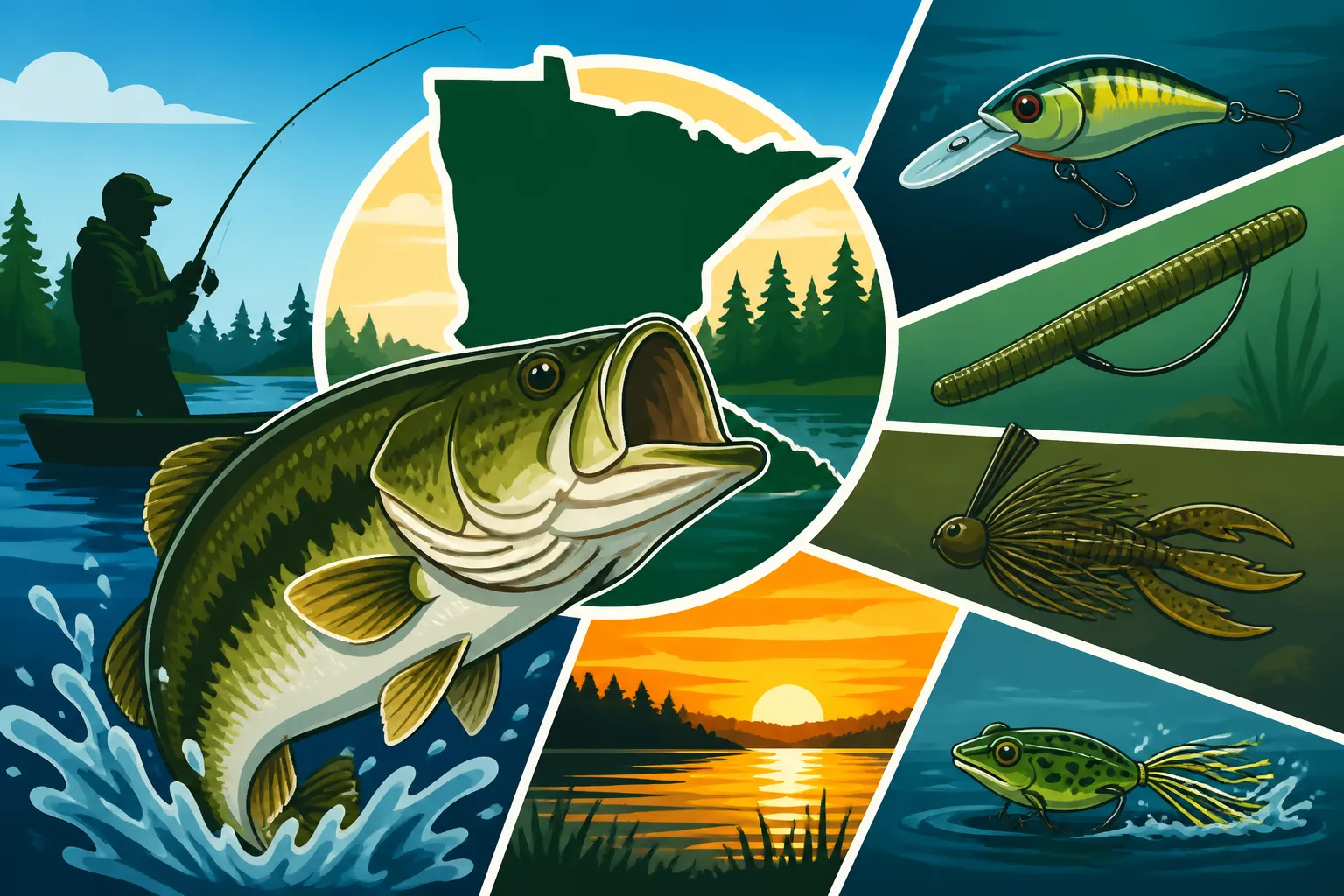
For jigs, whether it's a weedless Arkie-style jig or a swim jig, pairing it with a bulky soft plastic trailer like a craw imitation can be incredibly effective. Soft plastics, such as Texas-rigged worms or creature baits, are phenomenal for probing dense cover without snagging. Topwater lures, especially frogs, are not only effective but provide exhilarating strikes, especially over matted vegetation. For covering water and finding active fish, crankbaits and spinnerbaits are hard to beat, particularly in windy or stained conditions.
Proven Largemouth Bass Fishing Tactics
Now that we understand their habitat and have the right gear, let's dive into the actual tactics that put largemouth bass in the boat. Minnesota's waters offer endless opportunities for these techniques.
Flipping and Pitching Heavy Cover
This is a bread-and-butter technique for targeting largemouth bass in their preferred hideouts. It's all about precision and stealth. Instead of long casts, flipping and pitching involve underhand pendulum swings or short lobs to gently present your bait into tight spots with minimal splash.
Imagine a dense mat of lily pads or milfoil along the shore of Otter Tail Lake. You can't cast a crankbait through that. This is where a heavy-action casting rod, a baitcasting reel spooled with 50-65 lb braided line, and a Texas-rigged jig or creature bait shines. You're literally dropping your bait into the tiny openings in the weeds, or carefully placing it against a dock post or under an overhanging tree. The key is to let the bait fall straight down on a semi-slack line, allowing it to penetrate the cover. As soon as it hits bottom or the desired depth, give it a few subtle shakes, then lift and repeat. Most bites will feel like a slight "tick" or simply a feeling of weight on your line. Set the hook hard and immediately start reeling to pull the bass out of the cover before it can wrap you up. This technique is highly effective when bass are seeking shade and ambush points on bright, sunny days. Our article on How to Catch Bass in Weedy Lakes provides more specific strategies for navigating thick vegetation.
Topwater Action and Frogging
There's nothing quite like a largemouth bass exploding on a topwater lure. This isn't just a fun way to fish; it's incredibly effective, especially during low-light conditions or over matted vegetation.
- Frogging over Mats: When you see a thick carpet of vegetation – be it lily pads, duckweed, or matted milfoil – a hollow-bodied frog is your go-to. Cast your frog right onto the mat and retrieve it with a walk-the-dog action or short twitches, making it "walk" or "pop" across the surface. The goal is to imitate a frog or mouse struggling on the mat. When a bass blows up on it, resist the urge to set the hook immediately! Wait a second or two until you feel the weight of the fish, allowing it to fully engulf the bait. This is where that heavy braided line and stout rod come in handy to pull them out of the slop. Topwater Bass Fishing in Minnesota provides more insights on this exhilarating technique.
- Poppers and Walkers: For open water, sparse cover, or along defined weed lines, poppers and walking baits (like a Heddon Super Spook or a Rapala Skitter Walk) create a commotion that bass can't resist. Poppers are worked with short, sharp snaps of the rod tip to create a "bloop" and splash, followed by pauses. Walking baits require a rhythmic twitch-twitch-pause retrieve to make them glide side-to-side across the surface. These are particularly effective around dawn and dusk, or on cloudy days when bass are more willing to venture out of heavy cover to feed.
Crankbait and Spinnerbait Strategies
These lures are fantastic for covering water quickly and finding active fish, especially when you're unsure where the bass are holding.
- Crankbaits: Different crankbaits are designed to dive to different depths, making them incredibly versatile. Shallow-diving crankbaits (like a Rapala Shad Rap) are excellent for working along shallow weed edges, rocky banks, or over submerged grass beds. Medium and deep-diving crankbaits are perfect for targeting bass on deeper points, humps, or submerged timber. The key is to "crash" your crankbait into cover – letting it deflect off rocks, wood, or dense weeds often triggers a reaction strike. Experiment with different retrieve speeds, from a steady retrieve to a stop-and-go, to see what the fish prefer. Bright colors can work well in stained water, while more natural patterns are better in clear lakes.
- Spinnerbaits: Spinnerbaits are incredibly versatile, especially in windy or stained water conditions. The vibrating blades (Colorado, Willow Leaf, or Indiana) create flash and thumping vibrations that bass can detect from a distance. They are remarkably weedless, allowing you to retrieve them through sparse cover, along weed edges, or around submerged timber. A "slow roll" retrieve, keeping the bait just above the bottom or through the tops of vegetation, is often effective. You can also "burn" them back quickly to trigger reaction strikes, or let them fall and rise with a lift-and-drop retrieve. Combining a spinnerbait with a soft plastic trailer can add bulk and action, increasing its appeal.
Soft Plastic Finesse Techniques
Sometimes, bass are finicky. Whether it's post-frontal conditions, heavy fishing pressure, or extremely clear water, they might not commit to aggressive presentations. This is when finesse techniques with soft plastics truly shine.
- Texas Rigging: This is arguably the most common and versatile soft plastic rig. By burying the hook point back into the plastic worm or creature bait, it becomes largely weedless. Pair it with a bullet-shaped weight (often tungsten for better sensitivity) and a straight-shank or offset worm hook. This rig is perfect for working through any type of cover – weeds, wood, rocks – without snagging. Cast it out, let it sink to the bottom, then slowly drag it, hop it, or shake it in place. Most bites are subtle, so pay close attention to your line.
- Weightless Worms (Senkos): The Yamamoto Senko, or similar stick baits, fished weightless, has a unique shimmy on the fall that bass find irresistible. Cast it to open pockets in weeds, along docks, or over submerged structure, and let it sink slowly on a completely slack line. The slow, horizontal fall often triggers bites. Retrieve it with a twitch-and-pause, allowing it to fall again. This technique is deadly in clear water and for pressured fish.
- Drop Shot Rigs: For incredibly tough bites, especially on deeper structure or when bass are suspended, a drop shot rig is hard to beat. Tie a hook directly to your line, leaving a tag end where you attach a weight below the hook. This allows your soft plastic (often a small worm or minnow imitation) to suspend at a specific depth, wiggling enticingly with minimal rod movement. It’s a very subtle presentation and requires patience, but it can catch bass when nothing else will. For more detailed "how-to" on these presentations, check out How to Catch Largemouth Bass in Minnesota (Step by Step).
Reading the Water and Adapting Your Approach
Fishing isn't just about casting; it's about observation, intuition, and knowing when to switch things up. Minnesota's dynamic environment demands adaptability from its anglers.
Locating Bass in Different Conditions
The best bass anglers aren't just good at casting; they're detectives, constantly piecing together clues to find fish.
- Wind and Waves: Wind can be your friend when bass fishing. It breaks up the surface, making it harder for bass to see you, and it pushes baitfish, concentrating them along windy shorelines. This often makes bass more active. Focus on the windblown side of points or bays, using baits like spinnerbaits, crankbaits, or chatterbaits that excel at covering water in choppy conditions. The increased current can position bass for easier ambush.
- Sun and Clouds: On bright, sunny days, largemouth bass will typically retreat to the deepest, densest cover available to escape the intense light. This is prime time for flipping and pitching jigs or Texas-rigged plastics into thick weeds, under docks, or into submerged wood. Cloudy days, on the other hand, often encourage bass to roam more freely and hold shallower. Topwater baits, spinnerbaits, and shallow crankbaits can be incredibly effective as bass become more aggressive and less wary.
- Water Clarity: Clear water generally calls for more natural bait colors and longer casts to avoid spooking fish. Finesse techniques, light lines, and baits like weightless worms or drop shots shine here. In stained or murky water, bass rely more on their lateral line to detect vibrations. Brighter colors, noisy baits like spinnerbaits with large blades, or crankbaits with rattles, become more effective. The key is to match your presentation to the visibility.
Adjusting to Weather and Lake Pressure
Minnesota lakes see a lot of fishing pressure, especially popular spots like Gull Lake or Cass Lake. Learning to adjust is crucial for consistent success.
- Post-Frontal Conditions: A common frustration is the "post-frontal blues." After a cold front passes, bringing clear skies and high pressure, bass often become lethargic and less willing to bite. This is when you really need to slow down your presentation, downsize your baits, and focus on finesse techniques. Think smaller worms on shaky heads, slower retrieves with jigs, or even a drop shot. The bass are still there, they just need a more tempting, subtle offering.
- Fishing Pressure: If a spot has been hammered by anglers all day, the bass there are going to be wary. This calls for a change of strategy. Instead of throwing loud, flashy baits, switch to quieter, more natural presentations. Try fishing a weightless Senko around the edges of cover, or meticulously working a jig in areas others might have passed over quickly. Sometimes, fishing during off-peak hours (very early morning or late evening) can make a huge difference, as the bass are less pressured and more willing to bite. Don't be afraid to try a completely different area of the lake or even explore less-fished bodies of water found on Best Bass Lakes in Minnesota. Using mapping apps can help you find overlooked spots.
Remember, every day on the water is a learning experience. Pay attention to what worked, and what didn't, and you'll slowly build a robust set of tactics that lead to more successful largemouth bass fishing adventures in Minnesota.
Disclaimer
Fishing inherently involves risks and adherence to regulations. Always consult the most current Minnesota Department of Natural Resources (DNR) fishing regulations before heading out. Fishing conditions can change rapidly, and safety should always be your top priority. This guide provides general information and best practices; however, individual results may vary.