Spinner Rigs for Walleye (Crawler Harness)
Many Minnesota anglers hit a wall when the Fourth of July passes and the water temperatures climb into the 70s. The aggressive shallow-water bite of May vanishes, and suddenly your go-to jigs aren't producing. This guide solves the mystery of the mid-summer slump by mastering spinner rigs, the most effective tool for covering water and triggering finicky walleyes.
Understanding the Spinner Rig Fundamentals
There is something inherently frustrating about watching your sonar light up with fish on a mid-summer afternoon while your line stays slack. You know they are down there, likely tucked into the transition lines or hovering over the mud flats of Mille Lacs, yet they seem completely uninterested in a static presentation. This is where the crawler harness, or spinner rig, becomes your best friend. It isn't just a lure; it’s a delivery system designed to exploit a walleye’s predatory instincts—specifically their lateral line sensitivity and their reaction to flash.
What Exactly is a Crawler Harness
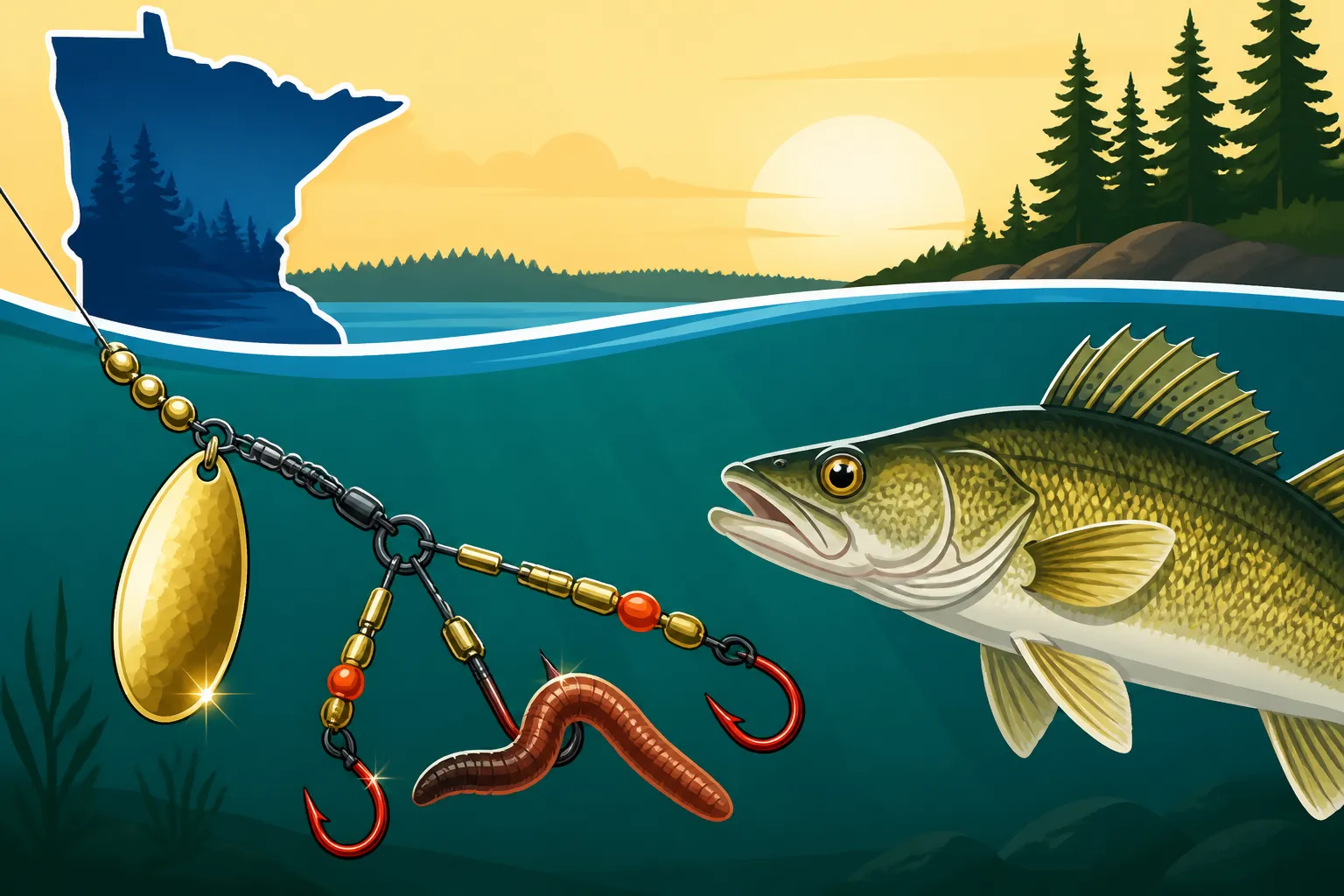
At its most basic level, a crawler harness is a length of monofilament or fluorocarbon leader ranging from 36 to 72 inches, adorned with a series of plastic or glass beads, a clevis that holds a spinning blade, and one or more hooks designed to hold a large nightcrawler. In the world of Best Walleye Lures: Jigs, Cranks & Spinners, the spinner rig stands out because it combines the scent of live bait with the mechanical vibration of a lure.
When you pull this rig through the water, the blade rotates, creating a "thump" that fish can feel from a distance. As they move closer to investigate, they see the flash of the blade and the colorful beads, which mimics a struggling baitfish. Finally, they smell the nightcrawler, which seals the deal. For many veterans, this is the "bread and butter" technique because it works when the sun is high and the fish are lethargic.
Why Minnesota Walleyes Can't Resist the Flash
Minnesota’s diverse lakes range from the tea-colored waters of the northern border to the crystal-clear depths of the Alexandria lakes area. In almost all these environments, walleyes are visual hunters. However, they are also incredibly efficient. During the heat of the summer, they don't want to expend more energy than necessary to catch a meal. A spinner rig moving at a slow, steady clip represents an easy, high-protein target.
The flash of a hammered gold or silver blade mimics the scales of a shiner or a perch. In stained water, like what you’ll find in the Lake of the Woods Fishing Guide, that flash is often the only thing that alerts a fish to the presence of your bait. The vibration bypasses their eyes entirely and speaks directly to their lateral line, allowing them to "see" the bait through the silt. It’s a multi-sensory attack that is very difficult for a predator to ignore, even when they aren't actively feeding.
Anatomy of a Successful Rig
The components of your rig matter more than you might think. A common mistake is using a leader that is too short, which can spook fish in clear water, or a line that is too light, leading to snap-offs on the initial strike. Most professionals prefer a 12-to-15-pound fluorocarbon leader. Fluorocarbon is nearly invisible underwater and has higher abrasion resistance, which is vital when you are dragging these rigs near rock piles or through the abrasive cabbage weeds of the Gull Lake Fishing Guide.
The hook spacing is the next critical element. For a standard 6-to-7-inch nightcrawler, you want your hooks spaced about 3 to 4 inches apart. This ensures that whether the walleye "nips" at the tail or inhales the whole bait, you have a high probability of a solid hookset. Many anglers are now moving toward "Slow Death" style hooks, which add an additional corkscrew rotation to the crawler itself, making the presentation even more erratic and enticing.
Components and Customization for Minnesota Waters
If you walk into a bait shop in Brainerd or Bemidji, you'll see walls covered in thousands of spinner components. It can be overwhelming. However, customization is the "secret sauce" of successful Minnesota angling. You aren't just buying a lure; you are building a tool specific to the lake you are fishing today. Understanding the nuance of blade shapes and bead colors can be the difference between a limit of eaters and a long, quiet boat ride back to the resort.
Choosing the Right Blade Styles
There are three primary blade shapes you need to keep in your tackle box: Colorado, Indiana, and Willow. The Colorado blade is the most popular for Minnesota walleyes. It is wide and round, which allows it to spin at very slow speeds (as low as 0.6 mph). It creates a heavy vibration, or "thump," which is perfect for searching for fish on the Mille Lacs Lake Fishing Rules & Limits.
Indiana blades are an intermediate option. They are teardrop-shaped and require a slightly faster speed to get spinning. They offer a balance of flash and vibration. Willow blades are long and thin, resembling a willow leaf. These are designed for speed and high flash with very little vibration. You’ll mostly use these when you’re trying to cover massive amounts of water at 1.5 to 2.0 mph or when you’re fishing in very clear water where the visual flash is more important than the "thump." You can find bulk packs of these blades on Amazon to save money when building your own custom rigs.
Selecting Bead Colors for Stained vs Clear Lakes
Bead selection is where you can get really creative. In the stained, "root beer" colored waters of northern Minnesota, high-visibility colors are king. Chartreuse, hot orange, and "firetiger" patterns are staples. The goal here is contrast. You want something that stands out against the dark background.
In clear lakes like Lake Ten Mile or Lake Minnetonka, you want to move toward more natural "forage" colors. Silver, gold, and transparent blue or purple beads often outperform the neon stuff. A popular trick among Lake Vermilion Walleye & Muskie experts is to use a "bleeding" pattern—incorporating one or two bright red beads near the hook to simulate a wounded baitfish. If you're looking for specific shades, check out the craft sections on Amazon for glass beads, which often have a more realistic "clack" and shimmer than cheap plastic ones.
Hook Configurations Double vs Triple Hooks
The debate between two-hook and three-hook harnesses usually comes down to the size of the bait and the aggressiveness of the fish. A two-hook harness is the standard. It’s easier to bait and results in fewer tangles. It works perfectly for 90% of situations involving a standard nightcrawler.
However, if you find that fish are "short-biting"—grabbing the tail and missing the hooks—it’s time to switch to a three-hook rig. This is particularly common in early July when walleyes might be a bit more tentative. The third hook sits further back in the tail of the crawler. Keep in mind that more hooks mean more chances to snag on bottom debris or weeds. If you're fishing the heavy vegetation discussed in How to Catch Bass in Weedy Lakes, you might actually want to stick to a single-hook "Slow Death" rig to keep things as weedless as possible.
Presentation Strategies: Depth and Speed Control
Once you have your rig tied and baited, the battle is only half won. The most common reason anglers fail with spinner rigs is poor depth control. If your rig is a foot above the fish's head, they might rise to get it. If it’s six inches below them, they will never see it. Walleyes are notorious for "belly-to-the-mud" behavior during the day, meaning your presentation needs to be precise.
Mastering Bottom Bouncers for Depth Management
The most effective way to fish a crawler harness in Minnesota is behind a bottom bouncer. A bottom bouncer is an L-shaped wire weight that keeps your bait at a constant distance from the lake floor. The general rule of thumb for weight is 1 ounce for every 10 feet of depth. So, if you are fishing the 25-foot transitions on Leech Lake Walleye Fishing Tips, a 2.5-ounce or 3-ounce bouncer is ideal.
The goal is to have the wire "walk" along the bottom at a 45-degree angle. You don't want to drag it; you want it to occasionally tick the sand or rocks. This creates a puff of silt that acts like a dinner bell for nearby walleyes. Many anglers buy their bouncers in bulk on Amazon because they are easy to lose in snaggy areas, but having the right weight is non-negotiable for staying in the "strike zone."
The Ideal Speed Finding the Sweet Spot
Speed is the "throttle" of your success. Most spinner rigs perform best between 0.8 and 1.2 mph. If you go too slow, the blade will flop rather than spin. If you go too fast, the rig might begin to twist your line, and the presentation becomes too aggressive for a neutral fish.
The best way to find the perfect speed is to drop your rig next to the boat and watch it. Gradually increase your trolling motor speed until the blade is humping consistently and the crawler is trailing straight behind it without spinning like a propeller. This is your "base speed." On days when the bite is tough, slowing down to that 0.8 mph mark with a large Colorado blade is often the only way to get a reaction. Conversely, if you're dealing with a "hot" bite, bumping it up to 1.4 mph can help you cover more ground and find the most aggressive pods of fish.
Reading Your Electronics to Stay in the Zone
Modern electronics have changed the game for spinner fishing. You are no longer "blind trolling." When you are working the Mille Lacs Lake Map: Mud Flats & Structure, you should be looking for "arcs" or "clouds" of bait on your 2D sonar or Down Imaging.
Once you spot fish, take note of their exact depth. If they are holding on the edge of a drop-off, you need to adjust your boat path to stay on that contour line. This is where high-definition mapping like Navionics or LakeMaster becomes invaluable. If you see fish suspended 5 feet off the bottom, you might actually want to ditch the bottom bouncer and use an inline weight or a "snap weight" to keep your spinner rig exactly at their eye level.
| Blade Type | Ideal Speed (mph) | Best Water Clarity | Primary Attraction |
|---|---|---|---|
| Colorado | 0.6 – 1.2 | Stained / Turbid | High Vibration (Thump) |
| Indiana | 1.0 – 1.5 | All Types | Balance of Flash & Thump |
| Willow | 1.2 – 2.0 | Clear / Deep | High Flash / Visual |
| Hatchet | 0.8 – 1.3 | Stained | Erratic Vibration |
Seasonal Transitions and Location Scouting
Walleyes aren't static. They move based on water temperature, oxygen levels, and the migration of their primary food sources. To be successful with a spinner rig, you have to know where the "grocery store" is located during different parts of the summer.
Early Summer Transitions on the Mud Flats
By mid-June, many of Minnesota’s largest walleye populations migrate toward the deep mud flats. This is classic spinner rig territory. On lakes like Mille Lacs or Lake Winnibigoshish Walleye Fishing Tips, the fish spread out over vast expanses of soft bottom, feeding on mayfly larvae and small perch.
Because the fish are spread out, you need to cover water. This is not the time for jigging. Set your boat to troll across the top or along the edges of these flats. If you find a "pocket" of fish, use your GPS to mark the spot and make multiple passes. Often, these fish are grouped by size, so if you catch one "eater," there are likely a dozen more nearby.
Deep Weedline Strategies in the Heat of July
As the summer sun beats down, walleyes often look for shade and oxygen, which they find in the deep cabbage weeds. Fishing a spinner rig along a weedline requires a bit more finesse. You want to "taco" the weed edge, moving in and out of the vegetation.
The vibration of the spinner blade helps the fish locate the bait amidst the stalks. If you find yourself constantly snagging, shorten your leader. A 36-inch leader gives you more control than a 60-inch leader when you’re navigating the tight turns of a weed edge. This is a prime tactic for Lake Minnetonka Fishing: Metro Trophy Water, where the weed growth is prolific and the walleyes use it as an ambush point.
Late Summer Rock Pile Tactics
In August, some walleyes move back toward deep rock piles and "humps" that rise out of the deep water. These areas can be treacherous for spinner rigs because the bottom bouncers love to get wedged in the rocks.
To combat this, use a "lighter" touch. Instead of a heavy bottom bouncer, try using a long-stemmed bouncer that keeps the weight further away from the crevice. Or, consider trolling with just enough weight to get the rig down, but keep it a foot or two off the rocks. The flash of the blade above the rocks can pull walleyes out of the "holes" to strike. This is a common pattern on Lake Vermilion Fishing Guide, where the Canadian Shield topography creates endless rocky structures.
Live Bait Selection and Handling
You can have the most expensive rig and the best boat in the world, but if your bait looks like a shriveled piece of string, the walleyes will pass. The "crawler" in "crawler harness" is the most important part of the equation.
The Nightcrawler Sizing and Stretching
When buying nightcrawlers, look for the liveliest, fattest ones available. A "jumbo" crawler is usually better because it provides more scent and a larger profile. A veteran tip is to "condition" your crawlers. Before you head out, move them from the dirt they come in into a bedding like "Fat Bag" or even damp shredded newspaper and keep them very cold. This toughens the skin, making them stay on the hook longer.
When you thread the crawler onto your harness, make sure it is perfectly straight. If the crawler is bunched up or "kinked," it will cause the whole rig to spin and twist, which looks unnatural and ruins your line. You want the crawler to trail behind the hooks like a swimming snake. Some anglers even use a "worm blower" (a small needle and air bottle available on Amazon) to inject a tiny bit of air into the tail of the crawler. This makes the tail float up, giving it more action and keeping it away from bottom-dwelling "nuisance fish" like bullheads.
Keeping Bait Fresh on Long Days
Minnesota summers can be brutal. A container of nightcrawlers sitting on the deck of a boat in 90-degree heat will turn into mush in an hour. Once a crawler dies, it loses the "bloom" of its scent and its firm texture.
Invest in a high-quality insulated bait cooler. Keep only a few crawlers out at a time in a smaller "working" container with an ice pack. If you are fishing a tournament or a long day on Upper Red Lake Walleye Fishing Tips, bait management is just as important as boat control. Refresh your bait often. If a crawler looks "washed out" or has been nipped by a perch, put on a fresh one. A fresh, vibrant crawler will always out-fish a tired one.
Conclusion
The spinner rig is the ultimate equalizer in the Minnesota angler's arsenal. It bridges the gap between the finesse of a jig and the aggression of a crankbait, allowing you to catch fish even when the "dog days" of summer are at their worst. By understanding the relationship between blade vibration, bead color, and boat speed, you can transform a frustrating afternoon into a productive day on the water. Whether you are searching the mud flats of a massive reservoir or ticking the weed edges of a metro lake, the steady "thump-thump-thump" of a crawler harness is the sound of success.
Minnesota Fishing Regulations and Safety
Before heading out to test your new spinner rig techniques, always ensure you are in compliance with the latest state laws. Check the Minnesota Fishing License: Cost, Types & How to Buy (2026) to make sure your paperwork is up to date. Be aware that specific bodies of water may have different rules, such as the Mille Lacs Walleye Regulations (2026) or specific Minnesota Slot Limits: Which Lakes & Why. Always practice Catch and Release Best Practices in Minnesota when handling trophy fish to preserve the fishery for future generations. Additionally, ensure your boat is clean and dry to follow Aquatic Invasive Species (AIS) Rules for Boaters and prevent the spread of zebra mussels and starwort.
Disclaimer
The information provided in this guide is for educational and informational purposes only. While we strive for accuracy, fishing regulations and conditions in Minnesota can change rapidly. Always consult the official Minnesota Department of Natural Resources (DNR) handbook before your trip. Fishing involves inherent risks, including weather changes and water safety hazards; always wear a life jacket and fish responsibly. This post may contain affiliate links to products like those found on Amazon, which help support our content at no additional cost to you.