Deadsticking for Walleye on Ice
One of the most maddening experiences in Minnesota ice fishing is watching a massive, glowing red bar on your flasher hover inches away from your spoon for five minutes without ever touching it. You’ve tried every twitch, rip, and flutter in the book, yet that walleye remains completely unimpressed. This guide solves that frustration by teaching you the subtle art of deadsticking, a technique where doing almost nothing becomes your most powerful weapon on the ice.
Understanding the Deadstick Concept
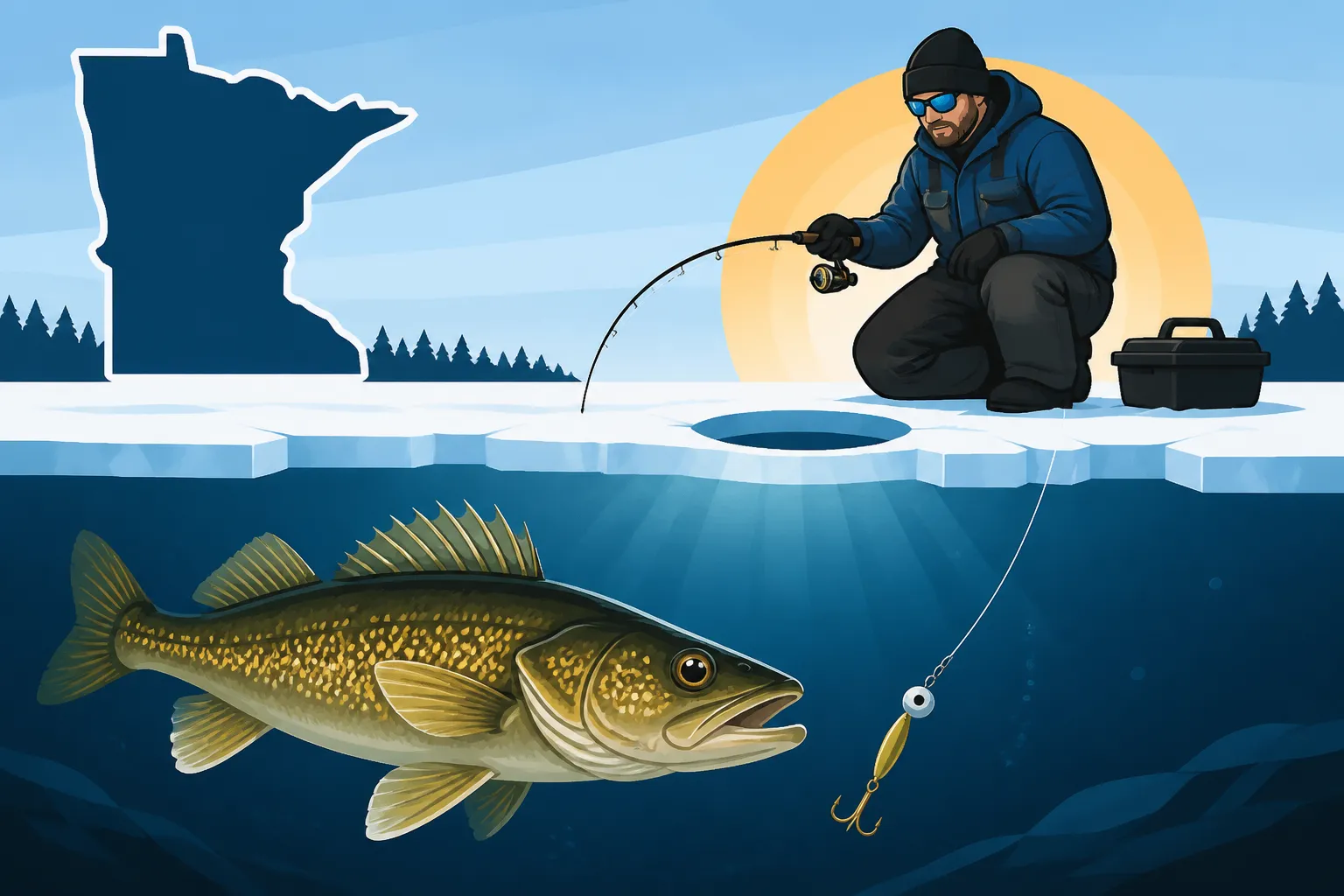
In the world of Minnesota ice fishing, we often get caught up in the latest high-action lures and aggressive jigging sequences. We want to feel like we are making things happen. However, walleyes, especially during the mid-winter slump or under heavy pressure on lakes like Mille Lacs, can become incredibly "neutral" or even "negative" in their feeding habits. Deadsticking is the practice of presenting a live minnow on a hook or a plain jig and letting it do all the work while the rod remains stationary in a holder.
Why Motionless Bait Triggers Bites
The core philosophy of deadsticking is based on the natural behavior of prey. When a walleye is in a cautious mood, the aggressive clanking of a rattle spoon or the erratic darting of a Jigging for Walleye: Jig & Minnow Basics setup might actually scare them away. A deadstick offers a "low-risk" meal. To a walleye, a minnow struggling on a hook but staying in one place looks like an easy target that doesn't require a high-energy chase. It mimics a wounded baitfish that has separated from the school, which is a signal even the most lethargic fish find hard to ignore.
In many cases, the slight vibration of the minnow's tail provides just enough "thump" for the walleye's lateral line to pick it up. This is far more subtle than the displacement created by a large lure. When you're sitting in a wheelhouse on Upper Red Lake Fishing Regulations (2026), you’ll often find that the fish will bypass your active jigging rod entirely to hit the deadstick sitting quietly in the corner. It's about matching the mood of the fish rather than trying to force them into an aggressive state.
The Psychology of a Neutral Walleye
Understanding walleye psychology is key to mastering this technique. In cold water, their metabolism slows down significantly. They aren't always looking for a big fight; they are looking for maximum caloric intake for minimum effort. When a walleye approaches a lure and sees it jumping around, the fish has to calculate if it's worth the energy to strike. A deadstick removes that calculation.
Furthermore, on heavily pressured lakes, walleyes often become "lure shy." They have seen a thousand gold spoons and heard ten thousand rattles. A plain hook and a lively minnow look "real" in a way that plastic and lead simply cannot. By using a deadstick, you are essentially providing a "control group" for your fishing strategy. It tells you whether the fish are actually active or if they are only interested in live presentations. If you're struggling, checking the Best Seasonal Pattern for Walleye in Minnesota can give you more insight into how these behaviors change from December through March.
Essential Gear for the Perfect Deadstick Setup
You might think any old rod will work for a technique that involves sitting still, but that is a common mistake. A true deadstick setup requires a specific balance of a soft, sensitive tip and a solid backbone. If the rod is too stiff, the walleye will feel resistance the moment it grabs the bait and will likely spit the hook before you can react. Conversely, if it’s too flimsy, you won't have the power to drive the hook into a walleye’s bony jaw.
Selecting the Right Deadstick Rod
The ideal deadstick rod is usually between 28 and 36 inches long with an "extra-fast" taper but a "light" or "medium-light" power. The tip should be so soft that you can see the minnow swimming; it will literally bounce the tip of the rod. This serves two purposes: first, it tells you your bait is still alive and active. Second, when a walleye takes the minnow, the tip will slowly load up without the fish feeling the "tug" of the graphite.
Many anglers prefer a glass rod or a composite for this specific task because glass has a slower reaction time than high-modulus carbon. Brands often market these specifically as "Deadstick" rods. If you are looking to build out your arsenal, checking out Best Ice Fishing Gear for Minnesota (2027 Guide) can help you narrow down the top-performing brands for this season. Remember, the rod is your primary strike indicator when you aren't using a bobber.
Reels and Line Choices for Sensitivity
For the reel, a high-quality spinning reel with a smooth drag is essential. However, the real secret is in the line. Many Minnesota veterans swear by monofilament or fluorocarbon for deadsticking rather than braid. Braid is great for jigging because it has zero stretch, but for a deadstick, a little bit of stretch is actually your friend. It provides another layer of "forgiveness" when the fish strikes.
Fluorocarbon is particularly effective because it is nearly invisible underwater. In the clear waters of lakes like Lake Vermilion Walleye & Muskie, a walleye will often inspect a bait for a long time before committing. If they see a thick line attached to the minnow, they may turn away. A 4lb or 6lb fluorocarbon leader is usually the sweet spot. You can find high-quality spools of fluorocarbon on Amazon that are specifically formulated for cold-weather performance so they don't get "coiled" or stiff in sub-zero temperatures.
Terminal Tackle and Live Bait Selection
The terminal tackle for deadsticking is usually very simple: a plain #4 or #6 octopus hook or a small, 1/32 oz teardrop jig. Some people prefer a colored hook—red or gold are classic Minnesota choices—to add just a tiny bit of visual attraction. Above the hook, about 12 to 18 inches up, you'll want to place a small split shot. This weight keeps the minnow in the strike zone and prevents it from swimming up and tangling in your other lines.
As for bait, the "livelier the better" is the golden rule. Fathead minnows are the standard, but for trophy walleyes on Mille Lacs Lake Fishing Rules & Limits, a large rainbow dace or a small shiner can be much more effective. The way you hook the minnow also matters. Hooking it just behind the dorsal fin allows it to swim naturally and struggle more, which sends out those "come eat me" vibrations. If you're constantly losing bait, you might want to look into Best Lures & Baits for Minnesota by Species to see what the current favorites are for the season.
| Minnow Type | Best Usage | Movement Profile |
|---|---|---|
| Fathead | All-around, stained water | Moderate, consistent |
| Shiner | Clear water, trophy fish | High energy, erratic |
| Rainbow Dace | Late winter, deep water | Very hardy, high vibration |
| Mud Minnow | Heavy cover, river breaks | Slow, bottom-oriented |
Setting Up Your Deadstick in the Water Column
Placement is everything. Even the best gear won't help if your bait is hovering three feet above the fish's head or buried in the muck. You need to understand where walleyes are looking and how they approach a meal. Generally, a walleye’s eyes are positioned to look up and forward, meaning they are much more likely to see a bait that is slightly above them than one that is below them.
Finding the Optimal Depth
In most Minnesota lakes, the magic number for deadsticking is 6 to 12 inches off the bottom. This keeps the minnow visible against the light coming from the surface while still being within the "strike window" of a bottom-hugging fish. If you are fishing in a river system or a lake with a lot of current, like the Mississippi River Pool Fishing in Minnesota, you might need to drop it even closer to the bottom to keep it out of the strongest flow.
Using a clip-on depth finder or your flasher, find the bottom and then reel up until your split shot is just off the floor. This allows the minnow to swim in a circle, occasionally "kicking" up some silt from the bottom, which can actually attract curious walleyes. If you find you're getting "lookers" on your electronics but no takers, try adjusting the height. Sometimes raising the bait to 2 feet off the bottom forces the walleye to make a decision quickly before the "meal" drifts away.
Using Electronics to Monitor the Neutral Line
Your electronics are your eyes under the ice. When deadsticking, you aren't just looking for your lure; you're looking for how the fish reacts to the stationary bait. On a Vexilar vs Humminbird Ice Flasher: Which to Buy?, you will see your deadstick as a thin, steady line. When a walleye approaches, a second, thicker line will appear.
The key is to watch the interaction. If the fish comes in and the line "flickers" but doesn't move, the walleye is nose-to-nose with your minnow. This is the ultimate test of patience. Do not move the rod! Many beginners get nervous and try to "jiggle" the deadstick to trigger a bite, but this usually just scares the fish. Let the minnow’s natural panic do the work. If the fish leaves, you can then try a few aggressive rips with your other rod to bring them back.
The Art of the "Set It and Forget It" Strategy
The hardest part of deadsticking is actually leaving the rod alone. This is where a good rod holder comes in. You can find simple, foldable rod holders on Amazon that keep your reel off the ice and your rod at the perfect angle. The "Set It and Forget It" strategy works best when you are focused on a different hole with an active jigging lure.
Think of the deadstick as your "safety net." While you are busy drawing fish in from a distance with the flash and noise of a spoon, many of those fish will come in, look at the spoon, decide it's too much work, and then drift over to the easy-to-catch minnow on the deadstick. This "one-two punch" is responsible for more limit-catches in Minnesota than almost any other strategy. If you're new to the ice, reading How to Ice Fish for the First Time in Minnesota can help you manage multiple lines effectively without getting tangled.
Best Locations and Times for Deadsticking in Minnesota
While deadsticking can work anywhere, it shines on specific types of structure and during certain times of the day. Walleyes are creatures of habit, and they follow very specific migration patterns during the winter months. Understanding these transitions will help you decide when to put the jigging rod down and let the deadstick take over.
Identifying Prime Structure on Big Water
On large lakes like Lake of the Woods Fishing Guide, walleyes often move along deep mud flats or the edges of prominent reefs. Deadsticking is exceptionally effective on the "transitions"—where the bottom changes from rock to mud or sand. These are the highways walleyes use to travel. By placing a deadstick on the edge of a drop-off, you are essentially setting a trap for any fish moving from the deep water into the shallows to feed.
In the mid-winter months, fish often settle into deeper "basins." During this time, they aren't moving much, and they aren't very aggressive. This is the peak season for deadsticking. If you're on a lake with a lot of underwater humps, like Gull Lake Fishing (Brainerd Lakes Area), try placing your deadstick on the "sunken" side of the hump where the wind or current might be pushing baitfish.
Transition Periods: Morning vs. Evening Bites
The "Golden Hour"—the 30 minutes before and after sunrise or sunset—is when walleyes are most active. During this window, you might actually want to be more aggressive with your jigging. However, as the light fades and the "prime" bite ends, the fish often linger but become more cautious. This is when the deadstick becomes the star of the show.
During the middle of the day, when the sun is high and walleyes are retreating to deeper, darker water, a deadstick is often the only way to get a bite. The fish are in a "neutral" mood and won't chase anything, but they will slowly inhale a minnow that is right in front of them. If you’re planning a trip, keep an eye on When Does Walleye Season Open in Minnesota 2026? to make sure you’re hitting the ice during the most productive legal windows.
Advanced Deadsticking Techniques and Troubleshooting
Once you've mastered the basics, there are a few "pro moves" that can help you turn a slow day into a memorable one. Deadsticking doesn't have to be purely passive; you can use it as part of a larger, more dynamic system.
Combining Jigging with a Deadstick (The One-Two Punch)
In Minnesota, you are legally allowed two lines through the ice in most inland waters (always check How Many Lines Can You Fish in Minnesota? for specific border water exceptions). The most effective way to use these two lines is to have one "calling" rod and one "finesse" rod.
Use a loud, vibrating lure or a large spoon on your first rod. Rip it aggressively, 2-3 feet off the bottom, to create a lot of flash and noise. This acts like a dinner bell, drawing fish in from 20 or 30 feet away. Once you see a fish on your flasher, you can slow down your jigging. If the fish follows your jigging lure but won't hit, simply stop moving it entirely, or slowly reel it up and out of the hole. Often, the walleye will then turn its attention to the deadstick minnow sitting quietly in the next hole. This bait-and-switch technique is deadly on Mille Lacs Walleye Fishing: Tips & Best Spots.
What to Do When the Bobber Just Sits There
If you are using a bobber with your deadstick—a "slip bobber" setup—you might encounter the "frozen bobber" syndrome. This happens when the fish takes the bait but swims straight up or stays perfectly still, so the bobber never goes under. This is why many pros prefer the "naked" deadstick rod method where you watch the rod tip instead.
If your bobber twitching slightly but doesn't go down, or if your rod tip starts to "heavy up" without a clear strike, it’s time to act. Pick up the rod gently, feel for the weight of the fish, and reel down until you feel resistance before setting the hook. Sometimes, a walleye will just hold the minnow in its mouth without swallowing it. In these cases, waiting an extra five seconds can be the difference between a catch and a missed fish. For more on this, How to Set Up a Slip Bobber Rig Step by Step is a great resource.
Safety and Ethics on the Minnesota Ice
As with all fishing in our great state, we have a responsibility to keep the resource healthy and ourselves safe. Deadsticking often results in fish being hooked slightly deeper because they have more time to inhale the bait.
Handling Big Walleyes in Cold Temperatures
If you plan on releasing a large walleye—especially those over 20 inches—you need to be extremely careful in sub-zero temperatures. A walleye's eyes and gills can freeze in seconds when exposed to the harsh Minnesota winter air. When you catch a fish on a deadstick, try to keep it in the hole or the water as much as possible while unhooking it.
If you're fishing in a heated house, like the ones found through Lake of the Woods Resorts Guide, this is less of a concern, but for those of us out on the open ice, speed is essential. Use a pair of long-nose pliers, which you can easily grab on Amazon, to quickly pop the hook out. If the fish is "gut hooked," it’s often better for the fish's survival to cut the line as close to the hook as possible rather than trying to perform surgery on the ice. Following Catch and Release Best Practices in Minnesota ensures that our "10,000 lakes" remain full of trophy fish for the next generation.
Minnesota Fishing Regulations Disclaimer
Fishing regulations in Minnesota are subject to change annually and can vary significantly by specific body of water. Always consult the most recent Minnesota Department of Natural Resources (DNR) Fishing Regulations handbook before heading out. Ensure you have a valid license and are aware of the specific bag limits, size restrictions, and season dates for the lake you are fishing. This guide is for informational purposes and does not replace official state laws.